

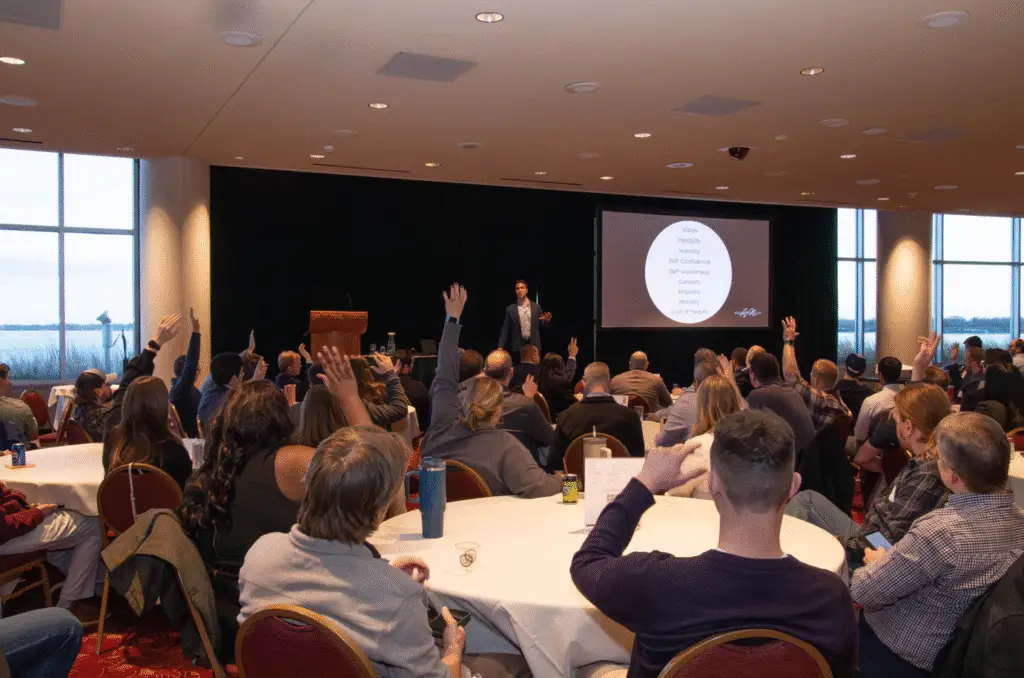
Everywhere I go, leaders are asking the same questions: How do we keep our teams engaged? How do we lead through change without losing momentum? How do we stay human in an age of constant disruption? These are the conversations happening inside boardrooms, classrooms, and conference halls. The challenges are real, but so are the opportunities.
Leading has never been easy. Leading today is harder than ever. In 2026, organizations are adapting to rapid advances in technology, changing employee expectations, and ongoing economic uncertainty. Artificial intelligence is transforming how we work. Hybrid models continue to evolve. Global competition is forcing companies to innovate faster than ever before.
Leaders are being asked to do more, do it faster, and do it better, often with fewer resources and greater accountability. The pressure to deliver results while maintaining a healthy, engaged culture has never been higher.
According to Gallup’s State of the Global Workplace 2024 Report, only one in three employees is engaged at work, and burnout continues to rise. The data confirms what I see every day. Leaders are trying to inspire teams in an environment where uncertainty feels constant. But the best leaders do not just survive uncertainty; they use it to sharpen clarity, strengthen trust, and accelerate growth.
After interviewing hundreds of leaders across business, sports, government, and the military, and after speaking to executives and teams at conferences across the country, I hear the same themes again and again. These are the most common leadership challenges I see in 2026 and the practical, experience-driven ways I believe leaders can overcome them.
Communication Breakdowns
When teams fail, the issue often starts with communication. Too many leaders believe that sending a message is the same as creating understanding. It isn’t. True communication happens when people know what needs to be done, why it matters, and how their contribution fits into the bigger picture.
In today’s workplace, this challenge is magnified. Hybrid and remote teams rely on digital communication tools that make it easy to share information but harder to build connection. Tone, intent, and empathy can easily get lost. A simple email or message can be interpreted in ten different ways, each with a different emotional impact.
What I’ve learned is that communication is not just about information transfer; it’s about creating alignment. Before I speak to my team or a large audience, I pause to ask myself three questions:
- What do I need people to understand?
- Why does it matter to them?
- What action do I want them to take?
This approach helps me strip away noise and focus on clarity. During my talks, I often remind leaders that clarity is kindness. When expectations are clear, trust builds naturally.
How Leaders Can Respond
- Communicate with context. Always explain the “why” behind decisions.
- Use multiple channels wisely. Important messages deserve voice or video, not just text.
- Listen before responding. True communication is a two-way process.
- Simplify the message. Remove jargon, focus on essentials, and repeat key points.
I’ve seen organizations transform when leaders commit to overcommunicating what matters most. One CEO I worked with replaced weekly status meetings with short “mission huddles” focused on priorities and obstacles. Productivity increased, and employees felt more informed and valued.
Research from Gallup’s 2024 Workplace Study reinforces this. Teams that receive consistent, transparent communication are 21 percent more engaged and 17 percent more productive. Communication is not a “soft skill.” It is a leadership advantage.
Low Morale and Disengagement
People want to feel valued, connected, and part of something meaningful. When engagement drops, so does productivity. I’ve seen it in organizations of every size and industry. The energy fades when people stop believing that their work matters or that their efforts are being noticed.
Leaders have a tremendous opportunity to turn that around. The most effective ones build cultures where people feel seen, heard, and appreciated.
Here’s what I’ve found works best:
- Recognize effort regularly. Appreciation should be consistent, not reserved for performance reviews or major wins.
- Give employees a voice in decisions. When people feel included, they take ownership of outcomes.
- Celebrate progress, not just perfection. Every step forward deserves acknowledgment.
- Connect roles to the mission. When employees understand how their work contributes to a larger purpose, motivation grows naturally.
Engagement flourishes when people feel valued. During one of my talks, a healthcare executive shared how her organization replaced traditional performance reviews with “impact conversations.” Instead of focusing only on numbers, leaders asked employees how their work improved patient care. The result was powerful. Engagement rose, and turnover dropped.
Leading Through Constant Change
Leaders today are managing rapid transformation across almost every industry. New technologies are continually changing how organizations operate, from artificial intelligence and automation to tools for multi-account management. The pace of change can be overwhelming, and teams are anxious and craving stability.
Great leaders understand that their role is not to eliminate uncertainty but to help people navigate through it. The best leaders create confidence by communicating early and often, providing direction even when the path is not perfect, modeling calm under pressure, and helping people focus on what they can control.
I’ve learned that when uncertainty hits, silence is not an option. People can handle difficult news, but they cannot handle being left in the dark. When leaders are proactive and transparent, they give their teams something to hold onto: clarity, trust, and reassurance that someone is steering the ship.
It is equally important to help people focus on what they can control. I often tell teams that energy spent worrying about the unknown is energy lost. When leaders redirect that energy toward meaningful action, it restores confidence and strengthens resilience.
I’ve seen remarkable transformations when leaders combine transparency with empathy. One executive I worked with led her organization through a major restructuring. Instead of sugarcoating the situation, she communicated openly and involved her team in shaping the path forward. The honesty was refreshing. Morale stayed high, and people stayed committed to the mission because they felt included in the process.
Change becomes manageable when leaders guide with clarity and compassion. When we stay calm under pressure, communicate with consistency, and help our people see the path ahead, we do more than lead through change; we help our teams grow through it.
Building Trust Across Hybrid and Remote Teams
Distance can weaken relationships unless leaders are intentional. I see this challenge often when working with organizations that have teams spread across time zones or work environments. Trust does not happen automatically. It requires consistent effort and genuine connection.
Trust grows through consistent check-ins that feel personal, not performative; clear expectations and accountability; making sure everyone feels included and informed; and encouraging collaboration instead of siloed work.
In my experience, the strongest remote teams are the ones where people feel connected to the mission and to each other, even when they are miles apart. That connection comes from leaders who show up consistently, listen closely, and communicate with empathy.
Trust is earned through actions, not policies. Every conversation, follow-up, and small moment of honesty adds up. When leaders make trust their daily habit, teams respond with commitment, openness, and shared purpose.
Developing New Managers Who Are Not Yet Prepared
Many high performers are promoted into leadership roles without the training or support they need to succeed. I have seen it countless times. They want to lead well, but they do not always know how. The skills that make someone great as an individual contributor are not the same skills that make someone effective as a leader.
Organizations that invest in new managers early see the payoff in stronger teams and better results. Support emerging leaders through coaching and mentorship programs, leadership development tied to real work, opportunities to observe experienced leaders, and honest feedback that builds confidence.
In my conversations with executives, I often remind them that leadership development should not be an afterthought. Growing leaders should be a daily behavior, not a once-a-year initiative. When people are given the tools and guidance to grow, they rise to the challenge, and the entire organization benefits.
Improving Performance Without Causing Burnout
Organizations want more productivity, but people are already stretched thin. I hear it in nearly every conversation I have with leaders; teams are working harder than ever, and many feel like they have nothing left to give. The challenge is finding a way to drive high performance without burning people out.
High-performance cultures thrive when leaders set clear priorities, remove unnecessary friction, model balance and recovery, and highlight purpose along with results. Productivity improves when people understand what truly matters and have the space to focus on it.
I have seen the most effective leaders redefine performance by focusing on energy, not just effort. They make it clear that rest is not a weakness; it is part of sustaining excellence. When leaders take care of their people and remind them why their work matters, motivation becomes intrinsic.
When people are energized by the mission, performance follows. The best results come from teams that feel both challenged and cared for, where ambition is balanced by empathy, and where leaders push for progress while protecting their people’s well-being.
Difficult Conversations That Leaders Avoid
Avoidance never solves a problem. It multiplies it. I have seen too many leaders hesitate to address issues, hoping they will fix themselves. They rarely do. The longer we wait, the harder the conversation becomes.
Strong leaders have the conversation sooner, not later. They give feedback that is honest and specific. They focus on behaviors, not personal attacks, and they reinforce expectations with support.
Difficult conversations are part of leadership. They test our ability to stay calm, fair, and empathetic while holding people accountable. I have learned that when handled with care, these moments can actually strengthen relationships.
Accountability builds respect when delivered with care. People may not enjoy tough feedback, but they will remember how you treated them. When feedback comes from a place of honesty and genuine intent to help, it earns trust, and that trust becomes the foundation for growth.
Creating a Culture That Attracts and Keeps Great Talent
Retention is a leadership issue. People leave managers, not companies. I have seen it again and again; culture rises and falls based on the quality of leadership. When people feel supported, valued, and inspired, they stay. When they don’t, they look elsewhere.
Culture strengthens when leaders live the values daily, encourage continuous improvement, welcome new ideas from every level, and build community instead of hierarchy. The everyday actions of leaders determine whether people feel connected to the mission or disconnected from it.
In my experience, great cultures are not built through slogans or statements on a wall. They are built through consistent behavior; through how leaders show up, communicate, and make people feel. When leaders embody the values they talk about, those values become real.
When culture feels positive and purposeful, people stay and grow. The best talent does not just want a paycheck. They want to be part of something meaningful. When leaders create that environment, retention stops being a problem and becomes a natural outcome of great leadership.
Overcoming Fear of Failure Within Teams
Innovation requires courage. Teams shut down when mistakes are punished instead of studied. I have seen it happen in organizations that want creativity but unintentionally create fear. When people worry about being blamed, they stop taking chances; and innovation disappears.
Leaders inspire confidence by turning failures into learning, rewarding smart risks, creating space for experimentation, and showing vulnerability and humility.
In my conversations with top performers across industries, one theme always stands out: progress never comes without mistakes. The difference between average teams and exceptional ones is how they respond when things do not go according to plan.
The most innovative leaders replace fear with possibility. They make it clear that setbacks are part of the process, not something to hide from. When people feel safe to share ideas, test new approaches, and learn from what does not work, creativity flourishes; and performance follows.
A Real-World Example of Progress
One organization brought me in because communication issues were slowing down collaboration. Leaders wanted stronger alignment and accountability across remote teams.
By focusing the keynote on practical communication tools and helping leaders put those tools into action that same day, the organization saw an immediate shift in energy and clarity. Communication improved. Confidence improved. Collaboration improved.
That is what happens when leaders get better. When people learn how to connect, communicate, and take ownership together, progress becomes visible right away; not just in metrics, but in mindset.
Final Thought
The most common leadership challenges in 2026 are not signs of failure. They are signs of opportunity. When leaders communicate better, show empathy, drive accountability, and strengthen culture, organizations become stronger and people thrive.
Leadership is not about having the perfect answer. It is about having the courage to keep improving, learning, and helping others grow along the way.
Key Takeaways
Leadership in 2026 is filled with challenges, but each challenge presents an opportunity to lead with greater clarity, empathy, and purpose. The best leaders communicate openly, recognize effort consistently, and create cultures where people feel valued and engaged. They develop new leaders by giving them the tools and trust to grow, and they sustain high performance by balancing ambition with well-being. When leaders replace fear with curiosity, stay authentic under pressure, and build trust across every interaction, their teams do more than adapt; they thrive.
Frequently Asked Questions
1. What are the biggest leadership challenges in 2026?
The most common challenges include communication breakdowns, low engagement, constant change, developing new leaders, and avoiding burnout. Each can be solved through clarity, empathy, and consistent leadership habits.
2. How can leaders keep teams engaged in a changing environment?
Engagement grows when people feel seen and connected to purpose. Leaders who communicate often, celebrate progress, and link daily work to the mission keep motivation high even during uncertainty.
3. What is the best way to build trust with remote or hybrid teams?
Trust develops through consistency and authenticity. Regular one-on-one check-ins, clear expectations, and inclusive collaboration help teams stay connected regardless of location.
4. How can organizations better support new managers?
New leaders thrive when they receive coaching, mentorship, and hands-on experience. Leadership development tied to real work and constructive feedback helps them grow quickly and effectively.
5. How can leaders drive high performance without causing burnout?
Sustainable performance comes from focus and balance. Leaders who set priorities, remove friction, and model healthy recovery create teams that perform at a high level for the long term.