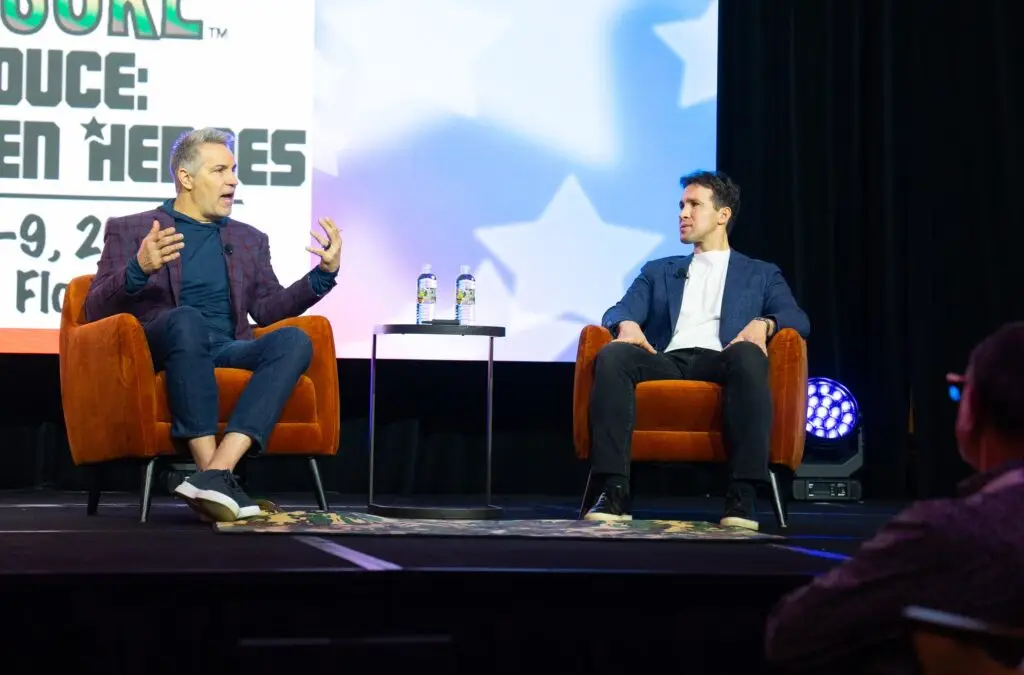

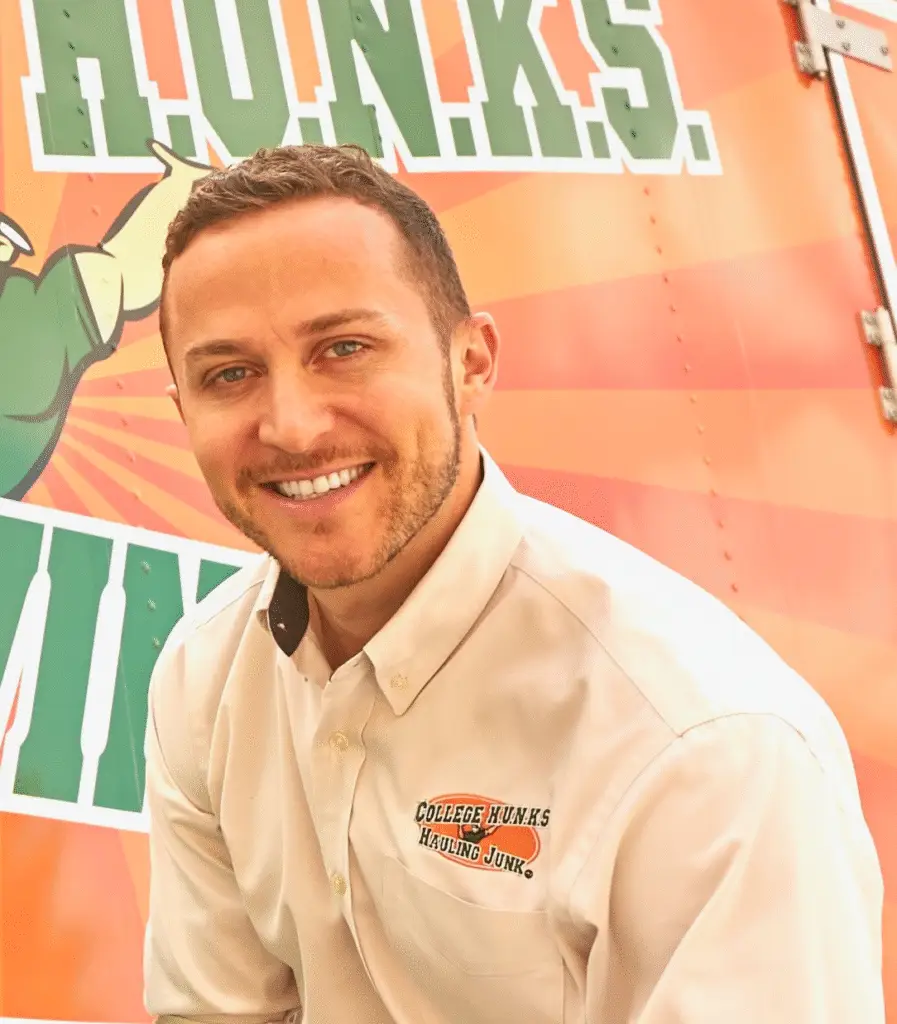
I recently went one-on-one with Nick Friedman, co-founder of College HUNKS Hauling Junk & Moving.
Adam: How did the idea for your business come together, and how did you actualize it?
Nick: Yeah, I would say most kids don’t grow up saying, I want to own a moving company or be a junk hauling business owner when I grow up, and I was no exception. I knew I needed a job after college, and in between summers before going back to school. It was actually the summer before our senior year of college. We were home for summer vacation. My best friend from high school, his mom, had a beat-up cargo van, and she let us borrow it to go clean out people’s garages, basements, and attics. She said, you guys could be College Hunks Who Haul Junk. We thought that was just a catchy way to make the phone ring. I think it was the first time anybody called me a hunk, so I thought that was pretty cool. I realized very quickly people had a need for the service, they thought the name was catchy, and we went back to school. Our senior year, we ended up writing a business plan which won an entrepreneurship competition, gave us a little more confidence in the idea, and then we got regular jobs briefly after college, and decided, you know what, let’s make this a full year-round venture. Most college kids would quit that and go do something in the real world, but I call it a 20-year overnight success. As you described, we’ve got almost 200 franchise locations now, and when it started, it was just my buddy and I in a beat-up cargo van.
Adam: When was the moment that you knew this was real?
Nick: I would say there’s been multiple micro moments along the way. The very first phone call we got, where people saw the flyer, and they were like, is this the College Hunks? We had to pause for a second and be like, oh, yes, yes, yes, it is. What can we do for you? That was the first light bulb moment for me. Another moment is, we always thought we’d be a bigger company than just two guys driving around town, so we went and bought a 1-800 number and put it on the back of the truck to make ourselves look bigger. It was still routed to our cell phone. People would call the 800 number to complain about driving, and I’d be in the driver’s seat apologizing, saying, we’ll fire those guys when we get back to the office. We probably fired ourselves three or four times that first summer. We realized we needed to create systems and processes. Getting our first office, hiring our first employee, selling our first franchise, buying our first building, all of those were momentous milestones where it’s like, wow, this thing really might work. What’s the next hill to climb? Our first franchise conference, where we had like five or six people there. Fast forward to this past year, we celebrated our 20th anniversary. We had over 500 attendees. We actually had Ludacris come and perform a private concert. Our mutual friend Darrell Moody was the MC for the whole three-day event. It’s been a multitude of milestones along the way where I’ve had to pinch myself and remind myself that this is happening, and it’s real.
I think this mantra has kind of become cliche in entrepreneurial circles, but when we read this book that a mentor recommended called The E Myth Revisited by a guy named Michael Gerber, there was a message in that book that talked about working on the business, not in the business, and creating systems and processes so that you can remove yourself from the day to day and elevate yourself to a larger position in the business so that it can grow. When we read that book, it was another light bulb moment where we said, hey, if we’re going to have another truck, let alone another location, we’ve got to start documenting how we do things, how we drive the truck, answer the phone, move the furniture, greet the clients, wear the uniform, so on and so forth. I think what happens to a lot of people when they get into business for themselves, they end up working for themselves, and they become almost a slave to the business, and they can’t remove themselves from the trees and see above the forest. So evolving that mindset early on, that doesn’t mean that you’re not going to have to, in our case, jump on the truck or lift the other end of the sofa in the early days, but it does mean that you have this mindset of scale. I think scale starts with systems, and then it also evolves into people. Having a framework and a foundation of systems, and being able to attract and develop good people, are the two key recipes to activate and actualize a long-term vision, which is something else that I think is critical to have early on, from day one. Similar to, like I said, we bought a 1-800 number even though we only had one truck, because we always imagined and envisioned that we were going to become a national brand.
Adam: What is the right mix between working in your business and working on your business?
Nick: Yeah, I think at the beginning you’re in it. There’s no other way around it. I think you have to be in it from day one, because the physical, tactical stuff has to get done, whether it’s writing that blog post or, in our case, driving the truck, answering the phone, or lifting a piece of furniture. But I think the concept of on the business is the big picture thinking, long-term vision, medium-term strategy, identifying and developing people, improving yourself, working on yourself, and improving the skills, whether it’s listening to leadership interviews or reading books, and kind of mapping out a plan to ultimately execute against. I don’t think that I’ve ever sat down and said, I got to spend 20% on and 80% in. It’s been this ebb and flow. But certainly in the early days, we were burning ourselves out because we were doing everything, driving the trucks, answering the phone, hauling the junk, even though we had this lofty ambition of growing, but we didn’t take time to say, what are things that we can do to work on creating systems and checklists, creating a roadmap for the next year, for the next quarter, for the next month, looking at the forest, as opposed to just running through the trees. It is difficult to pull yourself out of it because you wake up and there’s a missed phone call, or there’s a fire that has to get put out, and you’re sucked back into it pretty regularly. But having the discipline, whether it’s early in the morning, late night reflection, or end of week planning for the following week, those are opportunities that you can take a clarity break and say, what are some things, some building blocks or foundational pieces, that I can work on, whether it’s working on myself, working on my people, working on my plan. Of course, there’s still going to have to be stuff that gets done to keep the lights on. But I think for any business owner, leader, team member within the organization, in order to add true value and not feel like you’re just a hamster running on the wheel, you’ve got to be able to think about how to build the wheel bigger, or how to bring other people into the organization and beyond. I’ll say it’s more of an art than a science, at least it has been in my experience, but even having that mindset to think and reflect is important. Another good exercise is to spend a week journaling on where you’re spending your time. There’s a book by Dan Martell, it’s called Buy Back Your Time, and he recommends spending a week doing an audit of your time and seeing how much of it is spent on low-value, low-impact activities that you could potentially outsource or delegate, or hire for, so that you can elevate yourself to high-impact, high-value activities. That’s probably a great first step, a time and activity audit to see where your energy and effort is getting focused, and then ask yourself, what are the things that I can do that are going to really move the business forward from a value-added standpoint? A lot of times, those are on the business-type actions, whether it’s sales strategy, people development, marketing game plan, and so on, that have to get mapped out. One other analogy I would use, if you think about on the business, is like a sports analogy, it’s the offseason, or it’s the practices, or player development and training and coaching that takes place between the games. In the business is when you’re actually in the game, playing the sport itself. Obviously, we don’t have the luxury in business of true off-seasons, but disciplining yourself to carve out that time to create a game plan, create a big picture, continue to improve yourself, improve the tools and techniques that you can apply in the day-to-day, is a good way to look at it.
I think I saw a statistic, Steph Curry has practiced 500 shots a day since he was in middle school, right? So that’s millions and millions and millions of shots to be able to take tens of thousands of shots in an actual NBA game. So his ratio of practiced shots to actual game shots is massive, massively significant. To your point, if you’re always just playing, it’s very difficult to get better, or to hone your craft, or to hone your strategy, or your team’s strategy, or your business strategy, because you’re stuck in the whirlwind of the day-to-day.
Adam: What mistakes did you learn from most?
Nick: For me, some of the earliest mistakes were hiring the wrong people. I didn’t know anything about hiring. It wasn’t something I learned in college. It was something that I hadn’t really read about in books yet. When we realized we needed other people to drive the truck or lift the end of the furniture, we didn’t have a system or process for doing that. We just hired a warm body, somebody who looked strong, somebody who said they could drive a truck and had a driver’s license, and we very quickly realized that’s a recipe for things to go sideways. Creating a scorecard was really the best solution I learned there. For every position on the organizational chart, even if I’m the one filling those positions because we don’t have people for them yet, having a very defined mission and accountability of what that role does, how that role can be measured, and not just the skills and capabilities, but also the soft skills. We developed a set of core values that we use as our litmus test for who we want to align with and bring into our organization. Having not just the technical skills, but also the core value fit, was critical. Once we made that shift, the interview process became a lot easier because we could look at people’s past experience and ask questions that unearthed their value system to see if they were aligned with ours. We could bring in people who were capable of learning the skills if they didn’t already have them, but they also had a can-do, get her done mindset that was leadership-focused and service-focused. That’s been our secret sauce once we figured out that flip.
Adam: What are those values? And what questions did you ask to uncover those values?
Nick: We have four core values in our organization. I think it’s somewhat cliché to say, hey, we’re a values-based organization, but I’m a firm believer. You read any iconic business book, whether it’s Good to Great, or even The E Myth that I referenced earlier, they talk about it’s not what’s on the walls, meaning it’s not just a set of nice sounding core values on the wall, but it’s what’s in the halls. It’s the people that embody and align with the behaviors that support those core values. So our four are: building leaders, always branding, listen, fulfill, delight, and then fun, create a fun, safe, winning team. Those are our four. We think of them like the wheels on a vehicle. If they’re all moving in the same unison, it keeps us on the road, keeps us from driving off the cliff, and helps us get to where we’re going. The questions we’ll ask, as it relates to leadership, are, tell me about a time where you had to exhibit leadership, or tell me about a time where you got better as a leader, and what were some lessons you learned along the way? We’re looking to see if somebody understands accountability, wants to be held accountable, wants to hold others accountable, believes in self-improvement, and has a growth mindset. Those align with building leaders. For a fun, safe, winning team, we’ll ask, what does a winning team mean to you? What does winning mean to you? What does a fun team mean to you? What is safety? Give us some examples where that has shown up, whether in your collegiate life, your high school experience, on a sports team, or in prior work. For listen, fulfill, and delight, we look for experience in customer service, but also, tell me about a time where you went above and beyond for a team member or for a client. We look for very specific examples, not hypotheticals, because anybody can BS their way through an interview. We don’t know if the person is making up the story, but you can usually tell, even via Zoom or in person, if the person is being authentic about what they’re pulling. If they’re struggling to come up with examples, or struggling to come up with why this value resonates, or it feels like they’re trying to BS it, then they may not be a value fit.
A lot of the things that we’re talking about, a lot of this was aspirational to us in the early days. None of this happened overnight. It was stuff that we learned through books, attending conferences, talking to mentors, and we became very intentional about injecting these frameworks of core values and culture into our business. Over time, it evolved and manifested. Repetition is the mother of learning. We have to reinforce these ideas constantly in our organization. We say training is something we do, not something we did. We do a daily huddle at our corporate office, and we have our franchise owners do a daily huddle every day in their locations. Part of the daily huddle agenda, it’s a quick five-minute stand-up huddle, we include a core value story review. We ask team members to share an example of how one of the core values was lived in the past week, either through themselves or through observing it in one of their team members. If you spotlight specific examples of how those core values are being lived, it becomes part of the DNA. You hear this concept of company culture. Some people conflate that with ping pong tables, beanbag chairs, or great snacks in the break room, but the values are what ultimately create the culture. We say culture creates behavior, or drives the behavior, and the behavior drives the results of the organization. Getting that foundational element of values, culture, and purpose in place circles back to working on the business, not in it. If you’re just in the business running the motions and trying to put points on the board, but not paying attention to foundational elements, or even defining them early on, it becomes difficult to create a DNA. Now we’ve got multiple locations, franchise owners, and team members all over the country, how do we ensure a consistent client experience and a consistent employee experience? It’s through those foundational elements. This all stems from your question about early mistakes. The early mistake was not having any of this, just hiring somebody that could do the work, not knowing whether that person was going to be effective at delivering a good service, executing the game plan, or whether that person had skills or behaviors relevant to what we were trying to create. Defining those behaviors through a scorecard and values is what allowed us to attract good people, not just to execute the systems we were creating, but to develop even better systems for the business to grow over time.
Adam: What are the keys to scaling people and to scaling systems?
Nick: We say, if you’re not training, you’re not gaining, and coaching takes place in the locker room and on the field. Training is not something we did, it’s something we do. Training systems had to be developed. Initially, I would hand somebody a clipboard and the keys and be like, hey, here are the jobs for the day. I’d be surprised when they came back at the end of the day, and labor cost was 150%, and two jobs didn’t get completed because the customer thought we were too expensive, and we didn’t have rebuttals to overcome the objection. I was like, okay, we’re missing something. We were missing training. We were missing systems, how to teach a new hire how to perform the work in the field, how to teach somebody how to answer the phone, and convert a sale on the phone. The simple way we started was with checklists. Somebody made the point, every airline pilot, when they get on a plane, they don’t just haphazardly fly the plane. They go through their safety checklist, their pre-flight checklist, and their landing checklist. So I started creating checklists for how we were doing things, and that became the initial steps to create people that could then develop and evolve those systems as well. Accountability is a critical piece of scaling people and scaling leadership. On a good team, the coaches hold the players accountable. On a great team, the players hold each other accountable. We wanted to create an environment where people wanted to get better and improve. We had a lofty vision of where we were trying to take the business, so we said from day one, you may be a fit for where the business is today, but the business is going to be going like this. That’s what we’re committing to. So if you’re not growing yourself to keep up with the business, the business may outgrow you, or there may be a great role for you in one area of the business, but the reality is we’re going to have to hire above you at some point. We try to be clear and transparent about that. Some people make the mistake of hiring people and promoting them past their point of competency because they’re not intentional about matching capability and capacity with continuously improving skills and recognizing when somebody hits a ceiling. You don’t promote them past the ceiling into a role that was too big for them, and then have an awkward conversation about demoting them or moving them out of the business. If you want to grow and you’ve got a lofty long-term vision, it comes down to reverse engineering to the present day, the steps you take, and the people you need to attract to move that vision forward.
You can tell I’m big on analogies, especially sports team analogies, but one of the things I tell our team members is, building leaders is our core value, but that doesn’t mean everybody moves up. That doesn’t mean everybody gets a promotion. Building leaders means becoming your best self and maximizing your capabilities as a leader. For somebody to move from the minor leagues to the major leagues, two things have to exist. Number one, they’ve got to be the best of the best of the best in the minor leagues. They can’t be average, mediocre, or even slightly above average. They’ve got to be the best. Number two, there’s got to be an opening on the major league roster. Even then, somebody moving up may not make it because it didn’t translate, and now they’re surrounded by a much higher level of complexity and a faster speed of the game. We try to set those expectations up front. I believe in meritocracy. I believe the warm and fuzzy values don’t work unless they’re accompanied by performance-based, results-based accountability and toughness. Setting expectations up front when we’re hiring people, reinforcing them through performance reviews or conversations, having direct and candid conversations, sometimes difficult, is important. People come into an organization with big ambitions; they want to move up, and sometimes their ego gets involved. Sometimes, us as the founders or our leaders have to be disciplined about whether somebody is going to be a fit and move up in specific roles. Talent optimization, acquisition, development, retention, all of that comes into play as you’re thinking about building a bigger organization or a bigger, more impactful team.
Adam: Something that jumped out at me: the importance of, as a leader, making sure that you are clearly communicating the metrics that matter. What is success? What does success mean? What is the definition of success? It is really hard to be successful if you don’t know what success is. It’s a lot easier to be successful when you have a definition of success. A big part of it is defining success. I talk a lot about the importance of leading with love. You can’t be a great leader if you don’t fundamentally love people. That’s a big part of it, but the other part of it is leading with accountability. On the one hand, leaders need to lead with love. On the other hand, leaders need to lead with accountability. Not only are they not conflicting concepts, but they go hand in hand. Because if you really love people, and you love the people who you lead, you want them to be their best selves. You want them to be the best that they can be, and the only way that they’re going to be the best versions of themselves is by you, as a leader,r doing what you can do to help them get to that place. And a big part of that is keeping them accountable.
Nick: So much of what you just said brings up a lot of resonance from the evolution of our business. We used to read these books about core values and go to conferences, and we had warm and fuzzy value statements. The minute we started trying to hold people accountable to performance, we got pushback. People were like, wait, that’s not nice, or that’s not in line with our values. I was like, oh God, we made a mistake here. My business partner coined this term, he said, we had too much Sesame Street, not enough Wall Street. He said, you have to have the right balance of Sesame Street and Wall Street. If it’s all Wall Street, there’s no loyalty, there’s no passion, people are stabbing each other in the back, stepping over each other, or quitting the minute things get difficult. If it’s too much Sesame Street, you got a daycare where people want to be coddled. We say warm on people, cold on numbers. To your point, accountability is about helping people become their very best. A good leader holds their players accountable. A great team holds each other accountable. A good team member wants to be held accountable because they want to get better. The only way you can be held accountable is to understand what you’re being measured against. In our business, we measure people living the values. You mentioned the word love. We actually made that into an acronym that says, live our values every day. We LIVE every single day by living our values every single day. Those are harder to measure because they’re qualitative, but the quantitative metrics keep the lights on. We have another saying: without margin, there’s no mission. The business has to exist in order for us to make the impact in our communities and our team members’ lives, and to create viable franchise opportunities for our franchise owners to provide for their families and make an impact in their communities. You measure what matters. Another mistake early on is we didn’t have anybody who really understood numbers and could help us create a scoreboard. You hear, what gets measured gets managed. We brought in a controller four or five years into the organization, a little too late. His name is Roman. I called him Roman numerals when he first joined because he was such a numbers guy. When he started creating dashboards where I could see, on a daily basis, how we were doing with customer service, labor cost, fuel cost, disposal costs, revenue per job, conversion percentage on our sales, it was almost like we had been driving with a muddy windshield, and all of a sudden the windshield was clear. The speedometers and gas gauges that weren’t working before were now working. We could see red, yellow, and green, how things were doing. That allowed us to make more nimble, decisive decisions in real time. It allowed us to hold people accountable to the numbers and to stack rank. There’s a reason video game companies are so addictive and make billions and billions of dollars. It’s because there’s increasing levels of complexity, there’s a scoreboard, you can see how you’re performing versus your peers or versus your prior performance. People want to feel like they’re part of a game. We brought that concept into our organization to gamify it a little bit. For each role, there might be a slightly different scorecard. For each position, something gets measured slightly differently, but there’s also the company scorecard as a whole that you want everybody to know, how you’re doing. I was sometimes shy in the early days, like, I don’t want everybody to know how much money I’m making, or how much money the company’s making, and be resentful, but it’s like, no, the business has to make money in order to exist, to reinvest, to provide a better job opportunity, and a more vibrant solution for our clients. I got away from being self-conscious about that and recognized the business has to make money in order to make the impact it’s going to make. Being able to measure that and hold people accountable to the scorecard for each role was a key ingredient in developing people that wanted to win, wanted to keep putting points on the board, and help move the company forward.
We actually had a poster we put up in all of our franchise locations. I don’t know if we still do this, but we should if we don’t. It had a picture of a $1 bill, and it showed the $1 bill sliced into multiple pieces. It was like, 30 cents goes to labor, 10 cents goes to disposal costs for junk removal, five cents goes to fuel, five cents goes to insurance, 10 to 15 to 20% goes to marketing. All of a sudden, this dollar gets shaved down to a dime, or a dime and a nickel in some cases. We help people understand that dimes and nickels aren’t just going into Nick’s pocket. That dime and nickel is going to be reinvested into the business, new marketing initiatives, another truck, another location, a new franchise, perhaps a bonus for the team across the board. It also goes into building leaders and helps people think like a business owner. Not everybody thinks like that when they join an organization. They might look at it as punch in, punch out, but let’s get them to think strategically and understand how decisions they make impact whether that dime turns into a quarter on a margin perspective.
Adam: What advice do you have on the topic of franchising?
Nick: We got into franchising a little bit prematurely. We had a glamorized, almost naive view of what it actually was. We read about it in a book. I knew McDonald’s was a franchise. It seemed like an interesting way to make a royalty, but I didn’t really know what a royalty meant. It sounded like passive income, but there was nothing passive about it. What I don’t think I realized when we got on the franchising path was that you really need at least 50 to 100 franchisees, franchise locations, for that small royalty stream to be self-sustaining and cover the overhead necessary to support, operate, coach, and provide tools for those franchisees to be successful. The early days of franchising were very challenging because we were funding it with our one location, getting that business model set up, selling franchises, and supporting them. We were learning a lot on the fly, building the plane in flight. A lot of times, when people say, hey, I’ve got this great small business, I want to franchise it, I want to do what you did, I spend maybe the first five to 10 minutes not talking them out of it, but asking questions to make sure they understand alternatives. Have you opened up a second location yet, which is something I wish we had done before franchising. Could you set up multiple locations with a manager who gets an equity incentive or performance incentive, rather than becoming a franchisor and having to sell 50 to 100 franchise locations? It’s easy for me to say that now, on the other side of that canyon, but that’s probably the lesson I learned along the way.
Adam: What framework would you give to anyone who’s thinking about potentially franchising?
Nick: Systems. Systems. It’s got to be a business in a box. It’s got to be a business in a box where you can teach and train somebody on how to operate the business that you’ve built and made successful. You have to make sure there are no anomalies about the market that you’re in. You’ve got to understand most franchisees are not going to have the same drive or founder mode mentality that you have. You have to assume they’re going to be a little less gritty or resourceful than you were in the early days. That’s why I say it’s ideal to have at least a second location to prove it can be done in multiple sites before you sell somebody a franchise operation. You have to teach and train them, but know you’re not just handing them a playbook and they’re going to run it. You need resources internally to help provide steps along the way, because if a franchisee is unsuccessful, they may blame you, the franchisor. Even though you provided tools, their expectation was they were going to be successful. Sometimes, when they are very successful, they may resent you because they’re paying royalties and they feel like you’re not providing enough services to justify those royalties. You have to have the mindset of, I’m going to provide the tools, I’m going to give people the path and playbook to success. I’m not going to make them successful. They’ve got to drive the Ferrari, which is the business model you’re packaging up and providing to them. If you’ve got a successful small business and you’ve contemplated franchising, do some homework. Join the International Franchise Association. Go to conferences they host. Franchise.org is their site; there’s a lot of great resources. We dove headfirst into that. There are a lot of emerging and new franchise resources as well. You’ve also got to think you need, nowadays, half a million to a million dollars to invest in the infrastructure to sell and support franchises effectively as you’re building out that network. A lot of people think, oh, I can just do it, I’ve got a profitable business. But if you start pulling money out of your business and now you’re not paying yourself, it can be a recipe for a doom loop.
I say it boils down to the four F’s: fit, family, financial, and fun. Fit, do they have any transferable skill set that can be applied to this business? They don’t have to have run a moving, hauling, or even a service business, but do they have skills, leadership, coaching that they could bring into this business model? Family, meaning, does their spouse, significant other, friends, neighbors, mentors, and advisors support them in this venture? Because if they’re telling the person, don’t do it, and then they do it anyway, the moment things get tough, and they’re saying, I told you not to do it, you’re not going to have somebody in your corner championing you to keep going and be gritty and resourceful. Financially, do they have realistic financial goals relative to how much they’re going to invest and how much they need to make to pull out of the business? And then the fun factor, or fulfillment factor, are they going to enjoy doing this business? Are they going to be fulfilled? Do they align with what our core values represent? In our business, if a franchise owner views our employee challenges as a burden and not a blessing, you’re not going to stick with it. We have turnover. We have guys who show up late. We have guys who sometimes come in with a chip on their shoulder, and they have to be softened, molded, developed, and mentored to provide a great service and be a reliable, trustworthy employee. That’s a blessing in my book because it aligns with our building leaders’ opportunity. It allows us to mentor and develop future leaders that come in unrefined and leave with a skill set they didn’t have. But if a franchise owner views that as a headache, or blames the next generation as lazy and dismisses it, they’re going to have excuses for why their business didn’t get off the ground.
Adam: What do you believe are the keys to successful leadership? How can anyone become a better leader?
Nick: First, if you’re not learning, you’re not a leader. Learning and leadership go hand in hand. I always tell the joke, but it’s relevant. I asked my wife a year or two ago, I said, hey, what do you think I’m really good at? Out of the blue, to see what she would say. She said, you’re really good at trying to get better. I laughed at first, and I was like, so are you saying I suck, I just suck less than I did last year or last week? But I do believe if you’re not working on yourself, it’s very difficult to be a leader that helps other people work on themselves and get better. This building leaders philosophy is part of being a great leader. Leadership is recognizing potential in another human and having the courage to help develop that potential. It starts with yourself, and it translates into inspiring and developing other people. And it goes without saying, a leader inspires, doesn’t just direct. There are times for giving direction and orders and instructions, but being able to inspire, motivate, and encourage team members to want to do something they didn’t think they were capable of doing, or didn’t think they wanted to do, is a key piece of leadership. So those three things, being a self-starter, learner, growth mindset, helping others, identifying potential, and lighting the path for those individuals.
I think in frameworks and metaphors. You used to hear the who, what, when, where, why, and how. I think of it as why, where, when, who, what, and how. Why do we exist? What’s our company’s purpose? At College Hunks, we say our purpose is to move the world. It’s got a double meaning. Yes, we move people’s stuff, but we want to make a positive impact in people’s lives. We do that through this move the world mantra. That’s why we exist. That’s why we get out of bed. Where are we going, light a compelling vision of where we’re going as an organization. Ten years ago, we set out our vision to become an iconic brand with trucks throughout the country that’s recognized and celebrated for its service and culture. That’s the where. By when is, when are you going to achieve it? Then the who is the core values, who we’re going to bring into the organization, the behaviors we align with and value. Then the what and the how is the tactical, technical stuff of the business. Simon Sinek had his book Start with Why, so I believe you start with the why, the company purpose, and then the how and the what is at the very end, the technical, tactical stuff. It still has to get done, the blocking and tackling. To light the path, we set that vision of why we exist, where we’re going, who are the types of people we want to go there with. That inspires and galvanizes people to want to be part of that journey, part of that destination, and part of creating it. Then the what and how is, how do we load the truck, how do we answer the phone, how do we train team members. I’ve been saying those elements for over 15 years, ever since we came up with our company purpose, vision, and values. I try to reinforce it so it stays the framework and north star we’re all a part of. That inspires and attracts great franchise owners and team members, empowers team members to become better, to help colleagues become better, and those things create a compound effect that’s allowed the business to become what it is today.
Adam: I love it. I bring in guest speakers to my UCLA class, and one speaker said it best when he paraphrased Viktor Frankl, author of Man’s Search for Meaning: If you know the why, the how is easy.
Nick: That’s great. That’s powerful. I agree wholeheartedly. A lot of this stuff gets neglected, especially when you’re starting a business. You get into it thinking, hey, I’m going to make money, I’m going to do this to feed my family, have success, buy a house or a car. Maybe those surface-level motivations are there at the start. But when you realize, why am I really doing this, what’s motivating me to get out of bed every day, in my case to haul junk, and eventually to keep building the system and building the people around it, it’s got to be more than that. You can’t control a lot of outside factors. There are macro headwinds that make things harder and slower than you thought. You’ve got to have something beyond just making money or ego-driven outcomes. I agree on lifelong learning. I’ve heard it said, if you’re not growing, you’re dying. Another way is, if you’re not getting better, you’re getting worse. I heard Nick Saban give a talk once, they asked him, why do you keep fighting for another championship, this was before he retired. He said, complacency leads to bad decisions. Bad decisions lead to bad outcomes. I’m not a fan of bad outcomes. When I first started the business, I was like, I just want to get it to some place, then I’ll put my feet up and ride into the sunset. I read The 4 Hour Work Week, and I was like, that sounds awesome. But I don’t think that’s the reality. As I’ve gotten older and seen people who’ve created long term impact and long term success, that’s what I’ve become more passionate about, potential maximization in myself, whether it’s founder, father, husband, leader, as well as my team, and the College Hunks brand as a platform, what it could ultimately achieve from a potential standpoint.
Adam: What are your best lessons and tips on branding?
Nick: We made always branding one of our core values, so it’s ingrained in our company DNA. I always say you can’t shy away from promoting yourself or your business, especially in the early days, because if you’re not going to be the one promoting it, who will? You’ve got to be proud about what you’re launching, what you’re doing, the solutions it provides, and be willing to go talk about it, not from a braggadocio standpoint, but from an awareness standpoint. When we got into our business, this was pre-social media, pre-mainstream podcast stuff. We parked our trucks in visible locations. We had our brand on them. We put signs out. We put door hangers out. We went to networking events. We tried to be as known as we could in the market we were in. Then we jumped on the opportunity to be on the very first episode of the very first season of Shark Tank. We didn’t even know what the show was going to be, or that the sharks would become celebrities, but we saw an ad in Entrepreneur Magazine saying they were looking for business owners to pitch an idea for a TV show. We applied and got selected for what became the first show. That put our brand into a national spotlight. I don’t think we’ve done a great job, I think we’ve done an okay job, of leveraging social media, but there are unlimited possibilities to put yourself out there and connect through LinkedIn, Facebook, or other platforms, and make yourself known for the solutions you provide. Branding, marketing, and sales are interconnected, and you shouldn’t have a stigma about sales. If you have a product or service that helps other people and solves an issue, you’re not selling, you’re helping them, as opposed to doing something to them. I also think there’s relevance to personal branding, because people do business with people, not just a business brand. To the extent you, as a founder or team member, bring your personal story and connect it to the brand you’re connected to, it’ll help you in the long run.
Adam: What is the biggest failure as an entrepreneur and as a leader, and what did you learn from it?
Nick: This is going to sound probably disingenuous, but I’m having trouble thinking of one major failure. We failed hundreds, if not thousands of times. We didn’t hit our goals, we made the wrong hire, we signed up with the wrong software vendor, we sold a franchise to the wrong individual who ended up creating an almost lawsuit situation trying to get the individual out of the system. Each one is a micro failure, and you’re learning from each of them. Maybe to some person, one of those would feel like a failure they couldn’t get over. Probably the biggest thing I would think of as a failure is chasing shiny objects over the years that have been a distraction from our core business. It’s easy as an entrepreneur to get compare itis, comparing yourself to other business owners or leaders, or to people you see on social media. That distraction caused me to chase shiny objects that mostly didn’t go anywhere, and it was a step backwards for our core business. If I had put that compound effort and focus into the core business, it would have moved forward more aggressively. Long-winded way of saying, we’ve failed more times than I can account for. People that set aggressive goals, have high ambition, and are trying to do amazing things are going to fail more than people with mediocre goals, because you’re setting the bar so high. Those mistakes and micro failures are stepping stones and lessons toward the goal. But the distraction and lack of focus is probably one I would have reined in more along the way, as a result of comparing myself or comparing my business to other people.
Adam: How do you fail forward?
Nick: There’s a piece of not getting emotional when things are challenging, when we make a mistake, or a team member makes a mistake. Not having that knee-jerk reaction, not having the sky-is-falling mentality. It’s the resilience muscle, persistence muscle, grit muscle, these intangible muscles that are critical in entrepreneurship. I think back to my basketball days. I was never the most talented basketball player, but what got me on the court was diving for the loose ball, taking the charge, fighting for the rebound. That grittiness of hustle and hard work has carried through entrepreneurship. If there’s a failure or setback, or things are taking longer than we thought, we stay urgent in our effort, but we try to stay calm and maybe stoic in how we handle it. Easier said than done. Also, surrounding myself with peers. I was part of the Young Entrepreneur Council. I’m still part of YPO, Young Presidents’ Organization. Having a peer group, not feeling like I’m on an island when things get challenging, being able to confide in other people who’ve gone through something similar, mentors and peers, that has been extremely valuable and has allowed me to weather the ups and downs of the roller coaster of entrepreneurship.
Adam: Is there anything else you would like to share?
Nick: Man, you hit on a lot, and you do a great job to really unlock some of these things. Anybody who made it through this, I appreciate it. Keep doing what you’re doing, and give yourself grace along the way. Life’s too short not to have fun on the journey.