

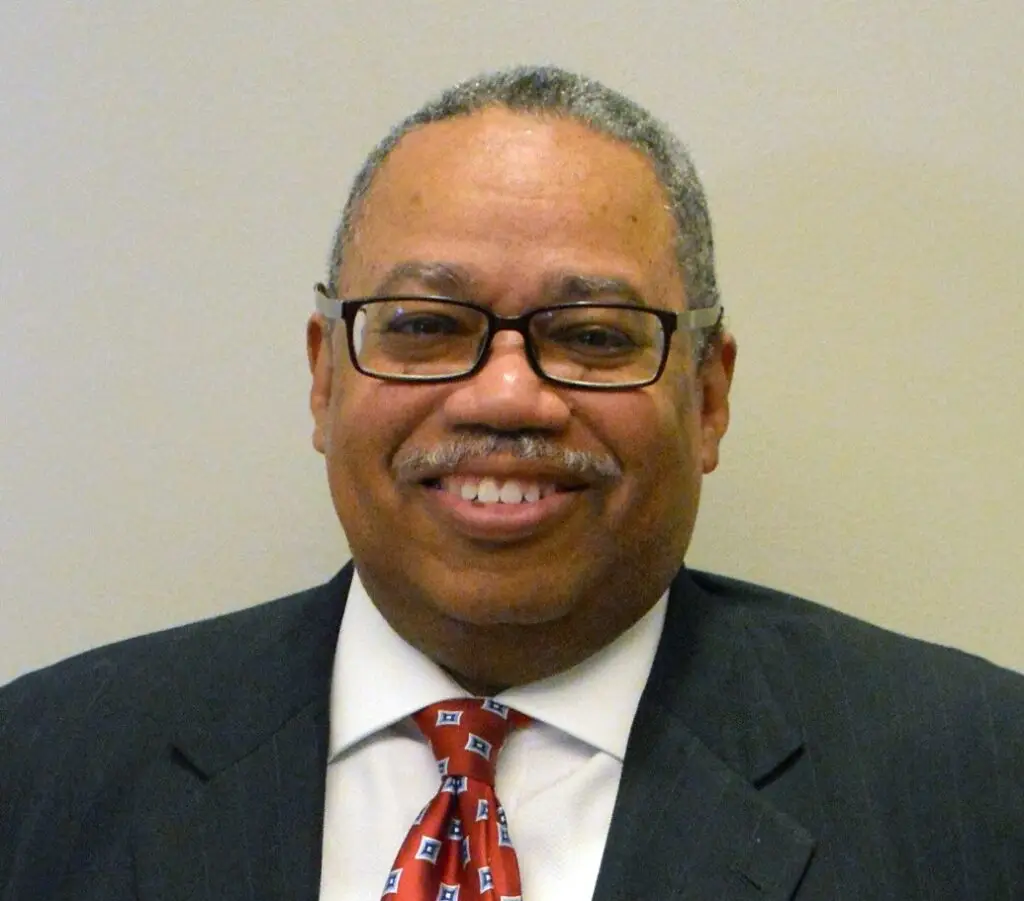
I recently went one-on-one with Dorval R. Carter Jr., CEO of Saint Anthony Hospital and former President of the Chicago Transit Authority.
Adam: Thanks again for taking the time to share your advice. First things first, though, I am sure readers would love to learn more about you. How did you get here?
Dorval: I’ve had a somewhat unusual path to end up as President and CEO of a hospital. My background was in a totally different profession. Previously, I came from the transportation industry, and I worked in the public sector my entire career. I was the head of the Chicago Transit Authority (CTA). Prior to that, I was a political appointee in the Obama administration, where I worked at the U.S. Department of Transportation, and I held several positions, the last of which was Chief of Staff to the Secretary of Transportation.
One of the things that I’ve always been very active in is policy and politics around infrastructure. It’s allowed me to have an impact on underserved communities and engage in projects that have made a difference in those areas over the course of my career.
Taking a job at Saint Anthony Hospital has highlighted a lesser-known part of my life. While the public has always associated me with transportation, my personal life has been very much tied to healthcare. Both of my parents were in healthcare. My dad was a doctor and worked at the hospital that I’m the CEO at many years ago. My family operated a nursing home facility on the West Side of Chicago, and I grew up working in the family business. I did everything from scrubbing floors to changing bed pans to administrative work, and only left the business when I went to law school.
What many didn’t realize is that over the last 20 years, I’ve been on this hospital’s board and became vice chair and ultimately, chairman of the board. One day, the CEO at the time informed the board that he was ready to step down and retire, and as I was reaching the end of my time at the CTA, I was approached about interviewing to become the next CEO of the hospital.
When I reflected on the idea of coming to work at Saint Anthony, I saw a lot of the same things that I’ve dealt with as the head of the CTA, which is an opportunity to work with an institution that has a significant impact on an underserved community and an ability to address those needs and help support the people we serve.
Adam: What experiences, failures, setbacks, or challenges have been most instrumental to your growth?
Dorval: Over the course of my career, I’ve made many mistakes, but from a leadership perspective, what I’ve always tried to do is embrace that as an opportunity to better understand and grow, as opposed to being resistant and trying to fight.
Some mistakes I made came in the way I interacted with politicians and my boards, some from the way that I would engage my senior management team. But through that process, you start to develop a management style that makes you appreciate the diversity of opinion and allows you to create an environment where you can encourage those opinions to be expressed.
I have watched over the course of my career many people who felt that they knew the answers to everything and surrounded themselves with people who would only agree with the things that they said…and I’ve watched many of those people crash and burn as a result. My management style has very much been about inclusion in that I think it’s helpful to have people around you who are not afraid to challenge you and your decisions.
That requires, from a leadership standpoint, a certain level of confidence in your abilities to allow yourself to be challenged and not feel threatened. It took me a while to get there because until you’re in a position where you have that kind of power, it’s really hard to embrace that.
As I was coming up in my career and moving into higher-level positions, I was the one doing the challenging, and I was the one who had to react to whatever my boss was or wasn’t saying in response to that. When I finally reached a level where I started to have that kind of power, I went out of my way to make sure that I established a culture where debate was appropriate, and my team can come to me with their concerns and allow me to hear and understand them. At the end of the day, I still may not agree with you, and it’s my responsibility to make that final decision, but at least I will feel that I’ve had adequate input to make the decision that I feel most comfortable with.
Adam: Who are the best leaders you have been around and what have you learned from them?
Dorval: I don’t know anybody who has had a significant amount of success to not have mentors. There are many who I learned from and took both the good and tossed away the bad.
It started with the general attorney who hired me out of law school, Joyce Hughes, a political appointee and the General Counsel of the Chicago Transit Authority. Joyce was hired under former Chicago Mayor Harold Washington, and this was at the point of the Council Wars, a political battle that was raging in Chicago under Washington’s term during that time. I came into those circumstances, and she took me under her umbrella of knowledge and taught me how to practice law in a political environment. She is the reason why I fell in love with public policy.
Subsequently, I’ve had a number of other mentors who have been just as influential in my development. William Farley, who was the General Counsel after Joyce Hughes, was the person who raised my confidence by giving me more responsibility and eventually the confidence to leave CTA and go work for the federal government.
When I went to the Federal Transit Administration (FTA), another one of my mentors took me under his wing and helped me learn politics at the national level, and that was Gordon Linton, who was the Administrator of the FTA at that time. He selected me over more experienced attorneys to run his legislative and regulatory department. That exposed me to a level of politics that was above and beyond anything I had ever experienced before, and that certainly added to my portfolio of knowledge.
When I came back to the CTA, Frank Kruesi, who was then president of the organization, influenced me to take my first position in a non-attorney role. He convinced me to take the leap from doing something I’ve spent my whole career doing and go into a management position. It also made me realize that the skills that I had were much broader than what I could use at this practicing law. Frank gave me that opportunity and shared with me his insights, politically and otherwise, that really led me on the path to eventually becoming the head of CTA.
After that, I was recruited to go back to the FTA by Robert Rivkin, who was the General Counsel of the U.S. Department of Transportation. Robert gave me the opportunity to take another step in my career as a political appointee, where I was not only leading the legal function of a federal governmental agency, but I was one of the leaders of the entire industry itself.
That elevated my leadership skills to a different level, particularly on the communication side, because you had to learn how to communicate on a much broader scale. Robert Rivkin was the reason that happened.
Finally, the other mentors of mine have been the mayors of Chicago. I’ve had the opportunity to work with every Chicago Mayor, from Richard M. Daley to Rahm Emanual who recruited me to become the President of CTA, to the current mayor, Brandon Johnson. I’ve had the ability to watch them, observe them, learn from them, and be a part of their success in the work that we have done.
Adam: In your experience, what are the similarities and the differences between leading in the public and private sectors?
Dorval: I haven’t been in the private sector that long compared to my experience in the public sector, but there’s certainly noticeable differences. The level of interest at the public level versus the private level being a big one. There isn’t the same level of scrutiny over every decision I make at the private level that I dealt with at the public level. I also have a smaller group of stakeholders that I answer to than I did at the public level.
When I was at CTA, I felt I always had to be the face of the organization. I don’t feel that same level of expectation in the private sector. Specifically, for me, a hospital has the ability to have many public faces associated with it that are reflective of the programs or activities the hospital is engaging in.
Overall, I think the most interesting thing that I’ve experienced is when you leave an organization the size of the CTA, which has over 10,000 employees, and go to a much smaller institution, you have the ability to see the employees as a whole with one common understanding and goal, and driving that mission forward is a much easier leadership challenge than what you have in a very big public organization.
In the public sector, your impacts are much bigger. The impact that I had on the Chicago population every single day was huge. The reach I have here is smaller, but it’s no less significant, particularly to the people that I’m impacting.
Adam: What is your best advice on building, leading, and managing teams?
Dorval: Hire the best people you can in the position you need them in and let them do what they do best. Don’t micromanage, treat them like professionals, and engage them professionally, and you will end up with very good results.
Adam: What do you believe about the defining qualities of an effective leader?
Dorval: You need to have a strong passion and drive for what you do. You have to be committed 100%, have empathy, and be a very good communicator. Leaders need to create an environment that maximizes the resources you have available to you.
You have to be willing to make mistakes, recognize those mistakes, own those mistakes, and learn from them.
Adam: How can leaders take their leadership skills to the next level?
Dorval: Get a mentor. Always take advantage of being a fly on the wall and observing – not just what’s happening, but what people are doing. Learn what leaders are doing and replicate what you like that fits you. I believe that leadership is a skill that needs to be developed over time and is learned from others.
My other advice is to take advantage of opportunities as they arise. The path for opportunities isn’t always a straight line and can be crooked. My career path is very unusual based on where I am today, but it has been anchored by the fact that when opportunities were afforded to me, I took them, and that involved taking a risk.
Adam: What are your three best tips applicable to entrepreneurs, executives, and civic leaders?
Dorval: Listen, engage, and be focused on accomplishing your goals.
Adam: What is the single best piece of advice you have ever received?
Dorval: I have received so much advice over my career. Maybe the best piece of advice is to recognize that when you’re in a leadership position, you cannot accomplish everything for everyone, and you need to be prepared to prioritize what you believe is most important with the amount of knowledge and time that you may have in that position.
The thing about these kind of positions is that they’re not on a 20-year term. You go into these roles with the understanding that your time will end one way or the other. Go in with a sense of urgency around what you want to accomplish and recognize that there are things you’re not going to get done, because there’s always more to do, and that never changes.