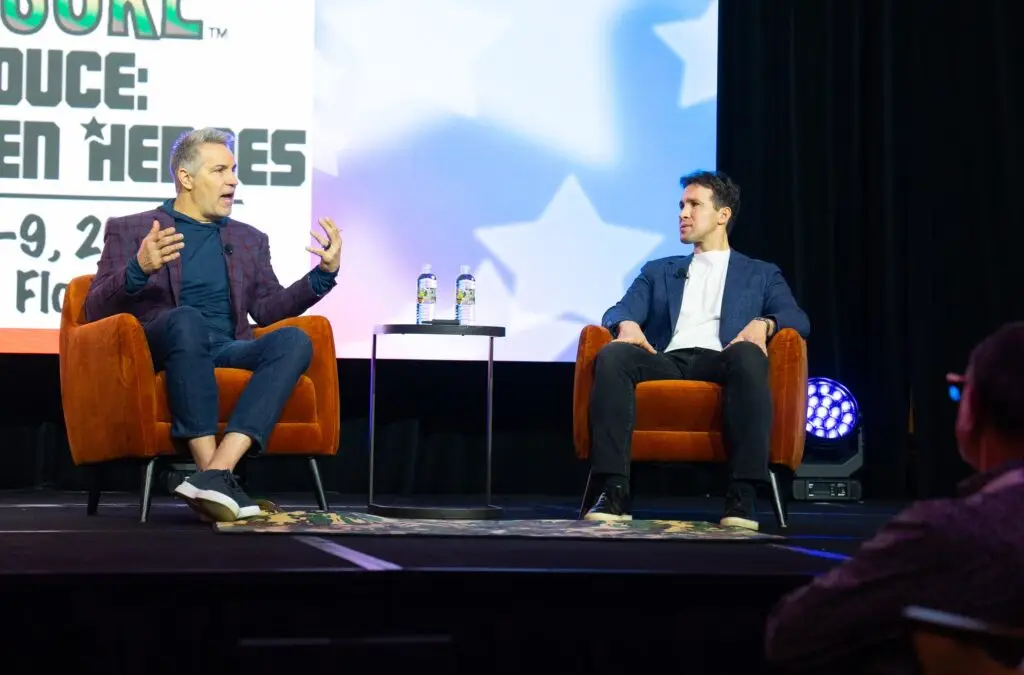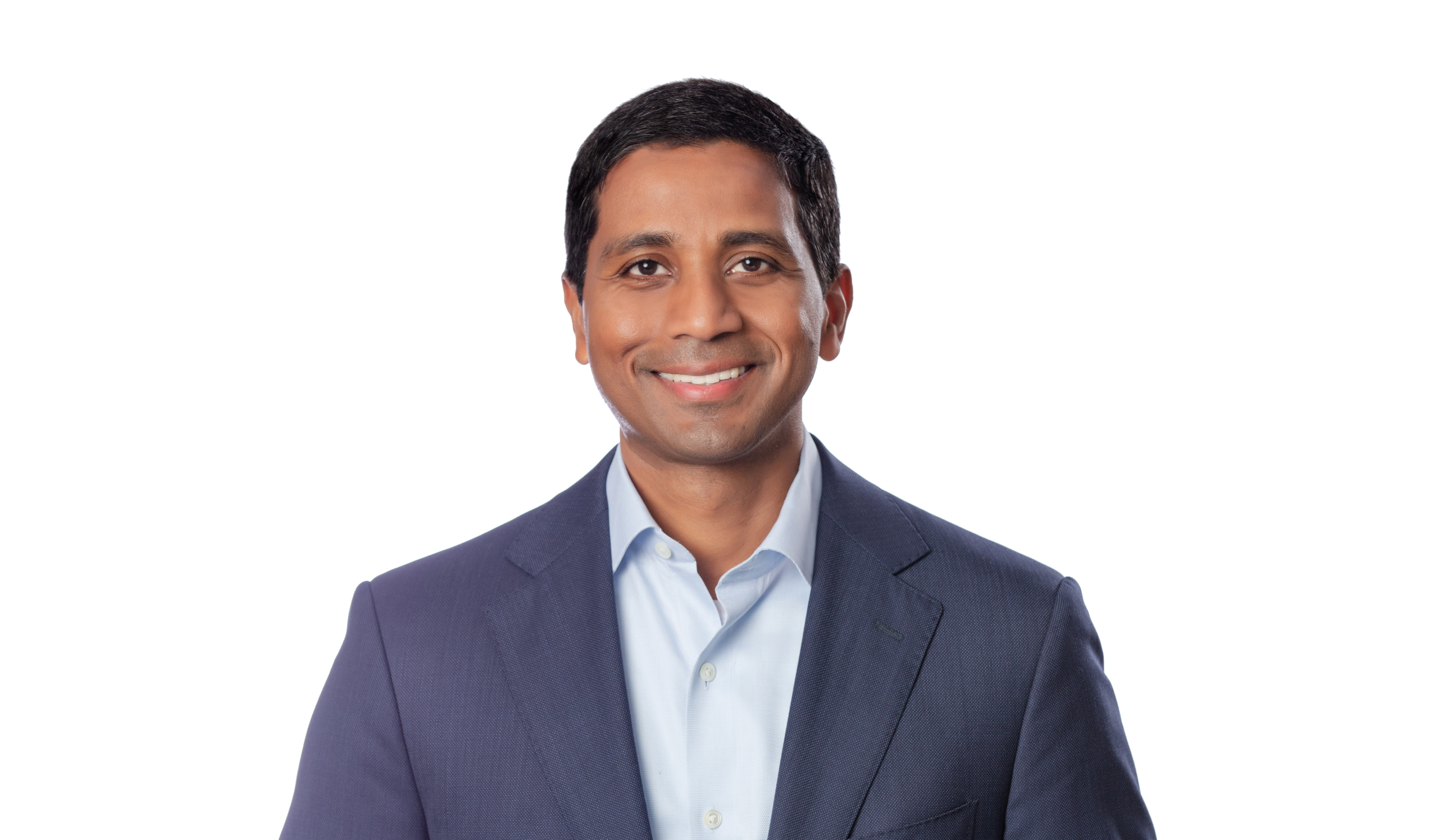

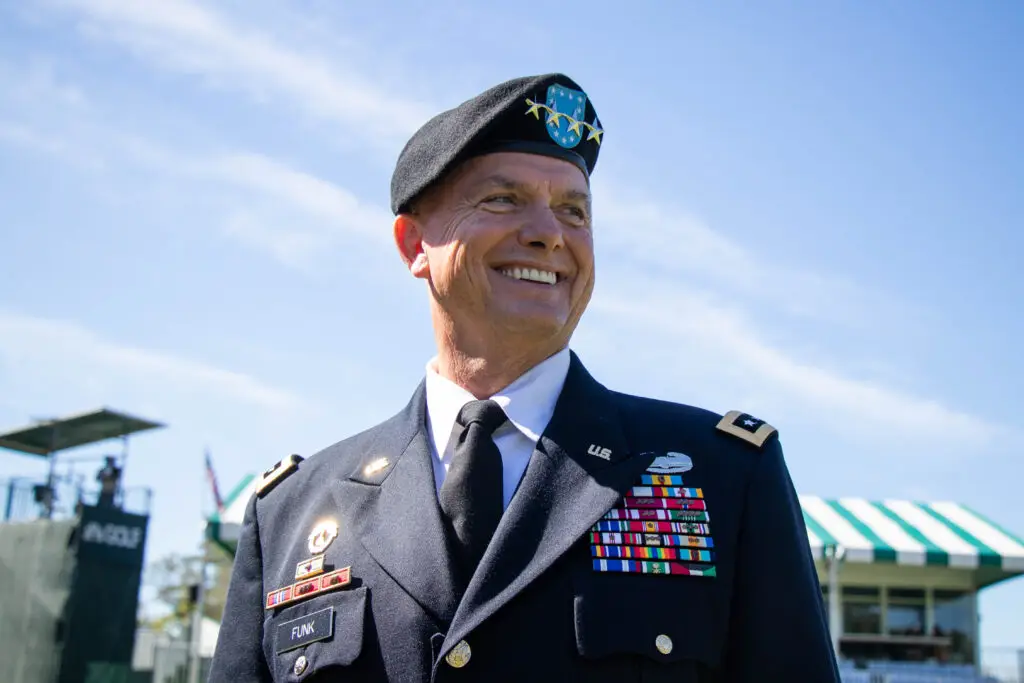
I recently interviewed General Paul Funk on my podcast, Thirty Minute Mentors. Here is a transcript of our interview:
Adam: Our guest today is a retired four-star general who led the world’s largest international coalition against ISIS in Iraq and Syria. General Paul Funk led at every level over the course of his 42-year career in the Army, including serving as the commanding officer of the Army Training and Doctrine Command, responsible for overseeing the training of Army forces. General Funk, thank you for joining us.
General Funk: Adam, it’s great to be here with you today. Thanks for having me.
Adam: Military service is in your blood. Your dad was a three-star general, and you grew up on military bases, including Fort Hood, not too far from where you live right now, and a military base that you would later command. Can you take listeners back to your early days? What early experiences and lessons shaped your worldview and shaped the trajectory of your success?
General Funk: Well, I’ll tell you what’s wonderful about that. Growing up in a military family, I always found that service to the nation was going to be prominent in my life, whether it be starting out as a young lieutenant or actually going through ROTC. I went to junior ROTC in high school. I had so many veterans around me that I don’t think there was any way I could not serve. So, my initial start and foray into the military, I was going to stay three years and then go do something else. But what I realized as I was growing up and along the way, I loved playing team sports. I played football, baseball, wrestled in high school, wrestled one year in college, but I always liked being part of a team. And as I saw the military in my formative years, what I saw the military be was the greatest team ever assembled, and so I wanted to be part of that. And I knew I wanted to at least start there. And then what I found after my first assignment, I met two of the guys that are still the best friends I have in the world. They both live in Austin, Texas, about 60 miles south of me here. And from that 40-year friendship across the spectrum of my service, I always came back to that in my early career, finding people that were like me, that loved to do the things I like to do, and to build and grow and develop friendships that last a lifetime was amazing to me. So I think that’s probably where it started. I’m an Army brat. So is my wife. We served together. She’s a little over 60, and I’m approaching 64. We met in high school. I was a senior, she was a freshman. Our fathers served together, and that’s how we matriculated along this. I just got lucky enough that she was available when it was time for me to settle down, and that’s the way we started. So everything good that happened to me happened to me at Fort Hood, Texas.
Adam: I love it. You mentioned the importance of being a part of a team, and there being no greater team than the military. What makes a great team? What makes a great teammate?
General Funk: A great team works together, listens to each other, develops, and presses each other for excellence. They develop a shorthand and a language, believe it or not. One of the greatest books I’ve ever read is called Legacy, which is actually the book about what some would say is the greatest team ever assembled, the All Blacks from New Zealand, the rugby team. It was written by a guy named James Kerr. In that book, it discusses how great teams lead to the future. They develop their own language, they press each other, they leave their jerseys in a better place every day. In other words, you don’t own that jersey. You’re just the body in the jersey at the time. You are responsible to those that came before you and those that are going to come after you to improve that organization just a little bit every day. How you do that and how you articulate that matters. I love the whole thought process. As a matter of fact, in my Funk’s Fundamentals, the last one I put on that list was leave your jersey in a better place. I got that from the book Legacy because it means you are responsible to those that came before you. Know your history. Speak the language. Build off the reputation. From there, share the suck. Sweep the sheds, as they say in that book, too. You’ve got to be able to sacrifice for the common good. The military has been transitioning and in transformation since 1775. The version it was in my 42 years is not the version that’s going forward. What’s going forward will be better, and will be better because of the people in it, the leaders that are responsible for it, and the direction that it’s taking in the world order. People think it’s very structured and static, and the US military changes every day. That’s what makes it unique.
Adam: And you made reference to Funk’s Fundamentals, and for those who might not be familiar, you put together a list of 40 guiding principles that are core to successful service, but are really core to succeeding in life, core to succeeding as a leader. And one of those fundamentals, the Army is a people business.
General Funk: Absolutely. We can have the greatest equipment in the world. We can have brilliant doctrine and all those things, but it takes people to execute those things. The heart and soul of the military is its people. I don’t think everybody realizes the sacrifice that young men and women today, and those that went before us, have made. I don’t think they understand the sacrifice and the servant’s heart that these young men and women have. It is remarkable to watch them. Many of my heroes are those that were wounded in the last several conflicts, some of them missing limbs. Some have internal or invisible wounds. Some have scars going forward. But what has been remarkable to me is their resilience, their adaptivity and their ability to do really hard things and make those things seem easy. It’s remarkable to watch. I’ve got a great friend. His name is David Bellavia. David’s a Medal of Honor recipient. For years, people would come up to him. So I blatantly stole this. Number 36, I think, on that fundamental list is tops: take other people’s stuff. Some of it might be a little more colorful language, depending on the audience. So David, people would come up to him all the time and say, thank you for your service. For a while, we felt kind of awkward. Dave came up with this, and I blatantly stole it from him. As somebody says thank you for your service to me, I turn around to them and say, you’re worth it. The American people, our way of life, and what we do matter, and you’re worth it.
Adam: I love that. What were the keys to rising within your career? And what can anyone do to rise within their career?
General Funk: First of all, hard work, sacrifice, determination, being a lifelong learner. You have to have some luck. There is luck associated with this. By that, I mean who you work for matters. And then mentorship. Nobody gets there by themselves. I don’t care where it is. Somebody was debating the other day when I was talking to them the difference between mentorship and sponsorship. When you think about that, mentorship is leading throughout life. My father and father-in-law were obviously mentors of mine. My father-in-law was a retired three-star general. He led all the ground forces during Desert Storm. John Yoslak is his name. Later in life, I was fortunate to have Marty and Deanie Dempsey in our lives. We were fortunate to have them at a young age. He was a major. I was a captain. We met in Desert Storm. From there, we have become lifelong friends. The mentorship piece of that, my dad was one of his mentors. I am one of his son Chris’s mentors. It’s a family affair. But he was also willing to sponsor me in rooms that I wasn’t in and speak my name favorably. I had several people like that. I was very fortunate in my career to work with great people, both on the enlisted and officer side of things. I consider myself very lucky to have experienced the kind of leadership, mentorship, and sponsorship I had in my 42-year career, and still have to this day.
Adam: What are the keys to cultivating a mentorship relationship? What are the keys to cultivating a sponsorship relationship?
General Funk: Do the boss’s work first. When the boss tells you he wants something done, get after it. What I found was if I did the boss’s work first, no matter which organization I was leading, I had plenty of time to do the things that I wanted to do as well. Hopefully, those were mutually supportive goals and objectives, and that really helped a lot for me. I think mentorship and sponsorship are a little different in how you do it. In mentorship, you want to find somebody with like goals and ideal,s and people that you can genuinely ask tough questions who will give you honest feedback. Sponsorship is more performance-based. Mentorship becomes how do you improve your performance, and sponsorship becomes this is how I performed and this is where I’m going in the future. People look at potential. That’s one of the things we do very much in the military. What is your potential to serve at the next level? I really think you have to have some sponsorship for potential. For mentorship, it’s how do you improve your current performance, and what should I do to help build on potential. You can’t really mentor potential in my opinion. What you can do is recognize it and then feed it through. Maybe you ought to be thinking about reading this. In the performance triad, what we try to do is training, operational experience, and self-development. That was the three-legged stool of the profession of the military. In the mentorship realm, you can definitely get two of those three, but you don’t get all of them. That’s why sponsorship matters too.
Adam: Can you talk a little bit more about the Army’s approach to training and development? What is the secret sauce? What is the magic?
General Funk: The human form learns two ways, significant emotional experience and repetition. If you think about those two things and then take the Army’s drive toward performance-oriented training, task conditions, and standards, and when you can achieve every piece of what your mission calls you to do, mission essential tasks, what are those things I must do to make my organization successful? That’s the framework of what the military uses. Leader development is a huge piece of the military, as is education, massively. People don’t realize how big it really is. Our leader development process drives toward taking a wide open approach to how do you develop the leaders of tomorrow through our training base, our educational process and our unit or assignment process. That’s how we develop leaders. We all have reading lists. We have forums in which we discuss aspects of our profession. We focus on the areas of profession. What does it mean to be a professional? What does it mean to be a warrior athlete? What does it mean to be part of the greatest team ever assembled and hold each other accountable to those standards? We’re a values-based organization as well. On the very first day you join the US Army, you are inundated with our values. They are loyalty, duty, respect, selfless service, honor, integrity and personal courage. If you think about the acronym that makes, LDRSHIP, that is the essence of where we start. When you can take citizens and turn them into soldiers in 10 weeks, you’ve got something pretty good going on.
Adam: What can anyone listening to this conversation do to become a better leader?
General Funk: I think there’s self-study. You have to look at different approaches. I absolutely believe that the essence of leadership is understanding people. You can be a professional in certain standards and ways of life, but in order to be a leader, you have to be someone willing to interact with the people you’re trying to change, develop or grow. Behaviors matter. Every time you think you’re somebody important, try ordering around somebody else’s dog. So you’ve got to walk the walk and talk the talk. Leadership becomes how you live your life. You can’t fake that. It all starts with people. People don’t care how much you know until they know how much you care. You’ve got to care for the young men and women. When you lead in combat, you’re leading America’s most precious treasure, its sons and daughters. That resource is finite. It is absolutely treasure and it can’t be wasted with poor leadership. That’s the future of our nation. There’s an order of devotion necessary to lead at the highest levels. There is sacrifice too. You have to come to account with that sacrifice. It is real. It is tough. It is demanding. It could be life ending. When you consider all those things, how you lead, how the very best leaders lead, is understanding the human dimension of what you’re trying to get done. What’s the best way to ensure somebody has the best chance to come home from a conflict? It’s to ensure they have access to the very best training you can give them with the resources available. Where you spend your time is the biggest thing leaders have. The one resource that is finite and you can’t get more of is time. How you spend your time in pursuit of training your organization to get ready to go to conflict is the essence of what a leader has to do. It doesn’t matter whether you’re in business or war. The stakes are incredibly high in war. In business, it’s profits, losses, bankruptcy, but the outcomes don’t end your life. In war, they can. You have to be ready to give your last full measure of devotion to the purpose of what you’re trying to get done. The reason young men and women fight today is because they fight for one another. They fight because they realize the American people will give them the best resources in terms of medical care and training. They realize they are fortunate to have those things. The third thing is they fight because of the trust they have between each other and their leadership. Those three things are why they fight. The same is true in business, but the stakes are not anywhere close.
Adam: You mentioned the word trust, which is an essential currency in leadership, an essential currency in high performance. How can you cultivate trust?
General Funk: You cultivate it through the things I talked about. When people understand what’s going to occur on the left and right of them, and they trust that when it’s time to cross that line of departure and attack into the enemy, everybody will go at the same time and pace, that matters. You build that through learning, training and self-discovery. Trust is remarkable. It takes years to build and you can lose it in a moment. There are great institutes out there, one by a guy named David Horsager. His point is it takes years to build trust, but you can lose it in an instant. People need to be mindful of that in their interactions and in what they do as it relates to building their reputation and trust in their organizations.
Adam: And really underpinning what you’re sharing is acting with integrity, acting with honesty, acting with honor. If you say one thing and do something else, if you don’t live your word, if you talk the talk but don’t walk the walk, whatever trust you may have built, you’re going to burn pretty quickly. Absolutely.
Paul: My dad’s got a great saying he came up with when he was my division commander in Desert Storm. He said, talking ain’t fighting. And that’s right. You just said it. You can talk the talk, but if you can’t walk the walk, if you haven’t developed the skills necessary to apply the weapons of war across all the various warfighting functions, if you haven’t done that, then frankly you’re not ready to go, and you’re going to burn trust in your subordinates and leaders, both laterally and above you.
Adam: You say talking isn’t fighting, and right next to talking isn’t fighting on the list of Funk’s Fundamentals, never fight a fair fight, which really speaks to the importance of being as prepared as possible, showing up to every situation with as much ammo, figuratively or literally, as possible.
General Funk: Exactly right. Don’t bring a gun to a knife fight. Don’t bring a knife to a gunfight. Understand the rules and what you’re trying to apply. One of America’s arguably most successful first battles was Desert Storm. Why? We brought overwhelming combat power to that problem set. Leave Kuwait or we will attack. That was a very clear line. In the bombing campaign during Desert Shield and then Desert Storm with the ground attack, basically in 100 hours, the third largest army in the world became the second largest army in Iraq. That matters. Overwhelming combat power. Overwhelm our adversaries. Make them fight multiple dilemmas. That is the essence of what US military doctrine is and should be.
Adam: And one way of doing that is by building coalitions, by not only bringing your own troops to the fight but by expanding your team. You led the world’s largest coalition, a 72-nation coalition, in the fight against ISIS in Iraq and Syria. What did you learn from that experience?
General Funk: It’s a great question, and we could talk for hours about that. What you learn is to understand both the strengths and weaknesses of those you’re adding to your team. In many situations, nation-states join our coalitions but come with caveats. For example, they could attack in Iraq but not in Syria. They could attack in Syria but not in Iraq. They could work against and talk to the Iranians, or they couldn’t. There are a variety of things. The real essence of leading a coalition like that is understanding those caveats and which ones work to your advantage and which ones you should not push. There were times when I’d play a card that another nation had. For example, in the information fight, they might have had looser restrictions than I did. I could put something out through their media system as a proxy. One of their officers would speak for me on a different news network to get a message across to a different population. You had to understand that. You had to understand who worked with who and who wouldn’t. You also had to understand those nations and militaries had ambassadors, country teams and all of that. You had to understand that piece, too. Who you built and brought onto your team mattered. I was fortunate to have great teammates from a variety of countries who understood where their nations were. When they spoke back to their capitals, they were helping me build the coalition to continue forward. It’s remarkable to watch these coalitions work and see the strengths and weaknesses of different positions and understand where nations are. They act in their own self-interest. If it’s in the interest of the entire group and benefits them too, they’re more than willing to move forward.
Adam: That’s an important lesson as a leader, really understanding the interests and incentives of every person at the table, really understanding the interests and incentives of every stakeholder, and that allows you to behave as effectively as possible.
General Funk: Absolutely, Adam. If I were leading a company, the most important event you have is your onboarding process. Not only do your people get a sense of you, you get a sense of them. You get to articulate what makes you tick, what your priorities are and why being part of your organization should matter to them as much as it matters to you. That’s the one place you’ve got everybody’s attention, in that onboarding process. It doesn’t matter what size the company is. With technology the way it is now, you have the ability to do this one hour a month. You should be talking to your newest employees. I don’t care if you have three people or 3000. You should be articulating your goals, your vision for the organization and why you think that’s important. It will save you man years.
Adam: A big priority for you while you were leading in the Army was changing the way members of the Army were learning so that they were better prepared for the 21st-century workforce. A big priority for you today is upskilling so that everyone can be more prepared for the modern workforce.
General Funk: Exactly. I think it’s great that we’re onshoring high-end jobs, advanced manufacturing jobs, and the semiconductor industry. We’ve noticed we were out of balance in that realm, and COVID drove that point home quickly. We outsourced and moved too many things offshore, and now our supply chains are at risk. If we don’t take the opportunity to build our training programs, and companies don’t like to spend a lot of money on that because they think incorrectly that it’s not well spent, in my opinion that’s the best way you can spend your money, training your people to become absolute experts in how you operate. That matters. Others are starting to recognize this. The state of Texas has developed what they’re calling a military talent pipeline. They’re going to do a pilot operation outside of Fort Hood, where we take young men and women getting out of the military and prepare them for high-paying jobs in a training program, then find a way to place them and keep them in the area. The vast majority of young men and women who serve today are the kinds of people you want in your neighborhoods. You want them to be coaches in your youth programs, Sunday school teachers, and part of the fabric of your community. To do that, you’ve got to find them opportunities. In this talent management pipeline business, with my great friend Larry Smith, who at one time was the chairman of Tokyo Electron US, the company that makes the machines that make semiconductors, he decided he wanted to hire veterans into his organization. We had known each other for 42 years. We built trust, common experience, and shared the suck when we were young lieutenants. We quickly formed a program when I was the commander at Fort Riley and got veterans into his organization, where they thrived because of the culture he built and the mission of that organization. Larry and I began to build the thought process of a military talent pipeline, and now it’s coming to reality in central Texas. We’re doing that through great organizations like Texas A and M Central Texas, the Transition Assistance Program at Fort Hood and a variety of stakeholders to develop a way to bring young men and women who have served us into high-paying jobs. It’s a fascinating study in how we take care of those who have served us. I’m deeply committed to that. It’s what Larry would term a pivot to purpose, which I agree with. That’s what we’re trying to do now, pivoting to purpose. One of the things that drives you toward that as a leader is being positively intrusive in people’s lives. You make a positive impact by asking leading questions. If you go to Funk’s Fundamentals, they’re online. There are videos of me explaining them. Each one has a story of an interaction I had over my 42-year career where I learned something. Some would say I’m a slow learner. I only learned 40 things in 42 years. But that’s not true. I enjoy the interaction with people. I’ve learned from great football coaches like Dan Quinn and great managers like Dave Roberts, who are friends of mine. We’ve discussed leadership. High-performing organizations have people who are positively intrusive in the lives of their subordinates and peers. They ask leading questions. They develop programs that build to the next level. They mentor, sponsor, and coach. They sacrifice that most precious resource, time, for the betterment of their organization and the people within it. To me, there is no greater calling than that.
Adam: You’ve led at all levels. You’ve led organizations of different sizes. You’ve led in vastly different environments, from a military base minutes away from where you grew up to incredibly adverse environments overseas. What are the similarities and differences between leading at different levels, in different environments, and organizations of different sizes?
General Funk: I think you develop a framework when you’re leading at the lowest levels all the way to the highest. You develop a shorthand that helps in decision-making. In wartime, you fall back on your training and self-development. I believe that’s true at any level. You also learn you have to train in worse time situations. Your enemy is always changing and adapting. The environment is changing and adapting. You’re altering time frames. You’ve got to continue to learn. In peacetime, I tried to make sure people understood my priorities. I would give them a vision every opportunity I had. I would build a framework on how I wanted to take information. I would build a time management system that allowed me to maximize time into my priorities. I believe simplicity is the most important principle of war and the most frequently overlooked. Our job is to take immensely complex situations and simplify them through training, doctrine, organizational constructs, and leader development processes. Simplify them so that a sergeant and his or her squad could execute incredibly complex tasks because they understood what the boss several levels up was looking for. That’s the secret. That’s why onboarding is so important. That’s why I believe the Army is a people business. You have to spend the vast majority of your time developing your people to deal with any situation.
Adam: General Funk, what can anyone listening to this conversation do to become more successful personally and professionally?
General Funk: Understand what the person above you is trying to get done. The vast majority of people are trying to succeed. Nobody woke up this morning and said today I’m really going to screw everything up. Very few people did that. If instead of a handout you give them a hand up and spend time in conversation, you’re going to find the secrets to leading people is understanding what motivates them. I’ll give you a quick snippet. I used to use challenge coins. These coins are tools in the information fight. Everything we do is about information. As I got more refined and time got shorter, I would ask why did you join this outfit, and why do you want to continue to serve. At one time, I was in charge of recruiting for the Army. What I found was they joined for a variety of reasons. What I found in the second question was the essence of leadership: why do you stay? Nobody quits an organization because they’ve had great leadership. What’s going to cause you to stay? Almost invariably, those answers were people-related. I stayed for the men and women to my left and right, my brothers and sisters, because we shared the crucible of combat together and will be brothers and sisters for life. I serve because I’m part of the greatest team ever assembled. I’m going to stay as long as I live. I had a young woman tell me one time after an incredible medical miracle in Baghdad that everybody had to be in the right place. At the end of this, I was down a line of about 18 people, asking why did you join and why do you continue to serve. I joined for the college money, but I stayed because of the mission or the men and women to my left and right. A young nurse who built a walking blood bank that put together 27 liters of blood in about an hour to save a grievously injured man said her story was different. Her family and she were going through a rough time. They were living in their car, and an Army recruiter found her. In that she found her Army. Think about that. A recruiter runs into a woman on the street, and later she builds a walking blood bank that saves a man’s life in the fight against ISIS. That is the essence of why people serve. That is what being positively intrusive means. Those are examples of leadership I’ve seen across 42 years where young men and women sacrificed their time and talent for the greater good of our country and way of life. A lifetime spent in service has been remarkably rewarding. I treasure every day. I never had a bad day in the Army. I had days I never wanted to live again, awful, terrible days, but I never had a bad day because I could lean on America’s most precious treasure, its sons and daughters. That forever I will treasure.
Adam: General Funk, I treasure this conversation. I treasure you sharing such incredible advice. Thank you for all the great advice, and thank you for being a part of Thirty Minute Mentors.
General Funk: Adam, thanks for having me. What a tremendous platform you have. A trove of national treasure. My best friend has been on this, Mike Garrett, a guy I respect greatly, Bob Caslen, too. I’m honored and humbled to be included in this world-class operation you’re performing.
Adam: The honor is mine, and I’m humbled by your kind words. Thank you again. I really appreciate it.
General Funk: Remember, talking ain’t fighting, baby.
Adam: I’m a lover, not a fighter.
General Funk: Hey, well, we all have certain talents.