

The search for the top motivational speakers for a 2026 corporate event turns up the same recycled bureau lists and ranked roundups. Most are built around SEO and traffic, not the actual work of holding a 500-person room on a Monday morning at a sales kickoff. I work in this space as a leadership keynote speaker, host the Thirty Minute Mentors podcast, and teach graduate-level leadership courses at UCLA, so I pay attention to which speakers move a room and which ones coast on a strong reel. This list reflects what I’d recommend if you asked me where to start.
A 60-minute corporate keynote runs anywhere from $15,000 on the lower end to north of $200,000 at the top of the market. What matters more than the fee is what happens when the wrong booking lands on a leadership offsite, an annual conference, or a sales kickoff that took months to plan. The audience checks out, the agenda falls apart, and the event gets remembered for what didn’t land. For event planners and executives weighing their options, the criteria you filter with matter more than the names themselves, which is why I cover that side of the decision separately in my breakdown on how to choose the right leadership keynote speaker.
The 15 speakers below have built their reputations through years of stage work and original thinking. Some are on every shortlist of top leadership speakers in circulation. A few are less familiar, and those are often the ones who surprise a careful audience the most. Each name here fits a different kind of room. If you’re looking for the best motivational speakers to book for a corporate audience in 2026, this is where I’d start.
How I Ranked These Motivational Speakers
A lot of “top motivational speakers” lists circulating online have a quiet conflict of interest. They’re built by speaker bureaus that earn commission on the bookings they push or by content marketers ranking voices they’ve never seen work a live room. I built this list to filter that out.
Every name here had to clear five filters before making the cut:
- Active in the corporate booking market: Recent keynotes for organizations, not one-off podcast appearances or social clips.
- Original recent footage on file: A full-length talk or substantive segment from the last 18 months that shows how they handle a live room.
- Documented client outcomes: Public testimonials, case studies, or measurable shifts tied to a specific engagement.
- Willingness to customize: Time invested in pre-event calls before any slide gets written.
- A defined audience fit: Strong with a particular kind of organization, not stretched thin across every market segment.
*No bureau paid for placement here. I don’t take referral fees on any speaker mentioned, and I have no commercial relationship with any of them beyond being a peer working in the same industry.*
The Top 15 Motivational Speakers in 2026
1. Tony Robbins
Tony Robbins doesn’t operate in the same lane as a typical corporate keynote speaker. He fills arenas, has personally coached presidents and Fortune 500 CEOs, and has been the most visible name in personal performance for four decades. He’s polarizing, and his style isn’t built for every audience, but at arena scale nobody else has matched what he does.
Background
Robbins started running personal development seminars in the early 1980s and spent the following decades building one of the largest live event businesses in the speaking industry. He’s privately coached Bill Clinton, Serena Williams, Hugh Jackman, and Salesforce founder Marc Benioff, and his Unleash the Power Within seminar regularly draws audiences of 10,000+ to arenas around the world. The 2016 Netflix documentary I Am Not Your Guru gave most corporate audiences their first close look at how he actually works a room.
Signature Topics
- Peak performance and emotional state mastery
- Wealth building and financial psychology
- Leadership under extreme pressure and uncertainty
Notable Accomplishments
- Bestselling author of Awaken the Giant Within, Unlimited Power, Money: Master the Game, and Unshakeable, with tens of millions of copies sold worldwide
- TED Talk Why We Do What We Do: one of the earliest TED Talks and among the most-viewed on TED.com
- Featured in the 2016 Netflix documentary Tony Robbins: I Am Not Your Guru
- Founder of the Tony Robbins Foundation, which has supported tens of millions of meals through Feeding America
- His Business Mastery seminar program has trained tens of thousands of entrepreneurs and business owners globally
Speaking Fee Range
- Live event: $100,000 – $300,000, typically reserved for arena-scale audiences
- Virtual: Available on request
Robbins rarely books standard 60-minute corporate keynotes. Most engagements run as half-day or full-day programs structured around his methodology.
Best For
Large-scale arena events, sales kickoffs at companies with the audience size to justify his fee structure, multi-day entrepreneurial summits, and organizations specifically looking for high-intensity peak performance work rather than executive-level leadership content.
Signature Framework / Methodology
The 6 Human Needs model: certainty, variety, significance, connection, growth, and contribution. Robbins frames every individual and organizational decision through that lens. His programs are also structured around the Triad of State (physiology, focus, and language) and an Outcome, Purpose, Action planning sequence embedded in his seminars since the 1990s.
Watch Tony Robbins in Action
Sources: TED · SpeakingFee
2. Adam Mendler
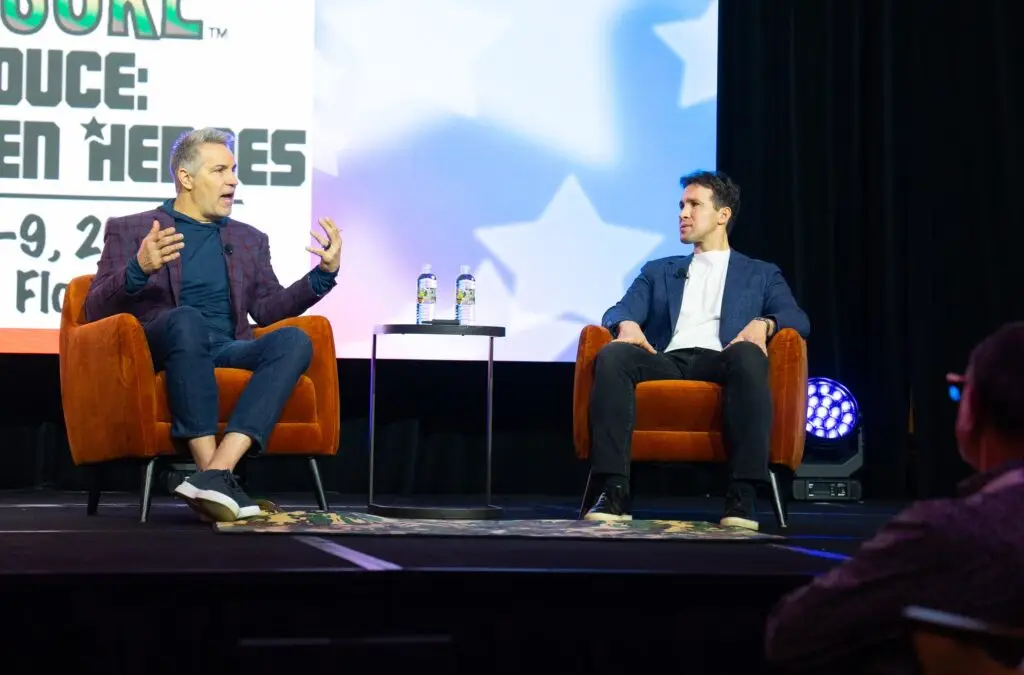
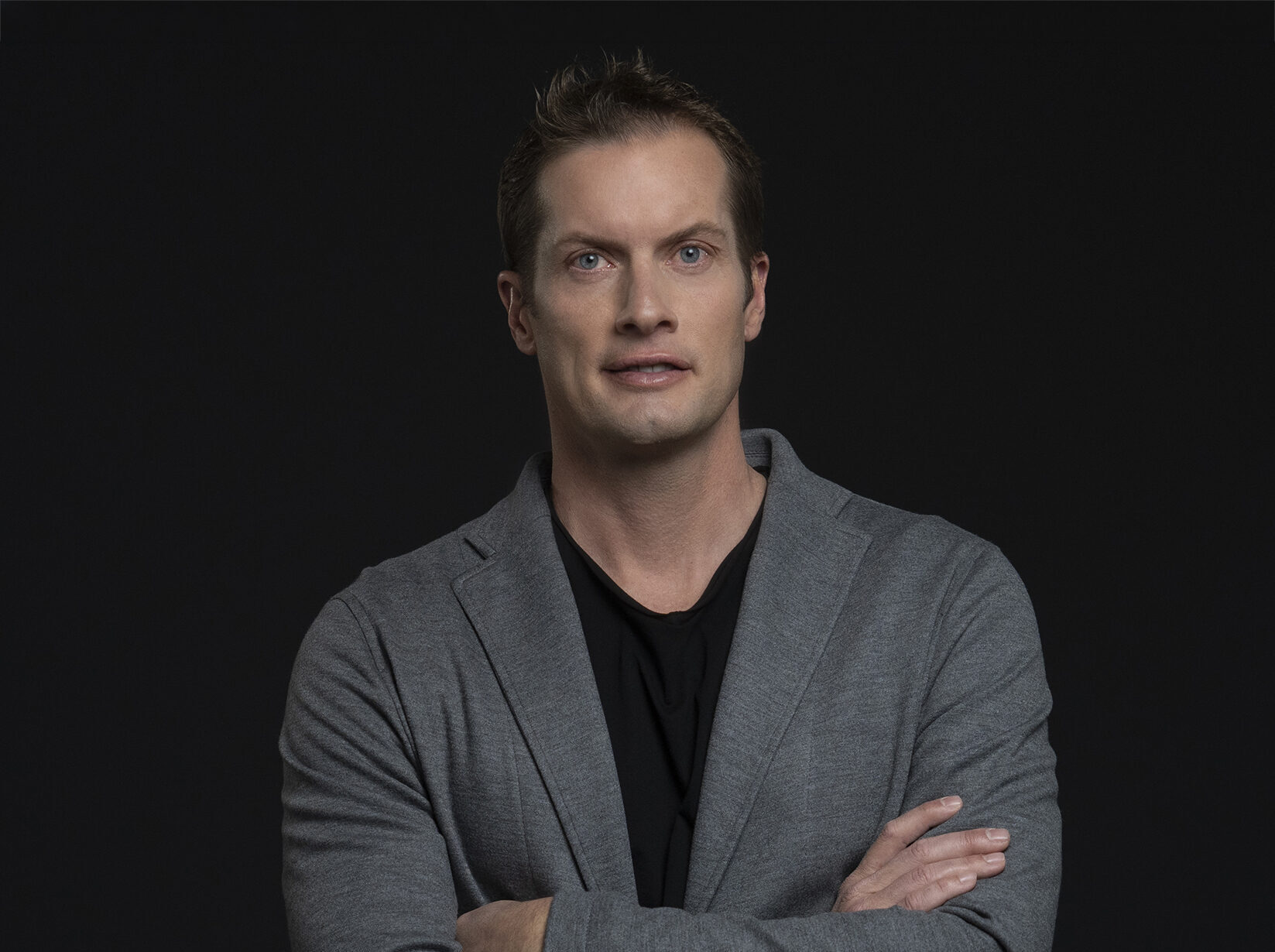
Adam Mendler is a leadership keynote speaker whose work draws on years of recorded conversations with Fortune 500 CEOs, four-star generals, Olympic gold medalists, and major political leaders. The frameworks he brings to the stage come directly from senior operators who have built and led at scale, translated into language and structure a corporate audience can use the same week.
Background
Adam Mendler is the creator and host of Thirty Minute Mentors, where he has recorded more than 500 conversations with senior leaders across business, government, military, and sports. He’s authored over 70 articles for Forbes, Inc., and HuffPost, teaches graduate-level leadership courses at UCLA, and advises companies and executives on strategy, leadership development, and team performance.
Signature Topics
- Leadership patterns from 500+ CEOs, founders, and senior operators
- Building high-performing teams during periods of change and uncertainty
- Decision-making and accountability for senior leaders and emerging executives
Notable Accomplishments
- Creator and host of Thirty Minute Mentors, with more than 500 published episodes featuring Fortune 500 CEOs, four-star generals, Olympic gold medalists, and political leaders
- Author of 70+ articles for Forbes, Inc. and HuffPost
- Featured in Business Insider, FOX, NBC, U.S. News, Sports Illustrated, Entrepreneur, and Yahoo
- Keynoted for organizations including DIRECTV, JLL, and the U.S. Army
- Teaches graduate-level leadership courses at UCLA
Speaking Fee Range
- Live event: $15,000+, with pricing depending on the event format, location, and scope of the engagement
- Virtual: Available on request
Each engagement is tailored to the audience, organization, event objectives, and program format and includes one or more prep calls with the organizing team.
Best For
Leadership conferences, company meetings, sales kickoffs, executive retreats, association events, leadership development programs, and other gatherings focused on helping leaders and teams perform at a higher level. Past clients describe the sessions as inspirational and highly practical.
Signature Framework / Methodology
The Thirty Minute Mentors method: draws on insights from more than 500 interviews with the most successful leaders to show audiences what the best leaders and the top performers do differently. Each keynote is structured around a focused set of patterns and brought to life through stories, examples, and actionable takeaways.
Watch Adam Mendler in Action
3. Simon Sinek
Few people in the modern speaking industry have planted a single idea as firmly in corporate vocabulary as Simon Sinek did with Start with Why. His Golden Circle moved from a single TED Talk into the standard language used across executive education, leadership development curricula, and even Marine Corps training facilities.
Background
Sinek started his career in advertising before shifting into leadership work after publishing Start with Why in 2009. His 2010 TED Talk How Great Leaders Inspire Action became one of the most-watched in TED history, and his subsequent books pushed the conversation from purpose into trust, psychological safety, and long-term thinking. Since then he’s worked with the U.S. Marine Corps, Microsoft, American Express, Costco, and the United Nations, and his Optimism Company runs leadership programs and certifications around his core ideas.
Signature Topics
- Purpose and the “Why” behind every team and organization
- Trust, psychological safety, and the Circle of Safety
- Infinite Game thinking versus quarterly short-termism
Notable Accomplishments
- Bestselling author of Start with Why, Leaders Eat Last, Find Your Why, and The Infinite Game, with millions of copies sold globally
- TED Talk How Great Leaders Inspire Action: viewed more than 60 million times per his official bio, among the most-watched TED Talks of all time
- Adjunct staff member at the RAND Corporation and visiting lecturer at Columbia University
- Clients include the U.S. Marine Corps, Microsoft, American Express, Costco, and the United Nations
- Founder of The Optimism Company, which trains and certifies practitioners in his methodology
Speaking Fee Range
- Live event: $200,000+
- Virtual: $100,000 – $200,000
Best For
Companies running a culture reset, leadership development programs at mid-to-large enterprises, military and government audiences, executive offsites where leadership teams need to reconnect to mission, and organizations whose long-term direction has gotten lost in quarterly noise.
Signature Framework / Methodology
The Golden Circle: Why, How, What. Sinek argues that organizations and leaders who can articulate their why earn loyalty and trust at a level that purely outcome-driven competitors cannot match. His Infinite Game framework extends the same model from purpose into strategy, drawing on James Carse’s distinction between finite games (defined players, fixed rules, clear winners) and infinite games (changing players, evolving rules; the goal is to keep playing). He uses both as the spine of most keynote engagements.
Watch Simon Sinek in Action
Sources: AAE Speakers
4. Brené Brown
Brené Brown is the rare researcher whose academic work reshaped corporate vocabulary. Vulnerability, shame, courage, and trust moved from clinical research into Fortune 500 leadership programs largely because of how she communicated her findings, and there’s no version of the modern psychological safety conversation that doesn’t owe her something.
Background
Brown is a research professor at the University of Houston, where she’s spent more than two decades studying vulnerability, shame, courage, and empathy. Her 2010 TEDxHouston talk, The Power of Vulnerability, became one of the most-watched TED Talks of all time and put her name in front of an audience that had never read an academic paper on shame resilience. Since then she’s worked with organizations across the corporate, military, and nonprofit sectors, and her Dare to Lead program is now used inside hundreds of organizations globally.
Signature Topics
- Vulnerability and courage in executive leadership
- Building trust through the BRAVING framework
- Shame resilience and difficult conversations at work
Notable Accomplishments
- #1 New York Times bestselling author of Daring Greatly, Rising Strong, Braving the Wilderness, Dare to Lead, and Atlas of the Heart, with millions of copies sold worldwide
- TED Talk The Power of Vulnerability: over 60 million views, one of the most-watched TED Talks of all time
- Featured in the 2019 Netflix special The Call to Courage and the 2022 HBO Max series Atlas of the Heart
- Host of the Dare to Lead and Unlocking Us podcasts
- Holds the Brené Brown Endowed Chair at the University of Houston Graduate College of Social Work
Speaking Fee Range
- Live event: Limited availability, fee on request
- Virtual: Available on request
Brown has scaled back corporate keynote bookings significantly since 2020 to focus on her Dare to Lead training program and ongoing research. When she does take an engagement, it’s usually for organizations she has a long-standing relationship with or for cause-aligned events.
Best For
Organizations going through culture change; leadership teams in periods of rebuild; executive offsites where trust and team dynamics are on the agenda; and companies investing in psychological safety as a performance lever rather than as soft-skills decoration.
Signature Framework / Methodology
Daring Leadership is built around four skill sets: rumbling with vulnerability, living into values, BRAVING trust, and learning to rise. The BRAVING acronym, the centerpiece of her trust work, stands for Boundaries, Reliability, Accountability, the Vault, Integrity, Non-judgment, and Generosity. Brown uses these as the structural backbone of every keynote and the foundation of her Dare to Lead facilitator certification.
Watch Brené Brown in Action
Sources: TED
5. Mel Robbins
Few new voices in the speaking industry have come up faster than Mel Robbins. The Let Them Theory hit the top of bestseller lists almost the moment it launched in 2024; her podcast routinely ranks among the most listened-to in the world, and her social channels reach tens of millions of people every week.
Background
Robbins started her career as a criminal defense attorney before moving into media, where she spent years as a CNN legal analyst and eventually hosted her own daytime talk show. Her 2011 TEDx talk How to Stop Screwing Yourself Over introduced the 5 Second Rule and pulled in tens of millions of views, and The Mel Robbins Podcast launched in 2022 and quickly became one of the most listened-to podcasts in the world. The 2024 release of The Let Them Theory pushed her into a different tier of cultural reach entirely.
Signature Topics
- Behavioral change and the science of motivation
- Building confidence and overcoming self-doubt
- Boundaries, relationships, and reclaiming control of your energy
Notable Accomplishments
- Bestselling author of The 5 Second Rule, The High 5 Habit, and The Let Them Theory, with millions of copies sold across multiple languages
- TEDx talk How to Stop Screwing Yourself Over: tens of millions of views
- The Mel Robbins Podcast has routinely ranked in the global top three on Apple and Spotify since its 2022 launch
- Former CNN legal analyst and host of The Mel Robbins Show
- Reaches tens of millions of followers across Instagram, TikTok, and YouTube combined
Speaking Fee Range
- Live event: 200,000+
- Virtual: $100,000 – $200,000
Her fee trajectory has climbed steeply since The Let Them Theory released, and current availability for new bookings is limited.
Best For
Sales kickoffs at consumer-facing brands, women’s leadership conferences, large general-audience corporate events, mental health and wellness summits, and any organization where the agenda calls for high-energy practical psychology rather than academic theory.
Signature Framework / Methodology
The 5-Second Rule is her foundational behavioral tool: when an instinct to act surfaces, count 5-4-3-2-1 and move before the brain talks you out of it. The High 5 Habit extends the same principle into daily self-perception work, and The Let Them Theory applies it to relationships, energy management, and the cost of trying to control other people. Her keynotes typically pull from all three frameworks depending on the audience.
Watch Mel Robbins in Action
Sources: Wikipedia · AAE Speakers
6. Eric Thomas
Eric Thomas, known to most of his audience as ET the Hip Hop Preacher, built one of the most-watched motivational moments in YouTube history with his “want it like you want to breathe” speech. The arc from teenage homelessness in Detroit to a PhD in education and one of the most-booked voices in professional sports shapes every keynote he gives.
Background
Thomas dropped out of high school at sixteen and spent two years homeless on the streets of Detroit before earning his GED and finishing undergrad at Oakwood University. He went on to complete a master’s and a PhD in education at Michigan State, then built a career that now includes work with the NFL, the NBA, the NCAA, and corporate teams at Nike, AT&T, and General Electric. His informal “Secret to Success” speech, recorded on a college campus more than fifteen years ago, has accumulated hundreds of millions of combined views across YouTube, TikTok, and Instagram.
Signature Topics
- Discipline, accountability, and the cost of mediocrity
- High performance and the mindset of elite athletes
- Personal responsibility and overcoming circumstance
Notable Accomplishments
- Bestselling author of The Secret to Success, Greatness Is Upon You, and You Owe You, the last of which was a New York Times bestseller in 2022
- Holds a PhD in education from Michigan State University
- Corporate and athletic clients include Nike, Under Armour, AT&T, Procter & Gamble, General Electric, and every year the NFL, the NBA, and the NCAA
- His Secret to Success speech has accumulated hundreds of millions of combined views across YouTube, TikTok, and Instagram
- Founder of the Eric Thomas Foundation, which funds education and mentorship programs in underserved communities
Speaking Fee Range
- Live event: $50,000 – $100,000
- Virtual: Available on request
Pricing scales with audience size and event format, and corporate sports bookings tend to land on the higher end of the range.
Best For
Professional sports teams during preseason and offseason work, sales kickoffs at large enterprises, university and college athletic programs, leadership events where the audience responds to high-energy direct delivery, and companies looking to pair performance psychology with a story of personal hardship and recovery.
Signature Framework / Methodology
Thomas centers his work on what he calls The Secret to Success: the willingness to chase a goal with the same intensity a drowning person reaches for air. From there, his teaching runs through a tight set of repeatable themes, including accountability, discipline, sacrifice, and the specific habits of elite performers across sports and business. His keynotes reset the standard the audience holds for themselves more than they hand out a step-by-step framework.
Watch Eric Thomas in Action
Sources: Penguin Random House · SpeakingFee
7. John Maxwell
Almost every conversation about modern leadership development eventually traces back to John Maxwell. He’s written more than 100 leadership books, sold tens of millions of copies, and shaped the curriculum of executive programs across corporate, military, government, and nonprofit sectors.
Background
Maxwell started his career as a pastor and gradually built one of the largest leadership development operations in the world. His 1998 book The 21 Irrefutable Laws of Leadership became required reading in executive programs across multiple continents and has stayed in continuous print for more than 25 years. Today his organizations have collectively trained more than 6 million leaders across nearly every country in the world.
Signature Topics
- The 21 Irrefutable Laws of Leadership
- The 5 Levels of Leadership and developing leaders at every level of an organization
- Personal growth, influence, and the leader as a multiplier
Notable Accomplishments
- Author of more than 100 leadership books, including The 21 Irrefutable Laws of Leadership and Developing the Leader Within You, with more than 30 million combined copies sold worldwide
- Books translated into more than 50 languages
- Named the #1 leadership expert by Inc. Magazine and inducted into the Amazon 10th Anniversary Hall of Fame as one of the top 25 authors ever featured on the platform
- His organizations have trained more than 6 million leaders worldwide
- Clients span Fortune 500 corporations, the U.S. military, nonprofit sectors, and faith-based organizations across six continents
Speaking Fee Range
- Live event: $100,000 – $200,000
- Virtual: $50,000 – $100,000
Availability is limited given the volume of programming his three organizations run year-round.
Best For
Executive leadership development programs, multi-day leadership academies, faith-based organizations, multi-generational corporate audiences, and organizations building internal leadership pipelines from the ground up.
Signature Framework / Methodology
The 5 Levels of Leadership is his most widely applied model. Level 1 (Position) means people follow because they have to. Level 2 (Permission), because they want to. Level 3 (Production), because of the results you’ve delivered. Level 4 (People Development), because you’ve invested in their growth. Level 5 (Pinnacle), because of who you are and what your career has come to represent. His 21 Irrefutable Laws provides the broader operating system around the model, and his Law of the Lid is the foundation of his work on the ceilings leaders impose on the organizations they run.
Watch John Maxwell in Action
Sources: AAE Speakers
8. Adam Grant
Adam Grant is the rare academic who gets booked at sales kickoffs without diluting his research. As Wharton’s top-rated professor for seven years running and the author of five New York Times bestsellers, he’s spent the last decade translating organizational psychology into language executives can use without losing the rigor underneath.
Background
Grant earned his PhD in organizational psychology from the University of Michigan and joined Wharton in 2009, where he holds the Saul P. Steinberg professorship and has been the school’s top-rated teacher for seven years running. His research focuses on motivation, generosity, original thinking, and how people sustain learning across long careers, and Thinkers50 has named him one of the world’s ten most influential management thinkers. He hosts TED’s ReThinking podcast and contributes regularly to the New York Times.
Signature Topics
- Givers, takers, and the economics of generosity inside organizations
- Original thinking, dissent, and the psychology of innovation
- Rethinking, mental flexibility, and the discipline of changing your mind
Notable Accomplishments
- Bestselling author of Give and Take, Originals, Option B (with Sheryl Sandberg), Think Again, and Hidden Potential, with millions of copies sold globally
- TED Talks including The Surprising Habits of Original Thinkers and How to Stop Languishing and Start Finding Flow
- Named one of the world’s 10 most influential management thinkers by Thinkers50
- Speaking and consulting clients include Google, NASA, Pixar, and the NBA
- Host of the ReThinking podcast on the TED Audio Collective
Speaking Fee Range
- Live event: Fee on request
- Virtual: Available on request
Grant is heavily booked across corporate, educational, and conference circuits, so calendars usually need to be locked 6 to 12 months in advance.
Best For
Executive education programs, corporate leadership summits, HR and talent development conferences, mid-to-large enterprises that want research-backed content rather than personality-driven motivation, and C-suite audiences who respond to academic rigor delivered without academic dryness.
Signature Framework / Methodology
Grant’s work spans several frameworks, but two anchor most of his keynotes. Givers, Takers, and Matchers from Give and Take divides workplace behavior into three types: givers who contribute without expecting return, takers who extract from others, and matchers who trade strictly tit-for-tat. The Rethinking Cycle from Think Again contrasts three common argumentative styles (preacher mode, protecting beliefs; prosecutor mode, attacking opponents; and politician mode, chasing approval) with the scientist’s mindset, which tests ideas and revises them as evidence accumulates. His talks usually orient around whichever model fits the audience’s decision-making problem.
Watch Adam Grant in Action
Sources: Wharton · Washington Speakers Bureau
9. Gary Vaynerchuk
Gary Vaynerchuk built one of the largest independent marketing agencies in the world while becoming one of the most-watched entrepreneurs of the social media era. He’s blunt, loud, and not built for every corporate room, but for sales teams and founder-led organizations, there’s almost nobody who connects faster.
Background
Vaynerchuk took over his family’s New Jersey liquor store in his twenties, grew it from a $3 million regional business into a $60 million-plus e-commerce operation, and used the playbook from that build to launch VaynerMedia with his brother AJ in 2009. VaynerMedia is now a global marketing services agency working with brands including PepsiCo, Anheuser-Busch, Procter & Gamble, and General Electric. Outside the agency, he’s published several books, accumulated tens of millions of followers across social platforms, and rarely goes a day without posting some form of business content.
Signature Topics
- Modern marketing, attention markets, and the economics of audience capture
- Entrepreneurship, hustle, and self-aware ambition
- The role of empathy and patience inside high-performance cultures
Notable Accomplishments
- New York Times bestselling author of Crush It!, Jab, Jab, Jab, Right Hook, Crushing It!, Twelve and a Half, and Day Trading Attention
- Founder of VaynerMedia, a global creative and marketing services agency working with PepsiCo, Anheuser-Busch, Procter & Gamble, and General Electric
- Co-founder of VaynerX (holding company) and VeeFriends (intellectual property and community brand)
- Reaches tens of millions of combined followers across Instagram, TikTok, LinkedIn, and YouTube
- Recognized on the Crain’s New York 40 Under 40 list
Speaking Fee Range
- Live event: $200,000+
- Virtual: $100,000 – $200,000
Pricing scales with audience size, event format, and travel. Vaynerchuk’s calendar moves fast, and most engagements need to be locked in well ahead of the event.
Best For
Sales kickoffs at consumer and DTC brands, marketing conferences, entrepreneurial summits, founder-led organizations, modern agency networks, and audiences that want raw business pragmatism rather than polished corporate-speak.
Signature Framework / Methodology
Vaynerchuk’s foundational framework is Jab, Jab, Jab, Right Hook: give value to your audience three times for every time you ask for something in return. Day Trading Attention extends that model into modern marketing, framing consumer attention as the underlying asset class every brand should be measuring against. His Twelve and a Half framework names the emotional ingredients (kindness, empathy, accountability, candor, and others) he considers central to long-term operator quality.
Watch Gary Vaynerchuk in Action
Sources: AAE Speakers
10. Lisa Nichols
Lisa Nichols is one of the most recognized voices in personal development and women’s leadership, with a keynote built on a personal story most speakers couldn’t deliver if they tried. She went from a single mother on welfare in South Central Los Angeles to founder and CEO of one of the most visible Black-owned personal development companies in the United States.
Background
Nichols built her career out of her own story. She was a struggling single mother in South Central LA before she founded Motivating the Teen Spirit, a youth empowerment program that’s served tens of thousands of teenagers across U.S. school systems. Her appearance in the 2006 documentary The Secret alongside Rhonda Byrne, Bob Proctor, and Jack Canfield pushed her into a different category of public visibility, and she’s since appeared on Oprah, The Today Show, The Steve Harvey Show, and Larry King’s network. Her company Motivating the Masses became one of the few Black female-founded companies to go public on the U.S. OTC markets in 2008.
Signature Topics
- Self-acceptance, self-approval, and the inner work behind external achievement
- Women’s leadership and overcoming circumstance
- Personal transformation and emotional resilience
Notable Accomplishments
- New York Times bestselling author of No Matter What! and Abundance Now, with multiple additional titles in personal development
- Featured in the 2006 documentary The Secret alongside Rhonda Byrne, Bob Proctor, and Jack Canfield
- TEDxLA talk The Power of Self-Approval with strong online viewership
- Founder of Motivating the Masses, Inc. and Motivating the Teen Spirit, the latter of which has served tens of thousands of teenagers across U.S. school systems
- One of the few Black female founders to take a company public on the U.S. OTC markets
Speaking Fee Range
- Live event: $50,000 – $100,000
- Virtual: $50,000 – $100,000
Best For
Women’s leadership conferences, diversity and inclusion events, faith-based and personal development summits, youth leadership programs, educational institutions, and corporate audiences looking for emotional storytelling paired with practical self-development tools.
Signature Framework / Methodology
Nichols teaches through what she calls the No Matter What! framework: seven empowering principles drawn from her own recovery from financial hardship, including conviction, commitment, and consistent action under conditions that would convince most people to quit. Her broader teaching focuses on The Power of Self-Approval, the idea that external achievement rarely outpaces the internal permission a person grants themselves to grow. Her keynotes weave these principles into personal storytelling delivered with the rhythm of a preacher and the structure of a coach.
Watch Lisa Nichols in Action
Sources: BigSpeak · AAE Speakers
11. Patrick Lencioni
Patrick Lencioni built the most influential framework for team dysfunction in modern business through a single book that’s spent over twenty years in continuous executive education programs. His Five Dysfunctions of a Team has shaped how leadership teams diagnose their own problems across nearly every industry where teams matter.
Background
Lencioni founded The Table Group in 1997 after early career stops at Bain & Company, Oracle, and Sybase. From there, he built one of the most respected boutique consulting firms focused entirely on organizational health and team effectiveness. His books, written almost entirely as business novels, have sold more than 6 million combined copies in 30+ languages and are required reading inside corporate, sports, military, nonprofit, and faith-based leadership programs around the world.
Signature Topics
- Team dysfunction, trust, and the discipline of healthy conflict
- Organizational health as a competitive advantage
- The behavior of ideal team players and the cost of the wrong hires
Notable Accomplishments
- Bestselling author of The Five Dysfunctions of a Team, The Advantage, The Ideal Team Player, The Motive, and The 6 Types of Working Genius, with more than 6 million combined copies sold
- Books translated into more than 30 languages
- Founder and President of The Table Group, a consultancy serving Fortune 500 companies, professional sports franchises, churches, and U.S. military organizations
- Host of At the Table with Patrick Lencioni and The Working Genius Podcast
- Named by Inc. Magazine as one of the country’s leading business thinkers
Speaking Fee Range
- Live event: $100,000 – $200,000
- Virtual: $50,000 – $100,000
Lencioni does limited keynote work relative to demand, since his time is split between writing, podcast production, and The Table Group’s consulting practice.
Best For
Executive offsites and leadership team retreats; family businesses; mid-to-large enterprises diagnosing leadership team dysfunction; sports franchises and athletic departments; faith-based organizations; and any C-suite that needs to fix how the people at the top work together before the rest of the org can perform.
Signature Framework / Methodology
The Five Dysfunctions of a Team is his foundational model: Absence of Trust at the base, followed by Fear of Conflict, Lack of Commitment, Avoidance of Accountability, and Inattention to Results at the top. The Ideal Team Player adds his three-virtue hiring filter (Humble, Hungry, Smart), and his 6 Types of Working Genius assessment (Wonder, Invention, Discernment, Galvanizing, Enablement, Tenacity) help teams identify where individual energy and burnout originate. His keynotes typically apply one or more of these to whatever the booking organization is trying to solve.
Watch Patrick Lencioni in Action
Sources: BigSpeak · AAE Speakers
12. Magic Johnson
Magic Johnson is the rare celebrity speaker whose business career has come close to outpacing his playing career. Five NBA championships, three MVP awards, and a Hall of Fame basketball legacy sit alongside an investment portfolio that includes ownership stakes in the Los Angeles Dodgers, the Los Angeles Sparks, LAFC, and the Washington Commanders.
Background
Johnson played his entire NBA career with the Los Angeles Lakers, winning five championships and earning twelve All-Star selections before his abrupt 1991 retirement following his HIV diagnosis. He’s since used the platform to build Magic Johnson Enterprises into a holding company with positions across professional sports, restaurants, theaters, and consumer real estate and to anchor decades of HIV/AIDS awareness work through the Magic Johnson Foundation. His commercial story has become almost as central to his public identity as his basketball one.
Signature Topics
- Entrepreneurship and investing in underserved communities
- Leadership lessons from championship sports cultures
- Resilience, identity, and reinvention after a major setback
Notable Accomplishments
- 5x NBA Champion (1980, 1982, 1985, 1987, 1988) and 3x NBA MVP with the Los Angeles Lakers
- Inducted into the Naismith Memorial Basketball Hall of Fame in 2002
- Olympic gold medalist with the 1992 U.S. Dream Team
- Author of 32 Ways to Be a Champion in Business and his autobiography My Life
- Founder of Magic Johnson Enterprises, with ownership stakes in the Los Angeles Dodgers, Los Angeles Sparks, LAFC, and the Washington Commanders
Speaking Fee Range
- Live event: $200,000+
- Virtual: $100,000 – $200,000
Johnson is highly selective with bookings and typically commands the higher end of his range for keynote appearances at large corporate events.
Best For
Large corporate sales kickoffs, leadership summits at Fortune 500 companies, diversity and inclusion programs, healthcare and HIV/AIDS awareness events, sports business conferences, and audiences that respond to athletic credibility paired with a thirty-year second act in business.
ness.
Signature Framework / Methodology
Johnson centers most of his keynote work on principles from 32 Ways to Be a Champion in Business, a set of operating lessons drawn from his playing career and applied to his post-NBA portfolio companies. The recurring themes include preparation under pressure, building disciplined teams, partnering with the right people, identifying underserved markets, and converting personal setbacks into long-arc reinvention. His talks lean heavily on story, with the lessons folded into anecdotes from the Lakers locker room, his HIV diagnosis, and three decades of investing in urban markets that other capital ignored.
Watch Magic Johnson in Action
Sources: Biography.com · AAE Speakers
13. Jim Collins
Jim Collins is one of the most rigorously empirical thinkers in modern leadership work. The vocabulary executives use to talk about long-term company performance (Level 5 Leadership, the Hedgehog Concept, BHAGs, the Flywheel, and the Stockdale Paradox) all originated in his research lab in Boulder.
Background
Collins left a faculty position at Stanford Graduate School of Business in 1995 to set up his own management research lab in Boulder, Colorado, where he’s spent the last three decades studying what separates exceptional companies from average ones. His research uses long-horizon datasets and matched-pair comparisons, which is why his conclusions tend to land with executives who would dismiss less disciplined work. He has also worked with leaders across the corporate and social sectors, including Johns Hopkins and the United States Military Academy at West Point.
Signature Topics
- What separates exceptional companies from merely good ones across long time horizons
- Level 5 Leadership and the profile of enduring CEOs
- Building disciplined cultures under sustained pressure
Notable Accomplishments
- Bestselling author of Built to Last (with Jerry Porras), Good to Great, How the Mighty Fall, Great by Choice (with Morten T. Hansen), and Beyond Entrepreneurship 2.0 (with Bill Lazier)
- Good to Great sold more than 4 million copies worldwide and has been translated into dozens of languages
- Former faculty member at the Stanford Graduate School of Business
- Holds an honorary doctorate from the Peter F. Drucker Graduate School of Management at Claremont Graduate University
- Has worked with senior executives and CEOs across the corporate, public, and social sectors
Speaking Fee Range
- Live event: $50,000 – $100,000
- Virtual: Available on request
Collins prioritizes his research lab and writing over a public speaking calendar, so confirmed engagements are infrequent and typically reserved for organizations he has a long-standing relationship with or an active research project tied to.
Best For
C-suite strategic planning offsites, board-level conversations on long-term capital allocation, executive education at top business schools, military and government leadership programs, and audiences already familiar with his books that want the next layer of his current research.
Signature Framework / Methodology
Collins works through a stack of related concepts rather than a single named framework. Level 5 Leadership describes the combination of personal humility and professional will he found in CEOs of companies that sustained exceptional performance over decades. The Hedgehog Concept is the intersection of what an organization can be best in the world at, what drives its economic engine, and what its people are passionate about. The Flywheel Effect maps how compounding small wins generate sustained momentum, and the Stockdale Paradox describes the discipline of confronting brutal facts while holding faith in eventual success.
Watch Jim Collins in Action
Sources: SpeakingFee
14. Robin Sharma
Robin Sharma is the closest thing the global motivational speaking industry has to a household name outside the United States. His Monk Who Sold His Ferrari series and the more recent 5 AM Club have sold more than 20 million copies combined, translated into 90+ languages, with particular reach across India, the Middle East, Southeast Asia, and Europe.
Background
Sharma left a litigation career in Canada in the 1990s to focus on writing and speaking. His self-published 1997 book The Monk Who Sold His Ferrari eventually became one of the most-read personal development titles in the world. He founded Sharma Leadership International, which has consulted with Nike, FedEx, Microsoft, NASA, IBM, Coca-Cola, Yale, and General Electric across multiple continents, and now works with executives and entrepreneurs globally through his books, keynotes, and the Personal Mastery Academy.
Signature Topics
- Personal mastery, high performance, and the discipline of elite morning routines
- Leadership without title and influence at every level of an organization
- Self-development, focus, and the long-arc cost of distraction
Notable Accomplishments
- Author of more than 15 books, including The Monk Who Sold His Ferrari, The Leader Who Had No Title, The 5 AM Club, The Everyday Hero Manifesto, and The Wealth Money Can’t Buy
- Combined book sales of more than 20 million copies, translated into 90+ languages
- Founder of Sharma Leadership International, with consulting clients including Nike, FedEx, Microsoft, NASA, IBM, Coca-Cola, Yale University, and General Electric
- Routinely ranked among the top global leadership experts by international business publications
- Operates the Personal Mastery Academy online learning platform for executives and entrepreneurs
Speaking Fee Range
- Live event: $100,000+
- Virtual: Available on request
International engagements often involve different fee structures depending on travel, exclusivity, and event format. Sharma’s international demand from corporate and government audiences across India, the UAE, Singapore, and Latin America is heavier than his U.S. calendar.
Best For
International corporate offsites, multinational sales kickoffs, founder summits, personal mastery and wellness conferences, leadership development events at companies with significant non-U.S. operations, and audiences responding to discipline-and-routine frameworks paired with longer-arc personal development work.
Signature Framework / Methodology
Sharma’s most widely-known model is The 5 AM Club, built around a simple discipline: wake at 5:00 a.m. and spend the first hour in three twenty-minute blocks (movement, reflection, growth), which he calls the 20/20/20 Formula. His Leader Who Had No Title framework argues that influence belongs to anyone who chooses to operate at a higher standard, independent of role or rank. Together they anchor his personal mastery work.
Watch Robin Sharma in Action
Sources: Speaker Booking Agency
15. Brian Tracy
Brian Tracy has been delivering practical training to sales teams and entrepreneurs for over four decades, with a body of work built around utility instead of flash. More than 80 books, audiences in 80+ countries, and over 5 million people reached through live training make him one of the most cross-industry voices in the speaking industry.
Background
Tracy started his working life with no high school diploma and a string of manual labor jobs before working his way up through sales and into a COO role at a $265 million development company. He left that role to focus on speaking, writing, and corporate training and has since built Brian Tracy International into a global business covering sales psychology, productivity, goal setting, and personal achievement. His training programs have been used inside more than 1,000 corporations across multiple continents.
Signature Topics
- Sales psychology, prospecting, and closing techniques
- Goal setting, productivity, and time management
- Personal achievement and the long-term compounding of small habits
Notable Accomplishments
- Author of more than 80 books, including Eat That Frog! (over 2 million copies sold), The Psychology of Selling, Goals! , Maximum Achievement, and Million Dollar Habits
- Books translated into more than 42 languages
- Has reached more than 5 million people through live training across 80+ countries
- Founder of Brian Tracy International, with training programs deployed inside more than 1,000 corporations
- Frequently featured in Forbes, Inc., Success Magazine, and other business publications
Speaking Fee Range
- Live event: $20,000 – $30,000
- Virtual: $10,000 – $20,000
Tracy’s pricing is among the most accessible for a speaker of his tenure and book catalog, which makes him a viable booking for mid-market companies that couldn’t justify the fees at the top of this list.
Best For
Sales team kickoffs and training conferences, small and mid-sized business events, entrepreneurial summits, corporate productivity and time management programs, and any audience that wants step-by-step practical systems rather than story-driven motivation.
Signature Framework / Methodology
Tracy’s most cited framework is the Eat That Frog! Method: Identify the single most important task each day and complete it before anything else. His ABCDE Method for time management asks people to label every task A (must do, serious consequences), B (should do, mild consequences), C (nice to do), D (delegate), or E (eliminate). His 12-Step Goal-Setting Method from Goals! breaks long-term ambition into a writable, reviewable, daily-action sequence.
Watch Brian Tracy in Action
Sources: AAE Speakers · Speaker Booking Agency
Motivational Speaker Fees in 2026
Speaker fees are one of the hardest pieces of information to find when you’re planning a corporate event. Most keynote speakers don’t publish their rates, bureaus quote in ranges that shift with the date and venue, and the gap between the headline fee and the all-in cost catches a lot of first-time planners off guard. The table below pulls public bureau and reporting data into one view for the 15 top motivational speakers featured here, showing typical live and virtual ranges alongside each speaker’s audience fit and signature topic. Treat the ranges as a starting point for budgeting rather than a final quote, since rates move with travel, exclusivity, and the speaker’s calendar. Where a speaker keeps a limited or unpublished public rate, the table lists the fee as available on request.
| Speaker | Live Fee | Virtual Fee | Best For | Signature Topic |
| Tony Robbins | $100,000 – $300,000 | Inquire | Arena events, multi-day entrepreneurial summits | Peak performance and the 6 Human Needs |
| Adam Mendler | $15,000+ | Inquire | Leadership conferences, company meetings, sales kickoffs | Leadership patterns that drive high performance |
| Simon Sinek | $200,000+ | $100,000 – $200,000 | Culture resets, mid-to-large enterprise leadership | Start with Why and Infinite Game thinking |
| Brené Brown | On request (limited) | Inquire | Culture change, psychological safety work | Vulnerability, courage, and BRAVING |
| Mel Robbins | $200,000+ | $100,000 – $200,000 | Sales kickoffs, women’s leadership conferences | The 5 Second Rule and The Let Them Theory |
| Eric Thomas | $50,000 – $100,000 | Inquire | Pro sports teams, enterprise sales kickoffs | Discipline, accountability, and high performance |
| John Maxwell | $100,000 – $200,000 | $50,000 – $100,000 | Executive leadership development programs | The 5 Levels of Leadership |
| Adam Grant | Inquire | Inquire | Executive education, research-backed summits | Rethinking, originality, giver economics |
| Gary Vaynerchuk | $200,000+ | $100,000 – $200,000 | DTC sales kickoffs, marketing conferences | Modern marketing and the attention economy |
| Lisa Nichols | $50,000 – $100,000 | $50,000 – $100,000 | Women’s leadership, diversity, faith-based events | Self-approval and personal transformation |
| Patrick Lencioni | $100,000 – $200,000 | $50,000 – $100,000 | C-suite offsites, leadership team retreats | The Five Dysfunctions of a Team |
| Magic Johnson | $200,000+ | $100,000 – $200,000 | Corporate sales kickoffs, sports business events | Championship culture and underserved-market investing |
| Jim Collins | $50,000 – $100,000 | Inquire | Strategic planning offsites, executive education | Level 5 Leadership and the Hedgehog Concept |
| Robin Sharma | $100,000+ | Inquire | International corporate offsites, founder summits | The 5 AM Club and personal mastery |
| Brian Tracy | $20,000 – $30,000 | $10,000 – $20,000 | Sales team training, mid-market business events | Eat That Frog! and goal-setting systems |
Five variables explain most of the spread you see in the table. The first is recognition. A speaker like Tony Robbins or Brené Brown brings name equity that most attendees recognize immediately, and planners pay for the draw on the agenda. The second is audience size and event format. A keynote for 5,000 sales reps at a national kickoff carries different commercial value than a 40-person leadership offsite, and most speakers price accordingly.
The third is customization scope. The further a speaker will go in tailoring content (pre-event interviews with leadership, surveying attendees, building stage examples around the business), the higher the price climbs. The fourth is day rate versus half-day or full-day programming. A 60-minute keynote at the low end of someone’s range can multiply quickly when you add a workshop, executive Q&A, or breakout session. The fifth is travel and exclusivity. International engagements, last-minute bookings, and non-compete clauses all add to a quoted fee.
The figures above are compiled from publicly available speaker bureau listings and industry reporting as of 2026 and represent typical ranges, not contractual quotes. Several speakers on this list have limited public booking calendars and may quote significantly higher for the engagements they do accept.
How to Choose the Right Motivational Speaker
Picking the right motivational speaker is a sequenced decision. The framework below is how I’d work through it: six questions that filter a wide field down to the speaker who actually fits your room. Run through them in order before any conversation about fees.
- Start with the outcome: What should be different about your organization after this event? If you can’t answer that in two sentences, you’re not ready to build a shortlist. Outcome clarity tells you what kind of speaker you actually need before you start vetting names.
- Map the room: A senior leadership team responds to a different speaker than a room of new hires, and a sales floor expects different energy than a strategic planning offsite. The best motivational speakers calibrate to the audience, but they need specific information from you to do that work properly.
- Watch a full keynote: Two-minute highlight clips are designed to sell. The real question is how the speaker handles a 60-minute room once the editing stops. Request at least one recent full talk before any conversation about fees.
- Ask about customization: Treat customization as mandatory. The best motivational speakers study the organization before writing the first slide. A pre-packaged talk is the most common predictor of a forgettable keynote.
- Book on the right runway: The top motivational speakers fill up six to twelve months out, especially for January kickoffs and Q4 events. Newer voices need three to six months. Last-minute bookings limit your shortlist to whoever happens to have a hole on the calendar.
- Budget for room impact: Speaker fees span $15,000 to more than $300,000. The budget question worth asking is which speaker moves your specific audience furthest. A $50,000 keynote that reshapes how 300 senior leaders make decisions can outperform a higher-priced booking whose message doesn’t fit the room.
Motivational Speaker Topics in High Demand for 2026
Six topics keep coming up in the inquiries I’m fielding for my own speaking and across the corporate event calendar going into 2026. Matching the topic to the right speaker is half the work of getting a strong keynote.
- Resilience under sustained pressure: Brené Brown, Eric Thomas, and I all work in this category from different angles. Brown brings the psychology of vulnerability inside leadership teams; Thomas brings personal accountability under hard circumstances; and my own work draws on patterns from interviewing operating CEOs on Thirty Minute Mentors. My breakdown of how leaders build resilience lays out what those interviews surface most often.
- AI adaptation and the human side of automation: Adam Grant, Simon Sinek, and Patrick Lencioni speak to this most directly. Grant rethinks assumptions, Sinek anchors purpose during major shifts, and Lencioni keeps leadership teams aligned when the work itself is changing underneath them.
- Sales performance and team energy: Tony Robbins, Brian Tracy, and Gary Vaynerchuk are the most-booked names here, each at a different scale. Robbins works at arena intensity, Tracy delivers systems-driven training, and Vaynerchuk fits founder-led and DTC audiences best.
- Team trust and psychological safety: Patrick Lencioni and Brené Brown are the two most-cited voices when an organization needs to address dysfunction at the team level. My own work on this draws from patterns I’ve heard across years of interviewing CEOs on Thirty Minute Mentors, and my breakdown of how great leaders build cultures people love gets into the structural side.
- Change management and reinvention: Magic Johnson and John Maxwell anchor this category. Johnson speaks to identity and reinvention after a public setback, and Maxwell delivers the structural change frameworks executives use to lead through transitions.
- Mental health at work: Mel Robbins and Lisa Nichols are most aligned here, both bringing practical psychology and emotional resilience work into corporate audiences who now expect it on the agenda rather than as a one-off side session.
Frequently Asked Questions
1. How much do motivational speakers charge?
Motivational speaker fees in 2026 range from $5,000 to $15,000 for newer professional voices, $15,000 to $75,000 for nationally recognized speakers with a body of published work, and $75,000 to $300,000+ for arena-tier names with major media platforms. The exact fee depends on audience size, customization scope, travel, and event format. Most fees climb when workshops, breakouts, or executive Q&A sessions are added to the base keynote.
2. How much does a motivational speaker cost?
The cost of booking a motivational speaker covers more than the headline fee. Beyond the keynote itself, plan for travel (flights, hotel, ground transport), production support if the venue requires specific A/V, and any pre-event prep calls or workshops included in the engagement. A $50,000 keynote at a regional conference can land closer to $60,000 to $65,000 once those line items are added in.
3. Who are the top 10 motivational speakers?
Among the top motivational speakers and inspirational leadership speakers booking corporate engagements in 2026, the most-recognized names include Tony Robbins, Simon Sinek, Brené Brown, Mel Robbins, Eric Thomas, John Maxwell, Adam Grant, Patrick Lencioni, Adam Mendler, and Gary Vaynerchuk. Each fits a different kind of room. Robbins for arenas, Sinek for purpose-driven offsites, Brown for trust and vulnerability work, Mendler for CEO-grade leadership patterns, and so on across the list.
4. What do motivational speakers do?
A motivational speaker is hired to shift how a specific audience thinks, feels, or operates by the end of an event. The best ones combine personal credibility with research-backed or experience-backed frameworks, customize their content to the room, and leave the audience with concrete steps they can apply afterward. Generic, recycled keynotes rarely produce that result.
5. Why hire a motivational speaker?
The right motivational speaker becomes the moment your audience anchors the entire event around. Strong keynotes shift behavior, reset team standards, and produce measurable improvements in engagement, sales activity, or leadership decisions afterward. The wrong choice burns budget and audience trust. The decision carries asymmetric upside and downside, which is why most organizations underinvest in the vetting process.
6. What’s the difference between a motivational speaker and a keynote speaker?
The distinction matters most at the booking stage, since a leadership audience and a sales kickoff audience respond to different formats. Planners comparing both categories can work from a separate ranking of leadership keynote speakers built on the same criteria.
7. How early should we book a motivational speaker?
Earlier than most planners assume. High-demand speakers fill calendars six to twelve months out. Strong mid-tier professionals need three to six months. January sales kickoffs, September leadership conferences, and late Q4 events are the busiest booking windows, and the top motivational speakers and best leadership speakers get locked in fast.
Final Thoughts
Booking a motivational speaker is a bet on whether your audience walks out of the event thinking differently than when they walked in. The right speaker becomes the moment your team references in meetings for months afterward. The wrong one becomes the line item you defend to finance every time the budget review comes around.
Every speaker on this list earned a spot because their work holds up to scrutiny that matters: active corporate booking history, recent footage that shows how they handle a live room, documented client outcomes, and a willingness to customize before any slide gets built. That’s the bar the best keynote speakers clear. Anyone you’re considering who can’t clear it probably isn’t worth what they’re charging.
For organizations that want a keynote built on leadership patterns drawn from hundreds of CEO, founder, and senior operator interviews, my own work sits in that lane. The cadence is direct, the frameworks come from operating leaders, and the content is built around the specific business problem the room needs to solve.
Disclaimer
The speaker fees in this article are estimated ranges compiled from publicly available speaker bureau listings and industry reporting as of 2026. They are not quotes from the speakers or their representatives, and they are not contractual figures. Speaking fees change often and vary with audience size, event format, location, travel, and demand, so the ranges here are general budgeting guidance and not confirmed pricing. For an accurate quote, contact the speaker’s official representation or a professional speaker bureau.
All biographical details, accomplishments, and career information were drawn from publicly available sources, including the speakers’ own websites, publisher listings, and reputable media coverage. If any speaker or representative believes information here is inaccurate or out of date, we welcome corrections and will update the article promptly. You can reach us at connect@adammendler.com.