
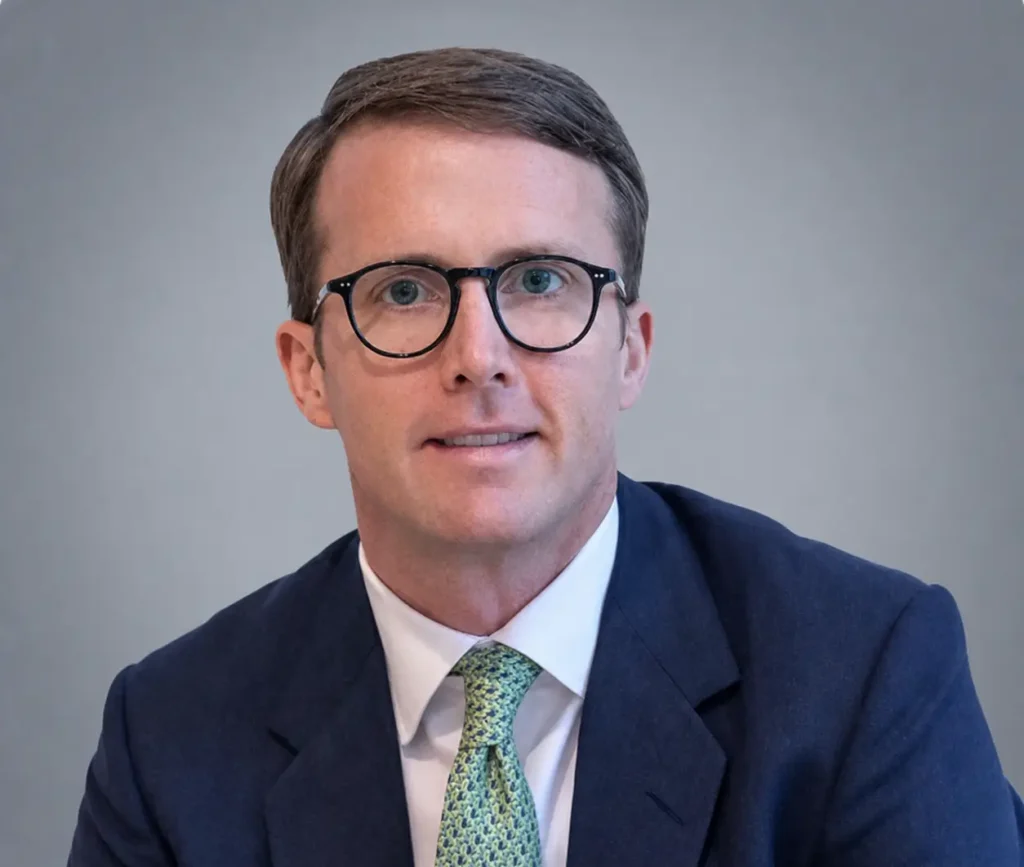
I recently went one-on-one with Todd Smith, CEO of Associated Metal Forming Technologies.
Adam: Thanks again for taking the time to share your advice. First things first, though, I am sure readers would love to learn more about you. How did you get here? What experiences, failures, setbacks, or challenges have been most instrumental to your growth?
Todd: My journey has been unconventional, with a mix of hard work and good luck. I started as a tax lawyer. The work demanded a level of attention to detail that has shaped how I operate ever since. My father instilled the same instinct growing up on a property in Australia: measure twice, cut once. The other half of that lesson is to move with speed and purpose.
This discipline was reinforced very early in my career. As a junior associate, I spent an entire weekend drafting a tax memo for a partner. I was in the office Sunday night finishing it, genuinely proud of the work. He walked into my office late Monday morning. His message was short: “Make sure you read the exceptions next time.” That stayed with me.
After law, I moved into private equity. It was a great experience, but after nearly a decade, my time there had run its course, and my interests had shifted to other roles. I had set my heart on a specific CFO role at a PE-backed portfolio company. I didn’t get it. A 2021 sabbatical gave me the space to be honest about what I wanted, and I pivoted into operating roles, first as CFO and then as President & CEO. I had watched too many PE professionals sit on the boardroom side of the table without ever having run a company. Staying on that side felt disingenuous. That was the best professional decision I have made. The operating seat suited me, and I joined AMFT in 2024.
The hardest lesson I’ve learned in my career came from a difficult investment in Mexico during my PE years. There was a lot of frustration, angst, and a long list of stakeholders. What it taught me is the principle I run by today: speed with purpose. Patient about what you cannot change. Deliberate and fast on what you can. Roll up your sleeves, lay out the roadmap, and get it done.
Adam: In your experience, what are the key steps to growing and scaling your business?
Todd: Three things, in order. First, ruthless prioritization. On a flight to Asia, I built out a priority matrix for myself and the executive team: what the next quarter has to deliver, what gets pushed, and what does not get touched at all. Context on what you will not do is what creates the freedom to move fast on what you will.
Second, the right people in the right seats. Be honest with yourself and your team about whether your talent matches the journey ahead. Hire ahead of the growth, not behind it. By the time you need the talent, you have already lost a year. We have had real success bringing young, capable people into industrial manufacturing.
Third, come back to your strategic value creation levers in everything you do. At AMFT, we have three. Every quarterly town hall, I reference the same three levers and link them to the specific actions we took the prior quarter against each. It centers the entire organization on where we are going and connects every action to the strategy.
Adam: What are your best tips on the topics of marketing and branding?
Todd: Two principles. Be clear on what you are and what you are not. We are a custom-engineered metal components solutions provider. Staying true to that gives the entire organization clarity, including on what we are not. People execute differently when they have that clarity in front of customers, in solution design, and in delivery.
If it looks wrong, it is wrong. The visual has to match what you say you are going to do. You cannot make precision metal parts for aircraft and cars from a facility that looks like trash, and the same applies to your marketing material, your website, your emails — every place a customer sees you. In precision engineering, the way you present yourself is part of the product.
There was a structural branding decision underneath this. When I took over at AMFT, customers knew us as a collection of legacy names: Associated Spring, Hänggi, AH Metal Solutions, Sko-Die, P&B. Consolidating them under AMFT was a marketing decision as much as a structural one. It signals that customers are buying a global capability set, not a regional shop. Your brand has to match your strategy.
Adam: What do you believe are the defining qualities of an effective leader?
Todd: Context. People at every level need to understand the why. Why their role matters, how it fits into what we are trying to achieve, and how they connect across the organization. When people see their part in the bigger picture, they execute. When they cannot, the best strategy will not survive contact with the day-to-day.
Separating signal from noise. As a leader, you can be pulled in a thousand directions every day. The discipline is to be deliberate about where you spend your time and where you can actually have an impact.
Decisiveness with incomplete information. Hindsight is the perfect science. Waiting until you think you have everything is worse for the business and worse for the team. What I tell my team and their leaders is this: make every decision based on what is in the best interests of the company and its stakeholders, and do not hesitate because you do not have all the information. If four weeks from now, you learn something that would have changed your call, so be it. The decision has to be made.
Adam: How can leaders and aspiring leaders take their leadership skills to the next level?
Todd: Get out of the office. Get on the shop floor. Get in front of customers. What you see and hear in person are the real signals in the business. Every customer meeting in Asia, the Americas, or EMEA teaches me something about their business that no deck will. How they are thinking. What they are seeing geopolitically. What they need from a supplier eighteen months out. The team is the same. They will tell you what we should be doing differently, but only if you are close enough for them to tell you.
On a recent visit to our Mexico site, the drive from the airport with our site leader was the most valuable hour of my month. She runs her plant brilliantly and tells me the truth. When leaders get too far from the action, they lose touch with what is actually happening.
The other piece is real customer relationships, built when things are going well, not only when something has gone wrong. Too many customers tell me the CEO only shows up when there is a problem. Sit down with them when the scorecards are strong. That is what makes the harder conversation a partnership conversation when the time comes.
Adam: What are your three best tips applicable to entrepreneurs, executives, and civic leaders?
Todd: Decide where you are going. Be clear, in your own mind first, about the outcome you are driving toward — and then make sure your team and your organization can articulate it back to you. If the leader cannot say it cleanly, no one else will either.
Get everyone going in the same direction. A piece of leadership advice that has stayed with me came through my wife from a seasoned CEO: if the whole organization is moving in the wrong direction together, you can turn the ship around. If people are unclear on the strategy and on their role, they move in different directions, and a fragmented organization is almost impossible to redirect. Alignment is more important than being right on day one. You can correct course. Spending time fixing chaos is a drain on time and energy.
Be available. Walk the floor. Travel to the sites. Do skip-level calls and 1-on-1s. The people closest to the work need to know they can find you, and the customers you serve need to know you show up in every single moment, both good and bad.
Adam: What is your best advice on building, leading, and managing teams?
Todd: Be clear on where you are going, what is expected, and what your team needs to get it done. That is the foundation. Set the pace from out front by removing the roadblocks. The leader’s job is not to do the work. It is to clear the path so the team can do theirs. Some roadblocks hide in plain sight. After an executive offsite, the team’s feedback was that the first month of every quarter is a perfect storm: town hall, performance review meeting, and in-person board meeting all stacked together, creating churn across the organization. We could not move the board meeting, but we could move the others. That kind of cadence audit is part of the job.
Keep it simple. Ruth Porat said in an interview once that if your team cannot explain something to you in two sentences, they do not understand it themselves. That is true at every level. Simple beats complicated. Hold yourself to the say-do ratio. As a leader, you do one hundred percent of what you said you were going to do. People do not respond to what you say. They respond to whether you do it.
Give people room to do their job and hold them to it. When they are off course, tell them. The moment your direct reports stop leaning in to do their job, you end up leaning in to do it for them. That is the moment the wrong person is in the seat.
Adam: What is the single best piece of advice you have ever received?
Todd: Play your role. It came from Anthony Parkin, one of my coaches when I was playing Australian rules football in college. It applied on the field then. It applies in business now. When you are part of a team, you do your job. Not the job you want. Not someone else’s job. Yours. That is what makes the team win.
The translation to running a company is direct. Hire people to do specific jobs. Be clear with them about what those jobs are. Then trust them to play their role, and play yours.