

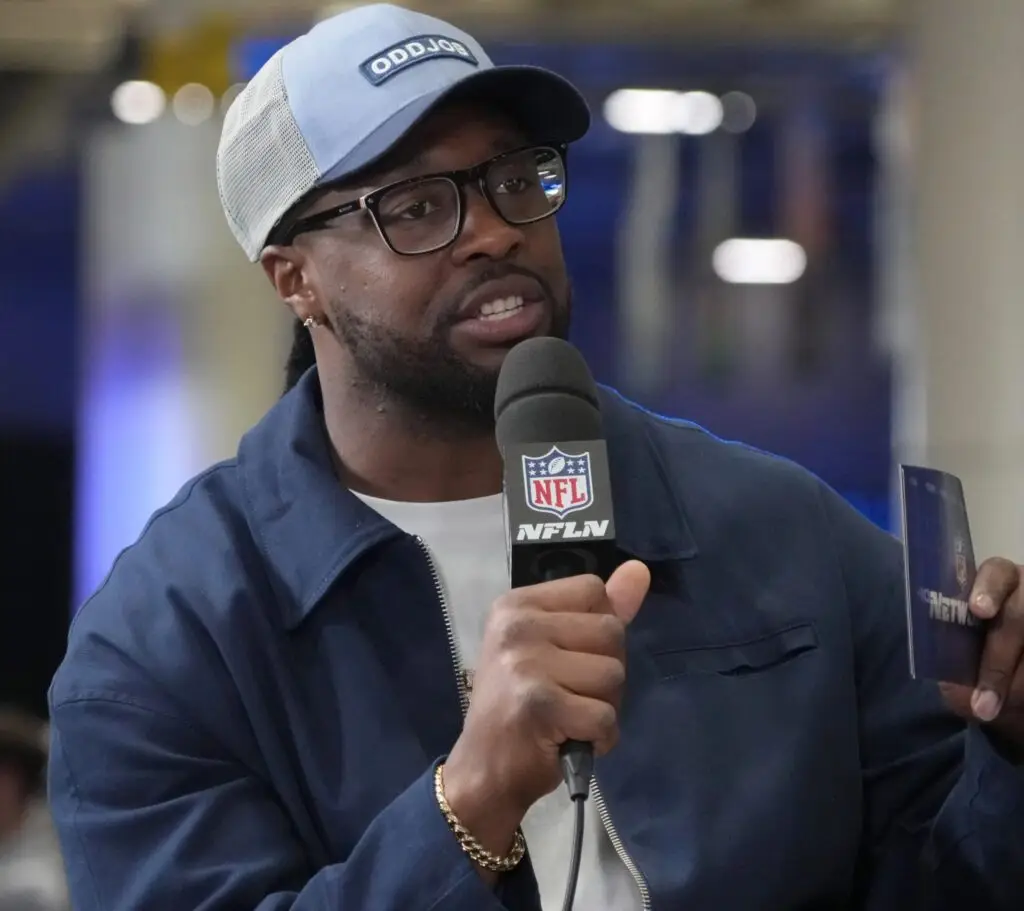
I recently interviewed former NFL star Gerald McCoy on my podcast, Thirty Minute Mentors. Here is a transcript of our interview:
Adam: Our guest today was a star in the NFL. Gerald McCoy was selected to six consecutive Pro Bowls and is a three-time NFL All-Pro. Gerald, thank you for joining us.
Gerald: Man, I appreciate you having me. Any opportunity I have to talk, I’m a talker. I love to talk, and if I have time that doesn’t take away from my family or anything that I have to do business-wise or school-wise, then I’m all up for it. So it’s always an honor, because you could have easily asked for anybody else, but you asked for Gerald, and I love that. So thank you so much for having me.
Adam: The honor is mine. You grew up in Oklahoma City, and you were one of the top high school football players in the country. You were recruited by every top college football program in the country, but you decided to stay home and play for Oklahoma. Can you take listeners back to your early days? What early experiences and lessons shaped your worldview and shaped the trajectory of your success?
Gerald: Yeah, let’s start back at the beginning. So I’ve been playing football since I was seven years old, and when I first started playing, I was an overweight kid. I’ve been big my whole life, had asthma, had to grow out of it. The athlete that people see me turn into as an adult or in college, it took a lot of work, because I used to cry just running to touch the fence to start practice because I couldn’t breathe, and I was out of shape and wasn’t used to working out and all that.
But then I started playing. I actually started playing football at the YMCA, and then I was at my sister’s softball game, kind of playing in the sandbox or whatever, and a football coach comes by and he’s like, “You play football?” And I was like, “Yeah.” Dean went to talk to my dad, and my dad was like, “Hey, you’re gonna go over here and play for this.” And I was like, “I really don’t want to.” He was like, “Yeah, I don’t think you heard me. You’re going to play football.” And I was like, “Oh.” So that wasn’t an option. That was a, this is happening.
I end up playing, and that coach who came up to me and my father actually ended up being my little league coach my entire little league career and was actually at my retirement party. So we ended up finding out that actually we were related. Wow. So it was incredible, but who I became on that team shaped who I ended up becoming in middle school and high school and ultimately college and the NFL, because I had to earn my way.
I started out playing offensive line and defensive line, but then as I got older, I played up two years. When I played with the older kids, there were some guys on the team that were playing defensive tackle, and I was a big Warren Sapp guy, and I’m like, I want to do that. I don’t really want to block people. And my dad was like, they’re not just gonna give it to you just because you’re big. They’re not gonna give it to you. So I went and worked, and I got better.
Well, fast forward, that carried over into high school, because I was bigger. I initially was a starter as a true freshman in high school, and I said, well, I want to play defensive tackle, because they had me on the offensive line. He was like, they’re not gonna give it to you. You got to work for it. So I worked for it. But this is what happened, and this is what I want to talk about. What really shaped me, it was my parents and my dad.
This is what he told me, and a lot of parents out there are going to hear this and be like, dang, he said that? And like, yeah, he said that. So I was around 15 years old, and my dad said, “G, do you want to play college football?” And I was like, “You know, Pops, I never thought about it, but yeah, I think I do.” His next line was the reason I got up and ran two miles this morning and I still work out to this day, was the line that I’m going to say to you that shaped who I was as an athlete. My dad said, “Colleges don’t want fat kids.”
And what I took from that is I gotta get in shape. I gotta work harder. They’re not just gonna give it to you. My dad told me from the time I was seven, eight, nine years old, they’re not gonna give it to you. You gotta go earn it. And I did, man. I lost 30 to 50 pounds over a summertime, and it wasn’t that I did anything special. Kind of watched what I ate a little bit, but you know, you’re still young, so you eat whatever. But your body’s still developing.
But what happened is I had never truly just worked out a lot, and I worked out nonstop. Wore trash bags, wore hoodies and everything, and I’m running every day, sprinting. I would do sets in the weight room, then I would take off and run a lap around the weight room and come back and do my next set, and the weight just fell off because I was developing as a person, but also I was working out.
And from that day forth, man, just growing up in Oklahoma City, understanding that the South Side of Oklahoma City, because there’s some schools in Oklahoma City that get pub, understanding that kids don’t come from where I come from and make it out, I knew I had to be different. I knew I had to separate myself and find a way to separate myself. And that started all the way back when I was seven, eight, nine years old, and that’s really what shaped me, man. Just my dad, my mom, my upbringing, understanding that God was in control, and I went from there.
Adam: Gerald, I love it. And you played with the most talented football players, the most talented athletes. You played at Oklahoma, you played with, you played against literally the best of the best when it came to raw talent. Then you went to the NFL, you played with the best of the best when it came to raw talent, natural gifts. But as you just shared, that is only going to take you so far. To get to where you want to be, to get to that next level, whether that next level is going from an okay high school player to an elite high school player, or becoming a college football player, an elite college football player, a star in the NFL, talent alone isn’t enough. It’s that work ethic, that lunch-pail mentality, that drive, that desire married with the natural talent that you were able to unlock.
Gerald: Yeah, and I’ll take it a step further. What I would say to anybody, think about this for a second. How many times have you said, I’ve said, anybody has said, hard work pays off? We all know that you got to work hard, but there’s a difference in working hard and separating yourself.
And I’ll explain. So what I found out very quickly is you have to know who you are as a person. Who are you as a communicator, as a leader? Are you a follower? Everybody’s not going to be a leader. I don’t want people to push be a leader, because everybody’s not. Everybody’s not built or made to be a leader, but you can be an elite follower. So you just have to know who you are.
I’ve always stood out and been upfront. That’s why I work in the media now, because again, I love talking, and I don’t mind talking. Cameras don’t bother me, crowds don’t bother me. It’s a gift that God gave me. It’s communication. But I understood also who I was as an athlete, and I was an inferior athlete. I wasn’t the fastest, I wasn’t the strongest. I was very quick, but I was highly intelligent when it came to the game.
But I had to realize that I have limited resources in Oklahoma City, where I went to school at Southeast High School. I don’t have all these extra trainers and this massive weight room, and our locker room, some of our lockers didn’t even have doors on the side. We didn’t have a training room. I didn’t see a training room until I got to OU.
So what I learned at an early age is find a way to separate yourself. So if you have a group of people who are all working hard, we’re getting up at six o’clock, we’re going in, we’re working out, and in that workout everybody’s going hard, and you look left, you look right, and you’re like, dang, everybody’s going hard. We all making our times, we all lifting weights, and we all just left at the same time. Y’all all just worked hard. Okay, so the hard work is going to pay off. But what are you doing to separate yourself?
So what I did is I started finding different ways to separate myself, and that started with knowing who I was as a person and as an athlete. Okay, one of those examples is when I would practice, when I would play in the NFL, I would get to training camp. I worked extremely hard in the offseason, extremely hard. I lived in Florida, but I would fly all the way to San Diego to train with my trainer, Todd Durkin, who worked at Fitness Quest 10. And I trained with Drew Brees, Darren Sproles, Peanut Tillman, trained with a lot of different people.
But TD would put us through these extreme workouts, but then I would show back up and I would still be tired. So I said, okay, G, what is happening? Why are you showing up tired? I said, because when we play football, you put on a helmet and shoulder pads, but when you train, you don’t wear none of that. So I said, okay, if everybody’s training and they’re going to take layers off when they get hot so they can continue working, I’m gonna double up on my layers.
So anytime I train, I wear a hoodie and a shirt and a compression shirt, so I usually have two to three layers on. But when I started training, I said, okay, why are you so tired when you go back, when you know you’re in shape? It’s because you put a helmet on and shoulder pads. So you know what I started doing? I started training with a helmet and shoulder pads.
And this started all the way back when I was in high school. When I would do a set or lift, I would go run a lap, and I had on a trash bag and a hoodie and sweats. When I got to college, if I knew we had a scrimmage, I would go outside. We had a little patch of grass outside my apartment complex. I would go outside and work on my steps, work on my steps, work on my steps. Everybody else upstairs playing video games. I’m outside working on my steps.
We all just did the same amount of hours, but just these extra reps that I got, I’m separating myself. So I started doing this at every level. Once I got to the NFL, then I started realizing I’m in much better shape. I have put myself over here while everybody else is over here.
So it’s not just about working hard. You got to find a way to separate yourself from everybody. What does that look like for you? You cannot find a way to separate yourself until you know who you are as a person, and that’s what I discovered, and that’s what I tell anybody. Know who you are as a person. Figure that out first, and then find a way to separate yourself from everybody else. It looks different for everybody. That’s how I did it. Everybody else might do it a different way.
Adam: Gerald, what you’re describing is universally applicable, and what you’re describing is the difference between good and great. Finding that little edge, evaluating everything that you’re doing, and asking what is a small thing that I can do in every little thing that I’m doing that will allow me to get to that next level, that will allow me to get even better?
Gerald: Yeah, for sure, and I would do that in everything. I do it when I work out now. If I feel like I need an edge, I’ll put on a sauna suit while I run, regardless of what I’m doing. I try and find a way to do it differently. Even when I’m on NFL Network, I work on NFL GameDay Morning. ESPN just bought NFL Network, so now I’m with ESPN. But when I was with NFL Network, and we were on NFL GameDay Morning, I purposely would let my coworkers take whatever answers, and I had a rule: no low-hanging fruit. Because if I give an answer that somebody at home can give, even if it’s coming from a Kurt Warner, who’s a Hall of Fame quarterback, his mind doesn’t work like everybody else’s. So the answer he’s going to give, most people wouldn’t be able to give, but if you played the game long enough, you’ll come up with what he’s come up with. So I said, I’m gonna let them have those answers. I’m gonna purposely take whatever is left over, so it forces me to have to think. Now I have to think outside the box, and that was my way of separating myself in the media. Come up with these unique ways to present what it is I’m saying.
When I played, what I would do is, okay, everybody prepares for their opponent. He’s 6’5″, 320 pounds, been in the league four or five years, an All-Pro, not an All-Pro, hasn’t started, has started, whatever you want to say about him. You know what I would do? I said, okay, that’s surface-level thinking of how to figure out your opponent. I would go research the person, because I know me personally as a married man with children, you’re not going to outwork me because I have something else bigger I’m playing for. Everybody knows my faith leads and guides me, so you’re not going to outwork me because I represent something bigger. So when I would go study a person, I would say, okay, what is his age? How long has he been doing this? Is it a contract year? Now I know I’m going against a guy who’s trying to get a new contract. He’s going to be going extremely hard. Okay, but there’s a different level of a rookie who’s coming in who’s just trying to get his feet wet. His psyche ain’t gonna be there yet. He might be going up against me, who’s an All-Pro, and he’s like, his eyes get big, so I know, okay, I can use that.
But if I’m going up against a guy who’s been in the league six, seven years, and I research him, he’s got a wife, he got three kids, or whatever, man, that is the fight of your life, because I know he’s fighting for something bigger. And that’s how I would find how to gain an edge. I would research injuries. Has he had an ankle? Has his hand been hurt? What is going on with his shoulders and all this? You just got to find a way to gain an edge, and that’s what you’re talking about. And I’ve found a way to do that in everything that I’m doing.
Adam: And as you’re describing the game within the game, it really comes down to preparation. It comes down to analyzing the little details, and it’s through those little details that you’re going to find those big breakthroughs.
Gerald: Yeah, yeah, for sure. So prepping for a game or anything, even if it’s on TV now, if I’m prepping for the show, whatever I’m talking about, I try and find those little details where you can find, okay, this is why this is happening, or this connects to this. So on one of the shows I’m on, Arena Gridiron, we talk about different topics. I research all the way back to as far as this topic may go to see if there’s a connection that people are not seeing and being outside the box, thinking a lot further.
When I was preparing for the game, I always tell people to win the rep before the rep. How do you do that? You put everything that they can do in a box. Okay, that’s based off the formation they’re in. For people who are wondering, if you don’t know what formation is, it’s how they’re lined up. You look at what personnel they’re in. If you don’t know what personnel is, what I’m saying is, how many players are in each position, and where are they lined up? That’s your personnel. So then I know, based off where they’re lined up and who’s at what position, this is what they like to do. They can’t do this. It literally can’t happen because he’s in the wrong spot, and that’s how I would win the rep before the rep, looking at where my opponent is at, looking at where the quarterback is at, where’s the running back at, how many wide receivers are on the field, where are they lined up. And that’s how you win the rep before the rep. And again, that’s all about preparation.
Adam: And a lot of what you’re describing is controlling what you can control. There’s a lot that you can’t control, and you were drafted by an organization that didn’t have a winning culture. You played for a college program that had an incredibly winning culture, and then all of a sudden you get into the NFL, and it’s the exact opposite. What were the differences between being a part of a winning team and a losing team, a winning culture and a losing culture? And what can you do as a leader to shift a losing culture into a winning culture?
Gerald: Yeah, so the difference in what I seen when I was at OU versus what I seen when I was in Tampa is everybody being on one accord. And then also in college, when you go to university, especially when I played, now it’s a little different because you can go buy these kids, but when I played, you could go out and you just recruit the best players, and then you get these coaches to get the best players, and y’all all operate on one accord. But one thing we did at OU is our work ethic and our preparation. But then when I got to the NFL, I realized that our unity wasn’t anything like college.
The closest I’ve ever been to my teammates was when I was in college. When you get to the NFL, the guys you start the offseason with is not even who you’re gonna go into training camp with, and then the guys you start training camp with are not even the guys you’re gonna go into week one with, and the guys you go into week one with are not gonna be the guys you go into week 17 with. That’s just how the NFL works.
So when you talk about controlling what you can control as a leader, I had a strength coach named Dave Kennedy. One day I came in, and I had my head down. I was a little tired, whatever. He was like, “What’s going on?” I was like, “I just ain’t really in the mood today.” He pulled me to the side. He said, “You are not allowed to have a bad day because you’re the leader. It does not matter what you’re dealing with outside of the realm that you have to operate in. When you step into that realm, you are not allowed to have a bad day. So whatever you have to do to compartmentalize whatever it is you’re dealing with, do it, because as the leader, if you know that everybody is looking to you, they’re allowed to have a bad day, because they know you’re going to do your part. They know you’re going to bring the energy. They know you’re going to handle if coach has something to say. They know every day that person is going to do what they have to do. They’re going to do it right. They’re going to make sure everybody else is doing it right, not by just saying, hey, let’s do it right. They’re going to look at you and see you doing it right, and they’re going to follow what you’re doing. So if you show up and you are moping, it gives them a chance to mope.”
Michael Jordan, in The Last Dance, said, “I never asked any of my teammates to do anything I wasn’t willing to do.” If I wasn’t doing it myself, I never asked my teammates to do it, and that’s who I was as a leader. We in the NFL have rookie duties. You bring in the rookies and they carry pads or they do all these different things. And I never had rookie duties because of how I got treated as a rookie. You know what my rookie duty was? I had one rule, one rule as a leader: mandatory extra work, either before or after practice. That’s all I demanded from my rookies.
I even took it a step further, and when I switched from Tampa to Carolina and went to the Raiders in these different places, it shocked everybody, because I have all these accolades as a vet in the NFL. One thing rookies had to do is carry the vets’ pads. I would go carry all of my rookies’ pads or carry my other teammates’ pads. I would go to the offensive side of the ball and grab the quarterbacks’ pads, or our opponents, our arch nemesis, the offensive line. I would go carry their pads, and everybody would be looking at me crazy, like, “What are you doing?” And I always used to tell them, “You have to learn to serve before you lead.” And this is what I did. I had to serve them before I could lead. So what I would do is I would service my teammates. I’m carrying y’all’s pads. I’m gonna help you. Need extra water? Hey, don’t worry about it. I’ll do it today. And that’s how you lead by example, and that’s what leaders have to do. You’re not allowed to have a bad day. Learn how to be a great server before you start leading.
Adam: As a leader, you set the tone, you model the behavior that everyone around you is going to follow. And to your point, if you show up and you are down, you have low energy, you have a bad attitude, that’s going to spread to everyone around you, and you’re not just the one having the down day. The organization is having a down day because of you. On the flip side, when you show up with energy, with passion, with enthusiasm, ready to go, ready to get at it, you’re going to uplift the entire culture.
Gerald: It energizes everybody. That’s what leaders do. They set the tone. So if you have a classroom with a teacher and you come into the class and the teacher’s in a bad mood, it’s going to bring the whole energy of the class down. Everybody’s about, “Oh, here she go,” or “Here he goes.” But if you walk into a classroom and your teacher has a lot of great energy, it’s going to make you more willing to, even if you don’t feel like being at school today, you are going to be like, you know what, I can get through this class. I mean, look at the energy this teacher’s given. I can get through this class, and at this next class, whatever.
But it’s like that anywhere you’re at. If I come into my house and I have bad energy, it spreads like wildfire across the house. Now my kids are walking on eggshells. My wife is like, “What’s going on with you? Are you all right?” This and this, and now it’s a lot of apprehension because our leader doesn’t have great energy. And my wife, I have to give her a lot of credit, because one thing she makes sure about me in our house is that me, the leader, has the best energy. You cannot have bad energy because you have such a strong aura and energy. Whatever energy you have, good or bad, it’s going to spread. And that’s not just in my house, but she preaches that to me wherever I go. Any room you walk in, your energy is so strong. So if you have bad energy, it’s going to spread across to everybody.
So as a leader, you have to set the tone, especially if you want to have some success. If you want to have success, you got to set the tone for how you want things to go. And bad energy, that’s not the way, because energy transfers.
Adam: How do you stay motivated on the days you don’t feel motivated? And in your case, there was a lot of losing, and there were a lot of days where psychologically I would imagine you felt down. Physically, you’re destroying your body. You’ve got to feel down, to say the least. How do you motivate yourself, and how do you motivate others?
Gerald: You find your why, and your why is whatever it is. My why was different from everybody else’s, just like your why is different from mine. Mine is different from yours. My wife’s different from mine. Everybody has their why, and you have to remember your why. Mine always starts with God. God gave me the ability and talent to play this game, and He’s given me a platform to transform lives. Not with the talent to play football, but my talent gives me a platform to change lives, and I have to remember that anytime I’m doing anything. I have to remember it’s bigger than you. It’s much bigger than you. And then it goes to that name. My parents gave me a name. The McCoy name is bigger than me. Who I represent is bigger than just Gerald Jr. So when you’re going and you’re operating, whatever you’re doing, it’s bigger than you.
Then I got Oklahoma City. I just told you, people who come from where I come from don’t make it to do the things that I’ve been able to do. I was just at the Michael Jackson premiere for his new movie. I’m from the South Side of Oklahoma City, and I told my publicist this doesn’t happen for people where I’m from. So when I’m out here, imagine if, when I had those bad days, or whatever, I’m just like, whatever, I didn’t learn to push through, I didn’t learn to persevere, I wouldn’t have the success I had where I got invited to something like that. Look at the opportunities I could have missed out on if I forgot what my why was.
But then ultimately, I never forgot that I’m from the South Side of Oklahoma City, and people don’t make it here. You’re sitting here complaining about losing when you could just as easily not have been in the NFL. You’re losing in the NFL. Oh, by the way, you’re making a lot of money to do it. So find a way to push through. Fall back in love with the game. Are you playing this for money, or are you playing this because you love the game? Of course, you want to win, but do you love the game? And do you understand this is bigger than you?
God gave you a mission, and if you lack, you are not going to complete that mission. Your parents gave you a name. If you lack, you’re not going to represent that name properly. You came from somewhere. If you lack, you’re not going to represent that place properly, so people understand where you come from and how the people from there are. You have a wife. You have kids you have to provide for, but also never forget that it could just as easily not be you. There’s a lot of people who didn’t make it to the NFL, not because they wasn’t good enough, because they literally didn’t make it. They passed away. Something could have happened. It could have been an injury. Their parents couldn’t have afforded to get them to certain camps and all that, but God chose me to be here. So I had an opportunity to be here. So if I’m gonna be here, I’m gonna make the most of it, and I never forgot that. But that’s my why. Why are you doing it? And that’s what everybody has to figure out.
Adam: Hey, Gerald, you’re sharing something extremely important, and a fan of the Bucs or a fan of the NFL could watch you and watch your career and ask, how do you stay motivated when the results don’t reflect your effort? How do you stay motivated when you’re showing up every day playing at an All-Pro level, and your team isn’t winning, your team isn’t making it to the playoffs? And what you shared is that there are certain things that are bigger than winning and losing a football game, and you have to remind yourself of that. Why am I doing what I’m doing? And to your point, your why can be different than my why can be different than the why of your offensive lineman, your quarterback, your linebacker, your safety. We can each have a different why, but as an individual we need to remind ourselves why we do what we do, and as a leader we need to help the people who we lead, who we influence, who we impact, uncover their why, and remind them of their why when they need to be reminded of it.
Gerald: One of my favorite athletes of all time, favorite people of all time, is Kobe Bryant, and he said, “Do what you do at such a level that it motivates other people to be great at what they do.” So when I think about fans, short for fanatic, not supporters, fans, there are some people who literally go to work and they set aside finances to go support their favorite team. So when I’m getting up and I’m training and I’m working out and I’m half doing it, and I’m showing up, and my performance is not where it should be, and I know it’s because I haven’t given it everything I needed to give it before I got to the game, now I get in the game and I’m not performing at the level that I’m capable of performing at. There’s some people who sit in those stands or sit at home that depend on me and my performance in order to operate throughout the week. There are literally people who do that. They support athletes in such a way that you never know who you’re impacting. You have no idea who’s watching you and watching what you do.
An interesting story that I always tell people, it’s always bigger than you, and this is my example of that. One day after a game, I was leaving the game, and my dad pulls me to the side. Regularly scheduled programming: get up, shower, get ready to go to the game, go in the game, stretch, do everything, play the game, come out, sign as many autographs as I can, hug on my family, love on them. My wife and I get in the car, we go home. Regularly scheduled programming. I get to the point of after signing the autographs, my dad pulls me to the side. He’s like, “G, I want to tell you something. There was a gentleman who just came up to me, and he said he had a friend who he brought to the game, who requested to come to the game because of you.” And I said, “Oh, that’s cool.” He said, “No, I haven’t even got to the point yet.”
He said, “That guy said I need to come to the game to see if what people say about this person is real or if it’s a persona, if it’s something he’s doing for the camera.” And he brings him to the game. They get field passes. He’s watching me before the game in warm-ups, dancing, having a good time, hugging on people, talking to everybody, signing autographs, just enjoying the time. We don’t win the game. I come out after the game, I’m still smiling, still hugging on people, still signing autographs. Energy didn’t switch or didn’t change. He came to the game to see if people like me actually existed. Why does that matter? Because he told his friend that his goal that morning was to commit suicide, but if people like me existed in real life, there was something bigger for him out there.
So when he seen me in my element, win or lose, I was the same person that everybody said I was in real life. It gave him motivation. It gave him a boost of energy. And my dad told me that’s why you have to be genuine. That’s why you have to be real, and that’s why you have to understand that it’s bigger than you. You never know who’s watching you do what it is that you’re doing. So that day, just me being me, me giving all the effort that I have, and representing God first, representing my name, representing Oklahoma City, my wife, my kids, who I am as a person, but also never forgetting that it could just as easily not be you, saved somebody’s life. And that’s why, as a leader, you cannot have an off day. Whatever you’re dealing with, you compartmentalize it, and you deal with it somewhere else. But when you come into your realm, and you lead, you have to be who you’ve been called to be, because you never know who’s watching.
Adam: I love that, and you’re a famous football player, you’re a star athlete, you’re someone who anyone who follows football knows, but every single person has that same ability to impact others. Every single person has people in their lives who they impact, who they touch, who they don’t realize that they touch. As a professional football player, there are going to be more people who you impact and influence and touch than the average person on the street, but every single person makes impact. Every single person has that same responsibility and duty to show up as their best selves, because to your point, you don’t know who you’re touching.
Gerald: Yeah, you just never know, man. And being genuine is hard to find. That’s why my wife and I keep our circle very small, because you never know who’s really being real and who’s being genuine. And this is what I’ll say to anybody, regardless of what profession you’re in or whatever you’re doing: understand that that person that you look at in the mirror every day is the most unique thing walking this earth, because it’s only one of you. There’s not two of you. Even if you’re a twin, there’s only one of you. Yeah, y’all split, that’s fine. We all in our families have certain blood and all this, but your name is different. There’s something unique about you. There’s literally only one of you. You might look like somebody else, but there’s one of you, and nobody is better at being you than you, and you’ll never be better being somebody else than them.
So why try and be somebody else? It’s only one of you, and you look at it every day in the mirror, and people have to come to grips with who that person is and be okay with being that person. People are going to judge. People are going to talk. People are going to say what they’re going to say. There’s just evil in the world. There’s negative in the world. There’s nothing we can do about that. There are things that are out of our control, but what you can control is you and how you handle everything that deals with you. Accept who you are. Love you first, and then it’s easy to be genuine. The only time you see people hating on other people is if they have something internally going on. The only time you see people being a certain way with other people is if they’re dealing with something with themselves.
So I say this to anybody who’s listening: learn to love yourself first, and then genuine, it’ll just happen because you won’t be worried about what everybody else got going, because you’ll know who you are, and you’ll be okay with that person. And you’ll soon find out more people love that person more than you think.
Adam: You’re only going to be as successful as possible if you’re your authentic self. You’re only going to be the best leader that you can be if you’re your authentic self. You’re only going to be as happy as you can possibly be if you’re your authentic self, and what you’re describing really boils down to getting to a place where you are truly comfortable in your own skin. How can anyone get there?
Gerald: For me, understand that God made us all who He made us, and this is what I believe. If you’re listening to this, and that’s not what you believe, that’s okay. But you understand that you were born you, and the court of public opinion is very strong, and it is very motivating to some people, and it is overwhelming to a lot of people. But once you understand that all of those people that are pointing fingers or passing judgment deal with things personally themselves as well, then you’ll start to understand it’s okay being you, because they are them and they have their own flaws. They have whatever they’re dealing with personally. They have everything that they have to deal with.
People go off social media, because social media, whether people believe it or not, is a drug. Now it can be a positive, it’s changed a lot of lives, but people always look at the outside and say, oh, well, this is what the public says is how it’s supposed to be. This is what’s popular, and this is what will cause the least amount of conflict or confrontation by just going with the flow and being status quo. If you look at anybody that’s been successful at what they’ve done, they always stand out. They are okay being themselves. Muhammad Ali, Floyd Mayweather, Kobe Bryant, Michael Jordan, LeBron James, Serena Williams, Tiger Woods, Tom Brady. You can go down the list of all these greats that have been phenomenal at what they do. They’re okay just being themselves and doing it their way, and they always stand out.
You don’t have to believe what I believe about God. Just look at reality. Anybody who is successful or great at what they do, I guarantee they stand out. And when you get to the bottom of what it is, they’re okay with being them, and they do it their way, and that’s why it works. That’s why it stands out, and it’s the Where’s Waldo effect. All these people, you’re trying to find Waldo, and once you find Waldo, you see, like, dang, that dude looked completely different from everybody else. That’s where Where’s Waldo came from. That’s where it came from. All this hoopla and all this, everybody trying to be the same, everybody trying to be the same. I’m going to search for the one that is different. Where is that guy? And all of the successful people that we know in life, I guarantee you, it all comes back to they’re okay being themselves and doing it their way.
Adam: Would you rather be the second-best version of someone else, or would you rather be the best version of yourself? And if you try to be the second-best version of someone else, you’re not going to be successful. Who wants an imitation? Who wants that? In order to be successful, you need to be you. There is only one you.
Gerald: It’s only one you. And if you look at anybody who is compared to anybody, or it’s, “Oh, he looks like him,” or “She’s like her.” I told y’all one of my favorite athletes or people ever is Kobe Bryant, but Kobe Bryant could only go so far because everybody said he looked like Michael Jordan. Everybody said he looks like Mike, or he got that from Michael Jordan, or this move looks like Mike. He copied everything that Michael Jordan did, so they never let Kobe Bryant surpass Michael Jordan because he always was tied to Michael Jordan.
Now look at everybody else. Larry Bird was Larry Bird. Magic Johnson was Magic Johnson. Shaq was Shaq. LeBron is LeBron. Tim Duncan was Tim Duncan. Michael Jordan was Michael Jordan. Kevin Durant is Kevin Durant. All of these people just look like them, and other people have to try and be them. When we look at Kobe, as great as he was, he can only be pushed so far because they said he looked like somebody else. The facts are the facts. That’s just how it is, man.
Adam: And it’s no different in any other medium. You work in the media. When you think about the greatest NFL TV announcer of all time, who is that?
Gerald: John Madden.
Adam: Absolutely. Only one John Madden.
Gerald: Only one.
Adam: You might have a different opinion than I do, because you’re from Oklahoma City, but when you think about the greatest basketball announcer of all time, who is that to you?
Gerald: The greatest basketball announcer of all time.
Adam: I think of Chick Hearn. There was only one Chick Hearn.
Gerald: I would go with Chick, yeah.
Adam: And you can go down the line. Baseball, only one Vin Scully. John Madden didn’t try to be someone else, and no one else can be John Madden. Chick Hearn didn’t try to be someone else, and no one else can be Chick Hearn. Vin Scully didn’t try to be someone else. No one else can be Vin Scully. You can only become great if you are your authentic self.
Gerald: Yes, and being your authentic self, you’d be surprised how many people you motivate to be their authentic selves. I’m gonna leave you all with this. I was at the Super Bowl, probably two years ago, and I’m at an after-party after NFL Honors, and there’s a defensive lineman, a guy I never met before, but he’s a defensive lineman. He comes up to me, he’s like, “Gerald, man, it’s an honor to meet you. I watched you when I was growing up. I’m in the league now. I’ve been in the league two, three years. You’ve given me the confidence to be myself.” And I asked him, “What do you mean?” He was like, “When you were okay being a D-lineman, but also being a nerd, it allowed me to stop hiding the fact that I’m a nerd too. I love comic books. I love anime. I love cartoons. I love superheroes. I love all of it. But I felt like I had to put on this tough persona as a defensive lineman because I was a defensive lineman. But seeing you dominate the game, but always being superhero-centric, comic book-centric, love movies, all of that. I mean, look at me now. I got on a Batman chain and a Hulk fist.” This is just who I am, and I’ve always been this person, and I’m unapologetic about it. You never know who you might motivate to be themselves by you just being yourself.
Adam: Gerald, thank you for all the great advice, and thank you for being a part of Thirty Minute Mentors.
Gerald: Thank you so much for having me, man. I love you all, even if I don’t know you, man. I love you all, and wish you all the best. God bless you.