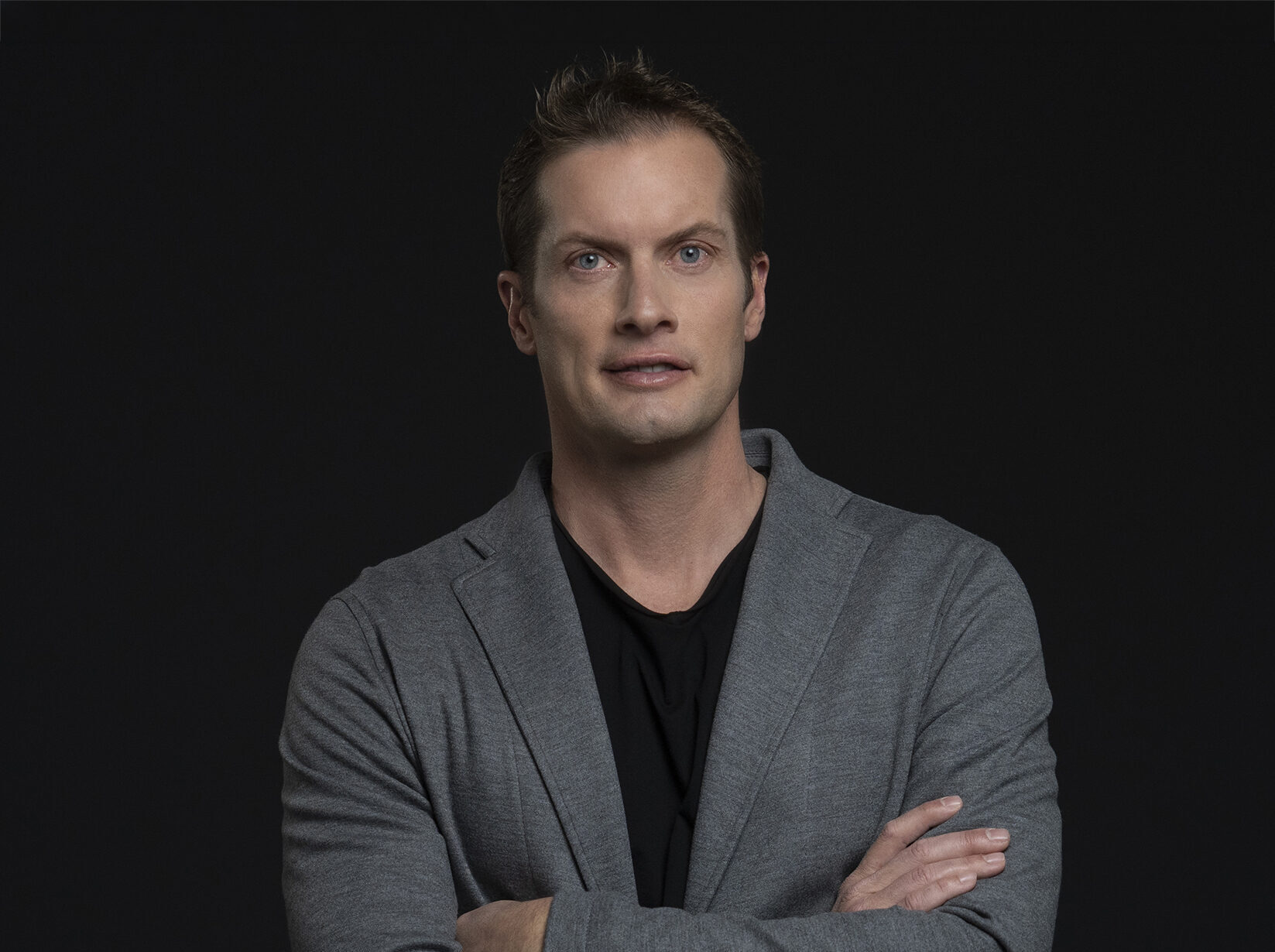

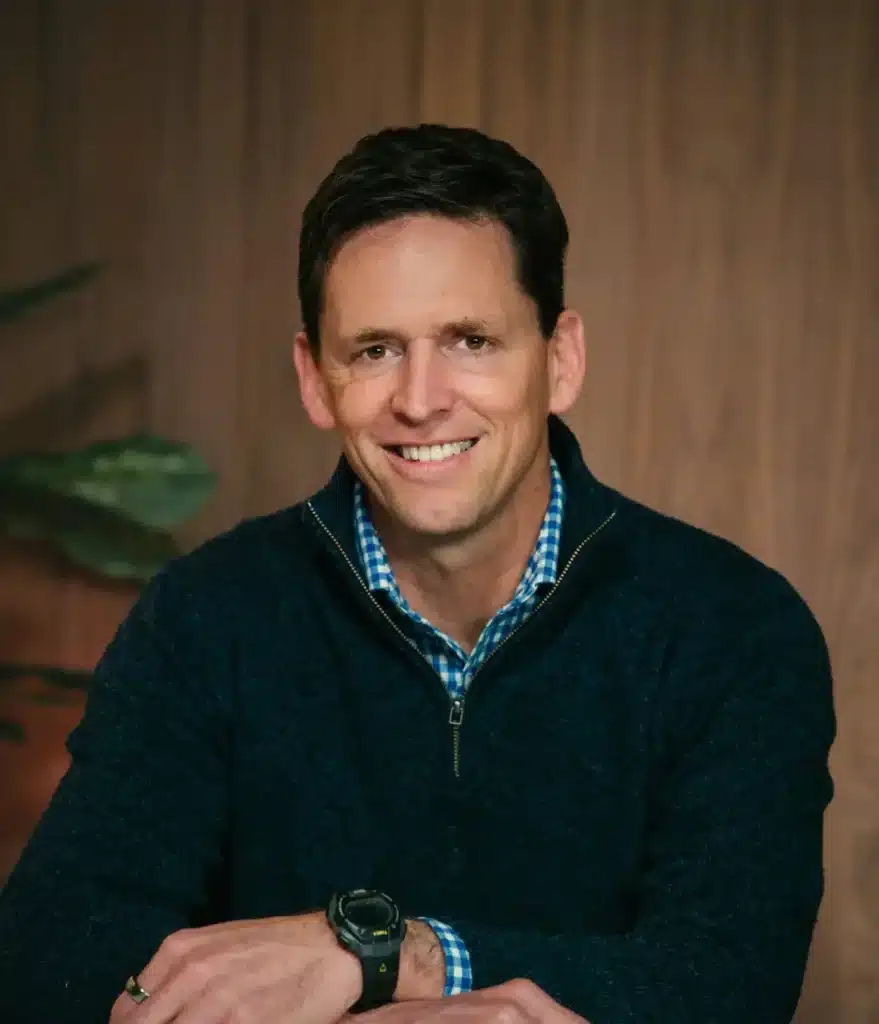
I recently interviewed Headspace CEO Tom Pickett on my podcast, Thirty Minute Mentors. Here is a transcript of our interview:
Adam: Our guest today is the leader of one of the largest companies in the field of mental health. Tom Pickett is the CEO of Headspace, downloaded by more than 100 million people. Tom, thank you for joining us.
Tom: Great to be here.
Adam: You grew up all over the Northeast, and you studied electrical engineering in college before kicking off your career as a fighter pilot. You graduated from Top Gun before going to business school and breaking into the world of tech. Can you take listeners back to your early days? What early experiences and lessons shaped your worldview and shaped the trajectory of your success?
Tom: I grew up all over the Northeast. My father worked for General Electric for most of his career, and he was in the manufacturing management program. He worked at plants, and every time he got a promotion or a new job opportunity, that meant picking up the family, packing up, and moving to a different state. So I lived in upstate New York. We moved to Maine when I was six, moved to Vermont when I was 12, moved to outside Philadelphia when I was 15, and I graduated high school outside Philadelphia.
My parents continued to move subsequent to that, so I don’t feel like I have a single anchor from where I grew up. It’s quite interesting when I look back, because my career has also been very much many different industries, many different companies, and different geographies. Maybe that comfort in terms of packing up, starting over, and doing something new was born there in my early ages and has cascaded through.
I was into sports as a kid. I played football, basketball, and baseball. That was a good way for me to meet new people. I skewed toward math and science. My dad was a mechanical engineer. That was kind of natural for me, and so when I thought about college, I applied for an electrical engineering degree. I went to RPI, Rensselaer Polytechnic Institute, which is in upstate New York, and I also applied for an ROTC scholarship, which paid my way to college with the agreement that I would join the Navy after I graduated.
I had a childhood aspiration of becoming a fighter pilot, just from watching air shows as a kid. So I went down that path, and I feel like I was very lucky that I ended up loving that pathway and spending the first nine years of my career in the military and getting to fly F 18s and land on aircraft carriers and travel around the world. It was really a great experience.
Adam: What were the best lessons that you learned from your time in the Navy that you’ve been able to apply in your career in business?
Tom: I probably didn’t know directly at the time what I was learning that I would be able to apply in business. But when you are a military officer, you get management responsibilities at an early age. Most people may not realize this, but a squadron in the Navy would have like 10 planes, 20 pilots, and 200 people in the squadron. The 200 people in the squadron would basically maintain the airplanes, run the operations, and do the administrative work. As a young officer, you get put in charge of different divisions. I would say the military exposes you to becoming a manager at an early age, and that’s kind of like business management in the military context.
But then more so, if I think about the flying aspect, you’re constantly training and learning to do more and more complicated things as you evolve in your career. Part of that is you start as a wingman, and you’re receiving a lot of training and information, and then you become the teacher. You become the leader of a two-plane formation, and then you become a division leader, and you’re now leading four-plane formations. Then you become a strike leader.
Next thing you know, I’m 27 years old, flying off an aircraft carrier, leading briefings, leading debriefings, and leading a package of airplanes that might be 20, 25 airplanes flying over Iraq. It’s kind of crazy, when you think about it, that you give 26, 27-year-olds such latitude to just go lead. Then, when I moved into the business world, I realized that it’s quite different. Usually, everything is about individual contribution, and then eventually you can become a manager, and then you try to figure that out down the road.
I felt like I had a great opportunity to learn general management, leading people, and then also operational management. Operating in a military environment, flying off aircraft carriers, it’s a big orchestration. It’s a lot of teamwork. It’s a lot of execution. This idea of just getting really good as a team, really being self-critical about what went well, what didn’t go well, and what you could do better next time, was just a tremendous learning experience. And it didn’t hurt that flying $50 million airplanes and getting paid for it was a heck of a lot of fun as well.
Adam: Sounds like a lot of fun. In the world of business, oftentimes we think of leaders as people who have gray hair, but in the military, you’re in your early 20s, in your mid 20s, and all of a sudden you have enormous responsibility. Regardless of where you are in your life, regardless of where you are in your career, you have the opportunity to be a leader. It really starts with your mindset. It starts with your desire to be a leader, and that desire can and should start at an earlier age than most people take on formal leadership responsibility.
Tom: That is 100% correct. I think oftentimes we actually force people who are great individual contributors, maybe great leaders of things, to become managers, because that seems to be the next step. Then they spend a bunch of time managing people instead of maybe a different type of leadership, which is strategic leadership, executional leadership, which doesn’t necessarily mean that you have to actually have people underneath you in a hierarchy.
Some of the best leaders I know have very small teams, but they work across the company to make things happen. Nobody should really hold themselves back in terms of what they think they can do or what initiative they can take as an individual, because it happens all the time, and it’s great to see it.
Adam: What do you believe are the keys to successful leadership? What can anyone do to become a better leader?
Tom: It’s practice. It’s putting yourself out there to take on something new. I feel like that’s probably the biggest obstacle, just raising your hand in many cases and saying, I’ll go lead this. There are a lot of things that I think happen in business where it’s not obvious who should lead it. Maybe it’s not the sexiest project, but there’s an opportunity to lead and there’s an opportunity to start to build a track record showing that you are the type of person who can get something done.
If you can, and you start to build that reputation, the sexier projects will start to come your way. So I think that’s the simplest thing. Volunteer for those things that are ambiguous, open-ended, where somebody could lead it or somebody else could lead it. Why not you jump in?
Adam: Why not you? And if you want to become a better leader, to your point, Tom, it starts with leadership experience. It starts with hands-on learning. You’re not going to get better if you don’t get started. The most successful leaders weren’t born. The most successful leaders might have some natural qualities that allow them to be predisposed to be good at certain things, but leadership is a skill that is learned and developed, and it starts with going and doing.
Tom: You have to put in the reps, and I’ll take it back to flying. Nobody’s a great briefer of a flying event and a great debriefer when they come back, or they’re great the first time they lead another plane on a mission. You just have to put in the reps, and then you have to be really conscious about being analytical around what went well and what didn’t go well and trying to do better next time. So I very much believe that it’s a learned thing, and so put yourself in there.
Adam: How do you describe your leadership style?
Tom: I would say my style evolves depending on the company, depending on the state, but in general, I tend to be more analytical. I think it harkens back to being an engineer by training. I like to look at the data. I like to break down the problem. I can think through more complex issues. I’m a logical thinker. But in my experience at Google, for example, I learned there about more of a servant leadership model.
Google hired very smart people, and what I learned at Google was figure out where you wanted to go, but give a good amount of rope to folks. Figure out how to unblock them, be their champion, help them navigate the system, but you’re more of a supportive role than a directive role. That was kind of the general model at Google.
I’ll pivot a little bit, because I also worked at DoorDash for four and a half years, and DoorDash is a different beast. DoorDash solves a really hard problem, which is delivering food or other things in a really tight time window, which requires a mix of technology, humans, vehicles, restaurants, and in the end, the consumer. The product can break in a gazillion ways along the way. It’s kind of a miracle that we deliver food on time and of high quality at such a regular cadence.
But in that environment, because of all the variables at play, it requires more of a directive model. You can’t have a bunch of people all off trying to solve problems in different ways. It takes more coordination, more alignment across teams, and a high amount of accountability and ownership along the way. So those are just two different examples. DoorDash pushed me a lot more to be a little bit more forceful in terms of, let’s go this way. No, let’s do it in this fashion. I get it that there might be two or three ways that we could do it, but we’re going to pick this way, and we’re going to get it done as quickly as we can, versus Google, which was a little bit more hands-off, empowering type of culture.
Adam: There are core principles of effective leadership that are universal, but so much of how you approach leadership has to be indexed to your environment, your culture, and the last piece of it is understanding your own style.
Tom: That’s right. You can only push yourself so far in one direction or another, particularly if it starts to rub against maybe your natural position. But across all of it, the other thing that really matters to me as a leader is I always talk about the team is bigger than you. The company is bigger than your team, more important than your team, and more important than you.
You have to have the big picture involved. You have to make trade-offs. You have to be willing to sacrifice something on your end when it makes sense for the company, if somebody else does it, or we do it in a different way. A low ego type of environment where it’s really about team success and not individual success.
I’ve seen different people at different parts of my career that have veered off from that, and for me, I am the happiest when I can find that type of environment. That’s kind of the culture I try to have within my teams. I feel like the DoorDash team very much had that culture, and that’s kind of the culture that I’m trying to bring here to Headspace as well.
Adam: How, as a leader, can you build a winning culture?
Tom: Well, it starts a lot with the management team that you build around you, because you can only say certain things, but if I say certain things and I have my management team operating in a different way, then people are going to get conflicting signals as to what success looks like. So one of the things as I came into Headspace, I had to hire four or five new executive team members in different areas of the business where I thought we maybe needed a different profile, or we had an opportunity to bring in somebody new.
Those are the types of things that I also test for. One of the things I also talk about is T-shaped leadership. If you’re in complex scenarios, or you’re in a place where there’s a lot of change, you need to be able to talk at a high level, like a 50,000-foot strategy, and think across the business. What’s going on in the external environment? What’s going on in your company? How do we make trade-offs?
The horizontal part of the T is what I just talked about, and then the vertical line of the T is also the ability to really go deep and really understand how things are done. How are you building the product? What are the edges of the product? Why does it break? If I asked you a question, you can actually go down into the weeds and tell me why it’s working the way it’s working.
I find in complex industries where you’re trying to bring a lot of new things together, the ability to do both of those is really important. As you get more senior in your career, people often want to just kind of stay at the high level. They’re like, well, the low level is something for others. But I find it’s rarer, and it’s super valuable, if you can find people who can demonstrate that T-shaped leadership.
Adam: As you’re talking about T-shaped leadership, thinking back to, I don’t even want to say how long ago it was that I was a college student, I can still remember the University President Steven Sample. His mission was to equip students with breadth, with depth, and that is T-shaped leadership.
Tom: Yes, and you’ve probably seen that it gets harder the more senior you hire, right, to get people to dive into the weeds. I just think it’s super valuable, and I think it’s also really important for the teams that you’re leading, that they understand that you understand how the product works and where the friction is and why their job is so hard, and how you can make it better. You can only know that if you really understand the contours of what they’re dealing with on a day-to-day basis.
Adam: How do you find those people?
Tom: They exist. The easiest way is, if you’re in an interview, everybody can talk, particularly the more senior you get. Everybody tells a good, high-level story. But then you just start peeling the onion, and you start asking the next layer and the next layer and the next layer, and you see how deep they can actually go and tell you about their product or their process or their business. You’ll see quickly whether they can keep going down or not. That’s probably one of the biggest tests.
The other thing we do when we bring people in, even at the executive team level, is we force them to do a case study, and the case study requires them to do some analysis on their own. There’s usually some data involved. Partly, it’s a good screen, because people probably put in four or eight hours of prep to come in and present the case in front of the management team.
So, A, it means they’re really interested and not just kicking the tires if they’re going to put in eight hours of work to come present this thing for you. But B, it also gives you a real sense of how deep they go in the case, and whether they just stay at the surface level, or they really start to get tactical about not just what they would do, but how they would actually go about doing it.
Adam: I would love to dive a little bit deeper into your journey. What were the keys to rising in your career, and what can anyone do to rise in their career?
Tom: In my career, I would say the biggest accelerant, because I went to business school, I became a consultant for a few years, and I felt like that was all training but not an accelerant. Then I joined Google, and it was 1,800 people in 2004, right before Google IPO’d. Nobody knew that Google then was going to be Google today, but the moment I stepped inside that company, I was like, wow, this is a special place, and the ambition level was crazy.
Anything that was happening, we thought we could do it. We should be doing it. I just had successive opportunities. I started in strategy. I moved into AdSense, which was like an online publishing business, and then we acquired YouTube, and I spent the next seven years on the leadership team of YouTube, which was a massive accelerant for me.
Frankly, that started with Sheryl Sandberg, who ran the group that I worked in at Google. She was like, look, we just acquired YouTube. It’s like 100 people. It’s growing really fast, but nobody there knows how to scale this business. We need to send somebody over to do that. Would you go do that? At the time, I was actually quite nervous about moving over, because Google had acquired some other companies, and oftentimes they ended up getting shut down, frankly. It was like, acquired company, you move over, and that didn’t go anywhere inside of Google. I was doing really well in the business that I was in.
But I went over. I convinced Chad Hurley, who was the CEO and co-founder at the time. She couldn’t just tell me to go over there. I had to go convince Chad, who was running the company, that he should want to take me. It turned out to be the best decision of my life, because I spent seven years joining this 100-person startup and building it into a multi-billion dollar revenue business around the world.
I had opportunities starting in the basement. Maybe to your question, be willing to do the hard jobs. When I went over, it was like, well, what’s your first big problem? The first big problem was content review. How do we keep up with all this stuff that people are uploading to YouTube, and how do we do that at scale? I had to figure that out, figure out how we can bring technology, how we use flagging to be able to do this at scale.
Then we had copyright compliance and user support. These were not sexy problems, but critical for the business to sustain itself. Then we got to the point where we were ready to launch the partner program. The partner program was, hey, any creator who uploads content on YouTube has the opportunity to make money. This was a massive unlock, and I got to run this program largely because of the work that I’d done by doing the hard work, the non sexy work.
Now I finally got a sexy program to go run, and it just was amazing over the course of seven years, building that out. Millions of creators now, people are making tens of millions of dollars off YouTube. It’s just crazy, but it was a massive accelerant, I think, for my career, just to be able to be part of that and to have opportunities to lead big chunks of that business as it grew.
Adam: Be willing to put yourself out there, be willing to take chances, be willing to do things that other people might not necessarily be willing to do. Whatever is thrown at you, be willing to do it.
Tom: What I find now as a leader, when you spot those people who just, whatever you give them, they have a way of getting it done. You don’t have to coach them that much. They just start to develop that record of success. Then what do you do? Every problem, I want to give to that person. I need more of those people.
It turns out that those people are rare, that have that ability to take ambiguous problems, define them, figure out how to get the right people working on them, and then just deliver the results. I think if you can put yourself in a position where you can take on some of those things, somebody is going to notice that.
In my case, somebody at YouTube really noticed that I was somebody who could just get things done, and he just kept putting more on my plate, so that at the end of my time at YouTube, I was basically running global partnerships and all the business operations of YouTube, which was pretty amazing for a guy who was a fighter pilot and never did anything in the media industry. Just kind of go where the problem is and figure out how to be useful.
Adam: And that’s something that we don’t talk about enough. When you think about hiring, you think about a lot of the tangibles. What school did you go to? What company did you work for? What were your numbers? What are things that we could easily measure? But the ability to get things done is as important, if not more important, than anything. When you think about your career and the people who you’ve hired, when I think about my career and the people that I’ve hired, it’s those people, the people who, no matter what it is you throw at them, they somehow figure out how to get it done. They’re invaluable. They’re the people who you want in the foxhole with you no matter what business you’re in. I’ve been in a number of different businesses in my career, and I brought people over with me with no background and no skill set in the new business, but I know that they’re capable of getting things done, and that’s really all that matters.
Tom: If I could hire a great problem solver, I’m like, come to Headspace. You’ve never done mental health. You’ve never worked in the healthcare industry. I don’t care. If you’re a good problem solver, I will hire you all day, and I’ll put you with people who have clinical expertise and can make sure that you don’t hit any guardrails.
One of the challenges I think we have in healthcare is that everybody thinks healthcare should move slowly because it’s healthcare. It’s like, oh, we have to be cautious. We’re trying to really figure out, how do we innovate and move things quickly? Because healthcare needs a tremendous amount of innovation right now. We have subpar outcomes, and we spend the most of any country in the world on it, and it’s only getting worse. So we need to find ways to bring technology to bear. A lot of this comes down to problem-solving and innovation, and I think it’s a generic skill set. You can use it across many industries.
Adam: Problem-solving. What an essential skill. What are the other skills that, looking back, were essential for you in rising in your career, and what are the most critical skills that you utilize today as a CEO?
Tom: Along with the problem-solving, I think this ownership mindset kind of goes back to what I was saying. One of the most frustrating things that I see is some things are very clear. This is a product thing. This is a marketing thing. This is an engineering thing. This is a sales thing. But a lot of things fall in the cracks, and the question is, who’s going to take the ball? That’s where this idea around just bias for action, ownership mentality, goes along with great problem solving, but that’s how you get things done. You identify problems. You don’t run from them. You kind of run toward them.
We actually just came up with a new award that we’re rolling out at Headspace called Headspace Heroes, and it’s designed to celebrate this idea of ownership mentality and heroes. Because when you think about firemen, when everybody runs from the fire, what do the firemen do? They run toward it. They’re the heroes. They run toward the fire. How can we find people that when they see a fire, they don’t run from it, they run toward it and they put the fire out? That’s a really critical thing that you have to reward in a company of any size, because I think stuff’s always falling through the cracks.
That’s just one example. I think more broadly, as the CEO in my career, I have friends from college who joined the automotive industry, and I was at Google, and I was like, why would you join the automotive industry if you could join Google? There’s so much more growth opportunity in a technology company, and if you’re willing to embrace these new technologies, there are just so many opportunities. So I love being on the cutting edge of technology. It was about my life at Google. When I jumped to a startup, it was kind of embracing video technology, but subscription. DoorDash was doing really interesting things with the combination of technology.
At Headspace, we are trying to really lean into AI, to really expand the tool set that people have to deal with mental health. Just to pause on mental health for a second, because that’s our life here at Headspace, mental health is getting worse every year, and every subsequent generation we see has a higher need for mental health resources. Yet the primary resource that we have in healthcare today is talk therapy. So one-on-one talk therapy with a human, usually eight to 10 sessions, 45 minutes each. Talk about the least scalable solution to a massive problem, one-on-one human engagement. That’s a really important aspect of mental health, but it is not going to solve the needs of the broader population.
Everybody has anxiety, stress at some level, struggles with sleep. What’s the toolkit that we can use to help people get better at scale and at an affordable cost? Here we are, conversational AI. This is one of the reasons I came to Headspace. If talking to somebody is the primary modality of getting help in mental health, then we have to really lean into conversational AI as part of our product experience, and I think we’re at the cusp of this opportunity to really reinvent the toolkit that we give to folks.
Adam: How, as a leader, are you building a culture of AI? And what advice do you have for anyone listening to this conversation on how to most effectively leverage AI and how to create a culture that leverages AI?
Tom: We started actually with the product and wanted to be on the early side of it. So you’ve probably heard of mental health and AI. There’s somewhat of a controversy about it, if you read the press. The issue is that people have been looking toward ChatGPT or Gemini or Claude, these general purpose chatbots, and using them for mental health and sometimes having really bad outcomes. The issue is that those platforms were not specifically trained. They’re not purpose-built for mental health. They didn’t have all the guardrails in place.
What we’re doing is trying to build a better, safer, more private version of that, and you have to walk your way into it with care. Obviously, this is mental health, but we started with journaling, and then we added gratitude, and we started to learn, okay, how do we put the right safety mechanisms around it? Then we started to open it up. Today, you can have a very broad discussion with Ebb, which is our empathetic AI, and we’ve built comfort, but this happens with iteration, with the right clinical guardrails in place. So we started there, which is we need to take our whole product experience and start to think about how it works in the AI world, but doing it with safety in mind.
More broadly, I believe strongly that people are worried about jobs going forward. What I say is that if you’re worried about a job going forward, then you better be the best version of yourself, using every possible AI tool to 10x what you can do, because somebody else is going to do that. The new competition isn’t just your colleague operating in the same way. The competition for jobs is really super-powered employees.
We’ve tried to make as many tools available to folks as possible to get them experimenting, to get them to figure out how to do lower-value work, take it off their plate so that they can do more impactful things. Me, as a leader, I try to lead from the front with that, with just constantly talking about it. I’m constantly using every new tool that’s out there. My son and I installed OpenClaw at home to kind of play with that and understand how this agentic AI is really coming along, and celebrating when people innovate and figure out how to offload work and do more. That’s all part of it.
Adam: You mentioned that healthcare is ripe for innovation and is a challenging industry to innovate in. How can leaders foster a culture of innovation? How can anyone at an individual level most effectively get to a place where they are at their most innovative?
Tom: The healthcare system moves slowly, but it doesn’t mean that you need to move slowly internally to continue to innovate. There will be time where we have to innovate, and then we have to do a study, and we have to prove the efficacy so that we can go to the health plan, or we can go to the employer, and we can say this actually works, and we’ve proven it. But because we have an annual sales cycle, and health plans generally change things once a year, the industry just slows.
I believe the company operates at the pace that management sets. Even in general, we often fall into a weekly or monthly or quarterly cadence. These are weird constructs because you could choose any one of those, but you can literally choose whatever time frame you think makes sense. So I keep telling my teams, the company will operate at the pace that you set.
I have a weekly business review where that’s kind of the cadence at which I want to review things every week. I want to get quick signals as to whether something’s working or not working, and get that update on that frequency. I could have done just quarterly business reviews, but I think everything would have been way slower than the path that I have. I encourage all my managers to really just push timelines, push it into the yellow zone, make it a stretch for folks to complete something, because there’s a massive power of compounding.
If you can innovate more quickly, if you can just get that release behind you and move to the next one and move to the next one, that’s where the power comes. Increasing the speed at which you deliver 10, 20% can have a massive compounding effect.
Adam: Tom, you’re in the business of mindfulness. How can anyone build a winning mindset?
Tom: We are in the business of mindfulness. Our primary goal is to really impact hundreds of millions of lives. We have a big mission, and so to do that, we have to put in the hard work. But putting in the hard work doesn’t mean you don’t take care of yourself. I think it’s really important for folks to figure out what their outlets are. For me, it’s running. It helps me stay sane.
In between the CEO role and the constant change we’re seeing in the environment, we encourage folks to find those little outlets that keep you energized. Of course, on Headspace, we’ve got a zillion tools and meditations and content and different things that you can use. But what I’d say is we also can’t use those as a reason to move slowly.
It goes back to the mission. One of our big values is make the mission matter. That means we’re not in it to feel good about ourselves, like we’re working on this really important issue. It’s mental health. I feel good about myself. It’s like, no, you should only feel good about yourself if you’re actually impacting a large number of lives and really changing the vector of mental health. That’s what we’re here for.
Adam: Tom, what can anyone listening to this conversation do to become more successful, personally and professionally?
Tom: I think I’ve hit on a bunch of those. Maybe one thing that we haven’t talked about is stick with a problem for a while. Ten years at Google, seven years at YouTube, I had a long time to really drive impact. I find a lot of people come in and out of jobs in a year and a half, two years, and I’m like, you barely had enough time to move the needle on something, and then you’re off to your next adventure.
Maybe you’re picking up a little bit of skills here and there, but the most successful people that I’ve seen have really driven something over many years and really caused a transformation. So raise your hand, stick with it, actually accomplish something over time, and I think if you do, a lot of people are going to be seeking you for another opportunity.
Adam: We started off the conversation by diving into the importance of recognizing that it’s never too early to take on leadership opportunities. But on the flip side, if you want to do something of real consequence, commit and be patient. Success takes time.
Tom: Be patient. It takes time, but that’s how you build your reputation as well, just over time, continuing to deliver. At least working in Silicon Valley here as well, you’re nothing but your reputation, right? Your reputation is built by that delivery over time. If you’re just hopping around, maybe you made 10 grand more because you jumped from job A to job B, but that’s a very short-term view on a career and the potential impact that you can have.
Adam: Tom, thank you for all the great advice, and thank you for being a part of Thirty Minute Mentors.
Tom: Awesome. It’s great to be here with you.