
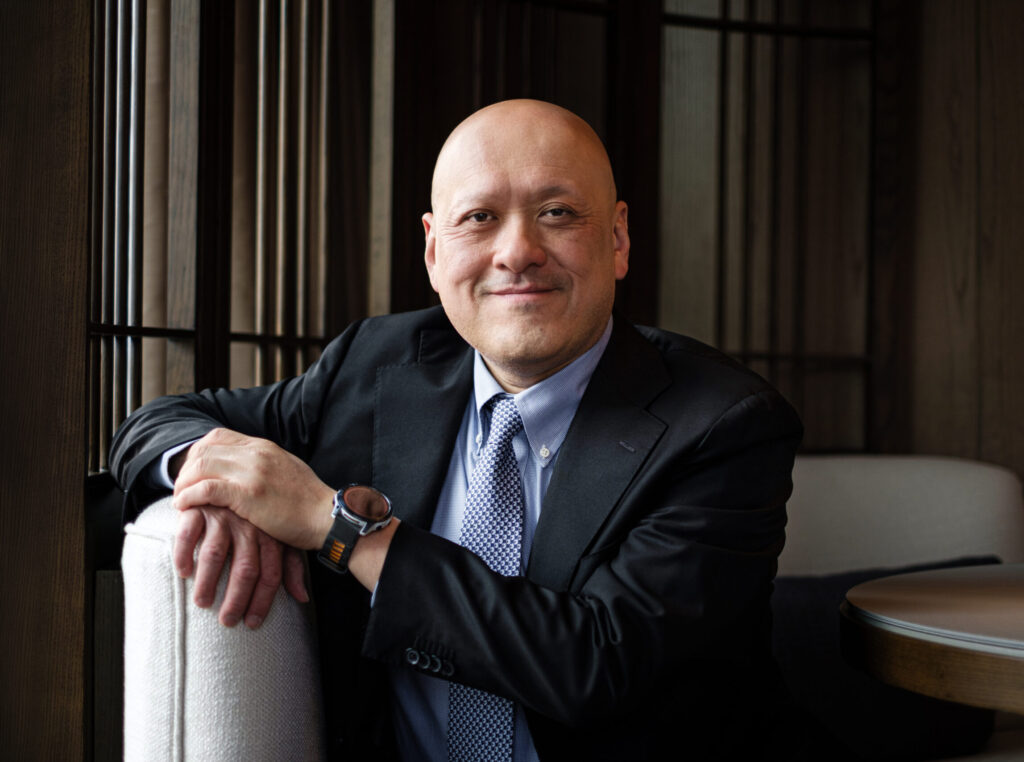
I recently went one-on-one with Dr. Silver Kung, founder and Chairman of Siegfried Capital.
Adam: Thanks again for taking the time to share your advice. First things first, though, I am sure readers would love to learn more about you. How did you get here? What experiences, failures, setbacks, or challenges have been most instrumental to your growth?
Silver: The short version is: debt, displacement, and determination. Early in my career, I carried nearly ten million dollars in debt. Creditors were legally entitled to take a third of every paycheck before I even paid taxes, and once employers learned about the garnishment, many refused to hire me. I realized I could not climb out from where I was standing, so I made the drastic decision to move to Hong Kong, where no one knew my history and I could rebuild from scratch. It took roughly fifteen years to fully recover. Those years taught me the most important lesson I carry into every business I build: never make your enterprise dependent on government favor or policy. I only needed to see one government decision destroy everything I had built. Since then, I have designed every business model to have minimal correlation with market swings or the political winds of whoever happens to be in power. Setbacks are not the end of the story. They are, if you are honest about them, the beginning of a better one.
Adam: How did you come up with your business idea? What advice do you have for others on how to come up with great ideas?
Silver: My ideas have always come from the side of potential problems I have lived through, rather than from opportunities I spotted from a distance. When you have faced real financial ruin and watched a business collapse because of forces outside your control, you develop a very clear-eyed view of where vulnerabilities lie in any system. That is where I look for ideas. My advice to others is the same: stop searching for a brilliant concept and start paying close attention to what consistently frustrates or fails the people around you. The best ideas are not invented; they are observed. Ask yourself what you understand from your own life and experience that most people do not see. Every difficult chapter you have lived through is a potential competitive advantage if you are willing to examine it honestly. That is how I formed Siegfried Capital. I found a need and built a company around it.
Adam: How did you know your business idea was worth pursuing? What advice do you have on how to best test a business idea?
Silver: I test every idea against one question above all others: does this survive if the government changes, the market turns, or a major customer disappears? If the answer is no, I go back to the drawing board. Beyond that, I look for ideas that solve a genuinely painful problem, not merely an inconvenient one. An idea worth pursuing is one that people will go out of their way to pay real money to resolve. The most practical test is simple: find ten people who have the problem and describe your solution without selling it. If their first response is “where do I sign up,” you are onto something. If they nod politely and change the subject, keep refining. Do not fall in love with the idea before it has earned it.
Adam: What are the key steps you have taken to grow your business? What advice do you have for others on how to take their businesses to the next level?
Silver: The first step in growing my business was survival, I mean that literally. When I arrived in Hong Kong with my history wiped clean, growth was not the goal. Getting to solid ground was. From there, every expansion came from the same discipline: I map the weaknesses, failure points, and the things most likely to go wrong, and I engineer around them before engineering for growth. That approach is slower at the start, but it is far more durable. My advice to anyone trying to take their business to the next level is to resist the temptation to scale before the foundation is stress-tested. Growth amplifies whatever is already in the structure, the strengths and the cracks alike.
Adam: What are your best sales and marketing tips?
Silver: Honesty is the most underrated sales tool. When my daughters were young, and money was desperately tight, I told them plainly that I could not guarantee they would return to their school the following semester. Rather than creating fear, honesty became a motivator for all of us. The same principle applies in business. Customers who understand exactly what you offer, including your limitations, become your most loyal advocates. They do not feel misled, and they do not leave when reality does not match the pitch. My single best sales tip is to clearly state what you do, who it is for, and what it will not do. That kind of transparency is rare enough to be a differentiator in its own right.
Adam: In your experience, what are the defining qualities of an effective leader? How can leaders and aspiring leaders take their leadership skills to the next level?
Silver: The defining quality is the willingness to look where others are afraid to look or will not under any circumstances. Effective leaders do not lead from optimism alone; they lead from an honest accounting of what can go wrong and a plan for what to do when it does. I have been told many times to relax, that I have succeeded, and that the hard part is over. I never fully believed it, and I think that discipline, not pessimism, but disciplined vigilance, is what has kept me from being blindsided. For aspiring leaders, my advice is to stop waiting until you feel confident and start building the habit of looking clearly at what others prefer not to see. That capacity, more than charisma or credentials, is what separates leaders who last from those who do not.
Adam: What is your best advice on building, leading, and managing teams?
Silver: The most important advice I can offer is this: make a commitment and keep it. During the hardest years of building, my commitment was simple: I would be home every Friday. My wife and daughters were in Taiwan while I traveled constantly across Hong Kong, Europe, and China. The physical distance was real, but the commitment made it manageable. Teams are no different. People can endure a great deal of difficulty and uncertainty if they trust that you will show up when it matters and tell them the truth about where things stand. The leaders who lose their teams are almost never the ones who demanded the most. They are the ones who disappeared when things got hard or said one thing and did another. Consistency and honesty are not soft skills. They are the foundation of every team that holds together under pressure.
Adam: What are your three best tips applicable to entrepreneurs, executives, and civic leaders?
Silver: First, design for independence. Whatever you are building, a company, a career, or a community initiative, ensure its survival does not depend on any single government, policy, customer, or market condition. Concentration is fragility. Second, build a business from the bottom up, not the top down. I did not set out to create a legacy. I set out to survive, then to stabilize, then to grow. Legacy is what accumulates when you do those things with integrity over a long enough period. Third, show up for the people who matter most. I learned this the hard way, coming home after a long absence to hear my seven-year-old daughter ask, “Can I help you, sir?” because she did not recognize me. No professional achievement is worth that cost. Stay close to the people your work is ultimately for.
Adam: What is the single best piece of advice you have ever received?
Silver: I did not learn it from a mentor or a book. I learned it by watching my own life play out. The principle is this: you do not have to be gold to shine. Silver is good enough. But “good enough” does not mean easy or effortless. It means committing fully to what you are capable of, without measuring yourself against someone else’s standard of excellence. That realization freed me from a particular kind of exhaustion, the exhaustion of chasing a version of success that was never really mine. It also sharpened my focus, because once I stopped trying to be gold, I could channel all that energy into becoming the best possible version of silver. That is a lesson I hope my daughters carry forward long after everything else I have built.