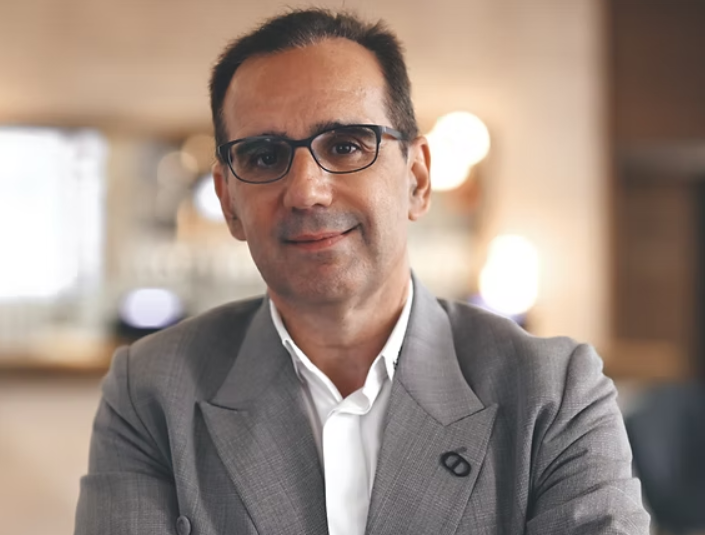


I recently went one-on-one with Nadine Buckland, co-founder and CEO of Zenzic Capital, in an interview coordinated around the 2026 Milken Institute Global Conference.
Adam: Thanks again for taking the time to share your advice. First things first, though, I am sure readers would love to learn more about you. How did you get here? What experiences, failures, setbacks, or challenges have been most instrumental to your growth?
Nadine: My first role in finance was working for a boutique insolvency practice as an administrator on trading receiverships. It was a great learning experience, and this role, like others I had early in my career, helped shape how I run my business now. From an early age, I knew I wanted to build my own company. I was never much of a conformist, and I wanted to procure and win business, and in doing so, help shape and crystallise the direction of a firm. After working through my twenties and feeling I wasn’t reaching my fullest potential, I decided to become an entrepreneur.
In 2014, I co-founded Zenzic Capital with my business partner Tom Lloyd-Jones. Zenzic operates in the private credit space, specifically focused on asset-backed lending. While the private credit market in the UK used to be nascent, after the global financial crisis (“GFC”), we felt that there was a real opportunity to enter the market and build a strong, sustainable business.
Adam: How did you come up with your business idea? What advice do you have for others on how to come up with great ideas?
Nadine: Post-GFC, the UK saw the emergence of a non-bank lending market that was already much more established in the US. As those lenders began to appear, it became clear that there were very few people who could truly access and understand that market, despite there being an abundance of capital. At the time, the sector was still opaque and in its infancy. Borrowers often did not understand which lenders were active, how their structures worked, what types of deals they wanted to do, or what their cost of capital looked like
We founded Zenzic to help bridge that gap in what was becoming an ever-growing addressable market. My co-founder Tom and I felt our combined experience gave us a genuine edge in that space. He had worked on structuring funds and transactions as a lawyer, while I had been advising and originating alongside many of the lenders entering the UK market.
My advice to others is that strong ideas usually come from observing a genuine need rather than trying to invent something abstract. It is also important to understand your own edge. Spotting a gap is one thing, but you also need to ask whether you have the knowledge, relationships, and motivation to build something around it.
Adam: How did you know your business idea was worth pursuing? What advice do you have on how to best test a business idea?
We tested our idea in stages; we did not try to build the final version of the business immediately. In year one, we focused on creating income and proving that clients valued what we were doing. In year two, the question became whether there was a viable, repeatable business rather than just sporadic transactions. By year three, it was about building enough scale to hire, invest in infrastructure, take office space, and move closer to the investment management business we wanted to create.
For entrepreneurs, my advice would be to define milestones early. What would show that the idea is working? What would show that it is not?
Adam: What are the key steps you have taken to grow your business? What advice do you have for others on how to take their businesses to the next level?
Nadine: Our longer-term ambition was always to become an investment manager, but because we did not yet have an investing track record, we first built an advisory business and balance sheet that would allow us to invest our own capital and ultimately grow into the business we had envisaged.
Investing our own balance sheet was a crucial bridge because it gave us practical experience as investors and helped us start to build a track record. While we initially looked more broadly at asset-backed opportunities, once we began investing our own capital, we found particularly attractive opportunities in real estate credit, especially mezzanine positions in a zero-interest-rate environment. That enabled us to build the balance sheet further and eventually transition from advisory into the investment management business that defines Zenzic today.
Another key step was staying resolutely focused. It can be tempting to pursue each and every opportunity when you are growing, but a North Star matters. Real estate credit became – and continues to be – the area where we see the most compelling and consistent risk-adjusted opportunities and where we can build genuine expertise.
Adam: What are your best sales and marketing tips?
Nadine: For me, the most effective sales and marketing boil down to the trifecta of radical trust, clarity, and relationships. Particularly in investment management, people want to understand not only what you do, but how you think, how you behave under pressure, and whether your interests are aligned with theirs.
Relationships are especially important. One theme I have seen across the industry, particularly in conversations with key stakeholders, is that many people still place significant value on direct access to decision-makers. They want transparent relationships with the people actually responsible for the strategy. That is an area where smaller or emerging managers can often have an advantage. They can be close to their investors, open in their communication, and highly aligned.
Adam: In your experience, what are the defining qualities of an effective leader? How can leaders and aspiring leaders take their leadership skills to the next level?
Nadine: Effective leadership requires judgment, resilience, and the ability to bring people with you. COVID was a good example of that. As a leader, I had to think about the people side of the business and the strategic side at the same time. The team suddenly had to operate remotely, and we needed to keep people connected and motivated. At the same time, we had to make decisions about how to manage capital in a market where values and risks were changing quickly.
Adam: What is your best advice on building, leading, and managing teams?
Nadine: The most important thing is to create an environment where people feel trusted and clear on what matters. I also think it is important to recognise that people have lives outside work. I am a CEO and a mother, and I know how important support and flexibility can be. People do their best work when they feel respected as whole people.
My advice is to hire for both capability and character. I do not want everyone around the table to think the same way. Particularly in investment decisions, different viewpoints are valuable because they help expose risk and improve judgment.
Adam: What are your three best tips applicable to entrepreneurs, executives, and civic leaders?
Nadine: First, do not wait for perfect certainty. Whether you are starting a company, making an investment decision, or stepping into a leadership role, there will almost always be incomplete information. At some point, you have to take the leap.
Second, combine a long-term vision with short-term milestones. When Tom and I started Zenzic, we had a clear longer-term vision, but we focused on practical stages – setting different goals for each year.
Third, surround yourself with the right people. No one builds anything meaningful alone. That includes co-founders, colleagues, family, advisers, and supporters. I have been fortunate to have a strong support network, both personally and professionally. The right people make it possible to keep going through difficult periods.
Adam: What is the single best piece of advice you have ever received?
Nadine: Someone once described running a business as being like hand-to-hand combat, and I could not agree more. There is a physical dimension to running a business that is often overlooked. It is the constant checking that things have been done, negotiating, chasing, persuading, and fighting for progress. The advice was to create discipline around the day: start early, set time aside to think before the day really begins, and make sure I still do the things that matter to me personally, like being present for my children by doing the school run and exercising. I have found that adopting that discipline has made a real difference.