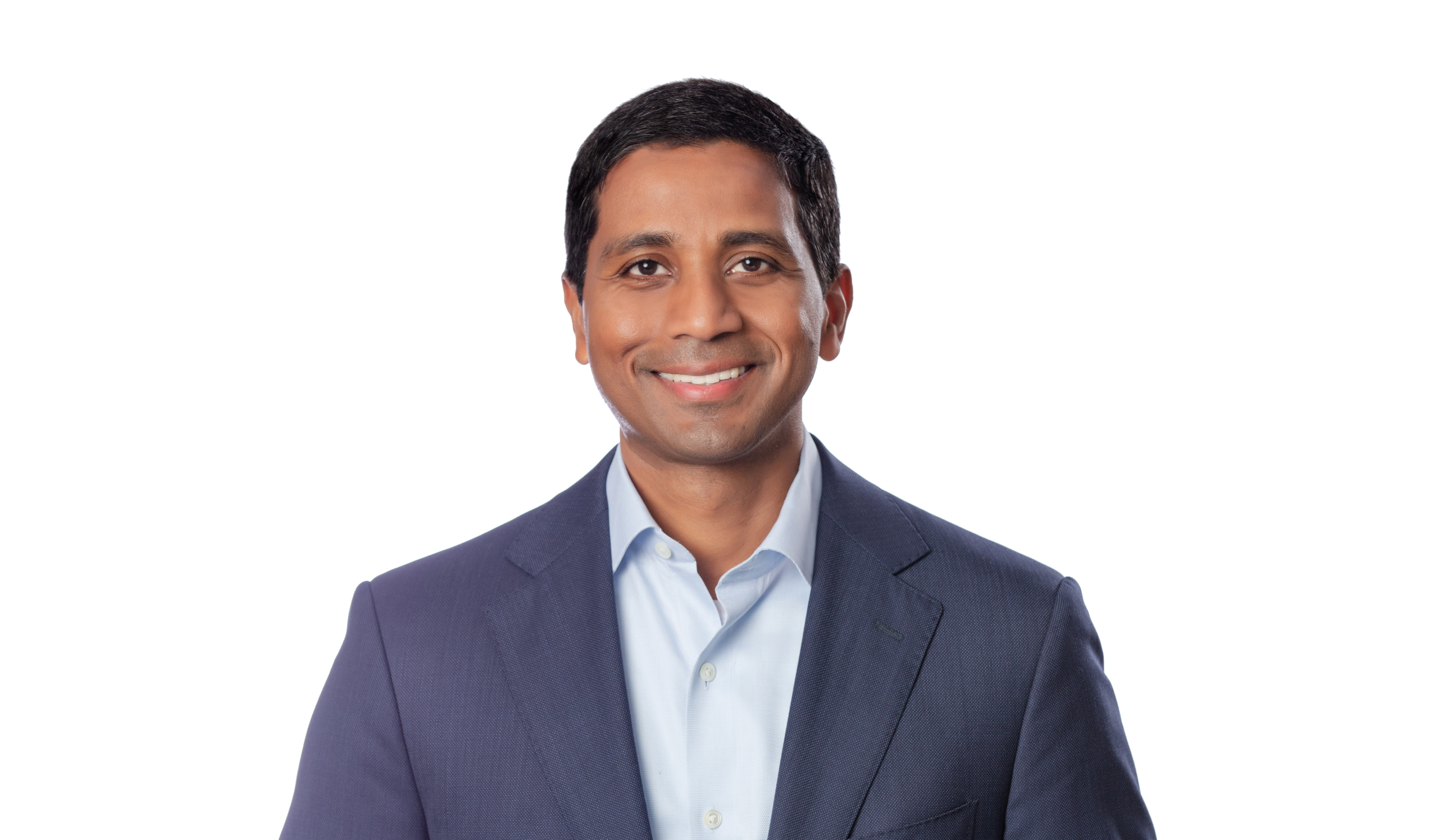

I recently went one-on-one with Phil Le-Brun. Phil is an Executive in Residence at Amazon Web Services (AWS) and the former international CIO of McDonald’s Corporation. Phil is also the co‑author of The Octopus Organization: A Guide to Thriving in a World of Continuous Transformation.
Adam: Thanks again for taking the time to share your advice. First things first, though, I am sure readers would love to learn more about you. How did you get here? What experiences, failures, setbacks, or challenges have been most instrumental to your growth?
Phil: I spent 30 incredible years at McDonald’s Corporation, from cooking burgers to being their International CIO and then leading systems development for nearly 40,000 restaurants across 120 countries. Starting on the shop floor gave me a feel for the company’s realities that proved invaluable later. A detour into financial services added a more regulated, risk-conscious lens.
This tenure meant I didn’t just get to start changes, I also lived through them. Starting something is easy; seeing it through is far harder. I made plenty of mistakes, but that’s natural when you are accelerating a slow-moving organization to the speed of digital. My big lesson: think much bigger, even if you start small. The result? Tens of billions of dollars added to McDonald’s annually and a much-improved customer experience.
Now I learn by leading Amazon’s Executives in Residence team comprising former transformation executives from organizations such as NASA/JPL, CapitalOne, Thomson-Reuters, and the US Government. We pool our own experience, Amazon’s, and lessons from over 1300 organizations we meet annually to help executives sidestep others’ mistakes. Think big enough, especially with cutting-edge technologies like agentic AI, and you’ll hit failures. Adaptable organizations treat these as data: the faster they run experiments, the sooner they have data that informs learning.
Adam: What do you hope readers take away from your new book?
Phil: We’re watching foundational assumptions about how organizations work overturned in real-time. AI is accelerating everything: decision speed, cost-of-execution reductions, and the lifespan of competitive advantage. The old model of periodic, top-down transformation is fatally slow. Despite the trillions poured into transformation programmes, fewer than one in eight deliver lasting performance gains three years on. The lesson isn’t to transform harder; it’s to stop treating change as an occasional event. Most organizations still operate like the Tin Man in The Wizard of Oz: beautifully engineered, but rigid, rusted, and waiting for permission to move. Jana and I wrote about becoming the opposite. Our book, The Octopus Organization, reflects a view we heard from meeting brilliant leaders such as Indra Nooyi (former CEO/Chairman of PepsiCo; Amazon Board member), Astro Teller (CEO of Alphabet Moonshot Factory), and executives from every industry who’d all arrived at the same conclusion: you don’t transform once, you build an organization that adapts continuously. We show how.
The book describes 36 antipatterns drawn from over 300 dysfunctions of traditional transformations: habitual, conditioned responses leaders fall back on. Take the multinational CEO who centralises everything, believing it’s efficient to do things once, but instead creating a giant bottleneck. The answer isn’t to swing to the other extreme and decentralise everything either; it’s to go “glocal,” pairing a common global backbone with the local freedom to act. For each antipattern, we offer levers – targeted interventions, borrowed from systems thinking – designed for outsized effect with minimal effort. Anyone at any level can pull one. Done repeatedly, this embedded change is driven by your own people rather than imposed top-down. That agency builds trust and a deeper connection to the mission. We want readers to leave with the confidence to go defeat some of their own antipatterns, starting now!
Adam: What is your best advice on building, leading, and managing teams?
Phil: Teams need three things from their leaders: clarity, ownership, and curiosity. Clarity isn’t a detailed map for every step. It’s about removing the bureaucratic fog so people grasp what needs doing, why it matters, which problems are worth solving, and what success looks like. Ownership means designing the conditions for teams to decide how to achieve a meaningful customer outcome. Leaders then clear blockers and push decisions as close to the customer as possible. Curiosity is the steady current of questioning sacred assumptions, treating failure as feedback, and staying positively discontent with the status quo. Leaders create an environment of psychological safety that is essential for innovation and high performance, role modelling the behaviours that sustain it.
The leader’s job is to engineer the system, not work in it. What can you subtract so teams move faster? How do you weave learning into execution so improvement isn’t a separate activity? In the best teams, running the business and changing it stop being two separate jobs: running becomes changing, and changing becomes running. How do you fully engage as many people as possible in the change? These are design questions, not effort questions, requiring persistent attention as even a small change in a team can reset the dynamic.
Adam: What are the most important trends in technology that leaders should be aware of and understand? What should they understand about them?
Phil: AI, AI, AI. That’s pretty much every conversation today. I understand why. AI is a fast-evolving general-purpose technology that will permeate almost everything we do. One expert reckons that if all AI development stopped today, the average organization would still need at least five years to catch up. With agentic AI, most sizeable organizations are also fixated on driving efficiencies rather than rethinking the value they can deliver. With the cost of execution heading toward zero, anyone can now bring a good idea to life quickly. The onus is on leaders to make sure their organization isn’t the bottleneck.
I’m not a futurist, but here’s the real trend. Interviewing leaders like Benedetto Vigna (Ferrari CEO), Indra Nooyi, and Dame Julia Hoggett (LSE CEO), we kept noticing the same behaviour. They didn’t shun learning about technology as many do. They were what we call “technology teenagers.” Think how your own children master new technologies, such as a games console, by playing incessantly. Most leaders are at ease with people and finance, far less so with technology, data, and organizational change. That’s unacceptable today. Our hope is that when someone asks about technology’s role, the CEO’s instinct won’t be to point to the CIO, but to answer it themselves.
Adam: What do you believe are the defining qualities of an effective leader?
Phil: We interviewed over 70 leaders for the book and saw a pattern. Their traits mapped neatly onto what Patrick Lencioni saw in ideal team players: hungry, humble, and smart. Never satisfied with the status quo, they relentlessly questioned why things were done a certain way, or at all, and didn’t let “best practices” block better ones. They knew the people closest to the customer often grasped the real problems and potential solutions far better than they could. I’ve added three traits from my own career: persistence, resilience, and humour. Persistence echoes Jeff Bezos – being stubborn on the vision but flexible on the details. Understand the problem deeply and never give up. On hard problems, people will tell you it’s impossible. That’s where resilience matters. I treat “it’s impossible” as an invitation to prove them wrong. And humour keeps everything in balance while humanising you, helping build team safety.
Adam: How can leaders and aspiring leaders take their leadership skills to the next level?
Phil: It’s easy to fall in love with your position and assume you have innate skills because you’ve reached a senior role. But how you show up every day matters, and there’s always something to get better at. I seek out candid feedback from people inside and outside my organization. It’s something Jana and I write about and practise religiously. We trade feedback immediately after any event, not as criticism but because we want each other to be the best version of ourselves we can be.
I’ll also borrow from several leaders we spoke to, who looked for two things in leaders. The first is the ability to tell a story, critical when you’re taking an organization on a journey. People want the context of a change: why it matters, and where they fit. The second is curiosity. It’s striking how many leaders aren’t curious enough about their own organization or assume answers of the past will serve the future. Asking good questions and coaching develops you and your team alike – but it’s an art that many struggle with, having been raised to believe they must have the answer. Research shows that our education system largely trains people to supply answers, not questions. We urgently need to reverse that, and to role-model that change.
Adam: What are your three best tips applicable to entrepreneurs, executives, and civic leaders?
Phil: Firstly, truly fall in love with the problem. Startups obsess over real problems to solve. They can’t waste time building things customers or citizens don’t want. Yet in large organizations, leaders rush to solutions – AI being the latest – and then go hunting for problems to apply them to. Work backwards from the customer outcome you want, and spend more time understanding what that outcome should be. It pays off: research suggests customer-obsessed companies are more than three times as likely to lead their industries in revenue growth. Be crisp about the single biggest problem. The Amazon Kindle eBook, for instance, was built around one: let anyone download any book, anywhere, in sixty seconds or less. Ignore this and you get a graveyard of solutions in search of a problem like Google Glass, Quibi, and the $400 Juicero.
Secondly, face into your constraints to accelerate time-to-value. Startups can deliver 20x outcomes with near-zero headcount because they pour the resources they have into activities that directly move the outcome. They strip out dependencies and overheads, replace organizational “checkers” with “doers,” and recognise decisions which are reversible — what Amazon calls “two-way doors.” You take those with about 70 percent of the information you’d like, then act, learn, and adjust.
Finally, tackle a problem’s hardest part first to see if it can be cracked at all. Astro Teller put it to us well: if you want a monkey to recite Shakespeare on a pedestal, start by teaching the monkey, not by building the pedestal. Yet many leaders build the pedestal just to show progress.
Adam: What is the single best piece of advice you have ever received?
Phil: Twenty years ago, a boss told me I alone am accountable for my own development – “owning your personal P&L,” she called it. Her point: organizations will or should invest in their people, but it’s up to me to stay relevant. Ever since, I’ve looked each year at which skills to build, whether that’s technical fluency, leadership range, or understanding a new domain. The leaders who last are the ones who never stop being students.
Adam: Is there anything else you would like to share?
Phil: The organizations that thrive don’t wait for a burning platform. They treat change as a habit – continuous, human-led, and deeply curious. You don’t need permission or a grand programme to begin. Pick one thing that frustrates your customers or people, pull a lever, and learn from what happens. That momentum, compounded daily, is what separates the companies that shape the future from those overtaken by it. It’s why we called the book The Octopus Organization: two-thirds of an octopus’s neurons reside in its eight arms, sensing, learning, and deciding themselves while still moving as one. The best organizations of this decade will be built the same way.