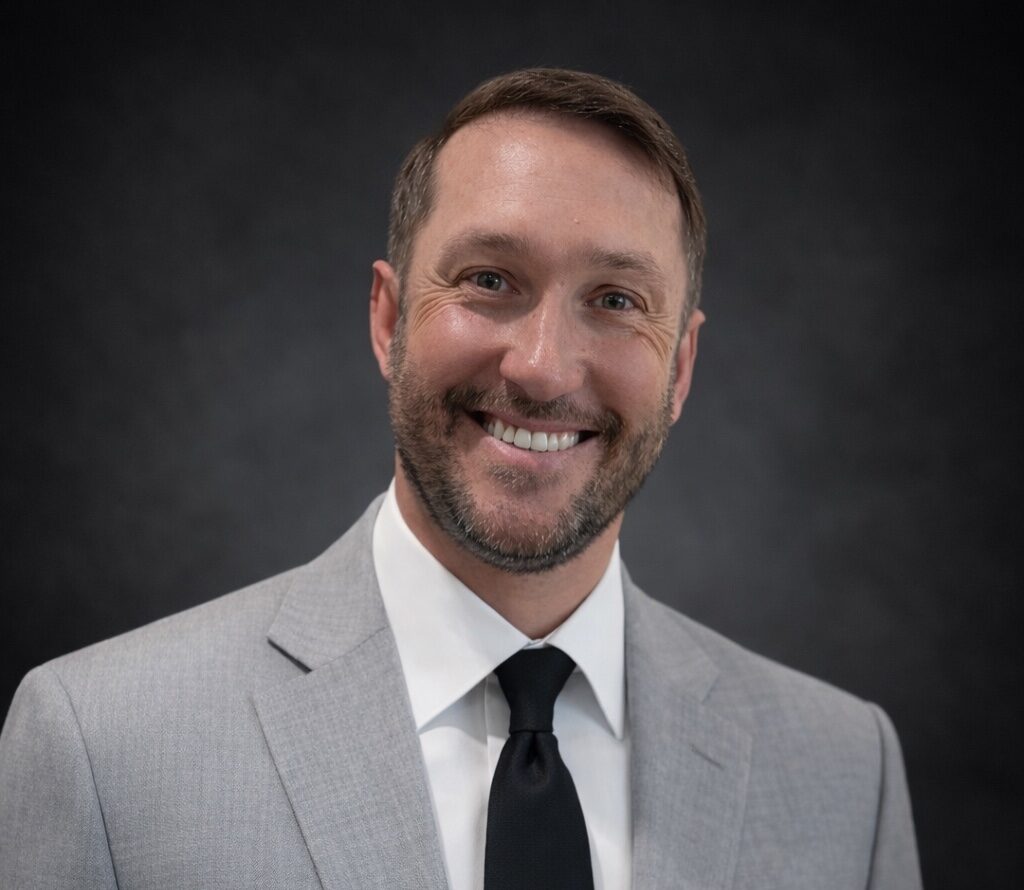


I recently went one-on-one with Louis Amira, co-founder and CEO of Circuit & Chisel.
Adam: Thanks again for taking the time to share your advice. First things first, though, I am sure readers would love to learn more about you. How did you get here? What experiences, failures, setbacks, or challenges have been most instrumental to your growth?
Louis: My professional background is rooted in tech. Before founding Circuit & Chisel, I had spent roughly a decade working at companies like Chainlink Labs, Google, where I co-founded a company within the Area 120 incubator, and Stripe, where I was the Head of Crypto and AI partnerships. I also founded Crimson Advantage and grew it into a multi-million-dollar business in the first year. The experience I gained from these roles gave me lots of insight into the ways products are scaled and how entirely new ideas get tested from the ground up. And I bring these lessons into my role as co-founder and CEO of Circuit & Chisel.
One of my biggest takeaways has been that building something new rarely goes the way you expect. When my co-founder, David Noël-Romas, and I left Stripe to launch Circuit & Chisel, it wasn’t with the intention to build a protocol, but to build simple, useful AI applications for businesses. We wanted to build agents that could take care of the repetitive, administrative work that every business deals with, but as we were building, we realized that AI agents weren’t living up to their full potential. Many of them were impressive in demo runs, but would end up breaking down once they had to interact with real-world scenarios. In trying to clear this hurdle, we realized there was a bigger opportunity to pursue, which ultimately led us to launch ATXP.
Adam: How did you come up with your business idea and know it was worth pursuing? What advice do you have for others on how to come up with and test business ideas?
Louis: When David and I founded Circuit & Chisel, we had a shared belief that AI agents were further along than most people realized. As we were building applications, we kept running into the same infrastructure problem: agents were capable of doing the thinking, but lacked the ability to move around the internet, identify themselves, access services, or transact autonomously. The solution we eventually developed became the agent transaction protocol (ATXP). Everything that we wanted to create required us to have something like ATXP in place, so we naturally wanted to build the bridge we needed.
The advice I’d give to others when it comes to building and testing ideas is to consider how useful they will actually be to people. That’s what people want most: solutions that will actually help them in their daily lives.
Adam: What are the key steps you have taken to grow your business? What advice do you have for others on how to take their businesses to the next level?
Louis: As tech developers, product adoption and usage are the key measures that represent how we’re growing. As we’ve rolled out new products, the main consideration we keep in mind is whether people will actually want to integrate the tools we’re offering into their workflows.
If you want your business to go to the next level, you need to put out products that your customers actually want, and you have to be willing to invest the time into making sure they work. An easy way to do that is to follow what we did – build tools to solve the problems you run into. Another thing you’ll need to do is constantly be seeking out and applying feedback. For example, when we launched Pareto, which offers people the best combination of intelligence and cost at any given moment, we made it free for everyone to use for the first 48 hours to receive as much true user feedback as possible. This was invaluable and showed us exactly what was working, what needed to be fixed, and where we could grow.
Adam: What are your best sales and marketing tips?
Louis: My biggest sales and marketing tip is to get close to your customers. Talk to them, understand what frustrates them, and figure out how to solve it. You can spend a fortune on marketing, but if you’re not solving a real problem, it won’t matter. When you’re starting out, focus on a small group of people who really need what you’re building rather than trying to reach everyone. Use that feedback to refine your products and make them successful, and let the results speak for themselves.
Adam: What are the most important trends in technology that leaders should be aware of and understand? What should they understand about them?
Louis: Tech leaders need to understand how and why AI is rapidly changing the landscape. A minor cost saving or advancement in computing power today can make a huge impact on the market and landscape as a whole. This is currently happening between the major labs and companies battling to reduce their pricing while boosting capabilities.
Leaders need to look beyond which model is strongest today and understand how the balance between cost, performance, and reliability is evolving. The companies that win won’t necessarily be the ones building the biggest models, but the ones that figure out how to combine the right capabilities to solve real problems efficiently. The landscape will keep shifting with every breakthrough, so staying competitive means constantly reassessing what’s possible and being able and willing to quickly adapt.
Adam: In your experience, what are the defining qualities of an effective leader? How can leaders and aspiring leaders take their leadership skills to the next level?
Louis: I think effective leaders need to be comfortable pivoting when the situation calls for it. There’s a certain level of conviction that’s required to start something difficult or take on a new project, but you can’t let that turn into a roadblock. It’s important for leaders to understand that their idea might feel right, but that it doesn’t have to be the only option that gets explored. Leaders need to be comfortable leveraging insights from everyone on their team. In the long term, this can also help the team adopt and connect with the company’s goal because they too are thinking about it from a problem-solving standpoint.
Adam: What is your best advice on building, leading, and managing teams?
Louis: I’d recommend looking for people who are comfortable working in the unknown, especially if you’re building a startup designed to tackle something new. The job somebody was hired to do six months ago may not look exactly like the job they need to do today, and having people who care more about solving the underlying problem than following role guidelines is really important.
Adam: What are your three best tips applicable to entrepreneurs, executives, and civic leaders?
Louis: I’d say the first is to have a clearly identified problem that needs solving, rather than focusing on what your solution could be. A lot of people start with the solution, but it doesn’t make sense to build backward. You need to start with the problem and build up to a solution.
The second would be to create a team that’s smarter than you. You want everyone you work with to constantly be challenging you and helping push your ideas forward. You can only do this if you fill your team with experts across the industry who all have unique perspectives.
The third would be to stay adaptable, especially for those in tech. The tech space moves incredibly fast, so much so that today’s solution could be tomorrow’s reference point. Making sure your offering or service is fluid enough to keep up with demand and shifting customer concerns will be really important to keep your company useful and relevant.
Adam: What is the single best piece of advice you have ever received?
Louis: I think one of my favorites would be to pay attention to what reality is telling you, especially when it contradicts your original plan. Even before Circuit & Chisel, this was such a common theme for everything I was doing on product development. It seems so simple, but when you’re in the weeds of developing a company or building a product or service, balancing your vision with what’s right in front of you can actually be pretty difficult.