
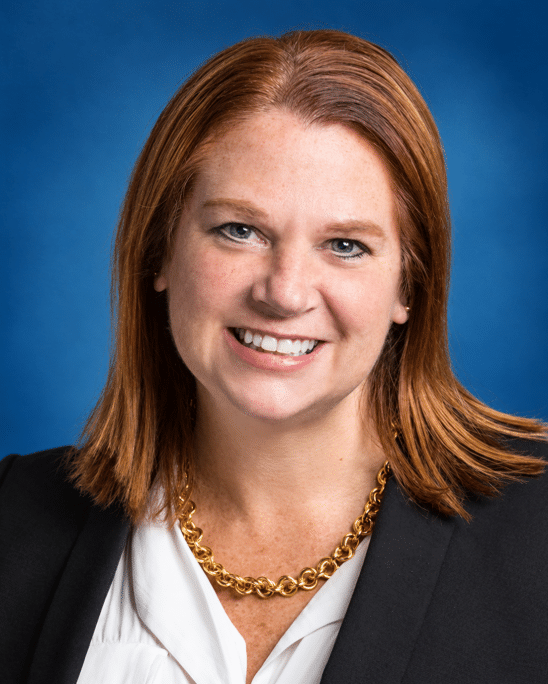
I recently went one-on-one with Shanna Marzilli, CEO of Plan USA.
Adam: Thanks again for taking the time to share your advice. First things first, though, I am sure readers would love to learn more about you. How did you get here? What experiences, failures, setbacks, or challenges have been most instrumental to your growth?
Shanna: I started my career in healthcare after being lucky enough to get an internship at a state agency that was on the cutting edge of regulating health insurance. My job was to ensure that insurers had doctors making decisions to deny care and that they had options to protect consumers. I joined the Blue Cross & Blue Shield system in Rhode Island, where I worked in roles ranging from compliance to operations and marketing. I eventually led the strategic planning function and became the Chief Marketing Officer overseeing marketing, communications, sales, and strategic transformation. Throughout my 18 years at Blue Cross & Blue Shield, I was thrown countless challenges, from problem functions to significant business challenges, and very few of them were sexy. Solving those challenges taught me a very important lesson as a leader: the knowledge and influence you gain by getting in the trenches to really understand the work and the people is more effective than power.
When I got the call about an opening for Plan International’s Chief Marketing Officer role, I happened to be drinking out of a mug from Plan International’s “Because I Am a Girl” campaign, and it felt like fate knocking on my door. This was my time to pivot my career and bring my leadership skills to a global humanitarian and international development organization, focused on equality for girls in more than 80 countries – something I have been passionate about since I was a young girl.
One setback I learned a lot from was the journey I took to now be Plan International’s CEO. I initially wasn’t selected for the CEO role at Plan International USA. I had served as the interim CEO, and the board of directors conducted a search. While I understood the board’s decision, I was disappointed and humbled. After sitting in my feelings for a few days, I decided that my north star for the transition would be professionalism and to focus on our mission. The board asked me to commit to staying for at least six months to onboard the new CEO. I understood that employees were going to take their cues from me, so I knew I needed to be visibly supportive, positive, and open to the changes the new CEO would bring. I accepted a role as COO and worked closely with the CEO to help them understand the organization. I grew a lot in those six months and faced some challenging situations, all of which taught me lessons about how to put the organization first. When I was eventually offered the CEO role ten months into the transition, I brought new skills and a better CEO mindset.
Adam: What are the best leadership lessons you have learned from leading a non-profit organization?
Shanna: Mission matters. Non-profit organizations are filled with people who care deeply about the organization’s mission. I learned quickly that while I may stay awake at night worried about fundraising revenue, my team needed to hear that expressed in terms of impact. For example, if we don’t hit our targets, framing it in terms of how many fewer girls will have the opportunity to go to school vs. how we’re competing in this market segment will resonate much more deeply with our dedicated team members. That being said, good business principles matter too. Because we deal with life-or-death situations such as humanitarian crises, the urgent can sometimes overtake the important. Having clear roles and expectations, good management processes, and excellent organizational communication goes a long way in staying on strategy.
Adam: What are your best tips for fellow leaders of non-profit organizations?
Shanna: Mind your board of directors – especially your relationship with the chair. This will make or break your performance as a CEO or senior leader in a non-profit organization. Dedicate time to building relationships, play an active role in board recruiting, and negotiate your respective roles with your chair. I deliberately set out to have an open, transparent relationship with our board. It takes time and resources, but the trust and understanding that you build will ultimately make the organization stronger and more successful. Don’t wait to build trust during a crisis.
Put on your oxygen mask first! In mission-driven work, it is so easy to give every bit of yourself to the cause and the people carrying it forward. But when crisis hits, like in 2025 when the dissolution of USAID suddenly wiped out 40% of our funding overnight, the emotional weight can feel crushing. In that moment of intense uncertainty, I realized that supporting our team meant I had to first tend to my own well-being. Giving myself permission to manage my stress and protect my health was never a luxury. It was the only way I could offer our staff a calm, grounded presence and make clear, compassionate decisions when they needed steady leadership the most.
Don’t neglect the basics of fair pay, benefits, and care for employees. The non-profit sector has a history of leaning on our employees’ dedication to mission and asking them to do more for less. If we want talented people to lead important work in our communities and around the world, they deserve to be treated like the expert professionals they are.
Adam: In your experience, what are the defining qualities of an effective leader? How can leaders and aspiring leaders take their leadership skills to the next level?
Shanna: Be curious. Be curious about the company, how it works, and roles outside of your own. For many, being able to take the step into a leadership role requires knowing more about the company than just your vertical. So, if a project comes your way that lets you work across teams and gives you exposure to other divisions, take it!
Adam: What are your three best tips applicable to entrepreneurs, executives, and civic leaders?
Shanna: Take risks. If everything is going well all the time, you might not be taking enough risks. Be willing to try something new to reach a new market or solve a big challenge in the world. The ability to take calculated risks backed by strong risk management is expected in the executive seat.
Find your personal “board of directors.” It’s true that it’s lonely at the top. Whether it’s a few colleagues, peers from another organization, an executive coach, we all need a few people who will be honest with us and to vet ideas with.
Be the leader you want to work for. It can be easy to neglect our own growth and development in senior roles. Even though I’ve spent most of my career in two organizations, every new role I took in those two organizations required me to grow to meet the needs of the team and the business. Take a minute to ask yourself what you would be wondering, complaining about, or disappointed with if you were an employee in your organization. How do you need to evolve as a leader in this moment?
Adam: What is your best advice on building, leading, and managing teams?
Shanna: In my early years as a leader, I would get frustrated when I would build what I thought was the perfect team, only for someone to leave or to be part of a restructure in the organization. Now I think of my team as a living organism that is always changing, and it’s my job to:
Invest in the individuals. Recognize that people on the team are in different places in their leadership journey. Provide regular feedback and set clear expectations for them as leaders. If you have the resources and a leader who really wants to grow, I believe executive coaching can be transformational.
Invest in the team. We have all experienced a wide range of team-building initiatives. I like to invest in building team synergy in advance of work we know will be challenging, such as an operating model review or a strategic planning process. Understanding how each member of the team is wired and what they need from their teammates to be able to give 100% to the work unlocks new ways of working.
Create norms and practice them. My executive team has five norms we agreed to, along with a list of behaviors for each norm. These norms give us a common language to appreciate and challenge each other. Two of my favorites are:
The Executive Team is my first team. This means we don’t show up as representatives of our functional areas, and we treat one another as the team we are accountable to. It helps us focus on the organization and reduce siloed thinking and behavior.
We go the last mile. We created this norm because we noticed that sometimes we would get to the point of making a decision but then reverse course and look for more information or input, especially when it was a difficult or unpopular decision. Now, when someone sees that we are walking back from the line of decision, they can ask, “Are we going the last mile?” and everyone understands what it means. We check in on the norms for a few minutes at the beginning of every meeting. This open sharing about challenges and moments where we saw the norms in action has helped us get better about sharing honest feedback in the room.
Adam: What is the single best piece of advice you have ever received?
Shanna: Be the kind of colleague and leader people want on their team and want as their boss. Show up, contribute, help, and influence. My mentors taught me to show up as a whole person, even when I was in the messy time of being in an executive role with three children five and under. They showed me with their actions that you could drive high performance through inspiration and influence and to save using power for the last resort.
Adam: What can anyone do to pay it forward?
Shanna: Set aside time to speak to new graduates and early career professionals. It can be easy to forget that we are all products of the people who helped us, not just our talents. It thrills me that young people still want to work in international development and humanitarian assistance after two years of crisis in our sector. I want to help them get a foot in the door or to find work in the private sector that helps build their skills for a future role in non-profit.
Adam: Is there anything else you would like to share?
Shanna: Plan International USA recently released important research about how young people in the United States think about gender and equality. 84% of young people believe that there should be equal numbers of women and men in positions of power, but 64% believe we haven’t reached full equality. When we compare results from the last time we conducted this research in 2018, we see some concerns. Only 21% of young people think about running for political office, compared to 33% in 2018. When asked what is important to them in their future, being in a position of leadership is the third lowest priority (2%), outranked by having enough money (74%) and being their true selves (79%). Almost half of young people see themselves as leaders. However, if we want to create the leaders of the future, we need to show that there is a path to being authentic and being a leader. To learn more about the report, please visit https://planusa.org/becauseiamagirl/research.