
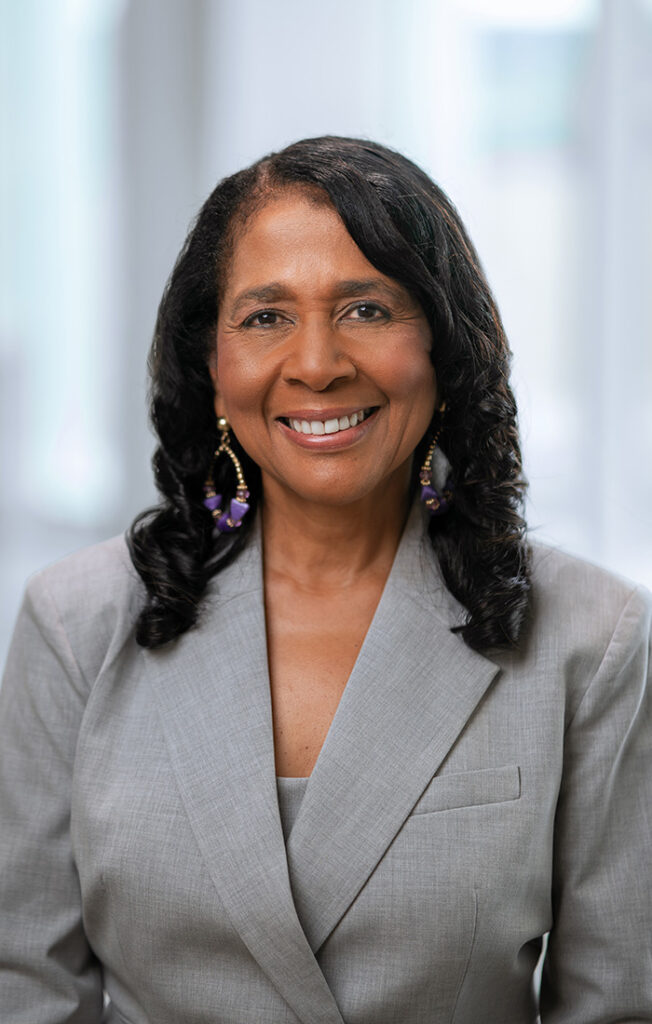
I recently went one-on-one with Dr. Angela Walker Franklin, President and CEO of Des Moines University Medicine and Health Sciences.
Adam: I am sure readers would love to learn more about you. How did you get here? What experiences, failures, setbacks, or challenges have been most instrumental to your growth?
Angela: I did not begin my career expecting to become a university president. At Furman University, I studied psychology and envisioned becoming a clinical psychologist. I earned my PhD in clinical psychology at Emory University and, right after graduate school, joined the faculty at Morehouse School of Medicine, one of the newer medical schools in Atlanta, Georgia, as a clinical psychologist in the psychiatry department teaching behavioral medicine. My original plan was to teach while building a clinical practice. Instead, I discovered how much I loved working with future health professionals. I was hooked. Teaching and academic leadership became my passion, and I eventually gave up my clinical practice as my administrative responsibilities grew.
For a time, I wondered if my background would lead to executive leadership roles. And I thought a physician would be expected to lead a medical and health sciences university. Honestly, I probably held myself back. Thankfully, my mentors saw something in me that I didn’t see yet. They encouraged me to pursue executive leadership roles and even began nominating me for university presidencies.
I eventually became executive vice president and provost at Meharry Medical College, which expanded my experience and prepared me for a presidency. In 2011, a search consultant contacted me about Des Moines University Medicine and Health Sciences. I had never been to Iowa and knew little about osteopathic medicine, but the university recognized the value of my background in psychology, medical education, and administration. I became the institution’s 15th president and found a mission that resonated with me. Fifteen years later, I still love what I do.
Adam: What would surprise people most about the role of a university president and how you allocate your time, energy, and focus?
Angela: People may be surprised by how constant the responsibility is. A university president is never completely off duty. You are still responsible for the organization. Technology makes that easier because I can join a call, receive an alert, or stay connected from almost anywhere. Without that, it would be much more difficult.
The challenge is finding a healthy way to remain present for family, friends, and personal interests while keeping a finger on the pulse of the university. I knew the role would require that level of commitment. Still, balance takes intention. You have to make space for your life while also fulfilling the duties of the president.
Adam: What are the biggest challenges you are facing as a leader in higher education today? How are you navigating them?
Angela: There are several. Higher education is operating under significant external pressure right now. We’re having to defend its worth and value, public policy is changing quickly, and institutions must respond to shifts in financial aid, research funding, and public opinion. In some ways, it may be a bit easier for DMU because we’re a graduate medicine and health sciences institution. We don’t have to explain to anyone why we exist or the value and outcomes of what we do.
Another challenge is staying focused around all the uncertainty. Leaders cannot control every policy shift or funding decision at the state or federal level. We have to think about who gets financial aid, how faculty will continue their research, and whether changing rules will affect access to federal research funding. That takes a toll. You worry whether you will continue to have a talented pool of students to fill classes. The health professions require a significant commitment. Will fewer people be interested in making the long-term investment to become health care providers and leaders?
We try to address this by inspiring future health care leaders. For example, we offer programs that introduce young people to health professions and help build the pipeline for the future. Clinical education is another concern. Universities like DMU depend on partnerships with hospitals, clinics, and health systems to provide many of the clinical experiences students need. Competition for these critical training sites is increasing, and placement costs continue to rise. I’m constantly thinking about how we can secure strong clinical rotations so we can continue training students in the best environments.
Fundraising is also always top of mind for university presidents. Private, tuition-dependent universities have to consider how to support education, research, and scholarships over the long term. We may always be tuition-dependent, but we also have to diversify our revenue streams, as some funding sources are becoming less certain. DMU has a story to tell, and we want people beyond our alumni to see themselves as partners in our work.
Adam: In your experience, what are the keys to managing change and leading through uncertainty?
Angela: People need to understand why a change is happening and how it will affect them. DMU built and moved to a new campus in 2023. It was a major transition. It changed everything: where we worked, where we sat, and how we did our work. What mattered most to me was making sure people felt connected to the vision and understood why we were moving.
We created opportunities for students and employees to participate in the process. Students tested furniture and helped select the chairs. Employees gave input on workspaces, lighting, and office needs. Members of the university community toured the campus while it was under construction. Those experiences helped people see themselves in the future we were building.
Leaders also need to understand that people respond to change differently. Some embrace it and are all in because they love the thrill of it. Others are terrified or need more time to process it. A leader needs to know how people experience change. Communication must cascade through an organization, and I have a wonderful executive team whose members support their respective teams. But the message starts at the top: people matter, their questions are important, and their connection to the vision is essential.
Adam: What do you believe are the defining qualities of an effective leader?
Angela: First and foremost, be a good listener. People need to feel seen, heard, and respected. Listening doesn’t mean every decision will go the way someone hopes, but it shows their perspective matters. Second, surround yourself with talented people and trust them to do their work. I love hiring good people and letting them do their jobs. But I don’t just hire a person to perform a function. I look for people who care about others on the team. I’m proud of DMU’s executive leadership team not only because its members are accomplished, but because of the relationships they have built with one another.
Finally, leaders shape culture through what they consistently model. I want people to feel that they matter at DMU. I attend every new employee orientation because I want people to hear directly that their work matters and that they are part of something bigger. That is how you create culture and establish the common thread that connects people. We value a collaborative spirit at our university, but it can’t just be one person. It has to include everyone.
Adam: How can leaders and aspiring leaders take their leadership skills to the next level?
Angela: Find a mentor, advisor, or trusted sounding board. I think everyone should have one. Leadership can be isolating, and self-doubt is common when you are considering a new opportunity or navigating a difficult decision. A trusted mentor can help you see your strengths, affirm that you’re worthy, challenge your thinking, and tell you honestly when you are ready for that next step.
A mentor might be a colleague, friend, family member, coach, or therapist. What matters is having someone to run ideas by and walk the path with you. On my journey, my mentors often saw my readiness before I did and helped me take the next step. That really makes a difference.
Adam: What do you believe are the most important skills needed to succeed in today’s and tomorrow’s workforce?
Angela: Health care needs people who are technically excellent, adaptable, and committed to serving where the need is greatest. Rural and other underserved communities continue to face issues with access to care. DMU’s mission includes preparing the health care workforce of the future, but education is only part of the solution. You will find DMU graduates working in all 99 Iowa counties, but we need more of them. Small critical access hospitals are closing, and communities need health care providers.
We also need clinical training opportunities and partnerships that encourage health professionals to build careers in communities with limited access. DMU recently became accredited to sponsor graduate medical education. This gives us opportunities to partner with hospitals and clinics to help expand the health professions workforce in those areas where there’s need. More broadly, communities need people who want to make a difference to others. Leadership is not just about a title. We need people who value developing others and want to have a positive impact on others. We truly are better together.
Adam: What are your three best tips applicable to leaders in business, government, and education?
Angela: First, don’t sweat the small stuff or get caught in the weeds. Leaders need to see the larger landscape. In the idiom “can’t see the forest for the trees,” a leader should understand the trees, the roots, and what the forest needs to thrive. Leaders help others see the broader landscape. We may need to spend some time in the weeds to understand what is happening there. For example, you need to know whether you have the right people, policies, and procedures in place. But if you lose sight of the big picture, you will spin your wheels and get stuck.
Second, remember that every person is living a life you cannot fully see. Someone’s pace, response, or approach may be shaped by circumstances you do not know. Respecting individual differences does not mean lowering expectations. It means meeting people where they are and helping them move forward. Third, listen and engage. Not every leader is an extrovert, and leadership does not require a single personality type. It does require a willingness to connect with people.
Adam: What is the single best piece of advice you have ever received?
Angela: My mentor, Dr. Louis Sullivan, once told me, “You should not have to play second fiddle to anyone. Go where you are wanted.” At the time, I was a finalist for another college presidency, but the search had stalled. Dr. Sullivan believed the institution preferred another candidate and was keeping me as a backup. He advised me to withdraw.
That was difficult advice to hear because I was close to achieving a goal I had worked toward for years. After talking with my family, I withdrew. The search consultant immediately called and asked why. I told him something didn’t feel right. He shared the university still hadn’t made a decision. And I replied, “That’s part of the problem.”
The next day, a recruiter called me about the presidency at DMU. The circumstances were different. DMU was actively seeking someone with my background and experience. They wanted me. To this day, I thank Dr. Sullivan for helping me understand that. Whenever I have doubts and wonder, “Am I worthy? Should I do this? Can I do this?” I remember what he told me: “Go where you are wanted.”
Adam: Is there anything else that you would like to share?
Angela: Teams cannot do their best work when everyone is thinking about an issue, but no one is willing to name it. Leaders need to listen, but they also need to create spaces where people feel able to speak honestly. Several years ago, I began using a small elephant as a physical symbol to encourage open, honest dialogue. I literally put an elephant on the conference table in my office. Colleagues use it to signal that they are going to share something candidly.
Holding it or touching it can make the moment more comfortable and has helped DMU’s executive leadership team say what needs to be said. The elephant itself is just a symbol, but it gives people permission to say what needs to be said. It continues to sit on the table as a reminder that difficult conversations can lead to more productive ones and make a difference.