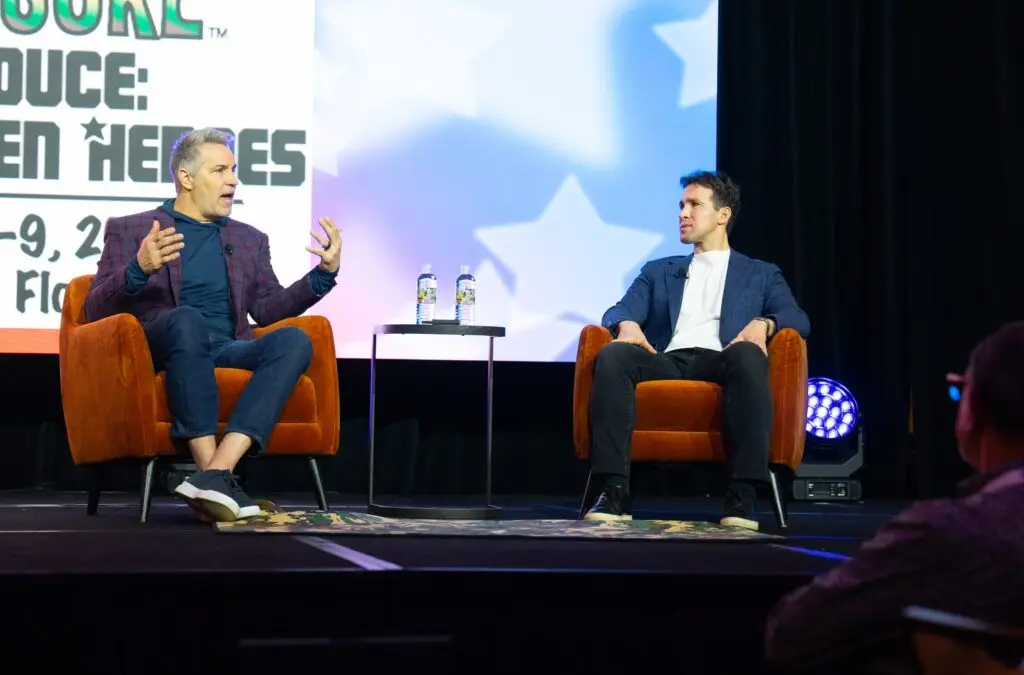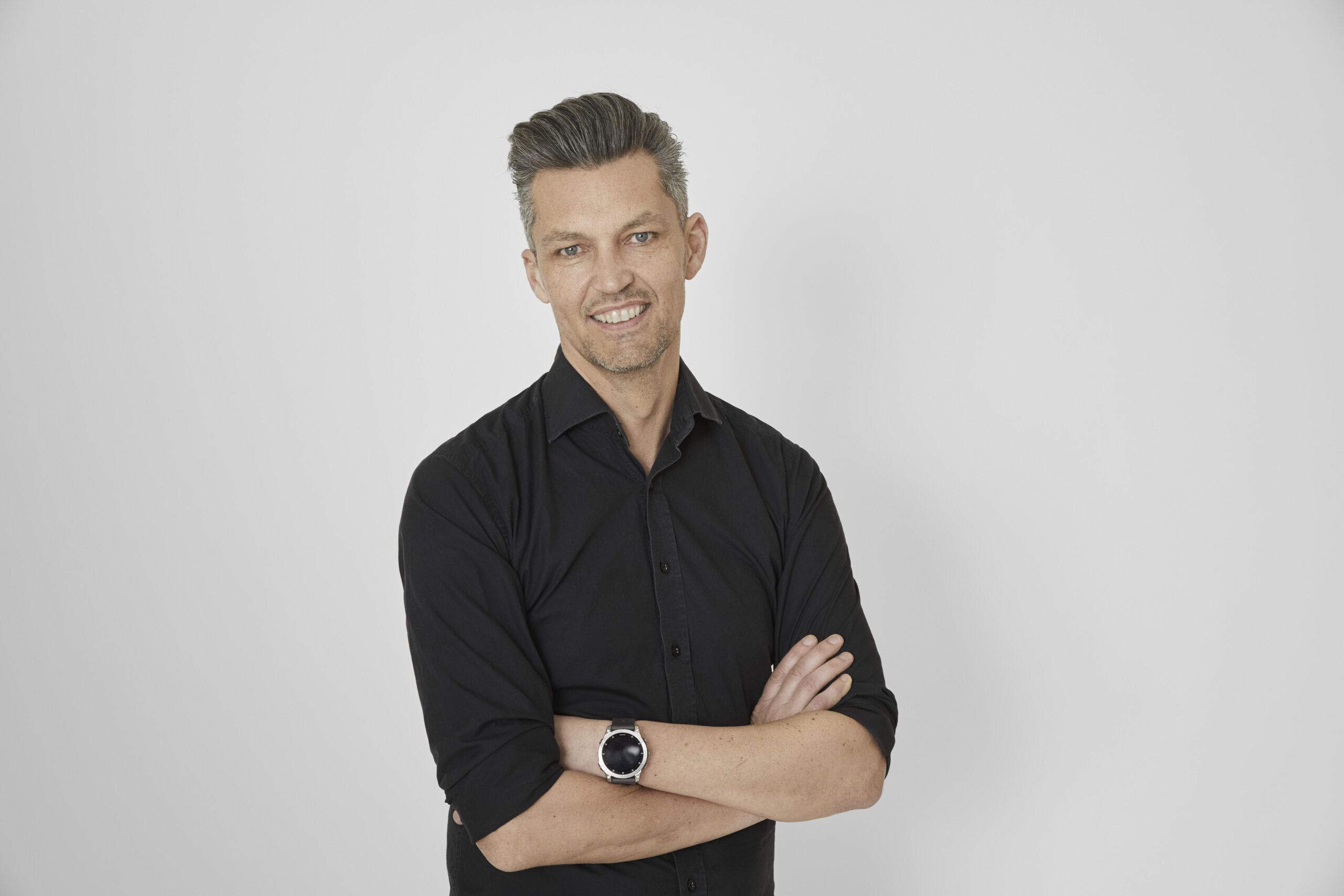

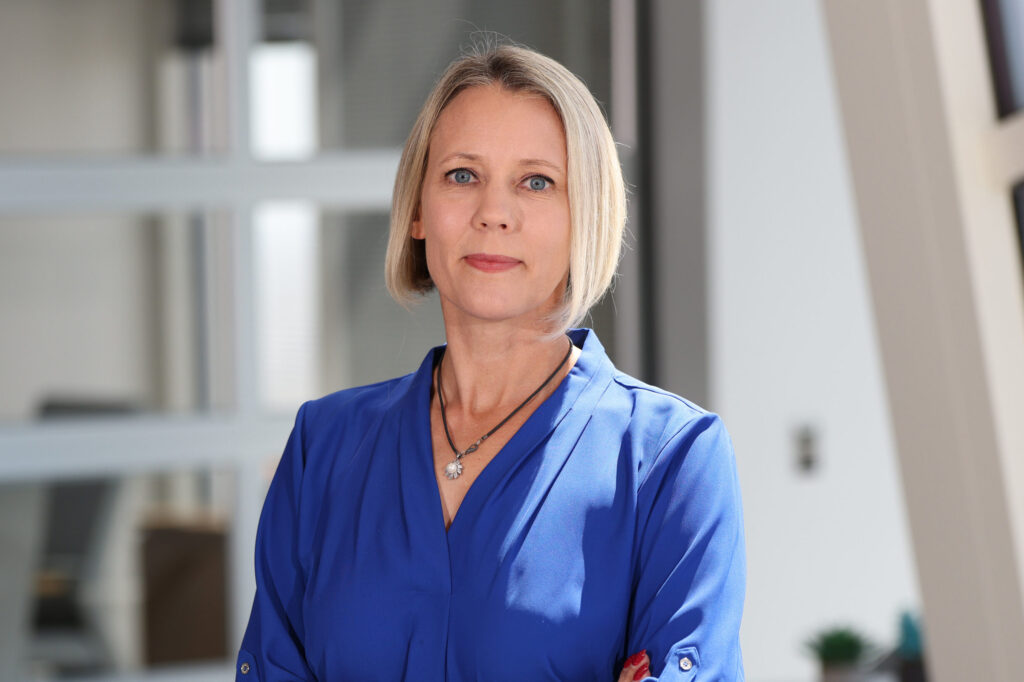
I recently went one-on-one with Anna Horndahl, EY Americas Entrepreneurship Leader and Assurance Partner.
Adam: You grew up in Sweden and came to the U.S. to run track. What ultimately brought you from the track to the world of accounting?
Anna: When I first came over here as a freshman in college, as you mentioned, I came to focus on being a good athlete. Then I thought, what might be a major that I could focus on while I’m here? At that point, I thought I would go back home, so international business was something I started pursuing. Then I had an opportunity to speak to a mentor, someone who worked with my father. He was an entrepreneur, and she was his right-hand person when it came to the financials for his business.
She said, “What you really should study is accounting, because accounting gives you the foundation of any business. If you know the foundation of a business, you can build off of that and really go in any direction. You’ll know the historical information, but you can layer on future projections. You’ll know the foundation of the balance sheet, income statement, and cash flow so that you can understand the business from a financial perspective in a different way than most others.” I changed my major to accounting after receiving her advice, and that’s really what got me into the field of accounting.
Adam: And you stuck in the field of accounting. You’ve risen in the field of accounting. What allows people to make it in the field of accounting compared to those who say, “You know what? This isn’t for me,” or the field says to them, “This isn’t for you”?
Anna: It’s interesting you say that because, when going into accounting and especially joining a Big Four firm, we know at the starting point that everyone’s career won’t be the same. It’s not necessarily a matter of becoming a partner at a firm. What the firms, at least in public accounting, are wanting to teach you is the foundation from an accounting perspective. Then you can take that and apply it in other ways.
When I talk to the people I work with, my staff, seniors, and managers, I know that not all of them have auditing or being a tax professional within a public accounting firm as their end game. Their end game might be, “I’m going to learn as much as I can while I’m here, but I’m going to apply it to a startup company. I’m going to apply it in industry in some way.” And that’s exactly what we want.
When you study accounting, some people continue, like myself, to do accounting and auditing their entire careers. Some people will apply it in a different way in their careers, for example, going into finance or whatever it might be. The foundation in accounting is the first stepping stone into their future career aspirations. Does that make sense?
Adam: That makes perfect sense. In your case, you decided that this was the right path for you. How did you come to that place? Why has this been the right path for you? And for others in the field, regardless of where they are in their journey, whether they’re early on, mid-career professionals, or at a more senior level, what advice would you share on how to know whether working within the field of accounting at a big accounting firm is the right place for you, whether you’re better off at a smaller firm, whether you’re better off in-house, or whether you’re better off applying that skill set and doing something else?
Anna: For me personally, there are parts of me that like to take risks, but from a career perspective, I like to support individuals who are taking the risk in a different way. Accounting was a great place to be because, through consulting, advisory, or auditing services, I can support entrepreneurs and provide them as much insight as possible through the career I have now, instead of sitting in the bubble of the risk, if that makes sense. I do like the stability that the accounting profession brings. Now, we can talk about what might happen to the field of accounting in the world of AI, and there’s still a lot to be discovered about what that ultimately means.
But what makes me passionate about it and excited about coming to work every day is being able to learn about all the different clients’ businesses I work with. I’m a lifelong learner, and the thing that excites me is continuing to learn new things, if possible, on a daily basis, but at least on a weekly basis. The field of accounting has really provided me with that because I can work with a number of different clients, learn about their businesses, and try to help them get to the next level. I get a chance to work with entrepreneurs, see what they’re going through, and connect them with partners and investors. That excites me.
Adam: You shared a lot there that I would love to unpack, and it really starts with knowing thyself. When you know who you are, what you like to do, what you don’t like to do, and what’s important to you, when you know, “This is what I need from a company, this is what I need from a job, this is what I need from a career,” then you can more easily figure out, “Where do I want to be? What’s the right fit for me?” In your case, you mentioned some things that I would imagine will resonate with a lot of people. You identified pretty early on, “I’m not a big risk taker when it comes to my career.” There might be other aspects of your life where you are or you’re not. Maybe on the track you are. Maybe on the track you’re not.
I’ve interviewed athletes who have told me this, and one in particular was Bode Miller, the great skier who is known as one of the great risk takers in the history of skiing. He’s an Olympic gold medalist, one of the all-time greats, and he told me that he actually wasn’t really much of a risk taker. The perceived risks were things he had to do because, if he didn’t do things that were perceived to be risky, he would have lost the race. Understanding yourself and your relationship with risk is so important. Understanding what fuels you, what drives you, what motivates you.
What do you want to be a part of? Do you want to work with small businesses and entrepreneurs? Do you want to be in the driver’s seat? Do you want to be in the passenger seat? We’re all wired differently. We all have different experiences that allow us to ultimately become who we are. But it starts with know thyself. When you know who you are, you’re going to be a lot more capable of knowing where you want to go.
Anna: Adam, you’re so right because risk can be viewed from so many different perspectives. When I say I’m not a risk taker from a professional perspective, that’s not necessarily who I am from a personal perspective in my everyday life. I obviously put myself on a plane and came to the U.S. without ever having set foot here. That’s a risk in and of itself, having the courage to do something when you don’t know what it’s going to look like. One thing with my career, and advice I’ve received over the years, is that I’m never afraid of taking a chance on something when I don’t necessarily know what’s on the other side of the door.
Not too long ago, I was on a trip by myself to the Caribbean, and I decided, “I’m just going to rent a car, and I’m going to drive myself around.” As I talked to people there, people who lived in the country, they would never do that. They would have a driver take them somewhere. They were intimidated by driving on the other side of the road from what we’re used to here. To me, it was a given that I would do that, because why not?
I’ve never had a fear of trying something new. I’ve never had a fear of approaching something when I might not know what the outcome will be. But when it comes to my career, financial stability, and that aspect of my life, I chose a profession where I felt like I had security. Accounting was a profession I felt very secure in because I learned over the years that all companies need someone who’s proficient in accounting.
If I put my head down and learned everything I could, along with continuing to educate myself to make sure I stayed relevant throughout my entire career, then I felt secure that, from a professional standpoint, I would have a home to go to. Never stop and get comfortable in your current knowledge. Always continue to try to develop.
Adam: I love that, and that’s another key early theme in this conversation: the importance of lifelong learning, continual growth, being proactive about your career, and owning your career. Recognize that, regardless of what profession you’re in, but particularly in the field of accounting, you’re going to have opportunities to grow professionally. You’re going to have opportunities to develop your skill set, learn new skills, and learn what’s going on and what might be going on in the future. But those are opportunities for you to either take advantage of or not take advantage of. I would imagine, in the course of your career, you’ve seen lots of people who’ve had the same opportunities but lacked that proactivity and, as a result, weren’t able to rise the way you were able to rise.
Anna: That’s very true, and I’ll give you an example. When I was a senior manager with the firm, I’d been serving clients within the technology and real estate spaces for a long time. That was my comfort zone. One aspect I feel is so important when you’re working with clients is knowing their language. If you’re working with a tech company and they throw out acronyms like ARR, you need to know what that means. Annual recurring revenue is what that means, so you know what they’re talking about. I was very comfortable in that environment.
But when I was a senior manager, the firm asked me to move down to San Antonio because we had a large client there in the oil and gas space, specifically in refining, in the downstream and midstream space. I’d never done anything with oil and gas before in my entire career. It was extremely important to me, before I set foot in their office, to learn everything I could about their industry and their specific space. This will date me a little bit, but I bought an entire DVD set about refining and midstream. I watched it from beginning to end and learned everything about the refining process.
We’re talking about what’s actually happening to the molecules within the manufacturing process when you’re talking about refining. It was very important for my credibility, standing in front of them, to be able to speak their language. If I came into their boardroom and they asked me a question and I didn’t sound like I was educated in their field, I was going to lose their respect on day one. To your point, throughout your entire career, it’s crucial that you continue to prioritize learning.
Your career might take you in different directions. Some people might have been comfortable saying, “I’ve done real estate and tech my entire career. I would much rather you find me an opportunity within that space, and I’ll wait.” The opportunity might never come. Or you open the door you’re not familiar with. It might take a little more effort to get up to speed. For me, having the courage to be okay with opening a door and going down a path that’s not as familiar, knowing I can get up to speed through learning, has served me well so far.
Adam: Anna, you bring up something really interesting, which is the delineation between risk and courage. There are difficult things we have to do, and then there are difficult things that would be good for us to do, but we avoid doing them because they’re difficult. Sometimes we look at things and say, “This is a big risk, and I don’t necessarily know if I want to take that risk.” But that’s different from looking at something and saying, “This is really difficult, and I don’t know whether I have it in me to do something this difficult.” When you have the mindset, “I can, and I will, and if I fail, if I fall, it’s okay. I’ll get back up. It’s fine,” it’s a lot worse to never get started, to never try, than it is to try and fail.
Anna: That’s so true. To bring it to real life, my car battery was out yesterday, so I had to jump-start the car. Earlier today, a friend and I were joking about the fact that I had someone at AutoZone put the battery in for me. My friend said, “But you could have done it yourself, couldn’t you?” I said, “I’m certain I could have if I wanted.”
I can take something on and try it. To your point, I might fail. I might not be able to get it exactly where it needs to be, but I’m going to give it a try because I want to learn how to do it. Back to the courage point, having the courage to try something with the knowledge that I could fail, that’s okay.
Adam: Asking me to fix your car would go into the category of high risk, where all of a sudden all bets are off. That would be high risk, and that would also be poor judgment.
Anna: I see. All right, I’ll keep that in mind, Adam.
Adam: But if I’m in Austin and I’m stranded on the side of the road…
Anna: Oh, you can call me.
Adam: I now know who to call.
Anna: Yes, that’s right.
Adam: We’ve been talking about what has allowed you to rise within your career, what has allowed you to differentiate yourself and stand out. What have you found, more broadly speaking, allows people within the field of accounting to rise within their careers? You’ve worked with so many people, people who’ve made it and people who haven’t. What are the other variables you’ve found are essential to success in this field?
Anna: Something you said earlier stuck with me and is so true. It’s taking charge of or responsibility for your career and where you want to take it. When I mentor younger individuals within our organization, I always advise them to try to map out where they’d like their careers to go. When they do that and advocate for themselves, they have the possibility of going beyond what they ever thought they could.
For most people, it’s hard if you just sit back and wait for something to be put in front of you. If you’re of the mindset, “I really want to achieve this,” whether it’s doing an overseas assignment, working on a Fortune 100 client, or pursuing a technical field, people around you can help you get there. But coming to work and just doing your day job without expressing what you’d like to achieve could limit you. From my perspective, what benefits you most is expressing your dreams and desires from a professional perspective, because then people can actually shepherd you there.
Adam: Some people might be reluctant to do that for a variety of reasons. They might be seen as overly ambitious. They might be seen as climbers. They might be seen as, or at least think they’re going to be seen as, not committed to or interested in what they’re doing now. What advice would you give to people who are reluctant to open up, reluctant to share where they really want to be and where they really want to go?
Anna: That’s a great point because patience is also very important. The differentiator is applying patience on top of expressing your desires. I had this happen once with someone who was just starting their career. They came in as a staff person and expressed, “I really wish I could be a manager already.” “You’ve got to pay your dues” isn’t the right way to put it. But to be a successful manager, you have to have taken the steps on the journey to get there. If you skip certain steps, you might not be a well-rounded manager.
When it comes to not seeming overly ambitious or like you’re trying to shortcut something, patience is important to layer onto it. If I express today that I’d love to do a global rotation in a foreign country, I’ll say, “I know it might take six months or a year to get there. What can I do to prepare myself to be ready for that opportunity?” That differentiates it from, “I think I’m ready today,” when others may be looking at me and saying, “But you haven’t done X, Y, Z yet. How do you think you’re ready for that now?”
Instead, lay it out as, “These are the five goals I have, and I know I need to do some work to get to those five things. Please advise me on the best stepping stones I can work on over the next six months, year, two years, or five years to achieve my career goals.” If you lay it out that way, it doesn’t come across as being pushy or trying to achieve something before you’re ready for it. You’re expressing your desires and career goals, but you’re also acknowledging that there are certain things you have to do, learn, and accomplish before reaching that step. Does that make sense?
Adam: That’s great advice. I love that advice because it’s great tactically, but when you look at it strategically, one of the potential pitfalls of coming out and saying, “I want to be the CEO. I want to be the managing director. I want to be the top guy,” or someone in their first week on the job saying, “I want to be a manager. I want to do this role three levels up,” is that people might look at you and think, “You have a really inflated sense of self. You have a really inflated ego. There’s a disconnect between who you are and who you think you are.” People are going to be put off by that.
The exact opposite of that is humility. When you immediately demonstrate humility, before they can even think that, by saying, “Look, I know I’m nowhere near where I want to be, and I’m coming to you because I respect you as a person who can advise me on the steps I can take to get me to where I ultimately want to be,” you’re exuding humility, and that will win people over.
Anna: That’s right. The great thing is that it’s true, because very few of us have all the skills that are out there. Continuously being curious is important, and one thing I want to talk a little about is learning from others. I learned this a lot when I went overseas for two years and worked in London. In different parts of the world, we work differently. As you go through your career, it’s important to learn from others and see how they’re doing things.
It could be on your team or in your office. Observe how other people go about their day, how other leaders deal with challenges or opportunities, and pick up the best traits from people around you. That’s a way I’ve tried to grow as a professional, continuously observing others and saying, “I really love that trait they have. That’s what I want to build into my style.” Especially working in a foreign country, you get another view, whether it’s work-life balance or the way conversations within a workspace take place.
You pick up those traits and can grow a lot more as a professional because, back to what you said, you don’t just think, “I’ve got this.” You have the humility to say, “I actually have a lot to learn from other people and their styles.” But I also have a lot to learn from seeing how other people behave and approach things that I don’t want to do. I don’t want to replicate that. You learn from both sides. You see leaders and think, “I wouldn’t have approached it that way. I’m going to make sure I don’t do that because, based on the way people around them reacted, I wouldn’t want to come across that way.”
Adam: We learn as much, if not more, from the toxic leaders we have the misfortune of being around, and it is a misfortune. But the one silver lining is that we do learn. We learn so much from the bad leaders, and we learn from the great leaders as well. Going back to your days as an athlete, we tend to learn more when we lose than when we win. When we win, we’re happy, we’re celebrating, and we feel good. When we lose, we’re very introspective and immediately start thinking, “What could we do differently? What can be done differently?”
It’s not all that different when you’re around great leaders or bad leaders. When you’re around really good leaders, it takes some extra work to step outside of yourself and say, “Hey, wait a minute. I’m actually with a really good leader. I have the fortune of being led by someone who knows what they’re doing, is good at what they do, has characteristics that allow them to lead effectively, and understands what leadership is all about.” Whereas when you’re around bad leaders, you feel it from the minute you wake up, from the minute you walk in until the minute you leave. Even after you leave, it affects how you feel after work. It’s this constant looming presence you just can’t avoid.
Anna: That’s right, and it can be very, very draining. One thing that sparked a thought when you were speaking about that, and something I’ve had to work on throughout my career, is that there’s an aspect of overreflecting as well. I’ve done this too many times. I reflect a lot on my own decisions: “How could I have done that better? What if I hadn’t done it this way? The outcome could have been totally different.”
There comes a point where you need to step back and say, “Okay, I’ve reflected enough on that, and I just need to move forward now.” If you move from reflection to rumination, a lot of the time you can stifle your path forward. You get so stuck ruminating on a failure that you don’t actually progress. There’s a fine balance. It’s extremely important to reflect, but right at that edge, when you start ruminating, you need to pull yourself out and say, “All right, it’s time to put that in the box, learn from it, and move forward.”
I think there’s power in the ability to make a decision as well, whether it’s moving forward with something or stepping back from something. There’s power in being able to say, “We’re going to go with this. We’re going to go in this direction,” without second-guessing yourself too much. If you decide, “I’m going to take this path now,” go for it. Don’t get halfway down and say, “Should I really have gone this way?” We’re on this road now, so let’s keep going.
If we hit a roadblock, let’s reconsider and think it through. Maybe there’s a fork in the road, and we now have an opportunity to pick one of two paths. We might flex from our original plan to go right and end up going left because that turns out to be a better path. That leads me to another concept: not being too stuck in your future plan, but also adding flexibility into it.
Adam: I love it. Not to bring you back to reflection after talking about the importance of reflecting and moving on, but I want to go back to reflection for a minute. A large segment of the people you’ve worked with, who you work with today, and who influence you are entrepreneurs. You lead EY’s Americas Entrepreneur of the Year program, and as a result, you’re around a lot of entrepreneurs. Today, you’re at the office of one of the entrepreneurs you work with. That influences you, and you learn from them.
In most cases, you’re around great entrepreneurs because those are the ones being considered for the EY Entrepreneur of the Year award. The one who wins it is doing something right because they’re standing out. What have you learned from the entrepreneurs you’ve been around? What have been the big takeaways from your time spent leading this program and being around the people who are on the ground building these businesses?
Anna: A few things come to mind. One is being able to articulate what you’re trying to solve for. When starting their entrepreneurial journey, entrepreneurs are able to express what they’re trying to solve for and how that’s a key differentiator, as well as having a very structured plan for how to accomplish it. But the last piece, which is crucial, is flexibility. Entrepreneurs who are willing to receive feedback and pivot as needed are the ones I see succeed the most.
There’s a specific company that comes to mind. They’d discovered that banana sap was very good for healing wounds, so they were developing a product, an ointment, specifically for wound healing. It was for climbers and people who might have an injury while out and about in everyday life. But the market for wound care wasn’t very broad, and the market for beauty products was much vaster.
There were two partners, and one couldn’t get off the point of, “I want to stick with wound care. That’s what we said. That’s what we’re doing.” The other partner was saying, “But it seems like it’s limiting our future potential.” They ended up going toward the beauty field and being flexible enough to go there. The partner who wasn’t willing to go that route ended up exiting the business.
As an entrepreneur, you have a vision. You know where you want to take the company. But the entrepreneurs who can flex and see that the path might have to widen as they go are the most successful. If you get too inflexible and stuck in your initial thought, you don’t follow customer expectations or market expectations. Especially in a world like we’re in now, with a lot of uncertainty, being able to continue to innovate and pivot as needed to get to the end goal of building something sustainable is crucial.
Adam: You bring up something really important. Oftentimes, we hear about the importance of having vision, belief, and conviction in your idea, and we hear that because it’s really important. If you don’t have a vision for yourself, for where you want to go, you’re going to be a lot less likely to get there. There are going to be other people around you who absolutely will have a vision for you. To paraphrase a guest I interviewed on Thirty Minute Mentors, there’s always going to be someone in your life who has a vision for you. If you don’t have a vision for yourself, the vision they have for you is going to be more beneficial to them than it is to you.
It’s really important to have vision, conviction, self-belief, and self-confidence. If you don’t believe in yourself, who’s going to believe in you? Talking about entrepreneurship, if you don’t believe in your product, what investor is going to believe in your product? What customer is going to believe in your product? That’s really important, but it’s equally important to be flexible and adaptable. Those two don’t conflict. They go hand in hand.
When you believe in yourself and your idea, and you possess flexibility, agility, and adaptability, what you realize is, “My idea, if it’s really that good, is good enough to withstand whatever pivots I need to make. It’s good enough to shift and mold into whatever it needs to be to ultimately find its place within the marketplace. If I’m really that good, if I really believe in myself, then I can pivot. I can adapt. I can shift. I can reinvent myself. I can do what I need to do to roll with the tide and get to where the market tells me I need to be.”
Anna: That’s so true because it all comes back to staying true to the purpose. Then it will flow from there. When it comes to being flexible, as long as you believe it stays true to your initial purpose, what you were bringing to the market and what you wanted to solve for, then it’s going to be successful. It might not look exactly like you thought it would. You might fail a couple of times on the way. But staying true to your purpose while being flexible in how the execution happens is the piece that creates that secret sauce.
Adam: You’ve alluded a couple of times now to the change we’re experiencing and the change we’re going to be experiencing. In the field of accounting, that’s big change. Some of it has already occurred, but a lot of it hasn’t quite yet occurred and is around the corner, coming at some point. What is that change? What do you expect to take place? What advice do you have for anyone in the field of accounting on how to excel in this moment of change and transformation?
Anna: A couple of things. As a firm, we’ve issued some information about how we see careers progressing and how we look at recruiting going forward. We know that a lot of the initial parts of the audit, when you’re talking about data entry and analyzing certain things, will be automated. For someone coming fresh into the field of accounting, their knowledge will continue to need to be elevated. You’re ultimately coming in with more knowledge and a different skill set than when I started, when we were still using pencils.
It’s a very different world. What is a pencil, right? Number two, red and blue pencils. That’s what we were dealing with back then. Adam, it goes back to what we started talking about, which is so crucial: learning. Continuously learning the tools that are coming out and being comfortable with them is a crucial part of getting over the intimidation factor of working alongside technology.
For myself, it’s being very supportive of my team learning all they can and taking all the training they can around the different AI tools we have. Using the tools and feeling comfortable supplementing them is a key aspect of the future. It’s being comfortable with the resources we’ll ultimately have in our back pocket that will elevate us as employees of different companies. We need to take those tools and use them as best as possible to be more productive and efficient in our daily tasks so that we can provide those unique human aspects to our clients and customers.
From my point of view, that human touch is extremely important. We’re able to provide an emotional, passionate aspect, going back to humility and the authenticity we as humans can bring to a client relationship. We can go into their office and see how they’re feeling that day. We can speak about a certain topic, which might be a difficult issue we’re dealing with, and deliver a message in a way that the best client service professionals or employees can. That human touch is going to be important.
I know I’m going around the ultimate issue here, but I think that humility, human emotion, the connection we can make with other people, and the judgment we can bring will continue to be very important. But we have to continuously elevate our learning. We have to be curious. We have to stay up on training on how to use technology and not stagnate. If we sit back and wait, it’s going to be more difficult if we’re not proficient in working alongside the technology that’s out there today and that will continue to run toward us every day.
Adam: Anna, what I’m hearing from you is that perhaps the single most important thing for anyone to do to succeed in times of change is embrace change. Adopt the mindset, “Whether this change is good, bad, somewhere in between, or both good and bad, I’m going to tackle it. I’m going to be as well equipped as possible to do whatever I can to excel in this time of change.” It’s having that mindset shift, going from the perspective of, “This is happening to me,” to, “I’m in the game. I’m going to be a very active participant. I’m going to be on the playing field.”
Going back to the earlier analogy, are you in the driver’s seat? Are you in the passenger seat? If you’re in the passenger seat in a time of change, what is the driver doing? Do you have a good driver? Do you have a bad driver? Is the driver fast? Is the driver slow? Is the driver taking you in the wrong direction or the right direction?
If you’re in the driver’s seat, you own it. You have control, and you’re not going to be able to control everything. There are other cars on the road. There’s a lot outside our own personal control. But when you take control, take ownership, and turn that mindset switch, that’s the big difference.
Anna: Very well said, and I 100% agree with you. That’s where you can bring that entrepreneurial mindset. It doesn’t need to translate to, “I need to start my own business.” It can translate internally to, “I need to be an entrepreneur of my own future.” Really design and direct what you want out of your career.
Back to my point on risk, it’s not necessarily that you have to be a risk taker. It’s exactly what you said: embrace change, be curious, and continue to elevate yourself by learning. If you do that, then you’ll be successful.
Adam: You’re a very senior leader within a very large U.S.-based company. You lead the Americas Entrepreneur of the Year program. You’ve spent the vast majority of your career here in the United States. You competed in college in the United States, but you have a very deep international background. You grew up in Sweden. You’ve worked internationally. You work with people from around the world.
What have you learned from your experience working outside the United States, or working with people or companies outside the United States, and what can anyone learn from that? How can anyone best excel in today’s global landscape?
Anna: I’m going to take this in a slightly different direction. What I learned when I was working in Europe is to never forget about yourself and your well-being, your health. Take care of your mental and physical health because, if you do that, you’re able to be more productive, more passionate, and excited about what you bring to your career. Having worked overseas, one thing I really embraced was the ability to step away and recharge.
I’ve read so many books about this, and there’s a Swedish neurologist who’s written a great book around brain health and exercise, and how important physical well-being is for our mental well-being. That’s one piece we didn’t get a chance to talk much about today. Making sure you personally feel rejuvenated, are able to recharge, and take care of yourself is a crucial piece of being a great employee and a great leader. It’s taking a step back at times and making sure you fuel your inner self.
Adam: You can’t perform at your best if you’re not feeling at your best. It’s really hard to do anything really well if you’re half asleep, if your mind isn’t in the game, if physically you’re not in the game. Taking care of yourself is a prerequisite to excelling in your career and excelling as a leader. I’ve interviewed leader after leader who has told me story after story involving the importance of putting your health first, your physical health and your mental health. As a leader, you have to create an environment that prioritizes the health and well-being of the people you lead. If you’re not at your best, if your team isn’t at their best, your organization isn’t going to be at its best.
Anna: I agree.
Adam: Is there anything else you’d like to share?
Anna: I think we’ve covered a lot. We could probably talk for another hour, but we’ve covered the pieces I’m most passionate about. The one thing I’ll say is that you talked earlier about doing something that makes you excited. It’s always good to be rewarded from a financial perspective, but what has always fueled me as a professional is feeling passionate about what I’m doing.
Anytime I talk about entrepreneurs or I’m around entrepreneurs, they fuel something I’m so passionate about that it comes through my entire being. What entrepreneurs bring to the U.S. economy and the global economy, the innovation, the risk-taking, beating all odds, and plowing through uncertainty without hesitation, makes me excited about tomorrow. I know we’re in good hands because we have so many entrepreneurs trying to solve the most difficult problems and fill the biggest gaps we have out there. That’s what makes me excited about working for a firm like EY, where we have programs that support entrepreneurs.
Ever since I stepped foot at EY, I’ve felt that we have entrepreneurship in our DNA as a firm. It was natural for me to gravitate toward the aspects of the firm where we’re fully embracing the entrepreneurial landscape with support. It’s something I feel is important. Even talking about the next generation, I was on an advisory board call earlier, and we were talking about next-generation entrepreneurs. How important it is for our young kids growing up to be entrepreneurial, have the lemonade stand, make their bracelets and sell them. There are so many things they learn by starting their businesses early and getting that financial literacy.
There are so many things we could continue to talk about. That’s a whole other aspect. But the passion I have around teaching the next generation entrepreneurship and supporting entrepreneurs who are just starting out or who’ve been in it for a while makes my day very, very exciting. I’ll always continue to support entrepreneurs because it’s something that gets me up every morning.