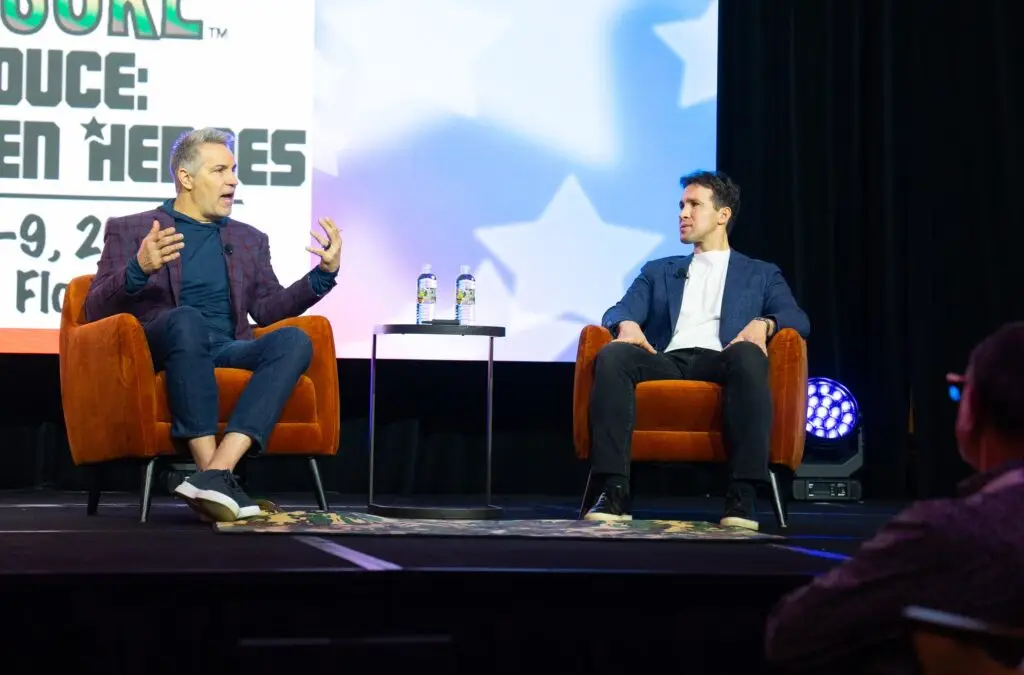

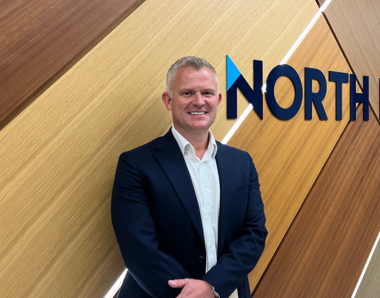
I recently went one-on-one with Anthony Shaw, Global CEO of North Highland.
Adam: I am sure readers would love to learn more about you. How did you get here? What experiences, failures, setbacks, or challenges have been most instrumental to your growth?
Anthony: I grew up in the northeast of England, in a family shaped by heavy industry. My dad started work in the shipyards. My grandad was a miner, as was my great-grandad before him. It was a world where you worked hard, family came first, and you couldn’t get away with making excuses. It gave me values that have stayed with me: family, hard work, relentless optimism, and a belief that anything is possible. My own career path has been non-linear and not entirely predictable. I studied Medicinal Chemistry at Manchester University, then moved into consulting with Accenture and later KPMG. Consulting gave me a brilliant grounding. I learnt to adapt quickly, deliver for clients and build relationships with people from very different backgrounds. It also took me around the world: I lived and worked in Australia, the Middle East, the Nordics and the US.
About ten years into my career, I left consulting to join Telefónica, which had been one of my clients. That was an important move because I stopped advising businesses and started running them. I ran various digital businesses across Europe, Latin America, Asia, and the US, from a joint venture with Mozilla and action camera partnerships to connected TV sets and building a smart-metering business from the ground up. There was no playbook for much of it. We had to be creative, work with limited resources, take calculated risks, and learn quickly.
I also spent 18 months as an HR Director in Telefónica’s innovation business, despite not having a traditional HR background. That experience changed my perspective. It taught me that strategy matters, but people, culture and leadership determine whether anything actually happens. I joined North Highland in 2017 to lead its Technology, Media and Telecommunications business in the UK. I became EMEA CEO in 2020, and over the following five years we delivered around 70% top-line growth, introduced a new go-to-market model, entered new markets including South Africa and the Middle East, and integrated acquisitions. On 1 June 2026, I became Global CEO.
The failure I have learnt the most from is waiting too long to make difficult people decisions. There have been times when I knew a role, a team dynamic or a leadership relationship was not working as it needed to, but I convinced myself that more time or more support would fix it. Sometimes people do turn things around, but blind hope is not a leadership strategy. The cost of waiting is rarely limited to one person: it creates uncertainty for the wider team, slows decisions, and leaves good people carrying more than their share. I handle those situations very differently now. I try to be clear early, give direct feedback, and provide a genuine opportunity for someone to succeed. But if it still isn’t working, I act. Kindness and clarity have to go together.
Looking back, the common thread has been putting myself in situations where I was not the expert and had to grow quickly. I have said yes a lot and been on many adventures. I am motivated by major challenges: I have always followed opportunities that felt difficult and genuinely uncomfortable. Outside work, I am married with four children. My wife is a family doctor and runs her own business. Our children are aged between 6 and 15, so life is never quiet. I am also a huge sports fan. Sunderland AFC is my first sporting love, and I also follow the Philadelphia Eagles.
Adam: In your experience, what are the key steps to growing and scaling your business?
Anthony: Growth is the outcome. The real work is building a business clients value, keeping skills relevant, and creating a place where top talent wants to do their best work.
First, be genuinely obsessed with clients. Not just client satisfaction scores or an annual account plan. Understand how the client makes money, what pressures its leaders are facing, how decisions really get made, and what could disrupt the business next. If you know the client only as well as your competitors do, you are not bringing enough value.
Second is to keep your skills relevant. The quality of your product depends on the quality of your people and the skills they bring. Markets move quickly, technology moves even faster, and yesterday’s expertise can become irrelevant surprisingly quickly. You have to invest relentlessly in learning, development, and new capabilities. The organizations that win are the ones whose skills evolve faster than their competitors and their clients’ needs.
Third, create a great people experience and culture. Culture is not a nice-to-have. It is a growth strategy. If you want your people to do great work for clients, create an environment where they can do their best work. Give them opportunities to grow, make them feel valued, surround them with great colleagues, and build a culture they genuinely want to be part of.
Put simply: know your clients better than anyone else, keep your skills ahead of the market, and build a culture where great people can thrive. Get those three things right and growth tends to follow.
Adam: What is your best advice on building, leading, and managing teams?
Anthony: I focus on three things: talent, trust, and being kind to people.
Talent comes first. Surround yourself with people who are excellent at what they do, who have the right attitude and who care more about the team than self-elevation. I do not want to be the smartest person in every conversation. I want to build a team full of people who challenge me and make the overall business stronger.
Trust is built through accountability. Do what you say you are going to do. That sounds basic, but it is the foundation of a high-performing team. When people consistently deliver, their colleagues trust them. When they do not, the entire team slows down.
Be kind. Give feedback in real time. If something is excellent, say so. If something needs to improve, say that too. People can handle the truth. What they struggle with is ambiguity and discovering too late that there was a problem nobody was prepared to discuss.
I also believe leaders have to choose to learn their business in real detail. That means constantly being on the frontline with clients and your people. Ultimately, the leader sets the standard. People watch what you do far more closely than they listen to what you say.
Adam: What are the most important trends in technology that leaders should be aware of and understand? What should they understand about them?
Anthony: AI is the obvious answer, but the technology itself is not the main story. The story is what AI does to how work gets done. Too many organizations apply AI to an operating model designed for another era. They automate individual tasks but leave roles, structures, decision rights, incentives, and processes untouched. That can create a load of activity without creating meaningful P&L impact.
I am particularly interested in agentic AI: systems that can take action rather than simply generate content. That changes the leadership question. It is no longer just, “Where can we use AI?” It becomes, “How would we design this business if AI were part of the workforce from the beginning?”
At North Highland, we believe leaders need to become “Client Zero.” Before advising clients on transformation, we need to transform ourselves. The organizations learning fastest are not talking about AI. They’re embedding it into the everyday work of their people. The winners will not simply add AI to their existing businesses. They will rebuild their businesses around it.
Adam: What do you believe are the defining qualities of an effective leader?
Anthony: I do not think effective leadership needs to be overcomplicated. The best leaders I have worked with do three things consistently well.
First, they understand the bet the organization is making. Not the mission statement on the wall, but the actual bet the organization is making. What problem are we solving? For whom? What is our right to win? If a leader cannot answer those questions clearly, there is a risk of being busy fools.
Second, they move faster than feels comfortable. A lot of businesses lack pace. Leaders often spend too long trying to remove every risk from a decision, when the bigger risk is doing nothing. I learned that while building new businesses at Telefónica, where there was rarely a perfect answer or a complete set of information.
Third, they protect the culture. Culture is not what leaders say at an all-hands meeting. It is what they reward, what they challenge and, most importantly, what they tolerate. Once the wrong behaviors become normal, they are very difficult to reverse.
None of those ideas are revolutionary. Leadership is rarely about producing the cleverest answer in the room. It is about doing the important things well, consistently and at scale. While no book gives you everything, one that has influenced my thinking is Never Eat Alone by Keith Ferrazzi.
The central idea is simple: relationships matter. The most successful people build genuine networks by helping others, sharing opportunities, and investing in relationships long before they need anything in return. I approach leadership and business in this way. Every major opportunity in my career has ultimately been connected to people, trust, and relationships.
Adam: How can leaders and aspiring leaders take their leadership skills to the next level?
Anthony: Leadership development is not a classroom exercise. The leaders who grow fastest put themselves in situations where they are stretched, uncomfortable, and sometimes exposed.
My advice is simple. First, spend time closer to clients. Too many leaders understand their business through PowerPoint decks and metrics. You learn far more sitting with clients and understanding what they genuinely care about. Second, seek experiences outside your functional expertise. Some of the most valuable lessons in my career came from roles I was not fully qualified for on paper. Those experiences force you to see the business differently. Third, ask for honest feedback and genuinely listen to it. Most leaders receive filtered feedback as they become more senior. The best leaders actively seek out the uncomfortable truths.
Finally, remember that leadership is a craft. You never arrive. The best leaders I know remain curious, keep learning and continue evolving throughout their careers.
Adam: What are your three best tips applicable to entrepreneurs, executives, and civic leaders?
Anthony: First, be clear on your purpose. Whether you are leading a start-up, a global company or a community organization, people need to understand what you are trying to achieve and why it matters. Ambiguity slows everything down. Second, move faster. Most organizations do not suffer from too many decisions. They suffer from too few. You will not have perfect information. Make the best decision you can with the information available and keep moving. Third, leave things better than you found them. Leadership is stewardship. Measure success not only by the results you deliver, but by the people you develop, the culture you build, and the opportunities you create for others.
Adam: What are your best tips on the topics of sales, marketing, and branding?
Anthony: Sales, marketing, and branding are often treated as separate disciplines, but the best organizations align all three around a simple and consistent story.
For sales, start with the client’s problem, not your proposition. Clients rarely care about your services. They care about their challenges, opportunities, and outcomes.
For marketing, be useful. Share ideas, insights and experiences that help people do their jobs better.
For branding, remember that your brand is ultimately your reputation. It is the cumulative effect of every interaction people have with your organization.
At North Highland, we talk about being plain-speaking consultants. That is not a marketing slogan. It is how we try to show up every day with clients and colleagues. The strongest brands are built when what you say and what you do are the same thing.
Adam: What is the single best piece of advice you have ever received?
Anthony: The best advice I received was that growth happens outside your comfort zone. It sounds simple, but it has been true throughout my career. I moved to Australia without a client network. I left consulting to run businesses. I took on an HR leadership role without an HR background. I helped build businesses where success was far from guaranteed, and I stepped into wider leadership roles before I felt I had every answer.
Those were the periods when I learnt the most. My advice is not to wait until you feel completely ready. If an opportunity stretches you, surrounds you with good people and gives you the chance to make a difference, then pile in and take it. Be brave and bold.
Adam: Is there anything else you would like to share?
Anthony: I’ve worked in consulting, industry, start-ups and large global multinationals. I’ve lived and worked around the world. I’ve led technology businesses, commercial areas and people functions. The constant in all of them has been people. Technology matters. Strategy matters. AI will change everything. But organizations succeed because talented people come together around a common purpose and execute really well. That’s what excites me most about my role at North Highland. We get to help clients solve difficult problems while creating opportunities for our people to do the best work of their careers.
Outside North Highland, I am a Strategic Advisor to 100andFirst, which applies lessons from elite sport to building high-performing teams. The more time I spend with successful teams, whether in business or sport, the more convinced I become that culture, trust, accountability, and teamwork remain enduring competitive advantages.