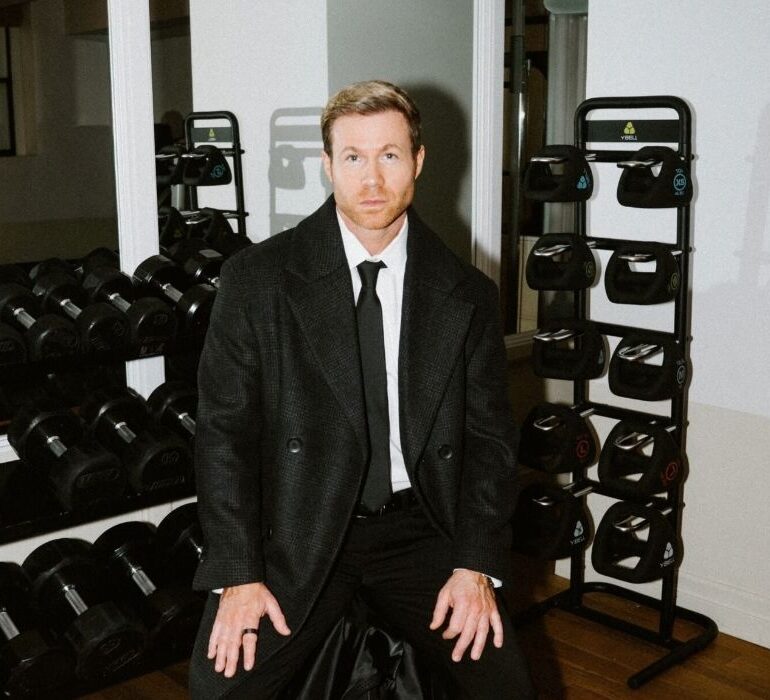

I recently went one-on-one with Akin Akman, co-founder and CEO of AARMY.
Adam: Thanks again for taking the time to share your advice. First things first, though, I am sure readers would love to learn more about you. How did you get here? What experiences, failures, setbacks, or challenges have been most instrumental to your growth?
Akin: I started coaching when I was 15 years old, and almost immediately, I began building a loyal following of strong, dedicated athletes who connected not just with the workouts but with the mindset behind them.
At the time, I was also modeling, and sometimes I would have to sub out my sessions for a modeling gig.
The gym where I coached didn’t announce substitute instructors, so if I had to miss a 6:00 a.m. session for a modeling opportunity, the athletes who showed up expecting me were always really upset. One morning, a group of them pulled me aside and said, “We need a way to stay connected with you. Start a Facebook page. Call us Akin’s Army. And make merch.” It was organic and completely athlete-driven.
Even then, I knew that if I was going to commit to coaching full-time, I would do it with a mission bigger than myself. I wanted to build a true academy – a place that didn’t just train bodies, but developed champions and leaders in all walks of life. I was inspired by my own coach, Nick Bollettieri, whose philosophy shaped global athletes and whose mentorship showed me that coaching, at its highest level, is a legacy.
Ironically, the biggest setbacks in my life ended up being the very things that pushed me to become a coach. A serious back injury forced me to step away from the court, and that setback sparked a deep curiosity about how the body actually works. I dove into sports medicine, biomechanics, and eventually indoor cycling, driven by a need to understand why we break down, how we heal, and what it takes to come back stronger.
Every injury and every “setback” has become an invaluable teacher. Those experiences shaped how I coach, how I lead, and how I show up for my athletes. They taught me to listen, to adapt, to innovate when the path wasn’t clear, and to build my systems around durability, mindset, and performance instead of shortcuts or trends. Each setback made me better, not only as an athlete, but as a leader and a coach.
Today, everything I do – from building training programs to leading coaches and athletes – is rooted in those lessons. I don’t see setbacks as obstacles but instead as a chance to learn and reset at a higher standard.
Adam: How did you come up with your business idea? What advice do you have for others on how to come up with great ideas?
Akin: My business idea, blending mindset coaching with athletic training, came from observing a gap in how sports and fitness are typically taught. During my time coaching tennis, working with top juniors and pros, and through my personal training, I realized something profound: while physical skills are drilled over and over again through repetition, the mental component is often left to chance. Athletes might have world-class technique, but when pressure hits, it is often the mind that fails them.
I thought, what if we integrated the mental coaching into physical training, rather than treating it as a separate add-on? What if we trained people not just to move like athletes, but to think like athletes, to trust their bodies, stay calm under pressure, and have a mindset that stays consistent? That is what eventually became AARMY: a community, a training philosophy, and a brand that helps people internalize mental strength through movement.
My advice to others looking for great ideas: start by deeply observing what you do, what frustrates you, and where the real gap lies. Think about your own journey, not just what customers might want superficially. Combine your domain knowledge with your personal mission. I did not build AARMY because I saw a business opportunity; I built it because I genuinely believed in a bigger mission: helping people come alive, discover their inner potential, and perform at their best in all areas of life.
Adam: How did you know your business idea was worth pursuing? What advice do you have on how to best test a business idea?
Akin: I knew the idea was worth pursuing when my athletes themselves validated it. When I proposed new ways of training, not just for strength or endurance, but for mental resilience, they responded. They asked for more, shared what they were learning, and saw real progress. The demand was not driven by a marketing campaign, it was organic. Their improvements, feedback, and faith in the approach told me that this was not just a niche concept; it had real power. If you are testing a business idea, it is critical to build in response to real need, not just to scale fast. Start with a core group who resonates with your mission. Validate through their feedback. Be willing to iterate. For me, the early community of Akin’s Army was not about growth for growth’s sake; it was about impact. As you scale, do not lose sight of why you started. That alignment is what sustains you when things get hard.
Adam: What are the key steps you have taken to grow your business? What advice do you have for others on how to take their businesses to the next level?
Akin: The key is having a vision and a why. Anyone can work hard for a short burst of time or chase a goal because it looks good on the outside. But when you know why you’re doing something, when it’s your purpose, then nothing can stop you in achieving it. You stop chasing the end result and fall in love with the process, with the journey of life.
Do what you love. Not what you think will impress others, not what you think you “should” do, and not what feels like the safer option.
You have to find a purpose you truly believe in. Something that lights you up, something that makes you want to show up early and stay late, something that makes you obsessed with getting better. You go to sleep thinking about it and wake up excited to work for it. Purpose gives you discipline when motivation fades.
Your goals need to be bigger than surface-level goals – bigger than money, bigger than metrics, bigger than validation. Those things are by-products. If you’re trying to build something real – a movement, a program, a career, a life – start with your vision. See it clearly. Feel it. Then lay the foundation. Get good at the fundamentals. Study your craft. Fail, and get back up. Keep showing up.
The strongest athletes, the strongest leaders, the strongest teams are not formed by shortcuts or convenience. They’re built by the people who choose to put in the work and don’t waver from their dream.
Adam: What are your best sales and marketing tips?
Akin: Stick to your mission. When you are building something that is meant to last, something that is meant to impact people at their core, you cannot be swayed by trends, quick metrics, or gimmicks. I stay away from anything that feels salesy, transactional, or manipulative. We build foundations. We teach patience. We set a higher standard. When people train with us, they know they’re not just signing up to sweat; they’re stepping into a team, into a philosophy that transcends the workout. That’s why we stay rooted in our mission. If you trust your purpose and lead with it, the right people will find you. Not because you sold them something, but because they recognized something in themselves that they were ready to fight for.
Adam: In your experience, what are the defining qualities of an effective leader? How can leaders and aspiring leaders take their leadership skills to the next level?
Akin: Growth is the defining quality of an effective leader. A leader is not just someone who gives orders; they are someone who grows, evolves, and brings others along the journey. For me, leadership means:
- Leading by example: being the first one to show up, doing the hard work myself, and being consistent.
- Building a strong team: surrounding yourself with people who are passionate, aligned with your mission, and skilled.
- Empowering others: encouraging team members to take ownership, take risks, and grow beyond what they think is possible.
- Staying mission-driven: always circling back to the why, why are we doing this, what are we building toward.
- Practicing adaptability: being able to pivot, reframe setbacks, and stay mentally flexible is everything.
To grow as a leader, you must invest in self-awareness, surround yourself with people who challenge you, maintain an unwavering sense of purpose, and commit to your own personal development mentally, emotionally, and spiritually. Effective leadership is not static; it is a lifelong journey of growth.
Adam: What is your best advice on building, leading, and managing teams?
Akin: Building and leading teams has been one of the most rewarding and challenging parts of what I do. Here is what I have learned:
- Lead from the Front: I always try to set the standard by how I show up, in my energy, my discipline, and in how I coach.
- Create Shared Vision: The team needs to believe in something bigger than themselves. For us, that is the mission of AARMY.
- Hold People Accountable: It is not about blame; it is about growth. I try to be consistent with expectations and feedback.
- Build Culture Through Consistency: Rituals, shared language, and repeated behaviors help build a strong culture.
- Foster Growth Mindset: Encourage team members to fail forward. Mistakes are inevitable, but each one is a lesson.
- Empower Ownership: People should feel like they own their work, their role, and their impact. Leadership is not about micromanaging; it is about trust.
Prioritize alignment, clarity, and communication. Make sure each person knows not just what to do, but why they are doing it.
Adam: What are your three best tips applicable to entrepreneurs, executives, and civic leaders?
Akin: My three best tips to everyone are:
- Go All In: When you believe in something, give it your full heart, mind, and energy. Half measures do not change lives.
- Progress Over Perfection: Do not wait for the perfect plan or situation. Take consistent steps forward. Growth comes from doing, failing, learning, and doing again.
- Fall in Love With the Process: The real reward is not a destination, it is the work itself. If you love building, learning, and growing, you will be more resilient, more creative, and more fulfilled.
Adam: What is the single best piece of advice you have ever received?
Akin: The most powerful advice I have ever received, and something I carry into everything I do, is WIN: What’s Important Now. When you focus on that, you win.
It is simple but game-changing. Rather than getting overwhelmed by the big picture or long-term goals, I focus on the now. What is the most important thing at this moment? What decision, action, or mindset shift matters most right now? When you align your energy with what is important now, you are not just being reactive; you are deliberate. You create movement, progress, and clarity. Over time, those “nows” accumulate into a powerful trajectory of growth, both personally and professionally.