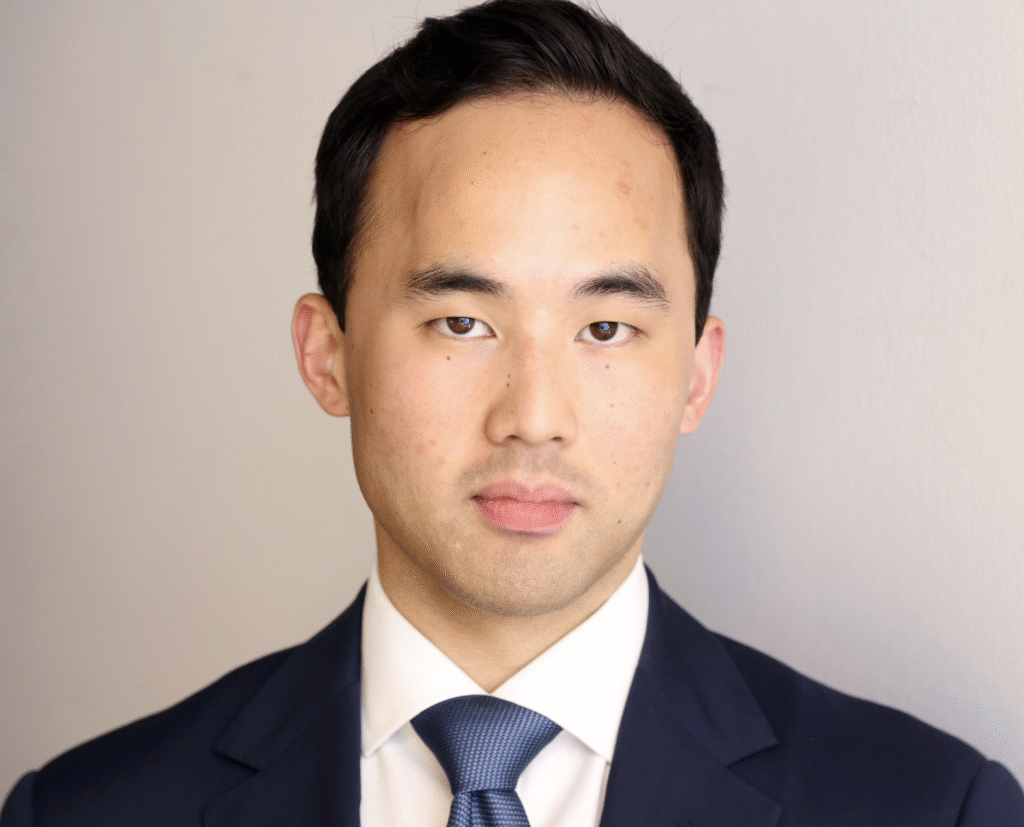
My conversation with Alex Bussenger, founder of the venture capital firm One Eight Capital.
Adam: Thanks again for taking the time to share your advice. First things first, though, I am sure readers would love to learn more about you. How did you get here? What experiences, failures, setbacks, or challenges have been most instrumental to your growth?
Alex: January 8th, 2024, changed everything for me, but before I get into that, I’ll start from the beginning. I was fortunate to win the lottery several times in my life. First, I was adopted from South Korea when I was a few months old. My birthmother was only 17 when she had me. To give me a better life, she made an incredible sacrifice. I grew up in Western New York with a great family and attended Canisius University, where I studied Accounting and Accounting Information Systems. After graduating, I moved to New York City and worked in consulting. I also worked at Morgan Stanley and later at Merrill Lynch, and at 27 years old became a Senior Vice President at Bank of America Private Bank. On January 8, 2024, at only 32 years old, I suffered an aortic dissection (the main artery that delivers blood to the rest of my body tore), one of the rarest and dangerous heart conditions a person can endure, especially for someone at my age. One moment, I was moving at full speed, and the next, I was fighting for my life on an operating table, facing odds that I still have trouble processing today. For the second time, I won the lottery and was fortunate to survive and make a full recovery. The recovery was one of the most challenging times in my life. During my dissection, I lost blood flow to my left leg, so they had to do a fasciotomy surgery on it. As such, I had to relearn how to walk on top of recovering from a 12-hour open-heart surgery. I ultimately spent about a month in the hospital and several months bedridden at home. After months of healing, I made the difficult decision to leave my career at Bank of America and begin my own venture. Last year, I founded One Eight Capital, a New York-based early-stage venture capital firm focused on the future of personalized and preventive healthcare. I also founded another company that addresses the loneliness patients face on their recovery journey. I can’t wait to share more soon!
Adam: What do you look for in companies you invest in? What are your best tips for investors and for entrepreneurs?
Alex: Three things: clarity, conviction, and velocity of learning. Clarity: Does the founder actually understand the problem? If they can’t explain it in one sentence without jargon, they don’t understand it well enough. Clarity is a superpower because it forces precision. It separates founders who studied a problem from founders who lived it. When a founder’s clarity is sharp, you can feel it. Conviction: When the world pushes back, do they bend or sharpen? Anyone can pitch confidently. I look for founders who’ve lived the problem and would build this company whether anyone invested or not. That level of belief is rare, but it’s also contagious. When things inevitably get tough, do they have enough belief in themselves and their companies to persevere long enough for a breakthrough to occur? Velocity of Learning: How fast do they get smarter? Great founders don’t just execute fast; they learn fast. They absorb feedback, update their thinking, and improve the product with urgency and humility. Speed matters, but speed of learning determines who survives. If a founder compounds their insights every week, their company becomes unstoppable.
For investors: Stop over-relying on metrics at the pre-seed stage. At this stage, you’re not underwriting a business; you’re underwriting a person. Their work ethic, their self-awareness, their ability to learn quickly, and their ability to withstand pressure. If a founder doesn’t understand their blind spots, it’s a liability. But if they know them and are actively improving, that’s a competitive advantage. Humility is underrated in startups… not the soft kind, the sharp kind.
For entrepreneurs: Speed matters, but speed without direction is chaos. I’ve seen founders mistake busyness for momentum. They celebrate motion instead of progress. Don’t do that. And most importantly: stop waiting for permission. Nobody is coming to tap you on the shoulder and say, “You’re ready.” You become a real founder the moment you decide that no one else is responsible for your destiny.
Adam: In your experience, what are the key steps to growing and scaling your business?
Alex: Scaling isn’t magic. It’s architecture. There’s nothing mystical about it. There’s a sequence, and when you follow it, things compound. First: get the foundation right. No amount of growth can save a product nobody needs. If your solution doesn’t solve a real, painful problem, adding more users only accelerates the collapse. Validate deeply before you scale widely. Second, build for repeatability. In the early days, everything depends on the founder’s energy. You’re doing sales, product, hiring, customer support… everything. But scale requires systems, not heroics. The moment the company only works because you are in every room, you’ve capped your own growth. Third, focus on one metric that actually matters. Most companies drown in dashboards. They measure everything and understand nothing. A legendary company identifies the single metric that, if improved, changes the entire trajectory. Then they rally the entire company around it. Fourth, surround yourself with operators, not spectators. You need people who run toward problems. People who don’t wait to be told. People who make things better than you envisioned. A founder is only as scalable as their team. Fifth, create leverage through technology and storytelling. Technology scales your abilities; storytelling scales your reach. The world responds to narratives. If you can’t articulate what you’re building and why it matters, you’ve already limited your growth. Sixth, be strategic with capital. Money is leverage, not validation. Be careful who you take it from. The wrong investor can cost you years. The right investor can accelerate you in ways you cannot imagine.
Adam: What are your best tips on the topics of sales, marketing, and branding?
Alex: Sales: Make people feel understood, not pressured. Be obsessive about understanding the problem behind the problem. People say they want features; they actually want transformation. Show them what their world looks like before and after you.
Marketing: People don’t buy what you do; they buy how it makes them feel about themselves. Stop shouting into the void. Speak directly to people who already feel the pain you’re solving. The best marketing doesn’t feel like marketing; it feels like recognition.
Branding: This is the most misunderstood advantage in business. A great brand compresses trust and creates gravity. It makes people want to be close to you. Think about Apple, Nike, and Patagonia. They’re not selling products, they’re selling identity. Get the story right, and everything else compounds.
Adam: What are the most important trends in technology that leaders should be aware of and understand? What should they understand about them?
Alex: 1. AI as Infrastructure. AI is no longer a tool or a feature. It has become infrastructure: a cognitive layer that sits next to every human being and every decision. A few years ago, AI was something organizations “experimented” with. Now, it’s becoming the default operating system for work, judgment, creativity, and strategy. Companies that treat AI as optional are already behind. The leaders who win in the next decade will be the ones who build AI into the core architecture of their business, not as an add-on, but as the engine. AI will shape product development, healthcare delivery, capital allocation, hiring, personalization, and user experience. It will touch every part of how value is created. The question is no longer “How do we use AI?” It’s “How do we restructure ourselves around the fact that AI is everywhere?”
2. Hyper-personalization of health. We’re finally entering the era where medicine becomes individualized, not aspirationally, but mathematically. Traditional healthcare has always been reactive. You get sick, you show symptoms, you seek treatment. But we’re moving toward a system where your biology, your genetics, your lifestyle, and your real-time data predict what’s coming before it ever arrives. Your body is becoming a data system. Genomics, wearables, continuous monitoring, machine learning, microbiome data, epigenetics: they’re all converging to create a level of precision we’ve never had. The idea of one-size-fits-all care will fade. Prevention will become more profitable than treatment. Health will shift from episodic to continuous. Companies that understand and leverage this shift will lead the next generation of healthcare. They won’t just treat disease; they’ll help people avoid it. They won’t just collect data; they’ll interpret it, translate it, and act on it with personalization at scale. For leaders, the key is understanding that personalization isn’t a feature. It’s the new baseline. Every product, every service, every experience, especially in healthcare, will move toward “for you, not for everyone.”
3. Technology as emotional infrastructure. We are living in the loneliest era in modern history. People are more connected digitally and more isolated emotionally. Anxiety, burnout, and disconnection are at all-time highs. The leaders who understand this emotional deficit will build the products that define the next decade. The next generation of breakthrough companies will meet people on the emotional level first and the functional level second. They’ll understand that every product is an identity product. Every service is a trust service. Every platform is a community engine.
Adam: What do you believe are the defining qualities of an effective leader?
Alex: Three things: clarity, courage, and responsibility. Clarity: If you can’t articulate where you’re going, no one will follow. Clarity is more than communication; it’s alignment. The best leaders make the destination so unmistakable that people feel pulled toward it. Courage: Not the absence of fear, but the discipline to act despite it. Real leadership shows up in the uncomfortable moments: difficult conversations, unpopular decisions, bold pivots. When everyone else hesitates, leaders move. Courage is what converts vision into momentum. Responsibility: Effective leaders own outcomes without flinching. They don’t hide behind excuses or blame. They absorb pressure so their teams can operate with clarity. Responsibility is the anchor that creates trust. Great leaders make people feel part of something bigger than themselves. That feeling isn’t manufactured; it comes from conviction, consistency, and the willingness to hold the standard even when no one is watching.
Adam: How can leaders and aspiring leaders take their leadership skills to the next level?
Alex: Leadership levels up when you level up. Most people try to improve their leadership by learning new tactics or frameworks. But tactics don’t elevate you; identity does. The next level of leadership requires being deeply anchored in who you are, what you stand for, and what you refuse to compromise on. First, stop performing and start embodying. A lot of leaders say the right things, act the right way, and hope it signals competence. But real leadership isn’t performance; it’s congruence. When your actions match your values, you become magnetic. People trust leaders who are the same in private as they are in public. Second, build calm under pressure. Crisis is the great separator. Stress exposes your wiring… your insecurities, your habits, your blind spots. The best leaders train for the storm. When things go sideways, they slow down instead of speeding up. They absorb chaos so their team can stay focused. Calm is not passive; it’s a competitive advantage. Third, develop judgment, a rare skill in business. Judgment is built through reps: making decisions, owning the consequences, extracting the lesson, and upgrading your thinking. Most people try to avoid decisions because decisions create risk. Leaders move toward them because decisions create clarity. Judgment compounds. The more you learn, the more you see around corners. Fourth, surround yourself with people who challenge you, not protect you. If everyone on your team agrees with you, you’re not leading, you’re being insulated. Great leaders invite tension, dissent, and intellectual friction. They want people who think independently and push them to see blind spots. Growth doesn’t happen in comfort; it happens in conflict that’s grounded in trust. Fifth, lead with conviction, not consensus. Consensus builds safe companies. Conviction builds legendary ones. Leaders must be willing to make decisions that others don’t yet understand. The courage to act before the world validates you is what separates operators from visionaries. You can’t build something extraordinary with diluted conviction.
Adam: What is the single best piece of advice you have ever received?
Alex: One of the best pieces of advice I ever received was this: don’t be afraid to fail. Failure isn’t a detour; it is the process. If you’re not failing, you’re not pushing hard enough to find your real edge. Look at the people we now call generational talents. In the early days of Amazon, Jeff Bezos pitched nearly sixty investors, and only about twenty said yes. That means more than half the room told him no, and he built one of the defining companies of our lifetime anyway. Alex Rodriguez is one of the all-time career strikeout leaders, yet he also amassed 3,115 hits and 696 home runs, proof that even repeated failure doesn’t prevent elite success. Fear of rejection is an illusion our minds create to keep us safe. But the moment you stop negotiating with that fear, the moment you accept that rejection is part of the scorecard, you unlock a different gear. Progress becomes inevitable. You stop playing not to lose and start playing to win. That advice shaped how I operate: take the swing. Embrace the miss. Keep going. That’s where all the real breakthroughs live.