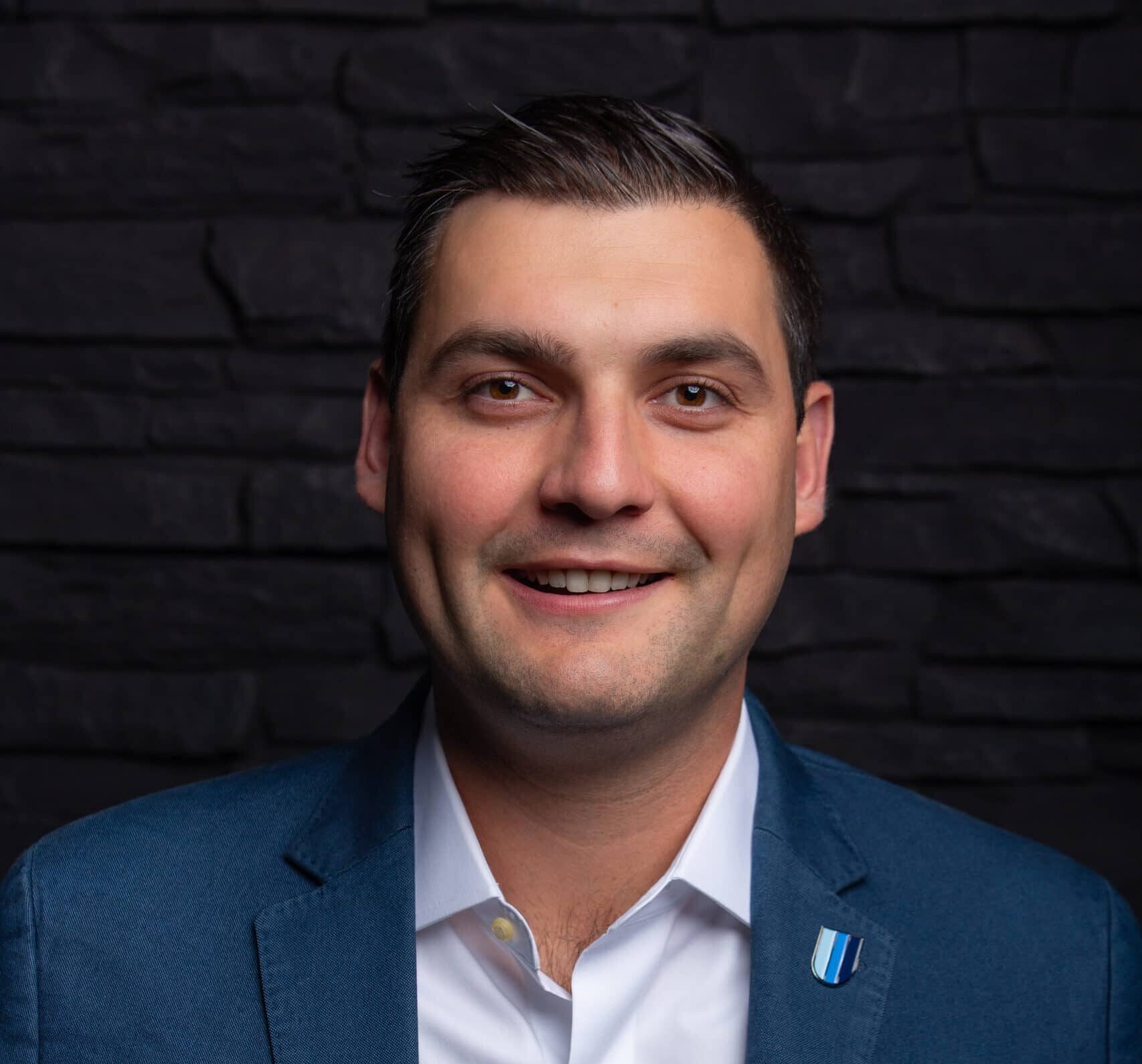

I recently went one-on-one with Alex Preece, co-founder and CEO of Tillo.
Adam: Thanks again for taking the time to share your advice. First things first, though, I am sure readers would love to learn more about you. How did you get here? What experiences, failures, setbacks, or challenges have been most instrumental to your growth?
Alex: I’ve never really taken the easy path. I started my career in the British Army, serving seven years on active duty in Bosnia and Iraq, which shaped a lot of how I lead today: staying calm under pressure, leading from the front, and understanding that success is always about people and teamwork. After leaving the Army, I co-founded the UK’s first daily deals business, which we later sold to Moneysupermarket.com in an £11m exit. That experience taught me how to build from scratch, move fast, and stay focused on creating real value.
Tillo came from a similar mindset: seeing a fragmented, inefficient market and wanting to build the infrastructure layer to simplify it. We’ve grown from two founders to a global team, been profitable since 2017, and scaled with just £1.3m in early funding by staying disciplined and focused on fundamentals. Along the way, there have been plenty of challenges and moments that required resilience and patience. Early on, we faced the classic two-sided marketplace problem – needing brands to attract partners, while also needing partners to attract brands. We had to establish value for both sides quickly, which forced us to stay relentlessly focused on building the most intuitive, reliable, and customer-centric platform possible.
As we’ve expanded globally, another major learning curve has been understanding that every market approaches rewards and incentives differently. What resonates in the UK doesn’t automatically translate to the US or elsewhere, so a huge part of scaling successfully has been listening carefully, adapting our approach, and staying close to customer needs. Through all of it, the biggest lesson has remained the same: the best businesses are built over time, with strong teams, constant innovation, and a commitment to solving real problems well.
Adam: How did you come up with your business idea? What advice do you have for others on how to come up with great ideas?
Alex: When we started Tillo, the digital rewards space was incredibly fragmented. Every retailer, every platform, every integration felt disconnected, manual, and difficult to scale. We saw a huge opportunity to simplify that infrastructure and create a single connection point between brands and businesses. At the time, we felt there was an opportunity to build the infrastructure layer for digital rewards in the same way Stripe simplified payments. That was the original thinking behind Tillo.
What’s interesting is that the business has evolved massively since then. We started focusing on digital gift card distribution, but over time, we became a much broader rewards and incentives infrastructure platform powering fintechs, loyalty platforms, and enterprise businesses globally. Our North Star has changed several times over the years… but our mission hasn’t.
Adam: How did you know your business idea was worth pursuing? What advice do you have on how to best test a business idea?
Alex: For me, the signal was that the problem kept showing up in different conversations. Brands were struggling with distribution, businesses wanted easier access but couldn’t get it, and the whole process was far more manual and fragmented than it needed to be. When you hear the same pain point repeatedly from different sides of the market, that’s usually worth paying attention to.
But I don’t think you ever truly “know” in the beginning. You build conviction through testing. In our case, that meant getting close to customers, understanding where the friction really was, and proving we could create value for both sides of the marketplace. The early challenge was that we needed brands to attract buyers and buyers to attract brands, so we had to validate both sides at the same time.
My advice is to avoid falling in love with the idea too early –fall in love with the problem instead. Speak to customers before you build too much, test whether they will actually change their behavior, and look for evidence that the pain is urgent enough for people to act. Compliments are nice, but commitment is what matters.
Adam: What are the key steps you have taken to grow your business? What advice do you have for others on how to take their businesses to the next level?
Alex: The biggest step has been staying disciplined about fundamentals. We didn’t grow by chasing every opportunity or trying to be everything to everyone. We focused on solving a clear problem, building strong infrastructure instead of over-customizing for every customer, and making sure we created real value on both sides of the network. Another key step was hiring people who were better than us in specific areas and then trusting them to lead. As a founder, you have to accept that what gets the business off the ground is not always what scales it. Over time, your role changes from doing everything yourself to building the conditions for others to do their best work.
We’ve also had to keep evolving. The business today is not exactly the business we started with, and that’s a good thing. Markets change, customer needs change, and your understanding of the opportunity deepens as you grow. My advice to other founders is to be ambitious, but stay focused. Growth creates complexity. The companies that scale well are usually the ones that can keep simplifying: simplify the strategy, simplify the customer experience, simplify decision-making, and keep coming back to what actually moves the business forward.
Adam: What are your best sales and marketing tips?
Alex: The best sales and marketing starts with understanding the customer properly. Too many businesses lead with what they want to say, rather than what the customer actually cares about. You have to understand the pressure they are under, the problem they are trying to solve, and what success looks like for them. In the early days, credibility matters more than polish. You don’t need a perfect brand or a huge marketing machine. You need to be clear, useful, and reliable. If you can solve a real problem and make the customer’s life easier, that becomes the foundation for everything else.
I also think patience is underrated in sales. Especially in B2B, trust takes time. You have to keep showing up, keep listening, and keep proving that you understand the customer’s world. The best relationships are rarely transactional; they are built over years.
From a marketing perspective, clarity is everything. Be able to explain what you do, who you help, and why it matters in simple language. If your own team can’t explain it simply, the market won’t either. And don’t be afraid to share your perspective publicly – clear, consistent storytelling builds trust over time.
Adam: In your experience, what are the defining qualities of an effective leader? How can leaders and aspiring leaders take their leadership skills to the next level?
Alex: One of the biggest things is removing the mental ceiling on what’s possible. A lot of people let external noise shape the size of their ambition – whether that’s investor skepticism, industry expectations, or just conventional thinking. I think you have to learn to block a lot of that out. Once you truly believe in the direction you’re going, you have to move boldly and move fast. One thing I’ve always admired, particularly in the US market, is that willingness to think bigger and execute aggressively once conviction is there.
At the same time, scaling requires focus. As businesses grow, complexity grows with it, so you have to become ruthless about prioritizing what actually drives impact and stripping away the rest. And above all, patience matters. Building something meaningful is usually a 10-year journey, not a 10-month one.
Adam: What is your best advice on building, leading, and managing teams?
Alex: My biggest advice is to be very intentional about the culture you build, because culture forms whether you manage it or not. In the Army, I learned very quickly that people perform at their best when there is trust, clarity, and a shared sense of purpose. The same is true in business.
Great teams need clear direction, but they also need room to operate. One of the hardest transitions for any founder or leader is learning to let go. You can’t scale a business if every decision has to come through you. You have to hire capable people, give them context, and trust them to make good decisions.
Communication is also critical. As companies grow, alignment becomes harder. What feels obvious to the leadership team is often not obvious across the business, so you have to repeat the mission, the priorities, and the reasoning behind decisions more than you think.
Finally, I think leaders set the emotional tone. If you panic, the team feels it. If you stay calm, focused, and honest, especially during difficult moments, that gives people confidence. Teams don’t expect perfection, but they do need consistency, transparency, and belief.
Adam: What are your three best tips applicable to entrepreneurs, executives, and civic leaders?
Alex: First, build for resilience, not headlines. Sustainable businesses are built on strong foundations, not short-term hype.
Second, remove the mental ceiling. Most limitations are self-imposed, and leaders often achieve far more when they stop thinking conservatively about what’s possible.
Third, stay adaptable. What got you here won’t get you there. Markets evolve constantly, and leaders need to be willing to evolve with them.
Adam: What is the single best piece of advice you have ever received?
Alex: The best advice I’ve received is that you are capable of more than you think, but only if you stop placing limits on yourself too early. That advice has stayed with me because I’ve seen how often people talk themselves out of ambition before they have properly tested what is possible. They assume the market is too hard, the competition is too strong, or the goal is too big.
That mindset has shaped a lot of my career. Leaving the Army, starting a business, going bankrupt, going through an exit, building Tillo, and then moving to the U.S. to help lead the next stage of growth all required a willingness to step into uncertainty before everything felt comfortable. So I’d say the advice is simple: don’t build your life or your business around an artificially small version of what is possible. Think bigger than feels comfortable, then back it up with focus, resilience, and hard work.
Adam: Is there anything else you would like to share?
Alex: This year marks ten years since we started Tillo, which is quite surreal in many ways. What’s probably surprised me most over that journey is just how important adaptability is. Our business today looks very different from the business we originally started, and that evolution has been a strength, not a weakness. The mission has remained consistent, but the scale of the opportunity has expanded massively over time. I think the biggest lesson is that enduring businesses are built through resilience, patience, reinvention, and great people. Those things compound over time in ways that are difficult to appreciate in the early years.