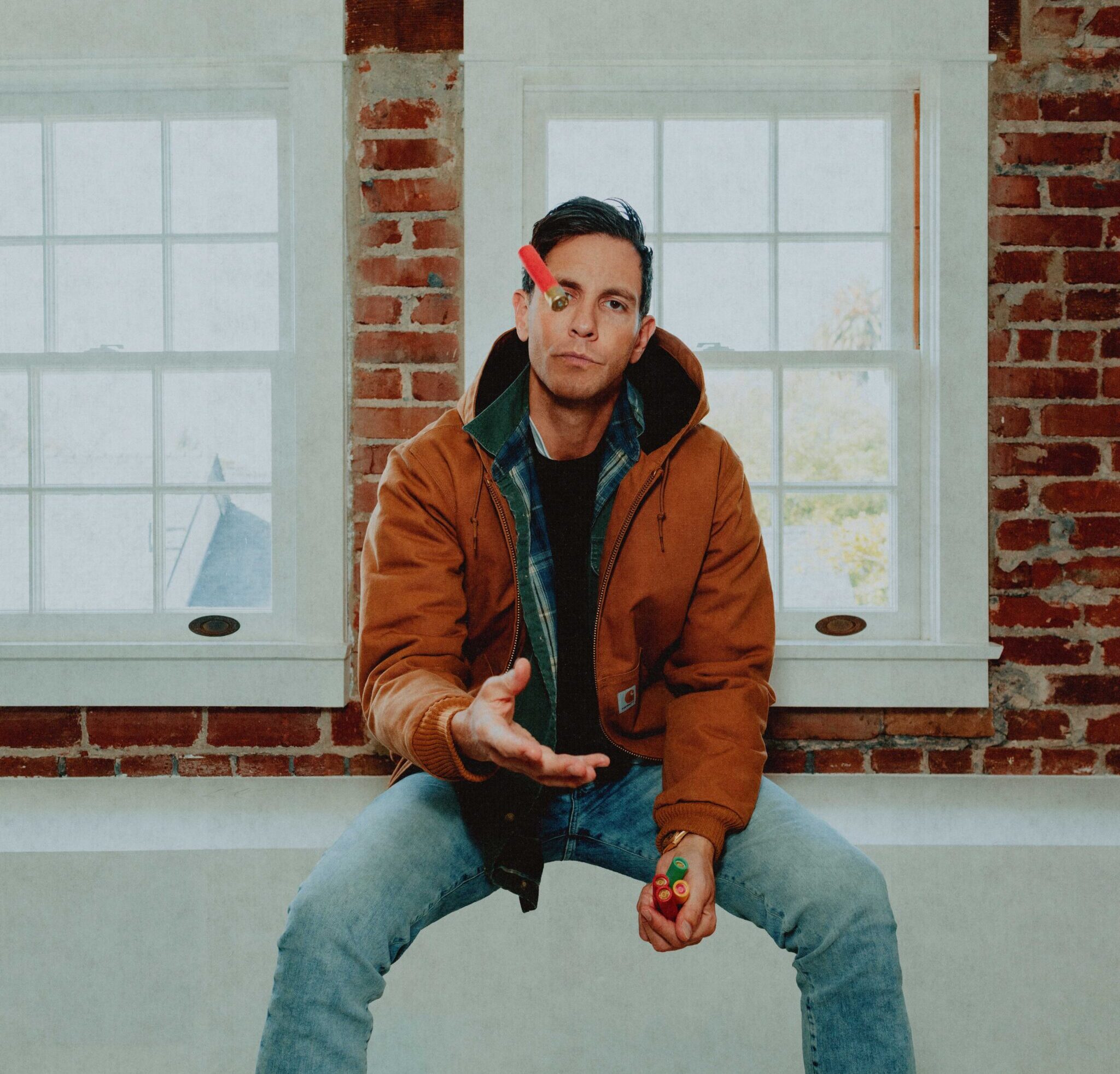


I recently interviewed Poppi Founder Allison Ellsworth on my podcast, Thirty Minute Mentors. Here is a transcript of our interview:
Adam: Our guest today built a multi-billion-dollar beverage brand. Allison Ellsworth is the co-founder of Poppi, acquired by PepsiCo for nearly $2 billion. Allison, thank you for joining us.
Allison: Thank you for having me.
Adam: You grew up in Wichita Falls, Texas, in an entrepreneurial family, but you went to the University of North Texas, not to pursue a career in business, but to study dance. Can you take listeners back to your early days? What early experiences and lessons shaped your worldview and shaped the trajectory of your success?
Allison: I love that question, because it might not seem like something that a typical founder of a billion-dollar exit would say, that they were a dance major in college. But even deeper than that, I remember my freshman year realizing really quickly you don’t need a degree in dance to teach it or to dance. So I had one of those moments that most kids go through in life of like, what am I doing with my life?
So I took a year off. I moved to Europe, moved to Spain for a year, bought a one-way ticket, and I just learned what life was like, the big beautiful world out there. When I came back, I was like, hey, what is the quickest way for me to get out there? I need to go experience life. It was so impactful that I also realized what life could be like if you don’t work for somebody. The man is what people always say, right? It was one of those transformative moments for me, and I ended up graduating with sociology. I still graduated in four years, because I was just like, there’s a big world, and I want to conquer it.
Adam: I love that, recognizing early on that your time should be spent intentionally in a meaningful way. Meaningful can mean different things to different people, but as long as it’s meaningful to you, it’s likely going to be time well spent.
Allison: Always. That passion is such a beautiful thing in life, that if you’re doing anything to just get rich, let me just tell you real quick how bottomless that feeling will be. Meaning and purpose are really big. The number one feeling I had post-exit was freedom, freedom to do what I want, with whomever I want, when I want. But with that freedom, there’s not a lot of purpose, and so I found through that journey that having a real purpose in life is the most important thing, and doing something that you love and that you’re passionate about.
I mean, I’m sure you’ve heard this quote: if you’re doing something that you love, you can be working 80 hours a week, being chaotic, having kids, growing a business, and if you love it, it’s called passion. If you hate it, it’s called stress. So just find what you’re passionate about. There’s no need to be stressed constantly in life.
Adam: I love that. My framework, the framework that I share with audiences that I speak to, is you’ve got to check three boxes. Number one, am I doing something that I love? Number two, am I doing something that I’m great at? Number three, am I doing something that allows me to make a positive impact in the lives of others?
Adam: To your point, if you’re checking all three of those boxes, you can wake up first thing in the morning and you’re fired up, you’re ready to go, you’re ready to get at it, you’re excited, and you can keep going all day until you hit the pillow late at night, pass out, and then the next day you’re fired up to get at it again. You compare that to not checking those three boxes, doing something that you don’t really love, that you’re maybe not all that great at, where you don’t necessarily see the impact of the work that you’re doing, and by 1 o’clock in the afternoon, you’re completely drained. Drained from what? Drained from working too hard, maybe, or drained from not checking those three boxes.
Allison: One of the top questions I get is with this whole conversation about work-life balance, and I usually say something that’s kind of controversial. The way that I look at it is, if you want to be successful in life, you kind of can’t afford to have very much balance when it comes to those things. Now, I’m not saying don’t take care of yourself mentally and physically. I’m saying I have spreadsheets in the bedsheets after the kids go to bed. I am up late. I’m working weekends. My phone is always on, and I love it.
That work-life balance for me is working a lot, because I had someone the other day be like, I shut my computer at 4 o’clock, and then I cold plunge, and I go to the sauna. I’m like, oh my goodness, when was your exit? And they’re like, well, I haven’t exited yet. And I’m like, well, obviously, it’s a big misconception that we talk about self-care nowadays, and we talk about all of those things, but they can coexist. I was able to have three kids. I started the company pregnant, was on Shark Tank nine months pregnant, and then I had another kid during our fastest year of growth, where we went from 50 million to 200 million.
I was exhausted, but I loved it. It’s like that thing of look at the results and the exit that we had from the hard work. Now I don’t have to work as hard, but you know what I do want to do is not retire. So it’s this work-life balance we talk about, but you need to find out what works for you. Now that might not work for everybody, but the shaming on you have to do it a certain way should go away. You can find what inwardly works for you, and if you like that, it’s okay. It’s okay to work hard.
Adam: You bring up something interesting, which is you exited for a huge amount of money, and you could spend the rest of your life at 4 o’clock doing a cold plunge. Even at noon or at 9 a.m., you don’t have to do anything. But what do you want to do to live a life worth living? Something that I’ve discovered in conversations with all kinds of people, including people who are in their 60s and 70s and even 80s, who are still going very, very strong, is that the single most important thing to staying young, the single most important thing to staying engaged, the single most important thing, perhaps period, is purpose. When you wake up every day with purpose, when you wake up every day with meaning, and whatever that is, that purpose could be, I want to build a billion-dollar business that’s going to change the world. That purpose can be, I want to raise great children. That purpose can be, I want to make an unbelievable difference through this cause. Whatever that purpose is, there’s no bigger differentiator than having that purpose.
Allison: Adding to that is a lot of people get stuck on finding their purpose, and you can actually change it over time. Your goals can change. People get scared of change, but I’m here to tell you it’s the only constant in life. Things are always changing, and to embrace that change is really powerful, and to embrace it messy and embrace it awkwardly, and know that there’s failure along the way.
But to find that purpose can change. Purpose to be the best mom you can be, or be the best at work, or to stop eating dairy. There are so many things that you can set goals toward, and they can change, and people forget that. It’s okay to change, because as humans, we change, and we grow, and we learn.
I know that even at Poppi, as a leader, most entrepreneurs don’t start companies and know how to be leaders. It’s not something that just magically someone knows how to do. You have to learn how to be a good leader in life. When I first started, I did every job at Poppi. I had a hard time letting go of things, but then the second I started letting go and empowering other people to do stuff, that changed me as a leader. My purpose of me getting everything done changed to, how do I now grow the business? My purpose of, yes, I want to revolutionize soda for the next generation. So there’s this meaning of one purpose creates everything, but it’s actually not true, if that makes sense.
Adam: What advice do you have for anyone on how to get on a path to find their purpose, recognizing that your purpose could change tomorrow, could change next month, next year, but how do you discover your purpose?
Allison: You have to look inwardly and be kind to yourself. It doesn’t have to look like someone else’s purpose. A lot of times, people are like, to have success in life, you need to meditate, have a five-step morning routine, get up at 5 a.m. There’s so much social media. There are so many other people telling you what to do, versus sometimes you just need to sit down.
If you don’t like to write, do a voice memo, use your notes in your phone, open up a journal, do all these things. Look inwardly and get your thoughts out on paper. People discount that sometimes, just trying to figure out your purpose. What is your purpose this month? What is your purpose this year? What is your purpose five years from now?
At the end of the day, we’re saying purpose, but these are just goals. A lot of people dream, but not a lot of people do. So it’s this meaning of putting the work in motion to do something about it. If you’re not happy about something, do something about it. Easier said than done with circumstances and life options, but I will say, to your point, I love just the purpose of getting up in the morning and being the best version of yourself, and to just do a little bit better each day. And if you have a failure in it, don’t feel like you just have to start over and find a new purpose. It goes back to that change thing. Be willing to change.
Adam: Allison, you bring up a number of really interesting points and really interesting topics, starting off with the fact that you need to have a goal. Understanding your goal can change; it starts with having a goal. It’s hard to be successful if you don’t know what success looks like, and again, your definition of success can be different than my definition of success, but what does success mean to you? However you define success, make sure you have a clear definition, and that will make it a lot easier for you to get there.
Adam: It starts with, in your words, putting the work in motion, getting going, getting started, taking that first step. There’s no more important step than that first step, and if you want to achieve any kind of big goal, it’s very hard to do it without achieving micro-goals along the way. It’s those little steps that allow us to ultimately get to the big step that we want to take.
Allison: There’s this crazy myth that we’ve all been sold, that success looks like confidence first, clarity first, validation first, that you just wake up one day and you are successful. But really, people that find success, it just doesn’t work that way. It looks more like starting before you feel legit, saying yes while your stomach is in knots and figuring it out later, doing things that make you cringe a little until they don’t anymore.
Most people don’t fail at success because they are not talented. I believe they fail because they refuse to look stupid for a while. One of the biggest things that I love to explore is how embarrassment is the most under-explored emotion when it comes to success. I get it. Looking stupid is super uncomfortable, but that discomfort is usually the price of entry if you want to be successful in life.
That discomfort, that embarrassing feeling, you should actually use it as a growth signal. It’s one of the biggest lessons I’ve heard: stop looking at embarrassment or doing things differently, or things that push you, as a stop sign. It’s actually a green light, and you should lean in. It means you’re growing, it means you’re learning something, and that you’re pushing yourself. So success, it’s this myth that we’ve been told, like I said, and I just think that you need to take a step back. It doesn’t have to be perfect, and it doesn’t have to be a perfect brand. It doesn’t have to be perfect anything before you start. You just kind of have to start.
Adam: Is there a moment for you and your journey when you were able to really embrace that embarrassment, embrace that discomfort, something that you did that deep down made you cringe, but you did it anyway, and it helped you get to where you wanted to be?
Allison: Yeah. Looking back, the growth of Poppi, me personally, it followed a very specific pattern. First, it started with embarrassment, then it went to refinement, then clarity, then confidence came. We always think confidence comes first, and it’s really funny. I remember back, we launched Poppi March 3, 2020, right when Covid started, and we were having to think very differently from the beginning on how we could connect with our consumer and our community.
There was this one new platform everyone was getting on. People were dancing on it. It was TikTok. Now brands are on TikTok constantly, but nobody was really going on and really talking to the community, founder to community. I remember getting on and I danced, I made taco recipe videos, I ran around like a crazy person with no team, no plan, no media, no social training, just me talking about this drink that I made publicly to live on the internet forever and ever. I thought to myself, this is either genius marketing or a permanent record of me making a fool of myself online.
Honestly, most posts were awkward. Most were so embarrassing. But it taught me a few things. It taught me what people understood about my product and what they didn’t, and what mattered to them and what didn’t. I learned people liked hearing my founding story. So one night I sat down on the couch, I was vulnerable, unfiltered, I had no makeup on, my hair was wet, and I just told the story of how I started Poppi, and how I was in my kitchen, and how I was on Shark Tank nine months pregnant, and had the baby 10 days later. It went absolutely viral, and we did $100,000 while we were sleeping, and it changed the whole trajectory of our business to be a digital-first, community-first, creative-first brand.
It all started with me being cringy online. Now everyone’s doing it. It seems very normal for people to go online as founder-led companies to do it, but it was really disruptive at the time, and it was just such a game-changer. So through that, I started with embarrassment, I refined the messaging, I got clarity, and then I was really confident online through it, but it didn’t start with confidence.
Adam: I love that. What looks like confidence today started off as deep discomfort, and you see the most successful people, and all you see is the success. What you miss is all the difficult things that they had to do to get there, starting off with doing the things that they really didn’t want to do, and oftentimes they don’t work. You going on TikTok and doing something that you felt was embarrassing, that could have very easily not worked, and that could have very easily led to you feeling cringy and having no payoff, but it’s about trying things. If you’re not willing to put yourself out there, you’re never going to get there.
Allison: Never. The $2 billion exit that I had, it started at a folding table at a farmer’s market for me. The Shark Tank deal, it started with me pitching an idea that wasn’t perfect, with Mr. Wonderful calling me an apple cider vinegar roach. The confidence you see now did start with embarrassment. So it’s this whole idea of it can change, and embarrassment can be such a beautiful thing, because those small moments, those unimpressive moments, are the ones that actually build that success and growth within a human. You learn through those moments, and you get better each day through them.
Adam: How did the idea for Poppi come together, and what were the keys to ultimately turning it into a billion-dollar brand?
Allison: I started it because I had personal health problems, just tummy problems. I was tired, couldn’t quite figure out what was going on, and I started drinking apple cider vinegar. I hated the taste and wanted to create something I could drink every day. It’d be better for you, ingredients I could love, had prebiotics, all of these things, and there was nothing like it. So I just created it, and it got to the point where I was just so passionate about sharing it with people, because I wanted them to experience what I’d experienced.
I love that that’s why I started the company, not because I saw a gap in the market and wanted to create something that was very contrived business. It was a passion of mine, and through that passion, it’s what connected and what was so special about Poppi and our growth. We’re one of the fastest-growing beverages in the history of beverage because we were able to, what I say are the three Cs, we were able to move at the speed of culture.
We were so connected into culture at Poppi. We hired very young, and at one point, I think we were like 65% female, so we knew our consumer. We were our consumer. We let the creative really dictate the heart of the company, so we leaned into the creative, the disruption, the brand awareness, not really tying ourselves to KPIs. And then community was at the core, right? We saw our community, it wasn’t our customer, it was our community. We did brand affinity, brand-building things versus focusing on how we can do coupons in the grocery store.
Those three Cs were so true to who we were. We kept it real. We were authentic, and it just paid off, and it worked really well for the product at the time. And I will say, what worked then for us, I don’t even know if it could work now, because times have changed. Everyone’s on TikTok. Maybe you are sick of that stuff now. So being able to move at the speed of culture is really big, and staying up on trends on how new-age marketing is honestly working.
Adam: There may be a slightly different formula now, but a lot of the things that you shared are universally applicable. The importance of really understanding your audience, and it’s one thing to say know your audience, and it’s another thing to hire a team that primarily consists of your audience. They are your audience. Something that you shared, which is so important, is not tying yourself to KPIs, not driving your business being completely focused on, well, I need to hit this metric, I need to hit that metric, and instead driving your business focused on your product, your customer, your audience, your vision, your mission. That will never go out of vogue.
Allison: Never. The brands that don’t last are the ones that are focused on the product and not the brand as well. Obviously, I’m speaking specifically to consumer products, because that’s what I know. I know every business is different, but it has to start with a good product, but it can’t stand alone. You have to invest in the brand, and sometimes it’s really hard for people to actually get what that means.
It means investing in things that you cannot directly tie to a KPI, like you said, where it’s like, okay, we do this, and we might see it pay off in three years. That’s really hard for people to put marketing budgets on, that long-term brand-building effect of giving Kylie Jenner free Poppi for three years in hopes that it might show up in one TikTok. Guess what happened? So it’s one of those moments where it’s really hard for people to actually do that, versus I know if I invest in this, it will return a sale tomorrow. That’s safer. We’re just going to do this instead, and we never focused on that ever.
Adam: You mentioned those key brand investments that weren’t tied to a KPI, in fact defied what an investor might demand of you to do, but you, as the founder, understood your business, understood your product, understood your mission. Were there other key brand investments that were game changers for you? Do you have any other advice on that topic that anyone can apply to their business?
Allison: I touched on the social media aspect of it. It is the digital way of marketing now, so the people shying away from being online, you’ve got to get over it at the end of the day. Any business owner wants to win, and they don’t think that that’s a way to win. The most important piece within that is the strategy has to come from the top down. You can’t leave it up to the intern. You can’t leave it up to the young kid that you hired that hopefully can run the socials and they’ll figure it out. No, you have to actually learn it and take it seriously yourself and make it part of the full 360 piece of it.
Team, people don’t talk about hiring the right team as such an important thing within the marketing function and the business. At Poppi, we have an entire vertical that is the culture vertical, so it’s all things culture. What does that include? It includes social, influencer events, college, brand partnerships, and we focus on these things. Of course, we have our head of e-comm, and I remember for the first three years, his nickname was ROI Killer.
We looked at Amazon as a marketing channel, so it’s a mind shift within the entire organization, and a goal of we are going to do long-term brand-building activities. We had an apparel line as a soda company that we launched with Target. We had a 26-piece collection that we did with Target. It went in for two months with a flavor for people to be like, wait. We have a designer dedicated to apparel and a production person working to get clothing made. These are things that you typically don’t hear a soda company doing, and so we just invested in it and took it seriously.
Adam: I love that, and I love the guy nicknamed ROI Killer. I can tell you that I fall into the trap that I would imagine just about everyone falls into, which is when you’re trying to figure out how to spend money on your business, the first thing you ask is, is this a good investment? What is the ROI going to be? Is there going to be an ROI? And if the answer is no, or if you’re not confident that the answer is yes, you’re going to find other ways to spend that money. I love the idea of taking a step back and thinking through, what are my long-term goals? What are my long-term objectives? To get there, I’m probably going to have to do things where there isn’t going to be any ROI right away. There might not ever be any ROI, but I need to take these chances, and without taking these chances, it’s going to be really difficult for me to achieve the kind of success that I want to achieve.
Allison: You see it within the creator and influencer network. It’s really hard to track if it works. If you’re a smaller company, and maybe you’re doing 5,000 a day, or a month on Amazon, you can see that little $50 jump, or $100 jump, or $1,000 jump. Sure, you can kind of see it. You can kind of track clicks on stories and codes redeemed, but the average consumer, 100% aren’t that, right?
Trying to even figure out, if I work with a creator, is this going to work? It’s going to be really hard for you to track that. Sure, you can track EMV and impressions. It is a gut feeling at the end of the day, and you have to trust that gut feeling that this is teaching a behavior of long-term brand building, of the people you do see, creator-led. And you’ve got to let go that it’s going to be tied back to something, especially at the level of a company that maybe is doing 20 million plus. It’s very hard to track, and that’s okay. You have to let it go.
Adam: You mentioned that you never really learned how to become a leader when you started your business, and most people don’t, but your leadership style evolved. What do you believe are the keys to successful leadership? What can anyone do to become a better leader?
Allison: The number one thing is not allowing your ego to get in the way of growth. As human beings, we have egos, and if you say, like, oh, I’m selfless, I have no ego, you’re a liar. Everybody has an ego. Some are way worse than others. For me, I just had to learn it really quickly, because we scaled so quickly. We went from zero to 500 million in four and a half years. We had to hire 250 people in a four-year span. I mean, that is crazy growth with having to be a leader.
I kind of mentioned that no one just wakes up one day and is like, I’m a good manager. You have to read books. You have to listen to podcasts. I got a business coach, and I did 360 reviews. I wanted to hear what my team thought of me. Sometimes it was hard to hear. I heard that I was actually very blunt, and that maybe I should be not so blunt. I was like, well, I didn’t actually know I was blunt. I thought I was just moving quick and giving direct answers. But then you learn these things, and through these learned behaviors, you become a better leader.
For me, the story on that ego piece was at one point during our journey, I woke up and realized we were growing faster than I’d ever imagined. I was running our marketing team, and I finally saw myself in this uncharted territory. I’d never bought a Super Bowl ad. I’d never managed a 60, 70, 100-million-dollar marketing budget. I had to say to myself that I needed help, and it goes back to that embarrassment piece of I was a little embarrassed to ask for it, but I did it anyways.
I didn’t allow my ego to get in the way of the growth of the company, and the best part is we found the right person, someone that came in and partnered with me and let me do what I was good at. So my superpowers are being the visionary, the disruptor, the creative. I didn’t have to do it all. I just had to show up and be honest and lean into the embarrassment of not knowing. At that moment, I feel like I learned something powerful, that asking for help isn’t a weakness. It’s an opportunity, and it might just be the thing that lets you shine.
If you can really learn that as a leader, that it’s not about you, it’s such a human nature thing to not think through that, especially since I started this company. But it’s not about me. It’s about the team. It’s about the growth and the health of the business. When we win, we win together, and it’s so much sweeter to do it with people than alone.
Adam: Asking for help is a strength, not a weakness. You’re never going to scale your business if you’re unwilling to ask for help. It’s the people who you bring in who can complement you, who can do the things that can allow you to focus on what you’re great at. You’re never going to be your best self. You’re never going to be as effective of a leader as you can be without having the mindset that help is what will allow me to get to where I want to be, instead of a detriment, a deterrent, something that I should be afraid of.
Allison: I love that. Yeah, that also goes back to perfection. People think you’ve got to embrace that success, you’ve got to let go of that perfection. Before we were in stores, or had investors, or Poppi was even on shelf, there was a folding table at a farmer’s market. It’s funny, I remember standing there trying to explain to people what my drink was, and it didn’t fit into any category. It was not a soda. It wasn’t a juice. Well, it wasn’t a soda at the time. It wasn’t a juice. It wasn’t a sparkling water. It wasn’t a kombucha. It was just something completely new.
I remember watching people take a sip and pause and say, what is this? It wasn’t really excitement. It wasn’t praise. It was a little bit of confusion. Here’s the thing about confusion: it feels a lot like rejection when it’s your idea. I just was, I want people to get this, like I get it. Instead, I got a bunch of micro-moments, and none of that was perfect. It was these micro-moments that I learned from, and then it grew into the perfection, into the clarity, and the confidence of it all.
As leaders, too, you just have to let go of perfection, because you can hold on to doing a lot of the things, and you’re not giving it 100%, right? You might be giving it 10%, whereas you can hand it over to someone, and they could be doing it 100%. Even if they’re doing 80%, it’s better than you doing it 10%. So it doesn’t have to almost be as perfect as you would have done, but now you have a dedicated person to this task that is focusing on it, and now you don’t have to worry about it.
You have to trust. So being a good leader also comes down to trust. You have to trust that person that you hired, and they might fail, and you almost have to let them fail through it to get better. Then when they succeed, and they do it without you, you’re like, wow, that is so nice. That’s such a good feeling.
Adam: Allison, you brought up something interesting when you were talking about how you brought your product to market and had some pretty mixed feedback. As an entrepreneur, as a leader, as a human being, we have conviction in our ideas, we have conviction in ourselves, and it’s critical to be open to feedback, and it’s critical to receive feedback. But at the same time, there’s this balance between conviction in what you have and listening to what the market is telling you, listening to what people are telling you. How do you figure out the right balance? How were you able to understand what to listen to and what not to listen to?
Allison: Sometimes it’s a gut reaction. It’s a team discussion. I will say the consumer loves to give you feedback, and you actually shouldn’t listen to everything, but you should listen to a lot of things. A good example is we had this root beer flavor that we launched. It was out for two years, and it just wasn’t selling very well. If we’re going to call ourselves a soda, we had to figure out this root beer flavor, right? Our consumer just kept telling us they didn’t like the flavor, the packaging wasn’t cute, it was a creamier, lighter color, and instead of hiding it and maybe trying to change the formula and then putting a new and improved flavor sticker on it, we decided to take all of those community comments, and we did a bunch of social posts.
We totally let our community roast us. It was almost like a burn book, and we put it out there. Then we launched with new packaging and new flavor, and we leaned into this awkward moment of them saying our product sucked. It ended up being so successful because they’re like, wow, they listened to us. They didn’t hide behind trying to sneak in a new flavor or something like that, or a new formula. It ended up jumping up to be one of our best sellers now.
I think that’s such a good example of, you can listen to your consumer, but I will say our consumer also has been dying for us to do 38,000 other things. Will you do a CBD drink? Will you do gummies? Will you do energy? Will you do this? At some point, I was like, no, no, we’re here to revolutionize soda for the next generation. Soda is a huge category. We are so focused, and we are focused on this. So there are these fine lines of listening, but also staying true to your mission and your values and your purpose and what you’re trying to do. So it’s a team discussion. Sometimes it’s a gut discussion, but it should always be a discussion.
Adam: I’m sure you’ve heard the term “embrace the suck.” It came from the military, but you really embraced the suck when it came to recognizing we have a product that our customers don’t like, and we’re not going to pretend that they love it. We’re not going to pretend that they like it. We’re going to embrace the suck. We’re going to lean into it, and you were able to use that to serve as a springboard for launching a new and very successful product.
Allison: I don’t think people do it enough, but I do think that you just have to be willing to listen. Also, one point, we do all of our in-house community management. So we have a team we do not outsource, who is literally hands-on keyboard talking to our community all day, because at the end of the day, that’s what I’ve said is the big key to Poppi’s success.
It got to the point where I actually had to stop reading the comments and going into it, because there are a lot of trolls online. That’s also something you have to be careful of. Is it someone that maybe doesn’t like your product, trying to get you to look malicious, all of those things? So you do have to be careful also within it.
So not listening to everything online and doing actual consumer studies and doing third-party testing and all of that stuff is important too, to really have a non-biased opinion on the brand. People get really sucked into the social media vortex, and they’re like, oh my gosh, the world is falling, or we’re the best thing that’s ever happened since sliced bread. You can get in your own world, so you do have to be careful with the social media swirl as well, and not take it either too hard or too seriously.
Adam: Allison, what can anyone listening to this conversation do to become more successful personally and professionally?
Allison: You should not think success looks like a certain way. A lot of people say if you are serious, you should look serious, but fun isn’t a distraction. It’s fuel. It’s what keeps you creative. It keeps you motivated. Poppi took off when I stopped trying to look like this serious founder, and I started leaning into joy, and yes, dare I say, cringy moments.
Color, playfulness, personality, it’s how Poppi’s culture worked. People felt it. The brand felt it. So fun doesn’t mean you don’t work hard. It means the work gives you energy instead of draining it.
Adam: Allison, thank you for all the great advice, and thank you for being a part of Thirty Minute Mentors.
Allison: Thank you so much for having me.