

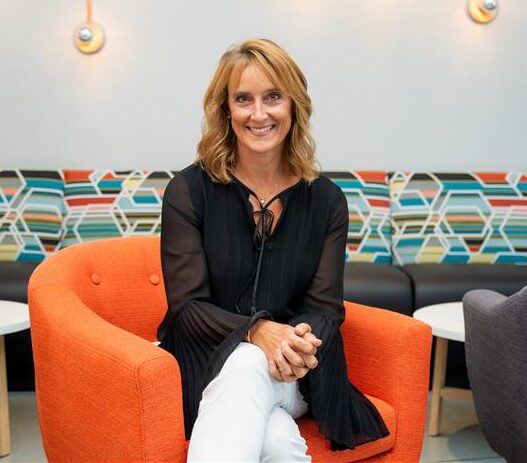
I recently went one-on-one with Amy Bjarnason, President and Chief Operating Officer of Cross Country Consulting.
Adam: What drew you to the field of accounting?
Amy: I wish this were a sexier answer, but I’ll be brutally honest. I went to college knowing I needed to get a good job so my family didn’t have to worry about me, and I looked around and thought, these accounting majors seem like they’re doing pretty well. So I went into accounting from a very practical perspective. I wanted something stable, something that would give me skills I could use for my entire career, and that’s really borne out. You can always use accounting skills. You can augment them with a lot of different qualities, but understanding the financial vocabulary of the world is really important, and that’s what drew me to it in the first place.
Adam: What are the most important skills you developed early on?
Amy: I’d say, relative to accounting, it’s really about understanding how the financial system works and how a profit and loss statement, the P and L, and the balance sheet all come together, and how a company uses those economics to run a business. That’s something that’s always important when you’re evaluating any decision that you have. In particular, I went into public accounting out of college, and that opens up a whole different skill set around client service, problem-solving, and relationship building. At the end of the day, public accounting is about relationships, and you have to know how to solve a problem, identify a problem, work with people, and create relationships. A lot of times, you’re walking into situations where people don’t really want to talk to you because you’re an auditor, so you have to find ways to connect. It might be noticing a picture of their kids on their desk or finding some common ground so you can start a conversation before getting into the work. Those soft skills are incredibly important, and they’re transferable no matter what role you’re in. So I’d say strong accounting fundamentals, combined with relationship-building skills and problem-solving skills, are what really carry through your career.
When I started in the Big Four, or Big Six or Seven at the time, the focus was much more on technical ability. But the people who really advance are the ones who see beyond the numbers and build relationships. They’re the ones who become strategic advisors to their clients, and that takes much more than technical skill. It takes the ability to earn trust and provide insights that clients wouldn’t otherwise get. Over time, especially in a professional services environment, you pick that up almost by osmosis, and the people who continue to grow are the ones who have that ability to connect with others and bring those softer skills to the table. The ones who don’t may be great technicians, but they’re probably not going to be in the same place in an organization as those who can really develop relationships.
Adam: What are the most important soft skills that anyone needs to develop, and how can they develop them?
Amy: I’d say empathy is a really important one, along with authenticity and the ability to build trust, and trust often comes from being willing to show a bit of vulnerability. Being able to put yourself in someone else’s shoes matters, but it has to be genuine. If you’re not authentic in how you show up, you actually undermine trust instead of building it. I was just on a call with our women’s network talking about leadership and goal setting, and one of the things we discussed is how important it is, especially for women in leadership, to balance hard skills with soft skills and to be willing to show some vulnerability to create a real connection. So I think empathy, authenticity, and vulnerability are all critical, but they have to be real. If they’re not, people can tell, and it has the opposite effect.
EQ is really the umbrella for all of that. It’s what allows you to operate in dynamic environments and not take the same approach with every single person, because that’s just not going to work. EQ helps you bring authenticity, empathy, and vulnerability in different ways depending on the situation and the person you’re working with. I think that really matters, especially today. If you look at Gen Z and where they are, they expect a different level of engagement and a different type of connection, and that’s very different from when I was at that stage in my career. So it’s important for me to have the right EQ and empathy to connect with them in a meaningful way, so I can lead effectively and help get us where we’re trying to go.
Adam: At one point, having EQ was an advantage. Today, it’s no longer an advantage; it’s a requirement. It’s table stakes.
Amy: I completely agree with that. It’s really interesting how the world has evolved from this being a nice-to-have to something that’s absolutely required. And I think in today’s environment, especially with AI becoming such an important part of what we do, the people who have EQ are the ones who are going to stand out. They’re the ones who can take information, tell the story behind it, and help others understand the value of what’s being built. It’s not just about the output, it’s about how you communicate it and how you connect it to what matters. So when we talk to our employees, it’s yes, you need the technical skills, yes, you need to understand AI and large language models, but what really matters is your ability to communicate effectively and connect. That’s not going away. If anything, it’s becoming even more important.
Adam: What did you learn from time working for Arthur Anderson and for EY?
Amy: Starting with Arthur Andersen, what a heartbreak. I think a lot of people who started there would still be there today if the firm hadn’t dissolved. It was a very special place. It didn’t work for everyone, but for those who were there, it was an intense environment that people really loved. Interestingly, one of the best things that came out of Andersen’s dissolution was the network it created. People spread out across other firms, across consulting organizations, and into leadership roles as CFOs, controllers, and executives. Now there’s this incredibly strong network, and when someone says they were at Andersen, there’s an immediate connection. You understand the level of rigor they went through just to be there, so there’s an instant level of trust and understanding.
What I learned there was the importance of hiring really smart people and giving them agency. In a large organization like Andersen, you could bring in great people and find ways to leverage them. Not every organization has that luxury, but the principle still holds. If you hire really smart people and put them in an environment where they have ownership, great things can happen. That’s something we still apply today.
When I moved to EY, it was during the transition after Andersen dissolved, and that was a very interesting experience. Andersen had a very strong culture, and EY was a great firm, but the cultures were different. You had this strong culture coming into another organization, and it created some tension. What I learned from that is just how important culture really is. Seeing that contrast made it very clear. I also learned the importance of listening when you enter a new organization. We came in thinking we had all the answers, and that didn’t serve us well. The ability to step back, listen, understand context, and learn before speaking or making recommendations is incredibly important.
Adam: Oftentimes, it’s not what you say, it’s what you don’t say.
Amy: Exactly, and it’s the same advice I give people today when they join CrossCountry. I know they think they have great ideas, and they probably do, and we’re excited to hear them, but it’s important to listen first. Understand where you are, learn the context, and then figure out the right time and way to contribute. If you can do that, you’re going to collaborate much more effectively.
Adam: What are the keys to building a successful network?
Amy: It really goes back to some of the same things we’ve been talking about, starting with authenticity. There are a lot of people who have a lot of connections, but people want to work with people they genuinely like and trust. You can have transactional relationships, and those can be useful in the short term, but they’re not going to lead to deep, long-term connections if that’s all they are. So being authentic really matters. It’s not about selling, it’s about building relationships in a natural way. It’s also about staying in touch and engaging meaningfully, and that doesn’t always mean formal settings like golf or drinks. It’s about meeting people where they are and finding shared interests or connections.
The other piece is being intentional. It’s easy to stay connected with people you naturally see all the time. It’s much harder to build and maintain a broader network. You have to have a process. Whether that’s reminders, check-ins, or some kind of system, you need to be deliberate about it. I keep a list of people who are important for me to stay in touch with, whether that’s clients, colleagues, or people internally, which is just as important. I try to schedule as many breakfasts and lunches as I can with different people.
Even small moments matter. If I’m walking out to grab lunch, I’ll invite a few people nearby to join me. I also try to incorporate people into different experiences, whether that’s through board work or events. I make an effort to be present at events across our markets and bring others along when I can. I also look for opportunities to join meetings where I can meet new people and contribute. It’s about being intentional and using everyday moments to build and strengthen relationships.
Adam: YHow did you transition from public accounting into a leadership role in a very different environment?
Amy: It was a big risk for me, honestly. I had only worked in large organizations before, Arthur Andersen, EY, Navigant, and when I was offered the opportunity to join CrossCountry, it was about 20 people at the time. Not only did that feel like a risk from a career standpoint, but the role itself was very different. Instead of leading within an established structure, I would need to come in and build something from the ground up. That’s a completely different skill set, and I’d be lying if I said I wasn’t scared.
I actually said no at first because I thought, I don’t even know what this is, you don’t need me, you’re 20 people. But I went back and said yes, and it ended up being the best decision I ever made. That was 15 years ago, and now we’re 1300 people across multiple offices, including international, and we’ve completed several acquisitions. Being able to build something and have a real impact on it was an opportunity I couldn’t pass up.
A big part of what drew me in was also the people. Two of the founders were people I had worked with for years, so it was a chance to come back together again. It was a calculated risk. The downside was manageable, I knew I could find another role if it didn’t work out, so I decided to bet on myself. That decision has allowed me to grow tremendously.
Adam: What were the keys to scaling from 20 people to 1,300 people?
Amy: In the beginning, the first several years, we were really bootstrapping. We had strong growth, always double-digit, but when you’re starting small, that’s easier to achieve. In professional services, growth comes through people. People bring clients, people deliver the work, and people bring in more people. Early on, our growth came from our network. It was one to five degrees of separation from the founding team. Many of us had worked together before, often going back to Andersen, so we were able to bring in people we knew and trusted.
After those initial years, we ran out of that immediate network, and that’s when we had to build a more formal recruiting function. We now have what I’d consider a best-in-class recruiting team. For a firm of about 1300 people, we have close to 30 recruiters, all in-house. That allows us to control our message and really communicate what it’s like to work here. What we’re ultimately selling is culture. There are many firms that do what we do. Our differentiation is how we show up, authenticity, empathy, leadership, and creating an environment where people feel supported and have balance. That’s been a big driver of our growth.
Then, to accelerate growth further, we brought in private equity. That gave us access to capital, which allowed us to scale faster, particularly by hiring partners at a much quicker pace. At one point, we hired over 20 partners in a single year, which significantly expanded our leadership base and our ability to grow.
Adam: How else has private equity changed your business?
Amy: We’ve been very fortunate with our partners. We were extremely intentional about who we chose. Culture is such a core part of who we are, and we knew that if we partnered with the wrong group, it could fundamentally change the organization in ways we didn’t want. So when we went to market, we were very clear about our values. We had our core values front and center in our materials, and that naturally filtered out firms that weren’t aligned. The partners we chose valued what we value, our people and our culture.
Have we changed? Yes, but that’s more a function of growth than private equity. As you scale, you need more structure, more processes, more data. You can’t rely on informal systems when you’re 1000 plus people. So we’ve added things like performance metrics and more formal processes, but those changes were necessary for scale, not just because of private equity. Overall, private equity has helped us become more disciplined and more sophisticated as a business, while still maintaining the culture that defines us.
Adam: When experiencing growth, what are the key pitfalls to should watch out for?
Amy: The biggest one is choosing the right partner. If you’re not intentional about that, or if you prioritize the wrong things, you’ll feel it immediately after the deal closes. Another is not conflating private equity with growth. Growth requires structure and discipline regardless. If you blame private equity for everything that changes, it can create a negative mindset.
For us, staying focused on culture has been key. Culture doesn’t maintain itself, you have to be intentional about it. We invest a lot of time in reinforcing it. Every new senior leader meets with us, and we hold regular sessions with new employees to talk about what our values actually mean in practice. If you don’t do that, culture will drift as you grow.
Adam: Every person in an organization plays a role in shaping culture.
Amy: Exactly. We actually refer to everyone as a culture carrier. Culture isn’t something that happens to you; it’s something you participate in. If you come into an organization with a strong culture and just expect to experience it without contributing to it, you’re missing the point. Everyone has a role in shaping it and sustaining it.
Adam: What is your approach to and best advice on hiring?
Amy: I think about it in two parts, the what and the how. The what is the technical capability, and that varies depending on the role. The how is universal. It’s how someone shows up, how they interact, how they collaborate, and how they align with our values. We weigh those equally. You can have strong technical skills, but if the how isn’t there, it won’t work. We have a very thorough interview process, usually with six to eight people, and we debrief as a group. If there’s hesitation, it’s either a no or we spend more time evaluating. Sometimes that means taking someone out of a formal setting and seeing how they interact in a different environment. We want to understand who they really are. At the end of the day, we ask ourselves, is this someone we’d genuinely want to spend time with? If the answer isn’t clearly yes, we don’t move forward.
Adam: What do you believe are the keys to successful leadership? What can anyone do to become a better leader?
Amy: I think one of the most important things is to listen more and talk less. The best leaders surround themselves with really smart, capable people, and they’re humble enough to know they don’t have all the answers. When you do that, and you give those people agency and a platform, you not only empower them, but you also continue to learn and grow yourself. That curiosity and willingness to learn is really important.
I also think being authentic is critical. You have to meet people where they are and build real relationships, not transactional ones. If the people around you feel like the relationship is purely transactional, they’re not going to trust you, and they’re not going to give you honest feedback, especially when you need it most. That trust is essential if you want to lead effectively.
Empathy is another big one. There are always going to be stressful situations, deadlines, competing priorities, and if you’re just pushing and pushing without understanding where people are coming from, you’re not going to get the best out of them. The more you understand your team and what they’re dealing with, the better outcomes you’re going to drive.
And then the last thing I’d say, and I believe this very strongly, is that positivity is a choice. You can wake up every day and decide how you’re going to show up. You can choose to be frustrated and spread that energy to everyone around you, or you can choose to be positive and bring a different kind of energy into the environment. That choice has real impact. It affects how you respond to challenges, how you interact with people, and how your team feels working with you. I try to make that choice every day, and I think it makes a meaningful difference in the kind of environment you create and the relationships you build.
The way you show up as a leader sets the tone, whether you realize it or not. If you bring positive energy, if you bring perspective, if you’re able to move past setbacks and focus on what’s next, your team is going to follow that. And if you don’t, they’ll follow that too. So being intentional about how you show up every day really matters.


![PB1B0218[58]](https://www.adammendler.com/wp-content/uploads/2026/04/PB1B021858-rotated-e1775140118513.jpeg)