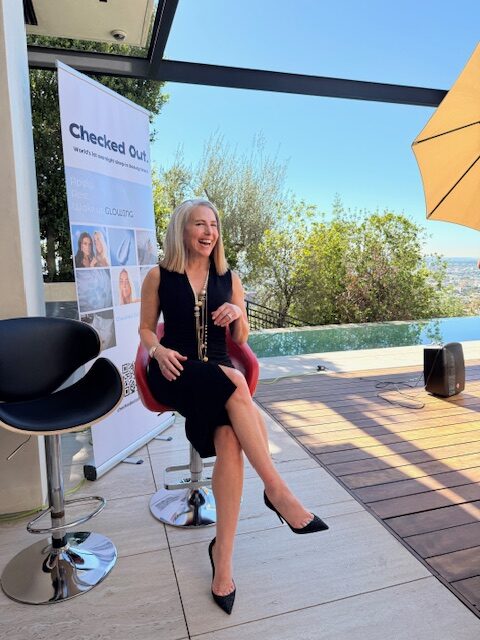


I recently interviewed Auntie Anne’s Founder Anne Beiler on my podcast, Thirty Minute Mentors. Here is a transcript of our interview:
Adam: Our guest today is the founder of the largest pretzel franchise in the world. Ann Beiler is the founder of Auntie Anne’s and is the author of the book Overcome and Lead. Ann, thank you for joining us.
Ann: Hey, Adam, it is great to be on your podcast today. Thank you so much for having me.
Adam: You grew up right in the heart of Amish country in Lancaster County, Pennsylvania, and you lived a traditional Amish lifestyle and attended a traditional Amish school through eighth grade, which is where your formal education ended, until you got your GED at the age of fifty. Can you take listeners back to those early days? What early experiences and lessons shaped your worldview and shaped the trajectory of your success?
Ann: Well, I have to take it all the way back to my family life, Adam. Mom and Dad and their eight of us kids, we grew up on a farm. Whether you were on an Amish farm or what we would call an English farm, if you were an English farmer, it really did not matter. The farming culture is very unique. So I grew up on this one hundred-acre farm, and we had maybe thirty cows to milk and an acre garden, and we canned and froze all of our food for the winter. Working out in the fields and working in the garden as a kid, as I recall when I think back on those days, I feel extremely blessed. I do not feel like my parents ever took advantage of me or that they were ever cruel to me. But I have to tell you, there were many times when my mom and dad would ask me to do something, and all of us kids had our tasks, and you just did what you were asked to do, without grumbling, without complaining, and never speaking disrespectfully to your mother or father. It was unacceptable. It was very comfortable, but there were a lot of rules that we had to follow. It was a very disciplined life. My mom and dad were on the farm at all times, and in that environment, Adam, I learned what I call the power of perseverance. You power through with perseverance. No matter what the task was, no matter how small or how big it was, if mom and dad asked me to do something, I felt like, oh, they think I can, so I will.
I was the only one of eight children that had allergies. Back in the day, the diagnoses were very limited, so mom and dad just knew I had hay fever, meaning I was allergic to grass and hay and corn and all the outside elements. At one point, my mom and dad realized I had lots of breathing problems and it was real, so they decided that I would be the helper in the kitchen with my mother. I would say that is one of the greatest components of my development as far as being a mother, being a wife, and learning how to cook and bake, and keep house. I learned all those things from my mom because I was always inside with her.
It was during that time, I think it was around the age of eleven and twelve. As an Amish family, you always have three meals a day. We had no TV, no radio, none of the electronics that we all experience today. There was a time and a place around our kitchen table three times a day, every single day, morning, noon, and night. It did not matter what you were doing on a farm; you did not start to eat until everyone sat down at the table. It was at the breakfast, lunch, and dinner table that we learned how to communicate. We learned how to behave. Often we were like crazy, always loud, always talking, always grabbing, but in that environment, we learned manners and how to tell stories.
The perseverance part of it came as I began to do more and more tasks around the house. One of them was when I was eleven or twelve. My mom would go with my father to a farmers’ market in Philadelphia, which was two and a half hours from our farm, and it was a cash business, which they needed to help the family along. On Thursday nights, my mother would go with my father to the Philadelphia farmers’ market. She would leave a note on the kitchen table with my name, Anna Beth. My name is Anna, and when she wanted my attention, it was always Anna Beth. Then she had a whole list of pies and cakes that she wanted me to bake that night after I got home from school.
I remember mom was not in the kitchen. I remember reading the note, going down the steps, and often I would cry as I was going down the steps because I did this all alone. In this dark basement, there was one little light hanging from the ceiling. By that time we had electricity, because we were now black car Amish, and we were able to have electricity. Going down in the basement by myself to bake, she would have a list of twelve cherry pies, ten apple custard pies, lemon meringue, shoofly pies, pecan pies, pumpkin pies. At the end of the night, I made sixty or seventy pies and cakes by myself from scratch. It sounds like a lot right now. When I am saying that I am like, how did I do that at the age of twelve? But the perseverance, the discipline, and the teaching that my mom taught me without saying a whole lot, I watched her, and I was able to do that. I would make the pies and cakes, and the next morning, my dad would put them in a pie box and take them to market.
The only reward I got for that was never a quarter, not a nickel, not a dollar, no financial gain for me, but it was the satisfaction of a job well done. My dad would always say to me, good job, Anna Beth, you did a really good job. That was the extent of my reward. That is where I learned how to persevere. I took that with me into Auntie Anne’s many years later.
Adam: I love that, and I love everything you shared. You shared so many incredibly valuable lessons. Something I have heard from many of the very best leaders who I have interviewed. I did an interview with General Martin Dempsey, who was the highest-ranking military officer in the United States, Chairman of the Joint Chiefs of Staff, and one of his core leadership principles is that before you can become a great leader, you need to become a great follower. You learned that at a very early age. You learned the power and importance of discipline. You learned how to become a communicator. We all want to get compensated for the work we do, but those who perform at the highest levels are those who are intrinsically motivated, those who are motivated by pride, those who care about what they do, those who care about their output as much as anything. The word that I have heard over and over from you, perseverance, that is the real buzzword here, and that is really the Auntie Anne’s story, a story of perseverance. Can you share with listeners how Auntie Anne’s came together and how you were able to overcome those truly significant obstacles to create this brand and company that everyone in America and that people across the world know today?
Ann: Loaded question, Adam, but I can answer that in a short form, I am sure. One of the lines that my mom quoted every day to all of us kids, task was a big deal. We also had lots of fun at home as well. She would always say, do it with will, do it with might, things done by halves are never done right. Going into a business, which before Auntie Anne’s we never owned. I was a housewife, and we were involved in our church and community, and family. That was our life. My husband was a body man. He left the Amish culture, and instead of buying a horse and buggy, he bought a car when he turned sixteen, and he went to the junkyard, found a car, and he repaired it. He became a body man. That was our income for many years.
With that background, one of the things that mom and dad taught me as well was when we went to market, that was really out of my Amish world. That was a whole big world. It was the city where I learned that everybody’s culture is interesting. My dad loved everybody, and so I learned a little bit about the world when we went to markets. That was the extent of my business experience.
When we started Auntie Anne’s, my husband and I experienced some very difficult times. We were both married very young. We had two little girls. Our youngest daughter was killed when she was nineteen months old, accidentally and instantly killed. I have to tell you this part of my story because it makes the Auntie Anne’s story even more interesting and powerful. When Angela was killed, it rocked my world, and soon after I went to my pastor for help, and he took advantage of me physically. I made a choice that day as I left his office. That is a whole story as well. I made a choice that I would never tell anyone that secret, and I kept that secret. That one secret kept me enslaved and shackled to abuse of every kind for almost seven long years, a very dark place.
I have to tell you that because coming out of that dark world matters. Many of your audience understand this. We start out well, and we find ourselves living life, and something happens that trips us up, and you wonder, am I going to get through this. At the end of seven years, I was finally able to tell my husband my deep dark secret. What I learned from that is the choices that we make are the life that we live. The choice I make today is the life I will live tomorrow. We make many choices throughout our days.
As a businesswoman coming out of that dark place before we owned the company, I had no idea that I would even survive that. At the age of thirty six it was so dark I thought life was over for me. But my husband and I began to talk. He never accused me, never blamed me. Instead, he started to study psychology, and he began to understand that what happened to us is common. It happens to a lot of people in our culture. He became a lay counselor and began to do free marriage counseling to anyone that would come to him. He was doing this five days a week. It was in that moment I said to him, I guess I need to go to work to bring home the bacon, or to make the dough, because we were not making any money.
So I went to it, and strictly, I started the company to make ends meet. I had no goals, and there were three things I did not have. I had no business plan, I had no capital, and I had no formal education. I strictly started the company, and I thought it was just going to be one little store in Downingtown, Pennsylvania. We had no idea that that one little store that year would do two stores. The following year we did twelve, and the third year, we did thirty-five more stores. Within two and a half years, we had over fifty locations, mainly on the East Coast.
I have to tell you, I was learning really fast. Overcome and lead is a great title for me, because I knew nothing. As we grew the company, the things that I learned on the farm and the principles that mom and dad always taught us were to love people and work hard. I know that is not academic. Is it really important today. I am saying yes, it is. Some basic principles never change. It does not matter what era we live in.
When we started the company, I was overwhelmed. I knew nothing about business, but because I had gone to market, I knew how to count money. I knew what a cash business was. I knew how to pay my bills, and I knew how to treat my employees. Within a few months, we had about ten employees. We perfected the pretzel recipe, which became a phenomenon. People from all over the county came to our little store to buy soft pretzels. The growth was so fast and so intense. There were so many lessons that I learned as we were growing.
Within a year or two, I learned to delegate because I was forced to delegate. Delegation is really important. Most of us hesitate. We think I have to control this, but if we do not delegate, we cannot grow. I was forced to delegate, and when you do that, it is really important that the people you bring around you are trustworthy, and that you are trustworthy as a leader. I began to hire people. First, it was friends and family and people in my culture, which was easier in some ways, but then we brought in experts in the franchise industry and in the business world, people from all over the country. That is what grew Auntie Anne’s, putting the right people in the right space.
One thing I learned, maybe four years into the company, is that growing up on a farm like I did, I really felt like I was a doer. I had no idea that I was actually a leader. We had a speaker at one of our conventions, and he talked about the difference between management and leadership. It is not right or wrong, but you are really one or the other. When you start a company, you are kind of all things. You do it all. As you grow, you have to find which one you are: the manager or the leader. That really shaped me. Leadership is a quality. Management is a science and an art. Leadership provides vision. Management supplies realistic perspectives. Leadership deals with concepts. Management relates to function. Leadership exercises faith. Management has to do with fact. Leadership wants to be effective. Management strives for efficiency.
When the speaker read that article, I was sitting in my seat, and it was a light-bulb moment. As a leader it is important to look for light bulb moments. All of our employees were so happy. They were thrilled that I finally understood I am not the manager here. I am the leader. It is not right or wrong. It is which one are you? Discovering which one I was put the wind beneath my wings. It helped me to soar. During that time, I was able to delegate more efficiently and more effectively, and I understood that part of my role as a leader is to delegate. Which one are you. It is really important to know.
Adam: I love that you started by saying I created Auntie Anne’s because I needed to make the dough. That was your skill set, making dough. You talked about how, as a twelve-year-old kid, you baked sixty to seventy pies from scratch. That was what you knew how to do. To go from leading a business that has ten employees to then leading a business that is in cities all over America, and then an international business requires a totally different skill set. It requires a totally different perspective.
Ann: That really became my challenge, of course. When I discovered that I am a leader, I knew I had to learn the skill of a leader. What does that mean? I did not have the academics. I did not have the books to read from my past, so I began reading books about the difference between management and leadership. I read constantly, on the planes, between meetings, whenever I could. I read about leadership. It is important for all of us as leaders to keep reading and keep learning. For me, it was life or death. If I did not become a good leader, I felt like the company would never soar.
I taught myself by reading and by going to conferences. I did personality profiles. I did maybe three in the course of a number of years. It became funny. I did not know who am I now. You have to figure out who you are. That was my journey, to learn what it means to lead. Who is Ann Beiler in this corporate world now? In time, with the struggles and the obstacles that we all experience, we have to push through and still be a leader and still be kind, considerate, courteous, and respectful to all of your employees all the time.
I think being a leader is a responsibility. There are perks, yes, but I always felt like it was a responsibility. Like my mom said, do it with will, do it with might, things done by halves are never done right. I wanted to do it well. I wanted to do it right. Never perfect, but I wanted to do it right. Another thing I learned in that growth period of Auntie Anne’s, and personally, was that I wanted everything to be perfect. On the farm, when we did things, we were expected to do the task well. If we did not do it well, we would have to do it all over again. Learning how to do things well mattered.
I read an article that relieved me. You cannot be perfect all the time. We are not perfect. Another article I read was about perfection versus excellence. Perfection is about being right. Excellence is being willing to be right or wrong. Perfection is fear. Excellence is taking a risk. Perfection is anger and frustration. I saw this in the workplace. People that are angry and frustrated are trying to be perfect. I would put my hands on their shoulders and say, hey, listen, it is not perfect here. It never will be. Excellence is powerful. It gives you the freedom to become who you want to be and need to be. Perfection is all about control. Excellence is spontaneous.
These are the things, Adam, that I learned along the way. I was overcoming as I was leading. Some people say, when I have all my ducks in a row and I have the right education and the right product and everything is perfect, then I will start my journey. I say, if you have a good idea and you are confident, and you know who you are, and you love what you created, and it is a great product, the right time to start is now. Bring people around you. Get advice. Get ideas and thoughts. If you are not careful, people will talk you right out of a good idea. Be cautious, be careful, but be confident. If you have a good idea, start doing something with it right now, carefully, not in a sloppy or careless way. Bring people around you, but do not be afraid. It takes a great deal of faith and risk at the same time.
Adam: I love that, and I love how you drew a distinction between perfection and excellence. All too often we try to pursue perfection, and the perfect is the enemy of the good. It is important to learn how to do things well instead of trying to do things perfectly.
Ann: When you do it well, you have this self-satisfaction. You feel good about it. That is another thing I learned on the farm. If I did it just right, if I did it the way mom asked me to do it, and I knew I did it well, you do not need everybody telling you how great you are. You kno,w on the inside, I did this to the best of my ability. There is satisfaction in that, which I took into the workplace with me.
Adam: You spoke about your evolution as a leader. What do you believe are the keys to successful leadership, and what can anyone do to become a better leader?
Ann: Internal reflection, internal growth, knowing who you are on the inside, and taking time to become the best that you can be. We have the external world. We boast and we talk, and we like to be around people that are very successful. We like what we see on the outside. We dress the part, we talk the part, we are the part on the outside. As successful leaders, it is easy to feel like I am busy, I am building a company, and it is successful. We create the external part of who we are. The internal part can be an altogether different story.
I had a counselor at one point. I spent lots of years in counseling because of the traumas we had been through. He said, Ann, what I want to help you with is to bring your external and your internal together so that the internal and the external are one and the same. In other words, Adam, be real. It is hard to be two different people. It is hard to be kind at work and a tyrant at home. It is hard to tell the truth to my children but lie at work. It is hard to be two different people. It takes a lot of energy.
I can speak from my experience. As I was coming out of my darkness, I still had a lot of baggage when I started the company. I was trying to hide some things about me. Not that I was living a bad life then. I had overcome a lot, but I was carrying some of this baggage with me. It was heavy. I did not want people to know who I really was, because if you really know my past, you may not like who I am. You may not respect me. You may actually quit your job. Working on the internal part of who we are takes a lot of time. It took me a long time to be the same in my home as I am in business, and that has great rewards. Now all of my energy is well spent. I can just be me wherever I go. That is a gift that you can take to the world. The real you is what people want to see. When you take the real you into the world, you can be more impactful and more effective, because you are not worried about what is going on inside. It is taken care of. I have prayed a lot. I trust in God. I have my faith. The hard work inside of me, the internal, that is my work. I have to do that to give it my best when I am out there in the world.
My advice is to bring the external and the internal together. If you do not know how to do that, then find someone that you can share your life and your story with. People can help you do that.
Adam: What you are sharing really speaks to one of the most important elements of successful leadership, and one of the most important elements to success in life and happiness in life, which is being yourself, being authentic, being you. We only have one life to live. Why try to live someone else’s life? Live your own life. It is your own.
Ann: Great advice. Trying to be someone else is hard. It is very difficult. You look at others and you think, I wish I was like them, I wish I was as smart as they are, I wish I had as much money, I wish I was as beautiful as she is. All those wishes are useless, and they take so much energy. Become the very best that you can be. That is what you can take into the world, and you can know that will have a reward for you.
In our company, when I speak, it has never been about me. Yes, we need great leaders, but it is the people in your company that are taking the company where you want it to go. It is important for your employees to trust you, to know you, for you to be authentic and open and honest with them, to be a trustworthy person. Together, you and your employees take your company wherever you want around the world. For Auntie Anne’s, who would have known. I would never have dreamed. I could not have imagined that a simple pretzel from Lancaster County, Pennsylvania, and lemonade would go around the world through the model of franchising.
At one point, I began, instead of focusing on what I did not have. That makes you grumble, complain, resent, and whine. When we compare ourselves and talk about what we do not have, it is discouraging. My husband one day said, stop complaining about who you are. Do you not know that there is no one in the whole wide world that God asked to be Auntie Anne? Be who he made you and be the very best that you can be. We began to look at what we had. We had a great purpose, a great product, and great people. When I began to focus on what I had, I had no time to complain about what I did not have. That did not matter anymore. We can get stuck in I wish I would, I wish I could, I wish I would be. What is it that you have? Work it out. Work it to the max. Give it your best. Develop it and take it to the world.
Adam: What a great attitude, what a great mindset, what great advice. Your story is a story of persistence, a story of perseverance, a story of resilience. What advice do you have for anyone listening on how to overcome the challenges, obstacles, setbacks, and failures that they face in their careers and in their lives?
Ann: How to overcome. It was a journey for me. A few things that I learned in those difficult times. Walk toward the problem. Do not whine about it. Do not walk away from it. Walk toward it. One way I did that was I would make a list on paper. I would write the most important things of the day, what I needed to do. There was always at least one or two things during the day that would give me a knot in my stomach or make my heart beat. I would think that is so hard. I hated to confront issues. That was very hard because I am a peacemaker. I am the middle of three girls, and I always wanted to make sure everybody is okay. I took that into the workplace, but I had to learn how to deal with issues. It was very difficult for me.
I would go down my list, and I would wait until the end of the day to take care of that thing I did not want to do. As leaders, we have to do things we do not feel like doing. For the most part, you can delegate; that is great, but at the end of the day, the buck stops here. The bigger the company, the more problems you feel, and people come to you with the big ones. What I learned to do during that time was to put at the very top of my list what I did not want to do, and I would start the day with the hardest thing on my list, the two or three hardest things. That freed me up to enjoy the rest of the day.
There were many things I did to overcome. One thing that helped me was an acronym, because I really felt like we were called to be salt and light in corporate America. How do you be salt and light. We began to study that and analyze: what is salt, and what is light? We took that concept into all of our boardrooms and all of our Auntie Anne’s meetings, employee meetings, and franchise meetings. Salt is share your story. Be authentic. Activate authenticity. Pay attention to what you are feeling. Then lean into intuition. I made a lot of decisions after I researched and talked to people. If I did not have the answer, I would pay attention to my gut. Lean into intuition, because that is a God given gift that we all have, but most of us do not pay attention to it. It is a feeling. Lean into intuition. Then trust courageously. That is salt.
Light is lead by example. Invest in your people. Give. Give freely. Honor God. Treat all business contacts with respect. If there is anything I can leave with your audience, these are the things I learned as I was overcoming and growing in my leadership role. These were the things that lifted me up and gave me the wind beneath my wings. I use that a lot because they gave me the wind beneath my wings to go a little bit higher.
No matter how high you go, you will always encounter obstacles and very difficult things. As you grow, you learn how to overcome these things, and it gets easier. By the end of twenty years with Auntie Anne’s, confronting issues and solving problems between employees and franchisees and vendors, it was a challenge, and I became comfortable in my own skin, because I was able to bring the external and the internal together. I learned how to overcome as I was leading. I learned about salt and light. As you grow, you still have obstacles, but you are learning how to overcome. It is a great place to be, and I became very comfortable in my skin as a businesswoman.
Adam: I take it you are a fan of Bette Midler?
Ann: Absolutely. When she sings Wind Beneath My Wings, I love that song.
Adam: What can anyone listening to this conversation do to become more successful, personally and professionally?
Ann: There are so many things you can do, but I want to bring it down to one thing. What is it that you struggle with the most? That, to me, is a clue or an indication that if you can overcome that, you can go to the next level. Take care of the issues that you feel are pulling you down. There were so many things I did not like about me. Whatever it is that you struggle with, that is what you need to overcome. As we overcome those things, we become stronger, and there is a joy in the journey. Look around at your employees and what is going on out there, but love yourself. Like who you are. At one point in my life I hated who I was, who I had become, and I carried that into the workplace for a number of years. I did not like me. I was not confident. Love your neighbor like you love yourself. It is important to deal with the struggles and deal with the things that come up. They will come up. It is never once and done. What is it that you do not like about you? What is your greatest struggle? Overcome that and then go to the next level in your business.
Adam: Ann, thank you for all the great advice, and thank you for being a part of Thirty Minute Mentors.
Ann: Thank you for having me. I have really enjoyed being with you, Adam.