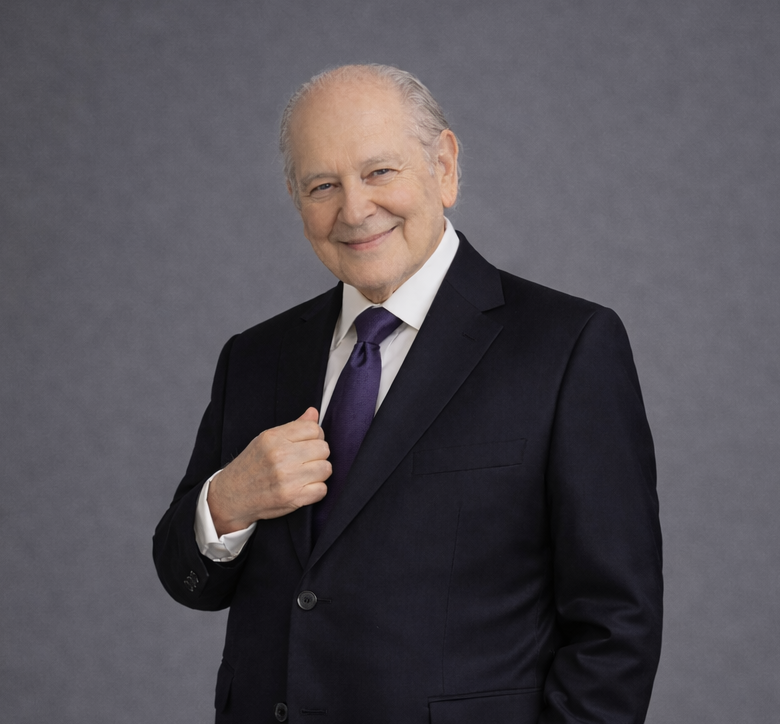


I recently went one-on-one with Ben Branson, founder of Seedlip.
Adam: Thanks again for taking the time to share your advice. First things first, though, I am sure readers would love to learn more about you. How did you get here? What experiences, failures, setbacks, or challenges have been most instrumental to your growth?
Ben: I’m a founder, inventor, and father to three gorgeous girls. My family has been in agriculture and engineering in England for over 300 years, a nine-generation legacy I am very proud to continue. My four current projects have all been born out of this legacy and relentless pursuit of solving problems and doing things differently with a love for nature and an insatiable curiosity.
Growing up on a farm has definitely shaped who I am, being surrounded by people working for themselves and entrepreneurs has been formative, and having a father in design and advertising has certainly given me this great privilege of pouring my upbringing and family history into my work and brands. But it took me 30 years to adopt this, and another 40 years to truly understand my brain and how useful it is at making things and spotting patterns!
Adam: How did you come up with your business idea? What advice do you have for others on how to come up with great ideas?
Ben: First thing to say is none of my projects began as business ideas!
Seedlip was born from my experiments with herbs, a little copper still, and a book from 1651 called The Art of Distillation, and then realising there were no good things to drink if you weren’t drinking alcohol.
SEASN, a pair of cocktail bitters 0.0% began in my garage in 2017 because I was asked to create some cocktail recipes for the World’s 50 Best Bar Awards, and all the cocktail bitters contained alcohol. I experimented with over 80 times different plant extracts to eventually make “the salt and pepper” for drinks, which launched last year.
Sylva, aged non-alcoholic spirits, takes my love of trees and process to the extreme. I have discovered how much flavour is actually in wood, by creating a pioneering distillation and maturation process at our distillery and maturation lab to produce delicious, complex liquids you can sip and slow down with.
And lastly but by no means least, following my autism and ADHD diagnosis three years ago, I set up a neurodiversity charity, The Hidden 20%. We champion thinking differently through our podcast and educational content, spotlighting the truth that ADHD/Autistic/Dyslexic brains are not deficient, but brilliant and integral to innovation.
My advice to others for coming up with great ideas based on my experience is don’t look at the competition, don’t look at the category, and don’t force it. If you are interested in lots of different things and curious about people, behavior, and solving problems, then you will be able to join the dots to make something relevant, meaningful, and highly innovative.
Adam: How did you know your business idea was worth pursuing? What advice do you have on how to best test a business idea?
Ben: Sylva, our aged non-alcoholic spirits, is a great example of this, as we only launched in December 2024.
My job when launching something is to be a detective, looking for clues that what we’re doing is working. The goal is to crack the code. The code means we can repeat what works and scale. That means running lots of tests at any one time, it means following my gut, my hunches. It means embracing both naivety and sound strategy, having some luck and actual targets, we even have a Slack channel called #youneverknow.
The clues I’ve found are people buy and buy again [repeat], the best chefs and bartenders love the Sylva liquids [endorsement], people buy for others [gifting], people drink it, sat down, neat over ice to pause [usage and occasion]. These are brilliant signals for us to keep going and build a bigger strategy around.
You are most agile at the beginning, the fastest and lightest you will be, and therefore this is the perfect moment to test, try things, because you have an immediate and short feedback loop and the easy ability to adapt. Being a good listener and observer in the early days is as important as getting sh*t done.
Adam: What are the key steps you have taken to grow your business? What advice do you have for others on how to take their businesses to the next level?
Ben: Idea to launch can’t be underestimated! Seedlip took me two years to launch, SEASN took 7 years, and Sylva over 12 years. Twice and long and twice as much is a useful mantra to keep in mind when wanting to launch something new!
Test and prove again and again so you can code what works to repeat and scale.
Then its resources and capital to fuel the growth.
That all probably sounds obvious and simplistic, but I think having a brilliant team, traction in the market with a big enough TAM to go after whose needs you can meet, then means it’s more a question of how fast do you want to go and how much is it going to cost.
Adam: What are your best sales and marketing tips?
Ben: It has never been harder to stand out or grab someone’s attention, but solid foundations must also be there before you jump to stunts or spending lots of money on META. Having a distinct brand, product, and proposition is crucial, but the most effective and most liberating tactic i have found is this;
Share the kind of brand you are, rather than just selling your product. Most companies don’t do this. The easy way to create a platform for sales and marketing from this is to fill out this equation.
X is a Y company making Z
Sylva is a Tree Company making aged non-alcoholic spirits.
This very simple shift, for us, has meant we are members of the Royal Forestry Society, we have hosted furniture designers, woodworkers, and arborists at our distillery. We have showcased Sylva at woodland feasts and even recorded podcasts in our forest. We also have 5* hotels and Michelin star restaurants sending us their wood to explore bespoke collaborations with. We are transcending our product. We did it with Seedlip as a nature company, which gave us a passport to sell bottles in very nice garden centres and design gardens for the world’s biggest flower show competition.
This framing increases our opportunities to cut through because we are not just going where the competition goes, and therefore, we have a better chance at salience.
Adam: In your experience, what are the defining qualities of an effective leader? How can leaders and aspiring leaders take their leadership skills to the next level?
Ben:
- Get out of the way. When I started Seedlip, it was just me. I did everything. As we scaled, my role became more and more focused and more and more based on what I was best at and most useful for the business. Don’t hold on too tight!
- Be more curious about HOW people work than WHAT they do. Understanding what makes your team tick is crucial. How do they work best when, for example? How do they like to receive information, and how can understanding their brain allow you to create the optimal conditions for them to thrive in their work?
- Be clear and direct. People work best, in my experience, when they are crystal clear on direction and what they need to do. Have a vision, be open, you might not have all the answers, and ensure your business understands its edges. What won’t you do is as important in the early stages as what you want to do.
Adam: What is your best advice on building, leading, and managing teams?
Ben:
- As flat a structure as possible to empower the team and build capacity.
- Start from 100% trust, back your decision, you’ve hired the best person for the job, they’re better than you at it, and you can let them get on with it.
- Skin in the game. Everyone has shares, everyone is an owner of the business. This is both highly motivating but also means everyone can be pointed in the same direction.
Adam: What are your three best tips applicable to entrepreneurs, executives, and civic leaders?
Ben:
- Make something of quality people have a need for that is meaningful to a big enough audience.
- Avoid succumbing to the LinkedIn trap of thinking your business has to raise lots of money, hire lots of people, and exit in 3 years.
- Ban internal email. It’s the single best thing I did 10 years ago to make the work more effective and efficient. Internally, we only use Slack and no WhatsApp groups. Email is only for our customers and suppliers.
Adam: What is the single best piece of advice you have ever received?
Ben: Make it simple. Not keep it simple, actually do the work to make it simple. There’s a brilliant book called Brutal Simplicity of Thought that wonderfully brings this idea to life.