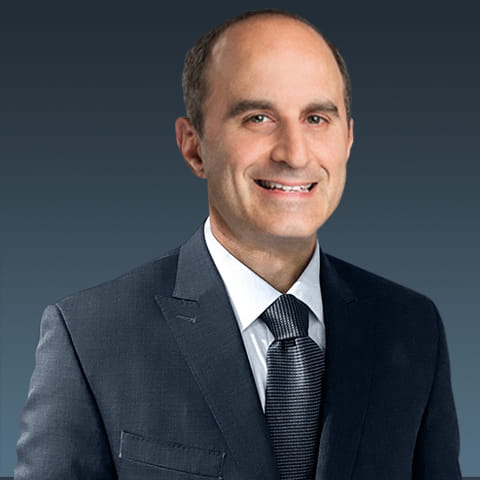


I recently interviewed Admiral Bill Lescher on my podcast, Thirty Minute Mentors. Here is a transcript of our interview:
Adam: Our guest today was the second-highest-ranking commissioned officer in the United States Navy. Admiral Bill Lescher served for 42 years in the United States Navy, retiring as the Vice Chief of Naval Operations. Admiral Lescher, thank you for joining us.
Admiral Lescher: Hey, Adam, it is great to join you, and thanks for the opportunity to chat.
Adam: You grew up in Highland Park, a suburb of Chicago, in a family with no connection to the military. What drove you to attend the Naval Academy?
Admiral Lescher: It’s a great question. There was definitely no direct military connection in my family growing up. My dad was an engineer at DuPont for 40-plus years, very well respected, a great role model in so many ways. My mom raised four kids full-time until I entered high school as the youngest. Then she returned to school. She earned her master’s degree, worked full-time as a clinical social worker, and was always very supportive of the children’s aspirations and desires to learn and explore. While growing up, for reasons that are not entirely clear, I developed a strong interest in the Navy. My dad once theorized it was because I was watching so many episodes of Victory at Sea, but I’m pretty sure that was more a symptom than a cause. We lived not far from Lake Michigan and had a small catamaran, which my oldest brother and I would sail along the North Shore. I think that is an element of it. There was always a strong sense of exploration. I remember seeing the horizon on the water and feeling a pull to see what was over the horizon. I learned about the Naval Academy early in high school, and in my mind, it sounded like a great place to see the world. It aligned with a desire not to spend the first few years after college sitting behind a desk. I thought, let’s go do that, see the world a bit, and then probably return to a more conventional path, similar to my dad, work as an engineer, raise a family.
Adam: You were in the Navy for more than four decades. What compelled you to remain in the Navy and make that your career?
Admiral Lescher: The short answer is that it started with my first 15 years in the Navy, during which I only did two things that I loved to do, which were fly and go to school to learn about things I was curious about. Four years at the Naval Academy were transformative. I sailed on the sailing team. I sailed on the Coast Guard barque Eagle across the Atlantic. I always had in my mind the idea of serving on small ships, frigates, and destroyers as the most interesting place to be and, as a naval academy midshipman, I was on a small frigate in the Mediterranean, where I was exposed to the Light Airborne Multi Purpose System community, the LAMPS community. This is a community that flies helicopters off our smallest combatants, a very harsh aviation environment that requires real excellence and discipline to execute well. That led me, upon graduation, to go to flight school and shift my focus from serving on the ship to serving on the aircraft flying off the ship. In this community that gives tremendous responsibility to young officers with small detachments, the stakes are very real. When I started in that community, in my first squadron, we lost four of the nine aircraft in the squadron in mishaps. I had squadron mates and peers killed. At a very early point, I understood, in every facet of naval aviation, the value of maintenance discipline, flight discipline, preflight and postflight discipline, and the imperative to know the aircraft in every respect.
From flight school to a first squadron tour with HSL 36 was tremendous. We circumnavigated South America on a UNITAS cruise, deployed on a frigate to the multinational peacekeeping forces off Beirut, and I deployed as a very junior officer in charge on an antisubmarine and special operations deployment hunting Soviet submarines. From that squadron tour, I went to Naval Postgraduate School and Test Pilot School. From there, I had a test tour flying three years at Patuxent River. We developed aircraft survival equipment for the early stages of Desert Storm. Then I went to a second flying tour as a department head, where I was an officer in charge of a two Helicopter detachment on a frigate deployed for Desert Storm. After that, quite unconventionally, I went to business school. So after all those tours, my first non-flying, non-school tour was a financial management tour in the Pentagon as the initial payback for the MBA. I was then blessed to have four consecutive tours in leadership roles as either the executive officer, the number two in command, or the commanding officer of two squadrons, a ship, and a wing over the next nine years. That enabled me to integrate many concepts and to understand what strong unit and organizational leadership look like.
Adam: What were those concepts? What did you learn from that experience? What do you believe are the keys to successful leadership?
Admiral Lescher: Number one of five pretty important things is to set priorities. Align the team to the essential few consequential, clear, and consistent priorities. I generally had only two significant priorities for my units, combat readiness and grow leaders. There was a mission focus about being combat-ready. When I was in organize, train, and equip leadership roles, it was about deploying our units combat-ready. When I was forward in a force employment role such as Commander of Expeditionary Strike Group Five in Bahrain, it was all about flight tonight readiness. The broader idea is that we do not have the bandwidth and the people to do everything we could possibly do all exceptionally well. The grow leaders priority was a continuous focus on developing, advancing, promoting, challenging, and rewarding our people as we equip them to lead well today and into future roles. Overall, the message on this one is set priorities. I expected our people and our leaders to stratify our activity and our resources, and then reallocate and align to the consequential by transparently allocating risk. Any time we allocate our bandwidth and our resources, we are allocating risk because we cannot do it all. A key takeaway is that you often see organizations where everyone is seeking to comprehensively drive the local risk in their function to zero. In aggregate, this can be one of the highest risk profiles for the organization because we are not allocating bandwidth and resources to the most consequential performance drivers. It’s imperative to address this risk-averse mindset clearly.
Number two of five pretty important things is to consistently reward and enforce high standards in how we work together and what we deliver. I saw organizations confuse our people about what our standards are and what we value because we were not consistently rewarding and enforcing high standards. The standards are not what is written or what we say. They are what we accept. My message to leadership teams when I was a commanding officer was, if you walk by an aircraft with a sailor working on it without their cranial or protective equipment and say nothing, then you have just reset my standard downward. The message to leaders at all levels is that whenever you see the standard not being adhered to, or more broadly, whenever your expectations are not met, you must impose a consequence. This does not have to be harsh, and it’s best when it’s not. Most often, it is simply taking the individual aside and saying, this is not done to our standard, here is what the standard looks like, here is some coaching, please reattack and come back with work to our standard. Our people must notice that we noticed the standard was not met. Clarity on norms and values from consistent reward and enforcement of high standards is essential for high performance.
Number three is to communicate fearlessly, communicate courageously. This is not natural for many people, particularly new or junior people. Leaders must reward and recognize courageous communication when we see it, and we must make clear what the standard for fearless communication is. I once had a young sailor come to me and say, Skipper, I courageously communicated on this, and what I cited was not done, so I don’t think I will be doing that anymore. My response was, thank you for speaking up and sharing your perspective. Now, let’s align on what the standard for courageous communication is. The standard for courageous communication is that we will make well-informed decisions by an accountable leader, not that we will do in every case what was offered. Our best leaders work to encourage our people to lower the threshold for speaking up and challenging what they see, and they clearly communicate that no one individual in any organization knows it all, including me. This ties to an important related point. My learning has been that consensus in team decision-making is neither required nor desired. I expected every stakeholder to speak clearly, strongly, and courageously, to marshal the facts qualitatively and quantitatively, and to express a clear view. The benefit, when every stakeholder does that, is that an accountable leader can make a well-informed decision having heard from each stakeholder. I would often say, I do not expect every stakeholder to love every decision I or a leader makes. I absolutely expect every stakeholder to be thrilled with the process by which the decisions are made. And when that process occurs, we will commit together to execute the well-informed decision as one, with further debate only when new information material to the path we have chosen becomes available.
Number four of five pretty important things is to earn trust through action. Take action to make your subordinates successful, your peers successful, and the team successful. Take action to make it easier to do our jobs well, to remove the barriers that constrain mission achievement, to facilitate well-informed decisions. Challenge our people to grow personally and professionally while contributing to important missions. Leaders should also communicate that this is how we evaluate leaders. Are you making your team successful? Are you leading by example? Are you building and inspiring trust by solving the problems that matter most to the mission and to our people?
Last, lead with radical transparency. Always act from a foundation of character, integrity, toughness, and respect. Follow what I came to call the sunshine theory of transparency. We will always act as if the full light of day shines on everything we do. I believe this applies powerfully in personal life as well as professional life. Overall, I found that these elements; priorities, standards, communication, trust, and transparency, are strong guideposts for effective team leadership in an organizational or functional role.
Adam: What a list, what a framework, what wisdom for anyone leading at any level. We could spend hours diving into each of those, setting the right priorities, setting clear and high standards, communicating fearlessly, earning trust through action, and leading with radical transparency. You led at the absolute highest level. You were the second-highest-ranking commissioned officer in the United States Navy. How did these lessons manifest themselves as you were leading at the very highest levels?
Admiral Lescher: It starts with understanding that strong unit or functional leadership of the kind that results when leaders lead with the five important things is necessary, but it is insufficient to unlock powerful, discontinuous improvement at the larger enterprise level. Strong unit or functional leadership is table stakes. Differentiated leadership at the senior level, where you are responsible for enterprise-wide Navy performance, is demonstrated by the ability to work with peers leading other organizations within the enterprise and to collaboratively problem solve with senior leaders horizontally across major organizations and functions, in addition to the more natural vertical leadership up and down echelons, to deliver enterprise impact. When we have challenging cross-functional enterprise objectives where no single organization or individual within the enterprise owns it all, these objectives are too often worked by senior leaders with shared or joint accountability, essentially work by committee rather than clear supported-supporting ownership, and that is a recipe for stagnation and failure.
In 2017, the United States Navy was clearly the world’s most ready and lethal Navy, absolutely world-class in force employment, and yet we had 300 non-flyable F-18 aircraft and a steady drumbeat of pinnacle-level mishaps over a few years. The Fitzgerald and McCain destroyer collisions killed 17 sailors. We had the Bonhomme Richard fire that resulted in the decommissioning of a multi-billion-dollar warship a third of the way into its service life. We had the grounding of the Connecticut submarine, the Somerset amphibious assault vehicle mishap that killed eight Marines and a sailor, and the Red Hill fuel depot incident, where we poisoned the water of Hawaii. When I would testify as the Vice Chief for oversight committees, their diagnosis was that the Navy was performing poorly, and the recipe was to punish harder. I saw it differently. Naval aviation flies about a million flight hours every year, 22,000 steaming days with our ships, and 70 major maintenance availabilities every year. There was a deficit in accountability, but it was not after pinnacle mishaps. The deficit was in how we hold each other accountable in stride daily to consistently achieve the high standards that deliver the uniformly strong enterprise-wide outcomes we need.
That understanding was the origin of what the Navy came to call the Get Real, Get Better and Perform to Plan principles and playbook. Today, following these principles/playbook, for the F-18 example among many others, the Naval Air Force has never been a more ready and lethal force. The key unlock, building from leadership that drives strong functional or organizational vertical performance, was mindset. Without doubt, the unlock in every case was mindset in how we work together. We codified this in three specific behaviors that are most different from our traditional behavior. They build on our foundational culture of honor, courage, and commitment, but they address the elements of our traditional behavior that were systemically crushing our ability to learn. One, act transparently and embrace the red. Two, focus on what matters most, use proven problem-solving rigor to find leverage, what is disproportionately impactful to driving outcomes, and fix or elevate barriers to standard. Three, collaborate with clear supported-supporting ownership and learning teams instead of work by committee. Each element is taught with measurable standards.
We teach that these behaviors work hand-in-hand with a simple collaboration problem-solving process. A Get Real understanding of your baseline performance before you proliferate new activity. A compelling time-constrained mission-focused north star outcome that inspires people to think, act, and operate differently. And then a gap closure plan, the navigation from the baseline to the north star, that is a relentless hunt for leverage and think, act, operate differently. All of that comes alive in the operating review. The power of these operating reviews is that they are not about blame. They are about barrier removal. We ask the key questions. Where are we today in our gap closure plan? Where did we expect to be? What did we learn from any difference? What is the most consequential barrier to our expected gap closure position, and how do you know? Show me your problem-solving homework. The last question is, who owns decision rights on this barrier, because we are going to remove it. Navigate these questions to a high standard, find the highest leverage barriers to gap closure, commit to remove them at speed, rinse and repeat. When learning itself is valued as an outcome, it powerfully delivers gap closure.
Overall, the journey the Navy embarked on with the Get Real Get Better / Perform to Plan principles and playbook was to teach our people a different understanding of what it means to be a competent leader. Often, the baseline in any organization is our people believe that to be seen as a competent leader I need to present myself as perfect as I can. I should pretend to know it all. I should always have an answer. I should embrace the green – i.e. highlight our best performance instead of where we’re weak. I should always be seen as busy and managing a tremendous amount of activity. All of these elements in fact crush the velocity of team learning and our ability to understand what is the next highest leverage barrier to delivering truly differential performance. We taught that, instead, the new definition of a competent leader is to 1) role model, reward and enforce in our teams the critical three behaviors – radical transparency, collaborative problem-solving rigor, and supported/supporting ownership, and 2) competently navigate the Problem-solving Process – Baseline, Northstar, Gap Closure Plan – to deliver high impact learning, high leverage barrier removal, and high velocity gap closure.
Adam: Your job as a leader is not to have all the answers. Your job as a leader is to surface the right answer. How do you do that? By doing all the things that you shared, starting off with creating an environment where people are going to be comfortable showing up every day, saying what they have to say, and what they want to say. Your job as a leader is not to walk into the room and start speaking. Your job as a leader is to start listening and ask questions. The best leaders are the best facilitators.
Admiral Lescher: One hundred percent. A couple of things you said really resonate. When we have seen senior leaders who are unable to navigate this well, a key symptom is a lot of broadcast and not much receive, without the humility we talked about. Humility plus confidence in the approach are core here. That observation is spot on.
Adam: Another thing you shared that I think is important around goal setting. It is natural to want to set really big goals. I am going to ten times my performance. Let us set a huge ambitious goal. It is less about the goal you set and more about the process you implement to ensure that the goal you set gets met. If you set a more attainable goal and position your team in a way that makes success more likely, that is leadership. Make things easier for your team to get to success. Remove the barriers that are preventing your team from achieving what everyone understands they need to achieve.
Admiral Lescher: These operating reviews in the Navy are called Perform to Plan, and my practice was to call them four-star barrier removal forums. This is all about barrier removal. Early on, when we had supported leaders who were accountable for delivering gap closure to very cross-functional objectives and were nervous about it because they didn’t “own it all” within their vertical function or organization, I would often call them one-on-one before the operating reviews and say, this is one hundred percent upside for you. All you have to do is present your learning and your most consequential barriers, to standard, and we are going to remove them or get them solved.
In these operating reviews, there are conceptually only two possible types of conversations. In one, the supported leader reports to the senior executive that they are on track in the gap closure plan, and here is the learning that enabled us to be on track, for the broader audience, to help them. In the second, the supported leader reports that they are off track in the gap closure plan, and here is my homework for you, the senior executive, meaning the barrier removal that is not actionable within my team, which is the fix or elevate element of the three behaviors. The standard for fix or elevate is that we do it with accountability, which means we always elevate to a named individual, never an office, a function, or a building, and we do it with specificity. A proper barrier elevation is, ‘Boss, if we work together to remove this barrier, I expect that we will create this change in outcome in this time frame with this confidence factor.’
If, after the second or third operating review, we are still off track and everything is still being worked internally with no barrier elevation or acceleration to gap closure, I generally decode that as there is no learning taking place. If you do not have a barrier for me to work or that you’re now acting on, then it’s likely we have a velocity of learning issue, and we will deep dive and sort that. For the single accountable, supported, leader, it’s important that they understand that they are accountable for leading a cross-functional team of supporting leaders with these behaviors and this problem-solving process to deliver the learning that illuminates the barriers to gap closure. It is not a binary succeed or fail metric on achieving the north star. If you are powerfully illuminating the most consequential and actionable barriers to delivering the north star outcome, that can be a real victory. Value that actionable learning as an outcome. I have seen multiple times where an organization sets a north star aspiration of two times performance and delivers it, versus one that sets an aspiration of ten times performance and does not deliver it, but illuminates the barriers to truly achieving ten times performance. The latter is often way more consequential to powerful performance going forward.
Adam: That is a huge lesson for anyone listening. The most successful leaders are lifelong learners. The most successful leaders are dedicated to getting better every day, continually trying to grow and get to that next level. No matter what level they are at, they could be what everyone else perceives as the pinnacle of success, yet they are continually trying to get to another level, and they bring that focus of learning to their organizations. An emphasis on developing a culture of learning is essential to creating an organization that is going to thrive under your leadership.
Admiral Lescher: Absolutely. One other key element I personally learned was that it is helpful for leaders to talk explicitly about the emotion of being in a mission-focused organization. As we have these operating reviews and ask these questions; where are we, where did we expect to be, what did we learn, what is the barrier, how do you know, who owns it, let’s go remove it, the emotion that results from our commitment to have these psychologically safe, purposeful, respectful conversations is often that they can feel uncomfortable. They can feel uncomfortable because we are committed to testing our self-talk that all this activity and all these resources are delivering actual gap closure. The message to our team is that it is human nature to back away from these uncomfortable conversations and we are asking our people to understand that this is in fact what right feels like. Let’s run toward that emotion as we have these psychologically safe, purposeful, respectful and often uncomfortable conversations. And it’s important to recognize that this type of behavior change will not happen overnight. People will naturally revert to where they are comfortable and to prior behaviors. It takes reps and sets to build the muscle to act in this powerfully different way. Learning focused, velocity of learning as a metric, learning as an outcome, barrier removal instead of blame, find leverage, remove the barriers, rinse and repeat, is what delivers discontinuous improvement at the enterprise level.
Adam: When you are trying to get people to embrace uncomfortable conversations, there is reticence because you do not know what that line is. Where are you going to go too far and make someone so uncomfortable that you have blown up the relationship, and maybe blown yourself up in the process. What advice would you give?
Admiral Lescher: We teach and we role model the new behaviors and the problem-solving process. When it was time to scale this enterprise performance culture broadly, we reached out to learn how others did this at scale. We looked at examples like Microsoft under Satya Nadella. Part of what we learned is that you have to roll it out from the top down. We have to earn trust. When we ask people to embrace the red at all levels, how do they know they are not going to get punished because their boss does not actually believe in it?
I remember speaking to a class of upcoming commanding officers. A thoughtful officer asked, should we really be rewarding red performance. My response was I’m not talking about rewarding red performance, I’m talking about rewarding improvement. And we have consistently learned that we will not improve until we embrace the red. I also told them I recognize there is professional risk in embracing the red, but I am directing you to do it because this is what will make the Navy better with the urgency the mission dictates. Then I turned to the more senior prospective leaders in the room and said, ‘and my direction for you is that when subordinate A comes to you and says, I am all green and doing awesomely, and subordinate B comes to you and says, I have embraced the red and we are getting better in clear and measurable ways, I want you to evaluate B above A every time’. Leaders have to role model these behaviors and problem-solving process and build trust that this is what right looks like and what is rewarded.
Adam: So much of what we have talked about centers around creating a high-performance culture. At the individual level, how do you motivate people when they need to be motivated, and how do you motivate yourself on the days when you need motivation?
Admiral Lescher: It is a great question. In both commercial and Navy contexts, I’ve found that people are very mission-focused, and they respond to mission challenges. I have had teams working on broad vision statements and asking what the vision should be. Vision is noteworthy, but mission is what inspires people to take risks and to think, act, and operate differently. To deliver impressive, discontinuous improvement, there needs to be a call to action and a sense of urgency that the status quo trajectory is insufficient. Rally around that and change the performance trajectory to deliver what our mission requires.
Adam: You have performed in high-stakes missions and in high-stakes moments. What are the keys to performing under pressure?
Admiral Lescher: Be brilliant at the basics. From an aviation perspective and a leadership perspective, there is definitively a training element to this. In high-stakes situations, our teams are generally exceptional at making sure strong foundations are in place, then we innovate and adapt to what we see. To help in assessing if we are truly prepared to execute to our full potential both in daily and high-stakes missions, I would often challenge our people to consider, where in the United States Navy do you see world-class performance today? I’m not asking where we are best in the Navy. I’m asking where we are world-class in any like function anywhere – not just other militaries, but anywhere, any industry, in the world. And the push is to get our people to elevate their gaze, and ask not where are we the best, but do I understand what world-class looks like in our key functions? A related key question is, do you believe we have world-class leadership? Again, the point to the audience is not to think of ‘who are our best leaders’ but ‘how would I know?’ Do I understand what world-class leadership looks like? On these questions, I believe the US Navy is world-class in force employment, the operational art in complex contexts of putting kinetic and non-kinetic effects down range to achieve mission impact. However, in terms of force generation – our performance in industrial operations such as aviation depots, shipyards and other key functions of deploying ready forces – and in force development – our ability to deliver both sustaining incremental and disruptive revolutionary capabilities to our warfighters – the US Navy and DoD in general are not world-class and we have plenty to learn from others. Regarding world-class leadership, many of our leaders are dynamic, energetic and decisive, but too often I would see that the problems they are working are different from the problems world-class leaders solve. Our leaders are too often muscling through the friction of weak enterprise, ecosystem, processes to resolve narrow, local, now, issues in order to achieve their outcomes, to get the flight out or the ship deployed. World-class leaders go deep to understand systemic process and ecosystem issues, solve those once, make the enterprise broadly better, then move on. That was part of our learning, and the value of calibrating our urgency to act, by understanding what world-class performance looks like in our key functions, and where the best opportunities are to get better.
Adam: What can anyone listening to this conversation do to become more successful, personally and professionally?
Admiral Lescher: Think hard about how the five pretty important things and Get Real Get Better leadership principles apply to you. Build transparency and trust through action. Make others successful. Collaborate across boundaries. Value humility along with confidence in our ability to learn. Keep rallying around a simple set of questions. What did we learn? What is the most consequential barrier to where we need to go? How do I know? How can I help – measure yourself by the barriers that you remove for others.
Adam: Admiral Lescher, thank you for all the great advice, and thank you for being a part of Thirty Minute Mentors.
Admiral Lescher: Thanks, Adam. I really appreciate the thoughtful questions.