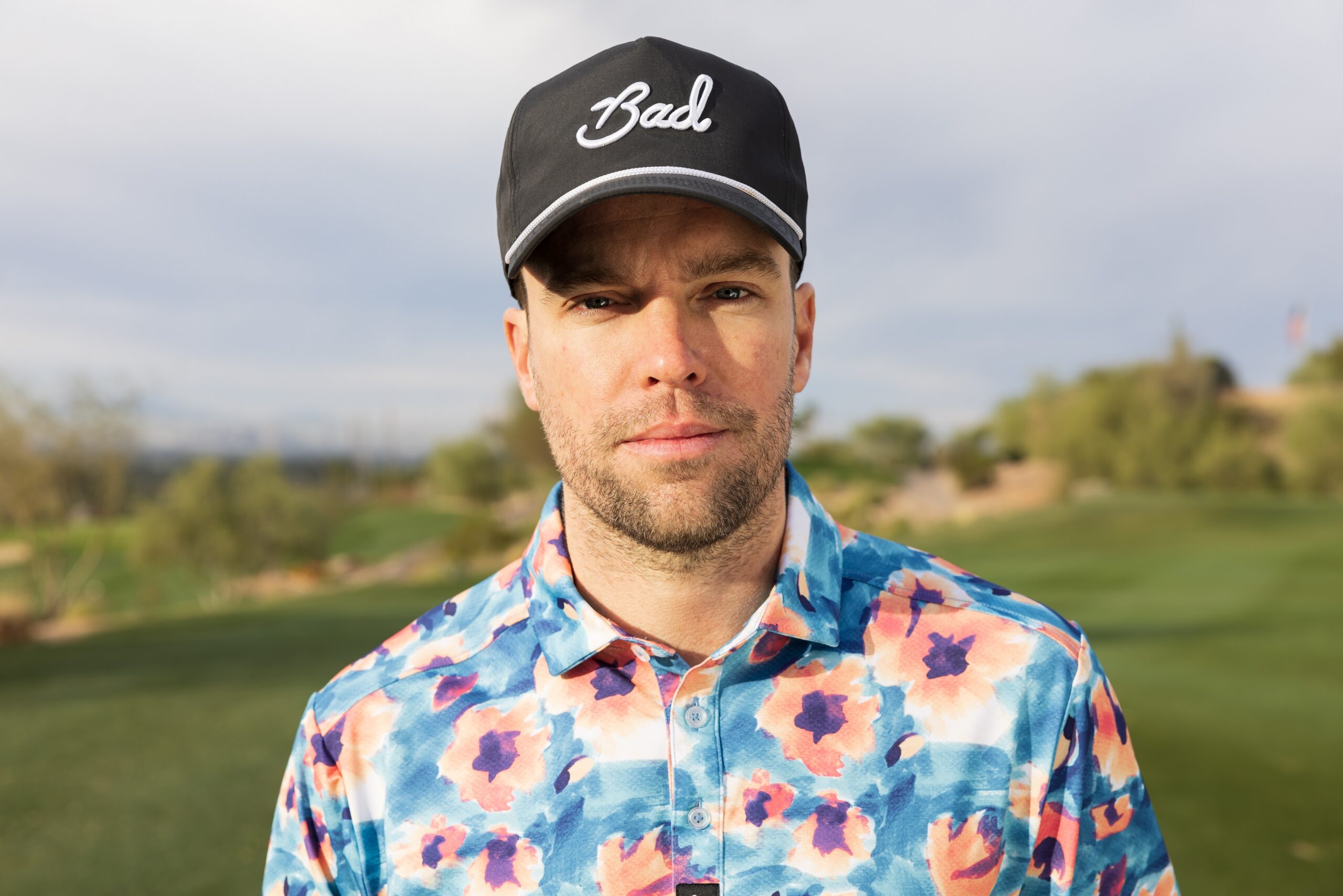
I recently went one-on-one with Bob McMullan. Bob has served as a CFO for organizations across a wide range of industries and was previously the CFO of Titan Sports, now known as the WWE.
Adam: You aren’t an accountant by trade, yet you lead in a field dominated by accountants. How did you become a CFO?
Bob: Yeah, so I got lucky. I was looking for some work, and I had some coaching from a recruiter who told me that out in the country from New York City, I was out in Connecticut in the Stamford area, and there were a bunch of headquarters. One place was even called Takeover Row, because these companies kept getting acquired. Anyway, I was advised to just walk into the company. So I started at the base of Long Ridge Road and worked my way up. By the time I got to the third building, it was Combustion Engineering. I walked in and walked out with a job, and they offered me a job as part of their internal audit group.
So even though I was not an accountant, I talked about my ability to look at operations profitability, key areas that are not necessarily part of the financial statements, but impact the financial statements, the results of optimization reduce cost, therefore increase profit. And I ended up getting trained as an Arthur Andersen auditor. There’s a name from the past. I went to their school as they audited the books, learned the work paper stuff, and started hanging around with accountants. Both things rubbed off. People heard from me on operational stuff, and I found things from tax opportunities and savings, like a multi-million-dollar export credit that we got, to improvements of profitability.
I also, physical stature-wise, qualified to be their construction expert. So I ended up on construction sites and translating big projects. Combustion-built power plants, and sometimes they were the prime, but the key components were their bread and butter, what they did. We traced costs over and saw where they came out, and if there was an estimation of problems or anything else like that, it also impacted financial statements.
So I got a solid training from Combustion, and then I evolved that to opportunities to interface as a lead in some of these audits with some of the greatest talent in the world from a manufacturing perspective. And I got the opportunity to walk in, introduce myself, and I’m from corporate. Nobody wants to hear that. But anyway, I’m from corporate. And I’d say, yeah, look, I’ve got a list to do, but if you want me to do something for you, tell me, I’ll look into anything you want me to. I sort of befriended these general managers, and in turn, I got the greatest education I did over about five years. So it was great.
That’s how I learned what I needed to learn from the accounting side. And candidly, accounting today is changing so much from the public perspective and SEC filings that it’s a constant learning situation, and I learned to grasp and use what I need. In the old days, I used accounting principles to maximize profitability on transactions. That talent is no longer required, because we all report pro forma, and that’s how I kept approaching the job.
And I got into deals back then, starting from diligence. The next company I went to, I was in the front lines negotiating. Next thing you know, I’m in 60 transactions with 12 divestitures, and I’m sitting as part of an acquisition team as part of growth. Private equity, platform companies I worked, so it’s organic as well as acquisition growth. Put that all together, in some cases some things don’t fit, and you sell them. So that’s how I sort of became the accountant. And from there, I haven’t looked back.
Adam: If you’re interested in becoming an accountant, it’s always great to have an accounting degree, but you don’t have to. So much of success comes with having a growth mindset, being not only open to but eager to learn every single day. And it’s not how much you know going into whatever job you have, it’s how much you learn once you get there. And what a perfect example of what this principle is all about.
Bob: Adam, I agree 100%, and that continues to this day. Just as an aside, I use my free time to come up to speed with AI. I think AI is going to change the role of the CFO even broader than it has migrated and evolved over the last 20 years. But that’s actually why I work, because it’s a learning process every day.
Adam: How can anyone most effectively understand and ultimately utilize AI?
Bob: You know, that is the real point, whether we’re talking about an application that becomes ubiquitous versus task-serving. I think today I would describe AI as, you can solve a lot of tasks, but processes and systems are not quite addressed today.
And I think, obviously, if you do a task that took three hours and you do it in 10 minutes, that’s a great savings. So first of all, you have to understand the basics. How do you use AI, learning to prompt, and so forth. But as a leader within an organization, you have to help your team. This should be not just at the CFO level, but at the executive level.
The strategy is, what is a company strategy to bring AI to the company and its employees? I think that decision drives how you formalize training processes, educational processes, ensure you’re compliant, that somebody’s not using AI to put in contract forms that are confidential. You need to maintain the propriety of your confidentiality.
And these things need to be addressed at the corporate level. Then a license, maybe one or two. Then you can hire firms today to bring in and train. Decision-wise, I think at a corporate level, from the CEO as a starting point, AI is a strategy. It’s a strategic opportunity. The executive team needs to understand how they’re going to incorporate that into the business.
They make a decision on a path, and that path, until proven wrong, should be executed. And that’s how you start off, in my opinion.
Adam: How have you personally utilized AI?
Bob: So I use it to learn, okay? Let me talk about the basics according to what the real purpose is. Cash flow statements are complex, particularly in multi-currency environments. There’s a lot of detail to them, and not everybody does them right.
And I had challenges with a foreign back office, to help them understand why they were making mistakes. This is pretty technical accounting stuff, and for the non-accountant here, I got a little bit too involved. But I did use it to run the statements and use it to show them, put a lot of data in. Unfortunately, I have to redo it all the time. And I set up a program that they could then, in turn, do the individual subsidiary cash flows to bring the whole thing together in US GAAP.
So, from an application on financial operations perspective, that’s the simplest. I use it for anything I want to learn. My phone has four or five different AI tools: ChatGPT, Claude, Gemini… Anytime you’re interfacing on a computer, for example, you have access to Copilot, Microsoft, and it’s there.
I utilize it. I sometimes use it for grammar, simple grammar, right? It just doesn’t look right. Let me take a look at it. Sometimes it’s wrong, so it’s not helpful. But wherever I can to save a step, I have used it, and I continue to use it.
But I think it’s solving tasks now, not yet processing. And maybe the advent of these AI agents will evolve, where you can use them and integrate them. You’ve got to have a partnership with your IT executive and understand how these things interface.
But to roll it out today, I think it’s different. Corporations should take it upon themselves to train their employees on how they want to use it. Don’t let it freelance. Get to a decision where you do have the internal controls and all the things that the CFO is responsible for, even cybersecurity and so forth, and the risk management and compliance part of the business.
Another example early on is, going back four years ago, I worked for an institutional pharmacy as a CFO, a portfolio company of a private equity firm. This is a second company that they introduced me to, and AI was new on the scene.
When I got there, we had huge inventories and a lot of working capital there. Over time, I reduced it very significantly and made about a $30 million turnaround in free cash flow. But if there was ever an environment where you could run and control data and inputs, inventory management in medical prescriptions is a natural, until we got into HIPAA issues. Then that gets a little touchy.
But AI is only as good as the data you put in, and it’s got to be clean, and it’s got to be structured in a manner that it knows. You need to understand the outcome before you start. And if you don’t do that, you’re at risk. Same with the grammar point, right? It could still be wrong, or you were right, and it wants to make you wrong, whatever it was.
But the dynamics are really exciting, again thinking about it. In the institutional pharmacy business, your wholesaler will deliver drugs to you in 24 hours. You can order and do it if you understand, as you should, 10 years’ worth of prescription history, and you put that into the database that you’re running through AI, you could run pretty lean inventories.
And when you’re talking about $40 million, $50 million of inventories, and can take them to 10, that’s $40 million of cash in your pocket. That’s a real-life example that was put into a prototype, and for other reasons, it got canceled. And we’re back to spreadsheets, trying to predict MRP usage and so forth. But that’s a real-life example that would have paid off very well.
Adam: You mentioned that you learned a lot from the accountants who you were around, and that the accountants who you were around learned a lot from you. What did you learn from them and what did they learn from you?
Bob: So, not being an accountant, other than my requirements for my business administration degree, I wasn’t aware of the FASB. I didn’t understand this standard-setting. I knew of the SEC in a different role than reviewing and regulating how you report financial information.
So those are some of the basics that weren’t so basic, but that I became more aware of, that became a daily conversation, right? Somebody would say, hey, you do this. And just hanging around accountants, I became, in essence, started thinking like an accountant, per se. But I never lost my other side of what it is.
But I found out that as long as I understand the financial statements and I understand the operational side of things, controls, requirements, terms, I understand the business we’re in, that all comes together to understand the flow of how I create $1 and how the hell it gets into the financial statements, right? And once I understand that flow, and then the technical stuff of SEC and all that, I may not have that totally up to date, but working with my outside accountants and a solid GAAP controller, it all came together, and it works for me.
And as I mentioned before, everybody came to pro forma reporting. Using the knowledge of the accounting principles, you could manipulate, and manipulate is maybe a poor word around accountants and public reporting, but you could establish procedures for accounting for certain transactions to maximize EPS. There was enough leeway in there to do that from time to time. Now it’s, there’s certain transaction stuff that you can exclude, it’s pro forma, and everybody accepts it, and that’s sort of not as valuable as it used to be.
Adam: What were the most important skills you developed and utilized to become a CFO and what are the most important skills you utilize as a CFO?
Bob: That is a question that’s still evolving, or an answer that’s still evolving, shall I say? Because I think the most critical thing is to listen. And I say that from a perspective that I’ve been in very, very different industries, and I’ve succeeded because I’ve listened.
I haven’t come in with my own pre-playbook to say, okay, I’m going to do this. One, you’ve got to be in sync with the CEO. You’ve got to understand their concerns, what they see in the CFO, and how they want to use them. Now, over time, the CFO can evolve that to be a better and fuller, trusted partner to the CEO, particularly as you get into a deal that doesn’t come offhand or something like that.
And then secondly, in the private equity world, you really have two bosses. You’re working for the CEO and the board, but the private equity firm spends a lot of time with you as well, and you have to understand how you balance that as well.
From my perspective, that you’re in sync with the CEO, there’s nothing different that you would translate to your PE partner, overseer there, but all communication has to go on. And once you understand the business, as I said, from the first dollar of revenue through to the impact to the P and L, you really have to build a team.
And you have to cover what I don’t know from an accounting perspective. You want solid SEC reporting, the procedures in place that really, you don’t want to be in a situation where there’s quote, unquote, ever an embarrassment, right? You just want all the things covered. And that goes down to team capability and delegation, and delegation with the respect that, or understanding that, it’s okay to make a mistake.
Too many people, I’ve been in high-growth environments. One company went from 50 to 350 in 12 months. It was a product company. And my story was, hey, we’re all going 150 miles an hour. It’s not whether you will crash or not, it’s whether, if you crash, you will crash.
And here are the rules. You raise your hand, make a mistake, and we put a permanent fix in place, and we learn from those mistakes. And that worked out very well.
And even despite all that growth we had, it was a business where the price erosion and product mix can change over time, or it went from 350 to 270 because of those dynamics. And growth hides a lot of sins, as I say. And I’m very pleased that the foundation we put in place was solid, and we saw every, unfortunately, dollar of that reduction in revenue before it even happens.
So you have to have a team. They have to understand their objective. You have to understand the objective of the CEO, and you need to always serve your CEO as a number one priority.
Adam: What do you look for in the people who you surround yourself with?
Bob: I look for thinkers. A lot of people can do the nuts and bolts you need. A people person in certain places. There are situations where people skills don’t matter because they’re kind of individual performers. But for the most part, you want growing leaders.
And for example, one thing I’m very, very proud of is three of my direct reports have grown and expanded. Grow may not be the right word, but they, in their own right today, are public company CFOs.
And I think for a CFO to have people that work for you that go on and follow your footpaths. And as I said, hearing back from people, they too have said, you showed me how to do this, and I had confidence to take on this job because of working around you.
And I’m very proud of that fact, and I’m very happy that these guys, it’s like your own children. If they do better than you, you’ve done okay.
Adam: What do you believe are the keys to successful leadership and what can anyone do to become a better leader?
Bob: Oh, well, I think the first thing is you have to recognize that maybe you need a few more skills, right? So you’ve got to really understand your pros and cons, right? What you do well and what you may need improvement with.
And I’ve kind of, as I mentioned earlier, bounced around industries, working for private equity portfolio companies. I can’t really say that I had a single mentor, other than my dad. He was a great leader and great teacher, and I’m very proud, and he’s a great mentor to me.
But if you don’t understand where you are in your own personal development, you’ll be challenged to continue to improve. And sometimes that just takes someone like myself to go into somebody and say, you did that too fast. I didn’t need it right away. You had the time to review it. You don’t want to give something that somebody finds that there’s a mistake in it, right? So don’t overlook the extra time to make it right.
From an execution perspective, again, being able to listen, as I started this conversation with, I think, is critical. And if you do not listen, you are not hearing the challenges that people may be having, right, and where they need a leader to turn around and say, okay, I hear you. We’re not doing that right. What do you suggest?
And in turn, there’s a coaching point. You have somebody that has you listen, you translate, and now you teach them to listen, to figure out how to fix it. Great. You told me what’s wrong. How do we fix it?
So I think watching people you respect, and work is another way to model your traits against somebody, and ask somebody for help. Many of us are very busy, but we take the time. I always took the time. If somebody asked me a question, I gave them all the time they wanted to help them understand something, or unfortunately, sometimes personal problems that are very sad.
But if you’re not sure, ask somebody, and you’ll be surprised that somebody might offer a hand, coach, and bring you along a path. Now, knowing that you’re open-minded, you want to learn more, and you can be coached. It’s individual. But again, you’ve got to start with the tools that you have, but you can improve them.
I remember my great habit as a young person was always wanting to have an answer, but I learned maybe speaking too quickly is not smart. So you have to learn through the pain of growing, as important as the growing itself. Everybody has their scars from a mistake here and there.
So I think there are plenty of books to read, internet, and some are good, and some weren’t worth the time. But you can; there is leadership, it’s a universe unto itself from the written word, right? So you can get help, and you can learn, and then ask somebody you respect, ask them to mentor you. That’s one way.
I would add one point. Not having the answers, but question if you don’t know. And the ability to question in itself is an art, and I think I do that quite well. And that’s how I’m able to go into different industries and adapt to the requirements that are unique to a semiconductor manufacturer versus my time at the WWF, right?
So you want the talent in your organization, it is a reflection on the person and the leader. You’re absolutely right 100%. And the one thing though, where I would share that, I encourage my teams to not just work within themselves, but at certain levels, to go out to the non-financial people, operations, manufacturing, procurement, these different things, and ask them if they had some time.
And my last controller, who is now a CFO himself, actually institutionalized that by bringing in different parts of the business to give monthly presentations, which was an excellent idea.
The success to go on in a business is that it’s not just about the numbers. You really have to understand how the numbers come to be, and the more you can put that together, the smarter you are about business and the more fun you have, and you constantly are learning.
And to me, I wish my brain was bigger so I could learn more. It’s just a simple fact, I don’t have enough brain power. But I hope I never stop learning, because that’s the essence of life, and it’s not just business. It’s maybe, obviously, your family, grandchildren, you learn different things through different ways. A little off the point, but leadership is, you don’t wake up with it and go into work with it. You have it, right? It’s not like, okay, I’m clocking in so now I’m a leader.
One of the things I tell people, to be very candid, if you want to be a CFO, you want to be an executive, you have to understand that as a leader, people are going to come to you with problems. It never seems to stop. Every day, something new comes up with a problem that needs to be addressed. And if you don’t like, sometimes that can be a burden to some people, dealing with problems, then the job is not for you. But you have to take it all in, and it can be very rewarding.
Adam: What were some of the biggest problems that you had to deal with, and how did you deal with them?
Bob: So we had one company, we had a very large client that was walking out the door, and it was a recurring revenue business. So when you lose a contract of pretty big scale, it’s difficult to overcome on the growth side of it.
And one of the parts of my job has evolved as a CFO over time is I have client responsibility. I’ve been involved in client sales. I’ve been involved in sales closing transactions. I’ve been dealing with problems on accounts and so forth.
In this case, we sat down and said, look, it is not in your best interest to pick up and move. This was a mutual fund processing business, so you’re accounting for daily portfolio values. You have transfer agency issues and a lot of detail. And I convinced him, if you want to leave, let’s do it the right way for both of us.
And I proposed, and then involved from the board side and so forth, that I wasn’t going to try to save the business. Let’s start one day at a time. And I convinced him that moving right away was not in his best interest either.
And we worked out a transition agreement that, lo and behold, that executive left and never had to use it. We kept the account.
Over my career as a public company CFO, you’re in earnings calls with analysts. You’re in one-on-ones with institutional investors.
And sometimes they’ll ask a question, and say it’s your 14th call in the last two days, and you say, you know, I kind of forgot. Okay, let me get back to you. Or you say, in one-on-one meetings at a conference, you know, is this, I don’t know if I said this earlier, right? Because you’re basically telling a company story.
And if you’re not honest like that, people accept it because they’re people too, right? So you know somebody will look and say, yeah, I can understand how you don’t have that at hand at the moment. I said, well, you know me, come to me in a second. But I can’t remember exactly what the number is.
So you do have to do that, and it shows that I think trust is earned through honesty and other ways and example and so forth. But to be honest with people is the only way to deal with people, in my opinion. And if you don’t know, you don’t know. Simple.
Adam: What are the keys to excelling across industries?
Bob: So everybody may have their own formula for doing things. I went from media and syndicated television, advertising, to technology, applied platforms and business services, to semiconductors. Then I went to another technology applied platform, back to semiconductor software.
And through all those, I recognized, and I always presented myself as, look, day one, I’m not going to know your business, but I’m going to know it faster than you think. And my goal is to learn a business.
I use my five-finger rules. On five fingers, I’ve got to understand how this company works. And if I don’t get there, then either it’s a very complex business that maybe needs to be simplified a little bit.
But I’ve gone in and looked for those four, five key items that really let me know the business is going in the strategic direction and tactical direction it’s meant to be. And I have to sit down.
I had the joke in the semiconductor industry; it took me two weeks dealing with a multicultural environment to understand that I didn’t understand anybody. And they had their own terminologies. They had all these standards, different standards, the AICPA and all that good stuff, engineering standards, and telecom standards.
And I sat down, and I asked people to show me, and they were very gracious to give me their time. I picked it up within very quickly. When I didn’t know, I asked the questions. These people became so helpful to me that when we went public and I had institutional investors, I would bring them to the lab and introduce them to all the engineers. They got a kick out of it.
So anyway, I reach out to people. I want to learn, help them, and they’ve helped me. And that’s how I learned.
And the five-finger rule has been pretty helpful. That tells you how you stay on track. And then the numbers, right? One thing about a CFO, you’ve got to be focused on the future, not the past. And accounting is transaction-oriented. It’s too late to change something once it’s in the books, right? It is what it is.
But the focus has to be on the future, understanding the business, seeing that those elements of the five fingers are going in the direction they need to go. And that should result in growth and continued success.
Adam: What were the best lessons that you learned from your time with the WWE?
Bob: So one was very interesting. I was hired on Cape Cod. They were off Exit 6, the Cape Cod Coliseum.
And so they had an arena business, and that was before the Centrum came up in Worcester. So there was a lot of concert business and all that. But that’s where they housed the business.
Vincent and Linda purchased Vince’s father’s business, the WWF business, from his father and three partners. The three partners stayed in the business.
But when I finally sat down with Vince up at the Cape, he’s a genius. He is a genius in the fact that he understood the business he was in. He was in the television business.
And he told me a story, and I use the term metamorphosis of professional wrestling. He said wrestling was big when they needed programs in the 50s, and it was regional because the television stations did it live. And he said, this time, I’m putting a production quality program together that they’ll never take me off the air.
And to that point, he’s been true, as opposed to what happened in the 50s to the 60s and the advent of videotape, right? And so he was impressive when I met him.
And this gentleman that was going to sort of be the COO with the business, he declined to come. They were moving to Greenwich. I was from Connecticut. And so that’s how we came together.
But I learned an interesting fact. The very smart people in that business, what started as sort of in an arena, it evolved to a very, very professional business. And in fact, one of the TV guys I knew as a kid growing up, he came in where we were, high school buddies, and others came into the business that were very impressive.
Vince never lost focus of his goal. He initially set out to acquire and become a big family of partners among the various regional players that were out there. And for some reason, they took offense to it.
And so Vince gave everybody a chance to participate. They chose on their own. And eventually, the ability to have a national program via cable, was what drove the business.
The greatest compliment I ever got in business is from Vince McMahon, and it’s a little funny. But as I come in and we’re putting all this stuff together, there was nothing. The first thing I did, I was creating cash flow.
I mean, the agents that controlled the box office, they’d go out for three weeks, and then all of a sudden, three weeks later, they’d show up at headquarters with all this cash. I said, guys, what are you doing with this?
And I set up a system whereby they were sending me checks daily. That improved by $250,000 of free cash flow all of a sudden, right? And even though we were paying out, they would pay the wrestlers, and they were paid. So it’s a cash business, and I formalized that.
But back to the compliment. When I kept doing things and trying to professionalize things, Vince said to me one day, he said, I don’t want my business to be like IBM. I kind of said I didn’t know what IBM was, but anyway. That’s okay, Vince, I won’t make it IBM.
But I learned the value of promotion and advertising. Vince, at heart, is a promoter.
And his initial WrestleMania was literally seven weeks from inception to execution. And it was one of the historic events from the cable industry. It was, to date, the largest Pay-Per-View event in the history of cable TV at that time.
And I think it was, we got like 1,800 addressable boxes or something like that, and that became, he did it over and over and over again.
But that was a promotion that worked. It could have failed, but it worked.
In those days, the Pay-Per-View was an afterthought. WrestleMania One was at various theaters on a closed-circuit basis, not as you see today, but this was open to things.
He and then Linda came in a lot. I tell people that all of a sudden, somebody wrote a book and came to me, and all of a sudden, I’m getting calls about Linda McMahon.
Linda McMahon was a very smart woman, and she was sort of the balancing act to Vince’s big picture. In many ways, she would listen to what I said, and somehow Vince would come back and say, hey, that makes sense. Let’s do that.
And for example, WWF talent would traditionally go to Japan, a place called New Japan Pro Wrestling. I think they’re in the United States now, I know that. But our guys would go out, we wouldn’t be able to use them in our kit, right?
So I said, Vince, we need to get paid for this. They’re taking our guys out. We need to get paid. And it didn’t take Vince long to say, how about $100,000 license to me. I said, perfect. Thank you. He’d get into this stuff. He was a business guy. He really did change.
Nobody will give me credit for this, but I told Vince, we’ve got to get out of the TV business. If we’re going to do TV, why don’t we do them in the arenas, right?
What they do today, those television shows are being taped in front of a live crowd. There were 3,000 people in Harrisburg and Allentown. Between the two arenas, 30 days a year, they’d take them out of the market, no revenue.
And now this went on. He created a magazine, he created concessions and licensing and video, and it was all happening during my time there, and they were quite successful.
And then, to finish the story, it was interesting. In 1999, I was taking a company public called GlobeSpan, and lo and behold, I ran into Linda McMahon in an investor’s office, taking the WWE public. Very friendly hugs and kisses, saying hello.
And then all of a sudden, some of the investors are going, oh, how do you know her? Oh, no, I’m just from the same town, don’t worry.
But no, they, you know, and it was a real business. And I was interviewed by a reporter, a journalist recently, and they asked me a question: did I know what was going on with Vince?
And I told him, I said, honestly, we were growing from 50 to 100 million in a year. I didn’t know what was going on with Vince. We were just trying to build a business, trying to grow a business.
So what I took away as key learning points is, I wish I had a little bit more strategic insight to the business, to be able to better adjust in my youth to this tremendous growth that we were going through, right? So that was my biggest learning lesson there.
And eventually, I got replaced. It was the right thing for the business, and I needed to learn a little bit more, build my skill set. But I have no hard feelings.
Adam: What have you learned from your experience leading companies in private equity?
Bob: So the simple answer is, if you execute, everybody does well. They invested money with a purpose, to bring a return to their limited partners and themselves.
I had opportunities to work, early in my career, for big-name private equity firms. But at the time, the business has grown over the 30 years it’s been in business, some of these firms. But Welsh, Carson, Anderson and Stowe, and TPG made them all money.
It’s what I call a pure environment. You execute the plan, everybody’s happy. And if you bring returns to your shareholders and investors, you will benefit as well. And that kind of magic excites me.
It also is full of challenges, because not every business you’re dealing with the full set of the financial dynamics of a business, right? If you’re a buy-and-build platform business, you’re dealing with acquisitions, you’re dealing with financing transactions, integration, identifying synergies, negotiating price.
When you look to an exit today, it’s an environment that, sometimes you can find a strategic buyer. But I think in today’s environment, as more private equity firms have focused on the middle market, they’re not quite strategic yet, so I think we’re going to see a lot more IPOs as we go forward.
But getting to the point and delivering on an IPO is really a milestone in terms of that private equity process, right? You’ve got them liquid. You’re stamped with a daily valuation. That sometimes can be a distraction, but you have the stock price, and you know they see a return if you continue to deliver on those businesses.
And I’ve been fortunate to deliver returns, and that number has been about three, a little more than $3 billion, round numbers. And it is more than 10 times their invested capital. That’s across the board.
Not everybody’s been at that, but it’s really a focus to realize you’re in the business to create a return for that investor. And if that happens, everybody’s happy.
Adam: What have you learned from your experience working and leading in different businesses of different sizes?
Bob: I’ve been in businesses up to about a billion dollars in annual revenue, but people forget sometimes when they look. I started at something smaller, and we grew it to a billion dollars over time, and a combination of organic and acquisition.
So I like to say my sweet spot is about $200 million, $250 million, that has an engine for growth and a plan for growth. The different size businesses, that’s really how it came up, right?
So I have been focused. I find and learn that sometimes smaller companies outside that are a little bit too hands-on, but it’s not something that I haven’t done and haven’t enjoyed and learned.
And again, as you put all this together, and for private equity, we need to deliver returns and grow a business, it’s very satisfying, and that’s why I like to work.
I’ll go back to what we, I think we mentioned, or might have mentioned. I think there are more people, right, the realness of people. The individuals that contribute can stand out and need to be identified, commended, and compensated.
I think it happens in all businesses, but there’s a little bit more personal touch at a smaller business. You don’t have the HR organization that you have in multi-billion-dollar multinationals that get you through processes. You have an HR person that’s doing their job and supporting the team.
And again, we don’t want to overspend as a private equity portfolio company. We need to invest in the business to what it needs, and that needs to be generated from the cash flow of the company.
And that’s the other thing I left out. It’s all about cash flow in private equity portfolio companies, period.
But I just take it as more personal. Over my time, I’ve dealt with issues that I never thought I would, just because there isn’t somebody else to take care of it. On the HR side, on the legal side, all of a sudden I’ve run legal organizations as part of my responsibilities as well.
And you get into an IP situation that you never thought could come up, and it could impact the business. And I just think it’s a little bit more personal than sort of the department-level stuff that you see at big companies. You’re talking to Jon Jones, who’s your lawyer, and taking his advice.
Adam: Is there anything else you’d like to share?
Bob: Adam, it’s been a wonderful conversation. I feel so much younger now. A few years of experience, and thank you for inviting me. I’ve enjoyed the conversation, and I commend you on your skills and understanding of what it takes to be a leader. That’s a great, great attribute.