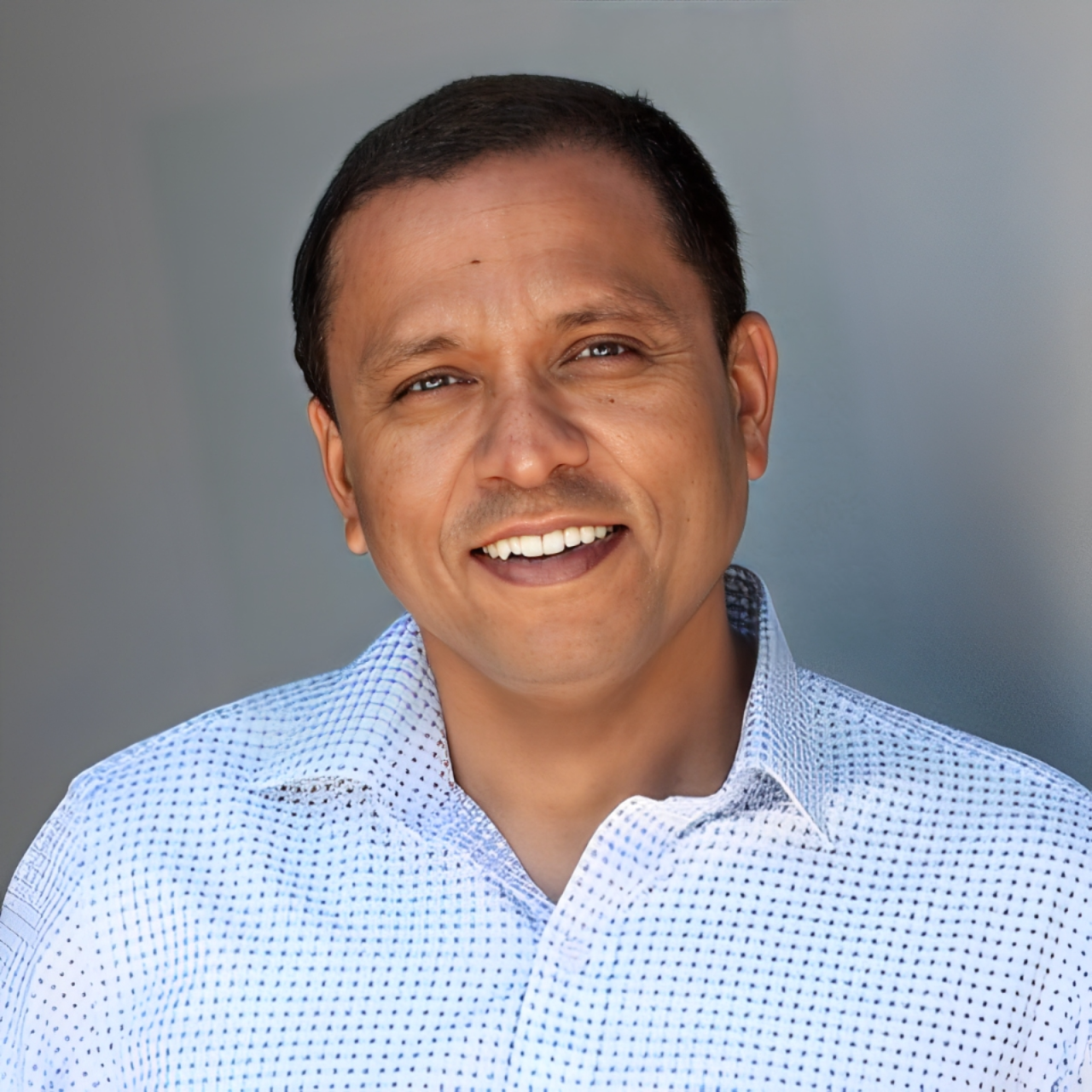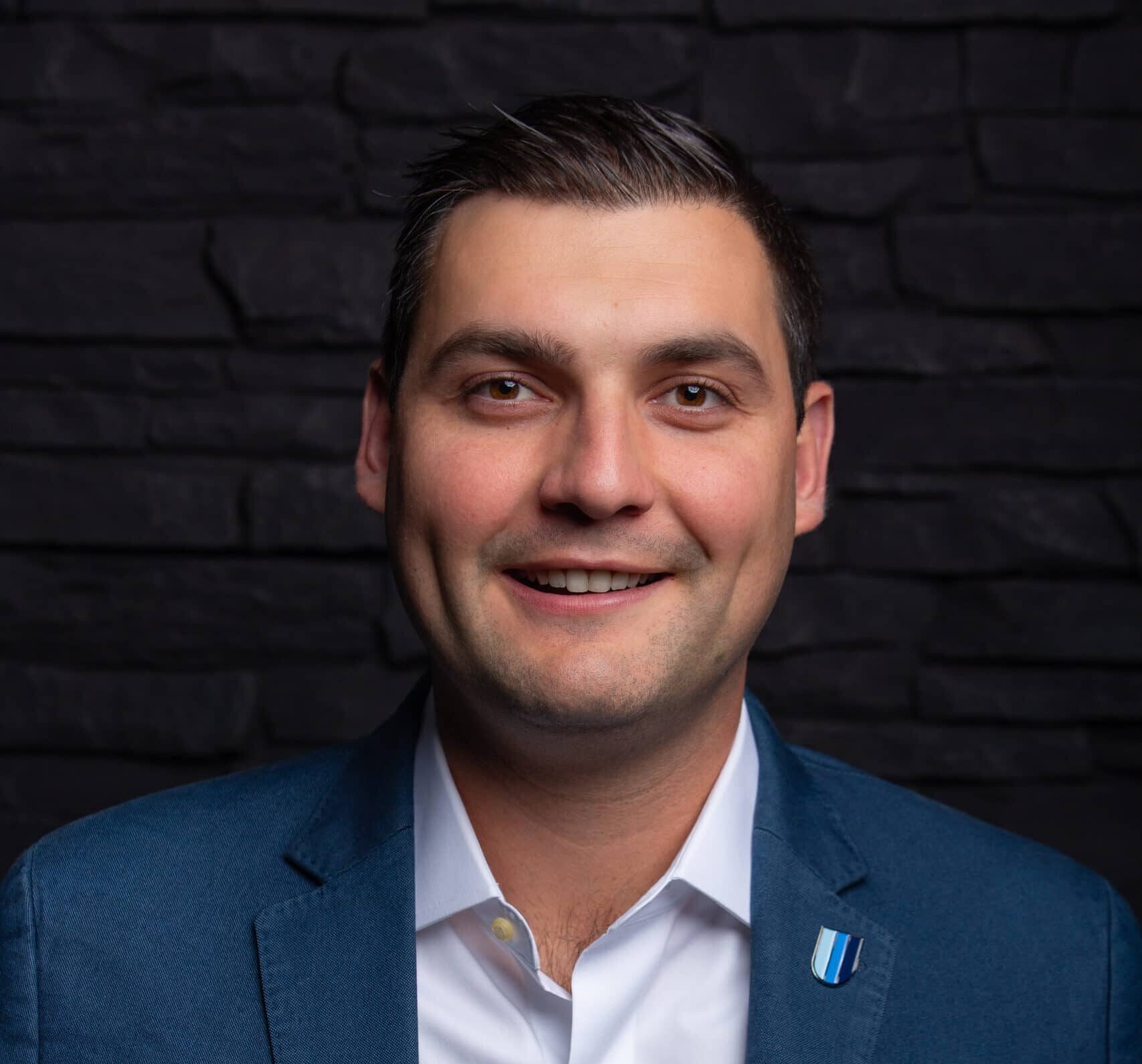


I recently went one-on-one with Daniel Wagner, CEO of Rezolve Ai.
Adam: Thanks again for taking the time to share your advice. First things first, though, I am sure readers would love to learn more about you. How did you get here? What experiences, failures, setbacks, or challenges have been most instrumental to your growth?
Daniel: I founded my first company in 1984 when the commercial internet did not exist. Tim Berners-Lee was still five years away from proposing the World Wide Web. The premise of MAID, an online market research service, was that any business with a computer and a phone line should be able to interrogate the world’s research from their desk, in plain English, rather than from the nearest library. To make it work, I had to build the rudiments of search and electronic commerce from scratch, because neither yet existed in commercial form.
That instinct, building the infrastructure beneath the next wave of commerce before the rest of the market understood a wave was coming, has defined the four decades since. MAID became Dialog and was sold to Thomson Reuters. I founded Venda in 1998 and ran it as Europe’s leading enterprise eCommerce platform until Oracle acquired it in 2014. Attraqt followed, and then came Rezolve Ai. Not every venture worked. The company that preceded Rezolve was a high-profile failure. Same instinct, same thesis, but the market was not ready. It told me exactly what still needed to be built.
The setbacks have been at least as instructive as the wins. The pattern I saw repeatedly, in my own businesses and in the ones I watched fail, was a confusion between being right and being right at the right moment. Markets do not reward the former. They reward the latter, with the right team, with the discipline to execute when it counts. If there is one consistent lesson across forty years, that is it. Execution beats ideas. Plenty of people have good ideas. Very few can turn them into something that scales globally.
Adam: How did you come up with your business ideas and know they were worth pursuing? What advice do you have for others on how to come up with and test business ideas?
Daniel: The best ideas do not arrive in brainstorms. They are obvious to anyone close enough to the operational reality. I was nineteen, working at an advertising agency, and my job was to brief the new business team whenever a client came in. That meant going to the corporate library, which was usually useless, then physically going to a public library, pulling company reports from Companies House, and spending a week producing a briefing on the toothpaste market or whatever it happened to be. It was slow, expensive, and completely manual. Then one evening I was watching a television program called Tomorrow’s World, and it showed how one computer could talk to another computer over a telephone line. I remember exactly where I was sitting. I thought, what if you could put all the world’s market research on a computer and just ask it a question? That was MAID. And everything I have built since has followed the same logic – to find the thing that is obviously broken to anyone doing the work, and fix it.
I had spent twenty years building eCommerce infrastructure for some of the world’s largest retailers. I knew exactly where their money was leaking. The single largest leak in digital commerce sits at the point of highest intent: the moment a consumer wants to buy and the experience falls apart before the transaction completes. Cart abandonment is not a UX problem. It is a multi-trillion-dollar revenue problem dressed up as a UX problem, and the industry has been pretending otherwise for two decades. Rezolve was built to close that gap. Not in theory. In production, in deployment with enterprise clients, with measurable lift on conversion. That’s the difference between a thesis and a business.
My advice to anyone testing an idea is this. Chase friction, not novelty. Find a problem that is painful, frequent, and monetisable, and ideally one you have lived through yourself. Get out of the building and talk to the people on the operational side rather than the strategy side. They will tell you very quickly whether you have something real. Most start-ups fail because they skip that conversation.
Adam: What are the key steps you have taken to grow your businesses? What advice do you have for others on how to take their businesses to the next level?
Daniel: Three things, in order. Product-market fit. Distribution. Discipline. We made a deliberate decision early at Rezolve not to ask businesses to rip out what they already had. Our technology integrates into existing commerce ecosystems rather than replacing them. While it’s a less glamorous way to construct a company, it is the reason we went from zero revenue at the start of 2025 to an ARR of over $200 million by year-end.
Distribution was the other half of that decision. The Microsoft and Google partnerships are not credibility exercises. They are the growth strategy. Their reach into enterprise markets gave us a path to scale that would have taken years to build independently, and frankly, we did not have years.
For anyone trying to take a business to the next level, nail product-market fit before you scale, not the other way round. Invest in the right distribution relationships, even when they take eighteen months to negotiate. And develop the discipline to say no to almost everything else. Scaling is not about doing more things. It is about doing the right things consistently.
Adam: What are your best sales and marketing tips?
Daniel: Timing is everything, but only if you can deliver when the moment arrives. We started building Rezolve in 2016. Nobody in any boardroom I walked into was talking about generative AI. By the time the conversation shifted, we had production-ready technology and live enterprise deployments. That is a fundamentally different position from scrambling to catch a wave once everyone else can see it.
The other point I would make is about reputation. In enterprise sales, your reputation gets to the room before your pitch deck does. Credibility is built by execution, not by promises, and the clients who matter will always find out which one you are built on. If you spend forty years saying things and not delivering them, the market remembers. If you spend forty years saying things and delivering them, the market remembers that too.
Lastly, I was trained as a salesperson early in my career, and the assumptive close is one principle that has stayed with me to this day. You walk into a room and proceed as though the decision has already been made. It is not arrogance. It is certainty, and there is a difference. I do not walk in and say we can help you with this or that. I say we are the market leaders in agentic commerce, we know where this is going, and we will navigate you through it. Customers are uncertain. That is almost always the real obstacle. Your job as a salesperson and as a leader is to give them something to anchor to.
Adam: What are the most important trends in technology that leaders should be aware of and understand? What should they understand about them?
Daniel: AI is the obvious answer, but the answer most leaders are giving themselves is the wrong one. I have watched enough technology cycles to know how this plays out. The companies that win the next decade will not be the ones running AI experiments in an innovation lab. They will be the ones who have made AI structural, embedded directly into revenue-generating processes, with accountability attached. Most boards I speak to are still treating AI as a sandbox project. They will lose. By the time you finish piloting, somebody else has already built it into their cash register.
The second point is more specific. General-purpose AI is not sufficient for high-stakes commercial environments. Commerce requires its own stack: trained on the right data, optimised for transactional accuracy, built to operate at the reliability standard enterprise demands. A consumer chatbot that hallucinates a recipe is mildly amusing. A commerce agent that hallucinates an order is a lawsuit. The companies that understand the difference are building the next infrastructure layer of retail. The ones that do not are buying it.
Adam: In your experience, what are the defining qualities of an effective leader? How can leaders and aspiring leaders take their leadership skills to the next level?
Daniel: Clarity. Decisiveness. The conviction to hold a position when others are not sure. Teams need to know where they are going and why, and they need to trust that the person leading them has thought it through and will back the call when conditions get difficult. Ambiguity at the top is corrosive. It forces people to hedge instead of commit, and you lose momentum at the precise moment you need it most.
The other thing I would add, because it is rarely said, is that leadership is not about having all the answers. It is about making better decisions over time and building an organisation in which the right information reaches you fast enough to act on it. The CEOs I have admired most are not the smartest people in the room. They are the ones who have built teams where the right information reaches them quickly and honestly.
Adam: What is your best advice on building, leading, and managing teams?
Daniel: Hire people who are better than you in their respective areas, and give them the space to actually do the job. The instinct to over-manage is natural, particularly when you have built something from scratch and care about every detail. It is also one of the fastest ways to lose the people you most need. Give them a clear objective, the resources to achieve it, accountability to outcomes rather than process, and then get out of the way.
I would add one further point. Hire for judgment, not just expertise. Expertise can be acquired. Judgment, the ability to make a good call in conditions of incomplete information with consequences attached, is much rarer and much harder to teach.
What are your three best tips applicable to entrepreneurs, executives, and civic leaders?
Daniel: Stay grounded in operational reality. The gap between where founders think their business is and where it actually is, is where most companies get into serious trouble. If you are reading your own press releases, you have already lost.
Move quickly, with purpose. We grew from zero to an ARR of over $200 million in a single year. That speed only works if every decision behind it has been thought through. Pace without judgment is not speed; it is panic.
Think globally from day one. The most interesting opportunities are rarely confined to one market, one customer segment, or one geography. If you are building with national ambition, you are probably leaving the most valuable version of your business on the table for someone else to pick up.
Adam: What is the single best piece of advice you have ever received?
Daniel: Go for it. My father said those words to me when I was twenty years old, the day I told him I was leaving a good job in advertising to start a company. Someone believing in you early and giving you licence to go and make something happen for yourself is more powerful than most people realise. At some point, all the analysis and preparation must give way to a decision. The people who build things are not the ones who waited for certainty.