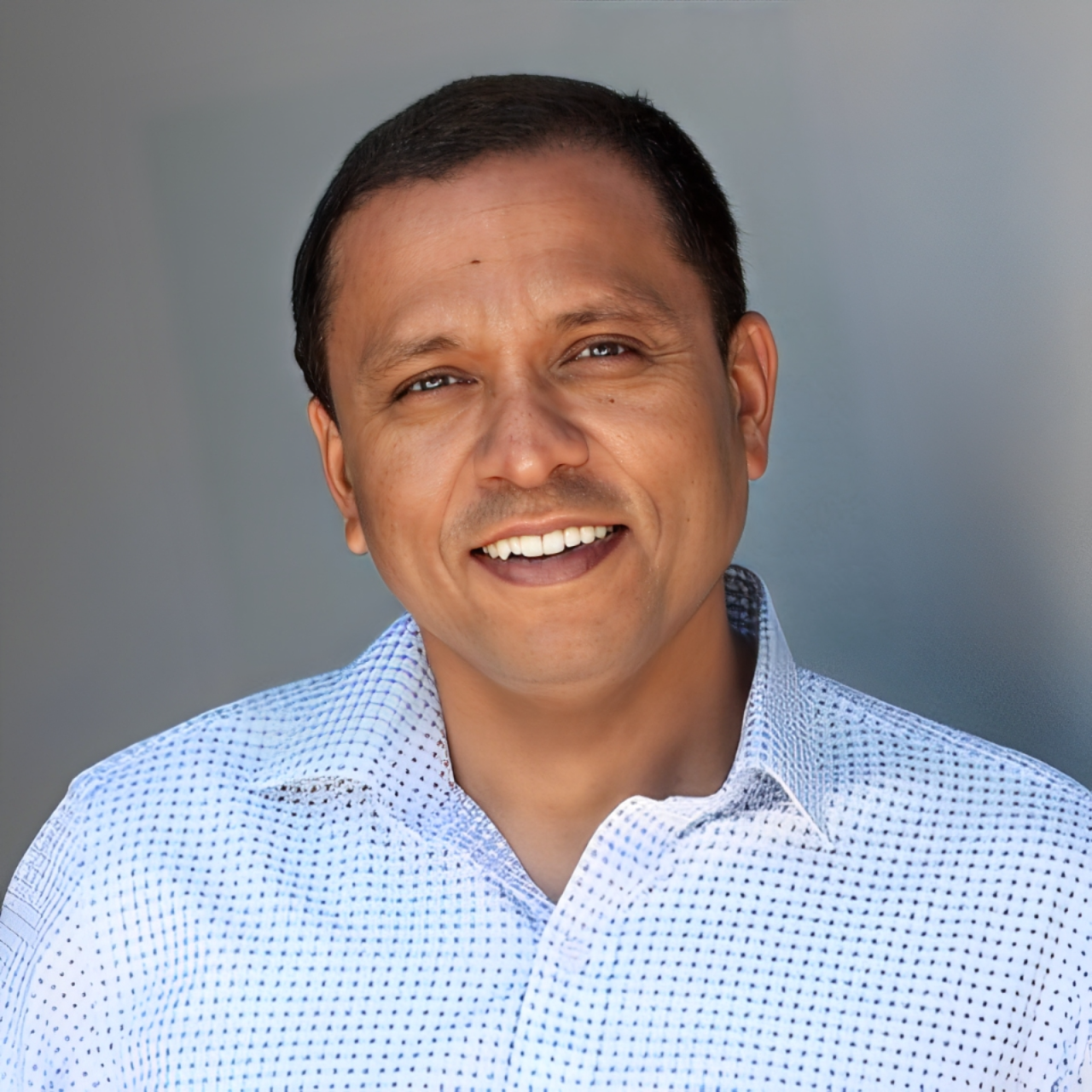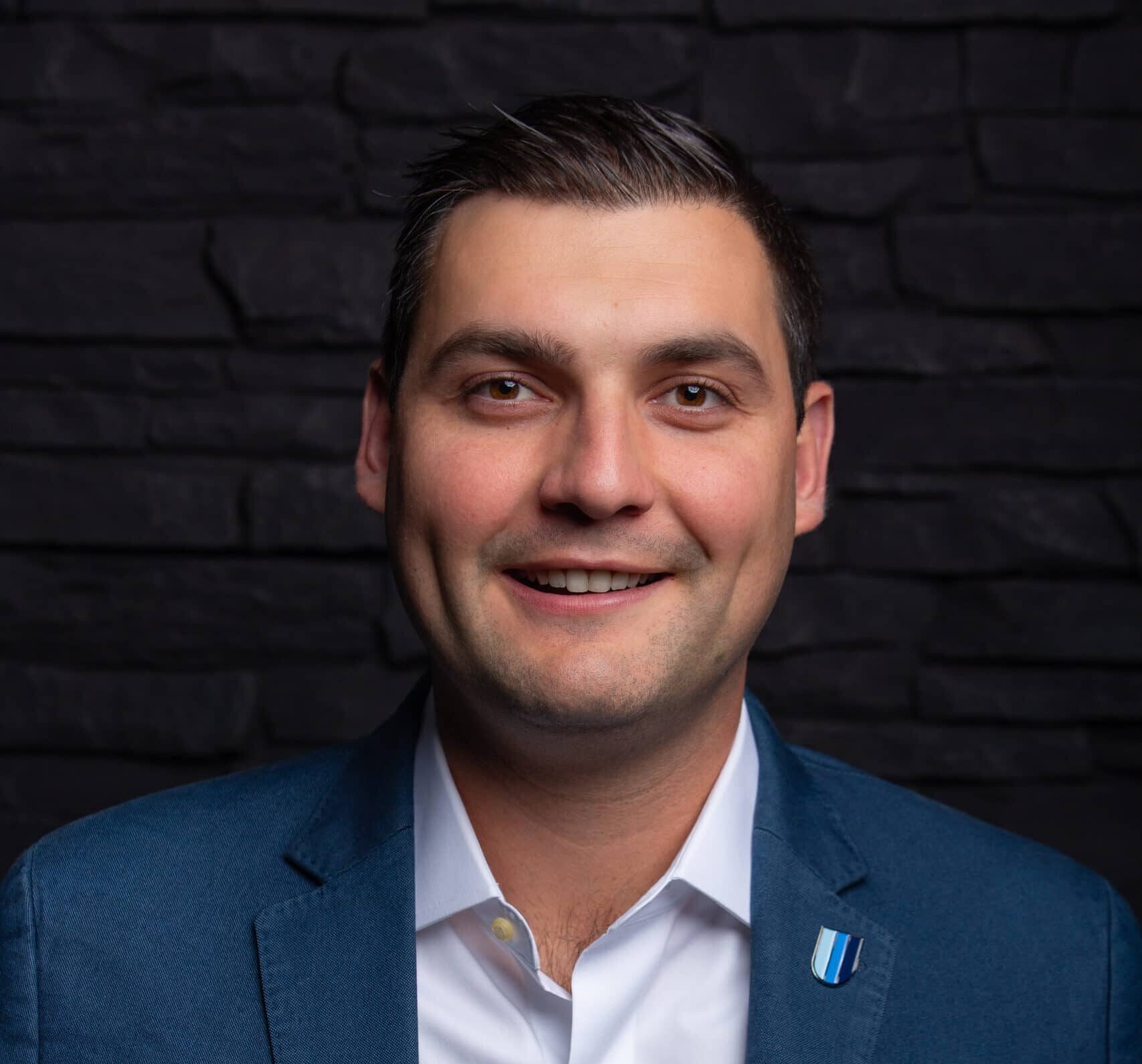


I went one-on-one with David Steinberg, co-founder and CEO of Zeta Global, at the 2026 Milken Institute Global Conference.
Adam: You’ve been an entrepreneur since the days long before the letters AI were used by everyone in the world. Can you take us back to your early days?
David: Well, now you’re making me feel old, but this is my seventh company I’ve sold or taken public, and I’m chairman of another. I became an entrepreneur for the same reason a lot of us do. I was unemployable. I came out of school in 1990, which was sort of the Great Recession of its time. I had wanted to be an investment banker with either Goldman Sachs or Morgan Stanley, and for some reason, they didn’t agree.
I went to work on the Hill, and I started working on telecom issues, and then I ended up in the wireless business for 17 years. But I was one of those guys who, even very young, was raking leaves for money, shoveling driveways. I’d started a detail business. My first real company was a nightclub production company in New York City and the Hamptons when I was 16 or 17, so I’d always been really into business.
My stepfather was a businessman. My father was a career accountant. It was a very interesting dichotomy of mentors that I grew up with. For the businesses that I’ve been able to successfully build, you’re starting, in most cases, from an idea and turning them into something meaningful. For me, it’s been all. I founded all the companies that I’ve run, once again, primarily because I don’t think anybody would hire me.
Adam: How do you come up with great business ideas?
David: Interestingly enough, I’m not sure you really ever come up with great business ideas from inception. What often happens is you come up with an idea, and you think it’s really good, and you start doing it, and you’re like, “Oh goodness, that doesn’t really work.” Then you pivot, and then you move, and you shake, and then you pivot again. I find that to get from inception to a good idea takes three or four really high-quality pivots, at least from my background.
Adam: Do you have an example you could share?
David: Yeah. When we started Zeta, we were really focused on customer acquisition. It was a big thing that we were doing. This is now 18 or 19 years ago. Then, about seven or eight years into it, we decided we wanted to become a lifecycle marketing platform, which meant we could do customer acquisition, customer retention, and customer monetization. Even to this day, most of those are separate point solutions. So we said, let’s bring that together because it made logical sense. We started buying different CRM platforms. We bought five or six of them and merged them together.
Then in 2017, I started looking at our data cloud, which we were just formatting, and we were ingesting so much data a day, Adam, that it would take weeks to run a report that we needed in seconds. I started looking around the landscape, and in 2017, we made the decision to go all in on artificial intelligence and data.
We ran our existing platforms for cash flow. We took 400 full-time engineers. We went from making a lot of money to making no money. That was a very interesting board meeting with my private equity backers when we had to convince them of that.
In late 2020, we rolled out the Zeta Marketing Platform, which literally was built with AI as foundational to the application layer. It was the first marketing platform to ever do that. I think it’s still the only marketing platform at scale where AI is literally core to what we do. Those were three very, very big pivots just to get us to where we are today.
Adam: How do you know when to pivot, and how are you able to successfully pivot?
David: It’s interesting. For me, I do what I call triangulation, and I read five, six, some days seven hours a day, where I’m reading publications, books, white papers, scientific papers. I take three disparaging points often on a grid, and I analyze them from a triangulation perspective to get to where I think things are going.
When you think about the pivot to AI, we had all of this data that we couldn’t process in time. We were trying to lower the cost of our clients’ creation of marketing, and we were starting to see that data was really going to be the fuel of the future. All of those things from a triangulation perspective led us into where we are today.
I’m going to give you slightly different advice because I would tell you I think most entrepreneurs and leaders feel when it’s time to pivot, but most of them are fearful of it. What I would say is when you start feeling like your business model is not growing at the rate that you would expect for where you are size-wise, when you start seeing profitability slip, when you start seeing competitors putting advanced products out that may be more advanced than the products you’re building, don’t be afraid to pivot.
There’s this very famous line called The Innovator’s Dilemma, where you’ve become so successful at what you’re doing, even in the early stages, that you’re scared to change it. I have never been scared to change, as it relates to that, and some of that was probably my upbringing. The reality is that when you think about it, you have to embrace that change and not be afraid to go all in.
The other thing I would tell you is if you pivot and it’s not working, fail fast. Move to the next pivot. Don’t keep banging your head against the wall. I see so many leaders and so many entrepreneurs who say, “Well, we just made the pivot.” Yeah, but it’s not working, so pivot again. You’ve got to pivot until you get to a place where you feel that groove. You start to feel your products working. Clients start saying yes in a meaningful way. You’re solving a problem, because if you’re not solving a problem, you’re not building a business that’s really going to sustain and grow.
Adam: What have been the keys to growing Zeta Global? What advice do you have for others on how to take their businesses to the next level?
David: The biggest key has been staying focused on solving a very important problem for very large enterprises. At the end of the day, businesses don’t succeed because they have the best PowerPoint presentation or the best marketing campaign. They succeed because they’re solving a problem and creating value.
When I look at Zeta today, what I’m most proud of isn’t any individual product. I’m most proud of the team we’ve built. We’ve assembled an extraordinary group of people who care deeply about solving hard problems for our clients. Together, we’ve built a platform that helps enterprises acquire, retain, and monetize customers more effectively. Recently, Forrester found that enterprises using the Zeta Marketing Platform achieved approximately a six-times return on ad spend. When you help clients create that kind of return on marketing spend, they’re going to want to do more with you. And with Athena, our goal is to help clients drive even greater returns over time.
Adam: What are the most important trends in technology that leaders should be aware of and understand? What should they understand about them?
David: Artificial intelligence is obviously the most important technology trend today, but I think it’s also one of the most misunderstood. If you look at history, every major technology shift has fundamentally changed the way people live and businesses operate. You had the printing press, the telegraph, the telephone, the computer, and the internet. AI belongs on that list.
Everyone is focused on large language models. I actually believe the future is inference-based AI. Large language models are going to become foundational infrastructure, but the real intelligence comes from inference models that use proprietary data to make highly specific decisions. That’s where organizations create real business value.
The companies that combine inference-based AI with proprietary data and a deep understanding of their customers are going to create enormous value over the next decade. The companies that don’t are going to find themselves at a significant disadvantage.
Adam: In your experience, what are the defining qualities of an effective leader? How can leaders and aspiring leaders take their leadership skills to the next level?
David: Interestingly enough, I think my answer to this has changed over time. When I was a younger entrepreneur, I thought leadership meant having all the answers. Today, I think the single most important job I have is to hire, recruit, train, and empower exceptional people. If you look at our executive team, it’s made up of individuals who are world-class at what they do. My job is to help them succeed, not to do their jobs for them.
The other quality I think is critical is intellectual curiosity. I spend a tremendous amount of time reading and learning. The world changes quickly. Markets change. Technology changes. If you’re not constantly learning, you’re going to struggle to see where things are headed.
Adam: What is your best advice on building, leading, and managing teams?
David: Hire great people and let them do their jobs. That sounds simple, but it’s much harder than it sounds. When you’re building a company, particularly as a founder, there’s a temptation to insert yourself into everything. Over time, I’ve learned that the best organizations are built around trust and accountability. You want people to feel ownership over what they’re doing. You want them to move quickly. And you want them to know it’s okay to tell you when something isn’t working.
The other thing I’ve learned is that teams have to evolve. The people who help you get to one stage of growth don’t always take you to the next stage. That’s not a criticism. It’s just reality. Businesses change, markets change, and leaders have to make sure the organization evolves with them.
Adam: What are your best tips applicable to entrepreneurs, executives, and civic leaders?
David: The first is to focus on outcomes. The world rewards results. Whether you’re running a company, leading an organization, or serving a community, people ultimately care about whether you’re solving problems and creating value.
Second, don’t be afraid of change. One of the biggest mistakes leaders make is becoming too attached to the way things have always been done. Every industry evolves. Every market changes. The ability to adapt is one of the most valuable skills you can develop.
And finally, invest in relationships. Every meaningful opportunity I’ve had in my career has involved great people. Technology changes. Markets change. Relationships endure.
Adam: What is the single best piece of advice you have ever received?
David: Early in my career, when I was leaving Capitol Hill to go sell insurance door-to-door, my stepfather gave me a piece of advice that has stayed with me my entire life. He looked at me and said, “The single greatest gift in your life will be figuring out how to get through no to yes.”
When you’re knocking on doors, raising capital, recruiting great people, selling customers, or building companies, you hear “no” far more often than you hear “yes.” What he taught me is that rejection isn’t a verdict. It’s a skill. The people who are able to keep learning, keep improving, and keep moving through those no’s are the ones who ultimately succeed. I’ve carried that lesson with me through every company I’ve built. And looking back, it may be the most valuable advice I’ve ever received.