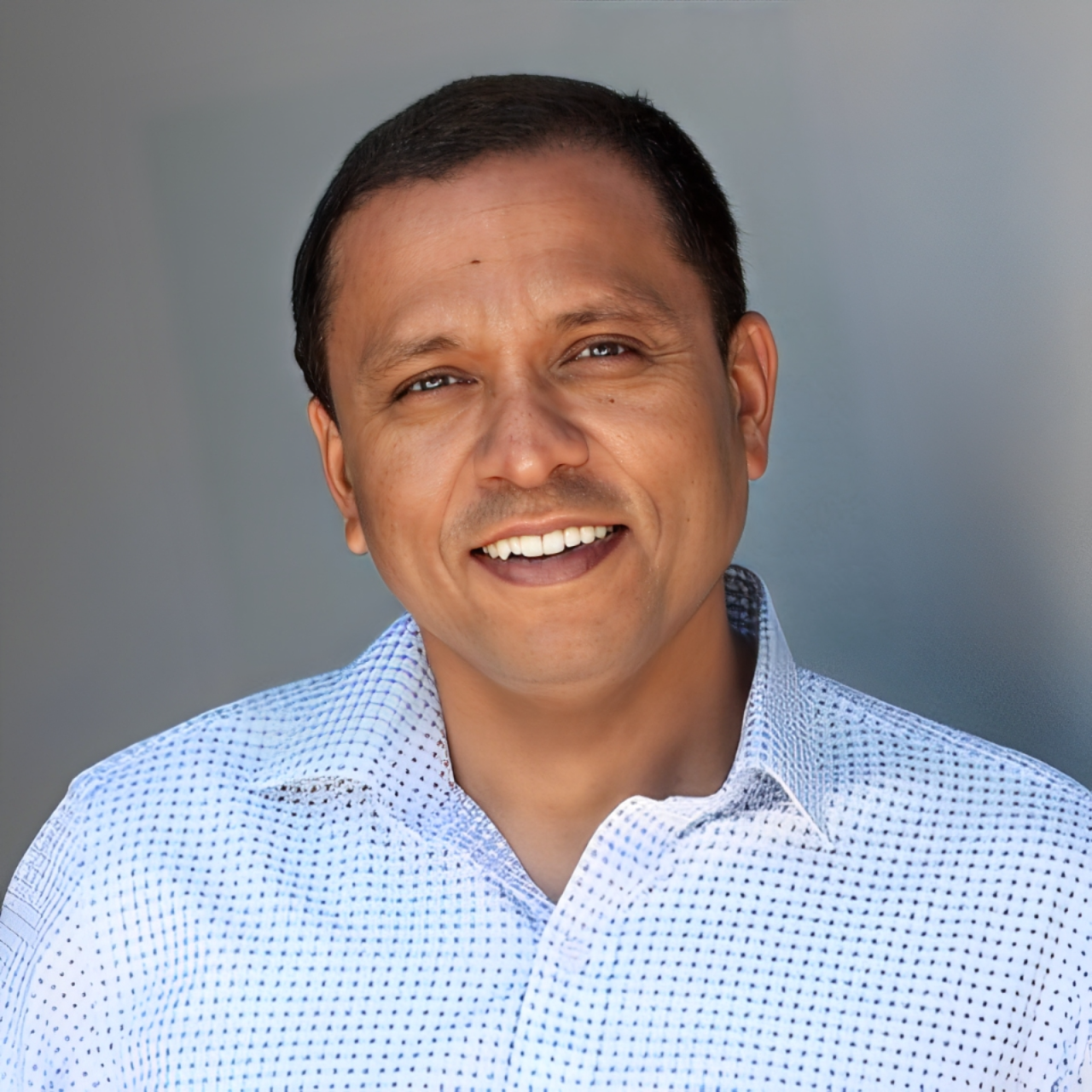

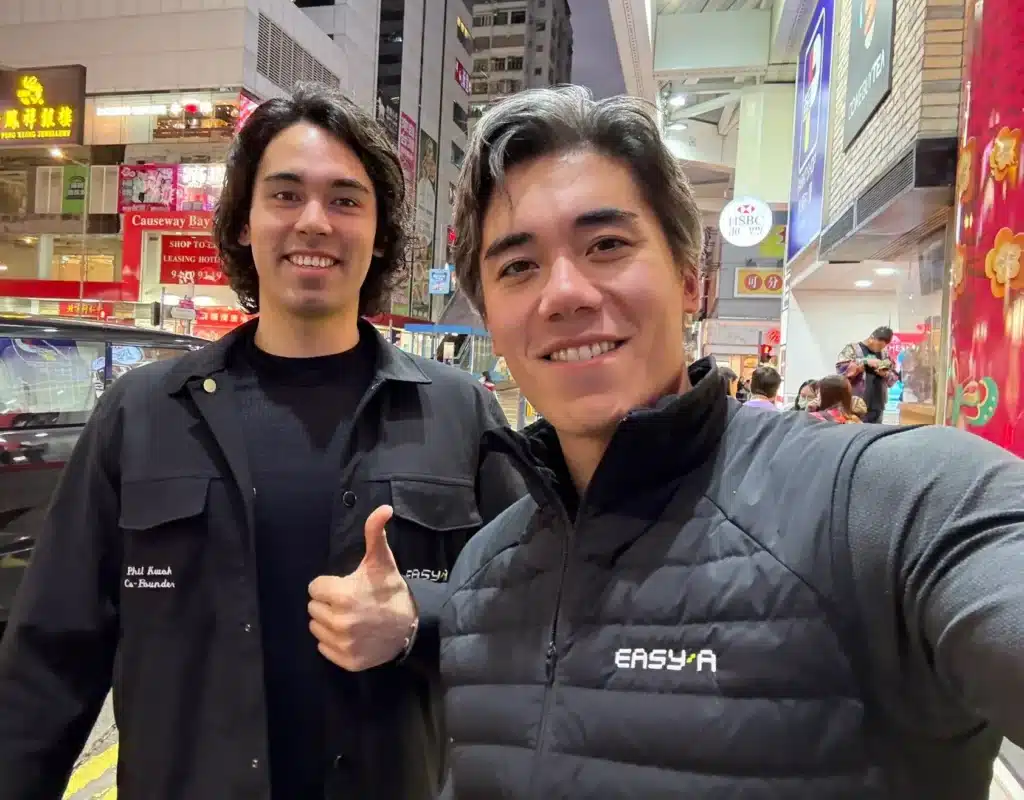
I recently went one-on-one with Dom Kwok and Phil Kwok, co-founders of EasyA.
Adam: Thanks again for taking the time to share your advice. First things first, though, I am sure readers would love to learn more about you. How did you get here? What experiences, failures, setbacks, or challenges have been most instrumental to your growth?
Phil: I grew up in London, studied Law there at Cambridge, then joined Sullivan & Cromwell in New York, where I became one of the youngest people to pass the New York Bar. By conventional standards, I was on the right track. But I had been mining Bitcoin since 2013, and I kept asking, “If blockchain was the most important technological shift of my lifetime, why was adoption not running at the pace it deserved?” Walking away from a prestigious legal career, without any guarantee of what came next, was the hardest decision I’ve ever made, but it was also the one that forced me to get completely clear on what I actually believed, and why it was worth acting on.
Dom: My path looked a little different. After graduating from Wharton, I worked in finance at Blackstone and Goldman Sachs, and then joined Travis Kalanick as one of his first hires at his new AI and Robotics startup, Atoms (previously CloudKitchens), where I learned more about speed and execution than anywhere else. So while these prestigious stops have been helpful to my career, the most formative have been the moments of genuine uncertainty. Leaving a stable career during a global pandemic to build something with my brother, in our childhood bedrooms, with zero guarantee of success, was where I found out what I was actually made of as an entrepreneur.
Adam: How did you come up with your business idea and know it was worth pursuing? What advice do you have for others on how to come up with and test business ideas?
Dom: We’ve both been involved in the crypto space since the early 2010’s, and we kept seeing the same pattern. Projects raising millions, launching tokens, but with no real use cases underneath, and not enough developers entering the space to build them. For EasyA, our goal wasn’t to invent a problem, but start looking for an obvious one that people have quietly accepted as normal, and that would be my advice to anyone asking is to follow a similar model. Stop looking for the most clever, out there, or outrageous idea; instead, find an everyday one that people are ignoring, come up with a plan, and test it by doing the work manually before you build anything and talk to real users. Let their actual behavior tell you whether it’s worth going further.
Phil: To Dom’s point, there was no eureka moment, just a signal that kept getting stronger. Every conversation with developers, universities, and blockchain projects surfaced the same problem about how the talent pipeline wasn’t there. We also saw early on that developers actually come into Web3 and AI is through the story, not through staring at raw code, which was a key insight that has really shaped everything. When the same gaps show up from every direction and you have a clear view on how to close it, that’s your answer. Don’t wait for permission or certainty before you commit, because in today’s world if you wait, consider yourself already behind.
Adam: What are the key steps you have taken to grow your business? What advice do you have for others on how to take their businesses to the next level?
Phil: Community has been our biggest growth driver. By partnering with over 300 of the world’s leading universities and hosting hackathons and demo days that gave developers a real on-ramp into Web3 and AI, we were able to build a movement as our real “product”. We also deliberately went after founders, not bounty hunters. We wanted people who were going to stick around and build companies, not collect prize money and move on. That distinction matters enormously when you’re trying to build something with real staying power. Add that to finding the thing that creates genuine momentum in your community and pour everything into it, you’ve got the perfect concoction for growth.
Dom: Staying hyper-focused on the mission, rather than chasing every opportunity, has been just as important. Frontier technologies like AI and Blockchain move fast, and there’s always something new to pivot toward. Over the years, we’ve kept coming back to the same question: does this help us onboard more developers into the Web3 and AI pipeline? If the answer is no, we pass. I’d honestly tell any founder to get very honest about what is actually driving their growth and double down on that instead of adding complexity. Clarity of focus is an underrated competitive advantage and one that’s easy to abandon the moment the next shiny thing appears.
Adam: What are your best sales and marketing tips?
Phil: We’ve always led with story before product. Most people out there think developers need to learn by looking at the code, and that’s just not the case. While others were selling features, we leaned into the fact that that wasn’t what moved people and the real way people were coming into both Web3 and the AI space was the story of what was being built. Seeing themselves as a part of what we were building and understanding what was possible for them via university partners or blockchain ecosystems made a massive difference. It meant they could see exactly what the experience would look like for their community. Making the person across from you feel genuinely understood before you ask them for anything was the real key.
Dom: Letting the community speak louder than we did was also something that helped us a lot. When developers who first started building with EasyA went on to raise funding from Andreessen Horowitz or get into Y Combinator, that story did more for us than any campaign ever could. So when companies like Cognition AI, which was founded by an EasyA hackathon winner, is now worth over $26 billion, it’s the most powerful marketing and shows that your product does what it promises. Create real outcomes for real people, then find ways to make those outcomes visible.
Adam: What are the most important trends in technology that leaders should be aware of and understand? What should they understand about them?
Dom: The convergence of AI and blockchain is the thing I personally think every leader is paying attention to right now. AI is creating this explosion of digital activity, and blockchain is the infrastructure that can make that activity trustworthy, verifiable, and owned by the people participating in it. At our hackathons, we’ve already seen developers build more in two days using AI tools than people previously built in weeks. Leaders who understand how these two technologies interact will be miles ahead of those still treating them as separate conversations.
Phil: I’d go even further and say that Web3 and AI together represent perhaps the single most important technological shift in the history of humanity, and as a result, decentralization isn’t just a trend but the defining technological shift of this era. We’re moving from a world where a handful of gatekeepers controlled access to financial systems, software, and opportunity, to one where blockchain is a strongly democratizing force that allows anyone to participate in the global economy without needing a centralized intermediary. Most leaders are still underestimating how significant that is, but the leaders who get ahead will be the ones who’ve already started building a world where it’s the default infrastructure, instead of debating if it’s sticking around.
Adam: In your experience, what are the defining qualities of an effective leader? How can leaders and aspiring leaders take their leadership skills to the next level?
Phil: It comes down to genuine conviction. People follow leaders who truly believe in what they’re building, not leaders who are visibly doing it for someone else. In spaces like AI and Web3, especially, where the space moves fast and the skeptics are loud, you have to be anchored in your own understanding of why the mission matters. The way to develop that is simple, but uncomfortable. Keep putting yourself in situations where you have to defend your thinking and that will either strengthen your conviction or reveal exactly where it needs to grow. Either way, you win.
Dom: I’ve had the chance to observe a lot of leadership styles, and those that stood out were able to carefully thread the needle of combining obsession about execution with never losing sight of the bigger picture. That balance of ground-level urgency and long-term vision is rare, so for anyone trying to grow as a leader, I suggest they get comfortable making decisions with incomplete information. Waiting for certainty is just another word for inaction.
Adam: What is your best advice on building, leading, and managing teams?
Phil: Psychological safety is huge. Your team needs to feel like they can bring a half-formed idea or flag a real problem without it being held against them. When that’s true, information flows honestly and quickly, and those are the teams that move fastest. That only happens when the leader actively makes it safe to be wrong. Dom and I have always tried to build that kind of environment because the Web3 and AI spaces move so quickly that the cost of someone staying quiet about something important is always higher than the cost of hearing an idea that doesn’t pan out.
Dom: Absolutely, and that feeds right into hiring people who care more about the mission than the title. In the early days of EasyA, we needed people who were genuinely excited about bringing AI and Web3 to the world, not people who were only there for their next career move. That intrinsic motivation is the thing you can’t teach, and it’s that exact thing that carries a team through the hard stretches.
Adam: What are your three best tips applicable to entrepreneurs, executives, and civic leaders?
Dom:
- Start with the problem, not the solution. The best businesses we have seen come out of our community were built by people who were obsessed with a specific pain point, not people who fell in love with their own idea.
- It can pay off to move faster and a little out of your comfort zone. Speed, especially in today’s market, is a competitive advantage that is available to everyone and underused by most, especially in AI and Web3 where the window to build can close quickly.
- Build your network before you need it. The relationships that have mattered most to us were ones we invested in long before we had anything to ask for.
Phil:
- Conviction is not a given thing; it’s a skill you can develop. Stress test your thinking more often and it will strengthen the foundation for when things get hard.
- Learn and connect anywhere you go. Some of our best opportunities came directly from sharing what we were building before it was polished or perfect.
- Surround yourself with people who have done what you are trying to do. Proximity to the right experience tends to shorten every learning curve and provides opportunities to ask the nitty-gritty questions.
Adam: What is the single best piece of advice you have ever received?
Dom: Working with Travis Kalanick, I really learned that the most important thing in business is speed and execution. Not speed for its own sake, but the kind of relentless forward momentum that doesn’t wait for perfect conditions and instead just keeps pressing forward and creating.
Phil: Mine came from a mentor at Cambridge who told me that the size of your impact is determined by the size of the problem you choose to attack. It sounds simple, but it changed how I thought about ambition.
Adam: Is there anything else you would like to share?
Phil: I would say to anyone who is sitting on the sidelines of Web3 or AI because it feels too technical or it’s too late, it’s not. The biggest opportunities in this space have not been built yet, and the barrier to entry is the lowest it’s ever been. Whatever your background, whether you are a developer, an entrepreneur, an executive, or a student, there is a place for you in this ecosystem. The builders who are going to define the next decade are getting started right now.
Dom: I’ll add that we are still in the very early stages of what blockchain, AI, and Web3 together make possible, and there’s so much potential still out there. The developers being onboarded into this space today are the ones who will build the applications that bring the next billion people in. This isn’t hope or excitement, it’s the pattern we have watched play out over and over again in our community, and it is what keeps EasyA grinding every day.