

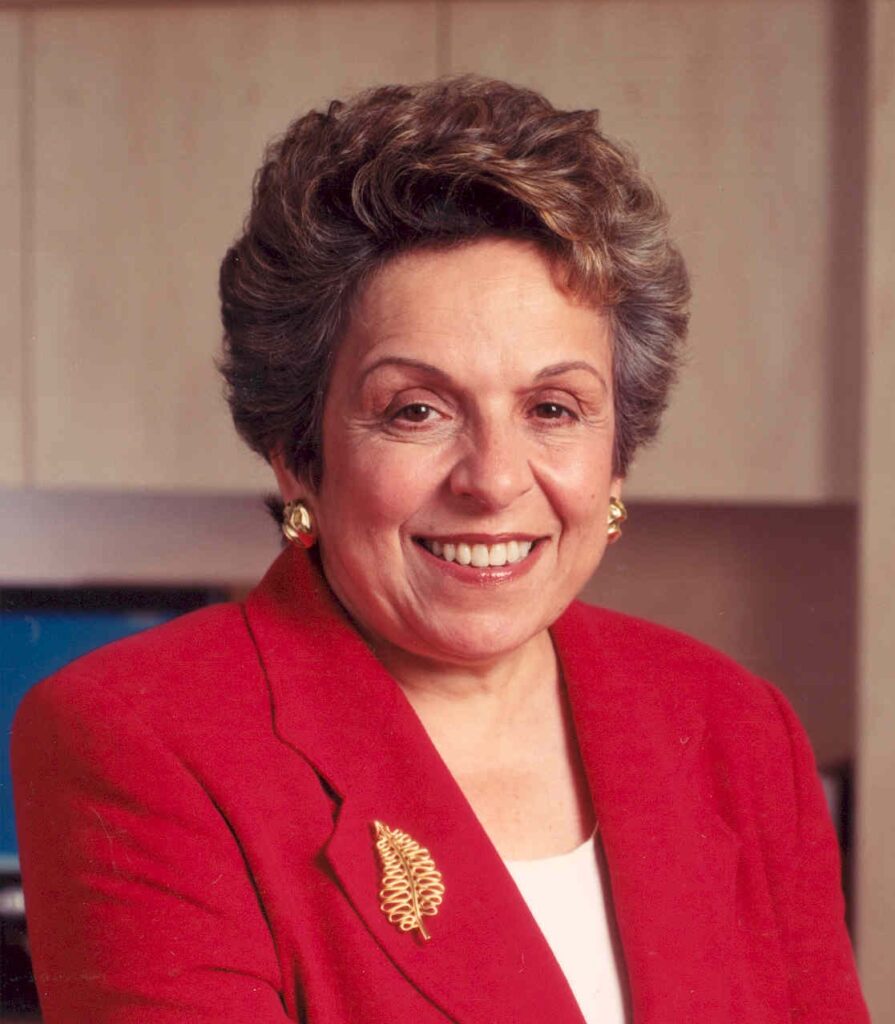
I recently interviewed former Secretary of Health and Human Services Donna Shalala on my podcast, Thirty Minute Mentors. Here is a transcript of our interview:
Adam: Our guest today was the longest-serving Secretary of Health and Human Services in American history. Donna Shalala spent eight years as Secretary of Health and Human Services before spending nearly a decade and a half as the president of the University of Miami and then serving in Congress. Secretary Shalala, thank you for joining us.
Secretary Shalala: Oh, my pleasure, Adam.
Adam: You grew up in Cleveland, and right out of college, you joined a brand new program called the Peace Corps, where you lived in a rural farming village in southern Iran. Can you take listeners back to your early days? What early experiences and lessons shaped your worldview and shaped the trajectory of your success?
Secretary Shalala: Interesting question. Someone asked me the other day what was my favorite position of all the positions I have had, and it was clearly the Peace Corps because it had the greatest impact on me. But how did I get there? When I was a senior in college, I could not figure out what I wanted to do. In fact, I had trouble picking a major. I ended up majoring in history only because that was the one major where I had to take the least number of additional courses to declare that major, because I was so interested in everything else in the liberal arts. So I applied to law school. I applied for a PhD program in political science. I applied for jobs in Congress. I applied for newspaper jobs. I even applied to medical school, which was crazy since I did not have all the sciences, and I got a bunch of acceptances. I also applied to the Peace Corps because it was inspired by John Kennedy, who was president when I was in college, and some of my friends were applying for the Peace Corps. So I laid my acceptances out on my bed the second semester of my senior year, and I only asked one question, and it is the question I have asked throughout my career. What would be the greatest adventure? The answer turned out to be the Peace Corps. So I went off to the Peace Corps, forgoing law school or medical school or a PhD program, because it was the answer to the one question I was interested in as a new college graduate. Of all of the positions I have had, the Peace Corps had the most profound effect on me. I had never traveled abroad. My family was Lebanese, so going off to the Middle East, my grandmother said to my father, who offered me a Mustang instead of going into the Peace Corps, a car, not a horse. She said she is going off to the old country, so it will be fine. She actually gave me a letter to give to the head man of the village. She had no idea where in Iran I was going to be stationed. She had been born in Lebanon and come to the United States at the turn of the last century. So what the Peace Corps did was make me a citizen of the world. It was not just the opportunity to travel. It was the opportunity to live among poor people who cared about their children and their futures, to live in a completely foreign environment, and try to get things done in that environment and relate to a very different culture. Even though I had a little Arabic, I lived in an Arab village in Iran. We learned enough Persian to get by. I taught English at a small agricultural college, which the Peace Corps volunteers basically built, and taught a little rural sociology, but mostly we tried to get the villagers to build schools and to change the agricultural outcomes of the communities around us. The Aggies in the Peace Corps, the young men who I was stationed with, knew everything about growing things and fixing things, and that was a characteristic of young Americans when we first went to the Peace Corps. We knew how to organize. We were relentless in trying to get things done. We had respect for other cultures and other people, and we really cared about the people in the communities where we lived. It gave me a real feel for poverty in other parts of the world, and it taught me to listen to what people’s goals and ambitions were. It taught me some hard lessons: that to get things done, you first had to understand the people in your community and what they really wanted, as opposed to what government might want us to do.
Adam: So much there that I would love to dive into, starting with that central question that you asked yourself then and that you continue to ask yourself over the course of your career: What would the greatest adventure be? That is so different from the question that so many of us ask ourselves early on in our careers. What is the most prestigious job? What will position me best for success? And then as we develop more wisdom, we ask smarter questions like: What will allow me to learn the most? Where can I go and meet the most people? Where can I develop the best network? But you had a completely different framework, and that took you on this incredible journey, not only in your early twenties, but over the course of your career.
Secretary Shalala: It did, and it is the question I have always asked myself, as people came and made offers or as opportunities opened up. Would it be an adventure? Not simply an adventure. Obviously, it was a chance to learn something new. After the Peace Corps, I went off to graduate school. I actually was not thinking about graduate school, but my boyfriend was going off to graduate school at Syracuse, and so I followed him. After a year of traveling around the world, I followed him. He hated it and left, and I loved it and stayed and got a PhD. But then the question was, what was I going to do after that? I was thinking of going into journalism, but there did not seem to be a lot of jobs around. I had edited my junior high school, my high school, and my college newspaper. I had worked for the Scripps Howard paper in Cleveland during the summers, and I was basically interested in journalism, not as much in being a scholar, but I wanted an adventure in New York City, and I ended up going to New York City, and the only jobs that were available were academic jobs. I thought that would be a real adventure, to try to establish myself as a scholar. The rest is history. I went in and out of academia and government, and I would describe my life as an adventure, always overreaching, not necessarily taking positions for which I was completely qualified, but learning the positions, which was part of the adventure.
Adam: You made reference to your career in academia. You made reference to your career in government. You rose to the very top in both of those professions. What were the keys to rising within your career, and what advice do you have for anyone on how to rise within their career?
Secretary Shalala: Never eat lunch at your desk. Network, network, network. Meet lots of people and keep in touch. Students have asked me, how do you get to be a Cabinet officer? I said, look around the room. Figure out which one of your friends is going to run for president, and keep in touch for thirty years. I met the Clintons before they were married, when they were just out of Yale Law School, and we kept in touch over the years. Hillary and I ended up serving on the board of the Children’s Defense Fund with our friend Marian Wright Edelman, who was at the helm at the time, for fifteen years. Much of my career has been affected by friends that I met along the way, by people that I knew and who knew other people who recommended me for different positions. I became a college president when I had never been a dean or a provost, just because some people in New York, when I was serving in the Carter administration, thought I was very capable and could be the president of Hunter College. Talk about overreach, but I learned the job, and they were sad when I left to go off to Wisconsin.
Adam: There are a couple of big lessons there. The lesson about how you landed that first big job in academia, you never know who is watching you. You never know who is out there. It is no different in anything you do. When you were working in government, you had no idea that someone connected to the decision-making process at Hunter College was watching you, and that would help you land that first big job in academia, which set you up for this great career that ultimately helped you become the president of the University of Miami.
Secretary Shalala: Earlier than that, when I was teaching at Columbia, because I was a young Democrat, I got to know the person who ran for governor of New York, Hugh Carey. You just never know about these things. He asked me to join his government because I had helped him. I was a specialist in state and local government, and I helped him put together his staff and organize because the Democrats had not been in power in the state of New York for years. Nelson Rockefeller had dominated New York politics. He asked me whether I would stay permanently, but I was a young academic. I was about to get tenure, and I was applying for a Guggenheim Fellowship, and he said he would find something that I could do. In 1975, I had just gotten tenure. I had a Guggenheim Fellowship for ‘75 and ‘76, and Hugh Carey called and said, we have a problem in New York City. There is a chance it will go bankrupt. I am appointing a panel, and I have been talking to some people, and I know that you are an expert on the financial relationships between states and cities, and you understand fiscal home rule, and we may have to take over the city’s finances, and we certainly have to deal with the bankruptcy. So I am appointing this board with a bunch of bankers and CEOs of companies, and I am going to put you on it. They will think that I am putting you on it because you are a woman, but actually you know the subject matter. So twenty years everyone else’s junior, I got on the Municipal Assistance Corporation panel chaired by the great investment banker Felix Rohatyn, and it changed the trajectory of my career. From there, I went to Washington in the Carter administration, and I had an opportunity to rub shoulders with leaders of New York, the union people, the heads of the major corporations, the real estate leaders, the mayor, and his top people. I was a very junior person on that board in terms of age and experience, other than the subject matter, but Felix did something interesting. He called me in and said, you are going to be on the board. We would like you to be the treasurer. I thought, is he a feminist? I am not going to be the secretary; I am going to be the treasurer. It turned out that the legislation creating this body that was going to issue bonds and save New York City required only the treasurer to reveal their income and fill out a disclosure form. The rest of those guys did not want to reveal their income or their stock holdings or their partnerships. So I got to be the treasurer, which meant I signed these billion-dollar bond issues over the course of two years. I was a signatory on all of these things. I got to be the treasurer of Big Mac, which gave me visibility and a set of contacts that were unbelievable. When I had a chance to go to Washington to HUD as the policy assistant secretary, Felix wrote a letter. He said, you are going to enjoy Washington, but I am going to give you an entree. He wrote a letter to his friend to invite me to a Washington dinner party. His friend was Katharine Graham. So I got invited as an assistant secretary to all of Katharine Graham’s dinner parties, where I met another generation of people in Washington. You have to be in the right place at the right time. You have to work hard. You have to get to the top of your profession, but often it is being in the right place at the right time, making friends, being the kind of person who can get things done, having a sense of humor.
Adam: On the one side of the coin is doing your job well, being really good at what you do. You clearly were excellent at your work, which allowed you to get recognized. And then the other piece is the relationship-building component, building the right network, making the right friends. What advice do you have for anyone listening on how to build successful relationships and how to maintain them over time?
Secretary Shalala: You have to start young, because many of my friends now that I grew up with in New York, by growing up I mean young professionals, we did not have much money, but we celebrated lots of things together. It was the beginning of the second wave of the women’s movement, the end of the peace movement, the second wave of the civil rights movement. We were all involved. We kept in touch, and we helped each other. The men and women I went to graduate school with, we helped each other’s careers. We put each other on panels. We provided opportunities for jobs for each other. Years later, I had an opportunity with one of the people I got a PhD with to offer him a senior position in the Clinton administration as an Assistant Secretary for Management and Budget at HHS. It was that long friendship with someone I trusted who had the skills. A lot of it is networking, getting opportunities, making friends. A lot of people come up to me and say, will you be my mentor. It is not that easy. You have to find people who have the skill and the time to invest in your career. Lots of people helped me along the line. That Hunter job came because I had large grants from the Ford Foundation for studies of educational finance to train a group of PhDs who were going to reform educational finance in the states, and the vice president for education, Doc Howe, who had been in Washington as head of the Institute of Education at HEW, recommended me to the Hunter people because their search had blown up. He knew me as a young academic who had gone to Washington and who had management skills. I have made lots of friendships over the years. I have helped a lot of people the same way people have helped me, and the networking helped. That is why I say to people, do not eat lunch at your desk. Go meet new people. It does not have to be senior people. It can be people of your own generation, because you are going to move up together or sideways or down. It is very important to develop those networks.
Adam: Those are really important points, particularly that last point. A lot of people think that they need to develop a relationship with the most senior, most prominent person they can connect with. Do not overlook the relationships with people your age and younger who can help you grow as you grow. You mentioned your friendship with the Clintons. You became friends with them thirty years before they made it to the White House, and none of us knows where our friends are going to be in thirty years. None of us knows where we are going to be in thirty years. It starts with not being so calculated, helping people along the way, not being transactional, being genuine, being authentic, and the rest will take care of itself.
Secretary Shalala: When I went to my first Cabinet meeting with Bill Clinton, I knew everybody in the room with the exception of Janet Reno because all of us had interacted over the years one way or another. We had been at boards together, nonprofit boards together. We had worked in Democratic politics. We had known each other from the Carter administration. I met Madeleine Albright and Alexis Herman and a whole bunch of people in the Carter administration who ended up in the Clinton administration. You just never know, and you cannot plan your life around that. I remember when John Wiley and Sons recruited me from Hunter College to go out to the University of Wisconsin, Madison, one of the great research universities in this country. My friend Harold Ickes, who was close to the Clintons, called me and said, you cannot go to Wisconsin. You are going to be a Cabinet officer in the Dukakis administration. Who remembers that Mike Dukakis lost that election? I said to him, I cannot plan my life around that. There was going to be an adventure in Wisconsin.
Adam: That is exactly it. The person who makes decisions around what is best for me in my career, what is the most calculated move, does not take that job. The person who says what is the greatest adventure, what is going to be the most fun, what am I most passionate about, takes that Wisconsin job and lets the chips fall where they fall, and they fell the right way for you.
Secretary Shalala: The other thing that I have said to young people is always leave jobs when you still love them, and then you will have very successful job experiences. Do not leave a job when you are tired of it or you think it is time to leave. Leave it when you still love it for another adventure.
Adam: You were Secretary of Health and Human Services longer than anyone, and then you were president of the University of Miami for nearly fifteen years. In your experience, what are the keys to successful leadership, and what can anyone do to become a better leader?
Secretary Shalala: You have to learn how to listen to people and what their goals are. I have always had both long-term strategies and short-term strategies. A lot of people get into leadership positions and they have to do strategic plans, but that does not affect the people who are currently there, whether it is the students, the faculty, or the staff. You have to do things that affect the people who are around you during the time in which you are there, so they sense improvement and that you are serious. When I took on the Department of Health and Human Services, everybody said it is a huge job. Conceptually, it was easy to understand for someone who had come from a research university. In research universitie,s you have powerful deans who have their own constituencies and their own resources. At HHS, I had very powerful departments and institutes, the National Institutes of Health, the CDC, the FDA, children and families, Head Start, and the appointees whom President Clinton gave me control of. I appointed people who were very distinguished in those fields, a Nobel laureate at NIH which they had never had. I said to them, we have to capture the civil service. They have to believe that we are there for good purposes and that we are going to listen to them. I never had a meeting with just the political appointees. It was always with the people with the expertise, the public servants who were there, and we treated them with great respect. I believe in diversity, all kinds of diversity. My Cabinet at HHS did not include just people who went to Ivy League institutions. There were people brought up in small towns and rural areas, people who grew up in poverty. I had an agency head who had rickets as a child. I had an agency head who spoke through a computer because he had cerebral palsy as a child. People from all over the country with different backgrounds. On policy issues, it was important that they brought their backgrounds to the table as we discussed policy. Economic diversity is as important as racial and religious diversity and other kinds of diversity, and I have always felt strongly about that, particularly at HHS. You can find talented people. It irritated people at the White House that I asked only one question, whether they could support the President’s policies and whether they could implement them, and all of them said yes. I did not ask if they were pro-choice or anti-choice. I was a Catholic. I wanted people with different points of view, but we had to support the President’s policies. The President taught me something very important about policy-making. He said, to make good policy and good decisions as a leader, you have to understand people’s lives. I tell my students that now. You have to be respectful, and you have to understand people’s lives if you are going to improve their opportunities. Bill Clinton was a genius in politics, probably the greatest politician of his generation. He really made an effort to understand people’s lives.
Adam: If you are a leader and you are disconnected, making decisions from the ivory tower or the corner office, and it is all academic to you, you are not going to be a great leader. The very best leaders understand people deeply, love people, care about people, and recognize that leadership is fundamentally about people.
Secretary Shalala: You are absolutely right. When I got to Hunter, and also at Wisconsin, I polled the state to find out their attitude about Madison. At Hunter, I polled the students, faculty, and staff. It was fascinating. They wanted the buildings to be clean and safe. That was everybody’s number one priority. So I hired a police chief at the recommendation of the head of security at Macy’s. He looked at the Hunter buildings and said you have the problem Macy’s has, all sorts of entrances. He said, do not hire a cops and robbers person from the police department. Get someone from the Housing Authority Police Department because they know about entrances. The head of the Housing Authority Police Department was retiring and looking for a second opportunity, and we hired him. To get the buildings clean, I hired someone who was head of sanitation at a hospital, and she got our buildings clean. That established more credibility than if I had made some academic move. We did make academic moves that changed the trajectory and the quality of Hunter, but the credibility from listening to people made a difference. In Wisconsin, the community told us we were too liberal, that we did not care about their kids when they came to the university, that their kids could not graduate in four years, and that they were disappointed in the football team. I dealt with all three.
Adam: Disappointment with a football team is something that is a universal issue. You could talk to stakeholders at just about every university, no matter how good the football team is, the team wins a national championship and loses a game the next year, and the fans are disappointed. So that’s an evergreen issue.
Secretary Shalala: Wisconsin was worse than that. They were losing all their games, and they were losing money in the athletic department. So I fired the athletic director and the football coach, to the shock of many people, and we recruited a Wisconsin alum who had lettered in five sports, Pat Richter, who was an executive at a corporation in Madison. I talked him into coming back to the university, and together we hired Barry Alvarez, who turned the Wisconsin football program around. If you go into any bar in Wisconsin and mention my name, they will buy you a drink. I am more famous for that than all the investments I made in undergraduate education or in facilities or in building up the biotech industry in Wisconsin, but it was what people cared about, so I cared about it.
Adam: It really speaks to the importance of customer centricity. Know who your customers are. Know what your customers want.
Secretary Shalala: I have always felt that my customers were the students. At the University of Miami, the dean of students, the vice president for student affairs, and I used to meet every year with the student government leaders, and they would give us their list. At the top of their list one year was free washers and dryers in the residence halls. Everybody thought that was ridiculous, and I asked the vice president for finance to take a look at it. He came back and said, it is a wash, probably. We created free washers and dryers. If you go on the Miami campus and take a tour now, the student tour guide will point out free washers and dryers in the residence halls. It was what the students thought was important, and I always tried to do short-term strategies off their list. One year they wanted ice machines in the residence halls. The vice president for student affairs objected. I said, give them the ice machines. They do not cost very much. It is what they think is a priority. I wanted my student leaders at every university to be successful, and to do that, I had to take their list and treat them with respect.
Adam: That is the way to lead. Take their list, listen, then start planning, then start focusing on what matters.
Secretary Shalala: I built relationships with the legislatures in Wisconsin and Florida. There were Republican legislators and Republican governors, and I had good relationships with all of them. In Wisconsin, I had Tommy Thompson, who cared deeply about the University of Wisconsin, and called me constantly to ask what more he could do. The legislature was trickier. When I arrived my first week, the head of legislative affairs for the university came running in and said a powerful member of the House had just given a speech saying they had hired a woman from New York who drinks white wine and eats quiche. He said, what are we going to do. I said, go find a bottle of white wine and a quiche and send it to him and have it delivered on the floor of the legislative house. He laughed so hard, and everybody laughed, that he became a very good friend, Marlin Schneider. We did not see eye to eye on a lot of issues, but we were friends, and the rest of the legislature loved my sense of humor. They loved that I took the football coach up to lobby for faculty salaries. I treated Republicans in the United States Senate with the same deference that I treated Democrats, and I did a lot of favors for Republicans in the House and in the Senate, which many remember to this day.
Adam: You did not see eye to eye on every issue, but you were great friends. We are never going to see eye to eye on every issue with everyone, and we have a choice. Are we going to view people we do not see eye to eye with as adversaries, or are we going to look beyond that and figure out what we have in common?
Secretary Shalala: I am teaching at the University of Miami now, and one of the courses I teach is in the Executive MBA. We have a healthcare track, and I teach the policy course for doctors and nurses and healthcare administrators in that MBA program. I teach with Alex Azar, the first Trump Secretary of HHS. For the students, it is a wonderful experience, because we want to get to the same place but in different ways. You have to figure out where the place is that you all want to get to. I spent two years in Congress until there was a big redistricting in Florida, but it was a lot of fun. I got very good legislation through working with Democrats and with the docs caucus on the Republican side. There are a lot of doctors who were Republicans, and they were interested in the same things I was interested in, including surprise billing. You go into an emergency room, you are out cold, they call in a neurology consult, they are not in your insurance network, and you get a big bill. It is totally unfair to the patient. We got legislation through that stopped that from happening when the patient gets billed for someone who was out of their network, when they had no control over that and were not informed. We had a big fight within the Democratic side about who was going to pay the bill. Some wanted the doctors and the hospitals to pay the bill. Others, including me, wanted the insurance companies to share some of the costs, which was where many of the Republicans were, and we worked it out. The Republican doctors working with a group of us on the Democratic side worked out a compromise and passed a bipartisan piece of legislation that was important to people in the healthcare area.
Adam: Secretary Shalala, what can anyone listening do to become more successful, personally and professionally?
Secretary Shalala: They have to understand people’s lives. They have to network. They have to have goals. Mayor Wagner taught me a very important lesson about management. He said everybody thinks I am a slow decision maker, but the truth is I am patient. If I pick up a rock and there is something horrible under it, most people would jump on that immediately. Sometimes I put it down and see if it works itself out. You have to like people. I do not care whether they are Democrats or Republicans, whether they are to the right or to the left, you can find what you jointly believe in. Everybody cares about their kids and their kids’ futures. Maybe we want to do it somewhat differently, but we have to understand why people do not want to get vaccines. What are they worried about? Who do they listen to? Who are the honest brokers in the community? For leadership positions, you have to learn how to organize people, how to listen to them, and how to keep moving. My philosophy has always been, if I hit a brick wall, I turn around and go in another direction, because there is plenty to do. I might not be able to do that thing now, but maybe later. And make friends. I cannot tell you how many small things I did for people over the years, and how they write me letters years later saying how it changed their lives because I listened to someone or tried to solve a problem for someone, or gave someone advice.
Adam: You shared so much incredible advice today. Thank you for all the great advice, and thank you for being a part of Thirty Minute Mentors.
Secretary Shalala: Thank you, Adam. It has been a pleasure.