
An employee engagement speaker is a professional who helps organizations improve team connection, communication, and performance by providing leaders with practical tools and frameworks they can apply immediately. Unlike a motivational speaker who focuses on short-term inspiration, a workplace engagement speaker focuses on lasting behavioral change across teams and leadership.
Only 31 percent of workers in the United States are actively engaged right now. That is the lowest number we have seen in over a decade, and Gallup puts the price tag at roughly $2 trillion a year in lost productivity. I talk to leaders constantly through Thirty Minute Mentors, and the pattern is hard to ignore. Disengagement does not just hurt morale; it quietly chips away at performance, retention, and the kind of culture that takes years to build.
What makes 2026 particularly difficult is that teams are dealing with several things at once. AI is reshaping daily workflows; younger workers are bringing new expectations around purpose and transparency. And many organizations are still feeling the aftershocks of years of uncertainty and restructuring. A company-wide email or an annual survey is not going to turn that around. The right speaker can help leaders take the first meaningful step toward rebuilding that connection.
Not all speakers approach this the same way, though. If you are thinking about bringing in an employee keynote speaker, this guide will help you figure out what actually matters in that decision and what to watch out for.
Why Employee Engagement Is a Leadership Issue, Not an HR Issue
There is a tendency in a lot of organizations to hand engagement over to HR and hope for the best. New survey tools get rolled out, recognition programs launch, and leadership moves on to the next priority. But workforce engagement does not change because of platforms or programs. It changes when leaders change how they show up. The ones I have watched build cultures people genuinely want to be part of are the ones who lead with clarity, consistency, and real care for the people around them.
Gallup’s own research on employee engagement and workplace performance supports this. Managers influence about 70 percent of the variance in how engaged a team feels. That single finding should reshape how every organization thinks about employee motivation, because it tells us the answer is not a better app or a new perk; it is better leadership.
And the stakes keep getting higher. Gen Z now represents a significant and growing share of the workforce, bringing expectations around meaning and transparency that feel very different from what leaders dealt with five or ten years ago. Hybrid fatigue is wearing people down. AI is creating anxiety about roles and relevance.
Organizations that treat engagement like a checkbox will keep losing people, while those that treat it as a leadership responsibility will retain talent and outperform.
If you want to explore how I approach these conversations with teams and leaders, take a look at my leadership assessment as a starting point.
Take the Free AssessmentWhat Does an Employee Engagement Speaker Actually Do?
An employee engagement keynote speaker gives leaders and teams something tangible to work with after the event ends. That could be a framework for running better one-on-ones, a new lens on how recognition actually works, or a clearer understanding of what accountability looks like when it is practiced and not just talked about.
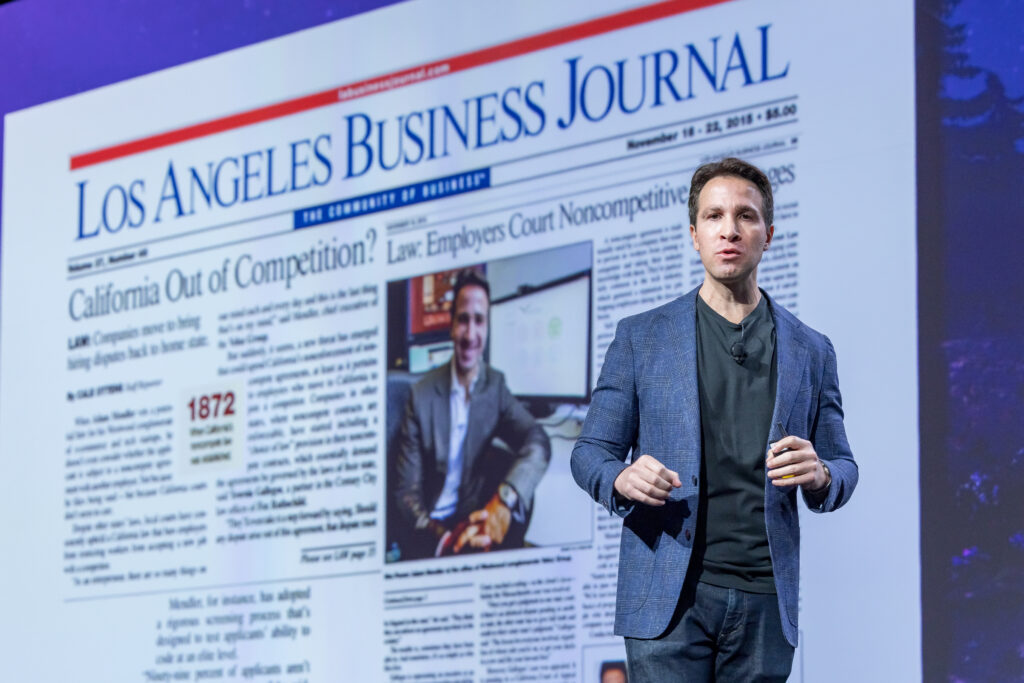
The format you choose also changes the outcome quite a bit. I have delivered full keynotes, led smaller workshops where people roll up their sleeves, and done fireside chats that felt more like honest conversations than presentations.
But regardless of format, the piece that makes the biggest difference is what happens before I step on stage. I spend real time understanding the audience, their challenges, and what a win looks like for the client. That preparation is what turns a decent speaking engagement into one people still reference months later.
How to Choose the Right Employee Motivation Speaker for Your Event
When you are looking to hire an employee motivation speaker, it is tempting to go with the most polished reel or the biggest name.
But here is something I have learned from being on both sides of the booking process. The speakers who leave a real mark are not always the most famous ones. They are the ones who pick up the phone weeks before the event, ask about your team, and build something that actually speaks to the room.
So when you are vetting someone, ask them straight up how they plan to make the content relevant to your people. Ask whether they have actually led teams and businesses or if they only teach theory and look at what previous clients say about the experience. Feedback from real event planners and organizational leaders will tell you more than any list of credentials ever could.
One more thing worth asking about is what happens after the keynote. Does the speaker provide frameworks or tools your team can keep using? If the value ends when the speaker walks off stage, that should tell you something.
What I Bring to the Stage as an Employee Engagement Speaker
My take on engagement is shaped by something most speakers simply do not have access to. Over the past several years, I have sat down with more than 500 of America’s top leaders through Thirty Minute Mentors, including Fortune 500 CEOs, four-star generals, and Olympic gold medalists. Those conversations have given me a deep and very practical understanding of what keeps teams connected, motivated, and performing at a high level.
I also teach leadership at the graduate level at UCLA, have led businesses across multiple industries, and have been published in Forbes, Inc., and HuffPost. When I speak about engagement, it is grounded in years of actually doing the work alongside studying it.
The part that clients bring up most often, though, is the preparation. One event organizer put it this way: “Adam spent time with our Speaker Committee doing his due diligence and researching our audience so that he could tailor his remarks and really connect with attendees.” That kind of preparation is also why I keep things simple on the logistics side.
If you are in the middle of planning an event and want to talk through what would work best for your audience, feel free to reach out to me directly. No pitch, just a conversation.
Get in TouchFrequently Asked Questions About Hiring an Employee Engagement Speaker
When should you bring in an employee engagement keynote speaker?
You should consider it when engagement scores keep dropping and the usual fixes are not making a difference. Other strong signals include rising turnover or burnout, teams feeling disconnected from each other, especially in remote or hybrid setups, leadership struggling with communication or trust, and morale taking a hit after a restructuring or change in leadership. If two or three of those sound familiar, it is probably time to have the conversation sooner rather than later.
What does an employee retention speaker talk about?
Employee retention speakers typically cover leadership, workplace culture, communication, trust, recognition, resilience, and adaptability, all focused on improving team performance and retention. But the topic list matters way less than whether the speaker actually bothers to understand your audience before building the talk. I have seen great topics fall flat because the speaker treated every room the same. A lot of organizations also look for a corporate culture speaker or an employee retention speaker, and in most cases, a strong engagement speaker already covers those areas.
How much does it cost to hire an employee motivation speaker?
The cost of hiring an employee motivation speaker typically ranges from a few thousand to tens of thousands of dollars, depending on the speaker’s experience, the event format, travel needs, and the level of customization involved. Some speakers charge a flat rate. Others build pricing around the scope of work. My advice? Skip the guesswork and just pick up the phone or send a note. A five-minute conversation will tell you more than an hour of Googling fee ranges.
Can an employee engagement speaker work with remote and hybrid teams?
One hundred percent, I do it all the time. And I will tell you something that surprises a lot of event planners. Virtual audiences sometimes get more out of engagement content than in-person ones because the problems are more acute. When your team is scattered across cities and time zones, the cracks in communication and connection show up faster. A strong speaker knows how to reach people through a screen just as well as from a stage.
How do I measure the impact of an employee engagement keynote?
Here is what I tell every client. Do a simple pulse check before the event. Ask five or six questions about how connected people feel, how clear their role is, and how supported they feel by leadership. Then ask those same questions three or four weeks later and compare. Look at your retention numbers. Talk to your managers about what they are noticing. If people are showing up differently in how they collaborate and communicate, that is your answer. Standing ovations are great, but changed behavior is the whole point.