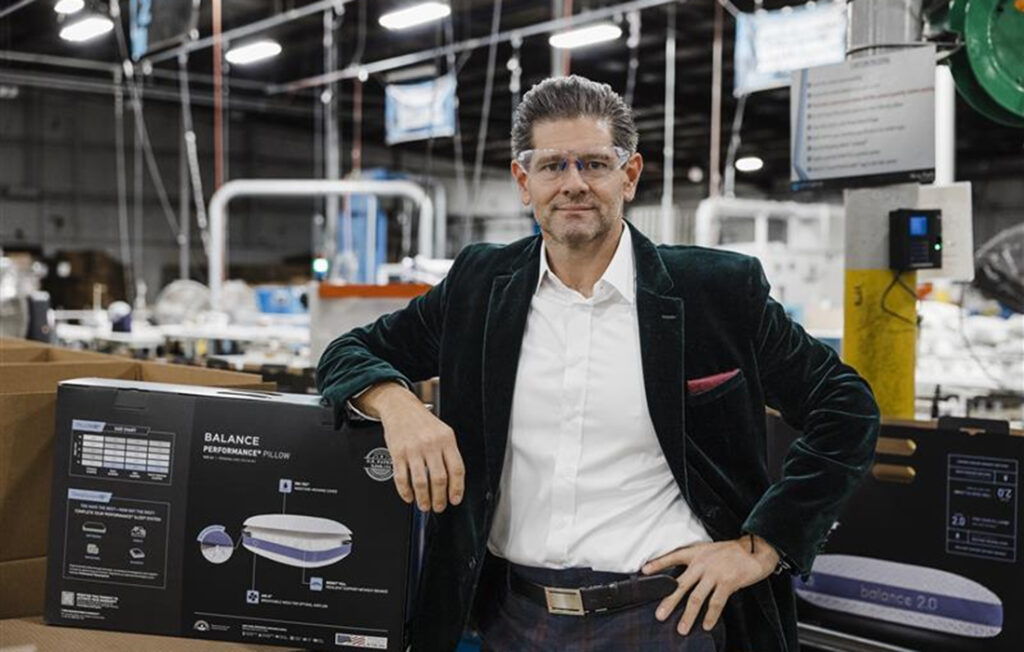
I recently went one-on-one with Eugene Alletto, founder and CEO of BEDGEAR.
Adam: Thanks again for taking the time to share your advice. First things first, though, I am sure readers would love to learn more about you. How did you get here? What experiences, failures, setbacks, or challenges have been most instrumental to your growth?
Eugene: I got here by refusing to ever be a victim. Losing my father at a young age taught me lessons that no school or business course could ever teach: resilience, responsibility, and the unshakable belief that giving up was never an option. My mother, who became both parent and mentor, drilled into me the idea that success starts with people. If you can convince even one person to believe in you, to invest their trust and time in you, then you have the foundation to keep going.
Every setback, every rejection, every “no” along the way became fuel for growth rather than a reason to quit. I failed more times than I can count, but each failure was a lesson in disguise. One of the most important things I learned early on is that growth doesn’t come from avoiding mistakes: it comes from embracing them, dissecting them, and using the lessons to get smarter, faster, and stronger. That mindset of perseverance shaped me not only as a leader but also as a builder of businesses. It taught me that the true measure of success is not the absence of difficulty but the ability to respond to difficulty with creativity, grit, and heart.
Adam: In your experience, what are the key steps to growing and scaling your business?
Eugene: Clarity of vision comes first. You cannot scale chaos; you scale systems. For me, that means aligning every team, every decision, and every action around a simple but powerful promise: performance, not just product. Everything we do at BEDGEAR is grounded in that commitment, whether it’s product development, customer service, or operational efficiency.
Scaling a business is not about chasing every shiny opportunity. It’s about methodically building the right foundations. Educate your customers about why your product matters, educate your team so they can deliver on the promise, and always make sure every decision has a measurable ROI. Growth is not magic; it is method. Every investment, be it in marketing campaigns, technology, or even the layout of our warehouse, must generate a return, whether tangible or strategic. Scaling successfully is about connecting the dots between vision, execution, and measurement consistently over time.
One of the things I stress with our leadership team is that growth without discipline is dangerous. You can double sales, expand into new markets, and increase revenue, but if your systems aren’t built to handle it, the foundation collapses. For me, scaling successfully has always been about connecting the dots between vision, execution, and measurement consistently over time, and ensuring that every person in the company understands how their role directly contributes to that growth.
Adam: What do you believe are the defining qualities of an effective leader?
Eugene: An effective leader is resilient, solution-focused, and empathetic. Leaders are like quarterbacks: they call the plays, see the field, and keep the team moving forward even when the hits come fast and hard. Resilience is about bouncing back, but it’s also about anticipating challenges, staying calm under pressure, and maintaining faith in your people.
Empathy is equally critical. It’s not enough to make decisions. You have to understand the impact those decisions have on your team, your customers, and your community. Boldness is essential – you must be willing to take calculated risks – but so is humility. You cannot lead effectively if you are unwilling to listen, admit mistakes, and adapt. And perhaps most importantly, an effective leader is relentless. You get knocked down, you learn, and you get back up again, and you make sure your team does the same. Leadership is a marathon of consistency, courage, and care.
A leader who can maintain focus while showing humanity will inspire loyalty, creativity, and high performance in ways that simply giving orders alone never could.
Adam: How can leaders and aspiring leaders take their leadership skills to the next level?
Eugene: You level up by staying curious and committed to growth every single day. Leadership is not a destination; it’s a practice. Keep learning, keep experimenting, and build environments where feedback is not feared but actively sought. Encourage dialogue that challenges assumptions because growth often comes from perspectives you didn’t consider.
Another key principle is efficiency in execution. You don’t need to reinvent the wheel every day. Instead, focus on making the wheel roll faster, smoother, and longer. Refine processes, optimize performance, and inspire your team to do the same. Elevating leadership skills is about marrying vision with execution. Seeing what’s possible, then methodically and collaboratively making it happen.
I also encourage leaders to seek mentors and build a network of peers who challenge them. Learning doesn’t happen in isolation. Exposure to different industries, different leadership styles, and different problem-solving approaches will broaden your perspective and accelerate your own growth.
Adam: What are your three best tips applicable to entrepreneurs, executives, and civic leaders?
Eugene:
- Be solution-driven. Problems are inevitable, but dwelling on them accomplishes nothing. Identify solutions quickly, implement them decisively, and learn from the results. Every problem carries a hidden opportunity if you are willing to find it. A solution-driven mindset builds momentum, confidence, and trust.
- Be additive, not disruptive. Too often, leaders focus solely on disruption for disruption’s sake. Instead, aim to elevate the industry you’re in. Improve standards, enhance experiences, and create value beyond your bottom line. True innovation grows industries; it doesn’t just break them. Think about your legacy: are you remembered for tearing things down or for building something meaningful that lasts?
- Think ROI in everything. This doesn’t just apply to dollars and cents; it applies to time, energy, and effort. I even apply ROI to something as mundane as toilet paper, and I challenge anyone who wants to hear it to ask me about my formula. There is always a return if you look hard enough, whether it’s optimizing efficiency, customer experience, or team productivity. Measuring impact keeps you accountable and ensures that every action drives meaningful progress. It forces you to consider the value of every choice, big or small, and encourages smart prioritization.
Adam: What is your best advice on building, leading, and managing teams?
Eugene: Hire for character first and skill second. You can teach talent, but you cannot teach integrity, curiosity, or drive. Culture beats the perfect resume every time. Once you have the right people, your job as a leader is to set clear expectations, provide the tools and support necessary to win, and hold everyone accountable, including yourself.
Teams thrive when everyone believes they are part of something bigger than themselves. When individuals feel connected to a shared purpose, collaboration flows naturally, creativity thrives, and results follow. A strong team is built not just through policies or structures, but through shared values, trust, and mutual respect. Leaders must also recognize that each team member is unique and adjust their approach to maximize each person’s strengths. That’s how you turn a group of individuals into a high-performing unit.
Adam: What are your best tips on the topics of sales, marketing, and branding?
Eugene: Educate instead of selling. Push products, and people feel pressure. Teach people, and they feel empowered. Branding is not about appearances or trends; it’s about trust, clarity, and identity. People need to understand what you stand for and why it matters.
When your messaging is simple, authentic, and backed by performance, you build loyalty, not just transactions. Educated customers become advocates because they believe in your mission, not just your product. Marketing, at its core, is about creating understanding and fostering relationships that last. Focus on value, not vanity. Make every interaction an opportunity to teach and demonstrate your commitment to performance and integrity.
Adam: What is the single best piece of advice you have ever received?
Eugene: Never be a victim. Life, business, and leadership are filled with events outside your control. The only thing you can control is your response. If you commit to moving forward no matter what, you will always find a path through the obstacles. Ownership of your actions and resilience in the face of adversity define whether you succeed or stagnate. Victimhood leads nowhere; agency leads everywhere.
I’ve seen it time and time again: people who lean into their challenges, take responsibility, and find solutions create momentum not just for themselves but for everyone around them. That mindset of refusing to be a victim is one of the most powerful foundations a leader can have.
Adam: Is there anything else you would like to share?
Eugene: Culture is not an accident. It is a choice. At BEDGEAR, we realized early that the people who stay, grow, and thrive share the same defining traits: humble, hungry, curious, clever, committed, and humanitarian. These are not slogans; they are filters for hiring, performance reviews, and accountability.
Every end-of-year review asks: Are you balanced in these traits? Are you demonstrating them in your work and interactions? Culture is not just felt; it is spoken, reinforced, and lived. Words are powerful: they shape behavior, influence decisions, and define identity. When a team internalizes shared values, success ceases to be luck. It becomes culture manifested: a deliberate, tangible force driving every decision and every outcome.
At the end of the day, the organizations that thrive are those that make intentional choices about the people they hire, the behaviors they reward, and the standards they uphold. A strong culture attracts talent, retains top performers, and multiplies impact. Everything else flows from that foundation.