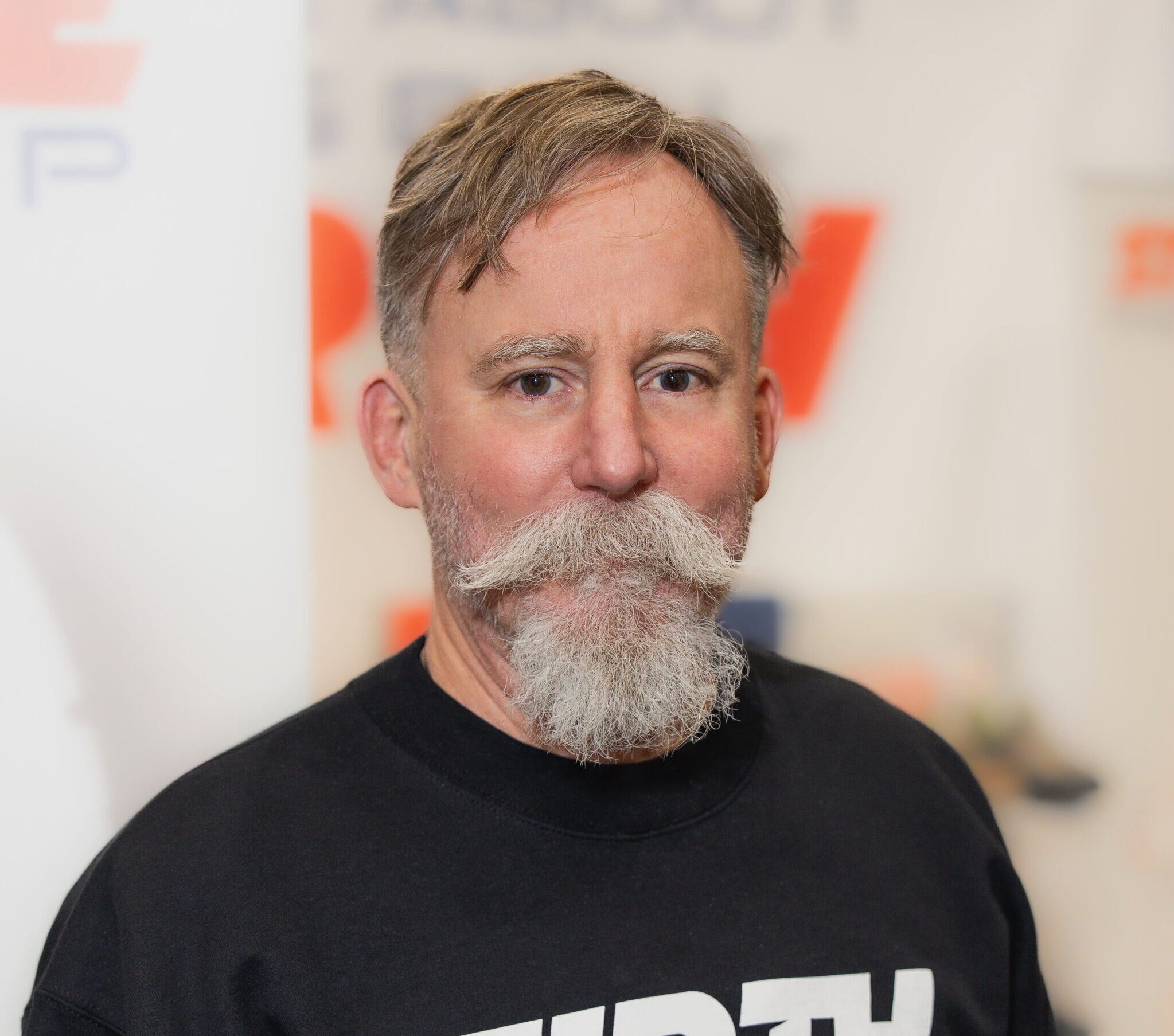


I recently interviewed Booking CEO Glenn Fogel on my podcast, Thirty Minute Mentors. Here is a transcript of our interview:
Adam: Our guest today is a Fortune 500 CEO and the leader of a company valued at more than $180 billion. Glenn Fogle is the CEO of Booking Holdings, the world’s leading provider of online travel and related services, and the parent company of Booking.com, Priceline, Agoda, Rentalcars.com, Kayak, and OpenTable. Glenn, thank you for joining us.
Glenn: Well, thanks so much for having me.
Adam: You grew up in Port Chester, New York, and from a very early age, you were driven, but your path to success hit a big speed bump when you were 17, and you suffered a debilitating stroke. Can you take listeners back to your early days? What early experiences and lessons shaped your worldview and the trajectory of your success?
Glenn: It’s interesting you bring that up. A long time ago now. I remember it like yesterday, really. I was a junior in high school. It was towards the end of the spring period, maybe it was about April or May, and I woke up one day, and something was very wrong. Long story short, it was a left temporal lobe stroke, completely paralyzed on the right side, that went away fairly rapidly. But the problem was, on the left side, that’s where a lot of your language capabilities are. And I couldn’t speak, not because my mouth wouldn’t move, but the words were gone. And I couldn’t read. I couldn’t write. It was something where I had been doing very well in high school and had expectations. And, you know, in the fall of my senior year, I’d apply to colleges. Everything would be great. Everything was looking good. I’d already taken my SAT scores. I’d done very well. And so I went from that to nothing. And that’s a bit of a shock. And it took a long time to come back, but I worked very, very hard. And nine years later, I was able to graduate from Harvard Law School with honors. So it’s wonderful that the brain, particularly when you’re young, has such a tremendous amount of plasticity. So while even now, if you did an MRI on my brain, you’d see the areas that are dead, gone. But the brain, other parts were able to take over, and it’s turned out okay.
Adam: It really is a metaphor for the power of the human spirit and how much resilience we have in us. And if we can unlock it, that will allow us to get to a level that we may not even realize we’re capable of getting to.
Glenn: I agree with that. It’s also an issue that, I mean, everybody goes through issues, problems. You know, there’s a book I read when I was in college that was a biography of Jim Morrison, the lead singer of The Doors. And the title of the book was Nobody Gets Out of Here Alive. Nobody gets out of here without having issues or problems or something you have to overcome. For me, it came at 17. Other people have much younger, you know, when they’re very small children or later, or certainly as we age and we face different difficulties. We always have to recognize that life is never going to be a nice linear upward trend. There are going to be drops. And then the key thing is, how do you deal with it? And that’s really what will make a difference in your life.
Adam: How have you dealt with those challenges that you faced? Because you were enjoying a linear path to success after that debilitating stroke, and after you were able to recover from it. Undergrad at Wharton, Harvard Law School, really successful career as an investment banker, and then that linear path to success flatlined. How did you deal with that flatlining? And what advice do you have for anyone listening on how to ultimately manage and navigate the really difficult challenges that they inevitably will face?
Glenn: Yeah. So, I mean, what’d be interesting is actually to unpack that, you know, linear upward trend, which wasn’t linear upward at all. So I came out as an undergraduate, and I started working in an IT department. So I was a coder, I was doing IT work, and I wasn’t very good at it. I was okay. But I realized that’s not what I want to do in my life. And it was the back office of a bank, Morgan Stanley. And I see those people who are in M&A doing all the deals, and I want to do that. And I said, How did I end up here? Because I did have a finance degree from Warren. So that’s when I stopped doing that. And I left that, and I went to law school, came out, and started working as an investment banker at a place called Kidder Peabody. And I joined it and, you know, in a few years, you know, unfortunately, I was part of a large group who were let go, which is a polite way of saying being fired. So I was fired from work. I didn’t work for a couple of years. That was not so great. But it certainly taught me a little bit about what it’s like to get fired. So now, as a manager, senior manager running a company, when we do have to let people go, knowing how that affects people certainly helps me, hopefully, I believe, do a better job when it is necessary to make changes in personnel. And I did get another job. I ended up being a trader at Patty Morgan Stanley. I’ll tell you that also just wasn’t that exciting to me. So I took a job because the internet was in its infancy in the late 90s. It was 1999. I said, OK, I’m going to get this job. I want to be on the internet. I want to be part of that whole new wave. And I knew, obviously, I knew a little bit about IT and had a background in banking. So I got a job at a place called Priceline. They said, guys, I don’t want to take the job, though, until I get my bonus for 1999, which gets paid end of February 2000. They said, Fine. So I arrived at Priceline.com in February 2000, which is one week before the NASDAQ peaked and the Internet bubble became the Internet bust. And I mean, it just proves I shouldn’t be a traitor. Because I just got on the internet like big time at the peak. So I think you know from your days at D.E. Shaw, I mean, that’s called top ticking a trade. So I topped the trade. And during that year, during that year, the stock went down to the equivalent now of six dollars a share, six dollars a share. Even my mother thought we had gone bankrupt, which obviously was not the greatest career move at the time. So it seemed. Now, 25 years later, I’m still the same company. We changed the name. We’ve done a lot of different things. I’m still here. And now our stock price is way up and, you know, bounced around a little bit, but we’re in the five thousand. So, and it’s been nice, you know, recently looking at it, we’re going closer and closer to 6,000. So let’s do easy math. That’s a six to 6,000 would be a thousand times increase over 25 years. That’s a 30% CAGR, and everybody says, Wonderful. And I’m like, it’s wonderful today. I assure you, it was not a straight line from $6 to, you know, up almost $6,000. It was a lot of problems, issues you had to deal with, but so far, knock on wood, today, it’s good. Tomorrow, who knows?
Adam: Wow, I really appreciate you unpacking your journey. Can you unpack how you were able to help take Priceline from a $6 stock to where it is today, a thousand times what it was when you joined the company?
Glenn: There are a lot of factors that go into these success stories. And what I find interesting when I read about some of them, many times they’re reduced to the hero journey, and that person has somehow moved mountains and created, and I’m smiling, thinking, nah, that’s probably not how it really happened. Because the truth is, first of all, the biggest reason is going to be a lot of things that you have no control over. You had nothing to do with it, yet it helped get the company and you to where it is today, and you had nothing to do with that. That’s one. The second thing is, you’re never alone. No sports team has ever won a championship because of one person, okay? Even if you’re in a soul sport, let’s say tennis, okay? Well, it’s not just the player. The player has a whole entourage. It’s got trainers, coaches, everybody helping together. It’s always a team. Nothing is done by a single person. So, I was part of a great group, and I’m still part of an incredible group that, together, we have been able to create what is very successful today. But we know that it wasn’t just us. We know there are many other things that came in, and I’m very thankful for them, but I’m not going to go around saying how great we are. We’ve done a lot of hard work, and we got lucky. That’s a word that people don’t like to use a lot in terms of explaining your success. We can call it randomness if you don’t like the word luck, but I know in my heart of hearts, I know how much we were very, very fortunate.
Adam: So, if you were to remove the luck from the equation, which is clearly a major factor in success, what were the elements that you did have control over? You personally, as the leader, and your team, your organization, what were those variables that led to this enormous success?
Glenn: Depends on which part of the journey you’d want to focus on. Surely, the early parts of the journey were recognizing how important cash flow is, because at one point, we were almost out of cash. And that can create an incredible amount of discipline and concentration on what really matters. So for our business, which is the travel business, we recognized very early that the most profitable part of the business was the hotel business. So that’s where we really focused, where some other competitors were spread out among many of the different elements of travel, flights, car rental, and other things. But we really concentrated on the hotel part up front because that’s where the money was. So that’s a discipline that helped us a great deal. Later on, we recognized that there were a lot of things we didn’t know how to do. So we needed to either build them on our own or go out and acquire companies that had that expertise. And I was fortunate because I was running, at the time, it was our European efforts, and finding a couple of very, very small startups that had some incredibly smart, good people in them, and being able to convince them to join with us to create something much bigger and much better. So that was one. And then continue to look, where are there other opportunities to bring in things that would add to the value to either our traveler customers, that’s one side of the equation, or our supplier customers, the hotels, the airlines, the car rental companies, et cetera, be able to add value to that. And as long as we continue to look, how can we provide more value to both sides of the marketplace? That’s how we can continue to improve, and that was a way to get more customers. And of course, there’s a bit of a flywheel. The more customers you have on one side, the better it is on the other side. It works both ways. More suppliers give more selections to the traveler. More travelers provide more opportunities for business for the suppliers. It continues to compound on itself. And basically, it’s fairly simple in that concept, but it’s a lot of hard work actually making it work.
Adam: And Glenn, right at the heart of what you’re describing is an unconventional strategy, a strategy that you then pioneered largely because you didn’t have another choice, in that you went out and acquired other companies to help create this massive conglomerate known today as Booking. Can you share a little bit more detail about your approach to acquiring companies? No one has a better track record than you and booking when it comes to acquiring companies and not only acquiring them, but ultimately integrating them into your organization. What do you look to do, and how have you been able to do it so successfully?
Glenn: So, a couple of things on that. One is, I don’t like the word acquire much. It sounds like you’re taking something. I think it’s more like partnering, particularly the way we did things, because what we’re doing is getting entrepreneurs to join our band. Come join our band, be part of our band, one. Two, and this is pretty important, what are we looking for? I’m always looking for people. It’s everybody’s got great ideas, right? But who is actually executing? And those first two that were really important, Active Hotels in 2004, Booking.com in 2005. Active was based in the UK, and Booking was based in Amsterdam. And we did Active first and then Booking, but being able to convince them to be together with us, they were very small at the time, so the total amount of money we spent was $165 million. On the active transaction, $135 million is on the booking transaction. So we’re talking $300 million roughly for both of them. But what we do is we incentivize the people, these entrepreneurs, to say, we want you to come. We’re not asking you to just hand over the keys. We want you to actually just stay and help build this. And we incentivize them in a way that if they were successful, they would do much better down the road. And that was the way they glued to keep it all together. Now, as you mentioned, over $180 billion. So people say, Oh, you built it by acquisitions. I said, well, look, we were able to get some really smart people to come and join us 20 years ago when they were really small. So, trying to ascribe the success to that, yes, it was an element. But they were time companies. In fact, the company was losing a lot of money at the time we got them to join. They were losing cash. That was amazing, which is part of the reason why they were willing to join with us. And now to get here, so a lot of it was not, yes, to start to bring them together, but then it was working together and being able to continue to innovate new things over the last two decades. You know, the world has changed so much since Back in that day or back when I first joined, just for example, I’ll bet a lot of your listeners probably never ever had an actual airline ticket that had this red carbon backing to it. It was like the weirdest thing. They probably never had that. We actually had to print those things. We actually had printers printing out airline tickets that you had to mail to somebody. The world has changed a lot since then, and we’ve always had a change with it. And now, change seems to be faster than ever.
Adam: As a leader, how can you create a culture of innovation? How can you create a culture of agility, a culture that is nimble, a culture that not only adapts to change but helps drive change?
Glenn: You know, it is so hard to do because when you’re doing well, a lot of time there’s an instinct, well, this is working so well, why should we change? It’s all working great. It goes back to that Gretzky saying about, you know, you’ve got to skate to where the puck’s going to be. We all know it. And it’s easy to say it. It’s easy to think about it. It’s much harder to actually get people to do it because that’s a risk. What if you’re skating the wrong way and that’s not where the puck’s going to be, right? And so being able to convince people of the need for change is a hard thing to do. One way that I’ve been doing over the last couple of years is just reminding people of companies that, at one time, were the height of success, and then they disappeared. And I use examples that are within people’s memory. So I’ll bring up things. I’ll say, did you ever have a BlackBerry? Oh, yeah. Did you ever have a Nokia? Oh, yeah. And we can go through a whole list of them. And the fact is that it helps at least remind people that just because things today are great, there’s no law that says tomorrow’s going to be as good. And if we’re not going to be fast, agile, and adapt to changes, look what’s happening now with AI. I mean, if you are not actively working with the changes in the world of generative AI, you will disappear, I am certain. It’s that fear of being left behind that helps instigate that desire to change.
Adam: The first company that came to mind for me, Blockbuster. I did an interview with the former CEO of Blockbuster, Jim Keyes. And as a kid, I spent a lot of time at Blockbuster, and actually, in my twenties, living in New York, I would go to Blockbuster and not anymore.
Glenn: So think about that one. That’s a great case study because the management knew what was going to happen, and they actually wanted to change. They wanted to make that change. And because of the structure and the dealing with the franchisees and all that, I’m sure you’re well familiar with the story, et cetera, they were not able to make that change. So it’s even imagined that, you know, you know, you need to change, but it’s so difficult to do it sometimes. And that’s a good case of one. In fact, I just read recently, I think the very, very last blockbuster just closed down a few months ago, I think.
Adam: So if your organization understands how important it is to innovate, to drive change, that fear has been instilled in them. What do you do next?
Glenn: Well, look, it’s problematic too, because just because the organization is facing a threat, you have human beings. And human beings are thinking not only about their team, but they’re also thinking about themselves. So you’ll have that issue. And that’s really hard. And then that can cause all sorts of issues within the entire organization when you recognize that a certain area of change is going to be disruptive because it’s going to hurt people. So let’s give a simple example of this, which is plainly obvious to see what the issue is, but it’s not easy when you have to do it. We operate over 40 languages globally, and we have done that for a very, very long time, over 40 languages. So back in the day, we used to have human people who did translations. So you get content information about, say, a hotel. Well, you’ve got to turn it into 40 languages so people in other languages can read about what this hotel is like and get a reservation. Well, technology advances, and all of a sudden, you don’t need human beings as much. In fact, now you don’t need human beings at all to do a good translation, basically. What happens to those people’s jobs? Well, you’re saying, we’ve got to change. We’ve got to bring in the technology. What’s going to happen to them? So they’re thinking, well, I’m not sure I like this change so much. And these are issues that you deal with all the time as you continue to change. So you also think, how are you going to handle it with people? How are you going to deal with that in terms of the entire organization, who are not translators, but they see that and they’re concerned. Because they know there’s going to be more change. For some people, people can adapt within the organization. For example, you’re a technical person and you’ve been coding, I don’t pick anything, Python or whatever, Java. Now you say, actually, I want to be an AI specialist, and you learn new skills and all that, and you can do that, and that’s fine, and that’s transferable and good. But sometimes it’s not. For example, that translator, well, some may be able to change, do other things. Some may not be able to. And now, what is your responsibility as an organization to help those people move on with their lives? They won’t be part of our organization; somewhere else. And how are you going to do it? What is appropriate? What is fair? What is just? These are very complicated issues that companies have been dealing with for a very long time. But right now, with all the changes that are happening so rapidly, so quickly, it’s something that we all as a society are going to have to deal with. And I’m concerned about; there’s nothing that we can do in terms of stopping this rapid change. But I’m concerned, are we dealing enough with how we will treat people with these changes?
Adam: What advice do you have for leaders on how to deal with the exact issues that you’re posing?
Glenn: Well, one thing is that’s a good thing. If you’ve been fired, you have some good ideas of how people should treat you when you get fired. You’ve been through that, so you kind of know how not to do it if it was a bad event. So what is this? Obviously, one is you need to do is to have a financial package that will give them the ability to move on to something else. It’s got to be a fair thing. And you’ve got to do it in terms of a time thing that enables people to adjust and adapt. When I was let go as a banker, it was literally, if you’ve seen the movie Margin Call, it was exactly like that. You are brought to a room, and you say, Thank you very much for playing. That nice big man over there will help escort you out of the building, and the stuff from your desk will be sent to you. You’re not even making a trip back to where your coat was, basically. You’re out there. That is not a very, let’s say, human way to deal with what is a very, very disruptive thing, traumatic to some. We’ve been through a number of times we’ve had to let people go. Time I’ve been CEO; it’s been a few times. Obviously, we had the horrific pandemic. We had negative revenue. I mean, negative revenue, what’s that? Well, negative revenue is when you’re refunding more than you get from new sales coming in. When you have no business, what are we going to do? So it’s something, though, you have to do it thoughtfully, carefully, and treat people with the respect they deserve. And by the way, I recently was reading some things in some financial newspapers and magazines, and reading about some CEOs of some very, very big companies. And the way the articles portrayed it, and I don’t know what really was true or not, but it sounded almost as bragging or being very proud of how many people they let go or how they continue to reduce their headcount, et cetera, et cetera. I would never feel good. About something like that. It’s necessary. But I’ll never be proud of it. I’ll never feel good about it, letting people go. Now, if it’s happening over attrition, that’s a different thing. You know, it happens because technology changes, but I don’t have to feel good about it because I know people are hurting.
Adam: Glenn, what you’re really speaking to is an essential characteristic among the very best leaders. Empathy, the most successful leaders care about not only the people they’re leading, but also care about people, period. What, in your experience, are the key characteristics of the very best leaders, and what can anyone do to become a better leader?
Glenn: Well, I think your point about empathy is very, very strong. I mean, that is a very, very foundational need. Another thing I think is curiosity. I think it’s seeing the bigger picture. Certainly, people who are selfish, I think, have a hard time winning in the long run. S,o tryingnot not to be one of the people who are saying mostly for themselves and our thing for their organization, for their whole team, those are really important things. Though many of the people I have met who are in leadership positions actually have all these good qualifications. They’ve been through a great deal of tests throughout their careers. Many times, it’s been decades of being tested. And when they are finally chosen for that top job, they are chosen because they do have these things. I don’t meet a lot of people who don’t seem to have these qualifications. Now, there are a couple here and there, and there are a couple there. As Rita mentioned, reading about a couple of them, I wonder about that. But most of them seem to actually have the good qualifications that we all admire.
Adam: And the ones who don’t have some incredible quality that allows them to overcompensate for the fact that they lack in these other areas, we can come up with examples of people who have enjoyed tremendous success in leadership roles without possessing many of the characteristics that the very best leaders possess. And why is that? Because they were so great in this one area that they were able to get away with it. But for everyone else, it’s going to be hard to get away with not being empathetic, not being curious, being someone who only cares about themselves, and doesn’t care about the well-being of others. Those are fundamental qualities among the very best leaders.
Glenn: I agree with you, and you’re right. And we can think of a couple, some who are gone now, some who are still around. I’m sure we both could think of a couple right now.
Adam: Probably thinking about the same people.
Glenn: Probably are thinking of the same people, I agree. But they are the top of the very top in terms of vision, to be able to change the world. And perhaps for them, it works out okay. For the rest of us, we’ll have to cope with not having that and be able to do all the other things well. One of the things I think is really important is learning from others. I mean, that’s how human beings have always learned. You’re a child and you’re looking at how other people or older you are acting, and then you’re trying to match up with them. I mean, we’re social animals. So we copy what other people are doing. Hopefully, over time, we’ll be able to copy the things that are good for our society. So I look at my bosses as I advance in my career, and one of the very important things to do is recognize, is that something I want to do also if I get to that level? Or is it something that’s not how I’m going to do it? I would do it differently. And be thinking about it. It’s almost taking that, stepping away from yourself. And seeing it as almost a third party looking at you and people you’re working with and coming out with, is this the right way to lead, or not? I’ve been very fortunate. I’ve had some great leaders that I could learn from, listen to, but I’ve also had a couple of people who I said, eh, not sure I’d want to do it that way. And that’s also instructive. So it’s really important, just real-life training in that. Then the next thing is, I really believe it’s helpful to read, or however you want to get your information, biographies of people you admire and hear the details of some of the things that they’ve done, or not, and why they were. I remember listening to the audio a couple of times, not just once, a few times, the great book, Team of Leaders. And it’s great to be able to hear other things that you’re facing, and maybe different details in the situation, but the themes are similar, and say, ah, yeah, that’s how that person did it. Maybe I could employ that in the situation I’m in now. And of course, very important to have a great support group. You’ve got to have people that you trust and be willing to listen to them. Nobody’s got a monopoly on great ideas or great thoughts. I can tell you many, many times I’ve gone into something thinking, I think we should do this. And the team has said something, I said, Hey, you’re right. I’m wrong. Let’s shift it around.
Adam: And that brings up several other core qualities among the very best leaders. The very best leaders are humble. Don’t walk into a room intent on speaking; walk into a room intent on listening. Don’t care about having themselves heard. Care about what the people around them are going to share because that’s how you get better. That’s how you learn. That’s how you grow. Goes back to the comment you made about curiosity. Humility, curiosity go hand in hand. If you think you know everything, you’re not going to learn anything.
Glenn: Yeah, absolutely right. And it’s interesting, though, because we were talking earlier about some leaders who perhaps don’t have some of the things we think are key to being a good leader. People also seem to come in with some pretty strong viewpoints, and I don’t see the type of much change. So it’s interesting. Maybe there’s some correlation there. I know there are so many things I don’t know. Then there are a whole bunch of things I don’t even know I don’t know. Somebody helpfully points out to me that I don’t even know that I don’t know that. So I am into like, explain it to me, tell me. And that’s kind of a bit of what the role of the leader is? Look, leader of a very large company, you know, you’ve got 25,000 employees doing all sorts of very complicated stuff. There’s no way you know everything. Of course, you don’t know everything. In fact, you know only a small portion of it. But my job is not to code. My job is not to be actually working on the details of the AI agent that we’re maybe trying to build. My job is encouraging, making sure everybody understands the vision, and being able to hold people to what they say they can do. Sports analogy, okay? The coach does not play on the field. The coach says what the plan is and helps put it together. But let’s say it’s American football. I say American football because it’s very global. If I say football, I’ve got to differentiate between football everywhere else, but America is something else. Butt let’s say it’s American football, okay? The guy is never out there throwing the ball. He’s not kicking it. He’s not running with it. He’s nothing. In fact, a lot of what he’s doing is choosing who’s going to be my defensive specialist, who’s going to be my special teams specialist. He’s trying to come up with a team of people who are then going to be leading different units. That’s part of what the job as a leader at a large organization is. And that’s really important because if you try and micromanage, you start doing what other people you have brought in to do and start taking over what they do, they’re not going to enjoy what they’re doing. They’re going to go somewhere else. So it’s really important to know what the role of the leader is and where the boundaries are.
Adam: Who are those people that you try to surround yourself with, both directly, and who are the 25,000 people that you want in your organization, making things happen with you?
Glenn: S,o one of the things that’s really important is that intelligence does matter. Smart people. It’s important. But even more so, lots of people are smart, but they don’t have the discipline, they don’t have the ambition, and they don’t have that concept that they want to win. They’re just not into it for the win. They’re into just showing up. So you definitely want to make sure you get as many people as you can who want to win. And you want to try and make sure that you don’t have the people who are just showing up. That can be really hard because you’re not going to interview 25,000 people, right? So you’ve got to create this idea and then have it cascade downward as far as you can. And that can be very difficult because the different parts of the world have different cultures. And some cultures are more interested in this idea of competition and winning. Some areas, some cultures, are not as important. I’m not saying one’s good or bad. I’m just saying in a marketplace that we live in, in the world of market capitalism, where competition will determine whether you succeed and continue doing what you do, or you disappear, unfortunately, that’s the way it is. And therefore, if you do not have the people who want to win, you will soon disappear. And look, we see it all the time. And you wonder why companies that were so great at one time, why did they disappeared. I mean, it wasn’t some sort of like physical law. How did they lose their way? And was it because they just got fat and happy and weren’t willing to work hard and compete anymore? I don’t know. But that’s something definitely to think about avoiding.
Adam: How do you identify those people?
Glenn: Well, you know, it’s a lot harder now that we have remote work because, you know, at least in an office, when everybody’s together, you can actually visually see who’s here, who’s not, who’s producing, who’s not. And having that casual conversation, just running into people. So say you’re managing a group of, let’s say, eight people. Well, you’re interacting with them person to person all the time. And that’s really helpful. Now, with many people working remotely, it’s harder to know, people are being as productive as they can be. Are they being as, let’s say, engaged as you’d like them to be? It’s much harder now. But you still can look and say, are they achieving what goals that were set out beforehand? And if not, why? But I agree. I think this has become a much harder thing to do than pre-pandemic.
Adam: Given the climate that we’re in, do you have any tips on how to identify the kind of people who you’re describing, people who want to win, people who are dedicated to being the best that they can be and dedicated to helping the organizations that they work for get to the best place that they can be?
Glenn: There’s one easy thing to know that they are on board is when they are responding and coming to you at all different hours, seven days a week. These are players. These are people who want to win. When I’m on a weekend and it’s like Sunday night, and I’m having emails bouncing around or whatever method of communication we’re using back and forth, those people want to win. And when you say something like, We’ve got to get this done by tomorrow, those people worked all night to get it done. Now, some people don’t like that. Some people say, Hey, I want a work-life balance. That’s OK for you. I would prefer you play for another team. But unfortunately, not that easy to get. She has to recognize, OK, this person is not the person who has the ambition, but they’re good, and they’re willing, and we pay them fairly, et cetera. It’s OK. You’re not going to have 100%, but you have to have enough of these ambitious, hardworking, driven people that you can continue to stay ahead because other companies, your competitors, and they got a bunch of these hard-driven, ambitious people too.
Adam: Glenn, what can anyone listening to this conversation do to be more successful personally and professionally?
Glenn: One thing I absolutely believe is that not everybody can be the best, because just by definition, but everybody can be better. Everybody can always be getting better. We can always be improving. And the best way, work hard, disciplined. I can’t imagine what the amount of time that’s being wasted on people, on social media, scrolling, scrolling about stuff that doesn’t matter at all. Can you imagine the number of hours? I mean, go through Aife. I think there’s a book out, maybe it’s called like 4,000 Weeks, maybe that’s what it’s called. It’s about time management and the fact that you only have so much time on this Earth, okay? You really want to spend it learning and reading about people who don’t care about you, and why do you care about them, and where they’ve been? It’s a phenomenon that just baffles me. So, imagine the time you’ll have to improve yourself by not spending time on that. And by the way, I’m not against vacation, while it’s our business vacations, right? I like that. But be thoughtful about these things. So when I go on holiday, when I take time off, I’m purposeful. I’m not just spending time that I’m not working and using it. That’s not a good way. So my advice is to be disciplined about how you spend your time.
Adam: Glenn, thank you for all the great advice, and thank you for being a part of Thirty Minute Mentors.
Glenn: Well, thank you very, very much.