


I have had the opportunity to speak with a wide range of leaders through my Thirty Minute Mentors podcast: CEOs, founders, military leaders, Olympic athletes, and executives from across industries. And regardless of company size, sector, or leadership style, one theme comes up consistently: culture.
What stands out in those conversations is how leaders describe the cultures they have built. It is rarely about a handbook, a policy document, or a set of core values printed on the office wall. It is almost always about behavior: the choices made in tough moments, the standards publicly held, and the consistency shown to their teams over time.
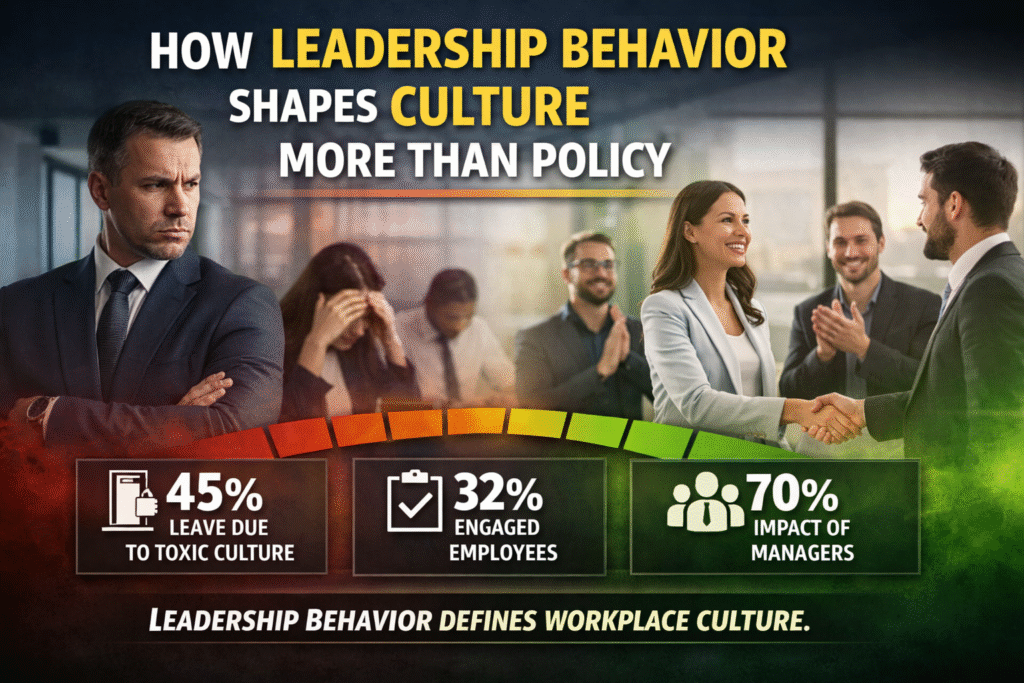
Many organizations have not fully accepted that while policies can describe the culture they want, leadership behavior determines the culture they actually have.
The gap between those two things is where most cultural problems begin. You can articulate your values in every town hall, embed them in your onboarding materials, and post them across every office wall. But if the behavior of your leaders tells a different story, your team will always follow what they see over what they are told. Culture does not live in documentation. It lives in the daily actions, decisions, and reactions of the people leading the organization.
This post breaks down why leadership behavior shapes organizational culture more than any policy ever will, which behaviors carry the most weight, and how to start closing the gap between the culture you are communicating and the one your team is actually living. If you are also thinking about how you show up as a leader, my leadership assessment is a good place to start.
If you want to bring leadership insights to your team, reach out directly to me at connect@adammendler.com.
“Culture is not what you say in meetings or print in a handbook. It is what you tolerate, what you celebrate, and what you consistently do.”— Adam Mendler
Why Policies Alone Cannot Build Culture
Policies create structure, set expectations, and give organizations a foundation to stand on when things go sideways. But when leaders treat policy as a substitute for leadership, culture starts to suffer. People do not experience your values through documentation. They experience them through the behavior of the people leading them every single day.
1. Employees Read the Room, Not the Handbook
Your team is not consulting the employee handbook to understand what is truly expected of them. They are watching what happens to the person who raised a difficult question in last week’s meeting, paying attention to which behaviors get celebrated, and forming their understanding of the culture through every interaction they are part of.
2. The Gap Between Promise and Practice Erodes Trust
A warm, well-written open-door policy means very little if leaders are disengaged every time someone walks through that door with a concern. The distance between what an organization promises its people and what those people actually experience daily is where trust breaks down, and it breaks down faster than most leaders expect.
3. Culture Cannot Be Delegated to a Document
The saying that “culture eats strategy for breakfast” has endured in business circles for good reason. No matter how thorough your policy documentation, the culture your people live and work inside every day is built by the behavior of the leaders around them.
Bring This Conversation to Your Organization
My leadership keynotes and workshops give leaders at every level, from emerging managers to C-suite executives, the practical tools and perspective-shifting insights they need to lead their teams and themselves more effectively.
Take the free assessmentWhy Leadership Behavior Shapes Culture
Leaders carry more weight in an organization than most of them fully appreciate. Every decision made, every reaction visible to the team, and every standard either held or quietly dropped sends a signal about what the organization values and how it truly operates. That signal shapes culture far more than any written value ever could.
1. Leaders Set the Standard Through Their Actions
The cultures that people genuinely respect were built by leaders who modeled the behavior they expected from others, consistently and without exception. When leaders hold themselves to the same standards they set for their teams, those standards stop being expectations on paper and start becoming the lived culture of the organization. You can read more about what that looks like in practice in my post on how great leaders build cultures people love.
2. Pressure Is the True Test of Culture
How a leader responds in difficult moments tells the team everything about the culture they are working in. A calm, honest response to a setback builds an environment where people feel safe to speak up, take ownership, and work through challenges together.
3. Behavior at the Top Defines Behavior Throughout the Organization
When accountability is visible and consistent at the leadership level, teams internalize it as the standard. When exceptions are made and shortcuts are tolerated among those at the top, that message travels through every layer of the organization far faster than any company-wide communication ever could. Leaders who understand this reality carry their responsibility differently because they recognize that the culture they model today is the one their organization will reflect tomorrow.
How Leaders Set the Cultural Standard
Every leader I have spoken with who built a culture worth being part of understood one thing clearly. The standard was never what got announced in a meeting or written into a policy. The standard was what they personally demonstrated, day after day, in the moments that were inconvenient, uncomfortable, and fully visible to their teams.
1. Your Actions Are the Standard
Kat Cole put it well in our conversation. Effective leaders need the humility and curiosity to learn from the people around them, and the courage to make the tough calls when it matters. That combination is what makes cultural standards credible. Leaders who exempt themselves from their own expectations do not just lose credibility. They instill in the organization the belief that standards are optional, a lesson that spreads quickly.
2. Accountability Starts at the Top
Across my conversations with top executives and founders, the leaders who built the most respected cultures were never the ones who delegated accountability downward. They owned their decisions publicly, acknowledged when they were wrong without hesitation, and made it clear that taking ownership was the highest standard in the building, not a sign of weakness.
3. Pressure Reveals the Real Culture
Teams build their understanding of the cultural standard from the hardest moments, not the easiest ones. A leader who communicates with honesty and composure during a difficult period gives the team a model that no policy document could ever replicate. That is where the cultural standard is either established or quietly abandoned.
Bring This Conversation to Your Organization
My leadership keynotes and workshops give leaders at every level, from emerging managers to C-suite executives, the perspective-shifting insights and practical tools they need to lead their teams and themselves more effectively.
Book a Keynote for Your Next EventHow to Lead With More Intentional Behavior
Most leaders do not have a values problem, they have a consistency problem. The culture you want already exists in your mind, but the distance between that vision and what your team experiences every day is almost always a reflection of behavior that has never been examined closely enough to change.
1. Audit Yourself Before You Address the Culture
The most important leadership assessment you will ever take is the honest conversation you have with yourself about how you actually show up. What do you default to under pressure? Where do your actions consistently fall short of your stated standards? Start there, because no cultural shift has ever begun anywhere else.
2. Let Your Behavior Speak Louder Than Your Messaging
The leaders I have most admired across my podcast conversations were never the ones with the most polished communication. They were the ones whose teams never had to wonder what the leader stood for, because the answer was visible every single day in how they made decisions, treated people, and handled adversity.
3. Protect the Standard in the Moments That Test It
Culture is shaped in the moments when holding the standard costs you something when it would be simpler to look the other way, make an exception, or let something slide. Those are the moments your team is watching most closely, and those are the moments that define what your culture genuinely stands for.
Conclusion: The Culture Your Team Deserves Starts With You
When I spoke with General David Petraeus on Thirty Minute Mentors, one thing that stayed with me was his point about leadership style. He said it should never be a fixed thing. It should be designed to bring out the best in each person you lead. That idea applies directly to culture. How you show up for each person on your team is how culture gets built or broken.
The leaders I respect most are not the ones who have perfect cultures or never make mistakes. They are the ones who took full personal responsibility for the culture around them, held themselves accountable to the same standards they expected from their teams, and understood that the most powerful cultural force in any organization was never a policy document.
If you are ready to bring that kind of leadership thinking to your team, I would love to be part of that conversation. You can explore what others have said about working with me, listen to more leadership conversations on the Thirty Minute Mentors podcast, or contact me directly at connect@adammendler.com.
FAQs
1. How Does Leadership Behavior Shape Organizational Culture?
Organizational culture is shaped by the leadership behavior of those around them, not by the documents these leaders produce. What gets rewarded, what gets tolerated, and how leaders conduct themselves in difficult moments collectively define the cultural norms that every person in the organization eventually adopts as their standard.
2. Why Does Behavior Matter More Than Policy in Building Culture?
Policies establish expectations on paper, but behavior determines what people experience in practice. When a leader’s actions consistently align with the culture they are communicating, that culture becomes real and credible throughout the organization. No policy can bridge the gap when they don’t align, as people will always follow what they see over what they’re told.
3. What Leadership Behaviors Have the Greatest Cultural Impact?
The behaviors that carry the most cultural weight are how leaders handle failure and accountability, what they choose to reward publicly, how they communicate during periods of pressure and uncertainty, and whether their actions remain consistent with their stated values across both strong and difficult seasons.
4. How Can a Leader Identify and Close the Gap Between Intended and Actual Culture?
Closing the culture gap begins with the kind of honest self-examination that most leaders avoid because it is uncomfortable. The most effective starting point is asking the people closest to you what behaviors they observe most consistently from leadership, then comparing those answers against the culture you believe you are building.