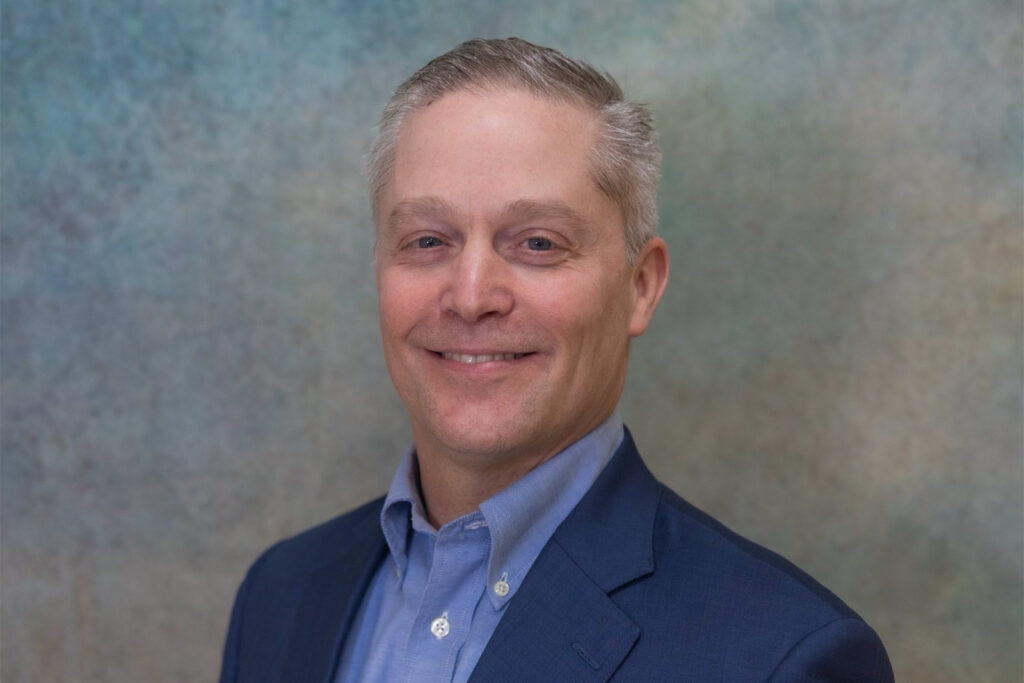
I recently interviewed General Tim Haugh on my podcast, Thirty Minute Mentors. Here is a transcript of our interview:
Adam: Our guest today is a retired four star general who served at the highest levels within the military and within the United States government. General Tim Hawk was the commander of the United States Cyber Command, the director of the National Security Agency, and the chief of the Central Security Service. General Hawk, thank you for joining us.
General Haugh: It’s my honor. Adam, excited to be here. The honor.
Adam: Is mine. You grew up in Hughesville, Pennsylvania, a town of 1200 people, and you grew up in a very patriotic family. Your dad served in the Marines, and you went to college in state, at Lehigh University, where you joined the Air Force ROTC program. Can you take listeners back to your early days? What early experiences and lessons shaped your worldview and shaped the trajectory of your success?
General Haugh: Yeah, I think Adam just had a wonderful childhood growing up in small-town America, being able to have friends that we shared experiences and we went from everywhere, from Sunday school together to every sport to being in high school musicals together. So growing up with a group of people in a community that really cared for each other, and I think that’s a foundation that, of course, has stuck with me and my bride. She’s my hometown sweetheart. We’ve been together since high school. And so that community and that foundation it started with my parents. My dad had served, and he was not concerned at all if I served in the United States Marine Corps, even though he taught me the Marine Corps hymn pretty early in my life. But the idea of service stuck with me, and that was really a start of what was the plan going to look like. Was it needed to include service? And when I found Lehigh, it felt like the perfect school with an Air Force ROTC program. That choice really set a foundation that was extremely helpful in really moving forward for the next phases of my career, and then the journey that my wife and I went on together.
Adam: What were the keys to rising within your career? And what can anyone do to rise within their career?
General Haugh: Well, I think part of it is that when you step into something new, you’re really going into the unknown. When I joined the United States Air Force, I had only been on one military base, and I was there for my initial training. And so I had spent around five weeks at Bergstrom Air Force Base in Austin, Texas, in a very controlled environment. So I didn’t really have a great sight picture as to what would my day to day look like. I knew what my career field would be. I knew I was going to be an intelligence officer. But when I went to Goodfellow Air Force Base for my seven months of training to be an intelligence officer, there were just really wonderful teammates that some were prior enlisted, so they could really put you under your wing and say, okay, here are some things you need to know about how to succeed. At the beginning, we had others that were expert in the craft of intelligence that inspired us to really get excited and be curious. And then leaving that first location is the only time in my Air Force career that I had a choice of where my assignment would be. And it was a choice to go to Key West, Florida, or Misawa Air Base, Japan, in northern Japan. And we chose Japan. Occasionally, my wife, who really does like the beach, questions that choice. But when we went to Misawa, what we found there was the perfect part of being in a military community overseas, because you really become a family. You have a shared experience together. And we had a wonderful couple that really became surrogate parents to us, and they wanted to make sure that we enjoyed the experience, that we got the most of it, and really helped us navigate what was it like to be a young family serving in the military overseas. I see that time and time again. We certainly had the opportunity to build on that and then to be able to share that with others.
Adam: One of the keys, clearly, for you and rising within your career, surrounding yourself with the right people, being around people who were the right teammates for you, being around people who helped guide you when you needed that guidance. What advice do you have for anyone on how to find the right people to surround themselves with?
General Haugh: I think within the military, I did not find that hard. We really have people that have a shared set of purpose. So you start with a lot of common denominators. But what I also wanted to seek out, I am inherently a positive individual. So I want to find individuals that are going to, at times, have a portion of that. People that you surround yourself with, that have an outlook of optimism and can see the future and can really, let’s take advantage of the opportunities. That doesn’t mean you want everybody to be in the exact same category. You want people that are going to question. You want people that are going to also bring different perspectives. But what I always wanted to find is positive leaders, because I wanted to be in organizations that had a positive outlook, that were thinking about how do you develop people? And so, whether it was organizations I was joining when I was more junior, or when I was selecting people to lead organizations, positive leadership was the first characteristic that I wanted to evaluate.
Adam: The very best leaders see the glass as half full. The very best leaders are optimistic, are positive, are always looking at the bright side, and are always trying to figure out how to help the people around them get better, and the only way you’re going to do that is by thinking positively, not thinking negatively, absolutely.
General Haugh: And what I’ve really come to see over the time in my career, the more that I move through more senior positions, I really think there were three things that I viewed that I was really responsible for in terms of a leader. One is intent. What’s the vision for the organization? Like, have to be able to articulate it and have people see where we’re trying to go, why we need to get there, and then where they fit. The second component around culture. The culture of the organization is a leader’s responsibility, and spending time on building that culture and shared purpose, and shared values is something that a leader owns, and that can be at all levels of an organization. But really, if you’re the strategic leader, you’re the one that sets that tone, and then you set expectations, and then you expect leaders at all levels to be able to implement it. And I think the third thing is to be a buffer from any outside noise. So whether that’s if you’re in a government position, there will be different stress that might come from the political level to a military organization, or just maybe the demands that are out there based off the environment that’s happening. The leader of the organization, keeping as much of that energy away from people that just need to do their jobs, and keeping them focused on the task at hand, on the things they can control, and be that buffer to ensure that the organization is focused on the things, whether it’s what the nation needs or what the business needs, to be able to ensure that that outcome is achieved.
Adam: I would love to dive into each of those, starting off with vision. Oftentimes, leaders have a vision that they think is the right vision, but it turns out not to be the right vision. Oftentimes, leaders are not necessarily great visionaries, but they have the ability to recognize that someone else has a great vision, and they take that vision and are able to communicate it effectively. How can leaders establish a vision and turn that into a winning vision?
General Haugh: I think, Adam, some of it is around the timing. So, as a leader joining an organization, you have to understand the environment, because there are times when the necessity and the need will drive the vision. So, an example of that, one of the key leadership roles you have in the United States Air Force is wing command, and it’s when you’re a colonel, and now we have a span of control. In the case of the organization I led, it was our global intelligence organization. Had about 6000 people that were spread across the globe conducting intelligence operations. And when I joined the organization, almost immediately following me joining it, the insurgency in Iraq and the emergence of ISIS occurred, and we were going to be one of the consequential organizations to produce intelligence. So at that moment, what we have to be focused on is clearly given to us. But then how do you translate that into something that becomes sustainable, prioritized, and then you’re able to support the organization that now is going to be operating at over 100% in terms of expectations and demand. And so that was an example of where that vision is now given to us. The environment is going to drive the conditions that you’ll lead in, and you have to adapt to that. Versus when I joined the National Security Agency and US Cyber Command, we were at a spot where we had opportunities to think about where we were as organizations, and now be able to chart more of the future and what that looked like. Two very different contexts. US Cyber Command, partly, we were asked to chart that vision by Congress. So now being able to do that work throughout the organization, to be able to come up with a shared vision so that then we can talk about how you would implement it. From the National Security Agency, what we were really trying to think our way through was generational change, just based off of when the NSA went through its very large growth following 911. Those leaders were now transitioning out of the organization, and a new generation was beginning to take on greater roles. So do we have the culture and the values to prepare for that generational change? So in that case, we were able to drive and have discussions and bring in experts to really help align what were those values and culture that we wanted to set moving forward. So two very different types of environment, but I think the leader has to evaluate the situation they’re in, how much latitude they actually have, and then what’s appropriate for the time that they’re going to be in that leadership role.
Adam: How do you define a great culture, and how do you, as a leader, build a great culture?
General Haugh: So, I think in different cases, what are your shared values in the organization? So at each stop, I think I really tried to use a similar set of tradecraft in each leadership role after my first colonel assignment, because as a young colonel, it is the first time that you’re really not tactical. So I’d led as a lieutenant colonel some really exceptional units. But when you’re in those leadership roles, you’re very close to the execution of operations. So if you give guidance, it’s going to get implemented, you’re going to see the result. The first colonel assignment is now you’re responsible for a more strategic approach, setting bigger guidance. What is the budget? How are you going to execute it? And those tactical leaders are executing the actual mission. And so what I wanted to do then was really sit down with all of them and their enlisted leaders to be able to say, what are the things that we’re going to really value? And at the time, also one of the books that we all read together was Daniel Pink, Drive, and the three tenets of what Drive was about, autonomy, mastery, and purpose. Everyone wants to be able to have control of their own environment to some degree. They want to have mastery and be great at whatever they do, and they want to know what they do matters. So what we really set out and really tried to do in every organization was, what does empowerment look like in the context of that organization? And every time it would be, what is the very short, intense statement that we can capture our values? So the first time we did it, it was empower, partner, deliver. So let people know that they were empowered. We’re expected to think outside of our organization, to like, who are those partners we needed to enable, and then we must deliver. So it was very simple to have that conversation with anybody in the organization about what their role was, where they fit, and then what our expectations were. And very similarly, as we went through other organizations, we had very similar conversations that either went around something like that, or around a why statement, building off of Simon Sinek, Start With Why. Well, what I’ve normally found is in the organizations that I’ve been a part of, motivation is never hard. There’s a shared belief system. There’s a shared focus on service. So the motivation component isn’t the difficult part; it’s the alignment. So, ensuring why people understand, like, this is the thing we need to work on. And I had a really great lesson from this, from my predecessor, General Paul Nakasone, that when he took over US Cyber Command and NSA in 2018, I worked for him in a number of different roles. He was given a task by the Secretary of Defense to defend our elections, which was something that was not a normal task within the Department of Defense. And so what John Nakasone did is he put together a small team and then reinforced that team by every day when he had an audience in the organization, he would tell the whole organization the number one priority for the agency and command is the defense of the 2018 midterm elections. He made sure everyone understood what was the priority. And if we had to make a choice of resources, if we had to make a choice in talent, it was going to be to support the defense of the 2018 elections. And so as one of his team leads, leading the effort, I had support from him that everyone in the organization knew what the priority was. Everyone was aligned. They didn’t need to be motivated. They were doing incredible work on whatever they were working on. But getting alignment against the highest priority really started with leadership. And once we have alignment, we could do a lot of great things. And to me, that was a lesson, which is there’s going to be amazing work that goes on throughout each of these organizations. They’re highly consequential. They’re really talented. But where you apply that energy is a part of the leadership discussion to ensure you’re aligned against the nation’s priorities, the President’s priorities, Secretary of Defense or the DNI’s, and ensuring that everybody understands what that alignment needs to look like, you’ll get results.
Adam: And a lot of what you’re sharing speaks to that last leg, which is being a buffer between the people who you lead and the outside noise that they invariably face, because that outside noise is going to be a huge distraction and is going to potentially impair any kind of alignment that you as a leader are going to be able to implement.
General Haugh: Yeah, and I think a part of that is balancing that you want to be transparent with the organization but not transfer any stress. That’s I think some of the art form that I’ve seen from a number of the leaders that I’ve served with, is that you want to create urgency but not let that become a distraction because of the stress that is coming from the origin of whatever that task is. And there’s probably rightly so, there’s probably some crisis underway. There’s probably something that needs to get solved urgently. But pushing that down to the element that’s actually executing isn’t going to help them do their job better. They know they’re always going to be focused on being as aggressive as they can to produce an outcome. Keeping them shielded from any unnecessary things that are outside their control is a role of a leader.
Adam: You bring up an interesting point, which is being able, as a leader, to delineate between what is a real crisis and what is a perceived crisis, but not a real crisis? And you’ve had to lead through some very significant crises. What have you learned from those experiences? And what are your best tips for leaders on how to lead in times of crisis?
General Haugh: Yeah, this is actually a really interesting one, because I’m working with a student right now that is trying to build what does a playbook look like for leaders in crisis, because he’s not really found a good start point for what does that look like. And it’s normally a learned series of behavior. And some of this is, what I’ve learned over time is, first is control your emotions. Because if you’re in an environment that is highly charged, really demanding, and really could be something that’s really consequential to the nation, is you want to always be measured in that discussion. And some of that is how you consciously think your way through of, how am I reacting? Can I breathe for a moment? When do we actually have to respond to this? And so first is making sure just your own self is that, to ensure that you’re calm, because that calmness helps within from a leader to the organization. And I think, across the leaders that I’ve served, and then what I tried to embody is then to be able to communicate transparently what are the timelines we need to operate in, but don’t do that in a manner that’s going to just ratchet up the stress. And so first is being in control of yourself, and then to consciously think through how you’re going to communicate what the urgency is, and is it something that requires us to call people in to work extra hours, or is it something that we’re going to be able to do over the next two weeks and meet the demand?
Adam: What do you believe are the keys to successful leadership? What do you believe anyone can do to become a better leader?
General Haugh: I think all of it is about being curious and being observant, because that’s one of the things that I just really valued, is I have served in the world’s greatest military and in the world’s greatest intelligence community. So there are leaders around us every single day, and it can come at all echelons. It doesn’t have to be the senior-most person in the organization. It can be the NCO that leads by their actions and celebrating that in the organization. It can be the intelligence analyst that makes a very difficult call that’s going to be incredibly unpopular, and celebrating doing that work that aligns with our ideals. So being observant to what those things are that ensures that actions and words are aligned. I think that’s one of the most important things a leader can do, is ensure that if you’re communicating something as a priority, that your actions reinforce it. If a value is important to you, your actions need to reinforce it. And then how people lead in different environments is a set of skills, and so much of that comes from observing. I led a military organization, I led a civilian organization, and there were different approaches in how to handle different situations based off of the seniority of the individuals, the experience of the individuals, and the culture of the organizations.
Adam: What were those differences? What do you learn from those experiences?
General Haugh: I think one is in a military organization, we just have a very straightforward approach. We might discuss things for a period of time, but if the commander gives an order, the team is going to execute that order. It’s just going to move, and it’s going to get alignment really quick. In a larger organization that has just very experienced individuals, what I found, what I think I observed, of leaders that were successful in those environments is spending a lot more time on consensus, because you had so much experience to draw from. And in many cases, that wasn’t in the line and block. It was in the diverse nature of the organization, the diverse set of experiences, and ensuring that you brought as many voices into that conversation in different ways to then get to alignment. And so that was just a different conversation. You could always, as the leader of the organization, give guidance, and people would execute it. But the more you have the opportunity to bring voices in and get alignment, it will be better in the long run for the full implementation in things that you want to stick inside the organization.
Adam: I have your three C’s to effective leadership with a fourth C that is really important in most environments, curiosity, consistency, and culture, understanding the cultural norms of the organization in which you’re leading. And the fourth one, consensus, being a consensus builder, which in most organizations is a critical skill. Not in every organization, but I’ve interviewed so many leaders across so many different disciplines, and the best leaders are leaders who recognize that I don’t have the ability to move people simply through my authority, simply through my title. My power as a leader comes through my ability to persuade, to influence, to build consensus.
General Haugh: Yeah, I think it’s a powerful thought, and it’s one that I think in junior officers in the military, you’ll see when people can make that transition. Because you do early in your military career. Many situations, you may be the senior person, but you’re not the most experienced. And it puts an individual that hasn’t been in many of those situations in a bit of a bind personally, because you feel this demand that I’m in charge and I need to be filling my role as a leader. But at some point, you learn that by giving up the total control and leveraging the expertise of the organization that you’re responsible for is going to be more effective. And that isn’t an easy lesson when you’re right at the beginning of your career. And I was really blessed to have a whole bunch of senior enlisted leaders that looked at it as their job was to make me a better leader, right from the outset.
Adam: In your Senate confirmation hearing, you were describing what matters to you as a leader, and you use three words: people, innovation, and partnership.
General Haugh: I think the leaders that you want, you want somebody that’s curious, but you also want somebody that you know and that you can trust. You can empower them and that you’re going to be able to then let them lead. I saw that at all different levels throughout my career. And where innovation happens is when people have a clear mandate. They have an understanding of what they’re trying to achieve, and they’ve got resources, and they have top cover. And if those ingredients exist, they’re going to likely be successful. And what I saw early, this was back in 2014, when I took over the first as wing command, we had an NCO that taught us how to do innovation inside our culture. And it was building on a concept that Google was using, which was to give everybody in the organization eight hours a month to do whatever they wanted within their span of control. And we started to do those things for our intelligence analysts, like give them a block of time where they could be creative and try to solve an intelligence problem within their authorities and within their span of control, and do it in whatever innovative approach. And the award that we gave at the end of the month was the crash and burn award. Whoever failed the most spectacularly got the award because they took the biggest swing. And in that culture that that portion of our organization had created is they understood that they could try things. They could experiment. And when they got it right, they were also in an environment that could then be shared across the broader organization. And that was a young leader, and we asked her to implement it across our entire organization. But it really came back to empowerment. And I think leadership within organizations that will accept that risk is if you want risk to happen, then you also have to provide top cover based off that. So I think that’s one key thing. In terms of partnerships, growing up in intelligence and in cyber operations, we naturally have lateral partnerships. It’s just the nature of our business. If you’re working in knowledge, you’re going to try to find all the experts that you can across the US government, across your foreign partners, and you’re going to be working with them to share knowledge and build knowledge. And I think that’s a core part of who we are as intelligence professionals, trained early, and it’s an expectation in cyber. It actually becomes even more critical when you think about the partnerships that must exist with industry. That industry owns 95% of our critical infrastructure. They produce all the products that we all use. And so how we secure them, how we use them, is a natural collaboration. And what I found was, particularly in my last two roles, the importance of those partnerships is what brings you the ability to counter adversaries that are trying to control information and trying to do harm to the United States and to democratic institutions. It was because we could partner with teammates around the globe that shared values and wanted to work closely with us to secure their infrastructure, to help us secure ours, and to be able to work together. And those were partnerships in other intelligence agencies around the world. It was partnerships with industry, and we invested a significant amount of time in those partnerships, and also our partnerships with academia. And so that’s where we budget. You budget your time. You dedicate forums. And you commit both talent and resources to making those partnerships successful.
Adam: You alluded to it over the course of our conversation, in talking about your upbringing, in talking about some of the people who influenced you over the course of your time in the military. You’re a product of the power of mentorship. What are your best tips on the topic of mentorship?
General Haugh: Well, I think first I have to give shout-outs to those mentors that I was blessed to work with throughout my career. The first one that really had an impact on me, my first supervisor, Major Larry Miller, taught me what it was like to be in the United States Air Force and what it looked like to lead in an intelligence organization. The second one was at the time, Major Dash Jamieson. She became Lieutenant General Jamieson and led Air Force Intelligence. But Dash was someone that throughout my career, I was focused on just doing whatever the job was that I was assigned. She was ensuring that I was getting experience in different parts of how the United States Air Force operated that would make me successful later. And as we did that, and that’s really a lesson that I took away, it took me a while to recognize that there were places that she and her counterparts pushed me to that were not things that I wanted to do. I didn’t want to go learn about budget. I didn’t want to go learn how to do long-term programmatic planning in the United States Air Force. I wanted to keep doing hardcore operations that I felt like I was good at, and I really enjoyed. But they forced me to learn skills that later allowed me to be more successful as I was given more authority, and in doing that, made me a better leader in ways that I would have never done myself. Another one is Major General Suzanne Vautrinot. She was a leader that was one of the early leaders in cyberspace. And between Dash Jamieson, Suzanne Vautrinot, and then later Jack Shanahan, another senior leader, they made sure that I got experience in intelligence roles and in cyber roles, which later made me qualified to lead the National Security Agency and Cyber Command. And so they gave me the foundation early, and then I got to work closely with Admiral Mike Rogers and General Paul Nakasone, two leaders of Cyber Command and NSA, that I could observe them operate in situations with just extreme national importance, and how they led through those components. And then put me in positions to be stretched in ways that I didn’t anticipate, whether that was going to the White House Situation Room, going to Congress pretty early in my career, and give me opportunities to grow skills that I didn’t know I needed.
Adam: General Hawk, what can anyone listening to this conversation do to become more successful, personally and professionally?
General Haugh: So I think two things. Anybody can be a better leader. There are people that naturally can lead, but they still need to put things into their toolkit, different experiences, exposing to different things. So part of that can be through reading, and the other part of that’s through observing, and look for people that you really respect and really understand what they’re doing and how they’re doing it, and have conversations with them. So I think that’s one. The second component is we all have an opportunity to take advantage of the changes in technology that are happening around us, whether that’s sitting down today and going to Claude and looking up what vibe coding is, and experimenting with maybe for the first time in your life, writing a program, or going to ChatGPT and clicking on the research button and diving deep into a topic that you have interest in but you haven’t really spent time on. This is an amazing time where technology can help us do so many things, and it can also, as we start to think about our society, can do things for us that are going to help us solve medical issues. It’s going to make us more efficient. It’s going to make us more effective. And then we just have to make sure that we implement this technology in a way that’s consistent with our values.
Adam: General Hawk, thank you for all the great advice, and thank you for being a part of Thirty Minute Mentors.
General Haugh: It was my pleasure. Absolutely enjoyed it.