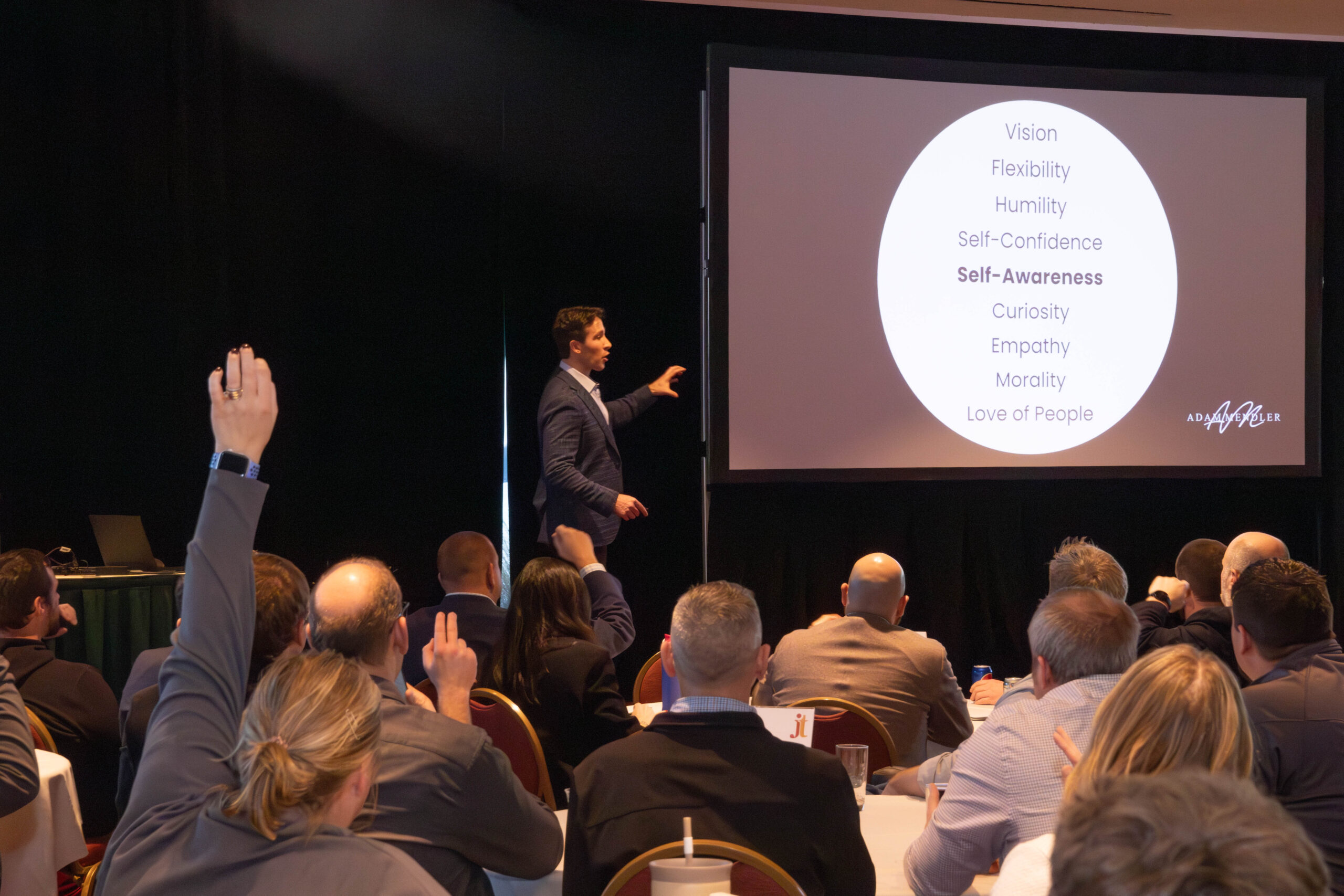


I recently interviewed former NBA Star Jamal Mashburn on my podcast, Thirty Minute Mentors. Here is a transcript of our interview:
Adam: Our guest today was a star in the NBA before becoming a highly successful entrepreneur. Jamal Mashburn averaged nearly 20 points per game over the course of his 12-year NBA career, and currently owns more than 100 businesses. Jamal, thank you for joining us.
Jamal: Thanks for having me. Adam, it’s a pleasure.
Adam: Pleasure is mine. You grew up in Harlem, literally a block away from Rucker Park. Your dad was a police officer, and your mom worked for the New York City Housing Authority. Can you take listeners back to those days, those early days, what early experiences and lessons shaped your worldview and shaped the trajectory of your success?
Jamal: Well, I was born in 1972 in Harlem. My father, before he became an NYPD officer, he was actually a professional boxer. He fought Larry Holmes, Ken Norton, and sparred with Muhammad Ali. I got an opportunity to watch my dad be a professional athlete, but not make a lot of money at it. So it demystified that professional athletes weren’t all famous and weren’t all celebrities, that there was a 99 percent that didn’t make a lot of money, especially in boxing. So I had a different view of what professional sports looked like. And I also grew up in the projects of Harlem, and we didn’t have a five-bedroom mansion and all these different things. So it was just a different way of looking at sports. And my mom, she was born in Beckley, West Virginia, and she didn’t have a lot of opportunities in Beckley, West Virginia, as the daughter of a coal miner, and her father only had a fourth-grade education. So they shipped her to New York. She was the oldest of six kids and shipped her to New York at 18 years old so she could have other opportunities. My mother always loved to travel, wanted to go into the military and everything like that, but her father wouldn’t let her. My mother had trouble having kids, so she had me late in life, and in 1972, when I was born she was 30 years old, so that’s pretty late. At that particular time, my dad was 28, and my mother loved numbers and everything like that. When she couldn’t afford aftercare to send me somewhere after school or whatever, she would bring me to her office and teach me debits and credits. And I used to see her close out the books. And she also put me in a private school in downtown New York City, near Hunter College. And I got a chance to ride the train from my projects, 150th Street, to like 68th Street and Lexington Avenue. And I saw the train transition from people that looked like me wearing construction outfits to people carrying a briefcase going to work on Wall Street. And I was always curious about what was in that briefcase. And on those train rides at a young age, I want to say at 10 years old, 11 years old, I started to dream about what the possibility was of bridging athletics and also being a business owner, whatever that meant. At that particular time, I was always fascinated by what was in the briefcase. Years later, I realized that a lot of people didn’t have anything in that briefcase. They were just carrying their lunch in there and some papers. But what the briefcase reminded me of, or what it was a symbolism of, was utilizing your brain and looking at my father and what not to do, and making different choices as a professional athlete, and really seizing the moment and having the right people around me to make better decisions for what I wanted my life to look like. And I wanted to be an NBA player that carried a briefcase, that had the opportunity to have freedom to lead when he wanted, but not be determined by the particular sport. So that’s when I got into business. Right before I got drafted, and there we go. So for me, growing up in Harlem was very important. It allowed me to see different people’s fears. Some people didn’t want to leave Harlem. And my home was a big component of getting out of New York City and seeing other things and explore. So that was the seeds that were planted to me early in life.
Adam: I really love that, and you shared so many themes that I would love to dive into over the course of this conversation, bridging athletics and business. You knew you wanted to be an NBA player, but not just an NBA player. You wanted to be an NBA player who could take what you brought to basketball and bring it to the world of business. But before doing any of that, you left New York, and you went to Kentucky. You played for the great Rick Pitino. You weren’t the top recruit in the country when you went to Kentucky. By the time you left Kentucky, you were one of the best players in the country. You were the number four overall pick. What did you learn from your time in Kentucky? What did you learn from your time with Rick Pitino?
Jamal: Great question. So Coach Pitino started recruiting me in high school, I want to say probably unofficially recruiting back in the day, probably around 14 years old, when I met him up at Five-Star basketball camp. And he used to do a lot of individual instruction and a lot of speaking at that particular camp. So he saw me at 14 years old and different things like that, and would pull me up and be a part of his demonstration. And at that time, he was a head coach at Providence University in Rhode Island, and he started to recruit me. And I had the fortune of playing in New York City for one of the famed AAU basketball programs called the Gauchos travel basketball team. We traveled all over the country, and I was the kid that always kind of played up. I was six-three and 13 years old, so when I’m playing 13 and under, when I got with them the following month they put me to play with 15 and under, and so forth and so on, 17 and under. So I was always the youngest kid playing with older guys. And the teams that I played with, when we got to 17 and under, guys on my team were highly recruited. They were going to Division One. I started to ask them the question, how are you making a decision to go to university? Because now I’m starting to feel the anxiety and the pressure of having to make a decision. My mom didn’t go to college. I had nobody that I could lean on that had that experience. So I decided to ask my teammates, and a lot of them had superficial answers. I love the school since I was a young kid, or they play on TV, or they’re paying me, or whatever before NIL. And I decided that’s not good enough for me. I’m going to flip it on its head and say, why should I choose that particular university? From the standpoint, forget about your tradition. How can you help me reach my goals? Because I know I’m going to help you reach your goals, because you wouldn’t be recruiting me if you didn’t think so. So the thing that I did as a 17-year-old kid was start to put my criteria list together, my profile. And one of the things that I had was core values. There was honesty and integrity. The next one was you had to buy into me wanting to carry a briefcase. How can you help me with that? The third one was did you have any ties to the NBA, meaning did you coach there? To me, that signified you understood the process, and it just wasn’t about being a college basketball player. It was evolving and helping kids get to the next level, and we could have a partnership in that particular way. So what I did was Coach Pitino fit all those boxes, and the one negative that he had that I overcame was the University of Kentucky was on probation my first year and couldn’t go to the NCAA Tournament my first year, and they only had three scholarships because they went through a period there. And I looked at the University of Kentucky as, okay, there’s opportunity to play minutes to get better. Coach Pitino is a teacher of the game. He bought into the idea of me wanting to carry a briefcase. And then also, too, he coached the New York Knicks back in 88 at that particular time, so he had pro experience, so you knew what it looked like. So I chose the University of Kentucky when we couldn’t go to the NCAA Tournament in my first year. Coach Pitino said, Jamal. And then I told him, if I’m a four-year player, that’s fine, but if I have the opportunity to leave early, you got to let me know. And to his credit, he did. And at the end of my sophomore year, we played in the Duke-Kentucky game when Christian Laettner hit the shot. Most people in college athletics considered that one of the best games of all time that had been played for a lot of different reasons. And I had the opportunity to play against the first Dream Team and work out with them for USA Basketball. And in 1992 that was the first time the USA had selected pros to go play. So they needed players to come practice against them, and I was part of the USA Select Team. It was probably eight of us at the time, college players, and we actually beat them the first day. And we stayed out there for a week in La Jolla, San Diego. I came back to school and started taking some summer school classes, and then Coach Pitino called me in his office and said, Jamal, you remember when I recruited you and told me to be honest with you if it’s your time to leave? He said, I got feedback from those seven days you were out there. You’re going to be no less than the fourth overall pick in the following year’s draft. So we’re going to announce today that you’re going to be leaving early so you don’t get bombarded with all the distraction of if you’re going or not going. So we’re going to announce it for the season, and then if we win a championship after that, we’re going to sit down, and we’re going to hire a business manager and an agent for you so you can start your business career, and then also somebody that can represent you. We wound up going to the Final Four and losing to the University of Michigan Fab Five, and the next day I sat in Coach Pitino’s office. I hired a business manager, and eventually my business manager, after I want to say six months, we built a relationship. We started investing in things and started to build things around transportation, real estate, and food, things that people need. And that’s how the car dealerships came about. Eventually, my first investment was Outback Steakhouse. I was a limited partner in that. And then the real estate is obviously owning the real estate of a car dealership and different things. And we got involved in the waste management business as well. So in a lot of ways, Coach Pitino showed me really what partnership actually looks like at the collegiate level, how we can help one another be our best and get what we all want out of it, and that’s winning both sides of the table, not just games, but also in life. And Coach Pitino also showed me what a real teacher looks like, because he’s a great teacher of the game. And sometimes that gets clouded by his perception and what people think of him, but he’s one of the greatest teachers of the game. What you see today and how people are playing, Coach Pitino was doing 35 years ago, shooting three-point shots and different things like that. So he was ahead of his time. So those are the elements that I received from Coach Pitino and playing at the University of Kentucky. A lot of people don’t know, unless you follow the program or really dive into it, or are in that southeast area, is it’s basically professional sports. You’re the NBA of that Lexington, Kentucky area. You’re the big dog in town. So it really taught me how to conduct myself in public and not just have pride in what’s in front of the jersey, but more or less have pride in what’s on the back of that jersey. You represent something bigger than yourself. You represent a generation. You represent a bloodline, just like the University of Kentucky. So I learned those things going to the University of Kentucky, because there was a lot of demand to perform. And once I got to the NBA, it was second nature because I already experienced it for three years.
Adam: As you reflect on what you took away from your time with Rick Pitino and from your time at Kentucky, you shared a lot of the most important elements of what makes a great coach. A great coach is a great teacher. A great coach is a person who is focused on developing the people who they lead. Something that you shared about Rick Pitino, he was honest with you when it mattered. He was honest with you always. And being honest with you wasn’t necessarily in his best interest, but it was in your best interest. In his best interest would have been to keep his superstar player around for another season, but actually it was in his best interest to be honest with you, because by being honest with you and by giving you the best advice possible, that’s what makes him Rick Pitino, that’s what makes him the kind of coach that you wanted to play for, that others want to play for. That gives him the credibility that allows him to attract the best players in the country. That’s what builds the long-term trust that makes great coaches great, that makes great leaders great, 100 percent.
Jamal: By him being honest with me, and I think what people fail to realize on the connection between business and sports, it’s all business at the end of the day. We call it sports, but you’re really an entertainment business. And I consider myself always an athlete. One thing that we always look for and strive for within ourselves is to be better, but also authentic as well. And you search for other people that are authentic in a business that’s not very trusting. Everybody has an angle. And when you become a good, great, or whatever type player, you’re always searching for, at least for me, I was always searching for who can be honest with me, even in the bad times, not just the good times. Tell me I want to get better. How do I get better? And don’t sugarcoat it, because the quicker I get better, the bigger impact that I have on the overall situation. And also, I think Coach Pitino realized that it’s not an unwritten rule, but it’s like the referral system. If you hear or see of somebody being productive, and the coach has your best interest in heart, that sets him apart from any other coach. So other players want to follow and participate in that. I left, Antoine Walker came in, Ron Mercer, and all these other guys because of how Coach Pitino handled me. He was like, hey, listen, I’m doing what’s best for the University of Kentucky, but in order for me to acquire the best amount of talent, I have to address their needs and wants and desires as well. It can’t just be about me. And that’s how I look at my organization and how I develop my family office. I always ask the question, I know what I need from you, but what do you want out of yourself? And how can I help provide that? I want to be aligned in that particular way. And that’s where I’m at in my particular life right now, is I’m only looking at opportunities that align with my spirit, soul, and make sense and have purpose. Anything outside of that I can’t do. I won’t participate. So we all have to be aligned with one goal in mind, not just to win a championship, but the championship is more than the actual trophy. It has to encompass what the other person wants as well.
Adam: Something else that you shared, which really stood out to me from your time at Kentucky and also from your time growing up, a focus on long-term, strategic thinking. You had opportunities to do things that might have felt better in the short term, but you were continually focused on what made the most sense for you to reach your long-term goals. Kentucky on probation, this isn’t going to be a great freshman year because we can’t really do anything. But is that really all that important compared to what I want to do in the long term? These are my goals. What is the best program for me to get there? And when you talked about your long-term goals, clearly the biggest goal that you had was not only becoming a great professional basketball player, but becoming a highly successful businessperson, and you were able to achieve both.
Jamal: So for me, growing up in the projects, I had no choice but to think long-term, because I didn’t want to stay in those particular projects. So it was almost a way out, essentially, and not necessarily from the standpoint that I didn’t love the community that I grew up in. But also growing up in New York City, when you travel downtown and you see people carrying a briefcase, you realize that there is more. And so for me, my mom really gave me that more mentality, which I would in turn say to you is that she took me around New York City and exposed me to museums. She exposed me to restaurants. She would sit there with me in a restaurant when we couldn’t afford it, and she would have me read off a menu and learn how to read off a menu, and she wouldn’t eat. I would eat. So my mom really exposed me to long-term strategic thinking, and that’s what my father didn’t have in his professional boxing career. He was much more of a short-term thinker. He wanted it right now, but didn’t understand the process and making choices of who the right people to be around. So that’s why I started to ask the question to older players what their process was, so I could really define my own, because I found that most people were short-term thinkers at that particular time, but they had a long-term vision and it didn’t match up. And then on the business side, the one thing that I always realized was it’s a reflection of my basketball game. And what I mean by that is there are certain things that I could only take so far as a basketball player, but there were certain things that Rick Pitino showed me, such as pound the ball, lift your elbow higher when you shoot because your shot is flat, pound the ball harder. Those are the first two things he gave me when he saw me at the University of Kentucky doing individual instruction. And he said, Jamal, you’re a pro now, just work on those things. And from the business side, I always look for people who are operators of that business and try to learn what I don’t know and connect the dots. And that’s what I found in Chris Sullivan, one of the three founders of Outback, and when he started launching Outback he had a great operating team. So I’ve always searched for that, because I had to learn operations just like I had to learn how to shoot a jump shot and do all these different things. So I just really applied what I had in sports and transitioned over to business, and just was able to connect the dots. For me, a halftime stat sheet is a balance sheet, essentially. That’s how I look at it. So I just framed it differently and realized that a pro athlete, at least for me, I was an entrepreneur. My IPO is different. It’s the NBA Draft, as opposed to the public markets. So I just framed it differently, and I knew where I wanted to be, and I worked my way to division, and then I worked my way back to build it back up. If that makes sense.
Adam: That makes perfect sense, and that’s such an interesting way of framing it, thinking about the fact that you’ve already had an IPO. It’s just a different public company. Because as a professional athlete, you are, in a sense, a public entity. Anyone who follows basketball knows Jamal Mashburn. Anyone who follows sports knows most players on most teams. You are not only a professional athlete, you’re, in many cases, a multi-million-dollar brand.
Jamal: Correct, correct. And I think most people, in an athlete’s mind, because of what they’re used to and going through the process from when they started playing high school and college, they’ve always looked at themselves as a part of the marketing machine. But they never really look at themselves as the operator within the marketing machine, because you do have to perform or the marketing doesn’t make sense. If the product is terrible, there’s no use in marketing at that particular point. So I always viewed myself as an operator within college athletics or entertainment, because the operations, the scoring points, rebounding, and producing wins, were the most important things. It wasn’t standing up there pitching a product, because if I don’t perform, I can’t pitch a product and I can’t build my brand. So most guys get caught up in the marketing part of it and don’t really understand the other components of business, finance, operations, and different things like that. They only stay with what’s comfortable for them because they’ve been a part of that system for a long period of time, and that’s how they’ve been used, rather than using the system.
Adam: Over the course of your NBA career, you played on a lot of teams where the product was terrible, and you played on a lot of teams where the product was really good. What differentiated winning teams from losing teams, winning cultures from losing cultures, and what are the keys to building winning teams and winning cultures?
Jamal: In professional sports, very simple, vision and structure and discipline. And also what makes it difficult for professional sports is, at least at the NBA level, and I would assume for the football level as well, when you get drafted you’re a high draft pick. There’s a reason why the team has a high draft pick, because they were terrible the last year. And usually when they’re terrible, there’s a lack of organizational structure, lack of vision, lack of discipline, no plan, no development for the player, no support. When I first played for the Dallas Mavericks, before the new ownership, there were certain things that we didn’t have. My first year in the NBA, we were the last team to fly charter. I flew commercial my first year in the NBA, just things like that. And when you don’t make investment back into the club, into its players, players start to realize and feel that. And it becomes an individual that’s a part of a team, but they’re really protecting their own individual status. And when you play for a winning organization like I did with the Miami Heat and also the Charlotte Hornets, the mentality is different. The focus is different. It’s about us rather than the I. There’s a buy-in on that side of it, on both sides. It is a partnership to execute that. On losing teams, it’s just about the I, let’s be honest. And that filters into you can’t persevere through the hard times of the game. You blow leads and different things like that. So to me, it’s really about vision, mission, execution, discipline, and process. That’s how I kind of see it in professional sports. And most of the teams that compete for championships have those things, those components, those core values, and it filters down from the coaches to the players and even to the staff that supports that. Everybody buys in. That’s the difference.
Adam: Vision, mission, execution, process, structure, discipline. Sounds like you’re describing Pat Riley, who you played for in Miami.
Jamal: What’s interesting is when I was with the Dallas Mavericks, I was one of the first guys to have micro-fraction knee surgery. And when I got to the Dallas Mavericks as the fourth overall pick, I quickly saw the difference between what I played for at the University of Kentucky and being in the NBA. I felt like I was in the NBA in Kentucky, and I felt like what the Dallas Mavericks were was probably a mid-major college team at that particular time, but they were a professional team. With that being said, I forced a trade. I got to know one of the minority owners of the Dallas Mavericks at that particular time and said, you guys are going in a completely different direction. I need to find a new situation. And here’s some of the things that I’m looking for. And he came back and was like, hey, what teams are you looking at that you want us to trade you to? And I said, I have two clubs, the Indiana Pacers and the Miami Heat. And he asked me, why those two particular clubs? And I said, well, Indiana Pacers, Larry Brown is the head coach there, and with the Miami Heat, Pat Riley is the head coach there, and I wanted structure, and the Dallas Mavericks couldn’t provide that. So they wound up trading me to the Miami Heat, and that was the first time. And I tell Pat Riley, and I’m a season ticket holder to this day, and we have conversations as I walk into the arena sometimes when I see him, he was the first coach that taught me how to be a professional. He reminded me of Rick Pitino in that regard, a teacher, but Pat Riley was a little bit different. He was much more than a manager or a head coach. He was a CEO. He conducted it that way. Everything was structured, practice times, we were always on schedule and on time. He wanted to get 1 percent better. And that mentality for my pro career, coming off an injury, that’s what I was starving for. That’s the diet that I wanted to be on. And most guys get that towards the end of their career when they want to win a championship and they put down all the individual accolades. I wanted to revive my career, but also have an experience of becoming a professional with the Miami Heat organization. It taught me a lot of different things. And one of the main things was show up and do your job every day to the best of your ability. It doesn’t matter what’s going on in your life, what went on at home, or anything like that. Come and show up. This has nothing to do with your paycheck. It has to do with your pride and how you want to develop and your character as a person. So I tell people I learned how to be a professional under Pat Riley, and it’s thrived throughout my business career. The same principles, the Heat culture that he talks about, hard work, we’re going to outwork everybody, and different things like that. I still take that as a part of my life, and nobody’s going to outwork me, but it’s from a different perspective. Now it can also be you’re not going to outwork me, but I’m going to find the best possible people and best practices and motivate the hell out of them to buy into the vision. So playing for Pat Riley, he’s instilled a lot in me. And Pat Riley wasn’t just a head basketball coach. He could be the CEO of a Fortune 100 company. He just fits that mold and has all the principles and guidelines and the structure, but he just did it in professional basketball.
Adam: When you share your definition of what a professional is, someone who shows up and does their job every day, I think about my favorite quote, which is from my favorite author of all time, and he actually got it from Dr. J. David Halberstam. Being a professional is doing what you love to do on the days you don’t feel like doing it.
Jamal: One hundred percent framed. I couldn’t say it better, because there were days where the first time I ever played in a back-to-back game, I remember staring at my shoes and thinking, I hope they magically get on my feet. I was so tired and I had to get out there. And then you realize that it’s not, at least for the good ones and the great ones with a certain mentality, it’s not about the paycheck. It’s really about self-discovery and seeing how far you can take it. Those are the days that you get better. Those days that it feels tough, that’s the extra equity that you get. That’s when the basketball gods, when you hit the back of the rim and it falls in, those days when you put the work in, those are probably more fulfilling. As an investor, I always look at what’s my downside, forget the upside. If I can keep my downside at a particular level and understand that that’s just like my performance. Essentially, when I scored 50, people were like, oh, that’s your best game. I was like, no, it’s the night that I played in Minnesota on a Sunday and I had to manufacture 20 points when I was struggling and tired. Those are the moments you learn the most about yourself and your character, and those are the moments that I search out for. So if I can keep my low bar high, my ceiling is going to be my ceiling. Great quote. And one mentor of mine said to me, a professional can be a janitor that sweeps the floors every day, but does it to his best ability when nobody’s watching. So those are the kinds of things that have nothing to do with economics, in my opinion. It has to do with your approach and how you respond to things.
Adam: I love it. I love that mindset. I love that mentality. It’s ultimately about being the best that you can be every single day, and every day that’s going to be a little bit different. To your point, some days you’re not going to have your jump shot. Some days you’re not going to have your fastball. For those of us that are not professional athletes, whatever we do, many days we wake up and we just don’t have our A game. How are you going to show up? You can’t control whether you wake up with your A game, but you can’t control.
Jamal: What you bring every single day. Yeah, I agree with you. And it’s something that I share with my son. When he took on his basketball journey, and now he’s going through his first year of professional basketball, I tell him don’t worry about making or missing, just worry about your technique. And once it leaves your hand, it’s out of your control. And every shot is not about making or missing, it’s about feedback for the next opportunity. So what I share with him is take the pressure off making or missing. It’s an educational component that applies to something else. So when you show up and you don’t have your best, there’s something you can learn from. When you show up and you do your best and you exceed or whatever it is, there’s still something you can learn from that applies. So it’s just all information and data, in my opinion. And I try to take the emotion out of it and really see it for what it is. And then when things go poorly, it’s not an indictment on who you are as a person. Most people get emotional about it. What I say is it’s all feedback for you to get better at the end of the day. And you’re not going to be the best version of yourself if you don’t handle the worst version of yourself and your worst moments. So I’m just a big believer that this is all data accumulation that you can use moving forward. It’s like having a file cabinet where you can say, well, here’s this file, and how I participated in this game. These are the things that I was struggling with that apply to another game and allow you to get out of a funk. So it’s just that accumulation in my game.
Adam: I love that. Who were your favorite teammates to play with over the course of your career, and what makes a great teammate?
Jamal: I always gravitated to the guys that had the long road to the NBA and had to fight their way to make it. One of my great teammates was David Wesley, who I played with. He was an undrafted free agent, worked his tail off to garner a double-digit NBA career. Baron Davis is another one. He was probably the most talented teammate that I’ve seen and played with, just from natural physical gifts. Another guy that I played with down here at the Miami Heat, his name is Vaughn. He was also undrafted. So I always gravitated to the guys that it wasn’t given to them. Even though I was a high pick, a fourth overall pick in 1993, I always carried my mentality as nothing was ever given to me. I didn’t feel entitled to anything. So that’s how I was able to maneuver throughout my career. And I found friendships with guys that had that similar mentality, who probably weren’t the most talented, but sucked everything out of that talent to get them to a particular place and worked hard at it. So I’ve always viewed myself as that guy. I think I gravitated to those guys because we connected on those core values, the lunch-bucket mentality. And growing up in Harlem, another guy that was a good teammate of mine, his name is Malcolm Huckabee. He was an undrafted free agent down here at the Miami Heat, and the guy made the team on a broken ankle. And I watched him, and we started to connect and different things like that in training camp. And we would go out in the evening and have dinner and stuff like that. And I would come pick him up at his house, and he showed me his ankle. I was like, dude, I don’t even know how you’re walking right now. And he made that club on a broken ankle. And just that grit and that determination, because to me, that tells me a lot about your capacity for work, your self-awareness, how to seize a moment and an opportunity. That’s the kind of people that I like to be around.
Adam: What do you believe are the key characteristics of a great leader, and what can anyone do to become a better leader?
Jamal: The first thing in becoming a better leader, just in my opinion, is really starting from the inside out. I don’t think you can lead people if you can’t lead yourself. And at some level, you have to work on who you are as a person and work on all your traumas and shortcomings and be vulnerable to accept who you are as a person, your shortcomings and your gifts. Also, a leader has to have the ability to follow, and probably most important, the ability to listen. The ability to listen is a critical component. We often look at leaders as being the rah-rah guy, the motivational speaker, but the best leaders listen and learn before they talk. Leadership is different to me than being a motivational speaker. I noticed when I played for Pat Riley at the NBA level, you can probably have a core team together for four years, and then you have to blow it up if you’re searching for a championship. Throughout that four-year period, there are only certain tools you can use to motivate that team. The team has already heard them before. When I played for Pat Riley, he could tell when teams would tune him out and wouldn’t listen anymore. You have to be conscious of that and pick your moments. And also, there has to be a partnership and understanding that there’s a two-way street, and your door always has to be open. And I also think you have to have the ability to communicate and be somewhat of a psychologist as well, and understand the mind and emotions, different things like that, and understand the background and profile of the people you’re trying to lead.
Adam: Jamal, what can anyone listening to this conversation do to become more successful, personally and professionally?
Jamal: It works hand in hand. I always start with the personal side of it. What’s that old adage, before you talk about somebody else cleaning their house, you got to clean your own house. And I’m big on the personal reflecting the business. What are your core values? I start with that. Some of my core values are honesty, integrity, accountability, perseverance, striving to get better, accepting criticism. And no matter what form it is, I don’t get sensitive, I don’t get defensive. It’s like, well, your tone was bad in delivering the message. No, what’s the message that I need to get better? So I think it starts with the personal side. And that’s why I love and gravitated to the game of basketball, because who you are as a person is expressed on the court. If you are selfish off the court, you’re probably going to be a selfish player. If you are unselfish off the court, you’re probably going to be unselfish on the court. So I think it’s a reflection. It’s an art form. In everyday life, we run into people who expose themselves by their actions. So my first thing is clean up yourself and really do a lot of self-discovery on who you are, understanding your triggers, your moments, and different things like that, and then it bleeds into your business life. And also, what do you learn from failure is a big thing. I took a lot of shots as an athlete, as a basketball player. I didn’t make all of them. But the ability to attempt them and to learn from those mistakes or those misses were probably more valuable than the makes at the end of the day. So I’m a big believer in self-discovery and developing self, getting control of that ego is the main thing as well that I learned as a professional athlete. And really finding good people with similar core values to you and taking a long approach. And that means a lot of hard work, and a lot of work has to be done on self. That’s just my philosophy.
Adam: Jamal, thank you for all the great advice, and thank you for being part of Thirty Minute Mentors.
Jamal: Thank you. I appreciate it, Adam.