

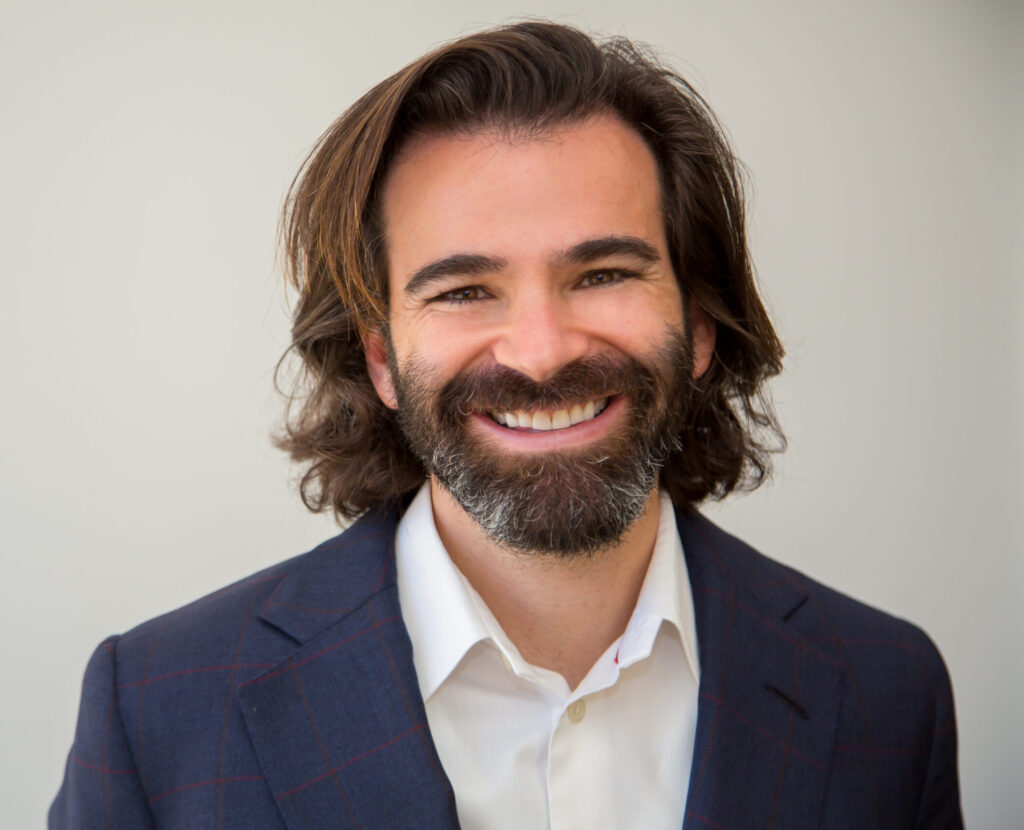
I recently interviewed LegalZoom CEO Jeff Stibel on my podcast, Thirty Minute Mentors. Here is a transcript of our interview:
Adam: Our guest today is the leader of a company that changed the way millions of people and businesses access legal services. Jeff Stibel is the CEO of LegalZoom. Jeff, thank you for joining us.
Jeff: Thank you, Adam. Pleasure to be here.
Adam: You grew up in Weston, Connecticut, and you stayed on the East Coast for college, studying psychology, philosophy, and cognitive science. While you were in college, you started a couple of different businesses, and neither one of them went anywhere, but about a decade later, you found yourself as one of the youngest public company CEOs in America. Can you take listeners back to your early days? What early experiences and lessons shaped your worldview and shaped the trajectory of your success?
Jeff: I would say there are probably two general themes from the perspective of what I learned when I was young, both from my studies on the science side more than on the business side. So the first was the importance of failure, and as you alluded to, you were far more kind than I was. I had a bunch of failed false starts with my first businesses, but what I learned was I failed forward. Each time I studied the brain. And the thing you learn very quickly when you’re studying the brain, especially at a doctoral level, is when you fail, you could kill someone. So it’s pretty important to be risk-averse. There is no such thing as a terminal failure other than giving up. So you can fail, so long as you learn from it, and you learn from it, you evolve, you grow, and you build off of that. The second thing I would say that I learned was to be in entrepreneurship in particular, not just business, you have to be relatively creative. You have to be able to think outside the box and do something fundamentally different than everyone else. And believe in that with total conviction. And I learned quite early on, at least in my opinion, that the way people think about creativity, doing something different is, in some respects, deeply flawed. They think that it’s about inspiration or dreaming or vision. For me, it’s always been about deep learning about certain things and then applying it in a different way. So I study evolution, brain science, biology, and try to apply that to technology in the business world. That’s always carried me pretty far, because I was able to learn in other domains about what was going to happen, what should happen, with parallels in technology and business, and as the lazy person I am, build something, draw a line in the sand and wait you
Adam: Bring up a couple of really interesting themes that I would love to dive into. The importance of understanding that failure isn’t terminal, that failure, in many ways, in many contexts, is the gateway to success. And reframing the way that we think about creativity. It’s not necessarily putting yourself in a room and wearing magic glasses or wearing some kind of magic hat or having the right kind of lighting, but instead committing yourself to learning, how do you get to a place where you do your best thinking, where your best ideas are generated?
Jeff: For me, it’s that notion of applying one domain to another. I spend as much time as I can reading, doing research, and learning about the fields that I enjoy deeply, and then looking at ways to apply that. You’re looking for those parallels, those connective tissue points, that you can then apply. It doesn’t always work. Sometimes you’re taking a round peg and trying to shove it into a square hole. But for the most part, it’s actually surprisingly interesting how much you can apply from one domain to another, and really be ahead of the curve in that respect, especially if you’ve got a deep understanding of both fields. So for me, it’s about applying principles of science, in particular biology and brain science, to technology and the internet. And I think, for others, you find something that you’re truly, deeply passionate about, and it should not just be about business and making money. That’s sort of the economic consequence of what you do. If you do it well, find something that you love, that you enjoy, that you can’t stop doing. You wake up in the morning, 10 minutes before the alarm goes off, you jump in the shower, and you ask yourself, five times, did I wash my hair? I can’t remember, because all I was doing was thinking about that thing I love. Then you know you’re working on the right things. You’re thinking about the right problems. Don’t worry about whether it’s going to impact the world. It will. It always will. If you’re doing it at that level.
Adam: I love that. What were the most important skills that you developed that allowed you to rise within your career, and what were the most important skills that you developed that allowed you to excel once you were able to get to a senior level?
Jeff: I would say an innate curiosity. Not sure if it was a skill or a consequence of either my upbringing or genetics, but you put me in a course on underwater basket weaving, I’m going to be happy learning until I stop learning. Then I get bored, and I leave. So curiosity, I think, has been critical. Learning, by the way, the hard way to embrace failure, to thrive on failure, to know that failure is ultimately the driver of success, and success is an ultimate consequence of learning from your failures. I think that is a really important principle that I embedded very early on. For me, I would start with those two things. And then finally, as a third, I’d say optimism. My wife jokes that I’m so optimistic and positive that I’m a manic, manic. I’ve got one button. It’s always turned on. I pop out of bed in the morning. I’m as happy as can be. I think part of that is because of my deep curiosity and excitement with how much there is to learn in the world, but in the world of entrepreneurship, building businesses where everyone is telling you no, everyone is saying that it is not possible, everyone is showing you the obstacles, not where the path is clear. You have to have some amount of optimism in order to drive forward in the face of adversity.
Adam: Those are all critical traits, curiosity, resilience, optimism. Can they be cultivated? And if so, how?
Jeff: Sure. These are muscles, and you use your organs, particularly the one up here, enough and in enough ways. By definition, you cultivate it. There is an old psychological experiment that I think was so simple and brilliant that’s both misunderstood and often misused, but more often than not, not even told, which is, if you smile, you will be happy. And that’s pretty much a fact of nature. Humans all have this network of neurons that are tied to your face muscles, and you turn your cheeks and your lips up, you’re going to be happy. If you’re feeling bad, just start smiling. It’s obnoxiously annoying because if you don’t want to be happy and you start smiling, it’s kind of hard not to. Unfortunately, what happens is most people start smiling, go it’s not working, because they stop smiling. So what it means is you’ve got to repeat things over and over and over again until it becomes automatic. And that’s all part of the human condition and how the brain works. You do something enough, then you start doing it by accident. It’s like driving a car. The reason we can’t teach our kids how to drive a car is because we actually don’t know how we learned to drive a car, because we don’t drive cars that way anymore. It’s automatic. For me, my unbounded optimism is automatic. And in fact, I surround myself with leaders who check me on that optimism, because it is so automatic. My willingness, eagerness to fail forward is now automatic. I don’t look at failure as a two-sided coin, with optimism on one side and failure on the other. Oh, it’s all good. It’s all positive. My glass isn’t half full or half empty, it’s full. It’s part water, part oxygen, and there is a hell of a lot you can do with water and oxygen. So the glass is always full. It’s having that mental state, that mentality, and reinforcing it over and over and over again that allows you to will yourself towards success. Ultimately, there are certainly people who are born with it, but that doesn’t mean they don’t have to work at it, and it doesn’t mean that people who aren’t can’t reinforce it until they become really good at it.
Adam: Something that you shared, which is really interesting, you are so optimistic that you need to surround yourself with people who are less optimistic, because your optimism can actually be a liability in that you see situations too positively. And maybe I shouldn’t be investing in this company, but I’m so optimistic that I think this is a great opportunity, and maybe it really isn’t a great opportunity. I need to have the right people around me who can check me, who can tell me, you know what you’re looking at the glass too much helpful. I didn’t say.
Jeff: Half full, full. Yeah, too full, yeah. It’s worse than that. My glass is full. That’s absolutely right. And it’s an important principle to understand humans as individuals are deeply flawed. The best way to look at an individual is as an idiot savant. We’re all really good at something. The hard thing is figuring out what that is and being honest with yourself about what that is. Once you do, your job is to try to improve what you do best so that you can do it better than anyone else on the planet. Like I said, though, that makes you an idiot savant. It means you suck at everything else. That’s a difficult way to go about life as an individual, which is why we have these things called teams and marriages and families. What people often miss, particularly with team building, is your job when you’re building a team isn’t to find uniformly the best people. The best people don’t always make the best teams. I constantly hear leaders say, oh, I’ve got to bring A people into my companies. I often ask them, do A people make A teams? Because the answer is no. Resoundingly. Those people tend to be myopic. They think the same, they look the same, they act the same, and end up with groupthink. What you want are complementary skill sets that work together as a team to get at the right answers, the right decisions, the right action, and to better empower each other to ultimately succeed. So what you’re looking for aren’t A players. You’re looking to build an A team, and that’s about filling gaps in individuals, and that’s a hard thing to do. Both from the standpoint of it’s humbling, you have to admit what you suck at, but also because it means you’ve got to go deeper than a resume. You’re not just looking for words on paper. You’re looking for people who can put the right puzzle pieces together to be complementary, so that you can create something that is greater than the sum of the parts.
Adam: One of those people who you surrounded yourself with, who by any definition was an A player, was Kobe Bryant. He was your business partner. How did you cultivate the relationship with Kobe? What advice do you have for anyone on how to develop winning relationships?
Jeff: He was a brilliant, wonderful person. I rarely talk about him publicly. What I’ll say generally, because this is always hard, is you’re looking for greatness. You’re looking for people who do things better than anyone else on the planet, and then you figure out what they did in their domain, and you see if you can apply that to something new and something different. I think that’s one of the reasons why Bryant Stibel was so magical. We had a team of world-class operators working with someone who mastered his craft as an athlete but also had a brilliant mind and ability to tell a story and narrative and then apply that principle broadly to life, to humanity, to purpose, and ultimately to business and technology. What we were doing at Bryant Stibel, and when that happens, it’s a thing of magic.
Adam: What were the best lessons that you learned from your time spent with Kobe?
Jeff: They were broad. He and I shared this notion of failure and how it builds what you do. The rhythm of success for I think both of us was failure, failure, failure, succeed. Failure, failure, failure, succeed. One of the things we talked about a lot was how little we actually privately discussed our successes, because you just don’t learn from your successes. I mean, for me, the only thing I learned from my successes is they were mostly a lot of luck, because success often is a lot of luck. It’s the humble truth about people who are successful. We invent a narrative to tell why we were successful in one particular instance. Failure, on the other hand, I can tell you exactly to the pinpoint instance why I failed each time. You can learn from that if you know why you did something, if you know why something happened. Failure becomes really, really important. At Bryant Stibel , we actually had a failure wall. It was a piece of glass. Kobe had a quote. I had a quote on there, and what we told people was, come in, write your failure on the wall, and let it go. Interestingly, we had a Sharpie marker for the failures. And the failure wall even taught us something, because we put it in a bad spot where it got a lot of sun exposure. And after about nine months, sure enough, the failure eroded. It was a really powerful analog to how you should think about life, how you should think about perseverance, how you should think about or not think about your past mistakes, and how you should move on from that quickly.
Adam: There is something cathartic to just letting it out, letting it go. Clearly learning from failure is central to your philosophy as a leader, central to your success. How do you learn from failure? What is your process? What is your best advice?
Jeff: Cathartic is the right word, because it’s painful, as is any cathartic experience, but it’s positive, it’s proactive. It pushes you and propels you towards benefit and gain. For me, it starts with a fundamental understanding of biology, because the thing that you learn about biological systems is they are massively failure-tolerant. When you just think about evolution and the way that natural selection works, it works from incremental success that is backstopped by monumental failure. Nature is red in tooth and claw, not because of bears that kill you, but because natural selection and the survival instinct causes adaptive behavior in such a way that the vast majority of species or individuals ultimately fail. They die or die out as a species to the betterment of other biology that ultimately succeeds to the state. And success isn’t about progress. It’s about survival. When you look at the brain, the brain is composed of neurons and then connections to neurons, axons, and dendrites, and communicates through chemical and electrical signals. You think of this wonderfully perfect device that has created biological intelligence, such as humans. What you realize is neurons fail something on the order of like 80% of the time. It’s the network of neurons that actually pick up from those failure points and that learning so that when the switches, the neurons actually have high failure rate, the overall system still compensates, learns, and grows. So the minute you understand that, it sort of releases you from the tension of not being willing, not being able, being afraid to fail. And instead saying this is actually part of our nature, it’s part of biology, it’s part of the human condition. We should just embrace it. And the minute you understand that, it’s the minute you start learning from everything around you, everyone you meet. And it is what drove me to such deep curiosity, because I realized that I was cutting myself off from a huge amount of learning, because I was focused on what I thought I was supposed to be doing, which was learning only in a certain way from certain people, and learning to succeed. The minute I started realizing that my job was to learn from my failure, all of a sudden, I embraced ways in which you could fail better. How do you fail forward? And the trick there is to find ways to incrementally fail, small ways to incrementally fail. Because if you are failing in a small way, you don’t have any catastrophic risk, and you can rebound and you can grow from it. So back to where I said most species die. I think there’s a really good stat. If you look at the last generation of humans, there are more humans on the planet now than there were in all previous generations. So we are learning and evolving despite the fact that all of our predecessors have now died off from an evolutionary standpoint, at least. We are pushing ourselves forward as biology dies off, multiple species die off, one survives and learns how to survive in their environment. We realize that that’s exactly what we have to do, whether it’s in technology, in business, in life. It’s those small, incremental failures that push us ultimately to success. Failure, failure, failure, success, failure, failure, failure, success. So we stand not on the shoulders of our giant successes. We stand on the ankles of our small failures. And it’s a long hill to climb, but it’s far more defense principle one than if you’re just trying to jump to the top right away.
Adam: We’ve talked a lot about failure. I’d love to dive into your advice on how to successfully build, grow, scale a company. You’ve had so much success starting, building, growing, selling so many different businesses. What advice do you have for listeners on how to grow, scale and ultimately sell a company?
Jeff: It’s surprisingly easier than most people think. The first thing is to step back and gain perspective personally. Why are you doing this? What matters to you? What are the things that are important? Second, you’re going to need to focus. So you’re going to need to eliminate all distractions. I mean, building a business is all-encompassing, so you have to make sure that you’re actually, genuinely up for it. Third, passion. You have to have whatever you’re doing be something that you’re genuinely, truly passionate about. If you’re not, it’s more likely than not to not succeed and make you miserable, because remember, the way to succeed is through failure. You have to be happy that you’re failing, and you’re only happy in your failure if you’re doing what you love doing. From there, it becomes a lot more tactical. From a business perspective, you mentioned the word defensibility. I think people misunderstand that word, especially in today’s age, especially with platforms shifting and technology in effect. What your job is as you’re building out a plan, a business plan, is to think through a competitive moat that you can own and defend. And the problem is, those are two mutually exclusive things. Most people go after the biggest moat that they can own quickly. They find a unique opportunity in the market and say, I can capture this. That’s not building a business that lacks durability, because the problem is, what you could be exploiting is an opportunity that someone else didn’t see, but someone larger or better funded could immediately come in, and you won’t be able to defend that territory. Far better find a molehill, not a mountain, that if you own it, when you own it, no one, no one can penetrate it. You can defend it, so that you create a moat around whatever that is, however small it is. Once you have it, you control it, you dominate it. You’ve got massive pricing power on the elasticity side. So you have an inelastic curve because you own it, you dominate it. It’s effectively a mini monopoly. And you have the ability to move from that molehill to a second molehill. Eventually, you pile up enough molehills. You have a defensible moat on a hillside. You can use that hillside to move into other hillsides until you own a mountain. And once you own that mountain, then you have a real, viable, large-scale business that you can control and feel confident that you can defend. And that’s the right way to insulate your business from day one. Feel confident that you can then build and grow in a defensible way, day two through day N. And I think most people misunderstand that. It’s a critical error in judgment for entrepreneurs and business leaders generally. They go after opportunities without enough strategic thought about whether they can defend them long term.
Adam: What steps can entrepreneurs, what steps can business leaders take to avoid that pitfall?
Jeff: Thinking long and hard, fast and slow. They need to trust their gut, but then ask everyone they can. When I’m building that strategy, I go to the biggest competitors I can find. And I talk to the board, I talk to the investors, and I talk to the CEOs. I say, I suspect you hate us. So here’s what I want to know: if we do this, would you partner with us? If they say no, I say, why? And if they think that they can build it, and they convinced me, I move on to the next thing. If they don’t, I’m going to crush them. Our team is going to destroy them. But eventually we’ll just partner. And if they say yes, of course, I would partner. I don’t want anything to do with that, then I know we’ve got a winner on our hands. So the idea is to get in the boots of your competitors, not just your customers, and determine whether they even think first and foremost there’s a chance for them to get into that space. The answer is no, you’ve got a winner. If the answer is they think so, but you can do it better, faster, more effectively, more efficiently, then you might have something. But you’ve got to think long and hard and go to more competitors and think more deeply about it. So what you’re looking for is something so orthogonal to what others are thinking about, yet so deeply entrenched in the space that you can’t help but win. And when you win, you own something, however small, because unfortunately, what it means is you might have to shrink your addressable market, what investors call TAM, total addressable market, to a level in which either people don’t want to compete or isn’t interesting enough day one. But as long as you have a vision to move from one TAM to another to another over time, by leveraging that first moat that you’ve built, you’re going to be in a much better, more defensible position.
Adam: Jeff, you’ve built and led so many different businesses, and have invested in even more businesses and have advised even more businesses. You’ve been around so many different leaders. What do you believe are the key characteristics of the very best leaders, and what can anyone do to become a better leader?
Jeff: I’ll back up, Adam, even before that, because your question implied something really important that I don’t think everyone understands or even believes. The greatest businesses, especially the early-stage ones, are all about the team. That’s all that matters. Most ideas that entrepreneurs have fail and should fail. Sony started off as a rice cooking company. Twitter’s parent wasn’t thinking about Twitter. Teams need to be determined, all in, opportunistic, thoughtful, strategic in terms of figuring out what they can own, but tactical in terms of execution. And they need to be able and willing to take advantage of the fact that they’re small and scrappy, knowing that they’re effectively going after lumbering dinosaurs. So you’re looking for this combination of street smarts and tenacity, and these brilliantly minded, and I’m going to use a word and then define it because I don’t mean it in the traditional sense, but these brilliantly minded engineers. And by engineer, I mean tinkerers, people who think with the scientific method, not the Socratic method. And those tinkerers who understand that there is a fundamental difference between inventors and entrepreneurs. We’re looking for entrepreneurs, doers. Those are the ones who ultimately succeed.
Adam: What do you believe are the key characteristics of the very best leaders, and what can anyone do to become a better leader?
Jeff: I would say the number one thing, know thyself. Step back. Figure out what motivates you, what drives you, what’s important. Keep that list small. Reevaluate it all the time. I do that regularly. I look to three to five things that matter to me. Make sure that I’m always positioned to focus on them. And if you have that, you have something that most people are missing, which is kind of this personal compass. And you refine that over time, so that you have, effectively, a compass that is pointing to your north point, not the north point, because it should be different for every individual. And if you have it, it allows you to constantly evaluate what you’re doing and whether it is purpose-driven and whether you’re doing it for the right reasons or the wrong reasons. And it’s not for me or you or anyone else to say what those reasons are. There is no good or bad. There is no right or wrong. I tell a lot of leaders that I work with, sit in front of a mirror, and literally get naked. Take all your clothes off. It’s the most uncomfortable feeling in the world. Then ask yourself that question, because you’ve got nowhere to hide. You do that a couple of times. You start getting answers that will surprise you, but that gets at the core of who you are, not who I want you to be, not what your parents want you to be, not what society or your schooling taught you to be, but what matters to you. And once you have that, once you can own that, and once you share that again with yourself, you don’t have to share it with others. You’ll be the leader that you want to be, and you’ll drive your business, you’ll drive your family, you’ll drive your personal life to much greater heights than if you’re doing it for external or extrinsic reasons.
Adam: Before you can effectively lead others, you need to be able to lead your own life. Self-awareness is essential to successful leadership, a key theme that you have hammered home over the course of this conversation. You need to identify what matters to you most and why. Get down to that core. What are the reasons why you’re doing what you’re doing, and are they good reasons? Are they bad reasons? What are those reasons? Am I doing something that I’m passionate about? Am I doing something that I really enjoy? If the answer is no, you’re probably not going to be all that successful at it. And if you’re enjoying some success, probably not going to be able to enjoy sustainable success. But if the answer is yes, that fire is going to continue to burn. You’re going to be able to keep going, even through the hard times, even through failure.
Jeff: 100%. Well said. I thought that was a brilliant summary. I think it’s critically important. And look, the measures that we use, the yardstick, if you will, that we use to measure our success generally doesn’t mean anything. What matters most is that you’re happy, you feel fulfilled, you’re learning, you’re growing, you’re having fun, you’re impacting the world in a way that means something to you and to the people around you. Everything else it’s road rash. It’s irrelevant. So those greater measures that are used to compare you to someone else, one company to another, it’s incidental to your core, your being, and to whether you’re actually succeeding or not.
Adam: Jeff, what can anyone listening to this conversation do to become more successful, personally and professionally?
Jeff: Honestly, stop trying to become more successful. Just take a step back and ask yourself, what’s important to you in life, and start to follow those principles, and you won’t focus so much on words like success and progress. And instead, you’ll focus on, am I growing? Am I building? Some days that’ll be incremental. Some days you might take a step back. But over years, decades, and generations, you’ll end up looking back and go, I grew leaps and bounds through incremental steps. And in the end, that’s what it’s all about. In Silicon Valley, there’s this kind of notion of moonshots. We at Bryant Stibel used to talk about the best way to fall flat on your face is to aim for a moon shot. Venture capitalists love it, because they’re placing bets. You get 100 entrepreneurs all going after a moonshot. It only takes one of them to succeed. The problem is, if you’re in business, that means 99 of the 100 went out of business. All those employees gone, done. Venture capital firm probably made money, but everyone else lost their jobs. Don’t go after moonshots. Build by jump shots. Stay grounded, lift yourself in the air, and you will make incremental progress on your jump shot to a point where eventually you’ll make it to the moon. You won’t do it right away, but most people don’t. And this isn’t about luck. This isn’t about a numbers game. This isn’t about lottery. This is life. In life, you don’t want to take those types of risks. So jump shots, not moon shots.
Adam: Jeff, thank you for all the great advice, and thank you for being a part of Thirty Minute Mentors.
Jeff: You bet. Thank you, Adam. This was a lot of fun.