
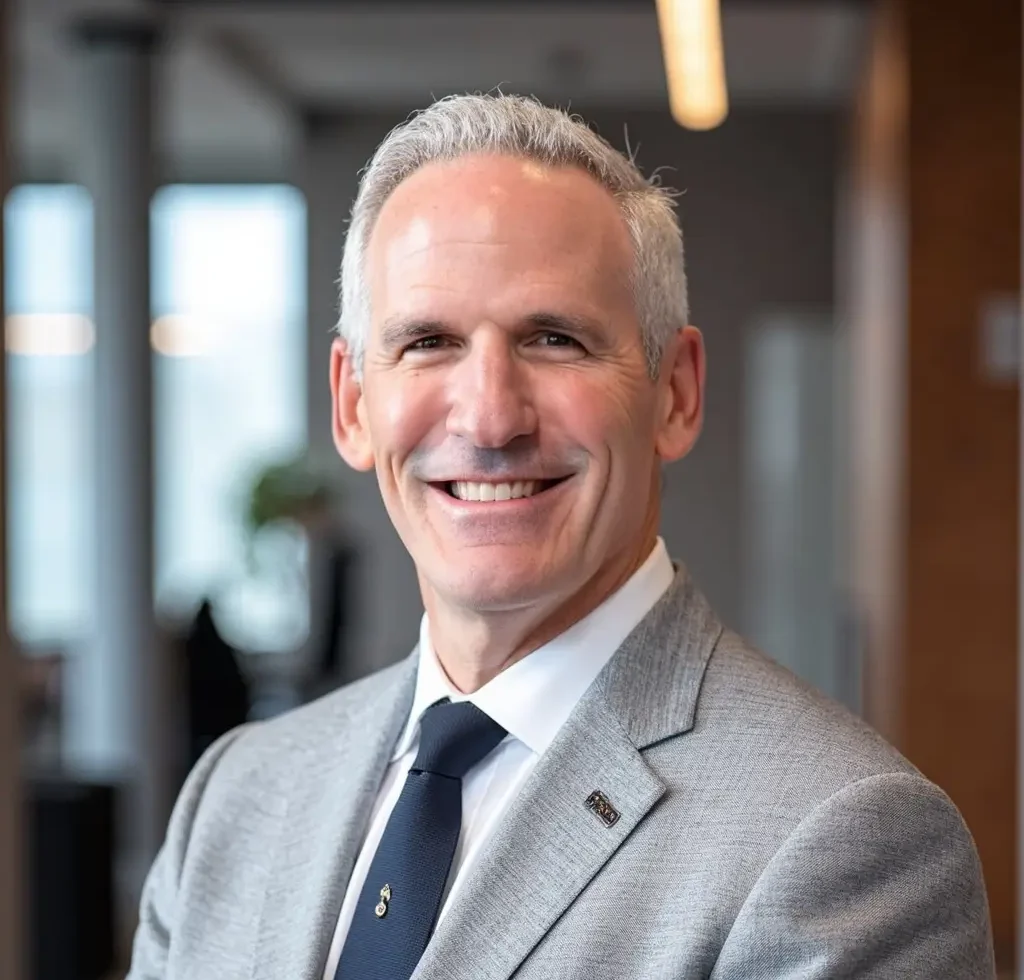
I recently went one-on-one with Jim Weiss, founder and Chairman of Real Chemistry.
Adam: Thanks again for taking the time to share your advice. First things first, though, I am sure readers would love to learn more about you. How did you get here? What experiences, failures, setbacks, or challenges have been most instrumental to your growth?
Jim: I got here by stumbling into and ultimately focusing on healthcare, staying curious, making plenty of mistakes, and surrounding myself with great people and clients. I graduated from the Newhouse School at Syracuse, thinking I might end up in entertainment publicity, maybe promoting bands like The Grateful Dead or Madonna. Instead, my first real work was in healthcare, working on Metamucil and Pepto-Bismol. I always say I started at the bottom, in the most literal sense, and worked my way up.
At the time, I didn’t even know healthcare communications was a real discipline. It was still forming then, but I quickly saw that healthcare was a place where communication could matter in a very real way. The science was complicated, and the stakes were human. And the people who invented the science were not always the people best trained to explain it. I made some hiring mistakes along the way.
Sometimes I tried to move too fast and definitely tried to do too many things at once. But I’ve always believed my success was a series of mistakes well made. The key is to learn from them and make those lessons useful. Over time, I also evolved as a leader. Earlier in my career, I was more of a driver. As I matured, it became much more about mentorship, coaching, and helping people do work they may not have done on their own, and seeing the potential in them that they didn’t see in themselves.
Adam: How did you come up with your business idea? What advice do you have for others on how to come up with great ideas?
Jim: I was the client buying these services and saw a gap in the marketplace of where it could be done better. I was working inside healthcare and life sciences companies, and I saw that many of them were founded or run by scientists. Scientists understand the science deeply, but they are not always trained communicators. Their work can be brilliant, but if patients, physicians, caregivers, investors, or the public can’t understand it, the impact is limited. I believed there was a better way to help healthcare companies communicate. Not one message for everyone, but a more surgical approach. It was about being more precise, more human, more connected to what people actually needed to know.
My advice is to get close to clients’ real problems. Great ideas usually come from watching where something is breaking down and asking why it has to work that way. Throughout the years, when a client asked if we offered a particular service or capability, I added it to our offering to meet their needs. This, in turn, built a business that was inherently client-focused and client-centric. This is something that could only be built by someone who came from the client side, versus a lifelong agency executive.
Adam: How did you know your business idea was worth pursuing? What advice do you have on how to best test a business idea?
Jim: I knew it was worth pursuing because the need kept showing up. Healthcare companies had important stories to tell, but the stories were often hard for people to understand, and patients, caregivers, and families were overwhelmed. When I was on the life sciences side, I was taught to follow the data to arrive at the right outcome. We applied that same practice at Real Chemistry. Applying data and analytics to create more precise engagement allowed us to reach the right patients and caregivers with the right solution at the right time.
I also think you have to test yourself. Every business sounds exciting at the beginning. The real test comes when the first version doesn’t work, when you make mistakes, and when you have to decide whether to keep going. For me, the opportunity was never just communications. It was bringing together people, data, technology, and storytelling to make healthcare more understandable, more accessible, and more human.
Adam: What are the key steps you have taken to grow your business? What advice do you have for others on how to take their businesses to the next level?
Jim: The biggest thing is surrounding yourself with great people. You can have the best strategy in the world, but if you don’t have the right people and the right culture, it will not go very far. Someone once told me that you define your culture by who you hire, and that has proven true again and again.
I also learned that focusing on the client really matters. Stay close to what they need, what they’re trying to solve, and where the pressure is coming from. Growth comes from listening, earning trust, and doing work that makes clients come back with bigger and harder problems. Everyone should have an owner’s mindset. That means you pick up the paper when it’s on the floor, because growth depends on people seeing what needs to be done and taking responsibility before someone has to ask.
Another important element of our growth was engaging with private equity. I self-funded my business to $100 million. At that point, I engaged with my first private Equity partner – Mountaingate Capital. Having a PE partner brought rigor as well as an appetite to build through M&A. In 2019, we engaged with our second private equity partner, New Mountain Capital. A partnership we still have today.
Adam: What are your best sales and marketing tips?
Jim: The biggest thing is you have to listen. Too many people go into a room ready to pitch before they really understand the problem. You need to show that you understand the problem and how to solve it. It’s about coming to the table with the gift vs the ask. You’re solving the problem while helping the client understand that you understand the problem. It’s better to be a better consultant and a businessperson first than a marketer. If you don’t know the business better than the client, then you have no business being there.
With respect to marketing, especially in healthcare, the challenge is that the science is complex and the regulations are real. But the job is still to make the information easy to understand, credible, and human. Most people don’t deal with a disease until it hits them or someone they love. And even then, it can be very hard to understand.
I also believe relationships are important. It’s not just what you know, but who you can reach, who trusts you, and whether you can get the right information to the right people in a way they can use.
Adam: In your experience, what are the defining qualities of an effective leader? How can leaders and aspiring leaders take their leadership skills to the next level?
Jim: I always say leadership is communications, and communication is leadership. Leaders have to make sure people understand where they are going, why the work matters, and how they fit into it. You have to keep contextualizing and aligning all the team members, so they fly in formation versus banging into each other.
Adam: What is your best advice on building, leading, and managing teams?
Jim: Get the right people around the table and give them room to do the work. Build teams with diverse thoughts and experiences. Find and coach people who are entrepreneurial, direct, and willing to learn. people who do what they say they are going to do. No excuses or caveats. That is part of my “make it happen” mindset.
You want to create a “do” culture. That means moving directly with thoughtful urgency, owning the outcome, and staying fluid enough to embrace and drive change. You need people who work as one in alignment, love what they do, and expand the horizon. And the standard should always be simple: why suck when you can become the best?
The pandemic also taught me a lot about flexibility and empathy. People were dealing with very different circumstances. Working parents, young employees back home with family, people isolated and scared. I became a better listener because I had to. The best teams have high standards and real humanity.
Adam: What are your three best tips applicable to entrepreneurs, executives, and civic leaders?
Jim: It’s about focus. You have to know your lane and can’t be too many things at once and still be great.
Second, hire people who are better than you in the areas where they need to be better than you. Don’t be threatened by talent, curate it and nurture it.
Third, stay close to your purpose. At Real Chemistry, we talk about people, purpose, and performance. I don’t think you get to performance unless you have great people who are aligned around a reason for being. For us, that purpose has always been about making the world a healthier place.
Adam: What is the single best piece of advice you have ever received?
Jim: Some of the best advice has come from my early mentors, including my mom, who always told me, “Once you think you’ve arrived, it’s time to go.” That stayed with me because it’s really about staying curious, humble, and in motion. Beverly Simons, my first boss and mentor out of college, gave me another piece of advice I still think about. She would say, “Don’t eat lunch at your desk. Get out and meet with people.” That was about more than lunch. It was about relationships, listening, learning, and being in conversation with people.
Adam: Is there anything else you would like to share?
Jim: I think we need more real conversations about health. Most people don’t deal with health or disease until it hits them or someone they love. I always say everyone gets hit by the bouncing ball. And even then, it is hard to understand. I’ve been deep inside healthcare for a long time, and even with that experience, navigating my own AFib and my wife Audra’s cancer was difficult. We knew what questions to ask, and it was still hard. That is why health citizenship matters to me. People need better information, better questions, better support, and more confidence navigating their own health. You shouldn’t just take one source at face value.
I also think prevention is going to be a big part of the future of medicine. Diet, exercise, better sleep, preventive medicine, early screening, and detection can save a lot of pain, suffering, and even lives. We are still too focused on treatment after people are already in the system. I am still learning and still trying to make a more direct impact. You can either agonize or organize. I choose to organize despite all the challenges.