
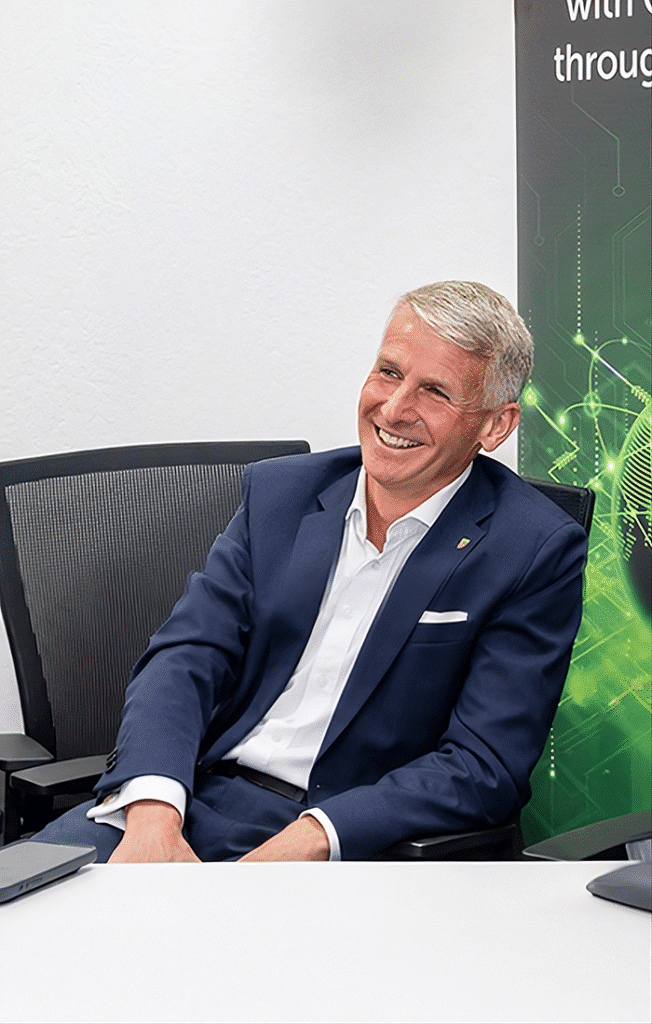
I recently went one-on-one with Johannes Hummer, CEO of Freedom Telecom International
Adam: Thanks again for taking the time to share your advice. First things first, though, I am sure readers would love to learn more about you. How did you get here? What experiences, failures, setbacks, or challenges have been most instrumental to your growth?
Johannes: I reached my current position as CEO at Freedom Telecom International by realizing early in my career how much value great partnerships can create and learning how to structure business relationships that deliver real strategic synergies. I started my career in mergers and acquisitions in the medical technology sector, where I spent close to a decade focused on deal screening, synergy analysis, fit assessment, and due diligence across Europe and the United States. That experience taught me how to evaluate opportunities rigorously and how to think about value creation from both sides of a transaction.
I then moved into telecom, which became the defining chapter of my professional journey. At Telekom Austria Group and later Vodafone, I took on progressively larger roles focused on partnerships, international growth, and cross-border execution. In my last role at Vodafone, I was responsible for the Middle East, Africa, Caucasus, and Central Asia regions, which gave me a global view of how telecom businesses grow across very different markets and regulatory environments.
Today, I lead Freedom Telecom International (FTI), a Dubai-headquartered subsidiary of Freedom Holding Corp. FTI was created to help telecom operators and technology companies integrate digital financial and lifestyle services into their ecosystems through strategic partnerships, joint ventures, and selective investments. FTI’s model is partnership-led and phased: we do not try to replace operators or ask them to become something they are not. We help them extend what they already do well into new value-added services.
I believe I am where I am today because of a combination of hard work, timing, a willingness to take calculated risks, and a strong instinct for strategic relationships that create synergies between businesses and industries. Moving from one sector to another can look like a risk in the moment, but in my experience, growth often begins when you step outside what feels safe.
Adam: In your experience, what are the key steps to growing and scaling your business?
Johannes: Growth starts with broadening your horizon and staying open to opportunities that may sit outside your immediate field of view. You need to be alert to synergies, agile in execution, and willing to turn constraints into opportunities. At FTI, that means thinking beyond traditional boundaries between telecom and fintech. We look for ways to create win-win structures that work commercially, operationally, and strategically for everyone involved.
Adam: What is your best advice on building, leading, and managing teams?
Johannes: The key point lies in carefully choosing your people. What comes after that in terms of building and leading the team becomes much easier when you have the right people in the right roles. I over-invest in the selection process and put my effort into defining our business goals and developing rigorous screening protocols. Another key need is to create the right culture that suits both your business goals and the people you work with. Speed, agility, and openness to collaboration are crucial to success.
Adam: What are the most important trends in technology that leaders should be aware of and understand? What should they understand about them?
Johannes: Technological and generational change is happening across all industries, especially in the telecom industry and the financial industry. With the rapid pace of digital change, there is a vacuum forming to build new relationships with new institutions and forms of banking. Intuitively, everyone feels that the companies who do not adapt now will soon risk being left behind.
This past May, FTI and our strategic partner Nokia were proud to inaugurate a joint Silicon Valley Innovation Lab near Nokia’s campus in Sunnyvale, CA. The lab will explore opportunities in next-generation digital infrastructure, artificial intelligence, cloud technologies, advanced connectivity, and telecom-fintech convergence.
Underpinning all this, infrastructure and energy will become increasingly critical. With each new generation of technology, energy consumption increases, so the world will need to focus on green energy solutions. Satellite technologies will also play a complementary role to traditional telecom infrastructure. While they likely will not replace conventional network towers, they can help offload traffic, particularly in rural regions. This evolution will require a more integrated approach between public and private sectors.
Adam: What do you believe are the defining qualities of an effective leader?
Johannes: A strong leader provides clarity about direction, strategy, goals, and values. You also need empathy, especially when working with teams and partners. Leadership is about steering the organization in the right direction while making sure people feel supported and understood along the way.
Adam: How can leaders and aspiring leaders take their leadership skills to the next level?
Johannes: Continuous learning is essential. Leaders need to define the direction they want to go in, then build the knowledge and experience required to get there. Passion and end-to-end ownership matter a great deal as well.
Mentorship is another critical component. Ideally, people should seek guidance from someone more senior within their organization and from another mentor outside it. You learn a lot from people you admire and trust.
It also helps to learn from peers and competitors. The broader your perspective, the more resilient and adaptable you become. That is something I’ve seen throughout my career, from telecom expansion to partnership-building across regions.
This same mindset is what drives FTI’s recent work. Within our first year of operation, we entered into a Cooperation Agreement with e&, a global technology and telecom group operating across 38 countries, to explore collaboration around fintech and digital services. Relationships like this help us test, learn, and scale in a disciplined way.
Adam: What are your three best tips applicable to entrepreneurs, executives, and civic leaders?
Johannes: First, look beyond your own sector. The world is more interconnected than ever, and the best leaders learn from disciplines outside their own.
Second, stay close to what is happening in the world. Technological progress and disruption will eventually reach every industry, so you need to be ready before they arrive.
Third, stay agile, adaptive, and unified. At FTI, we benefit from being part of the broader Freedom Holding Corp. ecosystem, which gives us scale, backing, and strategic alignment.
Adam: What are your best tips on the topics of sales, marketing, and branding?
Johannes: It starts with identity. If you cannot clearly articulate who you are and what value you create, it becomes difficult for others to see you as a strong partner. At FTI, we believe our partnership-led and phased approach is what makes us different. We are not trying to force a one-size-fits-all model. We are building with intention, and we are proud of the momentum we’ve created so far. Our relationships with Nokia and e& are good examples of how we are turning strategy into execution.
Adam: What is the single best piece of advice you have ever received?
Johannes: One of the most important pieces of advice I have ever received came from my mentor Hannes Ametsreiter, when he encouraged me to join Vodafone as Global Account Director. That role gave me a far more global perspective and shaped how I understand different cultures, markets, and regulatory frameworks. The more you work across borders, the more you appreciate diversity and cross-cultural sensitivity, and those qualities are invaluable in business.
Adam: Is there anything else you would like to share?
Johannes: I would emphasize the importance of balancing innovation with discipline, especially when it comes to emerging technologies like AI. What excites me most is our larger mission that FRHC as a whole undertakes. We’ve had the opportunity to engage with leaders and policymakers at forums like Mobile World Congress, GITEX, and the IMF-World Bank Meetings, where conversations around connectivity, inclusion, and digital growth are increasingly central. We also came together internally at Freedom Inside 2026 in Astana, which helped us to align with the various components of the broader Freedom ecosystem. At FTI, we are focused on helping telecom operators unlock new value through partnership, while keeping the customer experience, the regulatory environment, and long-term sustainability in mind. That is where the future is headed.