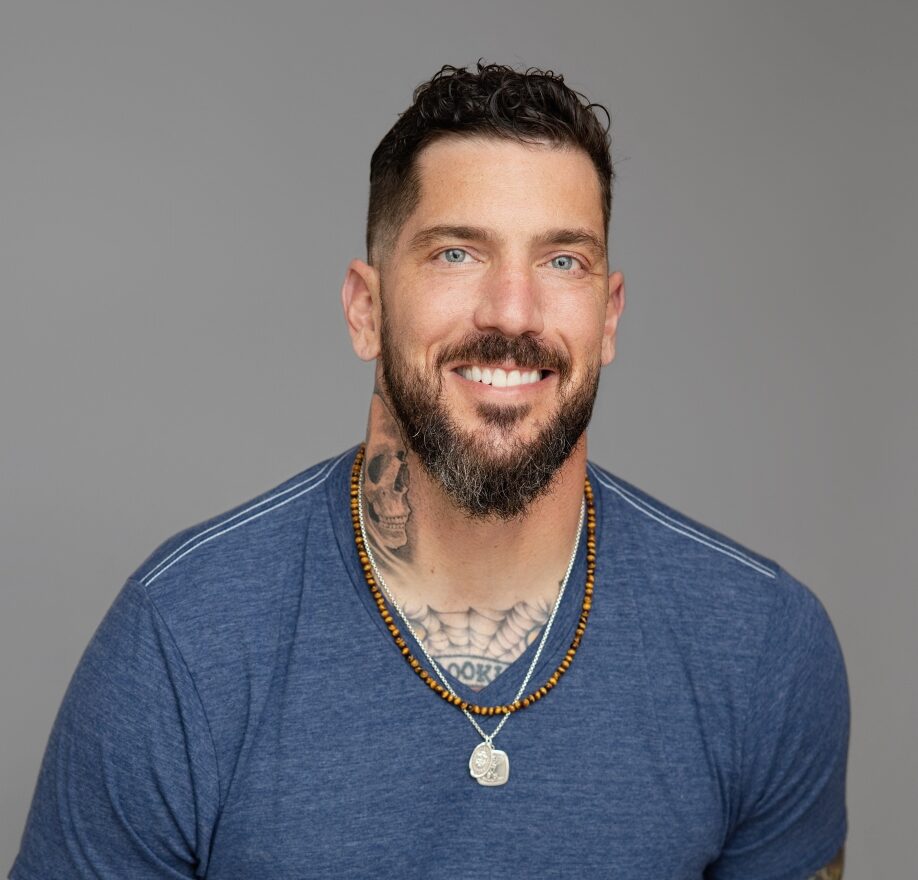


I recently interviewed former Cisco CEO John Chambers on my podcast, Thirty Minute Mentors. Here is a transcript of our interview:
Adam: Our guest today is one of the most successful leaders in the history of Silicon Valley. John Chambers spent two decades as the CEO of Cisco, transforming the company from a $2 billion business to a nearly $50 billion business when he retired. John is also the founder and CEO of the venture capital firm, JC2 Ventures. John, thank you for joining us.
John: Adam, it’s going to be a pleasure. I look forward to a fun give and take on this, and if your listenership agrees with everything I say, I failed. I want to make them a little bit uncomfortable on leadership and opportunities, and challenges in front of us.
Adam: But John, I’m excited. You grew up in Charleston, West Virginia, yes, I did, and at an early age, you were diagnosed with dyslexia in an era when most people didn’t understand learning disabilities, let alone understand dyslexia. Can you take listeners back to your early days? What early experiences and lessons shaped your worldview and shaped the trajectory of your success?
John: Well, you’ve raised both West Virginia indirectly, my parents and family, and how do you deal with challenges in life going in the sequence that you raised it? My parents were both doctors, and in second and third grade, I was having real trouble reading, and they would read with me each night, thinking that would help, but all they were doing was reinforcing a process that wasn’t working, and it was before dyslexia was really understood. But they found a teacher that helped work with young people with learning disabilities by the name of Mrs. Anderson, and over a period of two to three years, I went from being very nervous in the classroom when the teacher would come down the row asking you to read because I knew I was going to mess it up, and the kids would laugh. She taught me the techniques to work around it. You still have the dyslexia as part of how you wire your brain, but she taught me how to deal with the weaknesses of it, then she taught me how to deal with the strengths of it, and it is a strength in many ways. Anybody who’s dyslexic they normally emotionally connect with others because you don’t laugh at others once you’ve been laughed at, and it taught me how to deal with a challenge in life that with the help of my family and a special teacher, I was able to overcome and then make a strength for me. It will surprise your viewership to know that about a third of the CEOs in the world are dyslexic, and I can see it because I watch their thinking pattern. So when I meet with them, I’ve met with all the government leaders around the world multiple times, almost, and the business leaders, I watch their thought process, and then when we were by ourselves, I asked, you’re dyslexic, aren’t you? And they go, how do you know? And I said, it’s how you connect the dots and how you move forward in terms of the direction. Then I ask them, will you share with others your dyslexia? And almost all of them say no, because if you do, it’s a weakness, and even right now, you can’t see it, Adam, my hands sweat talking about it. However, I do talk about it all the time. And Charles Schwab and Richard Branson and I did an article in Fortune many years ago that talked about dyslexia, because it really helps. People have dyslexia, the parents will always tell them they’re smart, but the parents don’t have credibility there. But when you hear people have been successful, and how they deal with it, and you connect emotionally with how they think about that fear that never leaves you, you build relationships and trust. Everybody talks about your strength and your comments on Cisco and creating 10,000 millionaires at Cisco and the employees the first 10 years, and becoming the most valuable company in the world, and doing 180 acquisitions and setting the model for it was really cool and tremendously positive, a lot of lessons learned. But I’d argue it’s the lessons learned from your challenges and how you handle your setbacks determine who you are, including down to West Virginia, you were there in the Greenbrier recently, White Sulphur Springs, and West Virginia used to be the number one state in the nation per capita on millionaires, and we had more millionaires in West Virginia when I was growing up than the UK. Had 250,000 coal miners, 7,000 key McCoy engineers, much like the Silicon Valley of the past in Charleston, West Virginia, for FMC, DuPont, Carbide, and we lost our way, and because we missed market transitions, we went down to number 48, 49, and 50 in terms of economic standards states. Now we’re turning this around, and I’m heavily involved with playing a small role in making that happen on education and attracting business there, changing the business school and the med school on it. But very proud to be from West Virginia, but to answer the indirect part of your question, giving your audience a chance to get to know who I am and what motivates me, why I’d like to talk about the success is always more fun. I think leadership and how you handle your challenges in life are as or more important than your successes on how you end up. And so a great question to start with, and hopefully it’s a way of connecting with your audience.
Adam: I love what you shared, and I love the lessons as you spoke about what you learned from growing up with dyslexia and learning from a very early age. I’m different. People might not understand my difference, but by understanding how I’m different, what might be perceived to be a weakness, and what might be a weakness in some ways, can actually be a real strength. And if you can shift your perspective and not just look at weaknesses as weaknesses, but try to understand, how can my weaknesses actually be interpreted as strengths that can allow you to be so much more successful?
John: It can, and I speak every year to schools that specialize in dyslexia, or speak to people that write about it, because having those role models, most people will not talk about it. And it takes you how to be using young people’s view weakness determine it into a superhuman strength, and you want them to feel that way. And most people, as I said, are pretty humble that have dyslexia, and they’ve learned from it in terms of direction. And you give them hope and direction on what’s possible, and then you teach them how to dream. And so once you’ve overcome challenges, not only can you be a better person, you can be a better leader for my startups. And I’m very fortunate to have 24 startups, and I have 11 unicorns in that group, two decacorns, i.e., $10 billion plus valuation. I teach them very much, what is leadership about. How do you handle your successes humbly? But how do you keep innovating and push the envelope to lead? But you’re really a product of your culture and how you handle your setbacks even more than your successes. And so while I’ve been very fortunate in my startups, and I learned from doing 180 acquisitions at Cisco, and most people in the world would say we’re the model for high tech, and the CEO of Walmart said, John, I actually use your model today for doing acquisitions, even in a wholly different industry, in retail, you get a pattern that is repeatable, and you teach others how to do it. And I look for companies or individuals that have been knocked down and have come back, and I find they are much more likely to achieve in life as individuals or as a company. And those are the ones that I like to bet on when a leadership team has perhaps had a misstep or has failed, and they form another company, and they come back, and here’s where I want to go. That’s one of the ingredients I look for in terms of success.
Adam: Let’s talk a little bit about your success. What were the keys to rising within your career, and how can anyone rise within their career?
John: My parents, as I mentioned earlier, were both doctors, and they taught me the equalizer in life was education. But with a great education, you had to be in the right location, and I learned that hard, and I did the parallels to West Virginia with the comments on it with the internet. All of a sudden, your location wasn’t as important. It’s a great equalizer in life. And so my lessons learned is that their natural evolution of things that occur in the economy or in your life or in geographic locations, but those that are really successful learn how to adjust as you navigate through those different times, and so it taught me how to adjust quickly and reposition myself and my companies for the future. I’m a dreamer, Adam, and I have no apologies for that, but I know how to make dreams come true, and hopefully, always in a humble way, I am able to connect those dots in ways unique because the dyslexic can’t read A, B, C, D, E, F, G, H, I, J, we lose our spot. I’ve learned how to go A, B, and jump to the conclusion. Then get people around me who are really good on operations, and then I set out almost impossible dreams, not because they’re impossible, well, but because I can see a vision through what can be done, picture the outcome, write the press release, and then say, how do we get there? And so I am a dreamer. I apologize. I’m very competitive. Sports kind of helped me balance my issues in reading. I could make whatever grades I wanted on the math and sciences, that just came easy, but reading and languages was really hard, and I was fortunate enough to be good in sports, almost all, but not great in any of them. But it teaches you the teamwork and the coordination on it, and that combination of things allow me to be a pretty good leader at Cisco. And I’ve seen every movie. I’ve made every mistake there is. With your permission, I’ll probably challenge your listenership today about dreaming bigger and perhaps stating some things that some people might not agree with me on, but that’s how you learn in life. And I like to make people a little bit uncomfortable in terms of getting to the goals that I think we need to. So when I talk with dyslexics, I talk about you’ve got to dream bigger and realize that it’s only a weakness if you make it so. Learn how to deal with the challenge and then play to the strengths of it with businesses or communities that perhaps are struggling. I’ve got to say, what are you going to do differently? How do you build a great culture, which is as important as strategy? How do you build a great team, and how do you dream what you can do together and then go after that with your heart and your soul and make it happen? So very often, the dreams or the projections that I’ve held out, most people would say, are impossible to achieve, and yet, normally, I’ve been able to do that in business and in the personal life. I’ve been very fortunate. Part of that also was family. I was very fortunate to have a very strong family around me.
Adam: What were the most important skills that you developed that allowed you to become such a successful CEO and such a successful leader?
John: They are often basic, Adam. The number one thing is, I never get hard work confused with results. You were talking about the coach of Indiana football. I was talking about Coach Duke Krzyzewski. Leaders have a way of outlining very aggressive plans and pushing their organizations to be one or two, and I learned that also from Jack Welch, a generation in front of me, in terms of one of the best leaders of an older generation, if you will. And his philosophy is, always be one or two or don’t compete, and it forces you to think out of box how you get there. So never get hard work confused with results. The second thing is, it’s about the team that you build and how well you recruited, how well you develop it. I’m a believer in sharing. Third is it’s culture, and culture is as important as strategy and vision. There’s good cultures. There are tough cultures. They all work as long as you’re consistent. For me, I’m a team player in culture, and you win as a team, and you lose as a team, and we don’t expect to lose very often, so we share the success of my companies with all the employees more generously than anybody’s done. I referred earlier the 10,000 millionaires we created in the first decade of my leadership at Cisco in the 90s, and you’re from LA, so you know what it’s like. But Silicon Valley, you could buy a million-dollar house, and you had a mansion when I got there, and a million dollars was huge. Today, that is maybe a fixer-upper in certain sections, but it is sharing that. And at Cisco, we were the most profitable, most valuable company in the world, but we are also number one in corporate social responsibility in every major country in the world, and we won the top corporate social responsibility award from the combination of George Bush and Condi Rice as Secretary of State, and then we ran it from President Obama and Hillary Clinton, Secretary of State, and wherever I was, number one in social responsibility. It didn’t matter if it was in Eastern Europe or Israel or the Gulf states or in my home state of West Virginia, or around the world, we were also number one in business returns. And so I believe in giving back. I’m a huge believer in you, and I talked about it earlier on communications. And so it isn’t just up to the CEO or the head of sales or marketing to be good on communications. I put all of my leaders, including my 24 startups, in front of customers regularly, and have the customers say, how good are your communications? What do you need to do better? How do you interview for a podcast such as yours, or for key video media events, and make that a key element? And then I’m a believer that in business, putting the customer always first is very important. And then last sounds basic, just do the right thing. If your culture is right, you do the right thing. You can handle any of the challenges that come at you, including huge setbacks.
Adam: John, you shared a lot that I would love to dive into something that you shared right off the bat, as you were describing what makes you unique, what makes you different, your superpower, your ability to go not from A to B to C to D, but to go from A to B to Z, and that’s a unique gift, and that speaks to something that the very best leaders have, which is vision.
John: Well, I don’t know if it’s a natural skill, I think you develop it over time, and often you’re fortunate enough to have people around and mentors, and I strongly encourage that for all your listenership, to have mentors with different skill sets that will help educate you and teach you, and especially help you through the problems. And then you’ve got to have the drive to do that. It’s got to be important to you, and you’ve got to lead by example on it. And also, you’ve got to realize that if you aren’t able to anticipate the challenges coming at you, you can get left behind. And it doesn’t mean that challenges are unfair or not overcomeable, but you’ve got to deal with the world the way it is, as my parents, who were doctors, taught me how to do. And so it is that ability to do pattern recognition. It’s my strength ties back to dyslexia. I could never get an A in English or languages no matter what I did, and I didn’t like process originally, but then I learned to get really good process people around me, my CFO, Larry Carter, the first one ever had was amazing, and the people out of supply chain and CIO were also amazing for it. You’ll notice I used their names, Carl Redfield, Randy Pond, Rebecca Jacoby, and I surround myself with great people, and then I motivate them to win as a team, and I build a team that’s very competitive, but treats people like we’d like to be treated. So you learn it over time, and you do it from listening to people, such as your broadcast and lessons learned from each of the people that you interview. You’ve done 1,000 interviews. I’ve done 48 podcasts with leaders. Every time I do it, hopefully I get the audience to learn, but I learned myself, and I end up taking notes like I am today of things to learn on it. So those would be some of the just shared transactions that really worked for me. What I didn’t realize in teaching that to others how important stories are, and I now use stories both for how you handle successes and challenges, your fear. The comment went dyslexia. My dad taught me as an early youngster, and I was a pretty good swimmer, and we were fishing in a river called Elk River, and it was a pretty rapid area with rapids. You catch your fish actually in the rapids. And I was six years old, and I was used to fishing with my dad out of a canoe or being on the bank together. He put me in the best spot to fish in the river, but it was the top where the rapids were the fastest. That’s where the fish work. And he went up above me and was fishing on it, and he said only two things, John, you would have a temptation to get further out in the rapids. Do not do that. And if you’re out there and you’re not steady, when you get a strike, you lose your balance, and people can die in this rapid, so please don’t do that. And I assured him that I would not. And like any six-year-old, I was casting pretty well, and I wanted to get a little bit more distance. I moved out, and I got swept out into the rapids, and I was in trouble, Adam. I mean, I knew I was in trouble, and my dad was hugely upstream, and he yelled at me, hold on to the fishing pole. Hold on to the fishing pole, and I’m going down there. I’m getting bounced off of rocks. I’m thinking, I’m going to drown. And he’s yelling, hold on the fishing pole. Well, obviously, I wasn’t going to drown if he was going to tell me to hold on the fishing pole. So I grabbed a hold of that fishing pole with both hands and held on to it, and ended up at the bottom of the rapids. He came down, swam out, and got me, set me down on the shore, and said, what were the lessons learned? And of course, one was, Dad, you told me not to do that, and I apologize. He said, that’s not the lesson. The lesson is always to be very calm the more hectic things are. Calmness is what you’ve got to do. Focus on the solution. And when you’re in those rapids, focus on what can hurt you. It’s clearly hitting the rocks. So get your feet up in front of you, lean back, be calm, you’ll float better. Take the rocks with your feet as you go through it. Then when you get to a spot where you can see your way out, don’t try to swim straight over, angle to where you want to get out, come over and do it. But maybe just be training calm. And he said, did you get it? I said, I got it, Dad. He said, then let’s go again. He took me up to the top of the rapids, and he said, I want to see you jump in and go. He put me in again. I never told mom that. I went through the rapids, but he had taught me how to deal with it, and I got out. That’s a lesson in life that has served me well. I know how during a crisis, and maybe because they were doctors, that’s when you got to be the calmest, and you just think through it carefully and analyze it, and work your way out. It’s true in business, true in life, etc.
Adam: Calmness under pressure, essential to successful leadership. Being focused on the solution, the ability to get to the truth, building a culture of excellence, sharing success, empowering people, surrounding yourself with great people, and motivating them. Who do you look for in the people who you surround yourself with, and how do you motivate them to be at their very best?
John: Boy, you’ve asked about eight questions for it, and I’ll probably will forget one or two of them, but the first thing that I try to do is be a clear communicator on both expectations and arriving at the truth. And I wouldn’t have led with that, but you did, and it actually makes tremendous sense. My currency and your currency, Adam, is your track record. It’s the relationships you form and trust. Trust ties to truth in a way that people anticipate and buy into, and so how you bring those together is key. Within sharing my expectations, make no mistake, I hold my teams very accountable for results, and I set very tough goals, and I expect them to achieve it, but in my entire career, I’ve never raised my voice, and I found that it’s both the calmness issue, but also holding people the expectations and treating them with respect. It’s the right thing to do and get your results overall. Then you got to get stars. You’ve got to have your own role models, and you’ve got to reward the behavior you want and be candid about the overall approach. If you’re going to get to the truth, you have to often share your mistakes, and the biggest mistake I ever made in my life, business-wise, was I got every market transition right. For 10 years at Cisco, we grew a 65% average each quarter. We overachieved the market expectations 47 quarters in a row, became the most valuable company in the world, and I missed the dot-com bust. I just missed it, and I kept doing the right thing too long. And first week in December of 2000, I was growing at 70% year over year. By mid-January, I was shrinking at minus 45, which is impossible. I’d never been below 50% growth. My customers didn’t stop ordering. They went out of business. And it’s those lessons learned and being transparent on it and say, what should I have done differently? And it hurt. I wasn’t sure I was the right leader for Cisco to lead them through this, because I’d already got us into trouble. But then once I decided that it was the right thing to do to lead us through this, I went after it. My heart and soul was always due, and we recovered quicker than anybody else and came back pretty well, but I had to lay off 7,584 people. These were all people I hired. They were my family, Adam. I knew every illness that was life-threatening in every employee, their spouse or their kids in the world, and we were there for them like no other company. I do the same thing with critical account situations. If my networks were causing the customer to be down, whether it’s a customer’s issue or our issue or something else, we were there for them. I listened to every critical account in the world 365 days a year, and my teams knew that I was listening. They focused on it. We got it fixed. So my customers trust us, and the way that you can fix those issues is just get the truth out on the table, and it’s never exactly like each of us see the truth. It’s how you see it from a different angle. But if you piece it together right, then you can identify the transaction on the systemic issues, and then you can go after it successfully. So I like the way you lead with truth, and I’m going to think about how I tell more stories about that and use it in some of my examples when I speak publicly as well.
Adam: I love that your currency is your track record. Past is prolog. How do you know who I am? Look at what I’ve done in the past.
John: Then go to relationships, and people will tell you what you are like, and then ask them, did you develop the trust?
Adam: And when we talk about motivation, and when we think about motivation, we often think about fiery halftime speeches. We were chatting off the air about Kurt Cignetti and Coach K, and I recently saw a press conference that Mike Elko, the great coach at Texas A&M, gave and his team was down big at the half. And one of the reporters asked him, what talk did you give at halftime to get your team to come back? And he said, it wasn’t about my speech. It was about everything that we did before the game. And motivation isn’t about being the most rah-rah coach, the most rah-rah leader. Motivation isn’t about yelling and screaming. On the contrary, motivation is about trust. Motivation is about wanting to do what you’re going to do for the people who you’re doing it with.
John: I agree, motivation, to me, often was the ability to outline a vision and say, here’s what we could accomplish together, whether it’s West Virginia and our comeback as a great state and to get back to economic standards that we had when I was growing up, and the courage to change the education system, to attract businesses in, to dream what’s possible, but be practical on where we are. I do believe there are times when you’ve got to give that halftime speech to a business or to a family that’s going through a huge health issue, and they’re not sure if they’re going to live or not, and how do you think through it? Or to a company that gets knocked on its tail, including if I was the one that made the mistakes that got it knocked on the tail. So make no mistake about it, I can give that motivational presentation, usually not fiery, but boy, emotionally connected, and you’ve seen the combination of stories, track records, the relationship we’d have, trust, be practical on what caused our issues, what we’re going to do differently, outlining the vision of what we look like when we come out, and here’s how we’re going to lead it. But it’s a combination of all the above that actually is most effective for me. And then, as you’ve already figured out, Adam, I learned from everyone and learned from you on the podcast today, your techniques and how you approach it, and some of the key words. But there are times when you’ve got to say, follow me. Here’s where we’re going to go, and trust me. And you often have to do that when the team’s hurting the most and when there’s a fear that something really bad is about to happen, and not sure of a pattern to get out of that, and can’t say just work harder. Rah, rah, let’s go get it. You got to be realistic on what caused that fear or the problem. You got to see what you’re going to do differently than how you go forward, and then you’ve got to develop people. I don’t mind ever asking a friend to help me, but I have zero hesitation about a friend asking me to help them, and I do that probably every week on health issues, even though I no longer have 75,000 people reporting to me. I help people who have issues, and I can usually get them into the right hospital, whether it’s MD Anderson in Texas or UCLA or Stanford or the Cleveland Clinic. If you got a health issue, if you have one, that’s where I would recommend you go that’s real serious. On the heart, I mean really serious, and help them when they need it the most, and you form trust and friendship there perhaps more than any other time, because that’s when life is most challenging and fearful, is when you’re potentially to lose a loved one or yourself. And there are people that can share the experience and the stories and help connect with the doctors and stuff. And that’s not only the right thing to do, it builds trust with people. My teams will follow me just about anywhere, and I’d follow them, and it is that ability that makes this really hard to beat. So my startups, they’re normally one or two in their category, and Cisco, we had usually an average of 50 to 60% market share, which is unheard of for a market that is big as the internet. It’d be like being 50 or 60% market share in the AI world today. But it goes back to the basics of who you are, the cultures you want, and there’s not a right or wrong culture. You just got to be consistent on it and predictable on it.
Adam: And you just shared the heart of leadership, being a good person, being a caring person, being someone who is there at a fundamental human level, being someone who is reliable, dependable, someone who is there for times good, but more importantly, for times bad. If you are the person who people around you can turn to no matter what, they’re going to perform for you.
John: They will. But Adam, also, I wouldn’t be doing my job, because your readership will say, yeah, but boy, there are some great leaders who are not compassionate, who are not family oriented, who focus just on the bottom line, who are tough, and I think multiple cultures work. You’ve got to be consistent in it. And while you and I believe in the teamwork and the collaboration and the trust, make no mistake about it, there are some very effective leaders who do not believe a company is a family. It’s a professional organization. It’s up or out. It’s about your number one goal is to get return for the shareholders, not necessarily corporate social responsibility, and they can be very successful. So I think the key takeaway here is leadership is about outlining the vision and a direction for your organization. Determine what your culture is, and multiple cultures win, but you’ve got to be consistent in that, and you’ve got to understand the strengths and limitations of your culture as you drive it through. But you and I both know there have been some rather heated coaches at times, Bobby Knight at Indiana, and basketball for it. It’s not a style that I like, but in Mike Krzyzewski, learned from him in a very positive way. But multiple styles do work, and I don’t want to mislead anybody listening that to me and to you is much more fun and a better outcome with the values we said, but understand there are other people that take a different approach and a different path, and who’ve been remarkably successful as well.
Adam: How can you create a culture of innovation?
John: You know, it’s a great question, because I believe as a company, be it a small startup, a big startup, a very large company, or culture of a country, you have to outline that vision. Prime Minister Modi in India does an amazing job of that. I was honored to be kind of his wingman on his Digital India strategy. And here’s the innovation approach they’re going to do in the 12 planks that they have on it, everything from smart cities to startups to increasing standard living. And drive through, whoever leads an AI innovation will lead economically, GDP, defense-wise, etc. And so the first thing is, you have to say why it’s important. Secondly, you’ve got to build the education programs that develop the talent for you that does it. Third is you’ve got to tie the rewards to the outcomes that you want. Fourth, you’ve got to tell the worst stories and get the role models there. And fifth, something that took me a while to learn is I used to consider process and, quote, playbooks as overhead and bureaucracy. When I got really good process people around me, such as the ones I mentioned at Cisco with Larry and Carl and Randy and Rebecca and many others, I learned that process actually allows you to move with tremendous speed. And so I have a playbook that I ran for acquisitions, for the 180 I did. I had a playbook that I ran when you came to crisis management. I had a playbook that I ran when I entered new markets, and a combination of, what do you do yourself, what do you acquire? And because I had that playbook, and everybody in the company knew their role within that playbook, we moved with a speed that was almost unbeatable. So I could get an idea from the head of NASDAQ on a Thursday night about a company I should acquire, and it was common knowledge that they were going to be sold, and that there are a number of my peers and competitors in there for him, and he called me up and said, John, you’re an idiot. And I said, Bob, I know that, but what did I do now? And he said, you’re missing an acquisition. You should be all over it, and how did you miss it? And I said, can you tell me who it is? And I was really embarrassed, because I didn’t even know the name of the company. And he said, this is natural for you. I had to trust in him, and he had the track record with me, so I called up the CEO. I sent my head of business development over there at nine o’clock the next morning. He called me at 10, said, you got to get over here. I went over, met the CEO, looked at their strategy, looked at their direction, had a handshake at lunch for a $3.2 billion acquisition, put it through both boards, got HR involved, announced to the market and all the people, including the packages, coming over Monday morning, that is process. And so instead of being a dirty word, it’s much like I learned how to deal with dyslexia, a process that is replicable for it, and I gained an appreciation, something I wish I’d learned earlier in life, because, boy, it allows you to be tremendously effective. I still have no patience with bureaucracy, and I am an impatient person, as you’ve already figured out, but I learn from others, and then I get people around me who complement my weaknesses, and then we have no fear. We just go for it.
Adam: How can you instill that kind of mindset into your organization as a leader?
John: Culture starts at the top. The leadership has to own it. They have to articulate why it’s important. They’ve got to tie culture to the business success and business strategy, and then they have to reinforce it on their reward systems, who they promote, the type of people they recruit. How do they deal with problems that are culture violations even more important than performance violations in terms of the company, so you got to walk the talk. So it’s a combination of things, and you’ve got to believe it’s important, but it’s got to be owned by the top man. If the top doesn’t own it, you see it. You see the challenges.
Adam: You mentioned, albeit fleetingly, AI, and I know that that’s a huge focus for you. It’s been a huge focus for you for almost a decade now. Yes, it has. What should leaders understand about AI? Where is AI going? And what can and should we do about it?
John: I think if you look at a country’s success, a community’s success, individuals, job creation, etc., the industrial revolution, and what followed. America was a great example, from an agricultural environment to an urban environment, industrial environment. But technology in the early 90s, with the internet, changed the way you work, live, learn, and play. It wasn’t about moving around zero, one over a network with scientific people talking to each other. And when I said it’s going to change the way you work, live, learn, and play, people said, no, you do traffic monitoring. But yet, we all know it did. You take the power of the internet and how it changed your listenership, their lives. Think about AI is five times the speed and three times the outcome of the internet, and that all of us will be using it in our regular routines in the next year or two. And remember, two years ago, most people couldn’t spell it prior to Microsoft going after OpenAI. As you were kind enough to say, I started on it a decade ago when people couldn’t spell it. I knew that dyslexia moment, I could go A, B, Z, then I go to customers and verifies this right, and then I bet on it huge about the role that it would have. It’s something not to be feared. But boy, it is going to be so powerful. It will have tremendous strengths. It will drive productivity, in my opinion, at 10% plus per year for well-run companies. That has huge standard of living implications for it. It will allow us to cure most forms of cancer, because it’ll be able to compile such big data, run the analysis through it. It will be able to do things that will shock you, that we consider impossible today, and it’ll have weaknesses, because bad people use AI inappropriately and include donations in terms of how they do things differently. So you want to learn what it can do. You realize that if you don’t use AI, if you don’t reinvent yourself, you’re going to get left behind, and I mean really left behind. Not the story of West Virginia that I told earlier, that now we’re coming back on. And by the way, their business school and others, they teach AI, data security, etc. Their enrollment is going up dramatically at the university, and their economy is picking up as well. So that’s the kind of things you have to build in. AI will drive the stock market this next year. I said it was going to drive it last year, and it did. AI will enable us to do things that we considered impossible, but it’s how humans use AI, and I don’t believe it’s a bubble. I believe there are going to be pockets that will have tremendous train wrecks. But AI, we’re in the early innings. If you’re a baseball fan at all, just getting started, inning one or two. It will be the driver for not just this decade, but probably for this century. So that’s how I think about it. There will not be any businesses that aren’t heavily involved in AI, regardless of what industry type you’re in, and it’s the future. We need to understand its strengths and its limitations. It has severe limitations, and that we’re probably going to destroy more jobs in the short term than we create, and that the internet destroyed a lot of jobs, that we created many more. We need to think more about job creation in this AI world as we move forward. That’s my number one worry about it.
Adam: How can leaders most effectively utilize AI?
John: Lead by example. Don’t say it’s important and appoint somebody else to go do it. Take ownership yourself if you’re the leader of the country. Modi clearly does that in India. Our president here in the US made it a top priority for us as well, first president since Clinton. Clinton focused on the internet being the economic engine for the country, and I was honored to be at the White House and scared to death on the press conference where he announced it with Vice President Gore and myself, the internet era, and he was right. It drove the economy during his administration. I think President Trump understands that as well. So embrace the technology and go for it regardless of your political views and direction, and have the courage to realize it will make you uncomfortable and constantly reinvent yourself.
Adam: John, what can anyone listening to this conversation do to become more successful, personally and professionally?
John: Be curious, learn from others. For better or for worse, technology is going to be required in every job imaginable and in your personal life. So even if it makes you uncomfortable, do what the dyslexics have to do. Learn to deal with it as you move forward. Playbooks go a long way. There are bureaucracy, getting a replicable playbook that allows you to do things in your personal life or your business life, whether it’s your routine to stay in shape and exercise, or on what you eat, etc., or how you lead a company, or how you lead a small group of people, or how you contribute as an individual. And I guess last, have the courage to dream. You’ve got to have the courage to dream, to innovate. And in this world, and I worry about our country in particular, we’re not dreaming big enough, and then treat people like you like to be treated yourself. That golden rule goes an awful long way in terms of success.
Adam: John, thank you for all the great advice, and thank you for being a part of Thirty Minute Mentors.
John: Adam, if everybody agree with what I said, you and I failed. You gave me a couple of chances to get people a little bit uncomfortable, which I like doing, and I like when people do it with me, because it forces you to thank. It’s an honor to be on your podcast. Thank you very much. When I say friends for life, I really mean it. You’re kind of stuck with me. If you’ll ask.
Adam: John, I love it, and I’ll be honest with you, there were a couple of things that I disagreed with you about, but because this is Thirty Minute Mentors, we kind of had to leave it there. But because we’re friends for life, I look forward to engaging with you in those conversations sooner than later.
John: I like it, by the way. I’ll learn, and I don’t have a problem changing. If what somebody presents to me is different than I thought, or here’s a better solution, I have zero problem. I don’t have a not invented here syndrome. I just want the right outcome, and so it’ll be an honor. And Adam, one of the main things I like about you is you, and I won’t always agree, although we do a lot, but on things we disagree on, we actually probably learn from each other and end up with a better solution than either one of us would have done.
Adam: I love that, John, thank you again. Really enjoyed it.
John: Be safe.