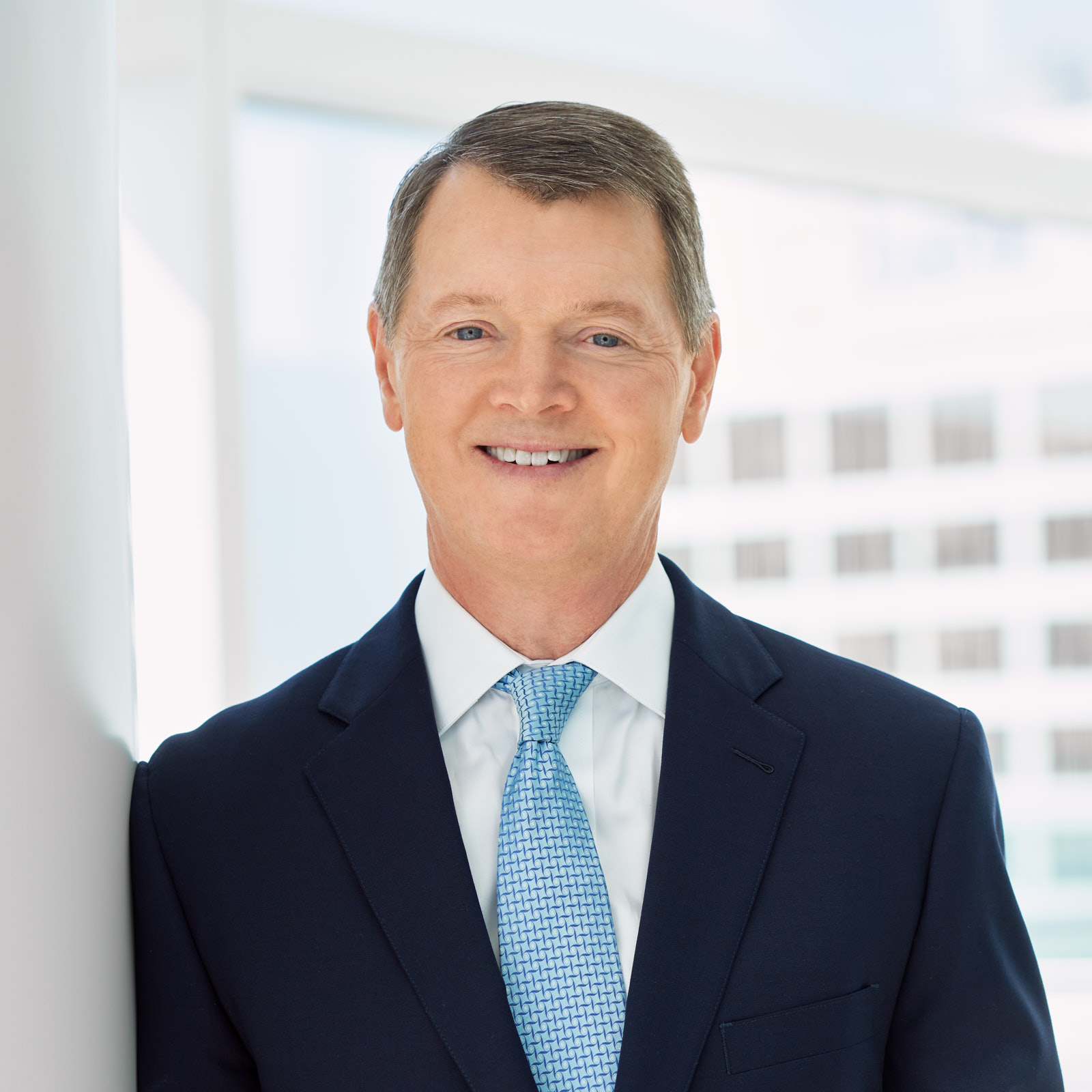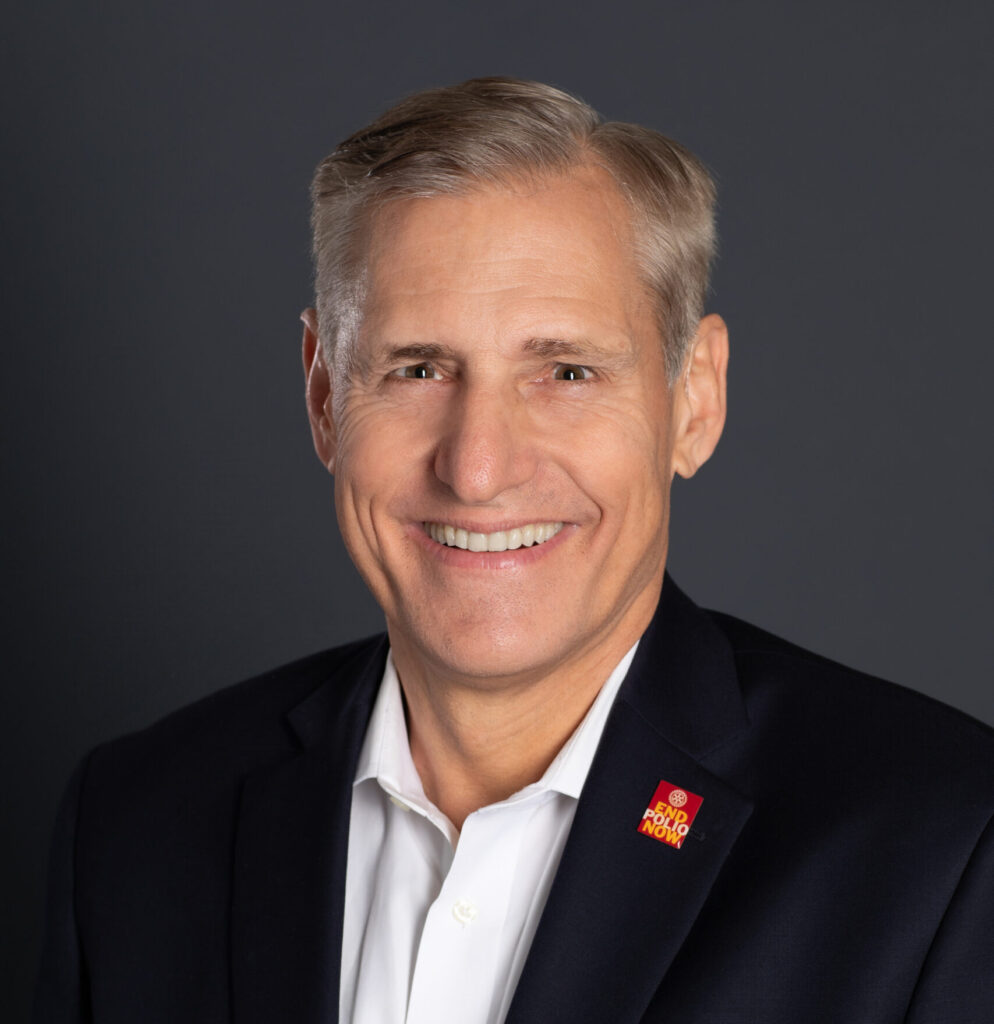
I recently interviewed Rotary CEO John Hewko on my podcast, Thirty Minute Mentors. Here is a transcript of our interview:
Adam: Our guest today is the leader of one of the largest and best-known service organizations in the world. John Hewko is the CEO of Rotary International, consisting of 46,000 Rotary Clubs and more than 1.2 million members. John, thank you for joining us.
John: Delighted to be with you.
Adam: You grew up in Detroit, you’re a big Detroit sports fan, and much of your childhood was shaped not only by your love of Detroit sports teams, but by your parents’ upbringing. They grew up in Ukraine. You wound up spending many years later in your life in Ukraine, leading a law firm there. Can you go back to your early days? What early experiences and lessons shaped your worldview and the trajectory of your success?
John: As you said, my parents, originally from Ukraine, came to the United States in 1949 after the Second World War. When the war ended, they spent four years in a refugee camp in southern Germany as the Soviet Army started marching back through Ukraine in 43. They fled west and were fortunate enough to be able to come to the United States. And so for me, my Ukrainian heritage, we obviously spoke Ukrainian at home, and the Ukrainian-American community was very strong and significant in Detroit. So that part of my background has really, in many ways, shaped me perhaps more than any other element. Some of the ways in which it did it is people come as immigrants and their children are, within a generation, able to attend, in my case, Harvard and Oxford University, and Hamilton College. My sister went to Northwestern both as an undergrad and for her MBA. And my brother went to the University of Michigan. So this deep appreciation for the United States and for the opportunities it provides people from wherever they happen to have come from originally. I suspect my experience is not atypical for other folks whose parents were immigrants. There’s a huge drive to succeed because my parents came with nothing, and you have to do what it takes to make it. And the beauty of the United States is that it does offer you so many experiences. But it also taught me the value of family, the value of having a supportive parent. And it’s kind of a yin and a yang. There’s enormous pressure to succeed. But then you also have that strong backing from your parents, which for me was important. And also, obviously, it created for me an interest in the world outside the United States. Obviously, Ukraine was a huge focus of our family, but it really kindled in me an interest in not only focusing on Ukraine, but also other parts of the world. I had the good fortune of being able to work as a lawyer in Argentina, Brazil, Ecuador, and Mexico, and then most of my legal career was outside the United States in Central and Eastern Europe. And so this passion and interest and curiosity about the world writ large was also a nice consequence of having grown up with parents who were immigrants.
Adam: What were the keys to rising within your career, and what can anyone do to rise within their career?
John: I always wanted to be a lawyer, and I wanted to be able to find a way to do both law and the international sphere at the same time. And so my advice to people when they ask me, well, how do I get involved in an international career, whether it be in law and business or whatever angle you want to approach? I always say, if you want to be international, you’ve got to go international. And what does that mean in practice? It means learning languages, not just enough to be able to order something in a restaurant, but to really be able to work functionally in a language that’s not your native language. In my case, let’s say English. And it also means going abroad very early on in your life to develop those international experiences. And so whether it’s spending a year abroad when you’re in college, going to the Peace Corps and spending several years in a country, to be international, you’ve got to go international and to really understand the world beyond the borders of your country. I would give the same advice to someone from whatever country they’re in. You need to be able to really speak other languages and speak them well, because language is what truly opens up the door to understand a different culture, a different country, a different society. And secondly, live abroad, work abroad in a non-English speaking country. There’s nothing like that experience that sets you up, in my view, for an international career. Then, of course, obviously, you have to excel in your chosen field. So you’re going to law school, and doing well in law school gives you significantly more opportunities than if you don’t do well. So it’s really a combination of doing what it takes to excel in your field, but also positioning yourself to have that broad-based international experience that will then serve you well when you embark on a career that’s internationally focused. And that’s what I was able to do pretty successfully over the years.
Adam: What is it in your experience about being abroad, being there, living there, that is such a game changer?
John: For me, it’s really, you know, I’ve had the fortune, as I said, to have worked and lived in Argentina, Brazil, Ecuador, Mexico, the Soviet Union. My wife, who is from Argentina, and I were married at the end of 1989 in Santa Fe, our hometown in Argentina. And we literally, a few weeks later, moved to Moscow. And I moved to Moscow to help open up the office of the law firm I was with at the time, Baker McKenzie. And at the time, we were the first officially accredited Western law firm in the former Soviet Union. And so I joke that Marga, my wife, is probably the first and last Argentine ever to have taken her honeymoon in Moscow in the middle of the winter. But the experience of having been able to work as a lawyer in that Soviet system gave me an understanding. Of the largely negative aspects, but a much more complete understanding of what that system was like. And then in 1991, we moved to Ukraine. I worked as a legal advisor in the Ukrainian parliament for a year. Of course, Ukraine became independent, the Soviet Union fell apart, and I got to experience that from the inside. And then after that, we moved to the Czech Republic. I worked there for many years. And that was a whole different experience. The country experienced a very different transition from communism to capitalism, let’s say, Russia had or Ukraine. And so for me, the real benefit of speaking all these languages and of having lived in these countries is that I can kind of close my eyes and I can envision what life is like in a place like Argentina. The cultural norms, the jokes, the political system, how these countries operate, and how you negotiate with them. Again, you can’t generalize, of course, but just this ability to really grasp what those societies are like. And you can really only get that through the experience of having interacted with that society. And I think language is really the key. So you turn on the TV, you can not only follow the news, but you can understand the jokes, you can understand the nuances, and the historical issues that the country is confronted with. It was really a combination of the on-the-ground experience plus the languages, being able to close my eyes and say, yeah, I know exactly what it’s like to be in Buenos Aires. I didn’t grow up there, but I’ve got a doggone good feel for what that society is like.
Adam: And John, what you are discussing leads to a larger point, which is when you want to learn how to do something, when you want to learn anything. There are lots of different ways you can go about it. You can learn by reading books. You can learn by listening to podcasts. Hopefully, a lot of people learn by listening to this podcast. You could learn by watching YouTube videos. But there really is nothing better than learning by doing, learning through immersion, which is exactly what you’re describing.
John: I couldn’t agree with you more, Adam. Let me give you another example. I was fortunate enough to have won a scholarship called the Marshall Scholarship to study for two years at Oxford. And it was really an extraordinary opportunity. And I mean, I love the UK. That part of it was great. But it was also an opportunity for me to do a lot of traveling during my two years there. So I went and worked for a couple of months on a kibbutz with a fellow Marshall Scholar in Israel. We did a round-the-world, four-month trip around the world back to London, backpacking around. Went to the Soviet Union on an extended trip for a couple of weeks. After I finished and graduated, a group of us got together and bought a truck from the British Army. We actually bought two trucks, and we fitted one out, and we used the other one for spare parts. And then we drove from London down to Cape Town and traversed all of Africa. Took the ferry from Marseille with the truck to Algiers, down to Algeria, Niger, Nigeria, into northern Cameroon, across the Central African Republic into southern Sudan, and then all the way down East Africa to Cape Town. And it was an experience that really fundamentally changed my life in that I wasn’t an Africa specialist before that trip. And on an academic level, to your point, I wasn’t. But you spend seven months driving a truck down Africa, pulling off and sleeping on the ground wherever you happen to be through those various countries. And of course, reading things about Africa as we’re going along, of course, there was that kind of academic post, but it was really experiencing Africa up close and personal, and it sounds cliché-ish, but that gave me an understanding of Africa that many academics perhaps wouldn’t have. And then later in my career, when I left law and joined the George W. Bush administration in 2004 to be part of the team that established a new foreign assistance agency, that Congress and the President’s initiative had created called the Millennium Challenge Corporation, which was designed to be a new way to deliver U.S. foreign assistance, not to compete with AID, but to offer a different way of providing U.S. development assistance. In that position, I was the chief U.S. negotiator for these various agreements that we had with the countries that were eligible to receive our development assistance, and the vast majority of those countries were from Africa. And it was really that on-the-ground experience that I had there that really made me much more effective in understanding the needs of Africa and in being much more effective in my job as a senior U.S. official trying to design and negotiate development programs that were going to have maximum impact for those countries.
Adam: And John is bringing out a broader point, the very best leaders understand the needs on the ground. The very best leaders are not sitting in the corner office all day looking at spreadsheets, studying numbers. They’re doing that, but they’re spending most of their time with people, with the people who they’re leading, not only with the people who are reporting directly to them, but with people up and down their organization. If you want to understand what’s happening throughout your organization, you need to talk to everyone.
John: You’re absolutely right. And whether it’s a company or it’s a government agency, whether it’s Rotary, you need to know what the needs of your constituents are. And your beneficiaries are. And that was the beauty of the Millennium Challenge Corporation, because it was a way of delivering assistance that was unique and different. Countries were chosen based on an objective criterion, and once they were chosen for MCC assistance, the countries developed their proposal for us. Now, there are parameters, et cetera, but the idea was that country ownership, if you’re addressing the real needs of the people, and these are needs that the countries themselves have identified as a priority. You have a significantly greater chance of success and of better utilizing U.S. development assistance. And as you said, Adam, this concept is universal, and it applies in almost every context. So I know for me in my job now as CEO of Rotary International, understanding the needs of our members. What is it that drives them as we put out new club models? What are the needs of the new members we’re trying to attract? What are they going to find attractive? Not what I would have found attractive when I was in that position, but what are they actually looking for? And in the international context, the more experience you have. The more languages you speak, the more diverse your experience has been, the better you are going to be at soliciting that sort of feedback, but also being able to ferret out. You have your own independent, sophisticated lens through which you can filter this information. Because not everything you receive from the field makes sense or is the right thing to do. And so having that broader experience gives you your own internal filter to be able to ultimately come up with the right decision.
Adam: John, in your experience, what are the keys to leading a service-based organization? And more broadly, what do you believe are the keys to effective leadership?
John: As you mentioned, Rotary is a unique institution. We were established in 1905. The first Rotary Club was in Chicago. That’s where our headquarters are in the Chicago area. World headquarters. And that first Rotary Club back in 1905 was sort of LinkedIn before anybody had heard of LinkedIn. And so the purpose of that first club was to bring business leaders together to network professionally. And to help each other with their businesses. And then, about 10, 15 years later, this concept of community service was added to the Rotary culture. And so today, Rotary is an organization where you join a Rotary club, both to network professionally, but also to really make a difference in your community, whether that community be your local community, regionally, or more globally. So we’re sort of the intersection between commerce and cause. Now, as you mentioned, we have 1.2 million Rotary members around the world. 75% of them are now outside the United States, and we have 46,000 clubs around the world. So we have this extraordinary platform. I like to say there’s not a politician in the world, or very few, who don’t have a Rotarian as a constituent. Now, the challenge that we face in managing this is that you have 46,000, in effect, franchisees that you really can’t tell what to do. And so McDonald’s, if you’re a CEO of McDonald’s, you can tell your franchisees, OK, tomorrow the archers are going to be pink. For breast cancer awareness and all the arches will turn pink. We don’t have that luxury. And so we have to find mechanisms where we respect the autonomy of our clubs and the things they’re interested in doing. And yet creating a structure that allows us to take advantage of this incredible global platform to make a real high global impact. And the polio eradication effort is an example of that. Back in 1985, Rotary, we’re a nonprofit, we’re not a multilateral institution, we’re not a ministry of health, had the audacity to say we’re going to eradicate a disease from the face of the earth. Smallpox had just been eradicated. And we said, all right, let’s try to see if we can eradicate polio. And three years later, we were joined by UNICEF, WHO, and CDC to create the Global Polio Eradication Initiative. And in a few years, more recently, the Gates Foundation has joined us and Gavi, the Vaccine Alliance. As we started back then, with 125 countries with polio. 350,000 cases a year. And now, 30-some years later, we’re down to just two countries, Afghanistan and Pakistan, where the wild virus is still circulating. And through those years, Rotarians have contributed about $2.9 billion to the polio eradication effort, which was a lot of pancake days, a lot of walkathons. But it is a great example of how you can take this really balkanized, dispersed organization, which has a huge global platform, and yet rally these 46,000 autonomous pieces together to tackle something that’s going to leave a legacy for as long as mankind exists. So we’ve been able to create a structure where we respect the bottom-up autonomy of our clubs, yet have been able to rally that structure to do really big, impactful, global top-down types of projects. But it’s not easy. For me as a CEO, and for our board, and for our leaders, it’s like herding cats, big time. And that is, of course, a challenge. You have to listen to your constituents. You have to have the ability to build consensus. Because humans are who they are, and there’s going to be differing points of view, and it’s very often where reasonable people can differ. One of the great skills of a leader, particularly in a multinational organization, is consensus building to try to get to yes with a constituency that comes from very, very different perspectives. And so it’s one thing to say I don’t know if your cause is X, and everybody you’re trying to deal with is passionate about X. It’s a heck of a lot easier. And it’s coming with the same perspective. Then, when you’ve got disparate people with different interests in something, but with different approaches, different cultural backgrounds, coming at it from a different angle, that requires a skill of consensus and team building. And that requires listening, understanding where everybody’s coming from, and then trying to hone in on what we can actually agree on. And not get bogged down in the things that you disagree on. And that’s a skill that’s not easy to develop. For me, it was really helpful, again, to have had these varied international experiences dealing with Latin Americans, with Africans, with Europeans, with Asians over the years, and everything in between that helped me become much better at building this consensus in a multi-ethnic, multi-international setting.
Adam: Rotary was founded in 1905. It was a very well-known brand. But it was a brand that was extremely popular in a different era…and a brand that has to continually evolve to stay popular today. How are you as a leader evolving the Rotary brand, the Rotary mission, and the Rotary focus so that your organization is relevant and thriving in today’s landscape?
John: You’ve raised the most important issue for Rotary today. We, for many, many decades, were very successful by offering a universal product. And that is the Rotary Club. And when you join a Rotary Club, you get a certain experience. And that was the same experience throughout the world. We’ve now realized that rotary is evolving differently in different parts of the world. Our traditional club model, where you join a Rotary Club, attend weekly meetings, and deal with all the various traditions that we have, is still a very popular model in, let’s say, Asia. Korea, Japan, Taiwan, India, parts of Africa, and other parts of the world. But our traditional model is not so popular anymore in places like the United States, Canada, Australia, New Zealand, and the UK. And so we’ve had to move, it’s the right move, to a concept of regionalization. In other words, Rotary is going to evolve differently. In different parts of the world, because at the end of the day, we’re offering a product, the marketplace, and that product is the experience you get when you join a Rotary Club. And so in those countries where the traditional model is extremely popular, we carry on. But in those where it’s not, where the dynamic is different, we have to adapt and are adapting. Offering clubs that meet less frequently, and offering clubs that are formed around a cause. In the old days, you couldn’t have more than two people of any profession in a Rotary Club because the idea was to have a real mixture. Well, now in those markets where we need to adapt, we’re not focusing on that anymore. So we’re focusing on creating club models that are going to be attractive to the types of people that we want to join our organization. It’s not easy in an organization that goes back to 1905 that has a lot of tradition, a lot more e-clubs and other clubs that meet virtually, clubs that meet in person maybe once a week and meet virtually a couple of times a week, clubs that only meet on weekends to do projects locally in their community, and clubs that, as I said, rally around a cause, maybe the environment or maybe literacy. And so it’s forced us to adapt to change in an organization that’s been around for a long time, where traditions are deeply embedded. So it’s been a challenge, but we’re making progress.
Adam: And it really starts with you as a leader recognizing that your organization has to evolve, no matter what your organization is. Organizations have to evolve to remain successful, to remain relevant. And something that you described, which is really interesting, reimagining what the Rotary Club should be, and it can be different things in different markets. In Asia, it can be this. In the United States, it can be that. What are some of the structural barriers that you, as a leader, have to overcome when you’re trying to drive change and transformation?
John: A lot of it goes back to what I was talking about earlier, consensus. Some of these changes that we want to implement can just be done. But some require us to change our corporate documentation, our corporate standards, and the overall framework within which Rotary operates. And that requires us to bring together the more conservative elements in Rotary that want to keep doing things the way they are because they like it, and they’re being highly successful doing it, with those elements that want to change. And within the change camp, there are those who want radical change and some want moderate change, and measured change. So you’ve got different approaches within the Rotary world on what this concept of regionalization and adaptability really means in practice. And that’s where, again, this consensus-building skill is absolutely critical to bring these folks together and to say, OK, the reasonable people could differ. What can we find that we can agree on? And let’s move forward with that, and we’ll tackle the stuff that we’re vehemently in disagreement on at a later time. But the world is changing. When COVID happened, as an example, it was a tragedy for the world, obviously. Horrific tragedy. But for Rotary, it did have a silver lining for us in that, for a long time, we were struggling to get Rotarians to embrace technology. And then all of a sudden, overnight, everybody had to go virtual. And we had to utilize technology. And people saw, wow, that we can actually use it for good. The other challenge, of course, we have is obviously the way people communicate today is changing. All these, the social media landscape, and especially how the younger generations interact, less face-to-face stuff and more through different channels that, say, my generation would never have considered something we’d want to do. Also, AI, that’s a big thing we’re going through. How do we utilize AI to become a more effective organization and provide a product to the marketplace that’s even more appealing? So we’re kind of going all into a brave new world now, and it’s not all that clear how it’s all going to shake out. But one thing I do want to say is that sometimes things that are old-fashioned are actually not so bad. Let’s take the example of the loneliness epidemic in the United States. It’s real, and it’s a problem, and it’s something we need to address as a society. So, how do we address that? Well, here, lo and behold, you mentioned how Rotary 1905 and viewed by perhaps some of the younger generation, well, that’s my grandfather’s organization, and that’s really not for me. And yet, it’s been empirically demonstrated that organizations such as Rotary that bring people together, that provide a community for people, to provide a forum within which you can actually do things with other people are an antidote to loneliness. It’s not a cure-all, but it’s an important element in our toolkit to address this loneliness. So what may seem like, oh man, that’s yesterday’s stuff. It’s not cool. It’s not hip. It’s not Instagram. It may seem old-fashioned, but it does the trick. And there’s a greater realization now that maybe we need to go back to the old chicken soup. Equivalent here. And look at some of these structures, such as Rotary, these civic organizations that bring people together. As I said, it’s a very effective antidote to this loneliness epidemic we’re seeing.
Adam: John, you bring up a great point. Anyone who says these guys were so successful for all these years, but what they did back then, none of that has any relevance today. That’s completely missing the point. On the flip side, as we spoke about before, so much of it comes down to adaptability, comes down to staying relevant. You spoke about focusing on AI. How can we incorporate AI into an organization that has never had to think about AI before? How do we reinvent models of organization? How do we change the way that we’re communicating? Because the way that people communicated 50 years ago, 30 years ago, 20 years ago, 10 years ago, 2 years ago, is very different than the way people are communicating today, very different than the way people are going to be communicating in 5 years. It’s ultimately on leaders to be laser-focused on continually evolving, continually adapting, marrying old school with new school.
John: As you just said at the end there, it’s generally not all or nothing, only the old way or only the new way. Generally, you need some kind of combination of both. And so the Rotary, the traditional bringing people together, is great. That is great. But what we need to adapt is how to bring them together. What’s the format through which we bring them together? What do they do when they get together? Those are the things where you have to bring new elements in. But the old-fashioned piece here is that we’re actually bringing people together in communities. And in large part, physically, that physical connection plays a huge role because there’s nothing like physical interaction to bring people together. But again, as you said, people are communicating differently now. The younger generation operates in a completely different way, and you’ve got to blend the old and the new to find something. And we will have and are coming up with solutions that are along that spectrum. Some solutions that are maintaining what had been tradition, and in some cases, implementing things that are more on the new end of the spectrum.
Adam: An integral element of Rotary is mentorship. What are your best tips on the topic of mentorship? What can anyone do to be a great mentor? What can anyone do to be a great mentee?
John: Yeah, that’s a huge part of the Rotary ethos is using your professional skills to mentor and to help others. You have to demonstrate a genuine interest. It has to be genuine. It has to be sincere to help your mentee. They need to sense that you really want to help them and you’re really interested in helping them. Secondly, you have to realize that mentorship is a commitment. It’s not something that you just throw out a few lines. If you really want to be a successful mentor, you have to invest. You have to invest time in it. As a CEO and before, when I was in the government or when I was managing partner in the various offices I was in when I was practicing law, I’ve always taken the view that I want to surround myself with people who are smarter and better than I am. For many people, that’s hard to do if you’re a leader because you don’t want to be overshadowed. You may be concerned about, oh, my God, I’m creating my competition. That’s a false way and not a good way to approach it. I’ve always approached it that I’m going to hire the best people I can around me. If they’re better than me, I don’t make that many mistakes. I do occasionally. But if I hire people actually better than me, they’re going to make even fewer mistakes. And at the end of the day, what you have to realize as a leader is that if you’re the CEO, if you’re whatever, whatever, at the end of the day, you will get the credit. OK, that’s just the way it works in the real world. And so you want things to be successful. And if you hire great people to surround you, don’t let your ego get in the way. And you’re not afraid that this is somehow going to be competition. At the end of the day, the leader, for better or for worse, will get the credit. And in the meantime, you’ve hired great people, you’re training them, you’re helping them, you’re doing all you can to advance their career, which in turn builds loyalty to you. And loyalty is a two-way street. They need to sense that you want to help them both financially and professionally. And in return, I want to sense that they’ve got my back. They’re being honest and candid with me. But when we make a decision, then even if you disagree and you’re free to express that disagreement, we move on and carry on. And so for me, where I’ve been successful is I’ve always tried to surround myself with really good people. And that’s a win-win for everybody, for the organization, for me, and for the people that I’m working with.
Adam: John, what can anyone listening to this conversation do to become more successful personally and professionally?
John: It may sound cliché-ish, but what is it that you ultimately want to achieve? Is it financial stability? Is it to make an impact in a given field? Figure out what it is that you want to do. And I know it’s a hard thing because many of us, certainly when I was coming out of law school, I had a pretty good idea of what I wanted to do, but you’re always trying to figure out what I’m really trying to achieve. If you want to do good in the world, I want to make a difference. I want to go and join a non-profit. The road I took was first to get that financial stability. Get yourself squared away financially. Whatever your chosen career is. Once you’ve gotten to a certain point where you can step off the rat race, you’re going to be much better positioned, in my view, to join a nonprofit, to get involved in causes, than to do things where you’re going to make a difference. For me, it was because I was very successful as a lawyer financially. I was enabled to join the Bush administration and really make a huge difference in the international development space. And again, because I’d done well financially as a lawyer, I was able to go to a nonprofit such as Rotary. And so I throw that out for people to consider that you have a heck of a lot more options. To do good in the world, if you first establish a solid financial base, then you start from scratch, and that’s the space you’re in. But it’s not wrong, but you have a lot more options if you first get yourself financially squared away.
Adam: John, thank you for all the great advice, and thank you for being a part of Thirty Minute Mentors.
John: Adam, thank you for having me. It was great. Really enjoyed it.