

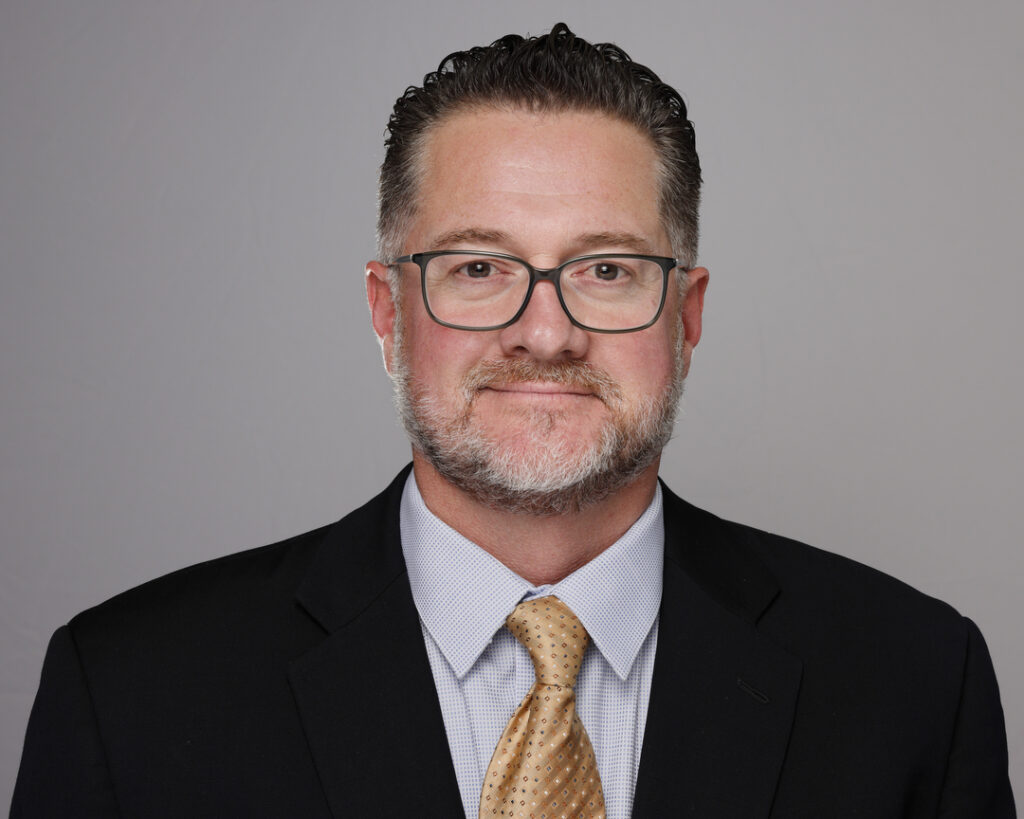
I recently went one-on-one with Larry Richardson, founder and CEO of AmeriPro Health.
Adam: Thanks again for taking the time to share your advice. First things first, though, I am sure readers would love to learn more about you. How did you get here? What experiences, failures, setbacks, or challenges have been most instrumental to your growth?
Larry: Pure grit. No shortcuts, no silver spoon, just a relentless drive to keep pushing through every obstacle. After eight years in the United States Marine Corps, both on active duty and in the reserve, I transitioned into fire and EMS. The frontline work was brutal and eye-opening: constant emergencies, chronic understaffing, reimbursement battles, response-time failures that cost lives, and widespread vulnerabilities to fraud in the system. Those experiences built the foundation, but the real pivot happened later.
At 36, already working full-time in EMS and operations roles, I decided to go back to school full-time while keeping my job – no breaks, no excuses. I balanced heavy course loads, long shifts, and family life through sheer determination. That led straight into the Executive MBA program at the University of Georgia’s Terry College of Business (MBA ’18). It was there, in that cohort, that the AmeriPro idea crystallized. I met incredible people, picked up practical tools, and came away with a clear vision for modernizing a fragmented, outdated industry like EMS and patient logistics, starting with better operations and culture, and eventually moving to technology.
Even as COVID turned the financial and business world upside down in 2020 and 2021, disrupting everything from supply chains to reimbursements to workforce stability, I didn’t slow down.
I doubled down on education, enrolling in the Master of Finance program at the University of Miami Herbert Business School. Why? Because you don’t know what you don’t know. That training sharpened my thinking about capital, sustainable growth, and efficiency in a high-stakes, regulated space, and helped us scale to 10 states and 1,300 team members.
The path wasn’t linear or easy. I had two heart attacks along the way, but my Marine Corps discipline, or maybe just hard-headedness, kept that “go get it” mindset alive. My years as a paramedic gave me firsthand insight into the industry’s pain points. And the education grind, starting college and grad school later, balancing full-time work with full-time study, and pushing through a global pandemic, reinforced a simple truth: sustained effort compounds. Grit gets you in the door; continuous learning keeps you ahead.
Bottom line: success isn’t about talent or luck. It’s grit, fueled by education. Keep learning, because the moment you think you know enough, the world changes underneath you. That’s how we got here, and that’s how we’ll hit our targets and beyond.
The Marine Corps instilled unbreakable discipline, the ability to lead under pressure, and an absolute team-first mindset. Those traits became non-negotiable when dealing with the high-stakes chaos of emergency medical services.
My early years as a paramedic revealed the harsh realities of the industry firsthand: chronic understaffing that left crews stretched thin, endless battles over reimbursements, dangerously slow response times that directly impacted patient outcomes, and medic and EMT burnout. Those failures ignited a deep, personal obsession with fixing systemic inefficiencies and optimizing every part of the EMS industry.
After founding AmeriPro Health, the real tests came fast. The post-launch period was intense on multiple fronts. Staffing proved to be one of the toughest battles: attracting and retaining top-tier paramedics and EMTs in an ultra-competitive labor market felt nearly impossible at times. Competitors were everywhere, many with deeper pockets or established contracts, forcing us to differentiate purely on quality, culture, and reliability rather than price alone.
I also had to confront my own gaps in understanding the true cost of running the business. Early on, I underestimated how quickly expenses could spiral: fuel, insurance, vehicle maintenance, payroll, and cash flow stayed painfully tight longer than anticipated.
Those challenges hit hard, and when we started integrating acquisitions, it brought cultural clashes and operational headaches. Culture is one of the hardest things to create and one of the hardest things to repair once it’s broken.
Every setback was a brutal but essential teacher. Tight cash flow forced prioritization. Staffing shortages sharpened our retention strategies. Underestimating costs built financial discipline and better forecasting. Competitors pushed us to innovate faster. Regulatory hurdles taught patience. Through it all, each failure refined our dual focus: people as the heart of the operation and technology as the multiplier that helps us scale.
Those experiences turned pain points into competitive advantages and reminded me that real growth rarely comes from smooth sailing. It comes from surviving the storms and coming out sharper every time.
Adam: How did you come up with your business idea? What advice do you have for others on how to come up with great ideas?
Larry: It wasn’t a lightbulb moment at all. It accumulated frustration from the field. As a paramedic, I kept seeing hospitals and clinics struggling with transport bottlenecks, patients delayed or lost in non-emergency care logistics, providers burning out from poor support, and billions of dollars lost through inefficient operations.
The idea crystallized around building a tech-enabled platform that combines high-quality ambulance and EMS services with smarter patient navigation and coordination, making healthcare logistics more reliable, scalable, and an employer of choice for medics and EMTs.
This company was built by a paramedic for paramedics and EMTs.
Adam: How did you know your business idea was worth pursuing? What advice do you have on how to best test a business idea?
Larry: Great ideas do not come from sitting in a room brainstorming in isolation. They are born from getting uncomfortable, diving deep into the real work, and refusing to settle for good enough. Everyone can spot a decent concept, but the real gap is in execution. Most people fail there because they underestimate how grueling it is to turn vision into reality, especially when things get messy.
The best way to generate truly great ideas is to work in the trenches first. Real problems aren’t discovered in spreadsheets or pitch decks. They’re lived every day by the frontline people doing the job. Immerse yourself in the industry as both a user and an operator. Roll up your sleeves, experience the daily frustrations, and document friction points and bottlenecks that slow things down or cost lives, money, or outcomes.
Then step back and ask the hard question: what would 10x better look like? Don’t just tweak the existing system, reimagine it.
The strongest ideas solve big, persistent problems in a sustainable way while aligning incentives for everyone involved.
Bottom line: Get comfortable being uncomfortable. Educate yourself obsessively on every aspect of the product or service. Execution separates dreamers from builders. The ideas that win are the ones you earn through grit, immersion, and the courage to act.
The best way to test an idea is simple: prove real demand first. Look at what’s already out there and know, without question, that you can do it better. Don’t shoot from the hip or trust your gut alone; people lose a ton of money that way. Your gut is for digesting food!
Build a solid financial model that actually works on paper: realistic revenues, true costs, margins, break-even. If the numbers don’t hold up, fix them or walk away. Then execute.
Adam: What are the key steps you have taken to grow your business? What advice do you have for others on how to take their businesses to the next level?
Larry: The key to growing any business is solving problems. To solve problems, you have to understand the pain points. Once you can ease the pain of an organization or person, growth will come naturally. Our constant focus is on solving our customers’ problems and amplifying their ability to deliver better access to healthcare.
Double down on what differentiates you from everybody else, and keep investing in your education
The notion that you don’t need degrees to be successful is true – and you don’t need shoes to run a marathon either, but a pair of Nikes makes it a hell of a lot easier.
Adam: What are your best sales and marketing tips?
Larry: Your best marketers are your frontline people. Strategy matters, but nothing sells like our paramedics and EMTs who truly believe in the mission and deliver exceptional service every single day. When they provide outstanding care and show genuine pride in what they do, the word spreads naturally.
Sales become easier once that foundation is in place. Focus on outcomes over features: show how you cut response times, reduce bottlenecks for hospitals, and minimize fraud exposure. Back it up with proof like case studies, testimonials, and hard metrics. Build strong referral networks because satisfied partners bring more partners.
I’ve always positioned AmeriPro as a true partner solving big pain points, not just another vendor providing transport.
Adam: In your experience, what are the defining qualities of an effective leader? How can leaders and aspiring leaders take their leadership skills to the next level?
Larry: Integrity, empathy, accountability, adaptability, and execution. Without execution, you’re just talking the talk.
I had an old lieutenant at my first fire station ask me, “Son, do you know how to put a fire out?” Of course, I said “water.” He said, “Nope, put yourself right in the middle of it and do whatever it takes to stop it from burning.”
At the time, I thought, holy cow, this guy is crazy, but now I see his point. People look at discomfort and shy away from challenges. That’s not how leaders are forged. Steel is made under intense heat and pressure. To get to the next level, you have to take the heat.
Adam: What is your best advice on building, leading, and managing teams?
Larry: I’ve always thought that character is the first and foremost trait to hire for. Someone can have the best pedigree on paper, but if they don’t have character, you’re in for a problem.
You must have integrity, a work ethic, drive, loyalty, and be a problem solver. I can teach you everything else, but I can’t teach you those traits. You either have them, or you don’t.
When managing teams, being transparent about expectations and feedback is paramount. You have to be comfortable having uncomfortable conversations.
Adam: What are your three best tips applicable to entrepreneurs, executives, and civic leaders?
Larry:
- Obsess over your people and your customers. People say leave your work at home, and I never understood that. This is my life; these are the people who trust me with their careers that provide for their families, and our customers trust us to provide services that save lives. I take that extremely personally, and I live it 24/7.
- If you’re not measuring it, you’re not managing it.
- Don’t optimize something that shouldn’t exist.
Adam: What is the single best piece of advice you have ever received?
Larry: I’ll give you three: “Lead from the front, but never alone,” “Delegate and trust your team, but own the outcome,” and “You can’t grow if you always work in the business and spend no time on the business.”
Adam: Is there anything else you would like to share?
Larry: I’m genuinely grateful to have an opportunity to build something in an industry that matters, with people who show up every day to serve patients on some of their worst days.
The one message I’d leave with is this: don’t underestimate frontline work. Whether it’s EMS, healthcare, public safety, or logistics, the people closest to the work usually see the problems first and have the best ideas to fix them. Listen to them. Invest in them. Build systems that support them.
At AmeriPro, we’re focused on doing the fundamentals better every year: improving clinical oversight, investing in our teams, and using technology where it genuinely improves outcomes and accountability. If we do that consistently, growth takes care of itself.