
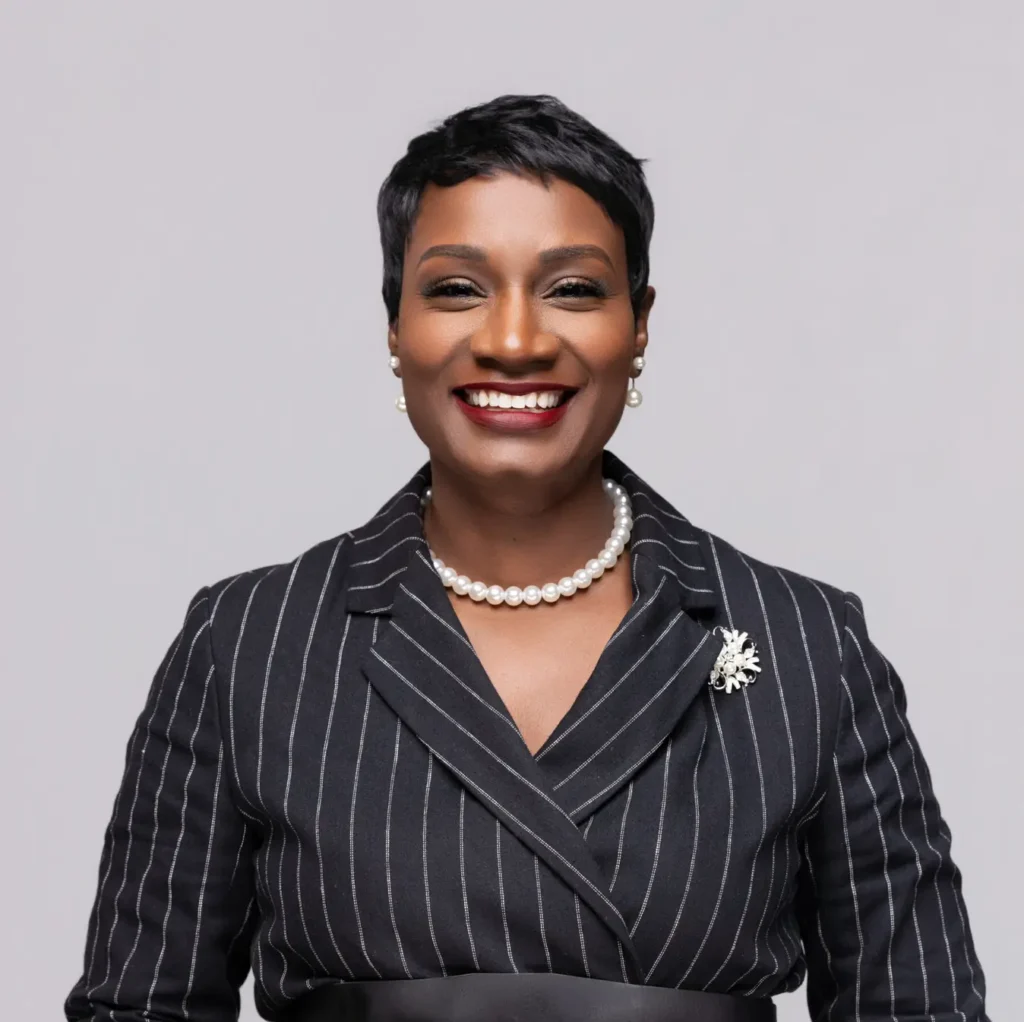
I recently went one-on-one with LaTosha Marks, Chief People Officer of Proof of the Pudding.
Adam: When HR leaders are looking at their remote or hybrid model, what are the first things they need to get right?
LaTosha: Well, I can only speak from the position of Proof of the Pudding, and I think that we have been a hybrid model even before it was mainstream. The reason I say that is our company is cross-functional across sports venues and convention centers. We’re 50-plus venues across the U.S. and Canada, so we’ve thought about this long and hard, because what we do for a living requires us to have teams that are spread everywhere.
I think you have to think about what culture you want to maintain, right? And how do you maintain that culture? From a communication standpoint, from a connection standpoint, how do you do that? I can’t say at all that Proof of the Pudding has the holy grail of understanding how to do it right. We’re still figuring it out, and we are ever-changing and ever-growing.
But I think the core of that is, what do you want out of it as an organization? Is it just for the employee, or are you tying that option of hybrid to a level of performance? And then how do you track that? Every organization is different in the way that they’re structured, but you have to understand that piece first. I think every organization needs to look at that. What do we want this really to be, and who is it for?
Adam: How should HR define remote and hybrid work arrangements so expectations are clear and policies can be applied consistently?
LaTosha: Well, the way we do it is by position. I see organizations where, across the organization, everyone has a hybrid model of some sort. For Proof, it is by position, and we look at what this role needs, where they need to be, and how we track that. It’s earned. No employee is going to get hybrid or work-from-home just because everyone else is.
We analyze what position needs it and how often, if that makes sense. On my team, I have some remote workers who are 100% from home because they’re in other states, and then I have others who are in our corporate organization. My HR generalist works one day from home, and I have a corporate recruiter who does two or three days from home. That’s because her job function requires interviews and virtual interviews often throughout the week, and having that quiet space to do that is what’s needed.
So to answer that question, it really depends on what position needs that model. It’s not universal for us across the board. And it’s earned. With my particular department, during the first 90 days of employment, if you’re in office, you’re in office 100% until you have earned it. Not only that, it enables us to track and train very well during those first 90 days. Then, after that, you earn whatever your hybrid model is, which is discussed at hire, but you earn that model after 90 days.
That also gives you an opportunity to build a relationship with that employee, make sure they’re trained, and make sure they have everyone accessible to them during that training process. But all locations don’t necessarily do it that way. I think we analyze what department it is, what the position is, and what the best way is to have a hybrid model or 100% work-from-home.
Adam: What compliance obligations do employers need to think about when employees are working remotely or across different jurisdictions?
LaTosha: From a compliance standpoint, I think we’re making sure that they have all the tools set up. I know that we’ve had conversations around what’s necessary to efficiently work from home, but then you also have to think about workers’ comp. There have been some regulations around that. If I injure myself and I’m working from home, is that workers’ comp? It is. If I need an ergonomic chair because I have a medical condition, then the company would have to supply that.
So there are different policies and procedures around how individuals work from home. Most of it is really between the communication and the tracking of performance. I know very large organizations track the computer and can see the movement. We don’t necessarily do that at our organization, but we do make sure that there’s performance and tracking to make sure the individual is performing at a high level. And if they’re not, how do we address those things?
I wouldn’t say that we have a detailed procedure book around it, other than work your regular schedule, check into meetings, dress code required, background noise, and certain things like that from an aesthetic standpoint that have to be in place. If you’re working from home, you’d be amazed how many individuals really thought it was okay to show up in their pajamas. It’s not okay.
Adam: When employees are remote, how can leaders ensure employees are performing at the level they need them to perform?
LaTosha: I think that all has to do with what they produce, right? As far as the production of work, I have worked with many work-from-home and hybrid employees, and it is going to show up when you’re not performing at a consistent level or a high level. Undoubtedly, it will show up. I don’t think you can prevent it. I think you monitor and manage it.
For my team, there are deadlines. There are projects that have to be finished. I’m very clear with any individual who is a leader and managing individuals, that honestly, I don’t care if it takes three hours to do your job or eight hours to do your job. If you’re doing your job, the results will be there. If you’re not doing your job, the results will be there.
But managing that communication, I think overcommunicating when you have hybrid workers so they can feel connected, is extremely important. Picking up the phone, whereas if someone was in the office, I would walk over, right? Being more intentional about connecting with your employees who aren’t there. I pick up the phone for that quick, “Hey, I was just brainstorming. Do you have a minute? Let’s go through this.” Because I would normally do that if you were in the office. I would just walk over.
Being intentional in that process is important. Again, I don’t want to police anyone on whether they’re doing an eight-hour day or whether they went to walk their dog on a 15-minute or 20-minute break, or whatever they’re going to do. I just want to make sure that the work is done. I’m guilty. I work in the office five days a week because I know LaTosha. If LaTosha is at home, LaTosha wants to do a load of laundry, put dinner on, and then I’ll find myself working 10 hours a day because I can’t compartmentalize where I am and not do the home duties versus the work. Then I blend them, and then I overwork myself.
So for me, it’s not a good model. I go to the office. The office is where I do all my work. When I come home, there’s a different set of responsibilities. But to the point again, I just don’t think you can monitor someone’s day-to-day. It comes out in the performance.
Adam: Are there other ways to measure whether a remote or hybrid model is working?
LaTosha: Yeah. I would say, for me personally, availability. Availability to our customers and availability to our operational teams. I think the model works. I think it works for different positions for different reasons. I think the model works if, like you said, you have proper communication and leadership in place.
I’ve found in researching that some organizations pulled away from it completely. You heard it at the top of this year: eliminating work-from-home, and everyone is back in the office. I’m assuming they found that productivity decreased when they had a full work-from-home model, and that’s the reason a lot of organizations moved in the other direction of bringing people in. But I also think it’s the business, right? It’s the business industry, and what industry you’re in.
We’re in hospitality. Our business model will never be fully everyone working from home. I’m mostly talking about leaders and administrators. We service people. We’re hospitality. We put on events. We’re in sports venues. We’re in places that you physically have to be to operate. But as far as our support functions, they are also across the U.S. and have a support function where they may support this sports venue, but work from home 100%. I personally don’t think there’s a right way or a wrong way. I think it really depends on the organization and whether it works for them.
Adam: What best practices or pitfalls should leaders look out for when managing remote or hybrid work?
LaTosha: Yes, and these are my best practices. Every individual should pick the days they’re working from home, and again, this is my philosophy, Adam. If, for instance, Tammy wants to work from home, she picks her work-from-home days as Tuesdays and Thursdays, and she sticks to Tuesday and Thursday. However, if she has a doctor’s appointment on another day, we don’t keep moving around the day. I expect that on Monday, Wednesday, and Friday, Tammy is in the office.
You create confusion with your teams when you start to allow people just to move the day as they please. To me, that creates confusion in the sense of if you’re supposed to have coverage at the office or we’re relying on her to be here these two days, outside of off days, vacation, and sick days, you stick to those days. You create confusion on teams when everyone is moving around their day, and then you find that there’s no one consistently in the office or reachable because we never know when people are coming in.
I’ve seen that model not work. I’ve seen that model become confusing to everyone. Not only that, it decreased productivity with other coworkers and team members. I can explain how. If you have one person who is sticking to their two days and the others keep rotating their days around, then the top performer, the high performer who is actually sticking to the process, feels now that the other person has the wherewithal just to do what they want. So now they follow the same pattern. Now they’re just coming in and out as they please.
You still have to have some structure to work from home. I don’t think it makes sense to say, “Oh, well, everybody gets three days. Just pick your three days.” I’ve seen the abuse in that, meaning, “Oh, I picked my three days, but now I want to move the three days.” Then, if you’ve noticed closely, it turned into four days. Now they’re never coming into the office because there’s no consistency or structure around it. So there is a bad way to do it, right? We learned that from trial and error, but sticking to whatever the process is is really, really important.
Adam: You mentioned consistency and structure. What other examples of structure are important for leaders to implement in a remote or hybrid setting?
LaTosha: Absolutely. Also, in that process with my team, you have to analyze the business, where we are, and when the important meetings need to happen. I charge them with the responsibility of knowing when they need to be in the office. If we’re in the middle of an M and A, and we have a meeting on a Tuesday, and that’s your work-from-home day, I charge them to understand and make the decision. Should I be in the office for this meeting, or should I take it remotely?
Those are the decisions I leave up to the team because they need to be able to make the distinction and not make the work-from-home day a concrete, unmovable thing. What do we need to do to still operate as a business, and where do you need to insert yourself and make the decision? Yes, this is a day that I can work from home, but there’s a meeting with the CEO today in the office on Tuesday, so I’m going to come in. I shouldn’t have to tell them that.
We do have this conversation in the very beginning about making the right decision as a manager and a leader. When do I need to show up in person or not? When is it okay for me? I have a light day, or I have multiple phone calls. I make it conditional for them as well. Even though those are your days, be really intentional about what you have on your plate, what meetings you have forthcoming, and what things look like that week before making that decision.
Don’t make it the holy grail where you have to be at home on Tuesday or Thursday unless there’s a reason. People have families, and they swap out with their spouse and have to pick up the kids, or whatever the case may be. But be really intentional about those days, and they’re not concrete days. You should look at the business and your productivity before you make that decision, if that makes sense.
Adam: What are the biggest inclusion and equity risks in remote and hybrid work, especially around proximity bias and access to opportunity?
LaTosha: As far as the risk, I’ll give you an example, and this example actually applies to schedules in general. What we shouldn’t do is say, “Oh, Sally needs to work from home. She has two little kids.” But Jeff doesn’t need to work from home because he’s single with no children or a wife at home, or he can work any schedule because he’s flexible. But she can’t. I think being mindful of those conversations is important. I’ve had those conversations with leaders.
Even to the extent of, “Oh, well, we know Tommy is taking care of his elderly parents, so he needs three days to work from home.” We do have to be very careful in creating disparate treatment with individuals based on their personal lives and making these decisions. The decision needs to be based on the position, not the person. What does this position need, and how often? We do have to be careful with that.
I’ve had complaints in my office from individuals saying, “Why am I stuck with these days because Sally has to take her kid to soccer practice on Fridays? Some Fridays, I would love to work from home. Why can’t I have this day?” People tend to be more sympathetic to Sally and have a disregard for Jeff. That is where we have to be more cognizant about giving these days off, or work-from-home days, or hybrid days, and then disregarding individuals when Jeff has a very active life. He plays sports, and he wants to spend time with his niece or nephew, or whatever the case may be, but he shouldn’t have to fight for that.
Again, I tell leaders, when you create models like that, do it based on the position and not the person. When you do these things, look at the position. What does the position need? Otherwise, as human beings, we will create biases unintentionally, trying to be understanding and sympathetic. But you create a bias for someone else, and you create disparity for someone else. I’m very, very aware of that, and I talk to leaders about that. Just don’t make those decisions based on a person.
Adam: How can leaders accommodate employees’ real personal challenges without creating unfairness or two sets of rules?
LaTosha: That’s a slippery slope. It’s case by case. I tell leaders all the time, they want me to give them the parameters, the graph, and show them how to maneuver this, and there isn’t that. You take it case by case. How do you have those different conversations? How are you okay with sometimes saying no and sometimes saying yes? Because you have to do both. You can’t say yes to everyone, and you can’t say no to everyone.
It is just, I don’t know, it’s a jigsaw puzzle. I don’t have the answer to that. But I think through the examples that I have managed in my career, they did come on the upside. We were able to give the gentleman the days off that he needed because his coworker was sympathetic as well and said, “You know what? You’re right. I do have every Friday, but I do want Jeff to have some Fridays as well. He tells me all about his sports and his family, and I know he wants to spend time.”
Sometimes we also leave it up to the team to make the decision amongst each other. How will you do this equally among you? What are you okay with? It’s a collaboration. It’s a collaboration with leaders and employees to figure out how we best do this, where we can get the best productivity and employees can get the flexibility at the same time.
Adam: What should leaders understand about making gray-area decisions around flexibility, fairness, and unintended consequences?
LaTosha: And this is a decision that leaders have to make, and it’s not a black decision or a white decision. It’s a gray decision, and it’s a decision that has implications one way or the other. The most important thing is to understand what the implications are of the decision you make. What are the potentially unintended consequences of doing something that might feel good, feel right, or feel just? There could be some blowback, and it could still be the right thing to do, but understand what the hidden costs of doing it might be.
Adam: What capabilities do managers need to lead remote and hybrid teams, and how should HR help develop those capabilities?
LaTosha: The capability to me would be, like we mentioned before, measuring performance, and then being able to hold your teams accountable for meeting deadlines, meeting on time, and being available. The challenge I find with a lot of leaders who have trouble with a hybrid or fully remote employee is that the employee isn’t accessible. If only that employee understood that if you just picked up the phone or answered the email, you wouldn’t be leaving room for speculation of whether you’re working or not.
So I advise, again, going back to the structure piece, create weekly meetings. That’s what I do with my teams that are 100% remote, and even locally in the office. There are weekly meetings and touchbacks that we do, and then there’s also daily communication. I find that when you don’t communicate daily to some of your team, and that can be just via email, depending on the communication, or a phone call, Teams, or Zoom call, then you lose some of that connection and that professional relationship-building. Some people can be out on the island.
I’ve heard employees complain, “Yeah, I’ve been hired. I sat at this venue, and no one calls or checks on me.” Usually, that’s a high performer, right? We spend more time inherently with the poor performer and more focus on the location that’s not performing at a high level than we do the high performer and the location that is profitable. But the one that is profitable and the high performer wants the attention that we’re not giving them. So we have to be very intentional about how we give that.
I talk to leaders about that. I know you’re focused on your areas of improvement, but also spend as much time with the areas that are doing well, because they’re doing well for a reason, and they don’t need to be neglected. So I hear both sides of that.
Adam: How can HR measure whether remote and hybrid work is actually working, and how should organizations handle return-to-office pressure without damaging trust, retention, or culture?
LaTosha: The only way that I could measure that is by conversation with leaders on how well they’re getting the results they need from their organization. So yes, in a way, physically we can’t, but we can from feedback from managers and productivity. To answer your question about how you bring people back into the office without disrupting the trust, flexibility, and all the culture that we literally put in place and then kind of snatched away, for every coworker, colleague, friend, or family member who has made that transition, no one that I’ve spoken to had a positive feel of it.
It was essentially, “This is what I have to do now. I’m upset about it. It was Sally Jo. She’s the reason why we have to.” Because we’re going to place blame on someone as the reason why everyone has to come back in. But what I can say is that over the past year and a half, those same individuals who murmured about making the change have acclimated very well. Not only that, several of them have been promoted during the process.
Any change comes with resistance, right? Especially when you go from the comfort of your home. It also depends on your personality. Your introverts probably were going to be more resistant than your extroverts because extroverts need the socialization and the energy, versus your introverts, who would rather never see anyone again and are very resistant to moving back into the office and draining their energy with socialization.
I don’t think there’s a method in doing that the right way or wrong way. I think it’s the nature of human beings and change. As far as HR tracking that, I think it comes from surveys. Proof of the Pudding does quite a few engagement surveys. How are we doing? Are we communicating better? Did you know about this? I love the survey that we send out to ask, “Did you know we did this?” Meaning, we’re asking that question after we rolled it out, after we put it in the newsletter, after we put it in our Pop Star app. Then we’re asking, “Did you know about this?” If they say no, we want to know why they didn’t know about it.
We’re measuring the effectiveness of our communication across our organization. So again, if I were to measure work-from-home, it would probably be a survey. But I would first put out communication about the change and figure out who noticed the change or was informed of the change before it happened.
Adam: How should leaders communicate a return-to-office decision when employees feel like something valuable is being taken away?
LaTosha: Either you’re going to get the buy-in, or you’re not, right? To your point, Adam, it is a benefit. There’s not one benefit that you can take away from me that I don’t feel like you’ve snatched away due to either something I have done or someone around me has done. You communicate and you overcommunicate where we were. I think you share the analytics of our production and where we were growing as a company versus where the company is now financially and with growth when we made this decision.
Then you show real data to try to get people to understand it wasn’t Sally Jo who screwed it up for everyone. We’re finding that our clients aren’t getting the attention that they need. We’re finding that we’re not communicating at a high level as we were before when we were there. Eventually, individuals will either have the buy-in for it, or you will experience some attrition through the process.
But I think the communication is key in being transparent and being honest about where we are as a company, as far as our growth and our production. You don’t have to say an individual, but where are we as a company? Where were we? Show some year-over-year differences and changes to create that buy-in, if possible.
I definitely don’t want individuals to believe that coming into the office yielded them more. It’s the performance that yielded those individuals the promotion. I think we just let them know this is the direction the company is headed, and again, data and statistics year-over-year create that transparency of the decision. That’s really the only reason it’s being made, to be honest. If the company was growing, extremely profitable, clients weren’t complaining, and individuals were getting what they needed, the model would stay the same. Something changed, and that’s the reason why the model has to change.
Adam: What are your best practices for communication in a remote or hybrid environment?
LaTosha: For me, myself, and my team, it is daily communication from me, the leader, right? My daily communication recap. Everyone in the department has to do a weekly recap to the team because everyone’s responsibility at some point ties into another. When you’re remote or located in a different state or a different location, again, it’s not a walk down the hallway anymore. So creating those recaps, weekly recaps, and the one-on-one meetings, which we do weekly with all the team members, is important. Then we do a group team meeting bi-weekly, with everyone recapping what they’re working on, what projects, what deadlines, and what major ones we may have with the organization.
But it’s about being intentional, Adam. It has always been baffling to me when leaders aren’t very intentional in communicating with their team. It takes effort, right? I get pulled into multiple meetings a day, and thousands of emails, it seems like, a day. I’m probably exaggerating. Maybe 40, but it feels like 1,000. But in that, I am very intentional about my team specifically and communicating that to them. I’m also intentional about communicating up to the leaders in our organization.
Being intentional that way requires you to put structure around it. What do I do first today? How do I write that out? Who do I communicate with today? You have to create a structure around it. I can’t say it enough. Communication is probably the biggest key to creating a successful work environment, whether your employees are remote, hybrid, or in the office, and creating that collaboration.
At the end of the day, Adam, if I need something from the marketing team, they’re going to do it because they like me. There’s a small percentage where they’re going to do it because it’s their job to do it, but essentially, they do it because they like me. Why do they like me? Because I communicate well with them, and I get them the things that they need on time. So now they reciprocate that back to me. If you’re intentional about communicating with people across the board, they’re more intentional about doing things for you. You can put that to the test. Never talk to a department ever, and then ask them for something, and see what you get.
Adam: What should leaders do differently when leading remote or hybrid teams compared to leading in person?
LaTosha: I will go back to that structure. Just creating the structure, whether that’s a calendar of who is where and when, outside of the communication piece. I would say the structure of it. How does it look within your organization and your department? Is everyone aware of what that structure is? How do they abide by it? Leaders should uphold that structure and not let one individual kind of do what they want to do, but hold them accountable for whatever structure is put in place.
Adam: What are the biggest risks around hours of work, overtime, rest periods, and right-to-disconnect expectations in a remote or hybrid setting?
LaTosha: Well, if you’re remote, nine times out of 10, you’re salaried. A salaried individual, by federal regulation, is measured by the work that you do, not the time that you take to do it. So I would not measure anyone’s days or hours to do it. The only risk to them taking short days or not working a full workday would be in the performance and the results of the performance. But most individuals, if you’re salaried, are measured by the work you do, not the hours it takes you to do it. Unless you’re an overzealous leader who wants somebody to work eight to five. That wouldn’t be me.
Adam: What pitfalls should leaders be aware of on this topic?
LaTosha: Again, I think the biggest pitfalls would be not having structure around it, not communicating it well, treating it as a privilege, not a right. I don’t know if that’s controversial or not, but that’s my perspective. And being intentional as leaders to keep connections with your remote or hybrid workers, and keeping them included on what the business goals and initiatives are.
Adam: How should organizations manage data privacy and information security when employees are using home networks and personal devices?
LaTosha: That is out of my AOR. We’ve got to get an IT person on this call. It worries me a lot, I’ll be honest with you. We can start talking about ChatGPT and AI. We just redeveloped our AI policy to talk about what you can put into it, right? No contracts should go in it, no client information should go in it, no names, no specifics.
When we start talking about technology and breaches, nowadays it’s not just at home. It’s even in the office when we have your chats and your quads and all your IT-based technology, and putting information in there. It worries the heck out of me. But no, that needs to be a roundtable next, Adam. I would love to sit at it with the IT people to talk about that. Not just that, but the lawyers and employment law attorneys. I’ve spoken to them about it.
When we created our policy, there was so much risk around it right now. It’s very, very scary because it’s learning. The moment you put a name in, it’ll regurgitate that name to you and say, “Remember? Oh yeah, I remember you were talking about doing a PIP for Jason. Is this the same PIP?” You’d be like, “Whoa, wait a minute. Why did you remember that?” So just being very careful. But I don’t have any solutions on that one. I wish I did.
We’re in this ever-changing evolution of AI and technology that has great perks and results. Even from the recruitment perspective, we use AI technology, so there are some huge pros. But there are also some very cautionary cons we have to be aware of.
Adam: How should pay equity and compensation be handled when employees are doing similar work but are located in different places?
LaTosha: I think we do really well at keeping our salary and pay bands consistent with the position, regardless of where they’re located. We don’t necessarily have an issue with that. We do have accounts that pay more because they’re in a different geography, right? But the remote worker who supports that location would be in line with the revenue of that location, so we don’t really have an issue there.
Adam: What should HR look for in the data to identify proximity bias or inequitable outcomes?
LaTosha: I would just say, run your reports. Understand what your salary bands are across the organization to maintain that it’s equitable. Range is a range, right? You have the lower end, you have the higher end, and anything outside of that, we just need to be mindful that we are consistent with paying attention to any disparity when it comes to wages or salaries.
Adam: What are the most common mistakes organizations make when trying to maintain culture and connection across distributed teams?
LaTosha: Common mistake, I think the biggest common mistake is believing everyone knows what your culture is. Organizations are ever-growing and hiring talent. Sometimes we lose focus in integrating a new hire into our culture. When you’re not intentional in doing that, people bring cultures from other organizations to your organization. So, how do you change that mindset from what they used to operate under to what their new culture is?
I think one of the misconceptions is believing that people even know what the culture is. I can’t express it enough. Do a survey. Find out if people know your mission statement, and then find out if employees know the culture. And just because they may not know your culture, they’re in a culture. Having no culture is a culture. Having a bad culture is a culture. So you have to understand what they believe the culture is first in order to change the perception, mindset, or understanding of what your organization’s culture should be.
That is something that you have to constantly measure, and you measure that by your surveys and by your engagement. Proof of the Pudding has a Pop Star app, so we have an employee app. It’s an engagement app. It’s social media, if you will. We continue to communicate our culture, our mission statement, and what we stand for. But not only that, we encourage the other employees to communicate that across the organization. We encourage them to talk about their location and their culture at their locations, and how they’ve done an amazing job that day, to create that excitement around Proof of the Pudding.
Culture is very, very, very sticky, and you have to pay attention to it, because you can have a great culture in place and it slips. The only reason it slips is because you have individuals who are entering the organization from other organizations. So you constantly have to communicate what the company’s culture is, teach it, train it, and live it.
One of the reasons that I’m in Dallas today is to go to our regional meetings. Each region across our organization gets together, and they do meetings on our goals and expectations and cascade those down to hourly employees. Each C-suite leader is to attend those meetings. We kind of disperse separately to attend those meetings to talk about our culture. We cascade down our mission statement and who we are as an organization.
Not only that, we have roundtable conversations about what they believe and who they believe Proof is. When you’re having those real, live conversations with your employees, if there’s a disconnect there, you can address it at that moment. If you don’t communicate and you’re not intentional about being out in your field organization at your different units, you can’t just do everything in the newsletter or on the Pop Star app. You have to be intentional to be there in person and physically there.
It’s hard because our organization does events, right? We’re focused on other people’s happiness. Whether it’s a sporting event, a wedding, a corporate event, something at a botanical garden or an arboretum, or wherever, it’s usually focused around that. So how do we get intentional with our employees to let them know they’re supported, they’re valued, and we’re listening to them? It’s creating these moments like our regional meetings, so they understand that’s how we feel about them as an organization.
Adam: Is there anything else you would like to share?
LaTosha: No, this was really, really good. As you can tell, I’m really, really passionate about talking about culture, talking about organizations, and how leaders should lead intentionally. At any point, if anyone needs a brainstorming session or would love to communicate further about whether it’s work-from-home, creating an exceptional culture, or managing and leading from different workspaces, I would love to connect with anyone to talk further about that.
It’s a passion of mine. I enjoy it. But not only that, it teaches me things when I can connect with like-minded individuals, and we can brainstorm on how to best make the best cultures for our organizations.