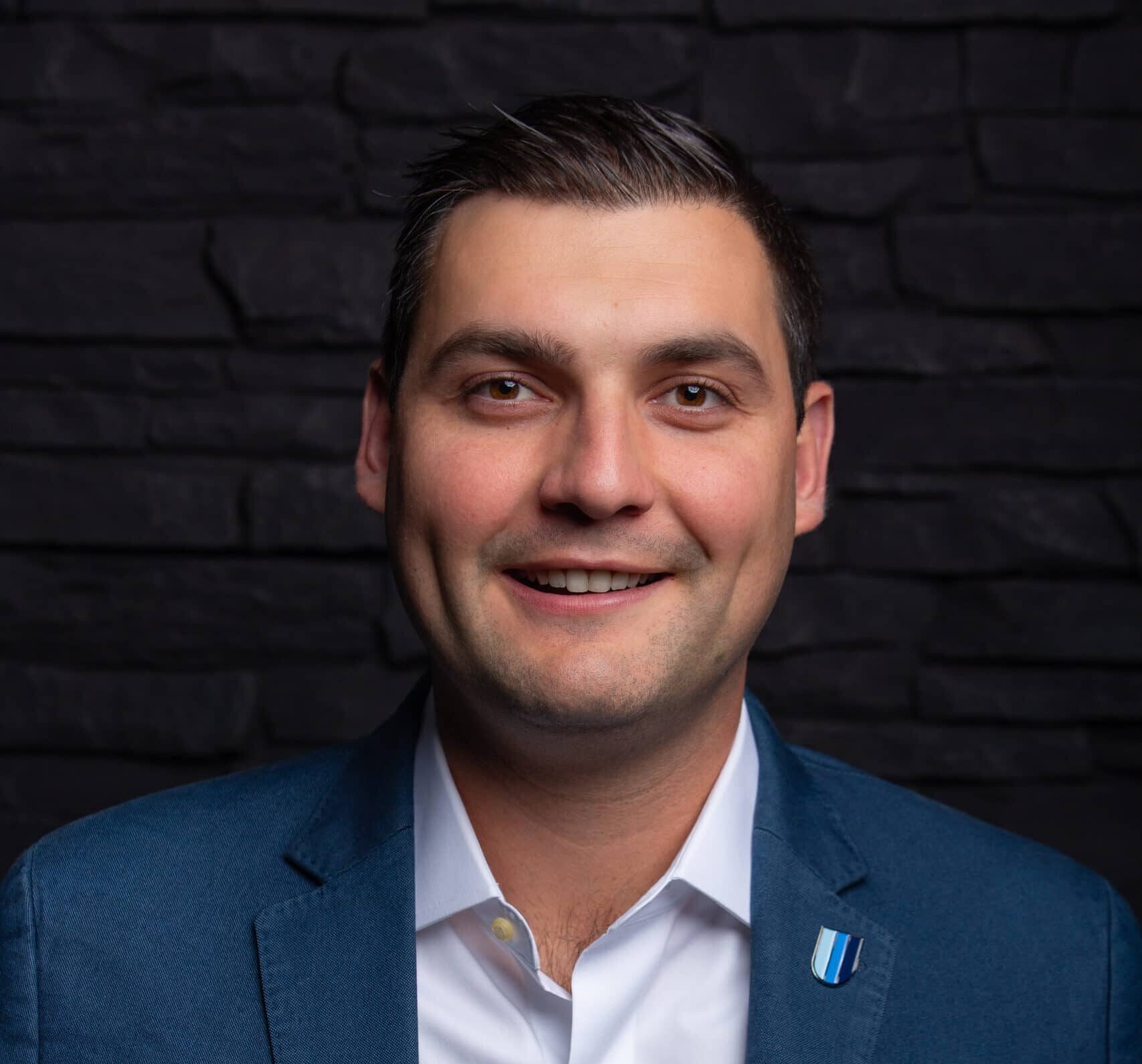


I recently went one-on-one with Lauren Antonoff, CEO of Life360.
Adam: Thanks again for taking the time to share your advice. First things first, though, I am sure readers would love to learn more about you. How did you get here? What experiences, failures, setbacks, or challenges have been most instrumental to your growth?
Lauren: I always knew what I wanted to do. I was going to be a civil rights lawyer. I got a Mac to write papers, and quickly, it sucked me in, and I got involved with the Mac community. Interning in the political world, I found myself frustrated by the lack of progress. I leaned into my tech hobby, where I felt like I could actually improve people’s lives. I ended up at a startup that Microsoft acquired, and the rest is history.
The path to Life360 was serendipitous. After GoDaddy, I took a career break and hoped to pivot into healthcare. During that time, my family took a trip to Vegas, and our dog, Soba (aka everyone’s favorite family member), escaped from doggy daycare. We camped outside the daycare for two nights, but he had been picked up by another family the first night. When they saw our posters, we were reunited.
I immediately started researching pet trackers. The best one had a two-day battery life. I made an offhand comment to my husband that I should work on improvements to make trackers ready for broad adoption. A month later, I got a call from Life360. They owned that exact tracker.
Adam: In your experience, what are the key steps to growing and scaling your business?
Lauren: Two things come to mind. First, keep investing in your core. One mistake businesses make as they grow is taking for granted what customers value the most, in favor of shiny new initiatives. If the foundation crumbles, you can’t build sustainably on top of it. At Life360, our foundation is trust. Families trust us with location data of the people they love most, and we earn their trust through the quality and delight of our experience and the responsible use of that data. We continue to raise the bar on location quality and data transparency to strengthen our foundation.
Second, be deliberate about defining where you’re going and what your strategy is to get there. Take the time to think in a 3-5 year time frame, then be deliberate about playing through ideas and picking a path. Do you want to serve the same customer in new geographies, or expand who you serve? Do you want to solve new problems, or invest in improving the solutions to the problems that you’re already focused on? There are always tradeoffs, so disciplined choices about your growth strategy give you the best shot at achieving strong and sustainable growth.
Adam: What are your best tips on building, leading, and managing teams?
Lauren: Early in my career at Microsoft, I led a team in Windows building family browser experiences. The day before Thanksgiving, my boss told me our team was merging with another and moving to MSN, without me. The member of the other team, at whose home I would be attending Thanksgiving dinner the following evening, was going to lead it.
A 360-review revealed that my direct reports were worried about my misalignment with management. I’d been focused on driving the right outcome for our customers and felt vindicated by the move to MSN. I started to learn that my team felt misaligned and vulnerable, worried their work might never see the light of day. It never occurred to me that their feelings were part of my job.
I came to understand my job as a leader wasn’t to make the thing, but to make the team that makes the thing. Remember, your job as a leader is the team. Surround yourself with people smarter than you, inspire them to be their best selves, and give them room to execute. Set a high bar, keep pushing, and give them a purpose that inspires them to be better than they would be without you.
Adam: What are the most important trends in technology that leaders should be aware of and understand? What should they understand about them?
Lauren: AI is such a big change that it’s hard to leave room to talk about anything else. It’s transforming what we build and how we build it at the same time.
When I consider the world 10 years from now, it’s tough to believe that phones will continue to be the dominant medium for our attention. Just like phones eclipsed laptops, which eclipsed PCs, which eclipsed mainframes, the phone is ripe for disruption. I’m not ready to bet on which modality or modalities will win, but I’d bet that it’s not a little brick in your hand. Today, Life360 is known for our mobile app, but our job is to make everyday family life better using whatever modalities become most relevant.
In parallel, the way we work is changing dramatically. At Life360, we’re front-footed about becoming an AI-native organization. We’re not just taking the people we have today and giving them AI as a tool. We’re redesigning what it is to be a tech company from the ground up.
There is no playbook. Every leader in tech right now is figuring this out in real time. Being willing to get parts of it wrong is part of the process of learning what works.
Adam: What do you believe are the defining qualities of an effective leader?
Lauren: I’ve been thinking about this a lot, because AI changes things. It changes what management means, for sure. Many traditional managerial tasks, such as assigning work, tracking progress, and sharing information, can now mostly be handled by machines. So it has us thinking about what makes a great human leader when you take away the management. For me, it comes back to three things.
The first, and the one near and dear to my heart, is future seeing and direction setting. It’s looking forward, imagining a new world, and saying, without knowing how things will play out, this is where we should go. It requires good judgment and the willingness to be wrong. Taking big enough leaps without certainty about where you’ll land.
The second is bringing people along. You can be a genius with all the right ideas, but if you can’t get people excited and motivated, you’re just a loner with a good idea that never gets executed. Leaders turn that idea into motivation that fuels teams.
The third is delivering results. This is the real endgame. Great leaders formulate direction, motivate action, and produce extraordinary outcomes.
Adam: How can leaders and aspiring leaders take their leadership skills to the next level?
Lauren: This is a difficult question because there’s no single prescription. For one person, it might be vision setting; for another, bringing their team along for the ride. This is one of the tough lessons I had to learn.
The one thing that matters for every leader is remembering that your mechanism for doing whatever you do is your team. Your job is to build and motivate a team that can turn your vision into reality. Beyond that, figure out what’s holding you back and be intentional about getting past it. When I lost that role at Microsoft, the 360 was part of how I started to figure out what was getting in my way. Over time, what was a weakness became a strength.
One practice I have with my leadership team is asking them to self-assess against the core areas of leadership. Not to prove what they’ve done or where they’re strong, but to find one specific area to improve. It’s not so different from planning a product. You have to envision what the next level looks like, form hypotheses about how to get there, work the plan, and iterate. The leaders I admire most never stop asking how they need to grow and improve.
Adam: What are your three best tips applicable to entrepreneurs, executives, and civic leaders?
Lauren: The most important thing is to find a problem you care about. For me, that’s about paying attention to what’s dissatisfying in the world, then doing the work to understand if other people share that dissatisfaction and ultimately creating innovations that make things better.
A lot of business and tech schools will teach you how to do research to learn what customers want, but if it’s something you personally care about deeply, if it irks you, that intrinsic motivation is powerful. And it’s compelling to other people. You still need to understand if there’s a market opportunity, but starting with your own heart and your own intuition fuels the conviction and effort that helps you power through the difficult stuff and drive transformative outcomes. Start there.
Adam: What are your best tips on sales, marketing, and branding?
Lauren: To be transparent, most of my career has been focused on creating products, with seventeen years of that at Microsoft. In that world, you’re really far away from sales and marketing. We just focused on making software that customers valued. Since then, I’ve had the opportunity to work with outstanding marketing leaders, who have shaped my thinking here.
One piece of advice is to focus your marketing efforts on the real value that your product delivers. Not what you wish it would deliver or what customers want to hear, but on value props that your product can deliver on in a strong and differentiated way. It’s not worth trying to sell or market something the product experience can’t live up to. You might get a big pop in the beginning and attract a lot of users, but you’re not going to keep them, and you burn cash and credibility in the process. Focusing on where you deliver real value leads to compounding effects of word of mouth and lets you build a brand people trust and a business that scales.
Adam: What is the single best piece of advice you have ever received?
Lauren: Does a quote from the ancient rabbi Hillel count as advice? He said, “If I am not for myself, who will be for me? If I am only for myself, what am I? And if not now, when?” I watched those questions play out in real time, growing up with a single mom, and that shaped who I am as a leader. She didn’t have a guidebook on how to do it right. And she didn’t do everything right. And that was okay.
We lived in a one-bedroom, rent-controlled apartment, and the landlord tried to evict us at least twice. My mom won in court each time. Not because she had legal training or money to hire a lawyer. She thought what was happening was wrong, and she stood up for herself. And it worked.
Watching her figure it out, stand her ground, and persist through the ups and downs is the leadership advice I carry every day. You don’t need all the answers. You need conviction in what you believe, and the willingness to fight for it. And you need to be ok getting it wrong sometimes, and learning from that.
Adam: Is there anything else you would like to share?
Lauren: Don’t wait for somebody who’s more qualified, and don’t wait for a better time. If you believe in something, go make it happen.
When I joined the workforce, I didn’t know the VPs were supposed to be in charge. I didn’t get that memo. I just thought if I saw something that seemed wrong, I should say something and try to make it right. That perspective shaped my career. The people in charge are us, at whatever level you’re at.