
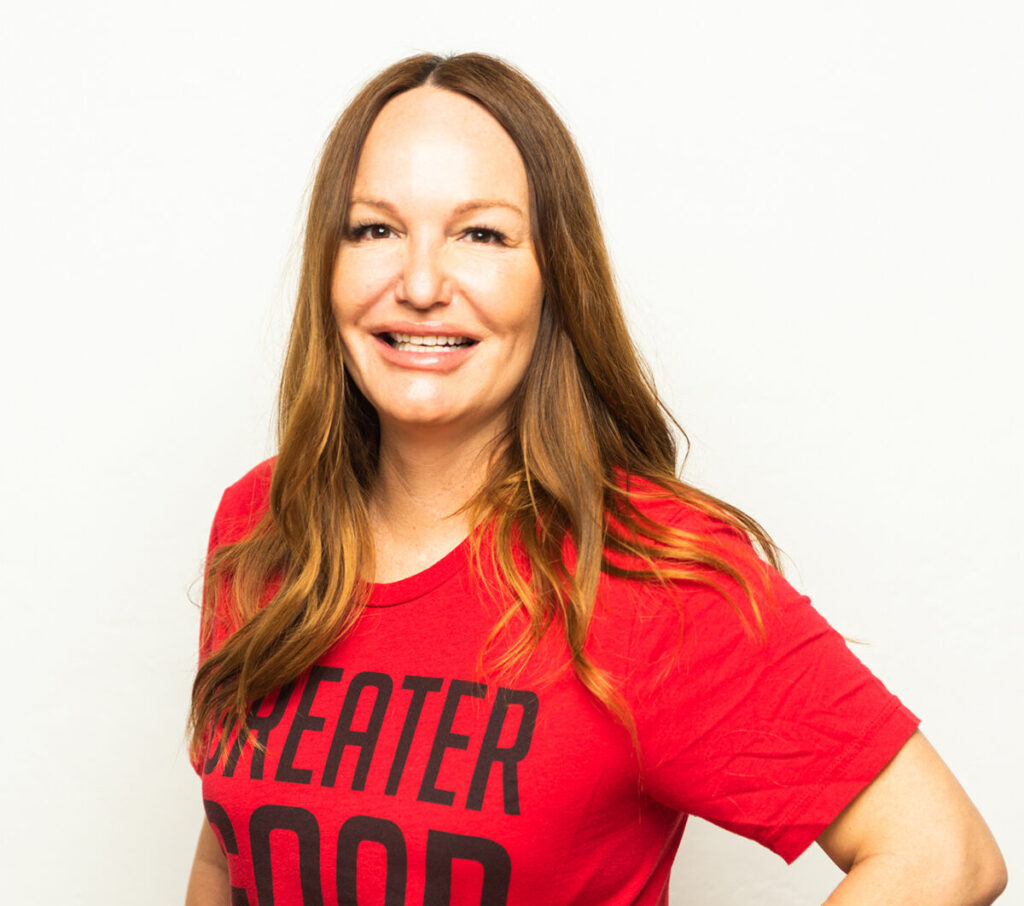
I recently went one-on-one with Liz Baker, CEO of Greater Good Charities
Adam: Thanks again for taking the time to share your advice. First things first, though, I am sure readers would love to learn more about you. How did you get here? What experiences, failures, setbacks, or challenges have been most instrumental to your growth?
Liz: I started working in high tech and then quickly moved into the “World Wide Web” when it became readily available in the 90s. There were numerous start-ups, no idea how to monetize the technology outside of ad sales, and a sort of wild west atmosphere. There were rapid changes, a constant need for learning, and a basic lack of standardized practices. That environment was very different from my previous jobs and demanded flexible, innovative thinkers who could keep up that pace of rapid development.
I worked in partnerships and online media, leading departments for Pearson Publishing’s online education platform, and after I left Boston, worked as VP of Partnerships for a then start-up, Petfinder.com. Petfinder.com was eventually sold to Discovery Media at the time, and I decided I wanted to take a break. I had worked peripherally to help start and manage parts of the Petfinder.com Foundation, so they asked me if I was interested in moving over to be Executive Director.
I love the NGO environment; it’s a lot like my experience with start-ups in the 90s. You must be nimble and be able to innovate and pivot. Our mission is very broad and requires not only knowledge on how to execute our core programs, but also the ability to be quite quick and flexible.
I have failed or made wrong decisions many times, as I expect most people do. The key is to invite other opinions, hear other voices, respectfully. I encourage tough conversations, opposing points of view. In the fast-paced, stressful environment that we work in, decisions must be made quickly. When I am wrong, I admit it. I learn from it and then move on.
Adam: What are the best leadership lessons you have learned from leading a non-profit organization?
Liz: Money doesn’t equal impact. Throwing dollars at something doesn’t mean that you will create change. In many instances, if that is your approach, you create more problems. As an NGO, we are problem solvers. Many effective solutions are simple ones, a tipping point, so our job is to essentially identify and remove barriers. At Greater Good Charities, before the Afghan government’s collapse in August of 2021, we ran a bus program in Afghanistan for close to a decade, providing safe rides to school for female students, safety to and from school was a huge barrier, so we solved for that. We started with one bus and expanded to running many in that country, providing a safe ride to and from school to thousands of girls. It cost very little and had massive impact.
Adam: What are your best tips for fellow leaders of non-profit organizations?
Liz:
- Mission and impact are your ultimate guides. Always circle back to those.
- Mergers are an underutilized tool for non-profits. Consider them more.
- Be good collaborators with others doing good work.
- Transparency is critical for buy-in from constituents you serve, staff, and donors.
Adam: In your experience, what are the defining qualities of an effective leader? How can leaders and aspiring leaders take their leadership skills to the next level?
Liz: I think most of the great leaders I know have a vision and an appetite for thoughtful risk to keep things moving. The great leaders I know also have a degree of humility, understanding that nothing is done in isolation. At Greater Good Charitie,s we have seen tremendous growth, and that growth can be attributed to everyone, not one person.
Adam: What are your three best tips applicable to entrepreneurs, executives, and civic leaders?
Liz:
- Take risks. Nothing ever changes by doing the same thing repeatedly.
- Serve others. Your job is to empower others to succeed.
- Listen. You cannot lead without hearing from those you are leading.
Adam: What is your best advice on building, leading, and managing teams?
Liz: Hire good people and get out of their way. I feel lucky every day to get to work with my colleagues who have vast expertise in science, are trained first responders, are veterinarians, can load planes, and pull off complicated logistics quickly. I let them be the experts and see my role more as a choreographer of sorts, integrating their expertise voices across the organization.
I also believe that you need to be willing to do what you are asking others to do, so I go to the places we work that are sometimes challenging, like Haiti, Ukraine, the Syrian Border, etc. Seeing first-hand what is really required to do the work that we do informs a lot of decisions.
I also answer my phone for any employee who calls. I believe that everyone working at Greater Good Charities plays an important role in any success or failure, and I always take the opportunity to listen to and get feedback from employees, regardless of their role.
Adam: What is the single best piece of advice you have ever received?
Liz: My first job out of college was as a staff assistant in the United States Senate for a senior Senator from SD, who was also chair of the e-commerce committee at the time. My office was the reception area, so I got to greet and talk with all the constituents coming for meetings, as well as CEOs of many large corporations.
After many meetings with many different people, I learned that people really care about the “five-mile radius of their life.” Meaning, whatever is closest to them that directly impacts their life. The things that make them passionate or afraid. That was different for everyone I met, but if you could somehow figure out what that looks like for them, it is a pretty good guide to understanding motivations.
In complex situations, I still try to simplify and apply that rule, for both clarity and understanding of what motivates people and decisions.
Adam: What can anyone do to pay it forward?
Liz: I truly believe if everyone gave an hour of their time and expertise a week to a cause they care about, many of the problems we are working to fix in the NGO setting would be solved. Most non-profits do not fall into the category of “large or extra-large.” They are working on a local level to solve real issues in their community and need volunteers of all kinds to help them. Find something you care about. Commit long-term and then follow through. It’s a simple and effective formula.
Adam: Is there anything else you would like to share?
Liz: I am grateful every day to get to do the work I do. In non-profit, you don’t amass stock options or ownership. There isn’t a business to sell. I believe and hope that the impact that I have been lucky enough to be a small part of has and will continue to be a catalyst for real change.