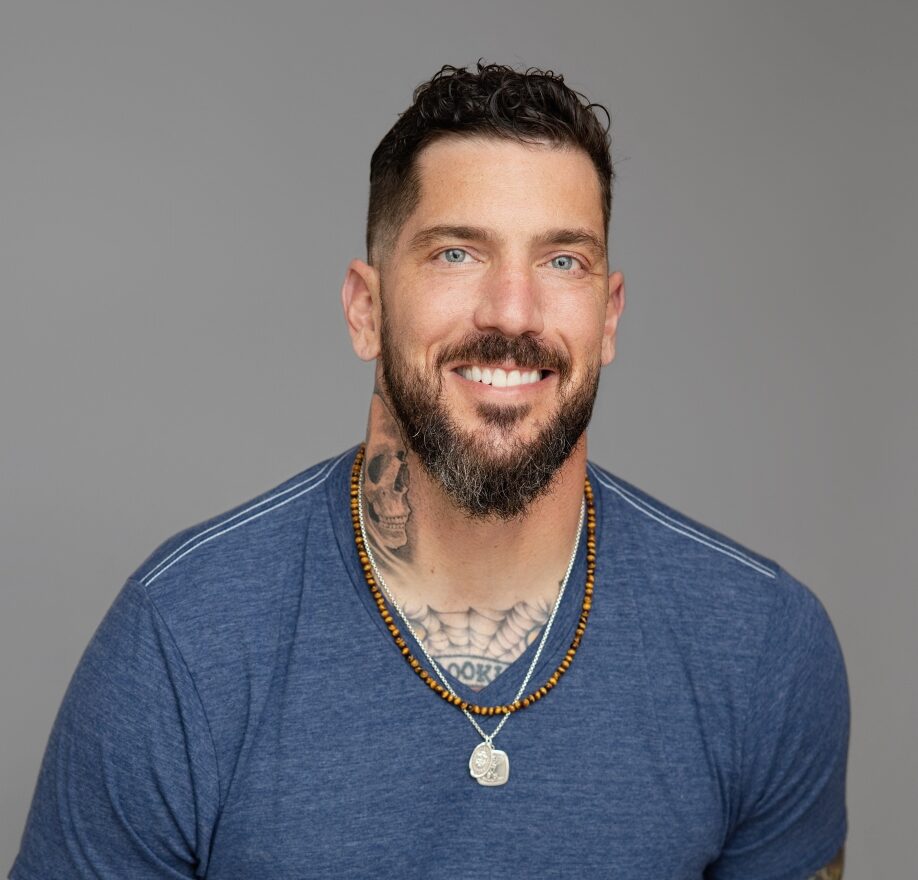


I recently interviewed Thumbtack Co-Founder and CEO Marco Zappacosta on my podcast, Thirty Minute Mentors. Here is a transcript of our interview:
Adam: Our guest today is the co-founder and CEO of a leading online marketplace with more than 10 million users. Marco Zappacosta is the co-founder and CEO of Thumbtack, where more than 300,000 local service professionals have completed more than 90 million projects. Marco, thank you for joining us.
Marco: It’s great to be here, Adam. Thanks for having me.
Adam: Entrepreneurship is in your blood. You grew up in Silicon Valley, and you grew up in a household where entrepreneurship was front and center. Your dad is a serial entrepreneur, best known as the founder of Logitech. Can you take listeners back to your early days? What early experiences and lessons shaped your worldview and the trajectory of your success?
Marco: Yeah, it is something that I’ve been very fortunate to live and see up close. I’ve got to give my mom a lot of credit, too. She was on the early founding team of Logitech and then was a founding engineering leader at another startup. So I have seen them practice entrepreneurship since I can remember. And I think the single biggest thing it did for me, and I think this is maybe a little less true today in its value, just how the narrative around startups has changed, but it simply made it possible. For a lot of people, they didn’t even consider this path because it was not one that was open to them. I saw my parents live the American dream, but you’re also seeing them as human beings, and they toiled, but then they succeeded. And so you think, Hey, that’s a possibility for me too. And then I think the other thing, which I feel very lucky for. It’s just how long this stuff takes. So my father built and ran Logitech for 20 years. My mom was an engineering and R&D leader at a startup for 17 years. So my expectations for how long it takes to do something big were set appropriately. I think one of the unfair things we do to founders these days is miss their expectations on how fast things can go. And the world is moving faster today than it ever has been, but traditionally, things are not an overnight success, and there’s a lot of toil and hard work. And I had my expectations set appropriately. So yeah, I’m very lucky that I saw it as much as possible, and I saw what it would take. But your customers don’t care. Our homeowners and the pros we serve couldn’t care less who my parents are or what they taught me. They only care if we’re delivering a good service to them and to our investors. So it is helpful to get started, but then ultimately, yeah, you’ve got to go earn it.
Adam: Your customers might not care, but I care, and our listeners probably care. And one of the things that I care a lot about is the lessons that you shared, and you shared a lot of great stuff there, including something that I’ve heard over and over and over again from so many of the most successful people whom I’ve had the chance to talk to. There is no such thing as overnight success. We see people who have reached the pinnacle of success, and we don’t see what they did to get there. We see the result. And there’s often a misconception that you can do great things really quickly. But I have never spoken to anyone who’s been able to do anything really big, really quickly. Greatness takes time.
Marco: I love the Bill Gates line. It says people overestimate what they can do in a year and underestimate what they can do in a decade. And I think decade is likely the appropriate measure of time that it takes to do something that’s truly huge and impactful. We live in a big, hard world. That’s what it takes.
Adam: I love that. I recently did an interview with a successful entrepreneur, and he’s founded and sold five different businesses. One of his businesses, he exited for more than $6 billion. He told me that anything he’s built has taken at least five years to get to any kind of level of success. Think in terms of decades, not in terms of days or weeks or months. It can be hard to flip that switch, but when you do, it allows you to be a lot easier on yourself, and it allows you to think more strategically.
Marco: That’s exactly it. I think it sets your expectations appropriately so that you can sustain over the long term. And then two, I think you’re playing a longer game. Basilis talks about if you’re focused on next year and you’re competing with everybody’s focus on next year, if you’re looking five or 10 years out, there are way fewer people doing it. And so it’s a more open green field for you to go into. I think in a fast-moving world, that’s going to be rewarded even more for outlier outcomes. Yeah, you’ll get the occasional you catch lightning in a bottle, but I think more often it’s going to be. Someone who’s been pursuing things almost as a quest that they believe in despite little proof, that then, five, 10 years later, here’s overnight to be this magical solution to this problem that people have long had. And I think that’s par for the course and is important for people to internalize as they’re getting going on their journeys.
Adam: I’d love to dive into your journey. How did you come up with the idea for Thumbtack, and how did you actualize it?
Marco: Yeah, so in many ways we did what you’re not supposed to do, right? You hear a lot of people preach, solve your problem, and build something for yourself. We did not do that. We looked outside ourselves and said, What do we feel like is broken, but will inevitably be solved by technology. And really, my co-founders and I would have calls on Sundays to talk through ideas. Sumtac was our second idea, and it came out of the observation that it was still too damn hard to hire a plumber. You had people with these needs and these wants, you had pros with time on their calendar and a desire to make more money, and the market wasn’t clearing. That felt like an obvious failure of the world and an opportunity for technology to revolutionize it and make their lives much better. So that obviousness of the problem is really all it took for us to jump in with two feet, we had hunches and hypotheses as to what might fix it and what was broken. But early on, we didn’t really know. We started talking to customers, talking to pros. We quickly validated that there was an opportunity, and then we went for it. We had enough conviction that this was a path worth pursuing and went all in. We were pushed all in, too, I would say a little bit, because we started the business three weeks before Lehman Brothers went under in 2008. So we start at the beginning of August, and Lehman Brothers goes under end of August. And at that point, my co-founder and I look at each other. It’s like, well, we’re not going to get jobs anywhere else right now. So we might as well stay focused on this. And that dogged determination, I think, has proven key to our success because while the vision has stayed remarkably consistent, the strategy and the tactics to bring that vision to life have evolved tremendously and multiple times over the intervening 17 years.
Adam: You weren’t solving a personal problem, but you were solving a problem that you believed existed for a lot of people. And then you went out and started talking to people. You talked to customers, you talked to pros. Can you dive a little bit deeper into how you were ultimately able to validate the idea, and what advice you have for anyone listening on how to assess whether their idea is a really good idea or not necessarily that great of an idea?
Marco: I would think about it in two ways. You can talk to customers. To better understand their problems and their desires. And I think we did that very early and instantly got very clear feedback that the world was broken. I have yet to meet a homeowner who’s like, oh, home care, maintaining, and improving my home. That’s easy. I never worry about that. I’m never frustrated by that. I’m never worried about how much I’m paying or how much time I’m spending. You just get the opposite. You get a world of pain and frustration. And did it with pros where, yeah, there are occasional pros who say, hey, you know what? I’m all good. I don’t need more customers. But 8 out of 10, 9 out of 10 that you talk to will say, I’d love some more customers. They have to be the right type, the right time, the right place. But yeah, my schedule’s got some holes in it. Let’s try and fill this up. So that was immediate and very non-controversial. What I think is much harder to evaluate in conversation with customers is, our solution is going to help them or be better than the alternative. And here is where I really think you have to learn by doing. You cannot ask a customer to tell you, Hey, would you like this? Would you want this? Would this be useful to you? I think you get some color with that, but revealed preferences are often very different than stated preferences. And you can only reveal the customer’s two preferences by giving them something to play with or work with or buy, or use. And I think that’s something we did very early. We got started in August, and I remember by the end of the year, November, December, we had a prototype up. We had our alpha side up. We had a version that we were putting in front of customers and pros, and starting to get feedback because basically that is the only way to zero in on what’s resonating and what’s not by people’s revealed usage preferences rather than their stated preferences. From there, you learn, you focus, and you’re doing both. You’re building and watching how people react, and then also talking to customers to build your own intuition. And the thing that emerged for us was that this hiring journey is multifaceted, and there are broken and hard parts of many of the components. But the hardest, most frustrating bit is discovery. It’s figuring out who’s available and qualified to do the job that I want done right here, right now. And so that became our obsession and still is in many ways, the motivation to help you at any point for any need, for any want, instantly be able to see a list of qualified and available pros such that you can get whatever you want done. That’s what we hope to provide. And we’re not all the way there yet. You know, it’s hard given that we cover every zip code in the US, 500 different categories. Every time of day, there are hard jobs to fulfill, but the flip side, the better we do, the more loyalty we create and the more brand love we get from our customers, because the world is broken. So I would encourage people to think about customer research as a way of validating problems and opportunities, but then you’ve got to just prototype and build and put something in front of customers to really get a sense of what’s going to work or not for them.
Adam: You’re not really going to be able to get meaningful and valuable feedback by putting an idea out there compared to putting a product out there. Don’t try to build the perfect product. The perfect is going to be the enemy of the good. Try to build a good enough product that you can get out there as quickly as possible, because you’re going to get exponentially better feedback on that product relative to the description of the product that you put out to customers.
Marco: Yeah, and that’s something the modern world is making a lot easier. These vibe coding tools are really good at developing prototypes. There’s still a way to go to have them develop fully robust enterprise-grade solutions, but for prototypes, for validating, for testing a new idea out in front of your target customer, incredibly quick and powerful.
Adam: What were the keys to growing and scaling Thumbtack? You’ve been able to create an enormous marketplace, with more than 10 million users. You started with zero. How did you go from zero to 10 million?
Marco: Slowly and day by day, but all with an appreciation that growth is a compact sport. There is a little bit of a delusional sense in Silicon Valley at times from technologists that if you build it, they will come. And look, every once in a while, lightning does strike and something catches overnight. But more often than not, what you see is that things that get to scale were deliberate efforts at refining and understanding who the customer is, where they are, what they want, and what messages resonate. And then building a go-to-market effort in terms of media or sales or whatever the motion is that brings them in and gets them engaged efficiently and profitably. And that’s a whole machine and apparatus and something that has to be built brick by brick. And you do it by swinging the bat and foregoing this notion of great. I just have to be great. And then the world shows up. It’s a little bit more complicated. There’s a joke that first-time founders are product and technology-obsessed. And second time founders are distribution obsessed and growth obsessed because yeah, you realize just like how critical that ingredient is. So we saw it that way from very early on. We took it on in a very technology-forward way, such that we had big ambitions. And so the idea of doing things manually, doing things on the phone, was an impossibility. And that pushed us to digital channels and scalable channels, and being very performant and being just scrappy in how we turned our time and money into something. engagement and usage. So the lessons and the specific tactics will be different for different industries and different customers. But the idea that you have to go to them, and it’s a contact sport. And in that contact, you can learn how to grow your business is a common answer.
Adam: As the CEO of Thumbtack, a lot of your time and energy, and focus is on leading and managing people. In your experience, what are the keys to successful leadership, and what can anyone do to become a better leader?
Marco: First off, people often conflate management and leadership. There’s a lot that goes into management, running a team, thinking about hiring, firing, mentoring, running a meeting, a team meeting, a small staff meeting, and creating OKRs. There are a lot of nuts and bolts of management that are important, but I think actually separate from leadership. I put those in the management of execution bucket. But I think what leadership requires is beyond that. It is vision, vision around the opportunity, the market, vision around the potential solution. Also, vision internally around the values of the organization, what it stands for, what it stands against, and how it’s trying to differentiate itself. And these things require courage at the end of the day, intuition, and creativity. But actually, the main thing is courage because it’s hard to point to somewhere that nobody sees as an opportunity and say, Hey, there’s gold over there. Or hey, point to something that has never been built before and say, this is going to be what really works, or say, hey, we can be different as an organization. We can be this and not that. That I think is what leadership is, and where I think it’s not obvious for people who haven’t been in that position or haven’t been asked to play that role, how intimidating it can be to supply a vision and be held accountable for that vision. But I think that’s what leadership is at the end of the day. So that’s also a hard part to train. The management piece, in comparison, I think, can be learned very broadly. Those are tricks and trades that lots of folks can pick up. This willingness to be a leader is not always something that can be learned. And you see it more reflects personal characteristics. Are they curious? Are they open? Are they independently minded? Are they, to some degree, confrontational and willing to put themselves out there and push back on other ideas or viewpoints? Are they willing to be disagreeable? If you’re a peacekeeper, unlikely to be a great leader because to make these calls, somebody’s going to disagree. Some people might even be mad and say, hey, you know what? That’s wrong. I hate that. And that’s where the courage comes in. Say, yeah, I respect that. I appreciate you disagreeing, but we have to commit and we’re committing this way, not that way. So yeah, that’s the hard part of leadership.
Adam: What’s been your biggest failure as a leader, and what did you learn from it?
Marco: The scary thought is that I don’t even know what my biggest failure has been. There are two types of errors, one of commission and one of omission. I’ve made many commissions, whether it’s about strategy or not focusing enough. Or hiring execs and not understanding what the role needed or how best to build a team, acquisitions that could have happened, and should have happened. So many errors of commission, but I’m nagged by the thought that I would assume the biggest error is one of omission, something I have not done that I could have done had I done. Would have made Thumbtack way more successful and us even further than we got. So yeah, the sad part is I don’t know what that is. I’m just haunted by it being out there.
Adam: And that’s a sign of effective leadership when you have the self-awareness to know that we all have blind spots, even the most successful people, the most successful leaders have blind spots, and through feedback. Feedback is what allows us to know what our blind spots are, to know where we are falling short, and to understand how we can improve.
Marco: Uh, one of the reasons why one of the things I look for in leaders is self-awareness and a willingness to engage in the process of gaining self-awareness. I’ve yet to hire somebody who’s perfect, but I’ve hired many people who were uninterested in appreciating their imperfections. And that creates a lot of problems. While on the flip side, if you have someone who is. Self-aware of their imperfections and is comfortable in learning more about them and what that means for others, I think you have someone who can get past them and can manage to be even better, or not be held back by those weaknesses. So it’s one of the things that I care about. Obviously, they have to be talented, skilled for the role. They have to be a values fit, but I care a lot about them being self-aware.
Adam: Self-awareness, one of the most important elements of effective leadership. And as you describe the mistakes you made as a leader, as you describe what you think about as a leader, so much of what you’re talking about involves people, hiring people, managing people. What do you look for in the people you hire? What are your best tips on the topic of hiring?
Marco: Something I’ve reflected on a lot, and I do think it’s ultimately a huge part of my job and my contribution to the business. And I think there are different classes of errors. The first error that people make is that they don’t understand what the job that they’re trying to get done requires the most. I think it’s easy to come up with a laundry list and say, you know, here’s the 12 things I want this person to be amazing at. But that’s lazy and also unhelpful because nobody’s amazing at 12 disparate things. Instead, I think it all starts with saying, okay, what does this role require in this moment and for the foreseeable future that I want to optimize for? What are the challenges? And then through that, what are the strengths that this person really needs to have to be successful? So I think people don’t spend enough time on that. I think too, especially entrepreneurs like me who don’t have a background before starting their business, I think at times, and I certainly did early on, you overestimate your ability to assess skill. Because if you’re trying to hire someone who is more skillful than you, you’re blind to how skillful they actually are, and they can trick you. And so what I’ve come to believe is that somebody’s career and their body of work and their references from people who worked with them are the best way to assess someone’s skills. It’s hard to fake a skill across a whole career. It’s comparatively much easier to fake a skill in a two-hour interview. And so I really look to body of work and references as a way to say, hey, what is this person exceptional at? Where have they succeeded? Why have they succeeded? What do peers of them think highly of them for, et cetera? Finally, I use my time. So I try to spend time with people who I think already meet that bar. So it’s not on me to assess it. They’ve proven themselves already. And so my time is less about skills assessment purely and more about the values fit, ambition fit, and approach fit. I’m looking for high-confidence, low-ego people. I want someone who has the courage and their own conviction, but is really low ego about it, in that they want to win and they want the team to win. They don’t really care about whether their idea is the winning one or not. And self-awareness is sort of in this bucket of things I’m really looking for at the end. Because you can hire the most talented and skilled person, but if they’re not a fit, right, if they don’t see themselves in line with the values of an organization or its ambitions or its timelines or its approach to work. You’re going to have problems. S,o focus on what the role wants. Use somebody’s career and the references to establish their technical mastery, and then use the interview in large part to assess fit with me, with the organization, and with the values. And that is how I approach it today.
Adam: You lead a virtual first organization. What are the keys to leading virtual and hybrid teams and to building culture at virtual and hybrid companies?
Marco: First off, it was something I was really scared about. This whole virtual experiment was not one that I had intended to try or wanted to try. COVID forced it. Had it not been for COVID, I don’t believe Thumbtack would be virtual first today. I don’t think I would have the courage to try and make this change. And that was because Thumbtack was very in-person driven in its culture. We got together a lot for meals, for events, for just convening. And I was worried about what would happen to the culture as we move virtual first. And what we learned is that culture is two things. It’s. First, your values and what matters and why, and then two, the habits that bring those values to life. And in this transition, we could keep the values exactly the exact same. We could really honor them, but the habits had to evolve. And what was amazing was that, yes, it was different in how we worked and how our culture came to life, but the values didn’t change at all. In some ways, they got stronger because virtual first work forces you to be more deliberate about things. And so, yeah, being really values-driven. So what I’ve taken away from it is that there’s nothing incompatible with virtual work and being very values-driven or a very culture-first organization. I think we have that. And two, it means that we’ve gotten the best of both worlds. The virtual aspects mean that we have access to talent we never would have otherwise if we were just in the Bay Area or in one spot. And it also gives that talent the flexibility that they want to run their complicated lives. So we have better talent drawn than we’ve ever had. And on the flip side, we can get together for the key moments during the year of collaboration around strategy and road mapping, and visioning work, and that type of stuff, which doesn’t happen every day and really shouldn’t happen every day. And so you can get together for those high bandwidth conversations, but then most of the time you’re in a place where you’re actually more productive per hour worked. And so yeah, Thumbtack has never been more effective, and I think we’ve still stayed true to who we are and our values. So I’m a big proponent, especially for a company at our scale. You know, we’re a thousand-plus people now. That’s just different than being 15 people or 50 people where you can still get in one room. We’re long past that. And so this, I think, is just a fundamentally more efficient and scalable way of working. And then the thing that I did not appreciate until more recently, which gets me excited, is that having everything be digital. Because we work virtually, all of our time is spent through a Zoom chat, through some software tool, through our computers. And with that, it’s all amenable to being improved with AI. All of this surface area that we’re putting in between our workers is all digital. And so you can bring AI into that. And so I think it lets us fully utilize these technologies right now, every meeting can be recorded and transcribed. You can build a repository of knowledge in a totally different way. And you can bring these aids into the room and into conversations in a different way. So yeah, I’m excited for what it means in terms of the AI tools that we can bring to bear because everything about Thumbtack is digital, and how we work is digital.
Adam: You touched a little bit on how you, as an entrepreneur and as a leader, utilize AI, but what advice do you have for entrepreneurs and for leaders on how to embrace and fully utilize AI?
Marco: Look, I think it’s as simple as learn by doing. I don’t think anybody has the blueprint. I don’t think there is anything that’s preordained here. It’s all moving very quickly and evolving very fast. And so I think the best way to learn and explore is to just do, to try. Whether it’s using these tools for a search replacement, starting to build agents to automate tasks, or creating smart scripts.Too full-blown vibe coding and playing with a Riplet or a Vercel or a Lovable, where you can create your ideas in a whole new way. And again, that’s like me, the product technologist answers. I think there’s probably a different answer if you’re a designer or an engineer or an operations leader. These tools are going to impact everything. They’re really incredibly human-like in some sense. And with that, they’re going to be a real partner to us in the knowledge work that we do every day. They’re going to come into our companies and yeah, just participate with us in the building and creation process for our customers. So I would just tell people to like embrace it and lead with curiosity and to learn by doing. I think this is not something that can be fought or feared, but something that has to be played with.
Adam: Lead with curiosity. And that applies whether we’re talking about AI technology or anything. The most successful leaders lead with curiosity. The most successful leaders ask questions because they want to know the answers. They want to know more information. The most successful leaders don’t walk into a room intent on speaking, intent on having themselves heard. They walk into rooms intent on listening, intent on learning, intent on consuming as much information from as many sources as possible. And it all comes back to curiosity.
Marco: Yeah, I think that’s exactly right. I will say our first company value is to lead with why. I think it’s fundamental. It is about having, I think, a curiosity. It’s about being kind of open to new ideas. It’s about being intellectually honest and humble about what you do and don’t know and where you might be wrong. And I think it puts you in the shoes of others rather than trying to presume, you know, it all upfront and that hypothesis-driven. Exploration and intuition building, I think, is key towards, yeah, company building. It gets thought of more as part of the scientific method, right? You start with your hypothesis, but the same thing happens in entrepreneurship, which is similarly a process of discovery. And so this is leading with why, like having intuition, having thought about the world, and then still being open to ask more questions and dig deeper and figure more out is the core of it all.
Adam: Marco, what can anyone listening to this conversation do to become more successful personally and professionally?
Marco: Be less scared of failure. Lots of people say no to themselves and say, Oh, that can’t be, that won’t be. Therefore, I won’t start. I would encourage people to let the world say no to you. So put yourself out there and try and give it a shot. That alone will teach you a lot and help you figure out what’s right to do next. You probably won’t be right the first time out, but it gives you the feedback that you need to take your next step. So yeah, lean into that.
Adam: What a great line. Let the world say no to you. It starts with not being afraid of hearing no. We’re going to hear no all the time. The only people who don’t hear the word no are the people who are too afraid to put themselves out there. If you want to achieve anything of any kind of significance, you have to put yourself out there, and putting yourself out there means you’re going to hear no a lot. Don’t be afraid of that. Let the world say no to you. Don’t say no to yourself. Don’t stop yourself from getting started.
Marco: Exactly.
Adam: Marco, thank you for all the great advice, and thank you for being a part of 30-Minute Mentor.
Marco: Thanks for having me. It’s a great discussion.