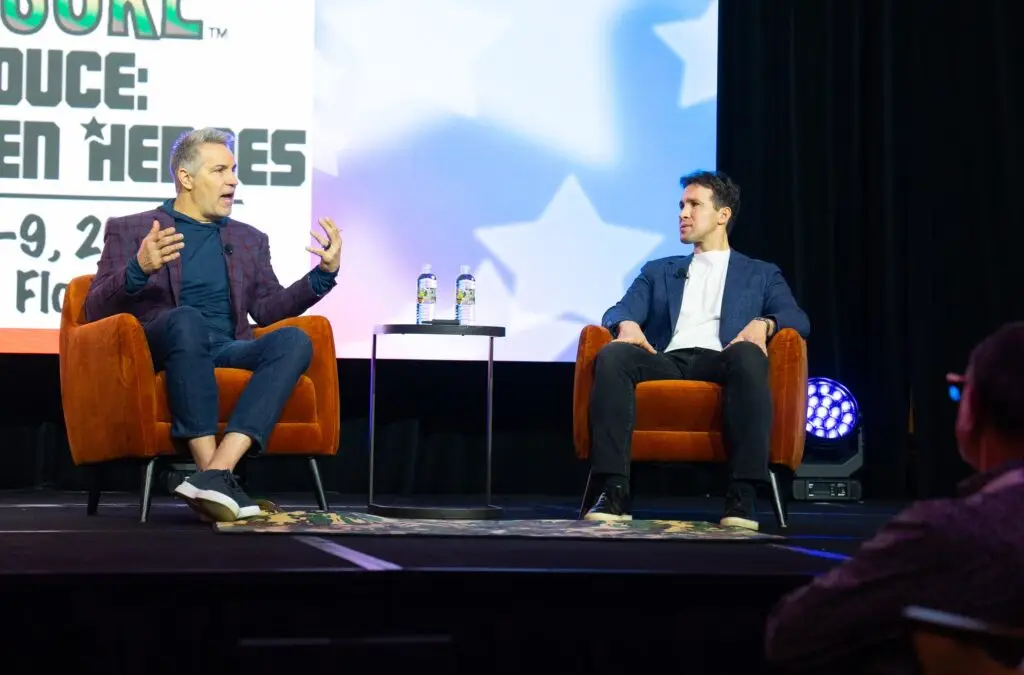

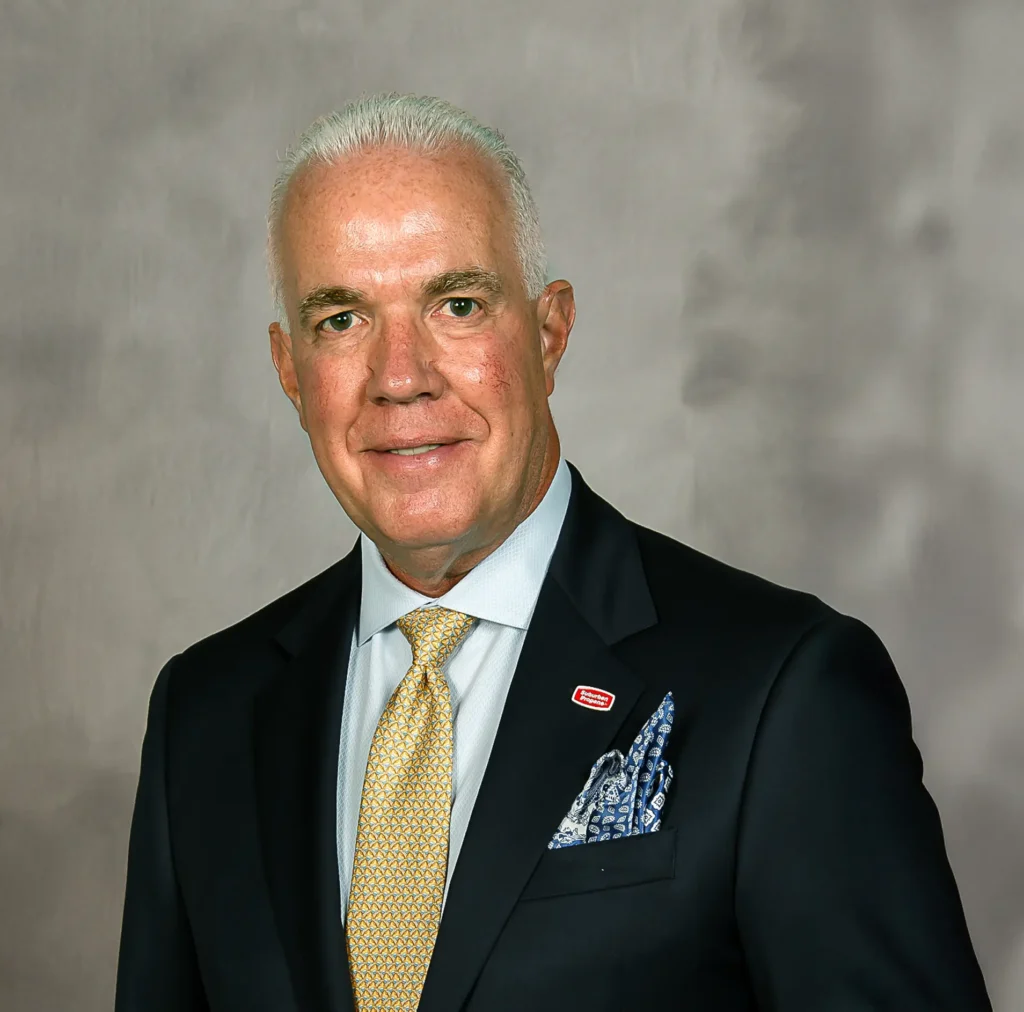
I recently went one-on-one with Michael Stivala, CEO of Suburban Propane Partners.
Adam: What compelled you to study accounting, and how has it shaped your career?
Michael: Accounting always came naturally to me, even in high school. I took a few accounting classes, so as a young 18-year-old going into college, it seemed natural to get into the accounting profession. I try to coach kids these days on what a great profession it actually is, because there’s no better way to truly learn about a business than through the numbers and through accounting. There’s always room for more accountants, and that’s not a profession I think is going to go away, even with the advent of AI.
I encourage my own kids and kids that I mentor that a career in accounting is an outstanding way to start your career, because from there you can really go almost anywhere. The training ground of getting to know a business from the inside is there. To me, there was no better way.
The favorite part of my career as a CPA, and I did 10 years in public accounting, which might as well be 20 years in that profession because of the workload, was becoming a trusted advisor to my clients. What I enjoyed most was getting to sit down with the CEO, the CFO, and other executives, really getting to know the pain points they had in their business, some of the direction they were taking, and how they thought about their own business.
A lot of people think about accountants as just number crunchers, but it’s so much more than that. You really need to understand the business that you’re involved in as a true advisor. For me, those years of sitting down with so many CEOs and understanding how they think about their business and leadership absolutely helped frame the future of my career.
Adam: How can someone become a trusted advisor?
Michael: It takes building relationships first and foremost. A lot of times, accountants who come into clients can be viewed as a commodity. Just get the audit done. But building a relationship and demonstrating that you’re there to support their business and help them be successful was the most important thing I could do.
That took time. It took sitting down and getting to know people from the people side of the business, and engaging with them in a way where they were happy to talk about their business and not view me as the third-party auditor who was just looking to get a job done. Instead, they viewed me as somebody they enjoyed talking with, and maybe somebody they felt they could learn from or get something out of our firm that could help their business in the long term.
Soft skills are critical. The business I’m in now, after leaving public accounting after 10 years and coming to Suburban Propane, and now I’m 25 years here, is a people business. You can’t be successful running a business without truly understanding the human capital component.
The things I tend to lose sleep over are making sure I feel the weight of not only the 3,000 employees who work for this company, but their extended families and their kids. They’re relying on my leadership team and me to make good decisions for the long term of this business, to provide safety, career development, and sustainability, so they have careers they can count on. Having an appreciation for the human side of the business is critically important.
Adam: How did you pivot from public accounting into a senior leadership role?
Michael: When they hired me, I was coming in as the Controller and Chief Accounting Officer, which sounds very technical. But I think what drew them to me was where Suburban Propane was in its life cycle. This was back in 2001. They were approaching a growth mode and seeking to diversify the business and pursue M and A. Even though they hired me as the Controller, they really wanted me to get involved in business development.
Through my career at PwC, a lot of my clients were doing that kind of work. They were hiring me and my team not only to do audits, but also to support them in things like due diligence and corporate development activities. That background, connected with my ability to be technical enough, drew Suburban Propane to me and me to them, because they wanted me to support the business development strategy that the CEO at the time was pursuing.
One of the first big things I did a year and a half into my career was one of the largest acquisitions that we had done at the time, a couple hundred million dollar acquisition of a business up in the Northeast that really extended our presence. Doing things like that, where you’re getting direct exposure to the CEO and the Senior VP of Corporate Development, and leading that team to bring that deal in, was how I cut my teeth here at Suburban. It demonstrated not only the ability to get it done through accounting, but also strategically.
Adam: How did you go from being trusted within the organization to becoming CEO?
Michael: It takes a lot of people you have to spend time with. I had to demonstrate a propensity to be trusted with the future of the business, which included not only the CEO, who I was going to succeed, but also our board. We have a very active board, and I had a lot of exposure to them throughout my career.
In 2014, when the CEO at the time was ready to retire, they had a choice to make. Was an internal candidate the right way to go? Was it time to think about bringing somebody in from the outside who maybe had a completely different perspective? I had to really interview for that job. Ultimately, I think they came to the conclusion that the career I had here, the involvement I had in the growth of the company, and the vision I laid out for where I thought the next generation of growth was, resonated really well. They trusted me to take the reins of the company.
Adam: What advice do you have for someone preparing for a big interview?
Michael: I always like to lead with people. It’s all about connection. The ability in those settings to connect with the people you’re talking to is critically important, because from there the conversation is just easy.
Understanding who you’re going to be talking to and what’s important to them matters, but building that relationship and that connection is, to me, the most critical aspect of any success in business.
Adam: When you interview people, how much does cultural fit matter?
Michael: Cultural fit matters a lot. When I interview people here for different jobs, that’s the first thing I look for. I assume most people have been vetted to the point where they’re probably technically capable of doing the job they’re interviewing for. But do they fit culturally? Are they going to fit into the team? Are they going to be able to understand our culture, work within the culture, and thrive?
That’s what I look for most when I’m interviewing people, whether it’s executives who are going to work directly for me or even a couple layers down from that. The most important thing is the cultural fit that I think that person is going to have.
Adam: How do you evaluate cultural fit?
Michael: That’s tough. You have to be able to read people. The other good training that I got as an accountant was being able to read people, because you do have a job to do in an audit. You have to get a sense of whether there’s a trust factor, whether you’re being told the right story about whatever that particular activity is, and you have to be able to see through all that.
I think that helped me become a good judge and reader of people, and that has stuck with me for many years. I pride myself on people and connecting, and reading and understanding people for who they are.
Adam: How can leaders cultivate trust?
Michael: Trust has to be earned. It has to be consistent. You can never waver. I think about that not only from the interaction I have with people, but as a public company, I think about every message that we send out to the outside world, whether it’s our quarterly earnings or an important press release.
As soon as you try to tell a story, you then have to remember the story. It’s so much easier to just tell the truth. I always lead with that in the back of my mind. That guides me. If I’m always just telling the truth, I don’t have to remember what I said. That’s how you build trust. It’s a constant thing.
Adam: How important is authenticity in leadership?
Michael: It’s essential. You have to be honest, truthful, and lead with integrity, but you also have to be yourself. If you try to pretend to be someone else, people will eventually see through it.
Adam: What are the key characteristics of the best leaders?
Michael: Leadership comes in so many different ways, and there are good leaders who have many different qualities. I can speak to myself. I consider myself a collaborative leader. There are definitely styles where you take more of an authoritarian approach, but I think for our culture, we run a very blue-collar business.
Of the 3,000 employees I referenced, 2,800 of them are drivers, service techs, and customer service reps who are interfacing with our customers at the front line every single day in 700 local communities around this country. It doesn’t work well to just be an authoritarian leader. It’s a culture that we consider to be family-oriented, because every single team at the front line acts as a family, taking care of the customer base in the local market that they serve.
I never go into a situation where I think or try to portray myself as the smartest person in the room. In fact, generally, I know I’m not. But I do like to make decisions. I do like to lead. I like to do that by getting the best people I can around me to help make the right decisions in the moment. I typically go around and ask my team what they all think before we make a decision. To me, that’s helped me be successful.
Adam: How did you change the company’s culture after becoming CEO?
Michael: My predecessor was very different. I was the number two guy in the company at the time, and it was a different culture. It was a good culture, but it was different. He was more authoritarian. He didn’t really get out much and communicate with the employees of the company, so they couldn’t connect with him.
When I came in, I said to the leadership team, I want to subtly change the culture of this company without anybody knowing it. In essence, I was part of the culture as a senior leader in the company for more than 10 years. I was part of shaping the culture, but I wasn’t the leader.
Now I was taking over at a time when we needed to start shifting our business. We needed to start moving in a direction for the future of energy, which was going to take us somewhat out of our comfort zone. I didn’t want to come across looking like everything that was done for the 10 years prior, which I was generally involved with, was wrong. But I needed to put my stamp on things, and I thought it was important for the direction of the company to be more welcoming, more embracing, more communicative, and more visible to the organization.
Adam: What tactics helped you drive that cultural shift?
Michael: First and foremost, I would say unleashing my team to become accustomed to new leadership. Most of my executive team, when I took over as CEO, had been my peers. We all reported to the CEO, and then one of us was elevated to CEO. So I had to get them to understand the shift in approach from the CEO’s perspective and how that was going to change the relationship they had with their CEO.
The expectations I had of collaborating with them and wanting to hear from them versus wanting to tell them what to do was the starting point. Then, to the organization, it was all about communication and being visible. It was about getting out of this office in Whippany, New Jersey, and getting out to as many of our locations throughout the 42 states that we operate in as I possibly could, and physically interacting with as many employees as I possibly could. I wanted them to feel the connection to the company and understand what Suburban Propane stood for.
Adam: What moments shaped your understanding of leadership?
Michael: It’s interesting. I hate to come across as if I just think it was natural, but it was early on. The good thing about public accounting was that every year you stayed there was effectively a promotion. As you got to be a third-year person, all of a sudden you were leading teams already. You’re 25 years old, and you’re leading a team.
Leadership for me started very young, and my approach was always collaborative. What I would say a lot back then was that I always felt as though I was never going to be outworked by anybody. It always started with the fact that I was going to be the hardest worker in the room, maybe not the smartest, but the hardest worker. As a result of that, I sort of expected people who were working with me to want to go through a wall for me.
One of the things I learned early on when I took over as CEO, that surprised me and that I had to put a stop to, was that everybody is listening to every word you’re saying as the leader. I would hear a lot of times, maybe after a meeting or maybe a week or two later, that something was happening because I wanted it to happen. The saying was, well, Mike said to do it. It may have been something in a meeting where, in a back-and-forth collaboration with the team, I was probing or questioning. But it wasn’t an edict. Because they were so used to edicts, if Mike said it, let’s go do it. So I had to say early on, time out here. Just because I say something doesn’t mean it’s the right thing to do.
This is almost a 100-year-old business. Honestly, the base premise of the business hasn’t changed in 100 years. We physically deliver energy to where it’s needed in local communities. That’s the beauty of propane, its versatility. That base, that core competency of who we are, which is safety, customer service, and logistics, to make sure that we’re always there for people, has been that way for 100 years. But we’ve survived 100 years because we never sit around and assume that we’ve been doing it right the whole time. We’re always looking for change. We’re always looking to press the envelope to do things better, but sticking to the core competencies and our core philosophy and mission statement as a company.
Adam: How can leaders build a customer-centric business?
Michael: That’s a tough one, especially in this industry. It’s a very fragmented industry, so consumers have lots of options in their local markets for who they want to be their energy provider. It’s a dog-eat-dog world out there in the propane space, so we have to be that much better at our value proposition.
Again, I come back to people. If I can get every one of our 3,000 people to be totally understanding and devoted to our brand and our mission, and our mission is to serve, then we’re going to be successful. If you look at our mission statement, it leads with serve. Serve our customers, serve our people, and serve our local communities.
All of those people are brand ambassadors. What I like to say is that if we could have all 3,000 of them bleeding Suburban red, then we’re going to be successful, because they’re doing it for our mission and for our company, and they understand it. I think that’s what’s great about our company. We do have thousands of people who really do resonate with that kind of culture.
Adam: How do you get employees to live the company’s mission and values?
Michael: We communicate constantly. You have to keep in front of everybody and drive that home. The good thing is, just like I said before, as long as you’re saying the truth, it’s easy to remember. As long as we’re saying the same message, it’s easy to remember. It’s also easy for those who are receiving the message to remember, because we try to keep it simple.
I’ll give you an example. I have a subtle thing that I do after every single communication to the company, or to any employee in the company. I end my statement by just saying, be safe, please be safe. Now I go out to a local location, and I’ll go to the drivers, shake their hands, and talk to them about their day. They’ll come to me and say, be safe. If everybody is doing that, it does drive a culture, and it drives behavior.
I love going into the local CSCs and seeing the culture. When we launched these things many years ago, we had banners and signatures, and we asked everybody to sign off. It’s all over the location, and the folks love to interact and remind me that they get it.
One of my favorite parts of my job is getting out and thanking and shaking hands with the people who really make it happen. I don’t get out there and deliver propane to a grandma who ran out, who is in zero-degree weather and going through propane a lot faster than she typically does, and she’s concerned, and we go out at midnight to make a delivery. It’s those people who deserve the credit in this company, and it’s those people I want to make sure go home safely at night.
Adam: How can someone lead without formal authority?
Michael: To me, part of it is you can’t be shy. You can’t just assume, well, I’m the CFO, so I’ll stick to my lane and be the finance guy. When I was the CFO, I wanted to get involved in every aspect of the business. I wanted to build relationships with the COO, and I wanted to get out and be visible to the company, even though they may not appreciate what a CFO was or does.
It was important for me that the organization saw me as a leader in the company, not as the CFO. You can do that subtly by making sure you’re not shy, you’re not just sticking to your lane, and you’re doing it in a respectful way. You can certainly ruffle feathers if you’re in a senior executive meeting and you’re the loudest voice. But if you have the respect of your other senior leaders, then it goes well.
Adam: What are the keys to building successful relationships?
Michael: It starts with mutual respect. You have to have mutual respect, and then you have to build relationships. You just have to connect. I know I say it a lot, but that’s what I mean. It is all about connection with people. It starts with mutual respect, and it starts with the ability to interact.
I’m sure I ruffled a few feathers early in my career. In fact, I know I did. But it’s all a matter of respect. Probably the folks whose feathers I ruffled, maybe I didn’t respect them as much as I did other people, and maybe rightly so. I think it starts with mutual respect and then building relationships through connection.
Adam: How do you become a person people respect?
Michael: You have to earn it every day. You can’t force it on people. You can be the smartest person and just be so arrogant that people don’t respect you. They should maybe respect your intellect, but if they don’t respect you as a person because they can’t get along with you, then what good is it?
You just have to earn it. It’s got to be earned. It’s got to be worked on, and it’s got to be maintained through consistency. Back to authenticity, as long as you’re authentic and you already have that respect, you should be able to keep it. You could be authentic and authentically bad, and then people won’t respect you.
Adam: How has technology impacted your business and industry?
Michael: For us, I like to say that our systems have been the backbone of our success, but it’s really the people and the processes around those systems that are driving the success. At the end of the day, we are still safety, customer service, and logistics. The system can enable all those things, and the system can help us be more productive and more efficient. But in the end, it’s the people who are going out every day and executing on those three core principles.
The system has allowed us to continue to tweak around the edges. We’re actually going through a transformational initiative right now where we’re going to be replacing all of our systems that have been there for 25 years. When I got here 25 years ago, we were in the midst of implementing a brand-new system that is still there today. It doesn’t have a lot of the newest technology around some of the AI models and so forth.
We are moving toward a more modernized system infrastructure, but the key is to do it with those three core principles still in mind. We still need the people to deliver energy locally, to take care of our customers locally, and to be able to interact with our customers locally. None of that is going to change for us.
Adam: What are the keys to driving meaningful transformation?
Michael: The way we’re approaching this initiative is that we are really embracing our subject matter experts in the company to help us build this new system the right way. What I’ve said to the leaders who are driving the initiative is that I want to make sure we are always open to thinking about doing things differently to be more efficient, but while sticking to our core.
I want the teams on this project to truly bring their expertise to the table, but at the same time be willing to look at the functionality that’s available to them and figure out whether we can work within that, or whether our process is better and now we need to build it into that system. It’s empowering them to accept change, but not for change’s sake.
It’s also about communicating constantly. When we’re ready with this new system, it’s going to be a big endeavor to train 3,000 people to do their jobs a little differently than they do today. That part is embedded in the change management of the project, to make sure people are ready, that they’re excited, that they understand it’s coming, and that they understand the reasons why we’re doing this.
Adam: How do you help people embrace change instead of fear it?
Michael: It’s not easy, especially as spread out as we are. We’re reliant on 200 managers throughout the country to not only receive the message from the leadership team and me, but to then be able to take their team of maybe eight people or maybe 25 people in their location and deliver that message as well.
It’s a real challenge, but I think we do it well. I really do. I think we communicate well. Like I said earlier, we have a very blue-collar-oriented employee base, but I like to say that as leaders, we run it as blue-collar people. We all roll our sleeves up. We’re all in it together. It’s not the leaders and the folks who are doing the job every day. We are blue-collar leaders of a blue-collar business.
You need to be visible, relatable, and willing to roll up your sleeves. People need to see that you’re connected to the work, connected to them, and connected to the realities of the business.