

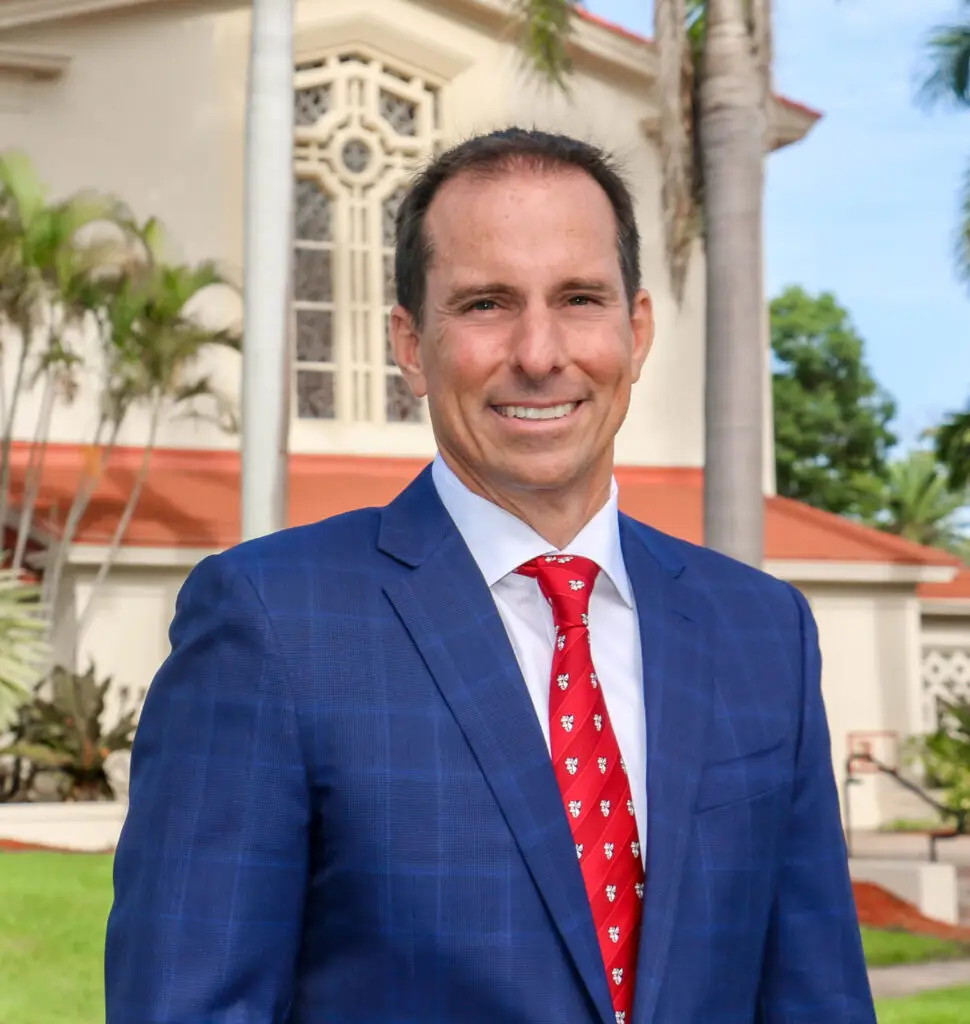
I recently went one-on-one with Mike Allen, President of Barry University.
Adam: What drew you to the field of higher education, and what allowed you to become a leader in the field of higher education?
Mike: First of all, Adam, thanks so much. It’s great to be here with you. Not to go too far back or date myself, but both my parents were educators. My father was a professor at the University of Connecticut. He taught psychology for about 40 years, and my mother was a great school teacher. I always grew up around colleges and universities, and just watching the fulfillment that they both took from their different lanes of being teachers really rubbed off on me, and seeing how you can change lives, and seeing the impact that you can have as a teacher, as a mentor, really meant a lot to me and steered me. You always look in the mirror, and you say, I’m not going to become my parents, and then one day you blink, and you’re middle-aged and you are your mother or your father or some combination of both, and that’s certainly what happened to me. Once I got in, I just really started to enjoy it. I enjoyed working with students, and I was very blessed very early in my career. My first job out of college was at the University of Connecticut, and it was actually as an academic counselor for the student athletes at UConn. I was maybe 23 or 24 years old, so just a few years older than the students who I was working with, but college athletes, generally speaking, and certainly at that time, were a great group to work with as my initial job, because I got to see their experiences up close and see what helped make them successful, see where the challenges emerged for them as students, as they were trying to find their way and trying to find their success academically, but also trying to discover their vocations and what types of careers they wanted to pursue and the internships and all those things, and getting to know them and their families at that young age was just a great way to understand students and what was important to them, and I’ve really carried that with me as I’ve elevated into different leadership roles, remembering that experience of just working directly with students and helping them to be successful in a one on one kind of way, so I always valued that opportunity as an initial start to my career, back in the early 90s.
Adam: What were the keys to rising in your career?
Mike: That’s a great question. I think, like anybody, you benefit from outstanding mentors and bosses and folks who really perhaps see some talent in you that you didn’t even know existed, and I was blessed in that way. My very first boss at the University of Connecticut, Bruce Cohen, I look back today and realize he imparted so much wisdom on me without me even realizing it, but I still quote him today and take the things that he taught me and implement them in my job as the president of a university. For me, what’s interesting is that I’ve always been very self actualized with work, and I won’t say every job I’ve had, but somewhere midway through my career, I feel like I found a place in my career where I could have said to myself, you know what, I’m doing exactly what I want to be doing, I enjoy it, I’m challenged, I’m making enough money, and if I did this for the rest of my career, I’d be really happy from a professional standpoint. What happened to me was a real blessing, which is that I kept looking at the person who I was working for, and as you know, higher education, like many organizations, is very hierarchical, and I would look at what they were doing and think to myself, they’re a great boss, but I actually think I could do their job, and then I started to realize, well, if I do certain things and add some of these items to my skill set, I could have their job. So for example, when I was an athletic director at Catholic University in Washington, DC, my boss was the Vice President for Student Affairs, and when that position became open, the president came to me and said, would you be interested in taking that job, and like any new opportunity, it was a little daunting, and I thought, I think I could do that. Then when I was Vice President for Student Affairs, I reported to the president of the university, who was a fantastic president who I learned a great deal from, but I also looked and said, you know what, I think I might be able to do that, and so that’s what really sparked my interest to say, let’s put my name out there, start getting engaged with the search firms, and that’s when the opportunity at Barry University came up to be the president of a university.
Adam: It really starts with the mindset of believing in yourself and being willing to put yourself out there, because if you don’t believe in yourself, no one else will.
Mike: It’s a great point, and a search firm representative once told me, and it was one of the very first times I was interviewing for a presidential role, she said, when you go into that room, you are the president, and I thought that was great advice, because in your mind, and I hear this a lot from people I mentor these days who are aspiring to become presidents, they say, I don’t know if I can do it, I don’t know if I have this skill or that skill, and I know the person, and I’m thinking, you do, but you have to be the one who believes that, because the members of the search committee will only believe it exactly as you said if you believe it yourself, so I think that’s a critical first step for anybody aspiring, perhaps beyond what they ever thought they might be capable of in their careers, to truly believe that they are ready and capable and worthy of that opportunity.
Adam: What are the most important skills to become a university president and to lead effectively as a university president?
Mike: Great question. There are lots of different ways I can take it, so I’ll sort it out at a high level. You have to be able to combine a visionary, innovative leadership style with a really strong sense of realism and the ability to be practical in the implementation of what has to happen, and I think all of us probably have a heavy lean toward one or the other, and you can’t be successful as a president without both. For me, my natural instinct is to be very practical, and I have a very good ability to take an idea, understand the key stakeholders, sell that idea, and implement that idea in a way that can be effective, but because of that, earlier in my career, I had a tendency to see where the pitfalls were, to see where the challenges might arise, and then to shut things down, because I would think, you know what, it’s a great idea, but it’s not going to work because of certain reasons. A big part of my evolution as a leader was to really push that visionary, innovative side of myself, to not think about the reasons why something can’t happen, but to focus on all the reasons why it can, and more importantly, to focus on the incredible and exciting things that will happen to our organization when we bring that vision to life, and in doing that, you are much better positioned to bring people along with you on that journey and to make that exciting and ambitious agenda come true, so I think that combination of being visionary and innovative, but also being practical and grounded, goes a long way toward being an effective leader.
Adam: How did you evolve as a leader?
Mike: It’s a great question. I’ll really lean into something that you hear all the time when people talk about the qualities of a great leader, but I’ll try to elaborate on it in a slightly different way, and that’s empathy, and I use it in the sense that to be a good leader, you have to be able to look at every situation, and I’ll use my cabinet as an example, I have seven members of my cabinet, each one oversees a very distinct and unique division of the university, and in order to effectively run a university, I have to understand what’s important not only to each individual leader and what motivates them and inspires them to be the best version of themselves, but also what is needed for them to run their area most effectively, and that only comes with growth and time and experience and really paying attention. Each one of those leaders, those division heads, whether it’s my vice president for finance or my provost who oversees academic affairs or my vice president for enrollment or advancement, each one of them should know more about their area of expertise than I do, but I need to know enough that I can both challenge them and support them so that not only they individually, but their area of the university, can truly thrive, and I think my evolution as a leader has been to become a kind of generalist across each one of those areas by working with first rate colleagues who led those areas and then by overseeing all of those areas as the leader of a university. For example, I never had a job directly as a fundraiser before I became president, but a critical component of my effectiveness as a president is the ability to generate revenue through fundraising, and I taught classes as an adjunct professor, but I was never a full time professor, and my job as president is not to be the professor or to be the head of advancement, but to create an environment and to understand enough about each of those roles so that I can put everybody in a position where they can thrive and be the best version of themselves, and that requires that baseline understanding and, coming back to that word, empathy, understanding what’s important to them, what they need to be successful, putting myself in their shoes, and then making that happen for them.
Adam: How do you think about the balance between staying out of the weeds as a leader and having enough knowledge to lead effectively?
Mike: I waffle on that a little bit, and I really like this line of conversation, but what I would say on that topic is that the obvious answer is what you said, which is correct, you have to hire great people, and I’m not sure there’s anything more important that we can do in our positions than make sure we surround ourselves with great people, and I’ve always been one to try to hire people who are smarter than me or better than me in their area of expertise, as any good leader would do. I also think, and we can circle back to this when we talk about modernization and AI and technology, but I don’t recall a time in my career where what we often call soft skills, which I actually think are the most critical skills, have been so important, the ability to problem solve, to think critically, to communicate effectively, to listen with purpose and meaning, and again to have that empathy to understand what people are saying and how you can best support them in return. That’s how I try to approach it, and I’ll use a very recent example that we all went through, which was the pandemic, where many of us were leading organizations through something we had no formal training for, we weren’t health experts, we weren’t infectious disease experts, and we were in a situation where there wasn’t even uniformity around the facts, and there has never been a time in my career, and maybe never will be again, where you had to rely so heavily on raw leadership skills. You had to take in the information available, listen to experts across different areas, and often you would have ten smart people in a room, five who felt one way and five who felt the other way, all listening to the same information, and you had to synthesize that and make decisions that none of us had specific training for, other than understanding what it means to be a leader, which is to demonstrate confidence, decisiveness, thoughtfulness, kindness, and reassurance. That, to me, is what separated good leaders from exceptional leaders during that time, and while I would never wish a crisis like that on anyone again, it was a unique opportunity to both demonstrate and develop leadership skills, especially early in my presidency, as I was only about six months into the role, and it really reinforced how important it is for people to feel informed, supported, and reassured, as we had a large portion of our community tuning in regularly just to understand what was happening and to feel some level of certainty in a very uncertain time.
Adam: Do you believe soft skills are more important than hard skills in today’s and tomorrow’s workplace?
Mike: I really believe they are, and this isn’t a new concept, there’s a lot of data that supports this idea, and I’m not saying it because I went to a liberal arts college, but I did, and you often hear parents question degrees in areas like psychology or history, asking what kind of job that leads to, but the data shows that over time those degrees often lead to strong outcomes in terms of career growth and lifetime earnings, and I think that’s going to become even more true going forward. This doesn’t mean moving away from technology, it actually means the opposite, it means fully embracing technology, but understanding that the hard coding and the tools themselves are increasingly accessible, and the real differentiator is how we use them across disciplines, whether it’s healthcare, education, business, marketing, or the arts, and that requires human skills, the ability to communicate, to collaborate, to think critically about risks and opportunities, and to apply judgment in how these tools are used. So when I think about where people will truly differentiate themselves and thrive, it’s in how they combine those human skills with the technology that’s available to them.
Adam: What are the most important soft skills that everyone should cultivate?
Mike: Certainly, the ability to think critically, to take in and absorb all the facts and all the ideas around you, and to collate them into actionable items, that ability to process and discern, to ask the right questions, and ultimately to generate the right answers is highly important. Communication is also critical, being able to communicate with clarity and with purpose and to embrace the two-way street of communication, obviously expressing your ideas verbally and in writing to your different constituent groups, but also taking in what others are saying and listening not just to the words but to the intent behind them and the tone, and then drawing the appropriate conclusions from those communications. Staying in communication, the ability to build trust through communication by demonstrating transparency, directness, openness, and approachability is incredibly important, because those qualities help build relationships where people are inspired by your ideas, motivated to work with you, and ultimately believe in you as a leader because of the way you communicate and the way you demonstrate both competence and trust in them.
Self-awareness is such a gift, and I think it’s something all of us can continue to grow in, asking others for feedback about yourself, listening to that feedback, and even watching yourself and how you come across, which is not always comfortable, but it’s important. You might think you’re communicating in a certain way, but others may perceive it differently, and you need to understand that. Being open as a leader and creating an environment where people feel comfortable giving you honest feedback without fear of repercussions is really important, and then actually listening to that feedback constructively. A lot of this also comes with time and experience; there really is wisdom that develops over time, and I’m not the same leader I was ten years ago. You begin to develop a filter for what is important, what you need to pay attention to, and what you need to react to, and that comes with experience. Earlier in your career, you can be pulled in many different directions, reacting to everything, but over time, you develop the discipline to focus on what matters most. For example, at a university like Barry, we are enrollment driven, about 90 percent of our revenue comes from student recruitment, enrollment, and retention, so while there are many great ideas that come from across the university, we have to consistently evaluate them through that lens, asking how this helps attract students, how it helps students succeed, and how it supports our financial sustainability, and that discipline helps guide decision making.
Adam: What are the keys to balancing the competing demands on your time?
Mike: It’s very easy to become overwhelmed by the volume of responsibilities and opportunities, and one of the realities today is that there is no clear start or end to the workday anymore, and the lines between work life and personal life are very blurred, so being intentional about maintaining some level of balance is important, not just for yourself but for the people in your organization. Another key piece is recognizing that there are many things we cannot control, whether it’s external events, regulatory changes, or broader industry trends, and instead focusing on the areas where we can have a real impact. In higher education, for example, there are demographic shifts that are reducing the number of college-age students, and while we cannot control that, we can control how we serve the students who do enroll, how we support them, and how we ensure they succeed and graduate. Staying focused on those controllable areas is critical. From a practical standpoint, one of the things we do is regularly ask why something is important, whether it’s an event, an initiative, or a request for time, and we evaluate what outcomes we are trying to achieve and whether it requires my involvement or if someone else can represent the university just as effectively, and that constant evaluation helps ensure that time and energy are aligned with priorities while still making sure that key stakeholders feel supported and heard.
It’s really important to think about the outcomes of the time and the return on investment of that time, and I’ll give you an example of how we think about investing the university’s resources, which includes time, especially leadership time. When we decide which programs to invest in, we recognize that we can’t be all things to all people, so we focus on programs that students are interested in and fields where there is strong job demand. If those two things align, then we are going to invest in those programs. A good example is nursing, where we have a very strong program, there is high student interest, and there is also a clear workforce need, so that is an area where we are going to continue to invest. You can apply that same thinking to how time is spent. The president sets the tone for the organization, and the president is the most influential person in shaping the culture, so being physically present with students, faculty, staff, alumni, and other stakeholders is very important because it allows them to see and feel the energy, the optimism, and the values of the institution. People form their perceptions of an organization based on its leadership, so being visible and engaged across those groups is a key part of how I decide where to spend my time.
You can feel the difference when someone is truly present and listening to you versus when they are distracted or just going through the motions. In my role, many conversations happen in busy environments, before or after events, in group settings, where it’s easy to get pulled in different directions, but when someone takes the time to speak with you, they have thought about what they want to say, and you owe it to them to be fully present in that moment. One of my mentors was exceptional at this, and I’ve tried to emulate that, even if I’m not perfect at it, by focusing on giving people my full attention when they are speaking. Even if others are waiting or there are competing demands, taking that time to truly listen shows respect and builds trust, and people remember that.
It shows up in understanding what people are dealing with in their roles and acknowledging the challenges they face. You may not know everything about someone personally, but you can understand the nature of their work and the pressures that come with it. For example, someone working in cybersecurity is dealing with constant threats and high-stakes situations, and someone in financial aid is working with students who are under stress and trying to figure out how to afford their education. Simply recognizing that and letting them know that you see what they are doing and appreciate it can go a long way. Even small acknowledgments, taking a moment to say thank you or to recognize their effort, can have a meaningful impact, because people want to feel seen and valued, and that reinforces their connection to the organization.
Ego is an interesting thing, and I think having the right balance is important. You need to have enough confidence to lead and to represent the organization, especially since a big part of the role is being outward-facing and engaging with the broader community, but you also need to have the humility to recognize the strengths of others, to hire people who are better than you in their areas, and to give them credit for their work. It’s about being confident enough to lead while also being comfortable stepping back and allowing others to shine. In a field like education, where compensation does not always reflect the value people bring, recognizing and appreciating their contributions becomes even more important, and that balance between confidence and humility helps create an environment where people feel valued and motivated.
Adam: What are the keys to leading through uncertainty and constant change?
Mike: One of the most important things is helping people understand the why behind decisions, especially during times of uncertainty. Higher education, like many industries, is facing significant challenges, whether it’s demographic shifts, financial pressures, or changes in the competitive landscape, and when people understand those realities, they are more likely to support the decisions that need to be made. Communication is critical, not just during a crisis, but consistently over time, so that people have a shared understanding of the environment and the challenges the organization is facing. When you invest in that understanding, it becomes easier to navigate difficult moments because people are not hearing things for the first time; they already have context. When you hear members of your organization explaining the reasoning behind decisions to others, you know that communication is working and that shared understanding becomes a strong foundation for navigating uncertainty and change.
Adam: Is there anything else you would like to share?
Mike: I would just go back to something we talked about earlier, which is building a culture where everyone understands how their role contributes to the overall success of the organization. In a university, you have a very diverse set of roles, from faculty to staff to those supporting the campus in different ways, and it’s important that everyone sees how their work connects to the larger goals, whether it’s attracting students, supporting them, or helping them succeed through graduation. When people understand that connection, and they see that collective success leads to individual recognition and opportunity, it creates alignment across the organization. When everyone is moving in the same direction and understands their impact, it brings out the best in people and strengthens the institution as a whole.