
I spend a big part of my professional life in conversation with leaders. CEOs of multibillion-dollar businesses. Four-star generals and admirals. Entrepreneurs who turned ideas into household-name companies. Political leaders who made decisions that affected millions of people.
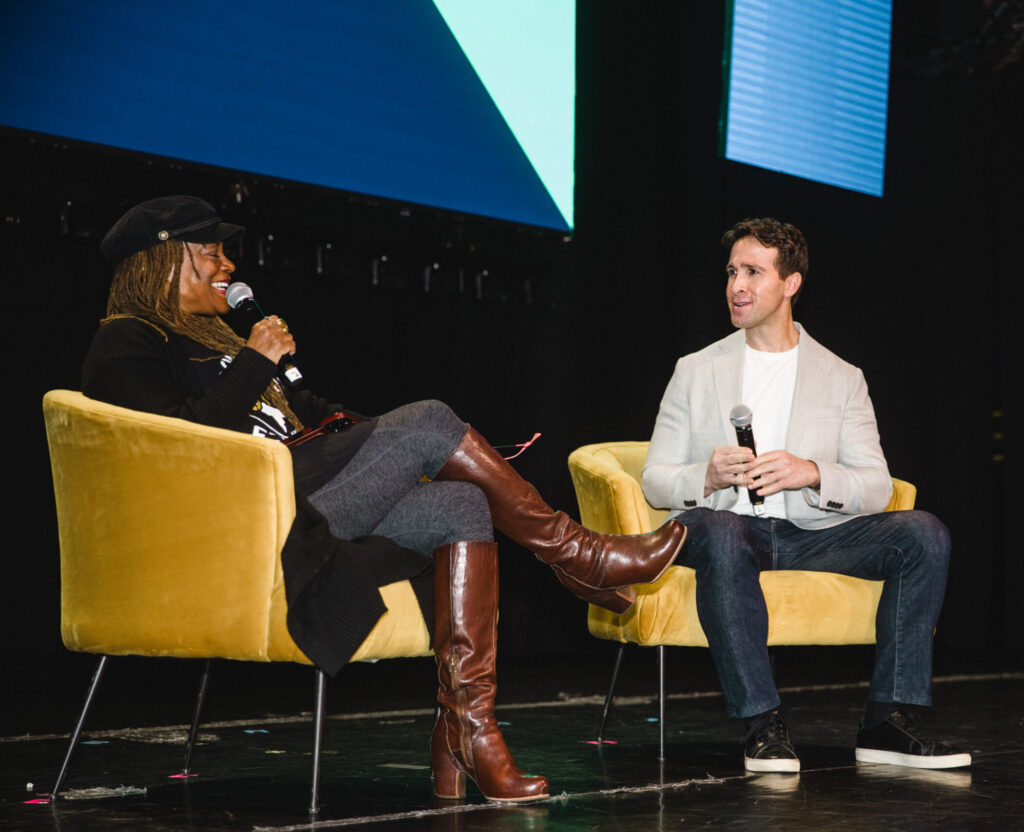
Sometimes those conversations happen on my podcast, Thirty Minute Mentors. Sometimes they happen live on stage, in front of audiences at conferences, corporate events, and leadership summits. In every setting, the same can be said: the quality of a conversation rarely comes down to the format or the stage, but to how well it is moderated.
Moderating is not reading a list of questions. It is its own form of leadership. It is how you turn a collection of people and topics into a shared experience that feels meaningful. When moderation is done well, a panel or fireside chat becomes the highlight of an event. When it is done poorly, even the most impressive lineup feels flat.
In my work as a leadership keynote speaker and event moderator, I think a lot about what makes conversations powerful, not just pleasant. If you are planning a leadership event and want to understand how to get the most out of your speakers and panels, it starts with understanding what a moderator actually does. You can learn more about how I approach this work here:
What a Moderator Really Does
From the outside, moderating can look simple. Someone sits on stage, introduces the guests, asks a few questions, and tries to end on time. But anyone who has watched a bad panel knows how quickly things can go wrong. People talk in circles. The discussion feels scattered. The energy drains out of the room. It becomes something people sit through instead of something they experience.
A good moderator is responsible for much more than keeping time. A moderator sets the tone, guides the flow, and protects the purpose of the conversation. The moderator is the bridge between the audience and the people on stage. They are there to help each speaker give the best of themselves while making sure the discussion stays relevant and alive.
I think about moderation in three simple roles.
I am a translator. I take what a guest says and help the audience understand why it matters.
I am an editor. I gently cut off what is not useful and go deeper into what is.
I am a conductor. I make sure every voice has a place in the conversation and create the conditions so every person can bring the best they have to offer to the forefront.
When moderation is viewed as leadership rather than traffic control, everything changes. The moderator stops being a host and becomes a catalyst.
Preparation You Never See
The most important work a moderator does often happens before the event. Audiences tend to underestimate how much preparation goes into a conversation that feels effortless. They see an hour on stage. They do not see the hours of reading, listening, thinking, and planning that come before it.
When I moderate, I want to know who each panelist is beyond their title. What shaped them. What they care about. How they tend to communicate. I study their background. I dig into interviews, articles, and past talks. I listen for the themes that define them and the stories that reveal who they are, not just what they do.
I also spend time understanding the organization and the event itself. What is the goal of this session? Is the audience looking for inspiration, strategy, or candid insight? Are they early in their careers or seasoned leaders? What is keeping them up at night?
That context shapes everything. Preparation, coupled with the experience of leading thousands of interviews, gives you the freedom to improvise. It lets you be present. It turns a panel from a list of questions into a living conversation.
Listening As a Competitive Advantage
If there is one skill that separates great moderators from everyone else, it is listening. That sounds obvious, but in practice, most people are not listening. They are waiting to talk. They are thinking about their next question or their next comment.
A moderator does not have that luxury. If I am too focused on my script, I miss the moment. Listening means I am fully tuned into what is being said, how it is being said, and what is not being said. I am paying attention to words, but also to tone, body language, and energy.
There is always a line or a phrase in a response that carries more weight than the rest. It might be a quick aside, a moment of hesitation, or a small admission that hints at something deeper. A strong moderator hears that and stays with it.
You said something interesting there. Can you unpack that?
Can you give us an example?
What did that actually feel like in the moment?
Listening is what allows a conversation to reach depth. Without it, you get surface answers and rehearsed talking points. With it, you get insight.
Questions That Open Doors
A moderator’s questions are the tools of the craft. Used well, they open doors. Used poorly, they shut conversations down.
I try to keep my questions short and clear. The longer the question, the less likely it is to land. I avoid jargon or anything that sounds like it is trying too hard to impress. I want everyone to understand instantly what I am asking.
The best questions do three things.
They invite stories.
They reveal values.
They connect to the audience’s world.
Curiosity Over Agenda
Moderation works best when it is driven by curiosity. When I go into a panel, I have a plan. I know the topics I want to hit and the kinds of stories I hope to surface. But I never fall in love with my own plan. If something interesting emerges, I follow it. If the audience clearly reacts to a point, I stay with it. If two panelists disagree, I make space for tension instead of smoothing it over.
Curiosity is also what makes moderation enjoyable. If I am genuinely interested in learning from the people on stage, that energy is contagious. The audience feels it. The panelists feel it. It becomes less of a show and more of a shared exploration.
Tone and Psychological Safety
People will only share honestly if they feel safe. That is true in teams and it is true on stage. One of the most important jobs of a moderator is to create a tone that invites candor.
Safety doesn’t mean avoiding hard questions. In fact, some of the most valuable conversations come from addressing difficult or uncomfortable topics. But there is a difference between confrontation and exploration. The goal is not to corner someone. The goal is to help them say something meaningful.
When panelists trust that I am there to bring out their best, not to embarrass them, they are willing to take risks. They share failures, doubts, and lessons that are much more valuable than polished success stories.
Balancing Voices on a Panel
Anyone who has watched a panel has seen the extremes. One person dominates while others barely speak. Or everyone is so polite that nobody really says anything. Balance is one of the hardest parts of moderation.
The first step is awareness. Sometimes balance requires gentle interruption. If someone is wandering too far from the topic or speaking in circles, it is my responsibility to redirect. I can do it respectfully, but I still have to do it. A panel is at its best when it feels like a conversation among equals, not a speech with side comments. The moderator is the guardian of that balance.
The Audience as a Silent Participant
Moderating is not just about the people on stage. It is also about the people in the seats. The audience is a silent participant in every conversation. Ignoring them is a mistake.
When I moderate, I constantly read the room. Are people leaning in? Are they taking notes? Are they checking their phones? Are they laughing, nodding, or looking confused?
I almost always involve the audience explicitly. I might ask for a quick show of hands or reference something I know is on their mind. Even small gestures like this reinforce that the conversation is for them, not just about the people on stage.
Managing Energy and Pace
Every conversation has a natural rhythm. Part of the art of moderation is managing that rhythm. Too fast and people feel overwhelmed. Too slow and they lose interest.
I think in terms of waves. There are moments when the energy rises. A strong story, a bold statement, a surprising insight. Then there are moments when the energy dips and people process what they heard.
As a moderator, I use my voice, timing, and follow-up questions to manage those waves. I might speed things up with a quick, focused question. I might slow things down by inviting reflection.
What you just said is important. I want to stay with it for a moment.
Energy is not about volume. It is about engagement. A quiet room can be deeply engaged. A loud room can be completely checked out. The job is to keep people mentally and emotionally present.
When Things Do Not Go As Planned
No matter how well you prepare, something unexpected will happen. Technology fails. Someone answers a question in a way you did not anticipate. A topic lands flat. Another topic suddenly becomes more interesting than you thought it would be.
Adaptability is what turns these moments into strengths instead of problems. The key is to stay calm and stay present. If you are too attached to your plan, you will miss opportunities. If you are flexible, you can turn surprises into momentum.
Moderation as a Form of Leadership
The longer I do this work, the more I see moderation as leadership in real time. Think about what a moderator is asked to do.
Set a vision for the conversation.
Bring different personalities together.
Listen, adapt, and respond under pressure.
Manage time, energy, and expectations.
Help others communicate clearly and authentically.
Those are the same skills leaders need every day. The stage is just a different setting. Instead of leading a team or a company, you are leading a conversation. You are responsible for the experience people have and for the value they take away.
Moderating powerful conversations forces you to practice skills that translate directly back into corporate leadership, team communication, and culture building. In that sense, a well-moderated panel is more than an event segment. It is a demonstration of leadership in action.
Lessons From Thousands of Conversations
Hosting Thirty Minute Mentors and moderating events around the world have taught me a few consistent lessons about what makes conversations powerful.
Listening is more important than speaking. The best moderators and leaders listen more than they talk.
Clarity matters. Simple, direct questions and answers have more impact than complicated ones.
Authenticity beats performance. Audiences connect to real stories, real struggles, and real lessons.
Curiosity keeps things alive. When you are genuinely interested, others can feel it.
Balance creates value. A conversation that includes diverse perspectives and experiences is richer and more useful.
Some of the most valuable insights I’ve learned about communication and leadership have come directly from my podcast conversations. Whether I’m speaking with Fortune 500 CEOs, world-class athletes, military leaders, or top entrepreneurs, their stories consistently reinforce the power of clarity, listening, and purposeful dialogue. One great example is my conversation with NFL Hall of Famer LeRoy Butler, where he shared lessons on resilience, teamwork, and leading under pressure. You can listen to that episode here.
These lessons are not limited to stages. They apply in boardrooms, team meetings, and one-on-one conversations. Moderation is just a concentrated version of what leaders are asked to do every day.
Why Event Planners Should Care About Moderation
Event planners are responsible for creating experiences, not just schedules. They think about themes, speakers, logistics, and logistics again. In the middle of all that, moderation can be overlooked. It should not be.
A great moderator makes every speaker better. They make complex topics accessible. They connect the dots between individual remarks and the larger purpose of the event. They help the audience see how what is being said applies to their own world.
If you are planning a leadership conference, corporate offsite, or association event, the choice of moderator can determine whether your panels are something people sit through or something people talk about long after they leave. Moderation is not a detail. It is a lever.
Final Thought
The art of moderating powerful conversations is not about being the smartest person on stage. It is about being the most attentive. It is about listening carefully, asking honest questions, and creating a space where people feel comfortable sharing what they truly think and feel.
When that happens, panels stop being filler. Fireside chats stop being formalities. They become real leadership moments. They show audiences what healthy dialogue looks like. They leave people thinking differently, not just about what they heard, but about how they communicate in their own lives.
If you are planning a leadership event and want your panels and conversations to feel alive, candid, and meaningful, you can learn more about my approach to moderating and speaking here:
FAQs
1. What makes a leadership keynote transformational?
A transformational keynote changes how people think and act long after the event by delivering clear, relevant, and authentic insights leaders can use right away.
2. Why do you focus on clarity in your talks?
Clear ideas stick. When a message is easy to understand and apply, leaders are far more likely to put it into action.
3. How do you tailor a keynote to each audience?
I go try to understand as much as I possibly can about every audience I am speaking to, from their challenges to their goals to what makes their culture unique. Understanding their reality allows me to focus the message on what matters most to them.
4. Why is storytelling important in leadership speaking?
Stories make lessons real. They help people connect emotionally and see how leadership plays out in real situations.
5. How can organizations create lasting impact after a keynote?
By keeping the conversation going. When teams discuss what they learned and commit to small, consistent actions, the keynote becomes part of the culture.