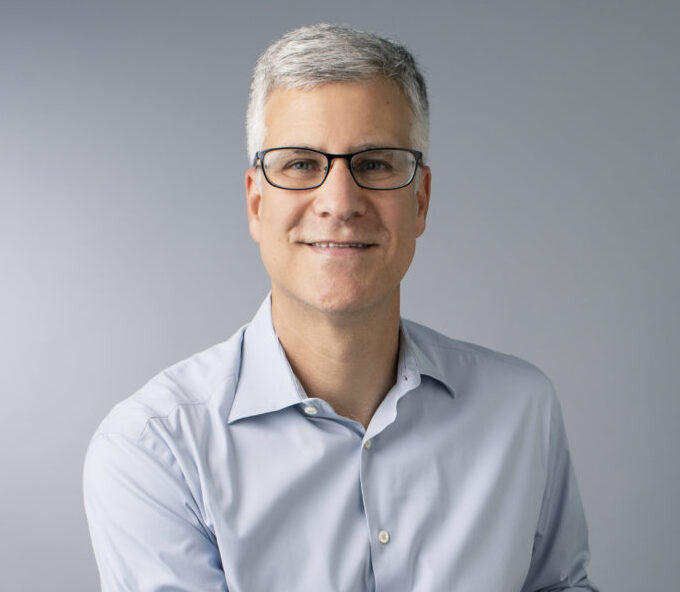


I recently interviewed Montel Williams on my podcast, Thirty Minute Mentors. Here is a transcript of our interview:
Adam: Our guest today is an Emmy Award winner and a New York Times bestselling author. Montel Williams was the host of The Montel Williams Show and is the host of The Balancing Act and Military Makeover with Montel. Montel, thank you for joining us. Thank you so much for having me. You grew up in Baltimore, and you were very active in sports and music, in student government, in the church. And after high school, you enlisted in the Marines. Can you take listeners back to your early days? What early experiences and lessons shaped your worldview and shaped the trajectory of your success?
Montel: I grew up during Vietnam, and I’m a Vietnam vet, so I entered during the Vietnam conflict, right before it ended. went on to become a special duty intelligence officer in the Navy and served until I got out and started a program where I was reaching out to children across the country and speaking across the country. And that kind of evolved into the Montalvo Show. Once that happened, 17 years later, I was still there, but then I left and started pursuing other things that I’ve been still doing now. What really helped to shape my world a lot was the fact that I had two parents at home, hardworking people who believed in education. Their own example proved that with education, you could literally try to write your own trajectory, which is what I was able to do. So I’m very thankful for the fact that my parents gave me the guidance that they gave me at the time when I left high school and started my professional career, and moved on sparking. The military service is a good foundation for anybody to build off of. From every different discipline to inquisitiveness, to learning how to study, learning how to set goals and achieve them. I think that was really probably one of the most important things that I think the military taught me. But once I was in the military, I literally went on a career path that had nothing to do with the military. The same discipline and same quest for trying to excellence and achieve and set goals and get them done. And I think that’s probably what made my television career as successful as it’s been. And post-television career has made my career sense as successful as it’s been.
Adam: And Montel, a key early theme has been the importance of goal setting, something that you learned in your career in the military, something that has allowed you to excel in your career in television. What advice do you have for anyone on the topic of goal setting?
Montel: The best advice I could give anybody is that we are not the summation of what other people believe we are. We alone own the definition of you should be a person who believes the same thing I do. I’ve lived by this moniker my whole life. I’m the only person in that person owns a definition of who I am. And I will determine what my future will be. Not anybody else. I will live down other people’s expectations. I’ll live up to my own. So understanding that it takes a filter off that society likes to put on people. I grew up 50, 60, 70s, a very troubling time in America, probably not as troubling as we are in today. There were so many facets in society that could have stop me. Fortunately, back then, we lived in a society that believed in possibility.
Montel: I don’t know if we live in that same society now. So I would suggest that this generation has to think in terms of not only what are the things that I’d like to aspire to do, but what are the things that I want to aspire to do that I can keep other people from trying to put a glass ceiling over the top of my head? There used to be a day where we used to live and aspire to breaking glass ceilings. They’re unbreakable now. And they will become more and more difficult to break as we move into the future in a society and in a time when we live with people who are trying to revert back to a time where individuals didn’t have individuals.
Montel: So it’s a tough time for this generation. but it’s still doable. The idea that you have ultimate control, I think maybe 10, 15 years ago, we could say that and roll off our lips and believe that we were giving people really good advice. Now I say to them, you know, you not only have to set a goal, but you have to really set unrealistic goal, way further out than you think you’re trying to achieve. And then it’s like, reach for the stars and try to get to Mars. The stars are millions of light years away, but Mars is a little closer. If I reach for the stars and I achieve Mars, I still achieve something, but you may be constrained from touching that star.
Adam: It might tell it’s really important advice, and oftentimes what happens is we set really ambitious goals and we don’t reach them and either we beat ourselves up for not reaching our goals or we just give up and move on because we didn’t reach these ambitious goals that we set instead of recognizing that it’s really hard to reach big goals. And oftentimes, the power is in setting micro goals that are stepping stones toward that bigger goal that you ultimately want to achieve. And you may reach that big goal. You may not reach that big goal, but by setting those small goals, you’re going to get a lot closer to where you ultimately want to be.
Montel: Absolutely. In this day and age, it’s trying to recognize the fact that goals are achievable, especially if you set them small and you keep moving forward. So I agree with you a hundred percent. And you can build off of those small ones. Hopefully, they’ll help act like a staircase or a ladder, but we’ve got to keep our eye on the prize and understand that there are those out there that are trying as hard as they can to tear that ladder down and to put a doorway at the top of the staircase.
Adam: There are always difficulties, there are always challenges. Those challenges are exacerbated today. What can leaders do to help uplift those around them?
Montel: What’s more important is what can we do to get leaders that understand that there is something awry in our society. It’s important to us that we familiarize ourself with, understand, learn, make ourselves available. The news of today is so repulsive in so many ways that there are so many people who are tuning out, thinking that it’ll just get better, it’ll just get better, it’ll just get better. That’s not gonna happen. If you sit back and you think that that other person down the street’s gonna change things for you, you’re crazy. You need to understand that you need to be involved. You need to get involved. You need to get involved by educating yourself, understanding that the other side, the side that’s trying to constrain you, hold you down, trying to revert back to times that they had the right to do and break any law that they ever wanted to break, those times could come back if we sit on the sideline. So we need now, more than ever, to convince those around us to as tough as it sounds all day long. I mean, you can watch five minutes of any news station and be depressed because of what’s going on in the world. We’ve got armed conflicts going on all over the world. It’s but through the grace of God and one or two days or a couple of weeks that we haven’t seen body bags coming back through Dover, Delaware.
Montel: But we will see that again unless we figure out a way to bring who we claim are our leaders under some sort of control.
Adam: What do you believe are the key characteristics of the very best leaders and what can anyone do to become a better leader?
Montel: That’s a huge question. Huge in the sense that leadership requires so many things. Personal knowledge, acceptance of fact, acceptance of evidence, acceptance of science, acceptance of empathy, tolerance. Leadership requires so many facets. Too often, too many people think that it just requires money. And unfortunately, we live in a society right now where that is literally what is applauded more than any of the things and tenets that I brought up. So, making sure that we make ourselves more familiar, more understanding, try to get as much knowledge as we can.
Montel: I go back to that first thing that I said, which was imperative that we understand and acknowledge that we own the definition of who we are. And what do I mean by that? What I mean by that is that you know yourself. You understand that just because somebody said you’re this color or that race or you’re from that town, they can’t define you from afar. You’re the one who has the ability to define who you are, then go out and get the information that you need to help you achieve the things that you have set up for goals for yourself.
Adam: Montel, I love it. Compassion, empathy, grace, knowledge, curiosity. I love what you shared. We own the definition of who we are. And it really starts with one of the most important characteristics of the most successful leaders, self-awareness. Know thyself.
Montel: I say it all the time, know thyself. And it’s a great phrase, but for those who don’t understand what that means, they think Oh, I know I am. I look in the mirror every morning. No, you don’t. You look at yourself, but do you actually look into your soul? You probably don’t. You probably spent most of your time just doing things, forgetting about what you did and trying to do the next thing. But it’s as important for us in our individual development to reflect upon the things we’ve done, reflect upon the moves we made, reflect upon the reactions we’ve had. and understand why we’ve had them. I wrote about it in one of my books. I had an opportunity, and not a lot of people have these opportunities; you don’t need one, you don’t need a summary to do this, but I spent a lot of time on summaries in my naval career. I spent three deployments deployed, or deployments of over 90 days, under the water before the hatches opened and closed. So at the close of the hatch, 90 days later, plus the hatch opened. And when that happens and you’re deployed like that, you know, you lose all sense of time, reality in a sense time, because you don’t ever see the sun. You don’t have to see the night. It’s a 24-hour clock of dimly lit infrared and red light and blue light. So after about five or six days, your body really does battle with understanding what a circadian rhythm is. in an effort to ground myself during that period of time, I spent many hours every single night doing some self-reflection. And what I mean by that is that I would spend my time literally looking back, I try to think to myself, could I remember, how far back in my life can I remember? And I’m telling you, trying to go back to experiences that I had when I was entering the first grade, those memories that flash at you sometimes when you go to sleep, and you remember yourself on a bicycle and in a dream where you remember yourself playing with toys in a dream. Instead of just letting those things flutter by, I try to stop, focus, and see if I could really truly remember what was happening. And on occasions when I could, from the earliest ages that I could think of through my teen years, through my developmental years, I would stop and focus in on decisions I made. maybe an argument that I had with somebody, and try to figure out why did I even have that argument? What was literally driving me to be so angry that time? What was driving me to get so upset that time? Can I think about what it was? Yeah, I remember I was maybe going to the store and somebody literally cast me as a thief when I had nothing to do with stealing. And I remember overreacting and yelling and screaming and throwing things and walking out of the store. Really, did I really have to react that way? I know as a child, I know I wasn’t able to understand what was going on around me and the environmental things that was causing that reaction, but I thought it through anyway. And then once I thought it through, then I thought about trying to catch and remember some of the words that may have come out of my mouth, and reflected upon the fact that was that necessary to use that using those moments to try to guide me in the moments that were to come.
Montel: And that’s what helped me figure out who I am as a person. Because, of course, trying to remember 40, 50 years ago, it’s tough. But remembering enough to know that the next time somebody steps to me with whatever it is that they stepped me with, my reaction doesn’t have to be, my reaction doesn’t have to be a boulder. My reaction doesn’t have to be a truck slamming into a building. I can achieve the same results by intelligently thinking through what the impediment is and figuring out how to get by it.
Adam: You shared a big experience there. Was there a moment in your career that transformed you as a leader? Anything that stands out to you?
Montel: Not really a single moment. It was a collective of all the moments. As a naval officer and as a special duty intelligence officer, I was dealing with what are considered black ops and top secret information. There were several steps along the way, several things along the way that happened in the heat of a mission, the heat of an operation, where I was called upon to make decisions that were life and death situations, decisions for others. That moment of time of discerning how I can react and how to react. Those moments when I studied myself and tried to reflect upon what was driving me to react so quickly in some cases, without taking the time to analyz,e are what really helped me slow down, focus, and understand that dealing with so many individuals and different personalities, we too often can only see things through one lens. It’s our own. We don’t understand that there are other lenses out there. So I’ll take a second to say, I had an opportunity to work with a guy who was a person who was a lecturer and teacher who spoke on issues of inclusion, spoke on issues of how to better communicate, especially in the workplace. And he used to have this theory that he called the beach ball theory. I’ll throw it out to Leah for a second. I mean, do you remember what a beach ball looks like?
Adam: I’ve gone to a lot of baseball games with a lot of beach balls.
Montel: Okay. All right. So think about that beach ball for a second. I want you to visualize your beach ball. What color is it?
Adam: It’s multicolored.
Montel: Correct. How many colors are on a beach ball?
Adam: I’m going to say six colors.
Montel: You’re absolutely right. And those six colors vary from time to time, depending on where you bought your ball. But let’s just imagine that a beach ball is six panels and that six panels is white, red, blue, flip around the other side, it’s orange, green, and let’s say purple, okay? So you have six distinctly different panels. I held that beach ball in front of us right now. I held it facing you. Facing you are the panels that are green, purple, and orange. Facing me are white, red, and blue. You’re looking at green, purple, orange. I’m looking at white, red, blue. You ask me, what color do I say? I say white, red, blue. You say, no, no, no. It’s green, orange, purple. I say, no, it’s not. It’s white, red, blue. That’s what I see. Because I’m holding it, looking at my half, and my half facing me is white, red, blue. Your half facing you, orange, green, purple. I turn it, just one panel. Now all of a sudden, yours is white, purple, green. Mine is blue, red, the other three colors. So what I’m trying to say to you is that all you have to do is pivot that ball just one panel, and I’ve got an entirely different perspective of which it’s true. It’s not that it’s not true, because when you originally were looking at it, you saw green, purple, orange. You see those three. Those are very vivid to you. My white, red, blue are very vivid to me. But if I switch on my panel, now all of a sudden I get a perspective that I didn’t have a chance to see. I try to look at the world that way to ensure that I’m always making sure that I recognize that as adamant as I may feel about my perspective, there is always another perspective that’s worth looking at. Put a beach ball on your desk and think about it. Because the majority of times they don’t even bother thinking about the other perspective. is that we think that the other’s perspective doesn’t even exist. If I’m staring at my side, it doesn’t exist. But the second I take a little shift to the right or a little shift to the left, I got a perspective that’s real. It’s not fake, it’s real.
Adam: I like it. I like the analogy, I like the exercise, and I like the broader lesson, and it speaks to something that all leaders need to understand, especially in today’s landscape, where the word diversity is oftentimes viewed as a dirty word. It’s a word that is so misunderstood because what so many people and teams and organizations fail to understand is that without diversity, leaders and teams are setting themselves up to fail.
Montel: Society, again, we’re living in a time where we hijack fact, we hijack science, we hijack anything we can to make sure that we never have to look at the other side of the beach ball. That’s a deliberate thing. Don’t sit back and think that this is just something that just popped out of nowhere. This is something that has been happening and been evolving for the last 90 years in America, based on a true piece of American history that we don’t ever want to let go of. It’s hate. And we live in a society right now where hate is the theme of the day. no matter what. So diversity, there’s never been a problem with diversity inclusion, but all of a sudden there is. Why? Because we don’t want to accept the fact that we have to share. I mean, you know, this is a basic infantile childhood thing that most babies learn within the first three or four days of their existence on this planet. Someone had to share food with them, or they would not have eaten, because they don’t have the ability to get food for themselves. There’s never been anything wrong with that. But now we’re living in a time where there’s something wrong with sharing. There’s something wrong with acceptance. There’s something wrong with anything that doesn’t start with an H that means hate. And have we come to a point in our society where it’s the driver? Yes, it’s the driver of the day. Can we get beyond it? I’m praying we can. What can we do on an individual level to get to that place? Put a beach ball on your desk. And I’m sorry I keep saying it that way. I’m going to try to be flippant. But recognize that what you see isn’t the truth. Because you’re only seeing from one direction. You got to look at things from multiple directions and understand and accept what you see. There was a time when we recognized that Diseases like polio, emphysema, measles, smallpox. We thought they were bad things. Why? Because thousands and millions of people died from some of those things. Now, all of a sudden, we have people who live in this planet who think, eh, it’s not really that bad. Not really that bad. I’m not going to protect myself, probably, because if I protect myself, I might protect somebody else from it, so that’s okay. I don’t care. How ignorant can we truly be? Instead of evolving as a species, we are devolving. the faster we devolve, the faster we’ll end this one and begin again.
Adam: It’s ultimately on us. It starts with every single one of us to take ownership, take control, take that first step, and to figure out what can we do to broaden our perspectives and whether it’s putting a beach ball on our desk, whether it’s extending a hand, whether it’s going out into the community, talking to people we wouldn’t otherwise talk to. Whatever it is, it starts with us. Every single one of us has the responsibility to do what we can to make an impact, do what we can to try to get things to a place where we want to get them. Not going to happen without us.
Montel: You’re dead on figuring this is 2025, and we still haven’t figured out the fact that it took all of us to get here. It’s going to take all of us to get to the next place. 2025, and we’re still fighting over slivers of dirt. We’re still fighting over bottles of water. We’re still fighting over colors of people’s skin. We’re still fighting over what people do in the privacy of their own home. We’re still fighting over the fact that people may not agree with what I feel. Really? Until mankind can figure out a way to actually accept acceptance, accept the things that we can change, and work to change them, and accept the things that we can’t change. We’re not going to ever stop the sun from coming up in the morning. It’s coming up every day, whether we like it or not, it’s coming up every day. And the moon’s going to come up every night.
Adam: And Montel, a word that I’m going to zero in on that you used is the word fight. And it’s an important word and it’s a word that can be used in a couple of different ways. And fighting can be a good thing. You can be a fighter and someone who shows up every day and fights for what you believe in. But great leaders are consensus builders. great leaders aren’t looking to fight with other people. Great leaders are looking to find common ground, build commonality, understand that to get to where we want to be, we need to bring people together. And that’s a critical skill that every great leader possesses.
Montel: Absolutely. Accepting people. We look back at the greatest societies of all time that lasted for the longest of times. Though they all had their issues, at the end of the day, it was the acceptance that even the people living on the fringes of those societies needed to be a part of that society to keep the pillaging and raping hordes from getting through. So people came together and worked together, even though at the end of the day, once they worked together and got done, there were still people on the bottom, there were still people on the top, but at least they accepted those people on the bottom and figured out ways to at least keep them alive. Right now we’re living in a time when there seems to be people at the top who don’t care about whether or not the people at the bottom live or die.
Adam: Montel, I want to go back to your career journey, which has been anything but a linear path. You’ve had a lot of pivots and twists, and turns along the way. What have been the keys to being able to pivot and pivot so successfully? And what advice do you have for anyone on how to successfully pivot in their careers?
Montel: except the idea that you alone define yourself. Sometimes we are afraid of making change because that’s not what we thought our original definition was. But when you find yourself and you decide, I’m going to be an author. And other people say, oh, no, you can’t do that. Oh, no, you can’t do that. Oh, no. And you do it and you do it successfully. Then you move on to the next if you choose to move on to the next. I’ve had multiple careers. I feel like I’ve had three 17-year careers in my life. I’m on the third one right now, and it’s an entrepreneur, business fan, member of society who tries to leave this place a better place than it was when I got here. So when someone said to me, when I started learning about my own illness and understanding how similar in some ways the illness that I have is to traumatic brain injury, because I have an illness that is characterized by scarring in the brain. Scarring in the brain is the same thing as when you have a TBI or you have a concussive brain injury. And if you look at some of the information that we were able to find as fact and gain some of the knowledge in a different discipline, you can apply that to your own. And so, rather than when I was told that I had MS to say, okay, I’m done, I guess I’m going to quit. I just decided that, okay, I have MS and it’s not going to happen to me. Let me figure out how I deal with this. get the knowledge that I need. We go and study as much as I can. We work at trying to do the things that I know I need to do to mitigate some of my symptoms and get it done. And I did that. And that didn’t stop me from embarking on another career and another career and another. So I think one of the things that’s most important is that we have to ensure that as we are moving along on this planet, It’s like right now I’m working in traumatic brain injury and concussive brain injury and PTSD for years now. I’m trying my best to learn as much as I can about it, but also I’ve been supporting a protocol that is now probably, it should be the standard of care for anybody who has a traumatic brain injury or a person who suffers from PTSD. That is something that I didn’t go to school for. I went to school for engineering. I didn’t go to school for brain science. But when I figured out, okay, I want to work on this and see if I can help better people’s lives, forced me to go back to my own school, Montel University, start studying on the internet, start reading articles, start gaining the knowledge that I needed, and not only just putting that boards in my head, but trying to process that. to actually think them through to see if I could figure out how and understand what the building blocks are. What are the things that actually cause the damage and what are some of the ways that that damage can be mitigated? And I will do that for everything and every project that I work on.
Adam: A couple of really important themes. Number one, you control your own destiny. You define who you are. You get to decide what you want to be. And if you have one career and that career goes well or doesn’t go well, decide what you want to do next. You decide for yourself. Don’t let other people decide for you. Take control, take ownership. Something else that you shared, which is really important, There’s no better school than the school of hard knocks, and there’s no better way to learn than by going and figuring things out. And we all learn in different ways for some of us. It’s going online and reading articles, watching videos, listening to podcasts. I learn best by doing what I do now, talking to people who know as much about a given topic and asking them questions, and listening. However you learn best, Own it. Dive into it. Whatever you learned in high school, college, graduate school, that’s just the tip of the iceberg. The real learning takes place the minute you get out of school and the most successful people are lifelong learners.
Montel: Absolutely. What you learn at a university and college is absolutely tremendous. But you have to be your own university and college. I mean, you don’t have to have somebody else write a curriculum for you. I wanted to know more about traumatic brain injury. I wanted to know more about PTSD. So right now, the good thing about the fact that we have these devices that we’re talking on right now is the fact that these devices have access to and getting ready to have access to the world. We already know that. some of the new AI technology can literally scan back through every single piece of printed material since the dawn of man. Think about that. Since the dawn of modern man, let’s give it credit for the last 2,000 years, but maybe even go 3,000 years. Really, go back 3,500 years and look at some of the writing. Or even further than that, go 5,000 years. Go back and look at some of the writings. You don’t have to look at them personally. AI can do it for you. you ask the question, it can give you an answer based on its ability to call through massive amount of data. It’s there. So therefore, if it’s there, you don’t have to leave it on the device so that every time you ask a question, you gotta go type in a question. If you’re asked a question, you gotta go type in another question to get an answer so you can get it out. Start asking the questions now while you’re inquisitive. Ask them, get the answers. Look at it for a couple of days, make sure you understand what it is you’ve read. If you don’t, ask more questions. And if you don’t understand that, ask more questions. But that is what lifelong learning is all about. And now we have the ability to do it better than any generation before us.
Adam: Clearly, a key skill that has allowed you to excel in each of your careers has been your ability to communicate at such a high level. What are the keys to effective communication, and what can anyone do to become a great communicator?
Montel: You said it five minutes ago. You do this podcas,t and you listen to those people who have information and you digest that information because you listen. The best form of communication is listening. When we think we know so much that we don’t have to listen, communication comes to a scratching and screeching halt. That’s the reason why we see communication around the world coming to a screeching halt. We see world leaders getting together and achieving nothing in an hour’s worth of pontification. Why? Because one is just pontificating and not listening to the other, and the other’s not listening back. When we get back to leaders who understand how important it is to listen, how important it is to listen, digest, understand what the person said to them, that’s a true leader. To be able to process information and then come up with solutions after you process that, you don’t get information unless you listen. When you think you know it all, or when you think it all stops with you, it all will stop with you. How can anyone become a better listener? Shut your mouth. I often say, I’m sorry, but it’s like, you know, having like relationships right now are probably some of the hardest things that mankind is trying to live through. We see generations don’t have relationships for 10, 15 years. Why? Because they don’t understand how to sit down and have a conversation, because they think a conversation means how much I have to throw out there on the table. rather than how much I can sit back and pick up from the table, how much I can sit back and listen and understand and listen with empathy, listen, actively listen, really, really hear what’s being said to you, not just let it come in one ear and roll out the other. Stop for a second, process that information. Most people are open books. They’ll tell you their whole life story in the first hour that you meet them. if you take the time to listen. And when you don’t take the time to listen, you just think that they’re just wah, wah, wah, wah, wah, wah, wah. You will never, ever, ever achieve a decent relationship.
Adam: Montel, what can anyone listening to this conversation do to develop a winning mindset?
Montel: It goes way back to what we started with, and that is empathy, compassion, inquisitiveness, openness. I try to come to every meeting with a blank sheet. I don’t walk in that meeting with 20 questions I want to ask already formed in my head before I walk in the door. There’s a person I know I’m going to go meet, title, position of authority, and it’s something that I want from them, or there’s something I want to express to them or share with them. I like walking in that front door and basically having just a boilerplate of the things that I would like to see if I can let them understand from me. Conversation begins. If I recognize that they are not active listeners, they’re really not listening, they’re just letting me spew so that then they can say what they want to say to get me out of their office, I can pick that up in the first three minutes of conversation. And once I pick that up, then that makes me understand, let me just shut up. This is really what I came to see about. What do you think? And what are your impressions about this particular issue? Where do you stand on this particular issue? Once you get them talking, most people can’t shut up. They love to hear their own voice. They think what they’re saying is so important. But then, once you digest what they’ve said, you start to recognize the holes in what they have and the holes in their thought process. And that’ll help you navigate what you have to do to achieve your goal of getting something from them that you walk through the office to ask for.
Adam: What can anyone listening to this conversation do to become more successful personally and professionally?
Montel: I think the most important thing is to set little goals, recognize as you achieve them one by one, you got success, and then build upon that success. Also, understand, if we individually knew everything, the world would be a perfect place, wouldn’t it? So we don’t. It is incumbent upon us. I mean, if you don’t try to do it, then why are you even here? Life on this planet is about experience and knowledge. You should be in a mode of lifelong knowledge, learning something every day. I love to get up in the morning and make sure I’ve learned something new. I live by a little moniker every night before I go to bed. I say to myself, what did I do today that’s worth talking about tomorrow?
Adam: What did I do today that’s worth talking about tomorrow? I can tell you in this conversation, there’s a ton. I love learning something new every day. I learned a lot new today, starting off with the fact that I need to go out and buy a beach ball. I used to hate beach balls at baseball games. I still hate beach balls at baseball games, but I have a new appreciation for beach balls today.
Montel: Yeah, same as you. I used to hate beach balls. I used to think it was the stupidest thing in the world. Why do they have color anyway? But You know, when you go buy one, do yourself a favor, go buy a couple of them, and give one to your closest friend, give one to your mate. The next time you’re in a conversation or you guys have an argument, or you have a discussion, blow up that beach ball, stand there in front of your mate, your loved one, the person that you’re having that discussion with, and hold that beach ball in front of you and let them look at their side. Say, the reason why I’m doing this is because I want you to know that when I shift it a little bit this way, I get to see some of your perspective and you get to see some of mine. And let’s think about this conversation constantly shifting the perspective so that we’re always aware of and respectful of the other person’s opinion.
Adam: Montel, I love it. Thank you for all the great advice and thank you for being a part of Thirty Minute Mentors.
Montel: Absolutely, sir. Thank you so much for having me.