
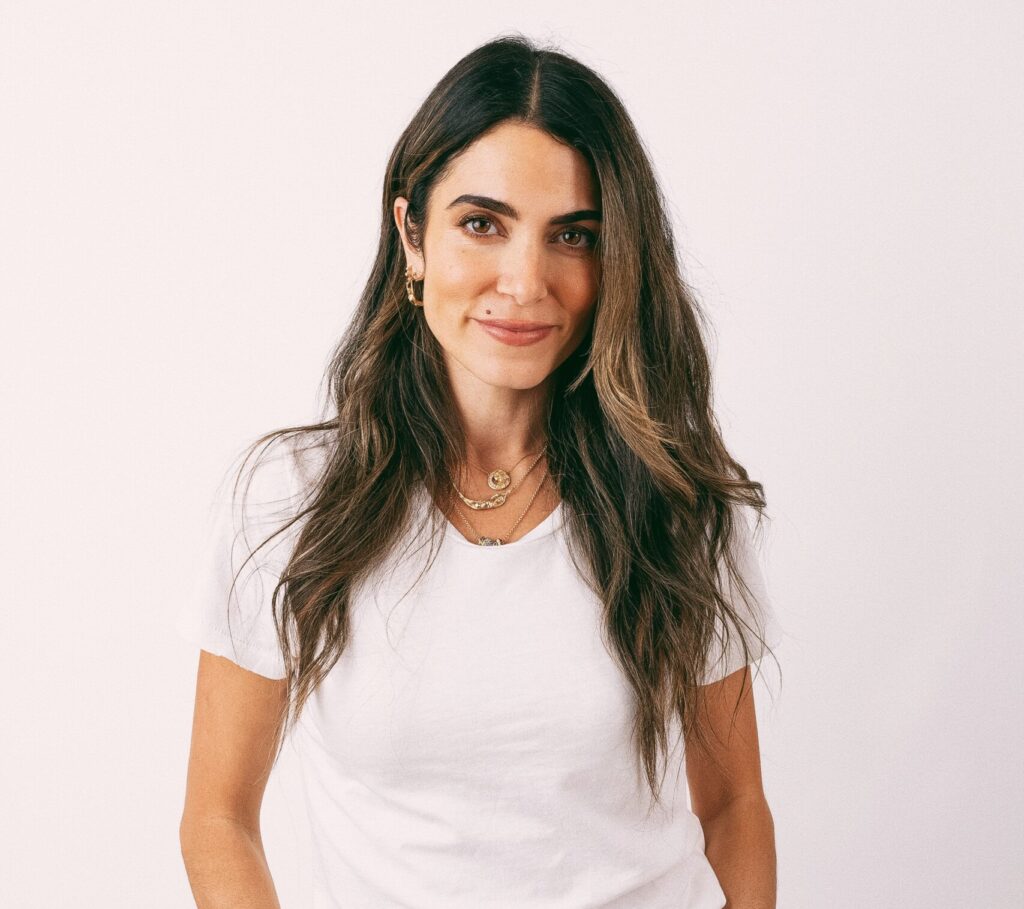
I recently interviewed award-winning actress Nikki Reed on my podcast, Thirty Minute Mentors. Here is a transcript of our interview:
Adam: Our guest today is an award-winning actress turned entrepreneur. Nikki Reed starred in The Twilight Saga and in 13, and is the co-founder of The Absorption Company. Nikki, thank you for joining us.
Nikki: Hello, Adam, thank you for having me. What an intro.
Adam: Only one way to do it. You grew up in Culver City and grew up early when most kids your age were starting high school, you were living on your own, and had co-written and starred in 13. Can you take listeners back to your early days? What early experiences and lessons shaped your worldview and shaped the trajectory of your success?
Nikki: So my career started in the most unconventional way, very much an accident, but I like to say one that was sort of written in the stars, a series of events that unfolded that I couldn’t redo if I tried. It was a little bit of magic sprinkled into it. I was 13 years old. I love love. Loved writing. I was always a writer at heart, and I took a series of journal entries and worked with a woman who was a family friend and production designer at the time, aspiring director, and we spent six days over the course of a Christmas break turning a series of journal entries into what turned into a very groundbreaking film. And I don’t love talking about myself, to be honest with you, but I understand that this is the platform for that. So I was a kid, and somehow that all came together and sort of helped me set sail, and I ended up falling into a career path that I had no idea was coming, and it was an incredible experience. I couldn’t and wouldn’t redo it if I were given the chance. And I think what it did is it allowed me to grow up very fast and very hard. I learned a lot of really, really valuable lessons as a young person, and carried them into my adulthood, and by the time I was 21 years old, I like to joke like most people were moving out when I was moving back in. When I was 21 I was actually moving back in with my father after having lived on my own for, gosh, I guess, six years at the time, and I lived in at least two or three other countries by that point, and brought all of that experience, life experience, into my work, into the businesses that I now own and operate. And there are a lot of lives packed into these three and a half decades.
Adam: You mentioned that you learn some very valuable lessons that changed your life, changed your career. What were those lessons?
Nikki: Well, I always had this burning desire to explore something more than the career path that I had chosen, and not because that career path wasn’t fulfilling. I mean, it was very fulfilling. It was challenging. It was creatively fulfilling. But I always had this desire to explore culture and language and art and become a human before I could try to become a character, I think. And in between filming what was arguably one of the largest film series of all time, I would find myself in another country, and I would have a publicist or an agent calling and going, Hey, don’t you think you should be here to, like, really capitalize on this moment? I’m between these two films here. And I was like, No, I’m actually learning Greek. I’m in grace for the next four months, and I’ll be back when it’s time for me to be on set. But I didn’t have a desire to harness the opportunities that so many would have. And that’s not because I’m a martyr in some way, or because I’m above it, or because I had the foresight, or I was so thoughtful, or I said no, I just followed the passion that I felt in the moment for whatever that thing was, and usually it was travel and culture and language and things like that. And I think some of the lessons that I learned were just about being a human being, about wanting to be a good human being on this planet. And part of that comes from seeing different parts of the world and deciding that beyond all else, I wanted to try to create businesses that had an impact, that were mission-driven companies. And I do think that that comes from those experiences that I was just talking about. You love and have compassion for the things that you care about. You protect what you care about. And I saw the earth in so many different ways from so many different places, and I saw community, and I saw small business, depending on, you know, where I was in the world and what corner of the world I was in. And I think I was just really inspired by the people, the community, the purpose, so that became my calling.
Adam: There’s no substitute for being a good person, no matter what you’re doing. And there’s no substitute for passion. The most successful people are passionate people, and you mentioned the importance of following the passion of the moment. And that just speaks to recognizing that we all have instincts, and sometimes we overthink things to our peril, and if you just trust your gut, trust what you know deep down is, right, there’s a pretty good chance that it’s going to work out for you.
Nikki: I also think people have different ideas of what success looks like, and to me, my version of success might look different from yours or someone else’s. To me, success is building something that you’re proud of that makes people feel good. I think that people deserve to feel good, and I know that expansive explosive growth for some people, for example, or global takeover for some people, all those things have their place in the term success, but to me, I love operating from a place of small, of conscious, of mission driven and with the idea that people should wake up every single day. They should love their jobs. They should feel good about their past, their company, their community, and when all those things feel aligned, I think that is success. So success, to me, is not always a number on paper. I think in this chapter that we’re all living in right now, it’s been defined differently for a lot of people. And that doesn’t mean that it’s not wonderful if you have a super successful business on paper as well, but I’m just saying that’s not the place I lead from. And so what’s interesting is that I have two companies. I have The Absorption Company, and I have buy you with love. And buy you with love is a very tiny, intimate company. We’ve had the same team for going on a decade now, and we are very much a mission-driven business, and I am the founder and CEO of that business. And then you have The Absorption Company, which is also a mission-driven business, founded on similar principles, right, principles of feeling good and doing good. We’re a supplement business, and I’m one of four co-founders in that business. One of them happens to be my husband. He and some are older, but it’s interesting to see how everybody brings a very unique perspective to the table, and I’m also the only female in a group of four co-founders. So it’s just interesting to see perspective and what everyone contributes, and how that masculine-feminine dynamic plays out there as well, which is, I think, so wonderful and so necessary to have both, and how it manifests in business.
Adam: Nikki brought up a lot of really important themes, starting off with something that I talk a lot about with so many of the most successful people, something that I talk about with many audiences that I speak to. You nailed it? You hit the nail on the head. Every single one of us can and should have a different definition of success. Your definition of success can be different than mine. It can be different than your friends, your neighbors, your husbands. It doesn’t matter. What matters is that we have a definition of success. If you have a definition of success, you’re going to be exponentially more likely to get there. It starts with understanding what does success look like for me, if my definition of success is to be the most successful actress ever, well, you’re going to take a totally different career trajectory than the career trajectory that you wound up taking. But your definition of success wasn’t that. You didn’t say, I want to be a five-time Academy Award winner. I want to be the number one person on every movie for the next 50 years. You had a totally different definition of success, and your definition of success was the right definition for you, and that’s what matters, and that’s what’s allowed you to attain success for you.
Nikki: Yeah, I mean, I also think that there’s some more obvious touch points there, which is just that in order to reach a certain level of success as an actor, there’s one very important component to that, which is being very recognizable, right? You can’t reach a certain level of accomplishment there without also the unintended consequence of that is that your face is everywhere, right? And to me, fame was just something that I was always deeply uncomfortable with, just by virtue of starting my career at such a young age, was something that was semi-autobiographical, writing a film that was sort of based on my life, and not understanding what the consequences of that might be in the public eye. And being a child, having that experience, I think, set me up to be an ultra-conscious, private person. Privacy is, in many ways, our greatest form of currency, especially as we enter into this new world of tech and AI and social media and everything living on the internet and not understanding what the implications of that might be, we’re all just out there giving away that currency to build other platforms, which is such a fascinating thing about human psychology, we’re out there giving away this thing for free in order to build these massive companies and platforms that we have no stake in. It’s sort of an interesting thing, all because of, I mean, we can wax poetic on that all day long, if you want, but largely due to a combination, I think, of ego and our desire to connect as human beings, right? And we give that away. And so I think in this time where we’re all doing that, certainly without awareness. I don’t want to call us all victims of the tech age, but we kind of are, because we don’t really understand what’s going on, but we’re a part of it. And I think I just had this burning desire always to keep things private in life, as we are a culture of oversharing. So yes, part of it was mission and passion and wanting to build these companies, and the other part of it was just knowing intuitively that in order to really push forward with a career in the entertainment business, that was a price that I wasn’t willing to pay.
Adam: And that’s a really important point for everyone listening. You don’t have to be a well-known actor, actress, well well-known person, period. Live life on your own terms. What makes you happy, what’s right for you, not what do other people expect of you, not what do other people think will make you happy? Don’t live your life based on what other people think is best for you. It’s great to get input from other people, but ultimately, you have one life. It’s yours. Live it on your own terms.
Nikki: Yeah, and we also have all these defining moments of life. When you’re 18, you’re supposed to do this, and when you’re 21, you’re supposed to do this. And if you haven’t figured out your career path by 30, then, oh gosh, you’re a failure. And all of these benchmark things in our minds that really to me, I’ve ignored my whole life. I’m a 37-year-old woman who has constantly reinvented myself, and that’s also a story that I think is really important for people, particularly women, to hear, which is that there is no timeline. All of that is some weird societal, I mean, I don’t even want to go too deep into that, but I’m not quite sure why we’ve put so much pressure on people to do things in a certain timeline, when the truth is you are never too old to find a new passion. You are never too old to reinvent yourself. You’re never too old to explore a new career. I mean, some of the most successful people have said that they’re only starting at 40 or at 50. And I think it’s really important for women to hear especially as we all struggle with being multi hyphenates and trying to be moms and business owners or just out there juggling like we all do, there’s never a time where you’re too old to try something that you’ve always wanted to try and to really go for it and believe in yourself in that way. And I think again, the definition of success, if we want to talk about that, success could be just that. It could be doing the thing that you’ve always wanted to do. And who cares about what labels go along with that, just doing it. That’s success.
Adam: I love it. You’re never too old to find a new passion. You’re never too old to reinvent yourself. You’re never too old to find a new career. You’re never too old to do what you want to do with your life.
Nikki: You’re also never too young. I just want to throw that out there, too.
Adam: I agree. I’m with you 110% and I would love to dive deeper into the topic of reinvention, how anyone can reinvent themselves. You were able to do it so successfully. What advice do you have?
Nikki: I think there’s a really beautiful intersection where passion meets purpose, and I think you’ll find it there if you put enough. Move passion into something that you believe is your purpose, you will find what you are supposed to do inevitably. That’s my belief, and I know that it might be a little bit naive to just say anyone can do it, or anyone can do anything, but I think if we don’t start from that place within ourselves, then it’s like we’ve given up before we’ve even begun.
Adam: I like that framework, passion meets purpose, something that I tell audiences that I speak to all the time. When you’re trying to figure out what you want to do with your life, you want to check three boxes. Number one, you want to do something that you love. Number two, you want to do something that you’re great at. Number three, you want to do something that allows you to make a positive impact in the lives of others, and if you can check all three of those boxes, whatever you’re doing doesn’t feel like work. You wake up first thing in the morning, and you’re fired up to get at it, and you hit the pillow late at night, and the next morning, you can’t wait to get at it again, and you compare that to people who are not checking those three boxes, or to yourself when you’re in a place in life when you weren’t checking those three boxes, and it’s one o’clock in the afternoon, and you’re completely drained and drained from doing what, from working too hard, or from not doing something that you love, not doing something that you’re great at, not doing something that you feel is making real positive impact in the lives of others.
Nikki: Well, what I will say is that you added skill into my pitch about passion and purpose. And I think that’s an incredible point. And I also think that you can have passion and purpose, and skill is something you can build on. So I don’t want anyone to ever feel like if they don’t already have that skill, they can’t begin because skill is cumulative, and you will be able to gain more knowledge and more skill in areas that you’re passionate about, if you just put one foot in front of the other and do and I’ve had to put myself, especially as a woman that has worked in areas that are largely male dominated fields. I’ve had to put myself in situations before where I didn’t necessarily have the skill, but I had the passion and I had the purpose, and I had to learn that skill as I went along. And I had to be fearless about it. I had to sit in rooms with people that maybe I wasn’t qualified to sit next to, but I wanted to learn from them so badly that I went anyway. And I had to always feel comfortable not being the smartest person in the room, actually far from that, but it gives you the ability to remain curious and to remain a student. And I just want to add that, because I do talk to a lot of people as well that often come to me and say, but I don’t know if I’m good at that yet. What if I’m not good enough yet? And I always say, you will be. 10,000 hours. You will be. Put the time in, and you will be. So I’m just adding that there, because that third pillar skill is very, very important, but it shouldn’t be the thing that stops you from starting.
Adam: Nikki, I literally could not agree with you more. Any of us can develop a new skill, and can develop it at any time. And I love that you shared that you oftentimes walk into a room and you recognize, hey, I’m not the smartest person in the room. But that doesn’t matter, and in fact, it’s actually an advantage when you walk in, yeah, when you walk in with the mindset that I understand I’m not the smartest person in the room, because if you’re the smartest person in the room, you’re either in the wrong room or you’re the wrong person. Amen, yeah.
Adam: You’ve mentioned the fact that you’re the only woman on your founding team at The Absorption Company, that’s allowed you to bring a unique perspective to the table. What have you learned from your experience as an entrepreneur? What are the best lessons that you’ve been able to take away that you believe are valuable to listeners?
Nikki: Don’t discount your voice ever. If you have a feeling, if you have an intuitive feeling or a conscious feeling, if you are thinking something and it won’t go away, it’s a nagging thought or feeling, it’s valuable. Add it to the equation. Don’t feel like just because you are not the most experienced person in that space, whatever that space may be, that your opinion isn’t valid. So I’ve learned in the last 15 years of running businesses to continue to put myself in the center of the conversation when it’s appropriate, and not back down, and I think that that’s really important as a woman, especially in business. And again, I bring that perspective, because there’s truth to it. As much as I don’t like to wave that flag, there is truth to it. I’m a woman. I’m also a soft-spoken woman. I’m also I’m very thoughtful about what I say, and so sometimes it’s easy to get pushed to the back of the line in any capacity. Over the last 20 years, I’ve felt this and seen this even in my previous career, but you have to learn to have enough confidence and conviction in what you’re saying and doing, especially in these category-defining businesses, which both of my companies are, to voice what is meaningful. And eventually you’ll see that it does have a place. And if you’re ever met with resistance, it doesn’t mean that your idea wasn’t great. It means that maybe you need to articulate it in a different way or come forward again. But it doesn’t mean give up, and I think that’s just a really important thing for all people to hear in business. It doesn’t mean that the loudest person in the room has the most valid point. I’ve never been the loudest person in the room.
Adam: A word you mentioned, confidence, which is such an important word, and it’s something that regardless of what you’re doing, whether you’re an entrepreneur, whether you’re an actor, whether you’re working in a business, essential. How can anyone cultivate more self-confidence?
Nikki: Adam, I don’t know that I’m the right person to ask that question too. I’m working on that still daily. That’s my honest answer to you. I really deeply admire people that were born with that, and I feel like every day I have to earn that myself. I think there’s a certain level of confidence that comes with just authenticity. So if you know who you are and you know what you believe in, then maybe there’s an innate confidence there. But it doesn’t mean that you have to speak in a way that’s the most confident. Just because you don’t like to stand at a podium, you’re not a confident person. And I think maybe confidence comes in different forms. I’m certainly very confident in the things that I know to be true about myself in the business space, what I know and feel I can contribute, but I don’t look at anything that’s a weakness or shortcoming as being something that I’m not confident in. In fact, I’m just maybe more confident in my desire to learn about it. So yeah, I don’t know that I’m like the poster child of confidence.
Adam: But you gave good advice, which is that there’s a direct correlation between confidence and being comfortable in your own skin. And the only way you’re going to be comfortable in your own skin is by being authentic, being yourself, being you. And Nikki, you have been around so many different leaders in the entertainment industry. You lead two different businesses. Authenticity essential to effective leadership. What in your experiences are the keys to great leadership? What can anyone do to become a better leader?
Nikki: They can listen. The best leaders listen, in my humble opinion, and that’s across all categories. That’s not just CEOs of a Fortune 500, it’s also, I think the best doctors are the ones that listen to their patients. I think the best teachers are the ones that listen to their students. I think the best leaders know the value of listening.
Adam: Who are the best leaders you’ve ever been around, and what do you learn from them?
Nikki: Oh, goodness. I have been so, so fortunate to not only find myself surrounded by but also seek out people that really inspire me. I can give a very poetic answer or a very straightforward answer. I can talk about all the women that I’m surrounded by that run ethical and sustainable businesses and their leadership and contribution to the world. I can also talk about the incredible people on our team, Grace, our VP of Marketing, and Ben, who has been the president of our company since we launched. I can talk about the people who I feel so lucky to sit next to in a room daily and learn from and listen to. These are the leaders in my life. I’ve worked with some of the most amazing directors, producers, and actors. I’ve sat next to some of the greatest political leaders. I’ve been in rooms with some of the most incredible business owners and operators. And I think people who listen are the ones who inspire me the most.
Adam: I love it. Great leaders are great listeners. And that’s a universally applicable principle. You mentioned that you spent time with many of the most successful people in many different industries, business, entertainment, politics, someone who you collaborated with very closely over the course of your career, Catherine Hardwicke, who was a mentor to you. What did you learn from your time spent together? What, in your view, are the keys to successful mentorship?
Nikki: Catherine’s incredible, I will say one of the greatest things I’ve learned from her is her ability to go into an empty room, and this is both literal and metaphorical, but an empty room, and bring it to life. And she started her career as a production designer turned director, and I feel like every time I’ve worked with her, which has now been, oh gosh, we’ve done a number of things together, not just 13 in Twilight, but also Lords of Dogtown. Catherine has this unique ability to see beyond the decor, and she has that with a script, with an actor, with a space. And I think it comes from being a production designer that she can literally walk into an empty room with four white walls and bring it to life. She can meet an actor, and even if they don’t look like that character, she can feel the essence of that character. She can see what they can bring to that space. I’ve taken that I’ve watched Catherine for 30 years of my life now, and I’ve actually applied that to my own life in so many different ways. It’s not always the obvious. Sometimes you have to lean into imagination and see beyond what’s immediately possible. You have to bring things to life in not just film and TV, but in business. I’ve put that in my back pocket as like a little secret weapon. I don’t even know if I’ve ever said that to her, but I see that, and also she has this very, very special quality that makes her who she is, which is that she really believes in young people. And I’ve also taken that as well. I’ve actually done some mentoring myself, not just with me, by the way, I might be the more well-known story of them all, but with a lot of young people, she’s taken them under her wing and mentored them and believed in them. But you know, what’s interesting is that she just has this ability to bring out what already exists in that person. So she’s not telling them who they are and who they should be, and what she sees in them. She’s allowing them to see things in themselves. So what a great lesson in life for all of us to take with us.
Adam: I love that, and you really hit the nail on the head in describing what a great mentor is, what a great mentor does, what a great leader is, what a great leader does. I can’t take credit for it. You should take credit for it because you lived it, and you described it, you narrated it for everyone listening. It starts with caring about the people who you lead. It starts with caring about the people who you’re mentoring. You can’t be a good leader if you don’t fundamentally love people, if you don’t fundamentally care about other people; that’s table stakes. And having that ability to bring out the best in others, not trying to turn other people into something that they’re not, not trying to turn people into a version of themselves that isn’t authentic to who they are, but recognizing what is it about you that makes you unique, makes you special, makes you different. What is it about you that makes you you, being able to identify that and to surface that that’s what great mentors do. That’s what great leaders do.
Nikki: Yeah, I agree. And having that person see that in themselves.
Adam: You mentioned that you mentor others. How have you been able to do that with the people who you mentor?
Nikki: Applying that same philosophy. And I think also there’s something to be said about just time, giving somebody your time. Time is so valuable and so precious. Always has been, but more so now than ever, I would say we’re all time poor right now. We all have lives that are moving at a faster pace than what we can keep up with and what they should be. The rhythm of life is faster than it’s ever been right now, I think the further we pull away from and disconnect from nature, which actually has a natural rhythm to it, for example, birds, flying leaves, blowing in the wind, there’s a pace in nature, and when those things speed up, it’s usually because there’s a problem. Right? If you hear the birds and they’re chirping loudly and you hear wind whipping fast, it’s because there’s a problem. We either have a storm coming or there’s a predator there. And so I think we all live with that new fast rhythm now that feels unnatural to our bodies. So you have a chronic anxiety issue, chronic depression issue. We’re not living at the natural pace of rhythm, which was part of the birth of The Absorption Company and was finding solutions for these things that we all are a part of together. We’re all experiencing together. So anyway, as we disconnect further and further from the pace of nature and that rhythm, I feel like time is a beautiful way to show up and just say I care. You don’t have to have some great skill as a mentor. It’s actually just loving someone enough to show up and give them your time, because none of us have that. That’s a very potent gift is being there in a time where none of us can really spare that.
Adam: Nikki, that’s a great point. And in addition to giving your time, something else that you’re sharing is being present, not just showing up and saying, I’ll be here for 30 minutes or I’ll be here for an hour, but actually being there. And you know, when you’re sitting across the table from someone, whether someone is with you and fully present, or whether they’re not, and there’s no substitute for being present.
Nikki: I agree, presence is a major gift right now. That’s why, before you started recording, I was talking about how I’ve now got a flip phone and a landline that’s going back in because we need tools now to remind us to be present. We need to get rid of these devices that are in our hands and the things that we’re tethered to at all times that we’ve tricked ourselves into believing life can’t operate without. And we need to go back to basics a little bit, otherwise the human mind is going to just implode. We can’t supplement our way out of I mean, I make supplements, right? That’s my company, that’s my career, but I’m the first one to tell you we can’t supplement our way out of this crisis that we’re in. We really can’t. It’s a multi-angled approach right now. It’s a level of understanding and consciousness about the way that we are all choosing to live our lives right now, a lot of it stemming from this big, hot ding, ding, word success and how we need to achieve that, and pushing us to move at this pace and never disconnect from our tech and our emails and our drive and our ambition, and none of it is enough. So it’s like you can’t ever cap it at anything, because there’s no such thing as enough. We need more. We are a culture of more all of these things. That is the demise. And so I think if anyone walks away from anything from this episode, it is that Nokia is actually making a flip phone again. And I bought it.
Adam: And you’re not a paid endorser for Nokia.
Nikki: Oh, I am not, no, but I would love a flip phone, although I just bought it and it’s only, like, 100 bucks. No, none of what I’m saying holds any, I actually don’t know if it’s 100 bucks, and I don’t know if I got a Nokia, but I did get a flip phone. That is a true story. And I have been trying to do this thing where on weekends I, when I say try, it’s because I’m a very honest person, and I don’t ever want to act like I’ve mastered something that I haven’t. So again, I’m a student, not a teacher, but I did get a flip phone. I do try on weekends to turn off my cell phone, and I’m trying to manage expectations, not just within company, coworkers, employees, employers, not just in that space. I mean also expectations I put on myself, my type-A personality. Part of why I’m great in the operations space is because I like to get things done in the moment. But what happens if that task list outweighs your availability and your time? What do you do? You’re constantly feeling like you’re behind, and that’s a hard place for all of us in business to operate from, to constantly feel like you’re behind, right? So I’m trying to manage expectations within myself as well what I can do. And I know this sounds like a funny thing to say, but setting the bar a little lower for all of us overachievers who set that bar super high, which has been my entire life, I’m like, maybe we could take that down just two to three notches for a second and not worry about that inbox hitting zero every single time, and not worry about being immediately available on a Sunday at two o’clock, when we’re not meant to operate in this way. And again, this comes back to that same definition of success. Success is also all-encompassing. It is. Are you living a life that feels successful, not by money, not by your company, not by what you’ve achieved, but success, to me, is being able to go, you know what? It’s Sunday, and it’s two o’clock, and maybe I’m going to be proud. In this moment, not catching up on the 5326 emails I’m behind on. And I’m saying that number because that’s actually a number that I’m staring at on my computer in front of me right now. That’s a true number.
Adam: Nikki, we all have different definitions of success. We all should have different definitions of success. But what can anyone listening to this conversation do to become more successful, personally and professionally?
Nikki: I would align your goals in business with the goals of your life. That’s what I would do. I would look, pretend you’re painting a picture of your life, and it’s in front of you right now, and it’s a blank canvas, and you’re going to paint that picture, think about what you want that picture to look like, and how your business fits into that, not the other way around. I don’t think that your life should fit into your business. I think your business should fit into your life, which is very funny, because you’re going to talk to my husband shortly as well, and he might say something very different, and that’s okay, too.
Adam: Nikki, thank you for all the great advice, and thank you for being a part of Thirty Minute Mentors.
Nikki: Thank you so much, Adam.